Nearly a million kazoos are born every year in a low building near the South Carolina coast. The brochure rack promised boat tours and shrimp shacks, but a detour was made anyway.
Twenty minutes outside a small historic town, past marsh grass and pine trees, the factory waits. Inside, the air smells faintly of warm plastic.
Machines stamp out resonators by the thousand behind a window. What was expected as a quick peek turned into over an hour of humming, laughing, and building a kazoo by hand. Hands assembled one using parts, and the hum of a dozen other visitors filled the room.
This is the only place in the United States still manufacturing plastic kazoos. It felt strange and wonderful, especially on a beach vacation.
Souvenir instrument went into a pocket, and new appreciation for a toy almost forgotten came home too. The visit became the highlight of the trip.
The Only Plastic Kazoo Maker Left in America
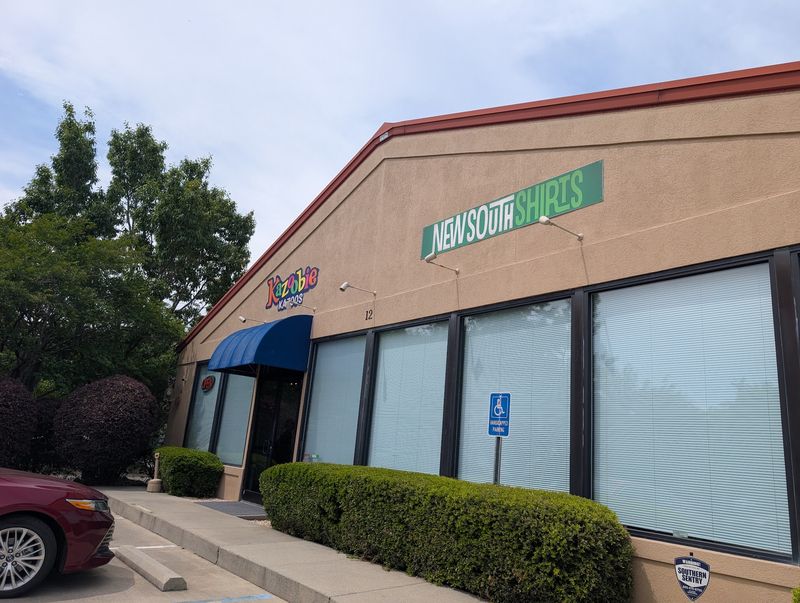
Some places earn their bragging rights quietly, and this one does. Kazoobie Kazoos has been turning out instruments since 1999, and it stands as the only manufacturer of plastic kazoos in the entire United States.
That fact hit me harder than I expected. In a world where almost every small toy seems to arrive from somewhere far away, here was a modest building in the South Carolina Lowcountry shipping humming instruments to more than 35 countries.
The numbers are genuinely wild for a building this size. Nearly a million kazoos leave here each year, with production running around 5,000 per day when things are moving at full speed.
What I liked most was how unpretentious it all felt. No glossy corporate lobby, no velvet ropes, just a working factory that happens to welcome curious travelers through the front door.
Everything is made in the USA, primarily right here in South Carolina, with the injection molding handled by a firm upstate. Knowing that gave the little instrument in my hand a bit more weight.
It is the kind of roadside discovery that turns an ordinary afternoon into a story you retell for years.
Watching Kazoos Roll Off the Assembly Line
The factory floor is the part I kept sneaking extra looks at. Guides walk you past the assembly stations, the printing machine, and the packaging area, and you can see the whole journey from loose plastic parts to finished, boxed instruments.
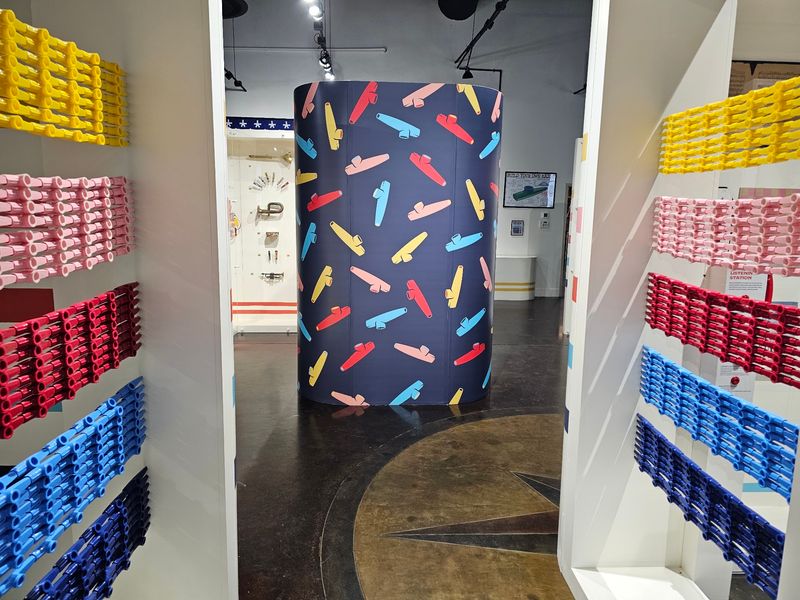
Bright colors are everywhere. Bins of kazoo bodies in red, blue, green, and purple sit waiting to be paired with their caps and resonators, and the sheer volume makes you grin.
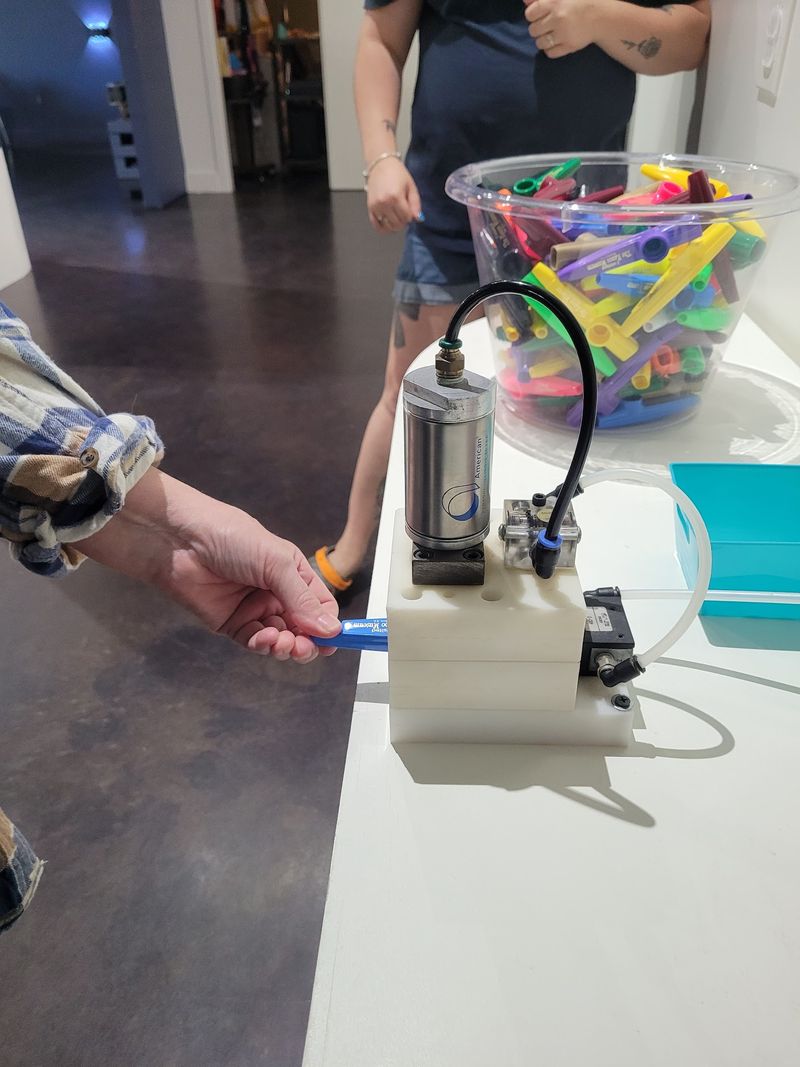
Watching the imprinting process was unexpectedly hypnotic. Custom logos and messages get pressed onto the metal-look bodies, which explains why you sometimes spot kazoos at weddings, festivals, and company events with names printed right on them.
A short video plays before the walkthrough, explaining how the pieces fit together, so the machinery makes sense once you are standing in front of it.
The tour runs roughly 45 to 60 minutes, which felt just right. Long enough to understand the process, short enough that nobody in our group got restless.
Seeing a product actually being made, start to finish, is rarer than it should be. I left with real respect for the small team keeping this line running.
Building Your Own Kazoo to Take Home
My favorite five minutes of the whole visit involved a workbench and a handful of plastic pieces. Every guest on the tour gets to assemble a kazoo and walk out with it, which is a souvenir that actually does something.
You pick your color, snap the parts together, add the resonator, and then immediately test it. The first hum out of a kazoo you built yourself is oddly satisfying.
Kids take to it instantly. The families in our group had their kazoos buzzing before the guide finished explaining, and nobody seemed to mind the noise.
Adults are just as bad, honestly. I watched grown travelers get competitive about who could hum a recognizable tune first, and the answer was nobody.
What makes the souvenir better than a fridge magnet is the durability. These kazoos are made from high-quality polypropylene, washable, and even top-shelf dishwasher safe, so yours will survive being tossed in a bag.
Mine still sits on my desk. Every so often I pick it up, hum something terrible, and remember a warm afternoon outside Beaufort.
Inside the Kazoo Museum and Its 150 Antiques
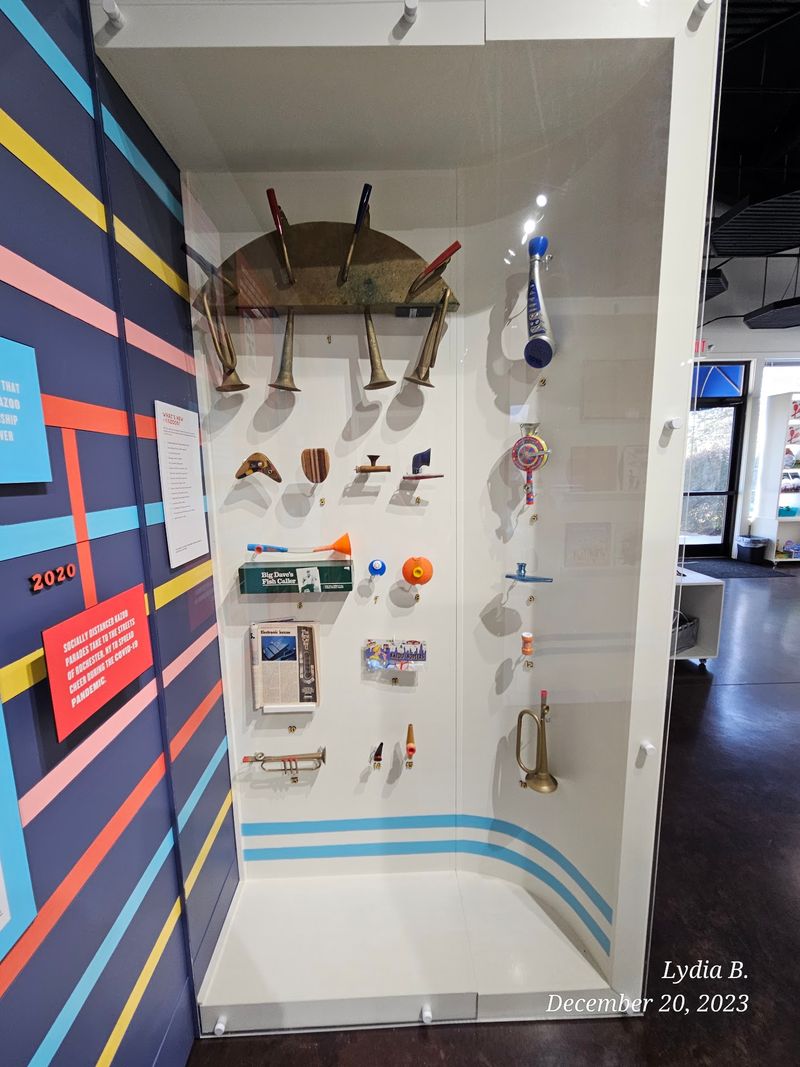
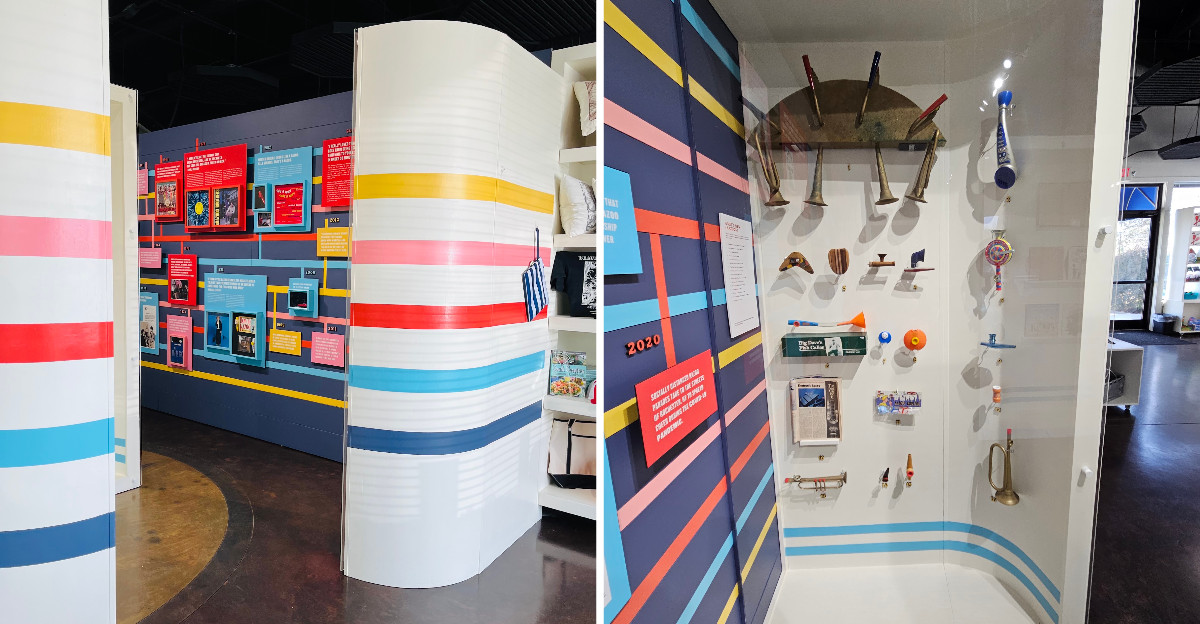
I did not expect a museum, and I certainly did not expect one this charming. Tucked inside the same building, the Kazoo Museum opened in 2007 and holds more than 150 antique kazoos and pieces of memorabilia.
Some of the items date back to the 1800s. Together the exhibits cover over 160 years of American kazoo history, which is a sentence I never imagined typing.
The variety is the fun part. There are kazoos shaped like cartoon characters, electric kazoos, oddball novelty models, and early metal instruments that look like tiny brass sculptures.
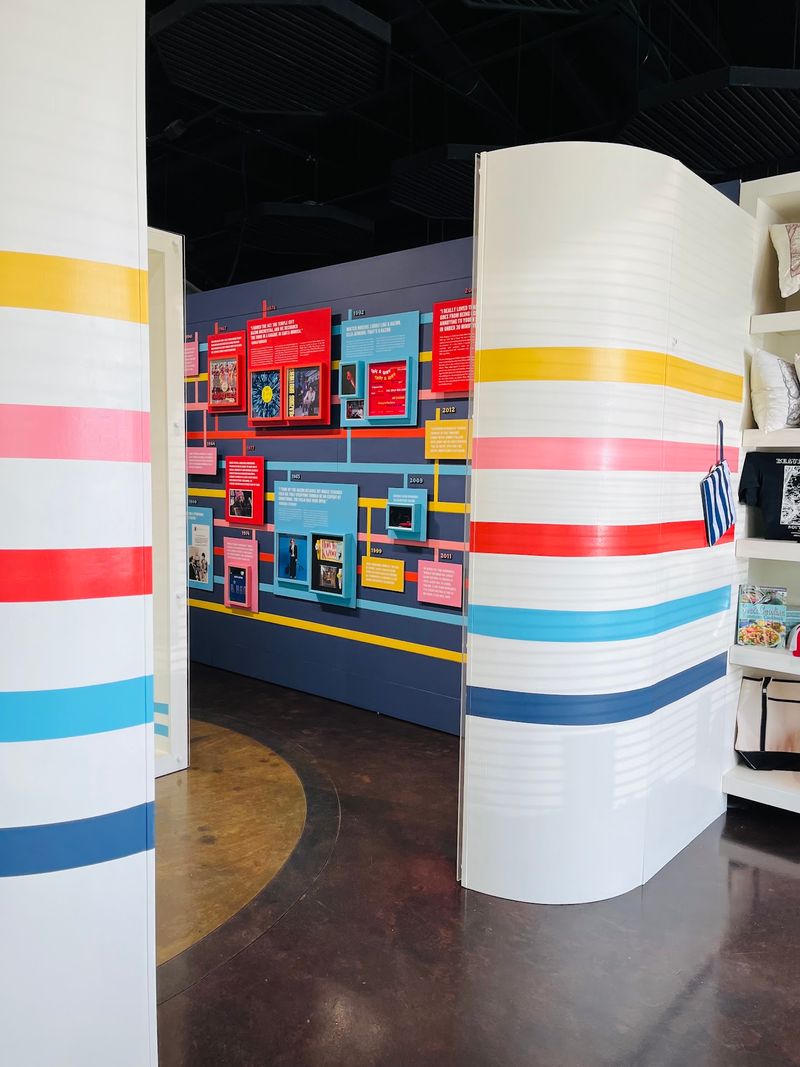
Panels and short videos walk you through how the kazoo went from curiosity to mass-produced toy, with commercial production starting back in 1912 in Eden, New York. The instrument itself traces to around 1840.
Admission to the museum is free, which makes it an easy stop even if you are short on time. The space is small, but it packs in a surprising amount.
The museum is currently owned and operated by Stephen Murray. I wandered it twice, once before the tour and once after, and caught new details the second time.
Demonstrations, Nose Flutes and Kazobos

Nobody warned me there would be a performance. Partway through, the guide starts pulling out noisemakers and playing them, and the room shifts from tour to variety show.
There are kazoos of every size and shape, plus nose flutes and something called a kazobo, which combines a kazoo with a horn-style body. The sounds range from sweetly musical to gloriously ridiculous.
The physics behind it got explained in a way that finally stuck with me. When you hum, talk, or sing into a kazoo, an internal membrane vibrates and turns your voice into that buzzy, nasal tone.
Getting the resonator right took serious work. The team tested more than 60 different papers and plastics before landing on the polyethylene version they use now.
Guides here are consistently described as knowledgeable and genuinely entertaining, and ours kept the energy high without ever talking down to the kids in the group.
Audience participation is basically required. By the end we were all humming along, badly and enthusiastically, in a room full of strangers who suddenly were not strangers.
The Gift Shop You Will Absolutely Overspend In
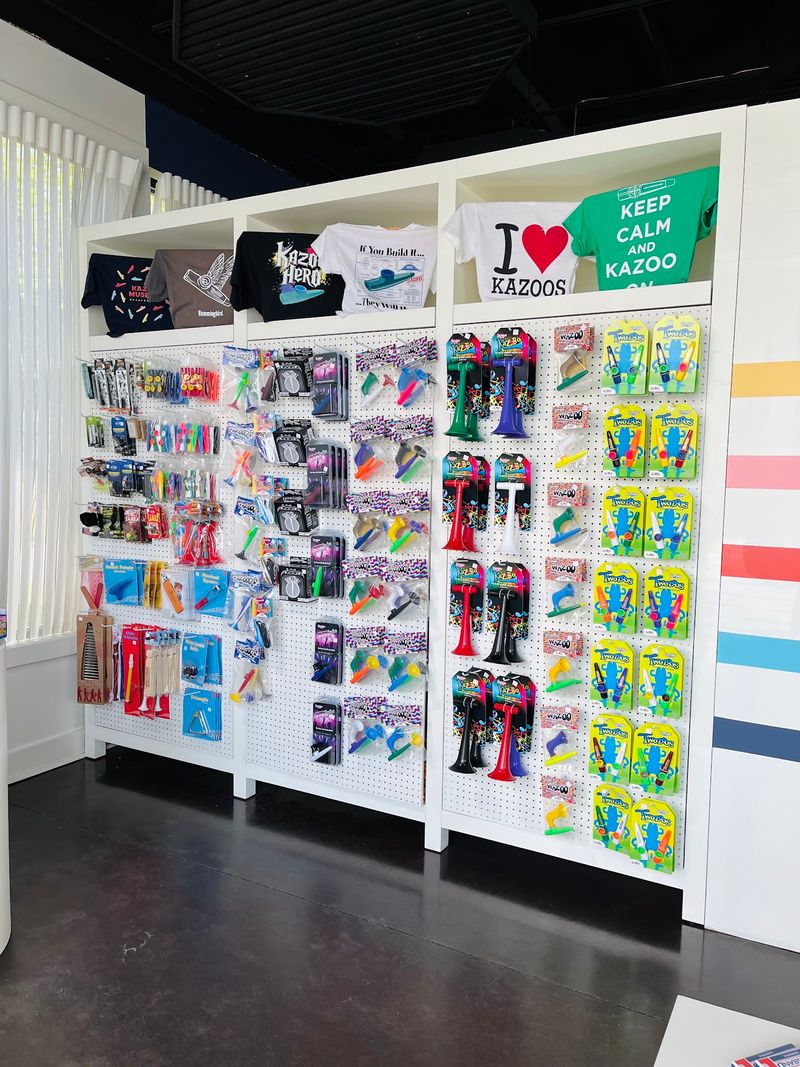
Fair warning: the gift shop is dangerous in the best way. Shelves are stacked with kazoos in every color and style, plus accessories and a pile of small plastic toys and noisemakers.
A tip I picked up and now pass along: shop after the tour, not before. You will spot instruments during the demonstrations that you had no idea existed, and you will want them.
Kazoo holders, replacement resonators, and novelty models fill the racks. There are also custom-printed options, which explains how kazoos end up as party favors and team giveaways across the country.
I went in planning to buy one thing. I left with several, including a nose flute that has since been banned from my kitchen by popular vote.
Because the shop sits at the front of the building, you can browse it without taking the tour. It keeps weekday hours alongside the museum.
For travelers hunting souvenirs that are not another shell-covered picture frame, this is a genuinely different option. Everything here is made in South Carolina, which makes the gift feel like it carries a bit of the place with it.
Planning Your Visit to John Galt Road
A little planning saves disappointment here, since this is a working factory and not an all-hours attraction. Guided tours run Monday through Friday at set times during the day, so weekend travelers need to shuffle their schedule.
The museum and gift shop keep weekday hours from 9:00 AM to 5:00 PM, with Friday closing a bit earlier at 4:30 PM. Saturday and Sunday the doors stay shut.
Calling ahead is smart, especially if you are traveling with a group or a school outing.
Everyone is welcome, though the experience lands best with kids around six and older, mostly because the introductory video involves some reading. Younger children still enjoy the noise and the building activity.
Accessibility is well handled. The facility, including transportation options on site, is wheelchair accessible.
Set aside an hour minimum, and more if you like lingering in museums. Beaufort’s historic downtown and the road toward Hilton Head are both close enough that this fits neatly into a larger Lowcountry day.
It is an easy stop to plan around, and the weekday-only schedule is worth remembering before building the rest of your itinerary around the visit.
Address: 12 John Galt Road, Beaufort, South Carolina
