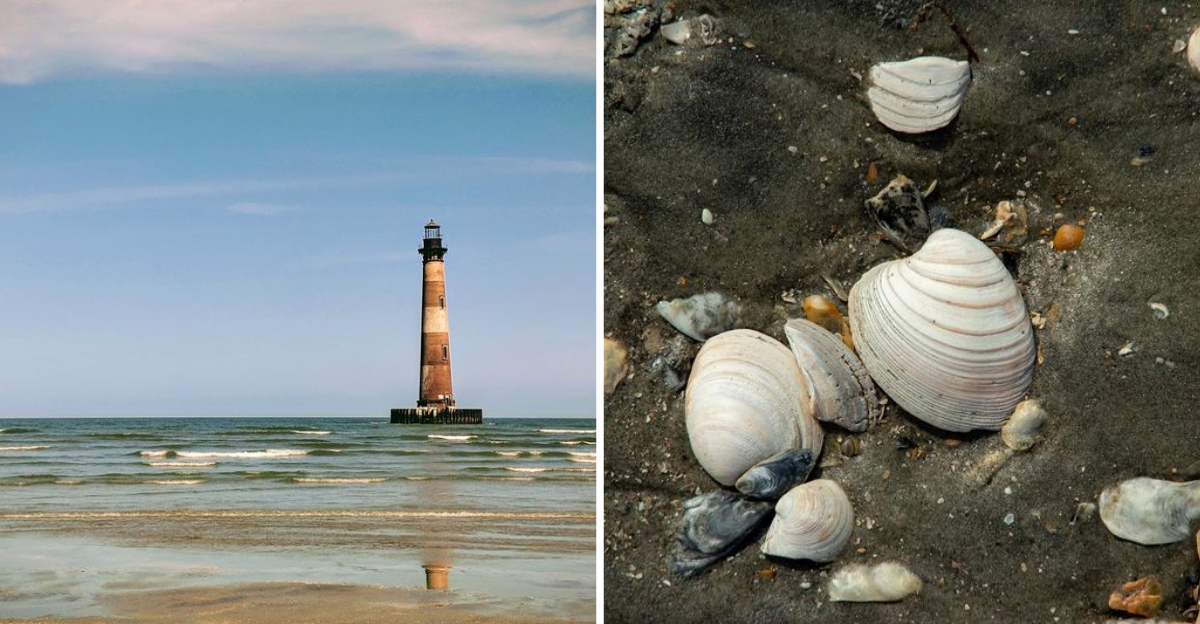
Short boat ride from the mainland, that small barrier island off the coast of South Carolina holds centuries of history in its sandy shores. Most people have never set foot on it, and honestly, that is part of what makes it so special.
I first heard about it as the kind of place where the world slows down and the only sounds you hear are waves and birds. That description turned out to be completely accurate.
I stepped onto the beach and found no shops, no crowds, no noise. Just open sky, wild shoreline, and a lighthouse standing in the water like it had a story to tell.
I walked along the sand, the wind in my face, and felt like I had found something the rest of the world had overlooked. Looking for a place that feels genuinely off the beaten path without being hard to reach?
That island might be exactly what you have been searching for.
The Morris Island Lighthouse: A Giant With a Complicated Past
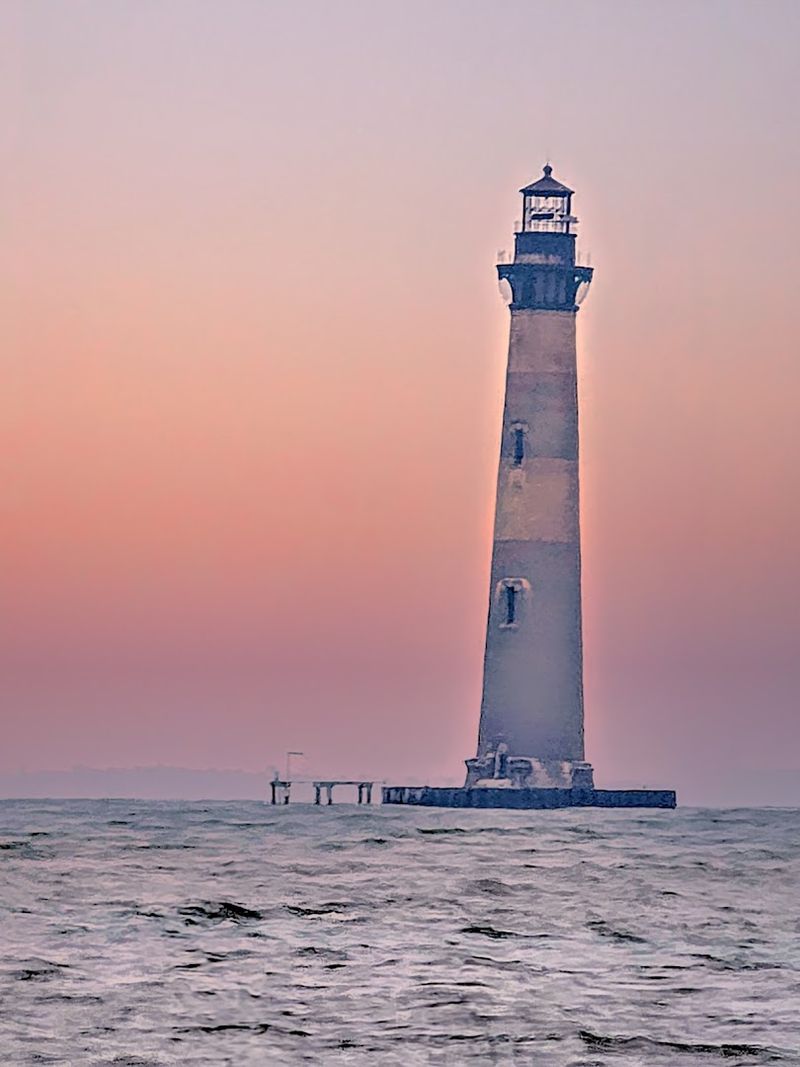
There are not many lighthouses in the country that ended up stranded in the middle of the ocean, but that is exactly what happened to the Morris Island Lighthouse. Built in 1876, it originally stood about 1,000 feet inland from the water’s edge.
It was a working lighthouse, guiding ships safely into Charleston Harbor, and at 161 feet tall, it is still the tallest lighthouse in South Carolina.
The problem came when engineers built jetties in the late 1800s to protect Charleston Harbor. Those jetties changed how ocean currents moved, and the erosion that followed slowly swallowed the land around the lighthouse.
Now it stands offshore, surrounded by water, cut off from the island it once anchored.
The lighthouse was decommissioned in 1962, replaced by a newer light on Sullivan’s Island. It has not been operational since, but it has not been forgotten either.
A nonprofit called Save the Light, Inc. has been working alongside the State of South Carolina and Charleston County Parks to stabilize and restore the structure. It was added to the National Register of Historic Places in 1982, which says a lot about how seriously people take its preservation.
Getting close to it is not something you should attempt by swimming. The currents around the lighthouse are genuinely dangerous.
The best way to appreciate it is from a boat tour or from the beach at Lighthouse Inlet Heritage Preserve, where the view is clear, quiet, and surprisingly moving.
Getting There: The Boat Ride Is Half the Fun
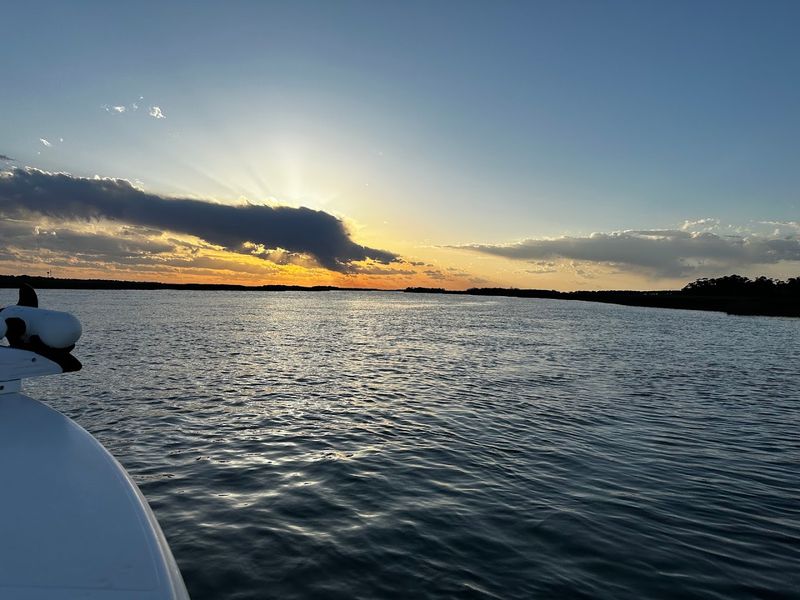
Morris Island does not have a parking lot, a ferry terminal, or a bridge. The only way to reach it is by boat, and that barrier alone is responsible for keeping the island as peaceful as it is.
Most visitors book a guided tour, and several operators run trips out of the Charleston and Folly Beach area, including Charleston Outdoor Adventures and Coastal Expeditions.
If you prefer something more active, kayaking is an option. The paddle from Folly Beach covers roughly four miles each way, moving through sheltered coastal waters.
It sounds manageable, but the currents near the island can be strong, so guided kayak tours are genuinely worth considering if you are not an experienced paddler.
Some tour operators offer drop-off service, leaving you on the island for a few hours to explore on your own before picking you up. That kind of unstructured time on an uninhabited beach feels like a rare gift these days.
You set your own pace, wander wherever the shoreline takes you, and have no schedule to keep.
One practical note: there are no restroom facilities on Morris Island. Pack everything you need before you go, including water, snacks, sunscreen, and a bag for any treasures you find along the beach.
A folding chair is not a bad idea either, especially if you plan to spend a few hours out there just watching the water and doing absolutely nothing. Sometimes that is the whole point.
Shells, Shark Teeth, and Fossil Hunting on the Beach
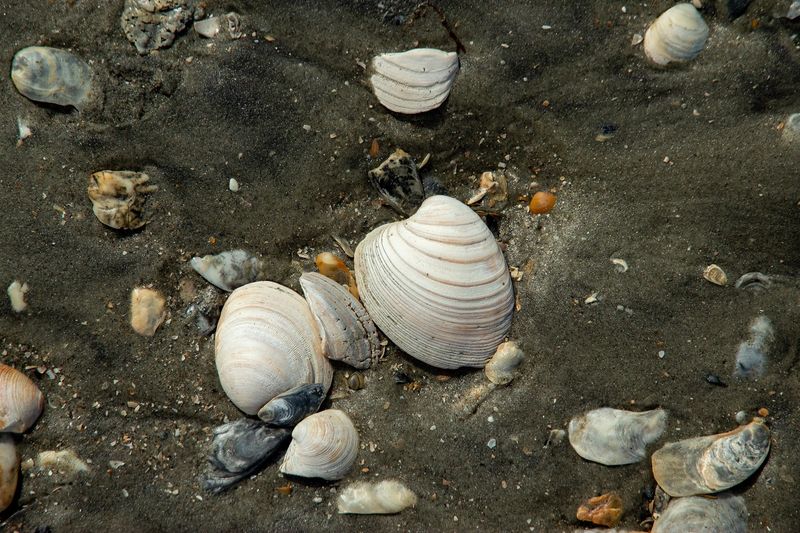
Few beaches in South Carolina can match Morris Island when it comes to finding things. The shoreline here is loaded with shells, and if you know what to look for, shark teeth are not hard to come by either.
People have pulled up teeth from species like Megalodon, great white, tiger, and mako sharks, all of them ancient, all of them preserved in the sediment layers that dredging operations have helped expose over the years.
The island’s geology is genuinely fascinating. Fossil-rich deposits sit beneath the water and sand here, remnants of marine life that roamed these seas millions of years ago.
When you hold a shark tooth in your hand on a quiet beach with nothing around you but ocean and sky, it is hard not to feel a little humbled by the timeline you are touching.
Beyond shark teeth, the beach is covered with sand dollars, hermit crabs, sea snails, and an impressive variety of shells. Families with kids tend to have an especially good time here because the beach rewards patience and curiosity in equal measure.
You do not need any special equipment, just sharp eyes and a willingness to walk slowly and look down.
Spring is often considered the best season to visit, with April being a particularly good month before summer crowds start building up on nearby Folly Beach. The beach stays cleaner and less picked over earlier in the season, which means better odds of finding something worth keeping.
The Civil War History Buried Beneath the Sand
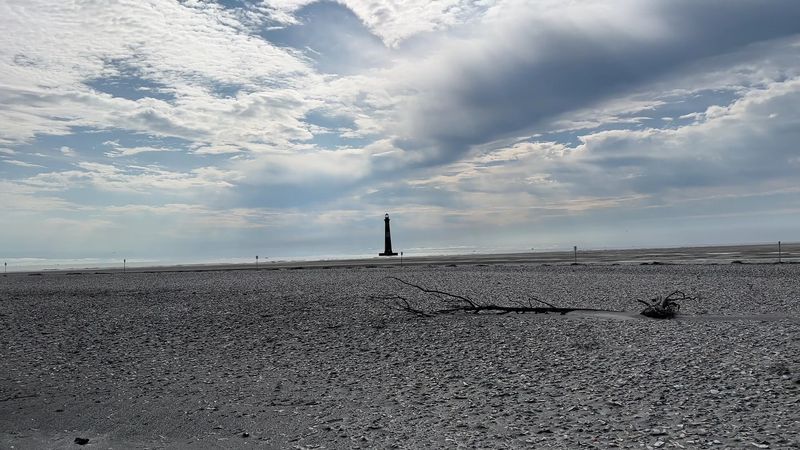
Morris Island carries a weight of history that goes far deeper than its quiet surface suggests. During the Civil War, this island was a critical military position, home to Fort Wagner, a Confederate fortification that controlled access to Charleston Harbor.
In July 1863, the 54th Massachusetts Infantry Regiment, one of the first official African American units in the Union Army, led a famous assault on Fort Wagner here.
That assault became one of the most significant moments of the entire war. The bravery of the 54th Massachusetts helped shift public opinion in the North and demonstrated that Black soldiers could and would fight with extraordinary courage.
The story was later brought to wider attention through the 1989 film Glory, though the ground itself remains largely unmarked today.
Erosion has claimed most of the physical evidence of those fortifications. The trenches, earthworks, and structures that once defined this landscape have been swallowed by the same forces that gradually surrounded the lighthouse with water.
History here exists mostly in memory, in records, and in the soil beneath your feet.
That absence of visible markers actually makes the experience feel more personal in a strange way. You are standing on a beach that looks peaceful and ordinary, knowing that something enormous happened here.
There are no crowds, no tour buses, no gift shops. Just the island, the wind, and a past that deserves to be remembered.
Doing a little reading before you visit makes the experience significantly richer.
Wildlife and Nature: What You Will Actually See Out There
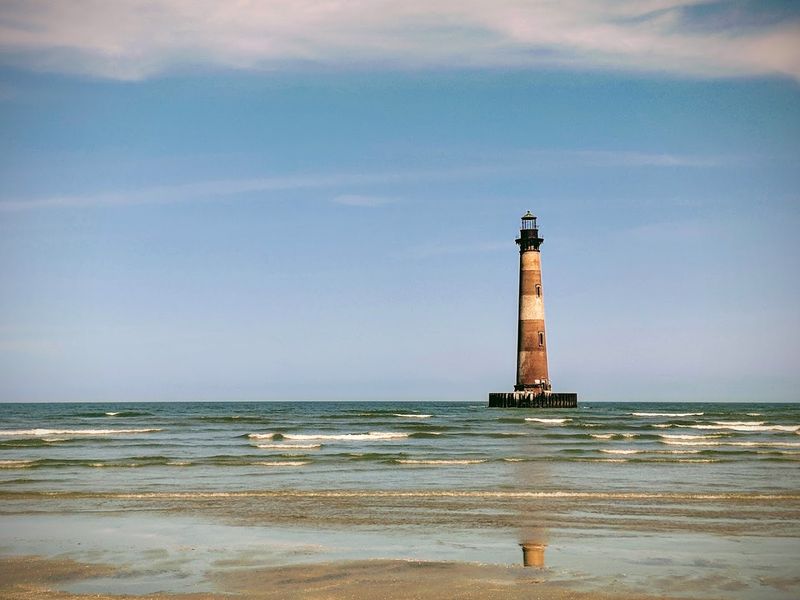
Morris Island is not just a beach. It is a living ecosystem, and spending time there means sharing the space with a remarkable variety of wildlife.
Atlantic bottlenose dolphins are commonly spotted in the waters around the island, often swimming close enough to the shore that you do not need binoculars to enjoy the show. Watching them move through the water against a backdrop of the lighthouse is genuinely one of those moments that sticks with you.
Shorebirds are everywhere. The island sits along important migratory routes, and birdwatchers consistently find it rewarding throughout the year.
Herons, egrets, pelicans, and various sandpipers work the shoreline, and the lack of human activity means they are not particularly bothered by visitors who move quietly and respectfully.
The island itself is a mix of beach, dunes, and maritime shrubs. Driftwood collects along the high tide line in interesting formations, and the landscape has that raw, untouched quality that is increasingly rare along the East Coast.
Dogs are welcome on the island, and many visitors bring their pets along for the boat ride and the beach time.
Camping is not permitted on Morris Island, so all visits are day trips. That actually keeps the ecosystem healthier and the experience more special.
You come, you look, you appreciate, and you leave it the way you found it. That kind of mindful visiting is exactly what a place like this needs to stay as beautiful as it is.
Viewing the Lighthouse From Folly Beach Without a Boat
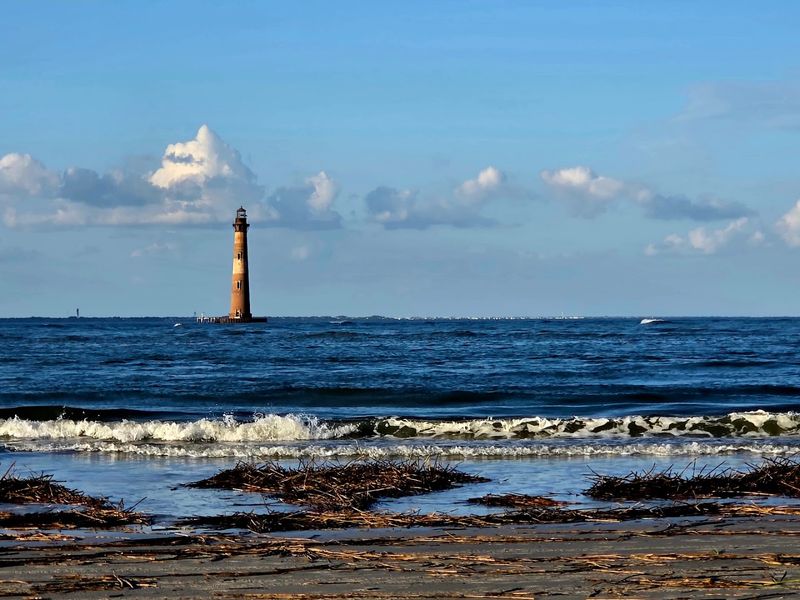
Not everyone has the time or budget for a boat tour, and that is completely fine because the view from land is genuinely impressive. At the far eastern tip of Folly Island, the Lighthouse Inlet Heritage Preserve offers one of the best free vantage points in the entire Charleston area.
You reach it by driving to the end of East Ashley Avenue on Folly Beach, where limited parking is available.
From there, a short walk through maritime shrubs and scattered driftwood brings you out to a quiet stretch of beach facing the lighthouse directly. The tower rises out of the water with no land around it, which makes the whole scene feel slightly surreal.
Photographers especially love this spot at sunrise and sunset, when the light hits the lighthouse at angles that seem almost designed for a great shot.
The walk itself is part of the appeal. The path feels removed from the busier parts of Folly Beach, and by the time you reach the water’s edge, the noise of the town has faded completely.
It is a good reminder that some of the best experiences along the South Carolina coast do not require much planning or expense.
Folly Beach itself is worth some extra time while you are in the area. The town has a relaxed, unpretentious character that pairs well with the kind of slow, observational day that Morris Island tends to inspire.
After an afternoon at the preserve, a walk along the main beach strip feels like a natural and satisfying way to finish the day.
