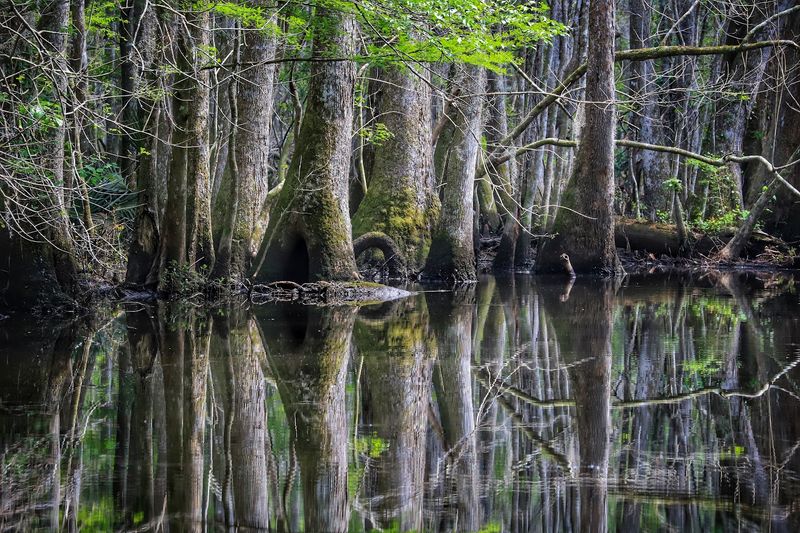
Ancient bald cypress trees, some over 1,500 years old, rise out of still black water like living monuments to a time long before any of us existed. That is what greets you at this South Carolina swamp, a place where the air smells like earth and moss and something wild that is hard to put into words.
I drove down a quiet road toward it, and the trees closed in around me like a curtain being drawn across the modern world. Time seemed to have forgotten to move forward here, and honestly, I am so glad it did.
This swamp holds the largest remaining virgin cypress-tupelo forest on the planet, and standing beside a tree that was already old when the first European explorers landed in the Americas changes something in you.
I sat on a boardwalk and watched the still water reflect the canopy above, turtles sunning on logs, birds calling from somewhere deep in the green.
That quiet is the kind you carry with you.
Ancient Bald Cypress Trees That Have Outlived Empires
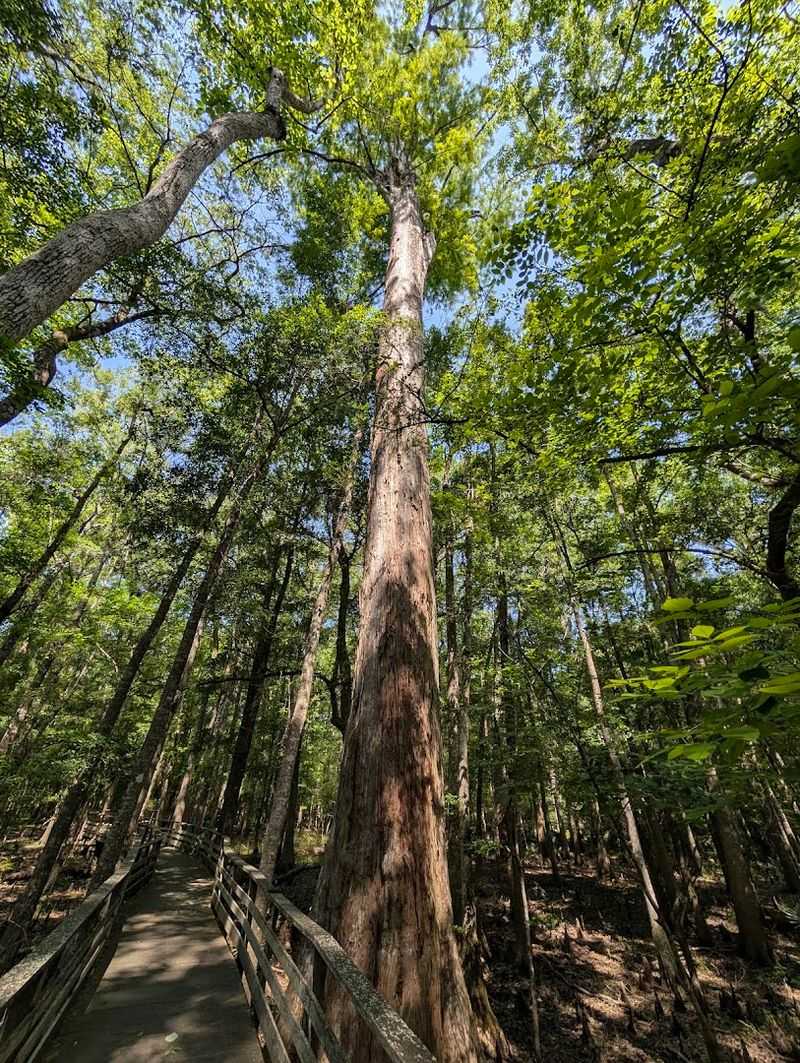
Some of these trees were already centuries old when the Roman Empire was still standing. The bald cypress trees at Francis Beidler Forest are not just big, they are genuinely ancient, with many estimated to be over 1,000 years old and some pushing 1,500 years.
That number is hard to wrap your head around until you are actually standing beside one.
Their trunks flare out at the base like something from a fantasy novel, and the root structures called cypress knees poke up through the dark water around them in clusters that look almost architectural. The bark is deeply ridged and soft-looking, almost like corduroy scaled up to an impossible size.
Francis Beidler Forest protects approximately 1,800 acres of this old-growth forest, which is remarkable because most ancient cypress swamps in the Southeast were logged in the 1800s and early 1900s. This one survived largely because the Beidler family, who acquired the land in the 1890s, chose not to clear-cut it.
The result is a living relic of what the American South once looked like across thousands of miles of coastline and river bottom.
The 1.75-Mile Boardwalk That Feels Like Another World
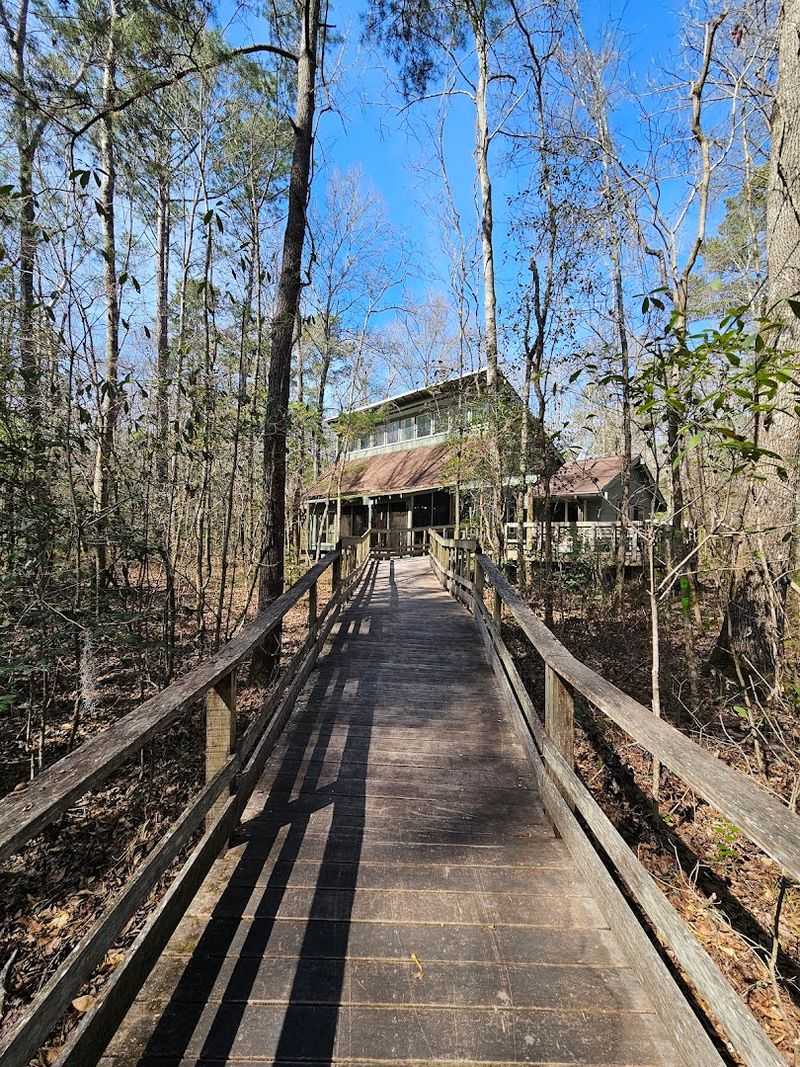
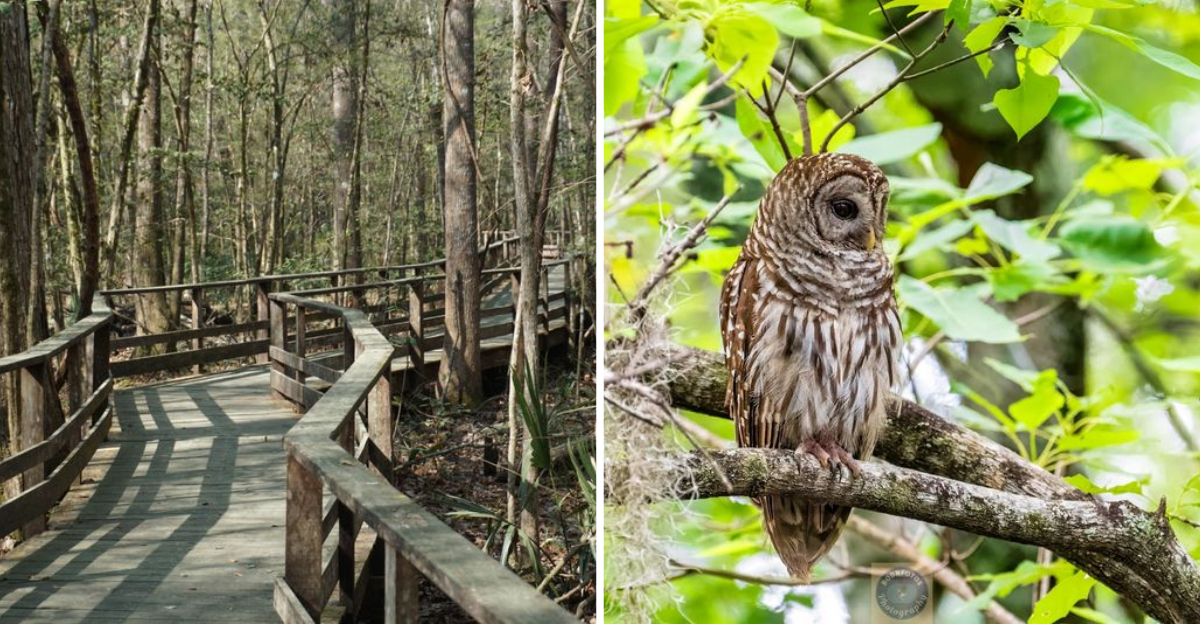
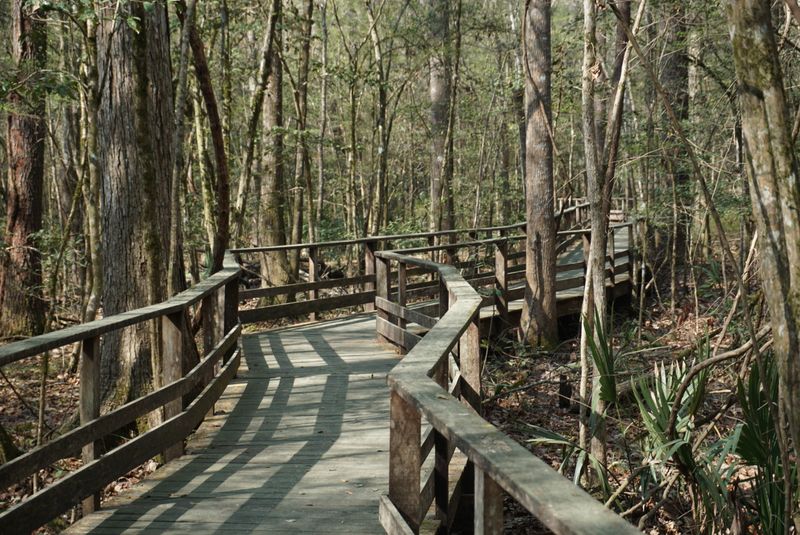
The boardwalk here is not just a path. It is a full sensory experience that starts the moment you step off solid ground and feel the slight give of the wooden planks beneath your feet.
At 1.75 miles long, it is the longest continuous boardwalk in South Carolina, and it loops through the heart of the swamp in a way that feels both safe and genuinely remote.
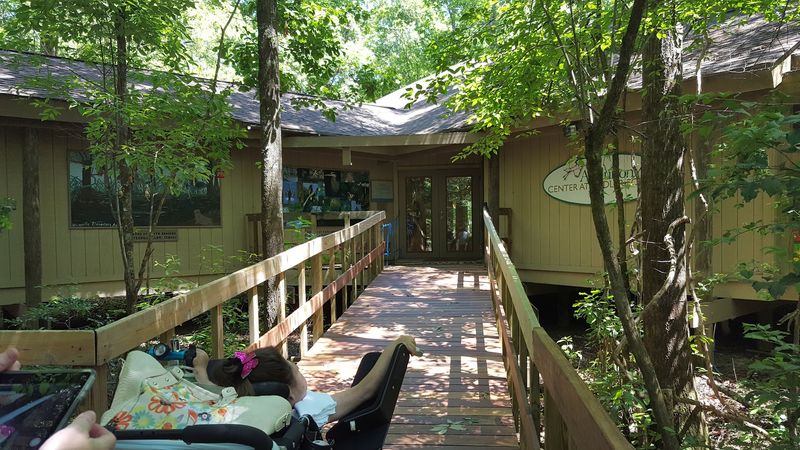
ADA-accessible and well-maintained, the trail is easy enough for young kids and older visitors alike. A few benches are scattered along the route, which is a good thing because you will want to stop and just listen.
The silence out there is remarkable, broken only by birdsong, the occasional plop of something entering the water, and the wind moving through the canopy high above.
Informative signs are posted throughout the boardwalk, covering everything from the biology of cypress knees to the cultural history of the swamp. Reading them does not feel like homework.
They add real context to what you are seeing and make the whole walk feel layered and meaningful rather than just a stroll through trees. Plan for at least two hours if you want to take it all in properly.
Wildlife Encounters You Cannot Plan But Will Never Forget
You never quite know what you are going to see out on that boardwalk, and that unpredictability is a huge part of the appeal. Alligators are spotted regularly, usually floating near the surface or sunning themselves near the base of a cypress tree.
The first time you spot one, your whole body does a little recalibration of where you are and what kind of place this actually is.
More than 140 bird species have been recorded in the preserve, and 52 of those use the swamp for breeding and nesting. The Prothonotary warbler is a particular favorite among birders, a small yellow bird that nests along the boardwalk and is surprisingly easy to spot if you move quietly.
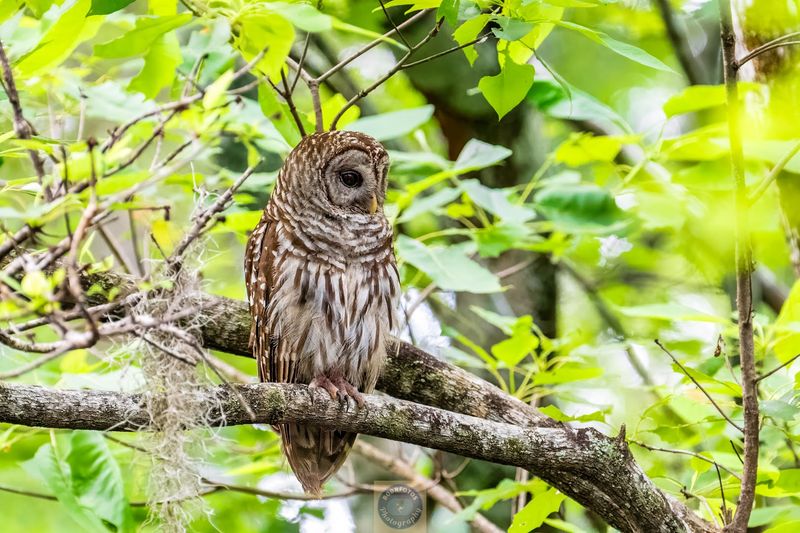
Barred owls call from the canopy, and if you are lucky, you might catch one perched in plain view.
Beyond birds and gators, visitors have reported river otters, deer, multiple snake species, snapping turtles, and a variety of frogs and insects depending on the season. Borrowing binoculars from the visitor center is a smart move, and bringing your own camera with a decent zoom lens will make the whole experience even more rewarding.
Go slowly and the swamp will show you things.
A Conservation Story Worth Knowing Before You Visit
Francis Beidler Forest carries a conservation history that makes visiting feel like more than just a day trip. The land spans over 18,000 acres within the Four Holes Swamp watershed, and it has been recognized as a National Natural Landmark since 1979.
In 2008, it was also designated a Ramsar Wetland of International Importance, placing it alongside some of the most ecologically significant wetlands on the planet.
The National Audubon Society and The Nature Conservancy have both played major roles in protecting and managing the preserve. Their partnership has allowed the sanctuary to expand its trail system, improve visitor facilities, and continue scientific research into swamp ecology.
A new woodland and grassland trail system opened in 2020, adding even more ways to explore the property beyond the main boardwalk.
What makes this conservation story particularly compelling is how the forest survived at all. While logging companies cleared nearly every other old-growth cypress swamp in the region during the late 1800s and early 1900s, the Beidler family held firm.
Their decision to protect the land rather than profit from it created a living archive of what the southeastern United States once looked like before large-scale industrial development reshaped the landscape entirely.
The Cultural and Historical Depth Hidden in the Swamp
The swamp holds history that goes far deeper than its oldest trees. Francis Beidler Forest was designated a site on the National Park Service’s Underground Railroad Network to Freedom program in 2020, recognizing the swamp’s role as a refuge for runaway enslaved people, known historically as Maroons, who lived in the dense, difficult-to-navigate wetlands to avoid capture.
That history gives the place a weight that you feel even before you read the interpretive signs. Swamps throughout the American South served as spaces of resistance and survival, places where the land itself offered protection to those who knew how to live within it.
The cypress trees that tower over the boardwalk today were already massive when those events were unfolding beneath their canopy.
The informational markers along the boardwalk touch on both natural and cultural history, which makes the walk genuinely educational without feeling like a museum tour. Learning that this landscape served as a place of freedom for people fleeing enslavement adds a profound layer to what might otherwise be experienced purely as a nature walk.
It is a reminder that wild places have always been part of human stories, not separate from them.
Seasonal Experiences That Make Every Visit Different
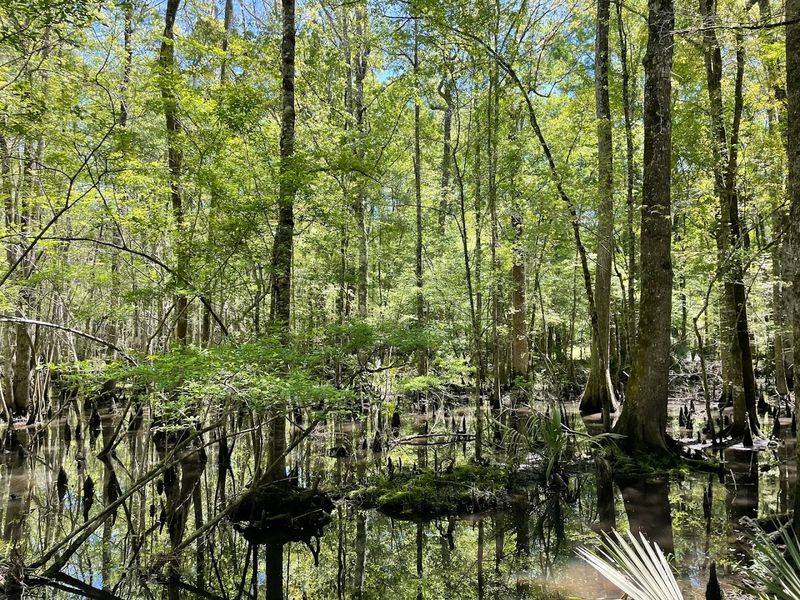
One of the things that keeps people coming back to Francis Beidler Forest is how dramatically the experience shifts depending on when you go. Winter visits tend to be quieter and cooler, with fewer insects and a stark, almost eerie beauty to the leafless trees reflected in the still water.
Some visitors say that is their favorite version of the swamp.
Spring brings an explosion of bird activity, with migratory species passing through and resident birds beginning to nest. The Prothonotary warblers are especially active during this period, and the whole swamp seems to wake up at once.
Fall offers a similar energy shift, with changing colors and noticeably cooler air making the walk genuinely comfortable.
Summer is beautiful but comes with a caveat that regular visitors are quick to share: the insects, particularly large horseflies, can be intense, especially if water levels in the swamp are low. Going early in the morning during summer helps significantly.
The sanctuary also offers seasonal guided programs including canoe trips through the old-growth forest and evening firefly walks, which by all accounts are extraordinary. Checking the calendar on the Beidler Forest website before your visit is absolutely worth the few minutes it takes.
Practical Tips to Make Your Visit Smooth and Memorable
Getting to Francis Beidler Forest requires some commitment because the sanctuary really is off the beaten path. Once you turn onto Sanctuary Road and start winding through the trees, it can feel like you have taken a wrong turn, but staying the course is absolutely worth it.
The drive itself starts to set the mood before you even arrive.
The visitor center is friendly and well-organized, with a gift shop stocked with field guides, nature books, and Audubon merchandise. Staff members are genuinely helpful and happy to point out what has been spotted on the boardwalk recently.
Petey, the resident blue jay ambassador, tends to be a crowd favorite, especially for younger visitors.
There are no food or drink options available on-site, so bringing snacks and plenty of water is a smart move. Restrooms are available at the visitor center.
The sanctuary is open Wednesday through Saturday from 9 AM to 5 PM and on Sundays from 11 AM to 4 PM, so plan accordingly. One Saturday each month offers free admission, which is a great opportunity for first-time visitors.
Parking is limited, so arriving early on busy days is a good idea. The phone number is (843) 487-9988 if you want to check conditions before heading out.
Address: 336 Sanctuary Rd, Harleyville, South Carolina
