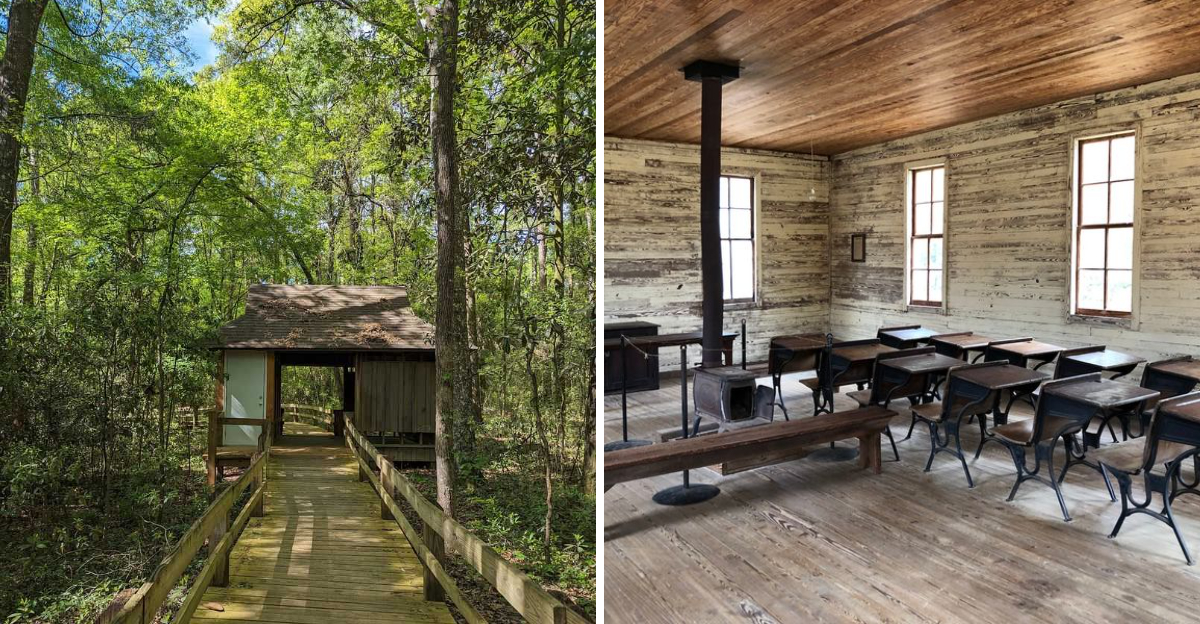
A one-room schoolhouse. A mule-drawn plow.
An old drugstore where you can still get ice cream. Somehow, they all ended up in the same Alabama park.
Start wandering, and the surprises keep coming. You can pass weathered farmhouses while chickens scratch in the dirt, follow a wooden boardwalk over dark wetlands, and peek inside buildings that preserve what everyday life looked like generations ago.
The park covers 150 acres, so there is plenty of room to explore without feeling like you are being shuffled from exhibit to exhibit. Then comes the completely unexpected part: a planetarium.
And if that is not enough to keep everyone interested, turtles gather near the dock and a playground waits nearby. It is a little bit farm, a little bit forest, a little bit museum, and somehow a whole lot of fun.
This park makes history surprisingly easy to wander into.
The 1890s Living History Farm That Still Runs Like a Real Farm
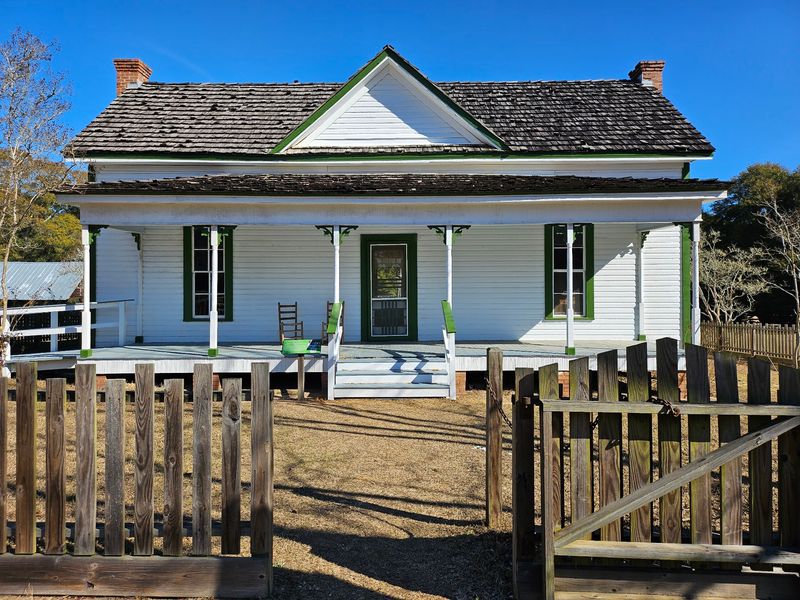
Most historic sites keep their doors roped off. Here, the farm actually works, with crops in the ground, animals in the pens, and seasonal chores carried out the way they would have been more than a century ago.
The centerpiece is the Waddell House, a modest farmhouse furnished to reflect how a Wiregrass family lived in the 1890s. Wooden floors, simple beds, a kitchen built around a wood stove.
Nothing is grand, and that is exactly the point.
Outbuildings scatter across the yard the way they would have on a working homestead. A smokehouse, a syrup shed, storage sheds built from rough lumber that has grayed with age.
Livestock wander their pens nearby, and children tend to press against the fences immediately. Sheep, chickens, and other farm animals make the history feel less like a display and more like an ordinary Tuesday in 1893.
Cotton, sugarcane, and vegetables grow in the fields during the warmer months, which means the view changes depending on when the visit happens. Spring planting looks nothing like autumn harvest.
Interpreters and volunteers often demonstrate skills like cane grinding, butter churning, or open-hearth cooking during special weekends. Ask questions.
The people running these demonstrations genuinely enjoy explaining how things worked before electricity reached rural Alabama, and their answers tend to be far more interesting than any plaque.
A Quarter Mile of Elevated Boardwalk Over Wetlands
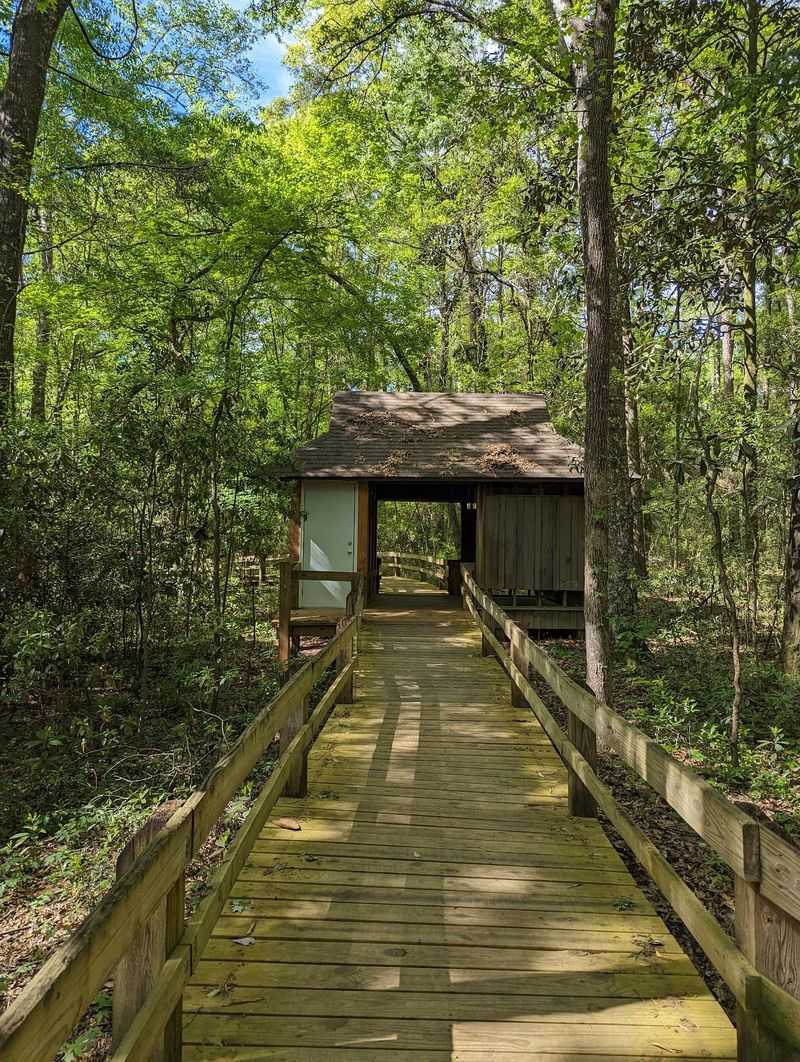
Boards thump underfoot, and the temperature seems to drop a few degrees the moment the trail leaves open ground. The elevated boardwalk stretches roughly a quarter mile through wetlands and hardwood forest, keeping shoes dry while the swamp does its thing below.
Water sits dark and still beneath the railings. Look long enough and something usually moves, whether a frog, a turtle, or a heron picking its way through the shallows.
Shade covers nearly the whole route, which matters enormously in an Alabama summer. Benches and wider platforms appear at intervals, offering places to sit and simply listen to insects, birds, and the occasional splash.
Spiders build webs across open spaces between the trees, so a quick glance upward before ducking through a gap is a reasonable habit. It adds to the atmosphere rather than ruining it.
Birders find plenty here, since the park sits along Alabama birding routes and the mix of wetland and hardwood habitat attracts a solid variety of species. Bring binoculars if that sounds appealing.
Additional dirt trails branch through the forest for anyone wanting a longer walk, though footing can be uneven after rain. Sturdy shoes beat sandals.
The whole loop works well for families, since the boardwalk keeps small children contained and the flat surface handles strollers without much struggle.
Turtle Feeding at the Pond Never Gets Old
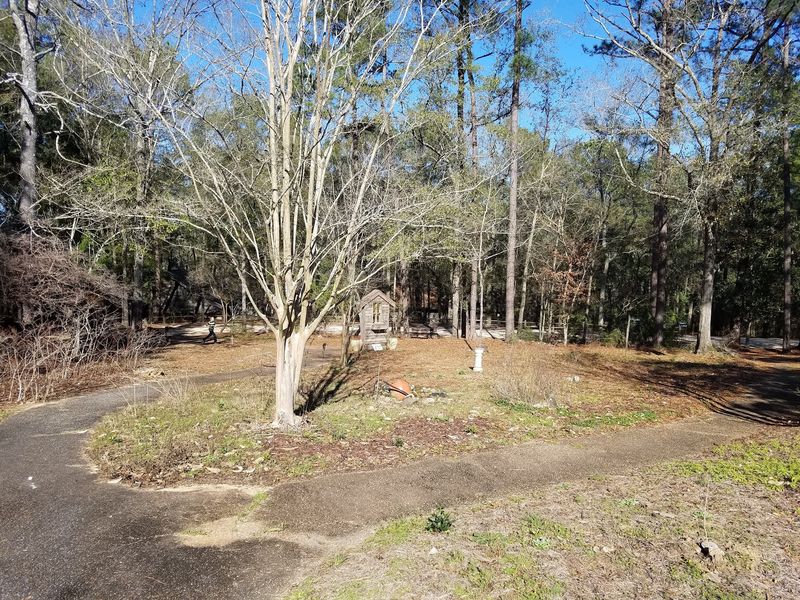
Footsteps on the dock act like a dinner bell. Turtles surface within seconds, necks stretched out, jostling with fish for whatever gets tossed into the water.
Feeding the turtles ranks among the most talked-about small pleasures at the park, and it costs almost nothing in effort. Food is available near the pond area, and the routine is simple enough for toddlers to manage.
What makes it work is the sheer enthusiasm of the turtles. They are not shy.
Shells bump against shells, tails swish, and the surface churns in a way that reliably makes kids shriek with laughter.
Adults tend to stay longer than planned. There is something quietly satisfying about watching the pond come alive on cue.
Around the water, dragonflies skim the surface in warm weather and frogs call from the edges at dusk. The pond doubles as a decent spot for pond-life observation if anyone in the group leans scientific.
Shade trees ring part of the bank, making it a comfortable pause point between the farm buildings and the boardwalk. Pack a snack and sit a while.
Check with staff at the entrance about feeding times and food availability, since supplies and access can vary by season and event schedule. A quick question at the desk saves disappointment later.
Star Shows Under the Planetarium Dome
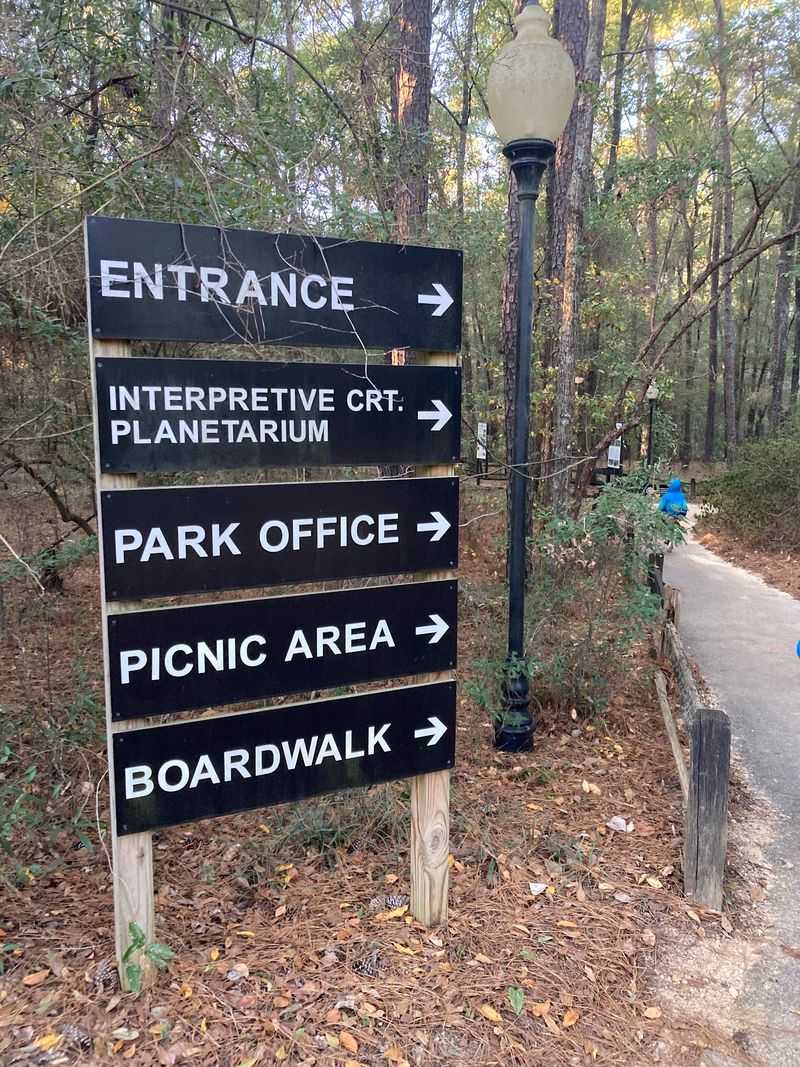
Nobody expects a planetarium on a farm. Yet the dome sits right there among the historic buildings, and it consistently turns out to be a highlight for visitors of every age.
Shows run on a schedule, projecting constellations, planets, and seasonal night skies overhead while seats recline into the dark. The programs lean educational without turning into a lecture.
Staff running the shows clearly enjoy the subject, and questions afterward often lead to extra explanations about what is visible in the southeast Alabama sky that particular month. That kind of small-venue attention is hard to find at bigger science centers.
Interactive elements and space-related exhibits sit nearby, giving kids something to touch and turn while waiting for the next showing.
Timing matters more here than anywhere else in the park. Show times are limited, so checking the schedule by phone or on the park website before arriving prevents missing out entirely.
The dome also provides a genuine break from heat or rain, which makes it a smart card to keep in the back pocket during a summer visit.
Special astronomy events pop up throughout the year, sometimes tied to meteor showers or eclipses. Those evenings draw a different crowd and give the park a completely separate personality after dark.
Arrive a few minutes early for seating.
The Old Country Store and Its Ice Cream Counter
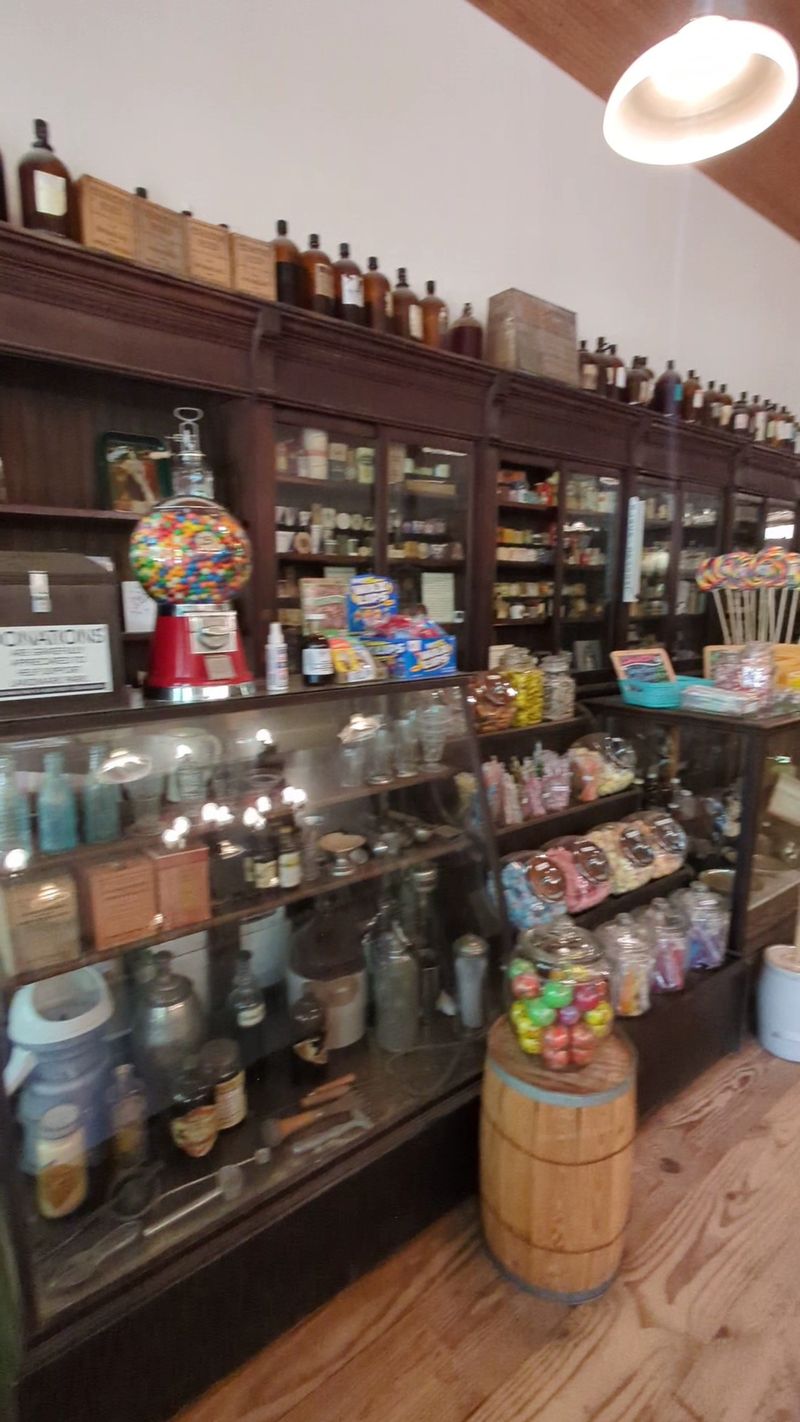
Screen door, wooden floorboards, shelves stacked with tins and jars. The general store recreates a turn-of-the-century drugstore and country shop, right down to the soda fountain counter with its row of stools.
Ice cream gets ordered here more than anything else, and for good reason. Sundaes, floats, and shakes come across the counter, and after an hour in the Alabama sun they taste roughly like a reward for good behavior.
Old-fashioned bottled sodas line the coolers, including sharp ginger varieties that surprise anyone expecting something mild.
Candy in glass jars, penny-style novelties, and small souvenirs fill the shelves. Kids with a couple of dollars can spend a genuinely happy fifteen minutes deciding.
The gift shop area also stocks polished gemstones and rocks packaged with little identification cards, which turns a souvenir into a small lesson.
Staff behind the counter tend to chat, and several have worked at the park for years. They know the building, the products, and the stories behind both.
Hours for the store can shift with the season and with staffing, so it may not always be open during quieter winter weekdays. Worth confirming if ice cream is a non-negotiable part of the plan.
Seating outside makes it easy to eat before heading back toward the trails.
Restored Buildings That Tell the Wiregrass Story
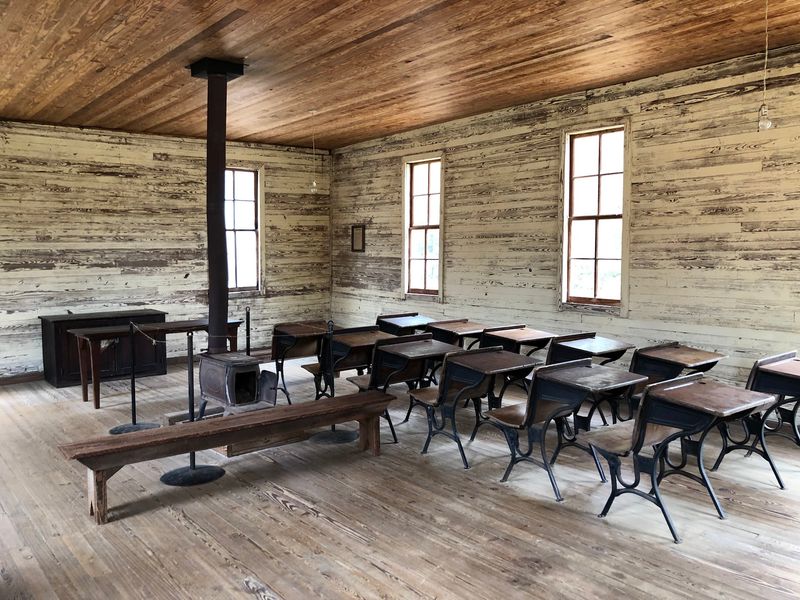
Buildings were moved here piece by piece from across southeast Alabama, saved from collapse and reassembled on park grounds. Each one carries a specific job in the story of Wiregrass life.
The one-room schoolhouse still holds rows of small desks, a chalkboard, and a wood stove. Standing inside makes the logistics of teaching multiple grades in one space suddenly very real.
A country church nearby keeps its wooden pews and plain windows, the kind of structure that served as both worship space and community meeting hall for scattered farming families.
Other structures include a drugstore, a print shop, and various farm outbuildings, all furnished with period tools and everyday objects rather than glossy museum displays.
Landmark Park serves as the official home of the Alabama Agricultural Museum, and its exhibits fill in the wider history of farming across the state. Plows, implements, and machinery trace how the work changed decade by decade.
Interpretive signs explain what each building was and where it came from, but the details worth remembering usually come from asking staff directly.
Plan on at least an hour just for this section if reading and looking closely is part of the fun. Rushing through does the buildings no favors, and the quiet inside them is half the experience anyway.
Festivals, Farm Days, and a Calendar Worth Checking
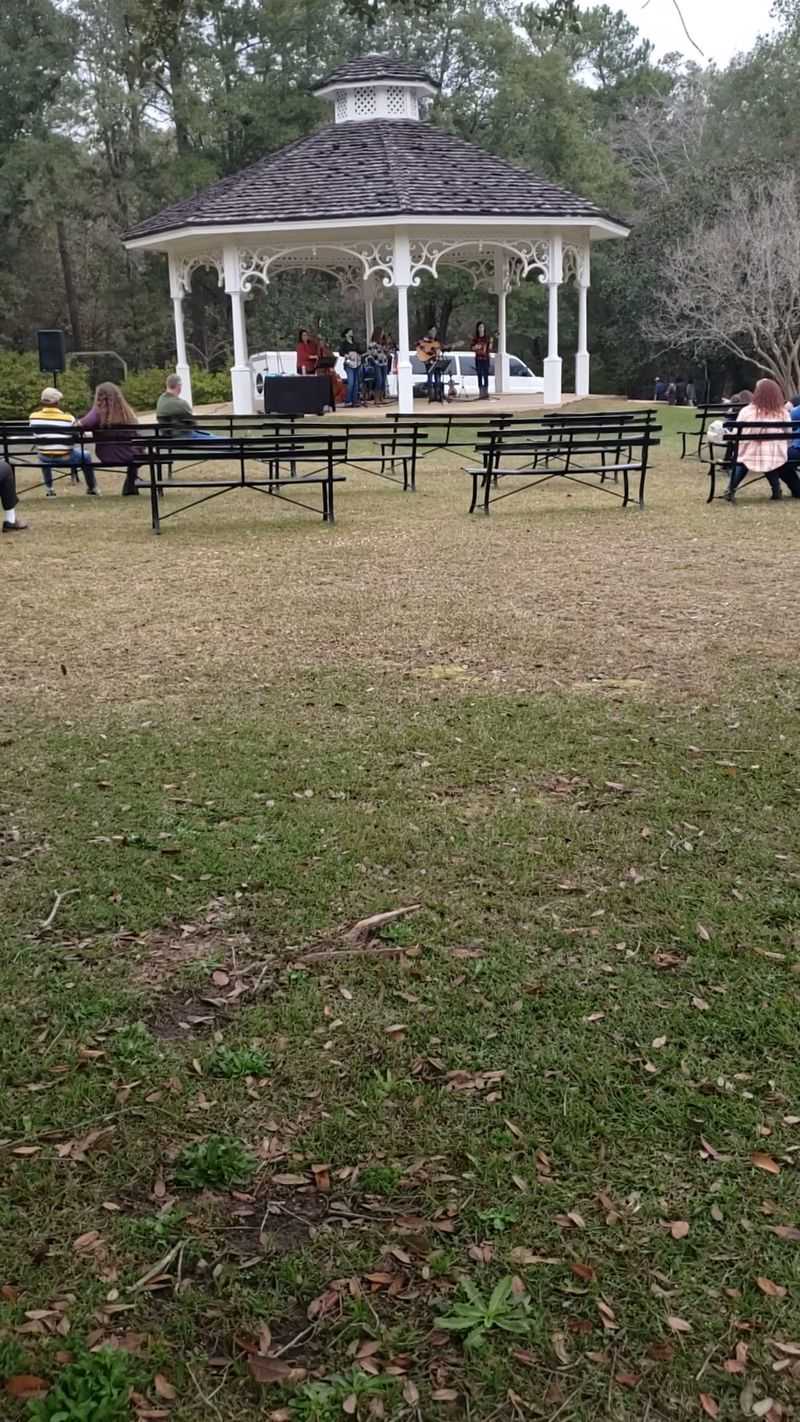
Ordinary weekdays here are peaceful. Event weekends are something else entirely, with music drifting across the fields, vendor tents lining the paths, and demonstration crews working the farm equipment.
Programming runs throughout the year and covers a wide range: agricultural heritage days, quilt shows, seasonal celebrations, harvest events, and outdoor gatherings that fill the pavilion area.
Farm days tend to be the most hands-on. Families get to participate rather than just watch, whether that means grinding cane, helping with a chore, or trying a traditional craft.
Live music shows up regularly, often bluegrass or other roots styles that suit the setting far better than anything amplified and modern would.
Volunteers do a huge amount of the work on these days, and their enthusiasm carries the whole atmosphere. Conversations start easily.
Parking stays manageable even on busy days, and the grounds spread out enough that crowds never feel packed together.
Since the park closes on Sundays and Mondays and operates from nine in the morning to five in the afternoon the rest of the week, checking the schedule ahead of time is essential. Special events sometimes run outside those regular hours.
Address: 430 Landmark Dr, Dothan, AL 36303
