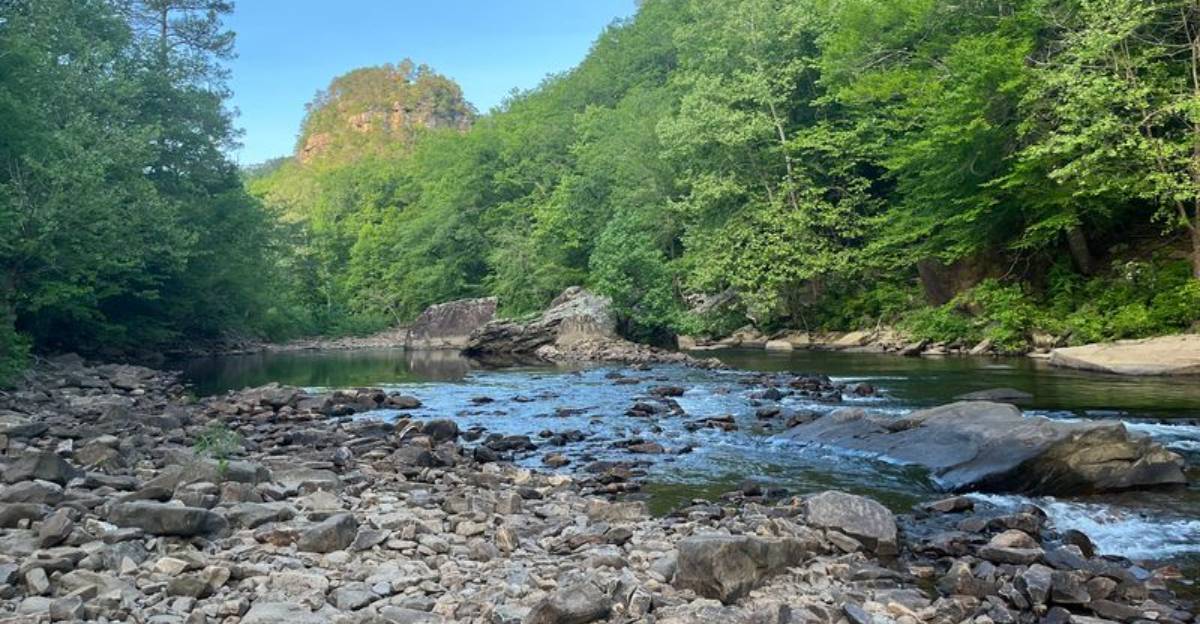
What would make a 600-foot descent even more memorable? How about an abandoned chairlift route leading all the way to the bottom of a massive canyon?
That is exactly what makes this Alabama trail so unusual. The old access road winds past concrete pillars left behind from a chairlift that carried visitors into the canyon in the 1970s, giving the descent a surprising glimpse into the past.
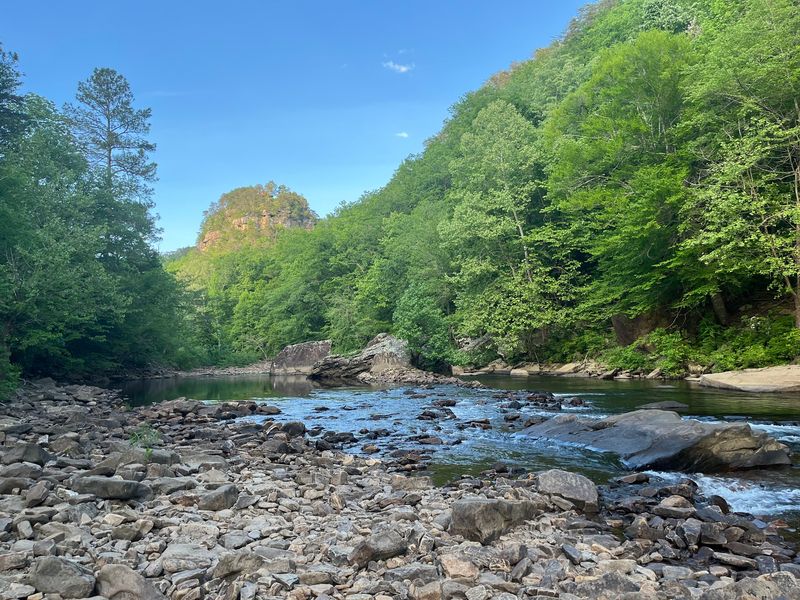
Then the scenery takes over. Massive boulders sit in clear green water beside the Little River, while canyon walls rise hundreds of feet overhead.
By the time you reach the river floor, the sounds from above have faded into the steady rush of the water. Of course, there is one catch.
The 600-foot climb back up is every bit as real as the descent. Ready for a hike where the best part comes after the hard part?
This trail makes the payoff worth every step.
The Overlook That Ends the Scenic Drive
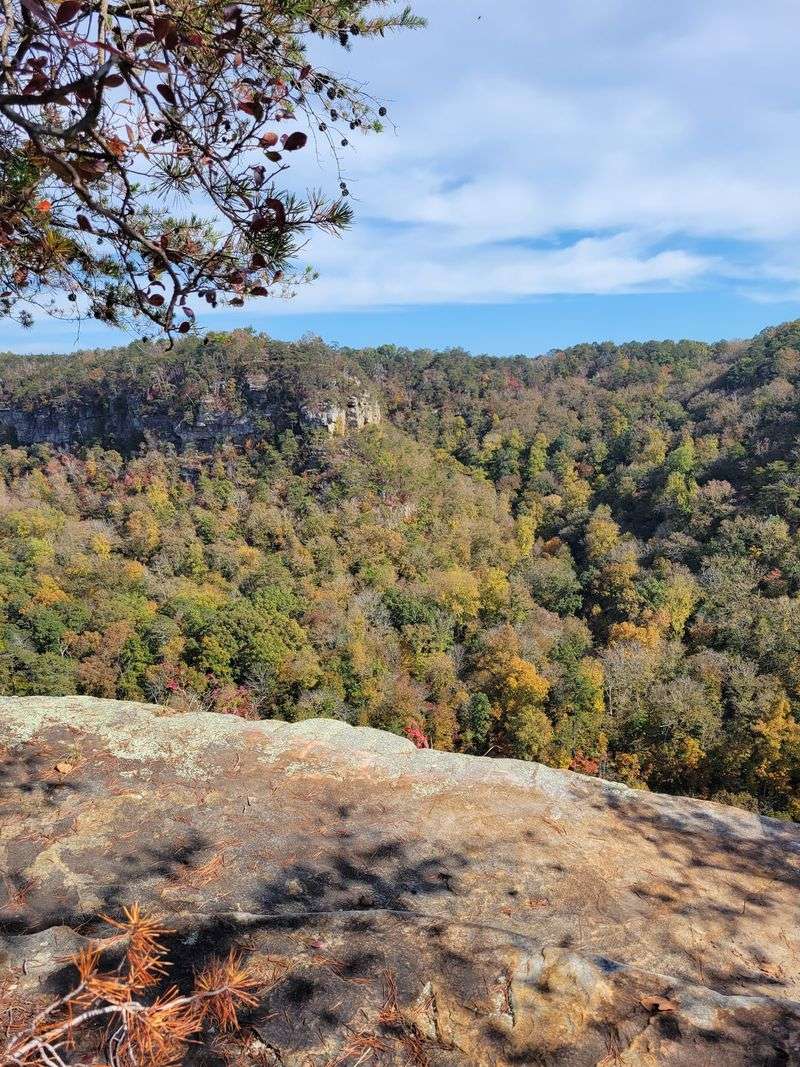
Pull off along Little River Canyon Rim Parkway and the last improved overlook on the route hands over the biggest reward. A short paved path leads from the small gravel pull-off to the rim, where the canyon suddenly opens wide enough to make conversation stop.
Cliffs here rise roughly 600 to 700 feet above the riverbed, and the far wall stretches out in layers of sandstone and forest. Benches sit near the edge, positioned for the kind of sitting that turns into thirty minutes without anyone noticing.
Parking is limited to a handful of spaces rather than a proper lot, which keeps the crowd thin even on pretty weekends. Hawks and vultures ride the thermals below eye level, a strange and wonderful sight when the birds are literally beneath the shoes.
Autumn turns the whole bowl into a patchwork of red, gold, and rust, while spring brings that soft new-leaf green that photographs never quite capture. Winter has its own argument, since bare branches reveal rock formations hidden the rest of the year.
Watch footing near the unfenced viewpoints behind the bench area, especially with children along. There is no railing at every angle, and the drop is immediate.
Even visitors who never touch the trail leave satisfied, which says plenty about the view alone.
A 600-Foot Descent That Means Business
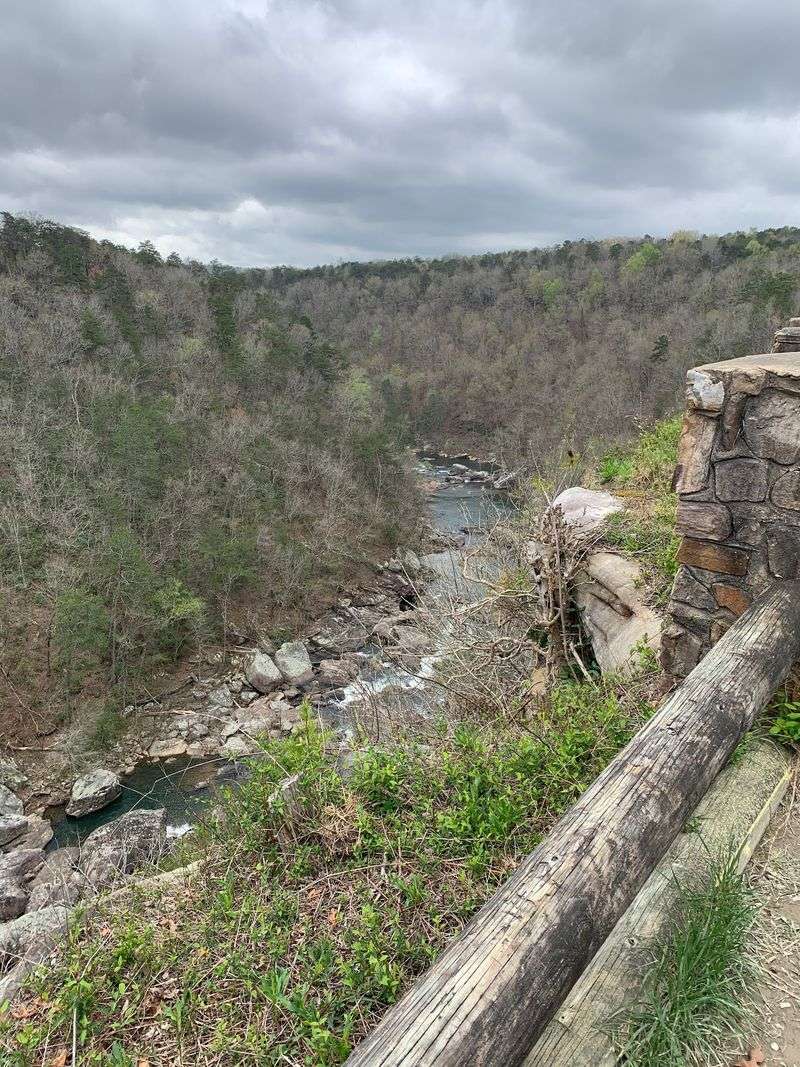
Beside the trailhead sign, a gate marks where the old access road drops off the rim and turns into the Eberhart Trail. From there it is roughly three-quarters of a mile of switchbacks down to the river, and the grade hits about 22 percent in places.
Loose gravel is the main character of this hike. Add washouts, ruts, and rocky patches, and the descent becomes a slow, deliberate shuffle rather than a stroll.
Most hikers report 30 to 40 minutes going down and a similar stretch grinding back up, though nobody comes back up faster than they went down. The return climb has earned a reputation, and it lives up to it.
Shoes with real grip are non-negotiable. Trail runners with worn tread turn the gravel into a slip-and-slide, and trekking poles save knees on the steeper pitches.
Carry more water than seems necessary, particularly in summer humidity, because the climb out drains reserves fast. Cell service inside the gorge ranges from spotty to completely absent, so tell someone the plan before heading down.
Small children and pets generally struggle here, thanks to the pitch and the boulder scrambling near the bottom. Fit hikers who pace themselves, though, find the whole thing surprisingly doable.
Concrete Ghosts of Canyonland Park
Halfway down, the forest starts handing over clues. Blocky concrete pillars appear among the trees, mossy and cracked, looking far too engineered for a wild canyon floor.
Those footings once held a 1,500-foot chairlift that carried visitors 600 feet into the gorge. The ride belonged to Canyonland Park, an attraction that ran from 1970 to 1973 and made a second short run between 1982 and 1985 before closing for good.
Near the bottom, other fragments turn up: the shell of an old rock concession building, scattered picnic tables, and bits of foundation slowly disappearing under leaf litter. Vines have claimed most of it.
There is something quietly fascinating about seeing an amusement park lose an argument with a forest. Fifty-odd years is nothing geologically, yet the wilderness has already swallowed most of the evidence.
Photographers love these ruins, especially in soft morning light when the concrete goes gray-green against the ferns. The contrast between engineered angles and wild growth makes for striking images.
Leave everything where it sits, since the ruins are part of a national preserve and part of the story. Poking around is fine, but the structures are unstable and not built for climbing.
History rarely comes packaged this strangely.
Boulders, Green Water, and a Reward at the Bottom
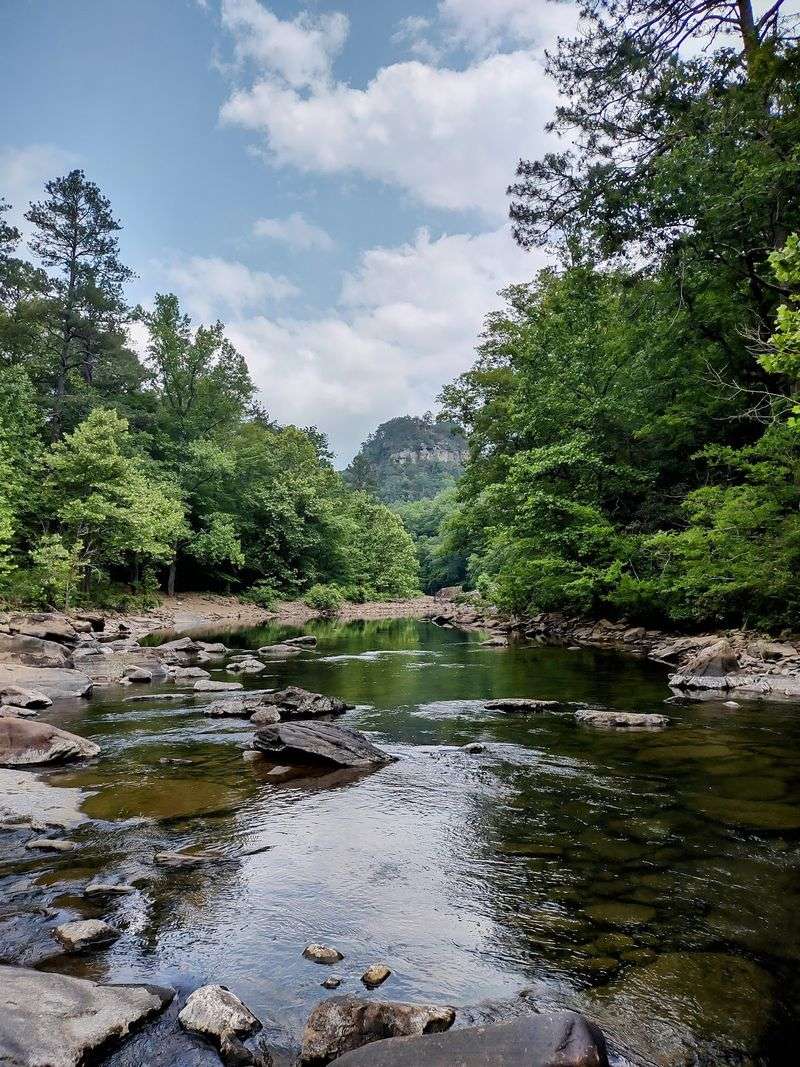
The last few steps off the trail deliver a completely different world. Air temperature drops, the light softens, and the Little River slides past between boulders large enough to make a person feel small.
Some of those rocks rival buses in size, sculpted smooth by water over unimaginable stretches of time. Families climb them, jump from the lower ones into deeper pools, and stretch out to dry in patches of sun.
Calm sections here work beautifully as swimming holes when water levels behave. After a sweaty descent, that first cold shock is worth the whole hike on its own.
Bring a packed lunch. Eating beside the river with canyon walls rising overhead beats almost any restaurant patio in the state, and the soundtrack costs nothing.
When flow is low, wandering upstream or downstream over the rocks opens up hidden coves and small rapids that most visitors never see. Footing on wet stone gets slick fast, so move carefully and skip the scrambling after heavy rain.
Because the trail sees light traffic, solitude is common. Plenty of hikers report having the entire riverbed to themselves on a weekday.
Pack out every scrap brought in, and the next group gets the same quiet welcome.
Wildlife That Actually Shows Up
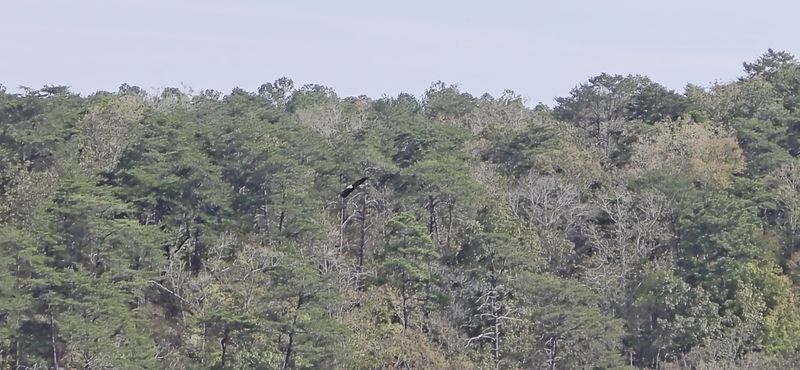
Quiet trails tend to produce better wildlife sightings, and Eberhart Point proves the point regularly. Little River Canyon National Preserve supports 147 bird species, 35 mammal species, 40 kinds of fish, and 28 species each of reptiles and amphibians.
Gray squirrels and white-tailed deer show up constantly along the upper trail. Bobcats, black bears, river otters, foxes, raccoons, opossums, skunks, and armadillos also live here, though most stay out of sight.
Six bat species emerge as light fades over the gorge, cutting loops through the dusk air. Raptors soaring below the rim are one of the signature sights at the overlook.
Three venomous snakes call the canyon home: copperhead, cottonmouth, and timber rattlesnake. They want nothing to do with hikers, so watch where hands and feet land around boulders and keep a respectful distance if one appears.
Plant life keeps pace with the animals. Rhododendron and mountain laurel explode into bloom during late spring and early summer, while ferns, mosses, and wildflowers layer the shaded slopes.
Rare species get protection here too, including the green pitcher plant, Harperella, and Kral’s water-plantain, an aquatic herb tied to this river system.
Move slowly and look often. The canyon rewards patience more than speed.
Rock Layers Written 300 Million Years Ago
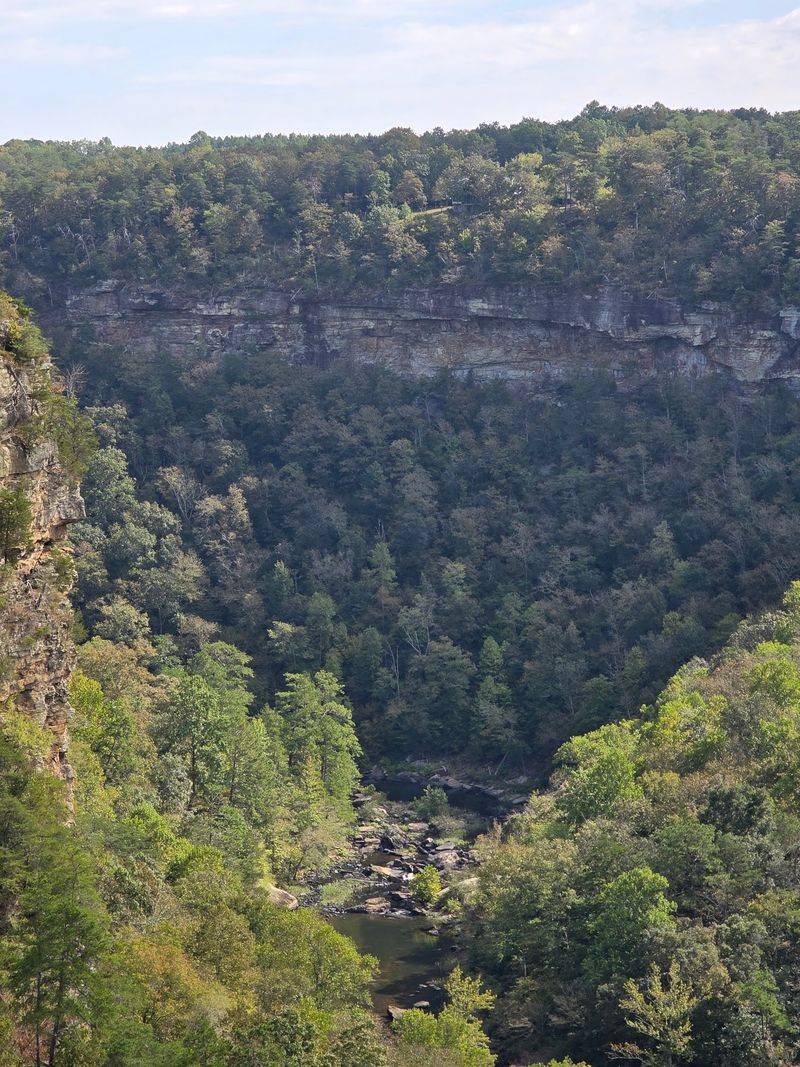
Look closely at the cliff faces and the canyon starts reading like a book. Exposed walls here belong to the Pottsville Formation, made of quartz-rich sandstone, conglomerate, shale, coal, and mudstone stacked in visible bands.
Lower layers formed in ancient prodelta and back-barrier settings, while the upper beds came from a river-fed deltaic system. Each stripe represents an environment that vanished long before anything resembling a mountain existed here.
The gorge itself owes its shape to the Alleghanian orogeny, a mountain-building event in the southern Appalachians roughly 300 million years ago. Continental collision, uplift, and folding produced the Lookout Mountain syncline, a U-shaped downward fold in the rock.
Water found that fold and got to work. Over an unfathomable stretch of time, the Little River carved through resistant sandstone to create one of the deepest canyons east of the Mississippi.
What makes it unusual is the setting. A river running along a mountain plateau before plunging into a gorge is not something the Southeast offers in many places.
Standing beside a wall of layered stone at the canyon floor puts human timescales in perspective in about four seconds. Geology students visit for exactly this reason, though no coursework is required to appreciate it.
Making It a Full Day on the Rim Parkway
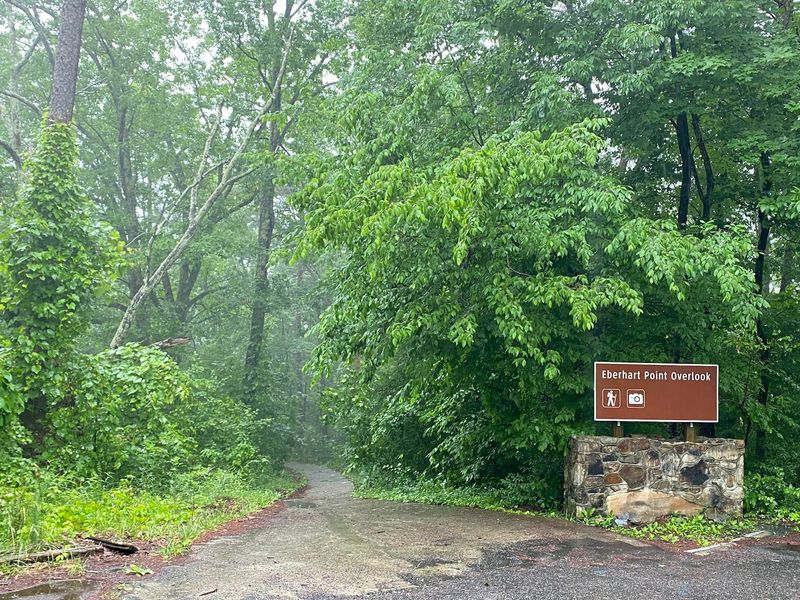
Eberhart Point works best as one stop among several rather than a solo destination. The scenic byway strings together overlook after overlook, and each pull-off frames the gorge from a different angle, so stopping at all of them is genuinely worth the extra time.
Little River Falls sits at the head of the canyon where Highway 35 crosses the water, marking the dramatic start of the gorge. DeSoto Falls drops 104 feet on the West Fork, and Grace’s High Falls plunges 133 feet as the tallest waterfall in Alabama, best after steady rain.
Easier walking exists too. The Beaver Pond Trail and paths around Canyon Mouth Park suit families or anyone saving their legs for another day.
Experienced kayakers tackle the river when levels allow, facing rapids rated Class III through VI. Climbers and rappellers work the sandstone walls, adding tiny moving dots to the cliff faces.
Motorcyclists and Jeep drivers love the parkway for obvious reasons, and autumn turns the whole route into a color show. Stop at the visitor center first for a map, since signage on side roads can be sparse.
Start early, pack food and water, and let the day stretch.
Address: 4322 Little River Trail NE Suite 100, Fort Payne, AL 35967
