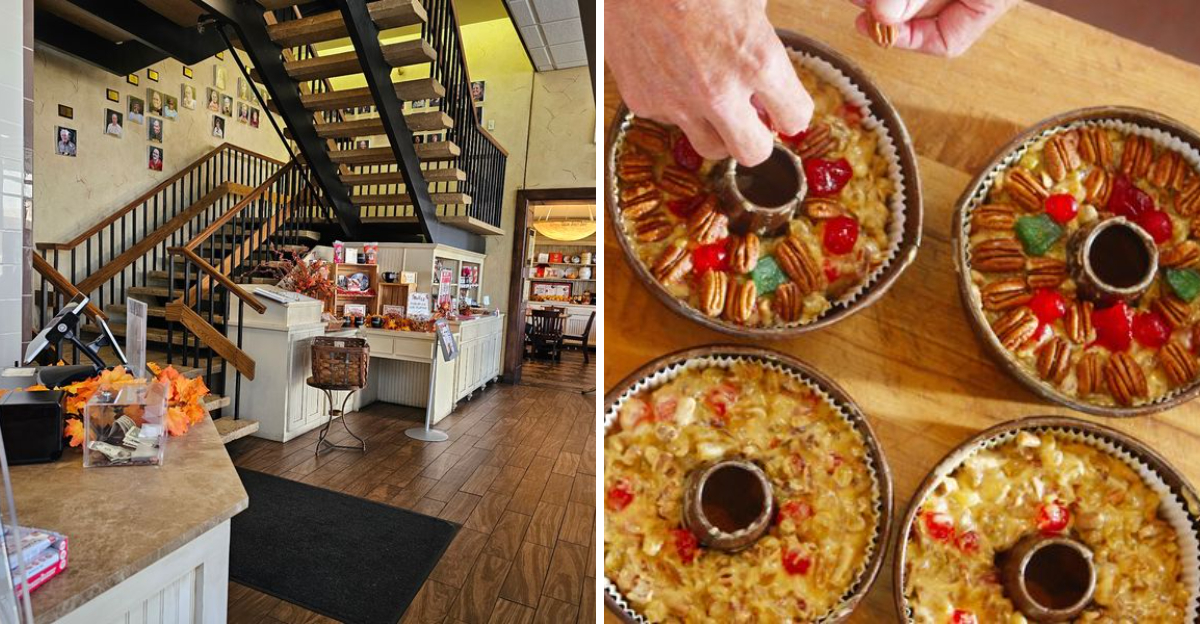
Fruitcake has spent decades being the punchline of holiday jokes, which makes it especially funny that one Texas bakery built a 130-year legacy around proving people will absolutely buy the stuff when it is done right.
The business began in 1896 with a German baker and his fruitcake recipe, and while the bakery has changed locations over the years, its current downtown home has been in use since 1967.
Those famous cakes are still the headliners, packed with fruit and pecans and shipped far beyond Texas, alongside pies, cookies, pecan cakes, and other baked distractions.
Any bakery that can keep fruitcake relevant for more than a century deserves at least a little respect, especially considering half of us cannot keep leftovers interesting until Tuesday.
A Bakery That Started With A German Baker In 1896
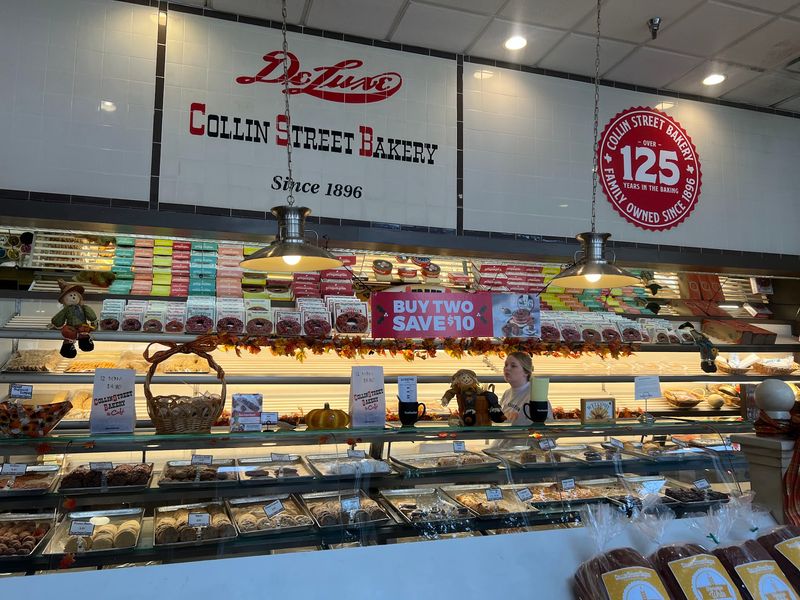
The story here goes back to 1896, when August Weidmann, a baker from Wiesbaden, Germany, teamed up with a local businessman named Tom McElwee. Weidmann brought Old-World recipes with him across the ocean.
One of those recipes was for fruitcake, and it caught on fast in this small Texas town.
The first shop opened on Collin Street, which is where the name comes from, even though the bakery no longer sits on that street. By 1906 the business had outgrown its space and moved to a bigger two-story building at 6th and Main.
McElwee, who apparently had ambition to spare, put an exclusive hotel on the second floor right above the ovens.
Guests slept over the smell of baking cake. That detail alone makes the whole thing worth reading about.
What I find genuinely impressive is that the recipes did not get modernized into something unrecognizable. The bakery still uses methods that are more than 125 years old, and it remains family-owned rather than swallowed up by a corporation.
For anyone who likes food history, knowing the timeline before visiting changes the experience. A slice of cake tastes different when you understand it descends from a recipe someone carried in their head from Germany to Navarro County.
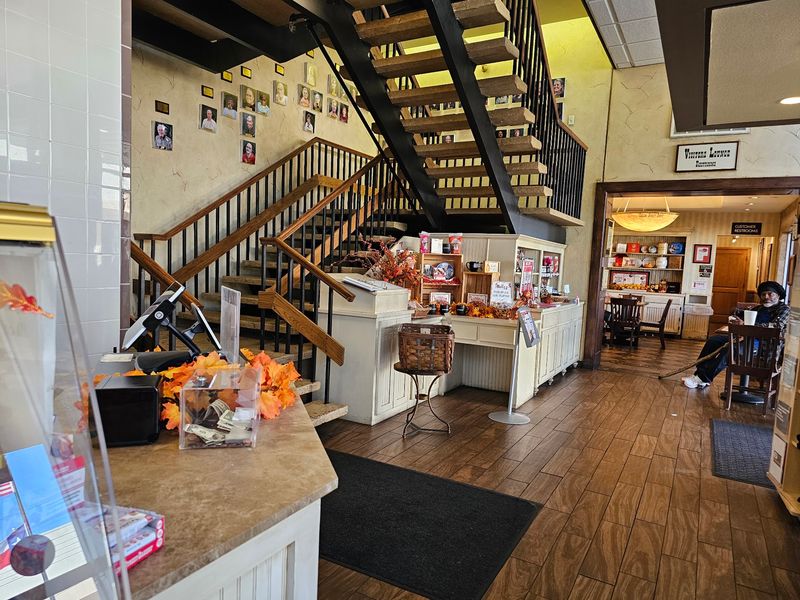
Ask about the history while you are there. Staff members are used to curious visitors, and the walls hold photographs worth a slow look.
The 1967 Building in Corsicana
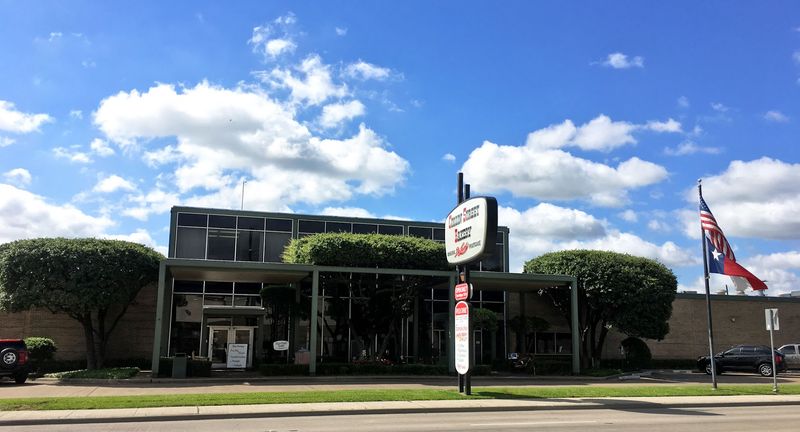
The main bakery and cafe opened in 1967, and it does not try to look fancy. Wide parking lot, big practical building, clear signage.
Function over flash, and honestly that suits the place.
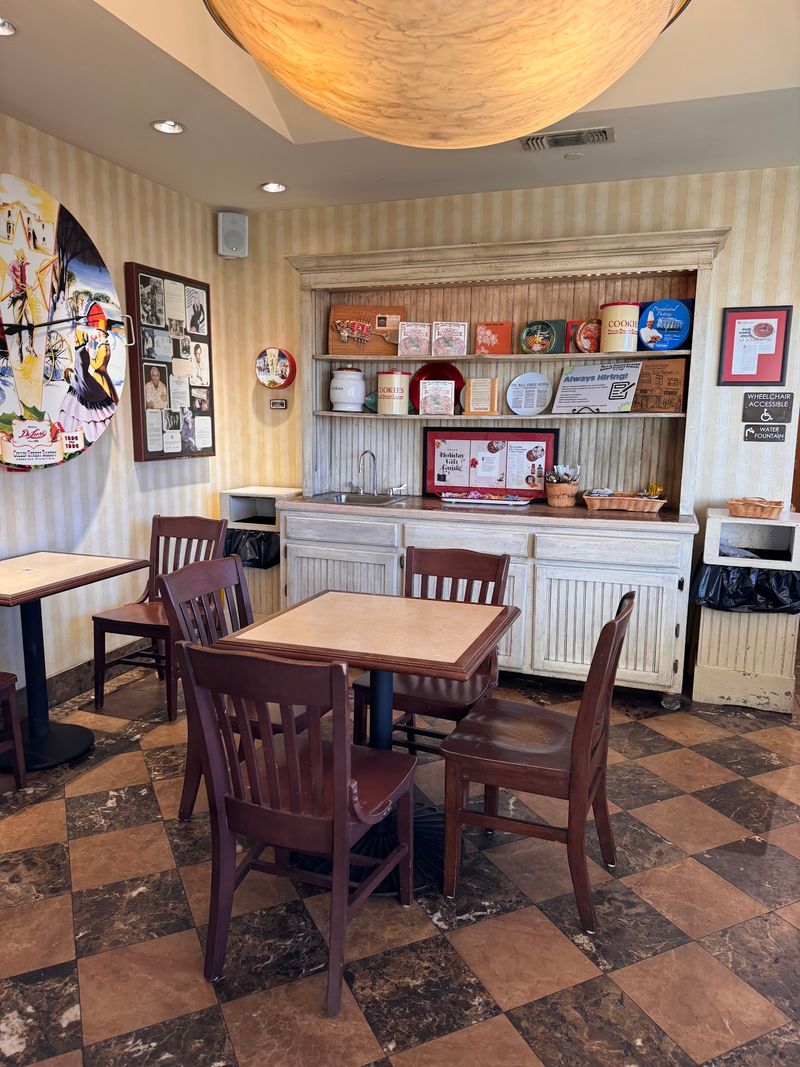
Inside, the room opens up much more than the exterior suggests. Shelves and cases stretch across the space, holiday tins stack into towers, and there is enough room to wander without bumping elbows with other shoppers.
The layout gives the feeling of a working facility that happens to welcome the public, rather than a boutique built for photographs.
Parking is easy, which sounds like a small thing until you have circled a downtown block three times looking for a spot. Families with kids and travelers with dogs waiting in the car both benefit from pulling right up near the entrance.
The building has served generations of Corsicana residents at this point. Grandparents who came for birthday cakes now bring grandchildren for cookies, and that kind of continuity is rare in food retail.
Give yourself more time than a quick errand would require. Between reading labels, sampling, and deciding what to ship home, most visitors settle in for a while.
Note that this location is separate from the historic downtown bakery, so check which address you are heading toward before setting off. Both matter to the story, but they are not the same stop.
Free Samples Waiting Near The Front Door
Complimentary samples are part of the routine here, and they are not a stingy crumb on a toothpick. Actual slices, set out for anyone who walks in.
The DeLuxe fruitcake usually leads the lineup.
That first taste is what converts skeptics. The cake is dense with pecans, sweet without being cloying, and nothing like the dry brick that fruitcake jokes are built around.
Other baked goods rotate through the sample tray too, depending on what came out of the ovens that morning.
Trying before buying matters more than usual at a place like this, because the fruitcake is a genuine commitment. These are not impulse cookies.
Once tasted, though, the decision gets much easier, and plenty of visitors end up buying several to send out as gifts.
The sampling setup also makes the shop unusually kid-friendly. Children who would normally protest at the word fruitcake tend to change their minds after one bite of pecan-heavy sweetness.
Take a moment near the tray to actually pay attention to the texture. The pecan pieces are large and plentiful, which explains a lot about why this cake built a national reputation.
Go in with an open mind. The samples do the persuading better than any sign or slogan possibly could, and they cost nothing but a few minutes of your time.
Watching The Baking Through The Viewing Areas
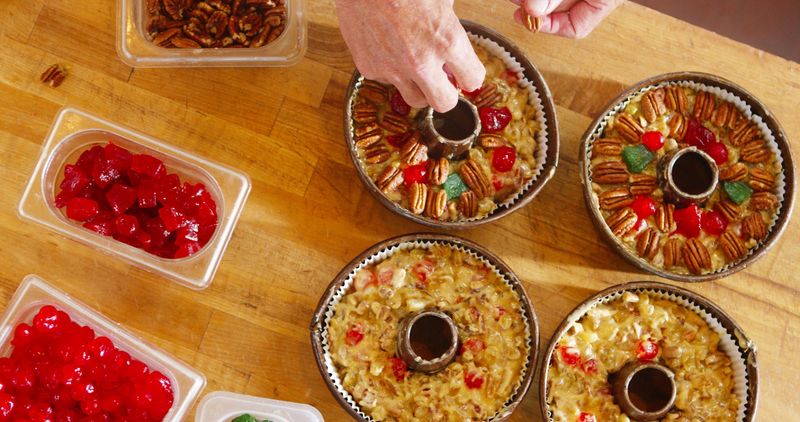
Glass viewing areas let visitors look in on bakery operations, and it is far more absorbing than expected. Trays, pans, racks, motion.
Whether the lines are running depends on the day and the staffing, so timing plays a role.
Weekday mornings tend to offer the best odds of catching real activity. Holiday season ramps everything up, since fruitcake production runs hardest in the fall and early winter when mail orders pour in from around the world.
What struck me most was the amount of handwork still involved. Pecans get arranged, batter gets portioned, cakes get handled by people rather than machines doing every step.
For a product shipped internationally, the process feels surprisingly personal.
Kids press their noses to the glass, and frankly so do adults. There is something satisfying about seeing where food actually comes from instead of just picking it off a shelf.
During the holidays, tours of the downtown Corsicana bakery and fruitcake factory become available, which goes deeper than the viewing windows allow. Anyone planning a trip specifically for that should call ahead to confirm schedules.
Bring patience and a little curiosity. Even a few minutes of watching gives context that makes the cake in your hands feel earned rather than mass-produced, and that shift in perspective is worth the stop on its own.
What Actually Goes Into The DeLuxe Fruitcake
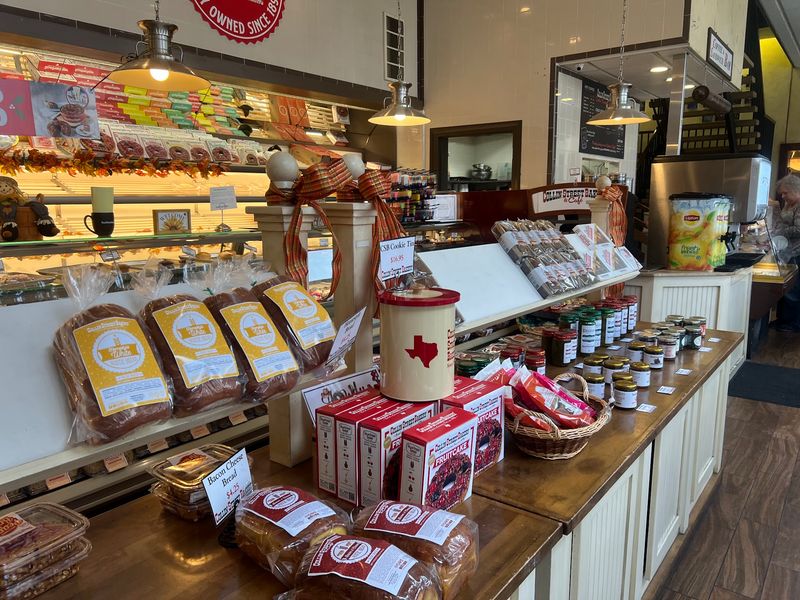
Twenty-seven percent of the DeLuxe fruitcake is native pecans, and that single number explains most of its appeal. Nuts, not filler.
The rest of the ingredient list reads like a small world tour.
Golden sweet pineapple and papaya come from the bakery’s own farms in Costa Rica, which means the company controls fruit quality from the ground up. Red cherries are sourced from Oregon and Washington State.
Pure clover honey and plump golden raisins round things out.
Nothing in there sounds like a shortcut, and the taste reflects that. The fruit stays soft and identifiable rather than dissolving into anonymous sweetness, and the honey keeps the whole cake moist.
Understanding the components helped me appreciate why this version escaped fruitcake’s bad reputation. Cheap fruitcakes lean on dyed candied peel and dry crumb, while this one leans on pecans and real fruit.
Slice it thin. The density means a small piece satisfies, and a single cake stretches across a lot of coffee breaks.
Storage is straightforward, and the cake keeps well, which is exactly why it became a shipping product in the first place. Anyone buying more than one might consider keeping a spare hidden away for unexpected guests.
Read the label while you are in the shop. The specifics make a good conversation starter when the cake eventually lands on a holiday table somewhere far from Texas.
Circus Performers Turned It Into A Mail Order Legend
Here is the detail that makes this bakery’s history genuinely fun. Traveling circus performers put it on the map.
Entertainers passing through Corsicana, including members of the Ringling Brothers Circus troupe, discovered the fruitcake and started ordering it by the dozen.
They had cakes shipped as gifts across the United States and over to Europe. Word spread through performance circuits and social networks that had nothing to do with Texas, and orders kept arriving by mail.
The bakery had not planned to become a shipping operation. Demand simply forced it, and the result was one of the earliest mail-order food businesses in the country.
The old location at 6th and Main also drew names worth mentioning. Opera singer Enrico Caruso, actor Will Rogers, baseball figure John J.
McGraw, and circus owner John Ringling all passed through, and the hotel above the bakery made that possible.
Imagine a Texas town of that era hosting an opera star who then tells friends about the local fruitcake. That is how reputations were built before advertising budgets existed.
Distribution is still tightly controlled, sold only through the bakery or by mail rather than scattered across grocery shelves. Scarcity keeps the mystique alive.
Learning this backstory before visiting adds a layer to the trip. The cake stops being a novelty and starts feeling like a piece of American food history you can actually taste.
The Cafe Counter And A Reason To Sit Down
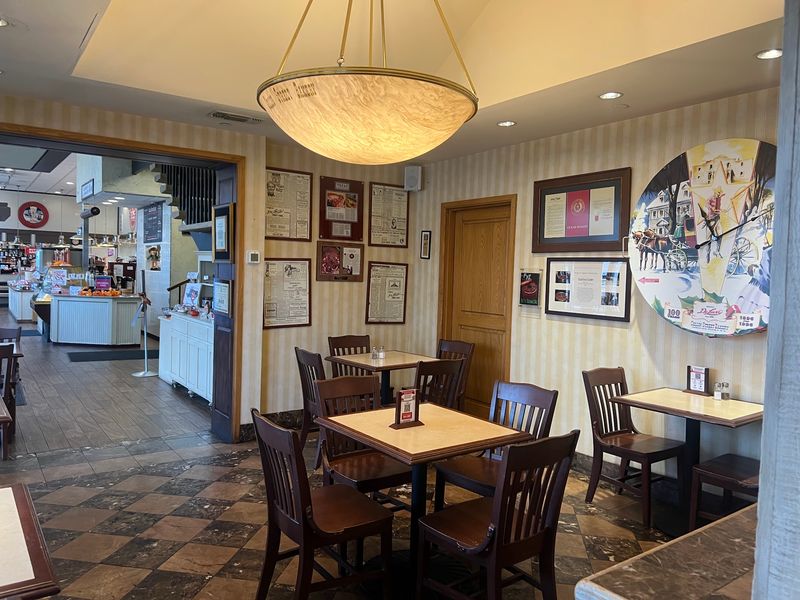
Beyond the retail floor sits a cafe, and skipping it would be a mistake. Sandwiches, pastries, coffee.
Simple, honest food that fits the setting without trying to impress anyone.
The cafe turns a quick shopping stop into an actual meal break, which matters if Corsicana is a waypoint on a longer drive. A sandwich and coffee cost less than highway fast food and taste considerably better.
Seating gives visitors a chance to slow down and take in the room. Locals come through for lunch, travelers filter in with maps and shopping bags, and the mix keeps the atmosphere lively without getting loud.
Coffee here pairs naturally with whatever pastry catches your eye at the counter. My advice is to order the sandwich first and treat the sweet thing as a separate decision, otherwise the sugar wins and lunch never happens.
Hours generally run from 7:00 AM to 5:30 PM Monday through Saturday, with extended hours on weekends, and 12:00 PM to 6:00 PM on Sundays. Early risers can grab breakfast pastries before the shop fills up.
Holiday season brings bigger crowds, so arriving outside peak lunch hours makes for a calmer visit.
Treat the cafe as part of the destination rather than an afterthought. Sitting down with fresh coffee inside a bakery this old is a small pleasure that travels well in memory.
Cookies, Pies, Pecan Treats And Gift Tins Worth Room In The Trunk
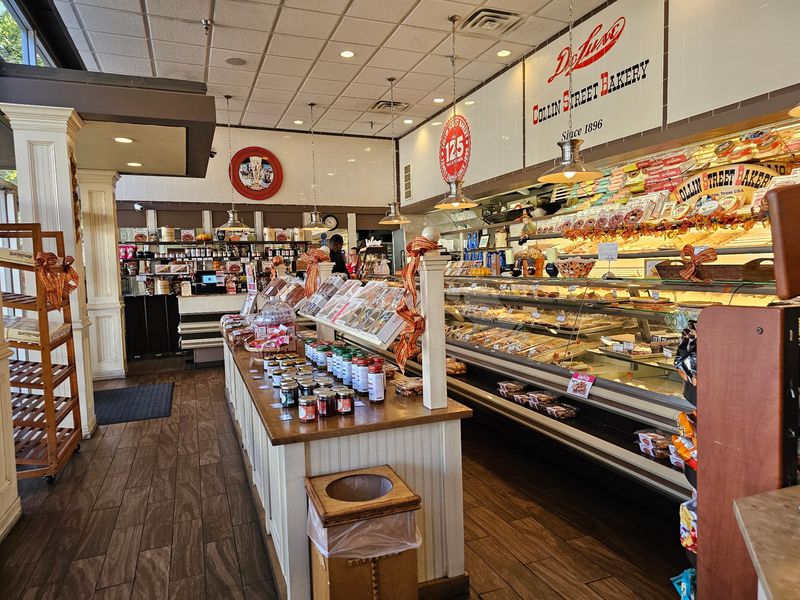
Fruitcake gets the headlines, but the shelves hold plenty more. Cakes, pies, cookies, pecan treats, gift tins.
The variety surprised me, since the bakery’s reputation rests so heavily on one product.
Pecan items deserve special attention given how central pecans are to the whole operation. Texas takes its pecans seriously, and this shop reflects that pride in more than one form.
Gift tins line up in stacks, decorated and ready to ship or hand over directly. For anyone hunting a Texas souvenir that is not a keychain, these solve the problem neatly.
Buying for other people is genuinely practical here, since the bakery has been shipping food across the country for well over a century. The packaging is built for travel.
Bring a cooler if the drive home is long and the weather is warm, especially for pies. Cookies and tins handle heat better.
Prices sit at a level that makes buying two or three feel reasonable rather than extravagant, which is dangerous for anyone with limited trunk space.
One tip worth following is to shop before eating rather than after. Decisions made on a full stomach tend to leave regret at the checkout counter.
Plan the visit as a real stop, not a five-minute detour. Corsicana rewards travelers who linger a little.
Address: 401 W 7th Ave, Corsicana, TX 75110
