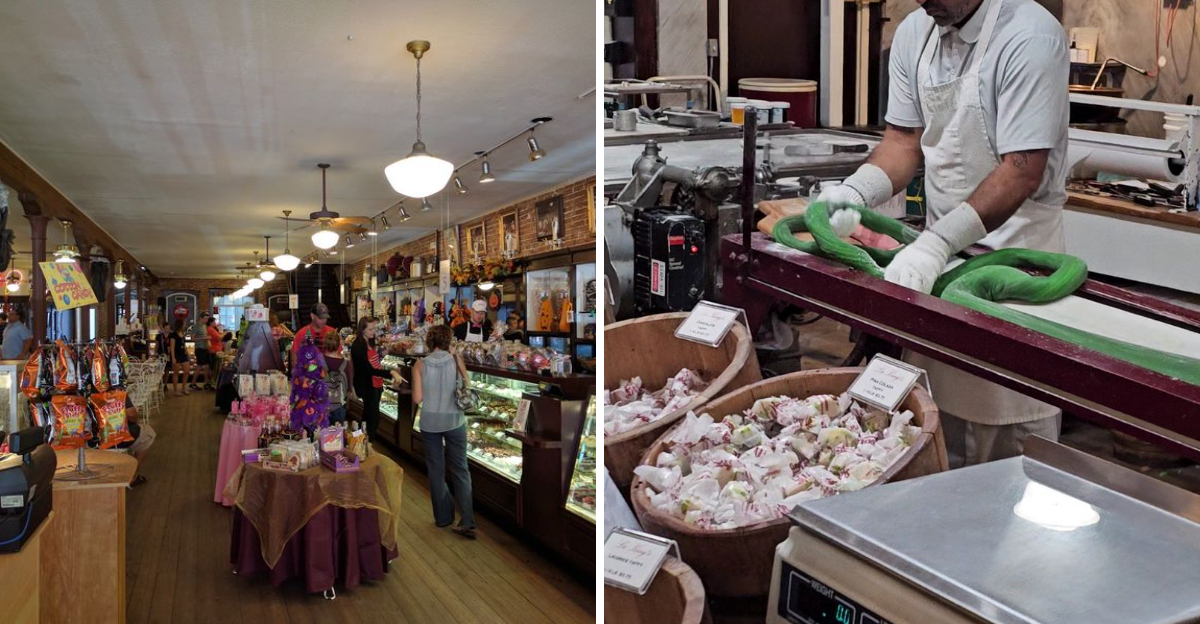
There are candy stores, and then there are places where taffy making becomes actual entertainment.
This old-fashioned Texas confectionery makes handmade chocolates and saltwater taffy, but the especially fun part comes on weekends and during summer, when visitors can watch the taffy being pulled, spun out, and packaged right in front of them.
Add fudge, novelty candy, coffee, and ice cream to the equation, and suddenly “just stopping in for one little treat” sounds about as realistic as entering a bakery while hungry and leaving with a salad.
The whole experience has the cheerful chaos of a childhood candy run, except now nobody can tell you that spending your own money on an unreasonable amount of sugar is against the rules, which feels like one of adulthood’s better perks in Texas.
The Window Where Taffy Comes To Life
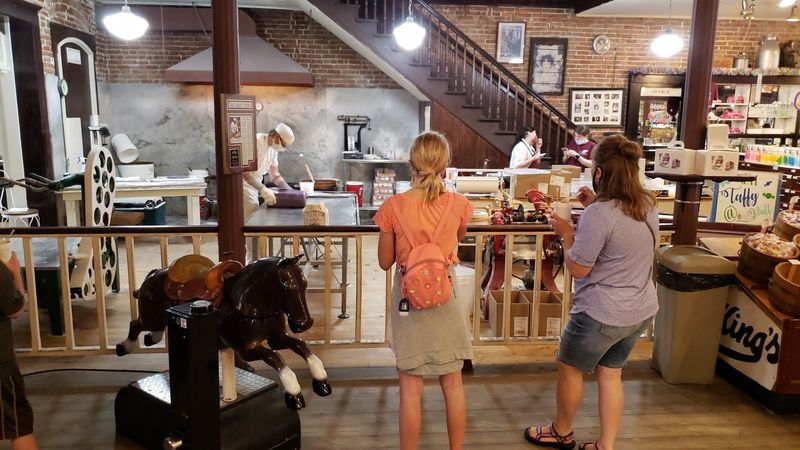
My favorite spot in the whole shop is not a seat, it is a patch of floor near the front window. Fresh taffy gets poured, cooled, and pulled right there in full view.
The mixture starts out hot and glossy, spread across a table with cold water circulating underneath to bring the temperature down. Once it firms up enough to handle, the candy maker loops it over a hook and pulls, folds, and pulls again.
Watching the color change is oddly satisfying. What begins as a deep translucent blob slowly turns pale and shiny as air works its way into the sugar.
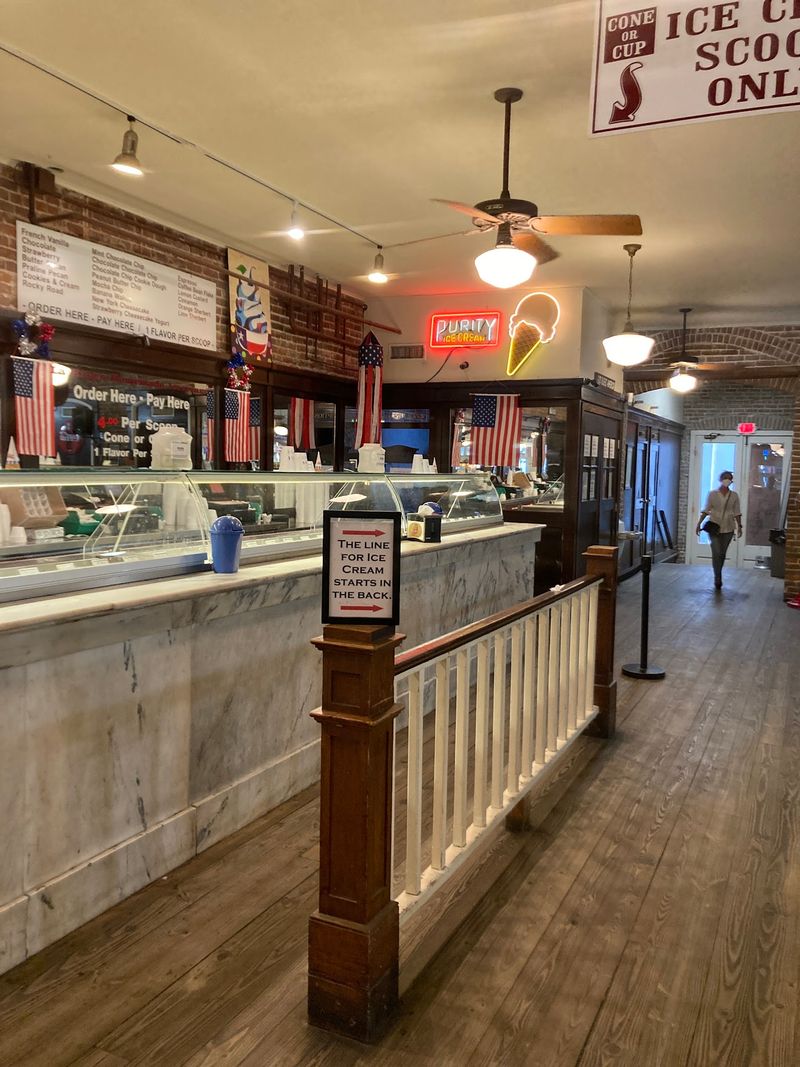
Weekends and summer days are when the taffy show is most likely to be running, and the crowd around the window can get three deep. Kids press their noses close.
Adults pretend they are not just as fascinated.
The candy maker often chats with whoever is watching, explaining what is happening and sometimes handing out a warm piece straight from the batch. Warm taffy is a different experience entirely, softer and more fragrant than anything from a package.
What makes it feel honest is that nothing is staged for show. Production genuinely happens here, and the antique spinning and wrapping equipment is still in service rather than sitting behind velvet rope.
Bring a little patience if the window is busy. Standing back for a few minutes usually opens up a clear view, and the whole process is worth the short wait.
A Family Story That Started In 1927
Behind the sugar and the shine sits a long family thread. Jimmy King began making candy in Houston in 1927, learning his craft from Old World candy makers who worked by feel and experience rather than machines.
His son, Jack King, carried the trade forward and moved the family to Galveston in 1976. The goal was to open an old-fashioned confectionery and bring a vanished era back to street level.
Nineteenth-century formulas guided the recipes. Traditional copper kettles, marble slabs, and hand methods shaped how the candy was actually produced.
The building deserves a mention of its own. It is close to 150 years old, and the brick, beams, and pine floors give the place a texture that no modern build-out could fake.
Standing inside, the history feels layered rather than decorative. Galveston has weathered storms, boom years, and quiet stretches, and this shop has been a steady sweet spot through decades of that change.
Master candy maker Ernest Torres keeps the old-time specialties going, working methods that stretch back more than a century. Seeing techniques that old still in daily use is rarer than it should be.
Reading a plaque about history is one thing. Tasting something made the same way it was made generations ago hits differently, and that is really the appeal here.
Anyone who enjoys heritage travel will find plenty to appreciate before even reaching the candy counter.
That Candy Counter Goes On And On
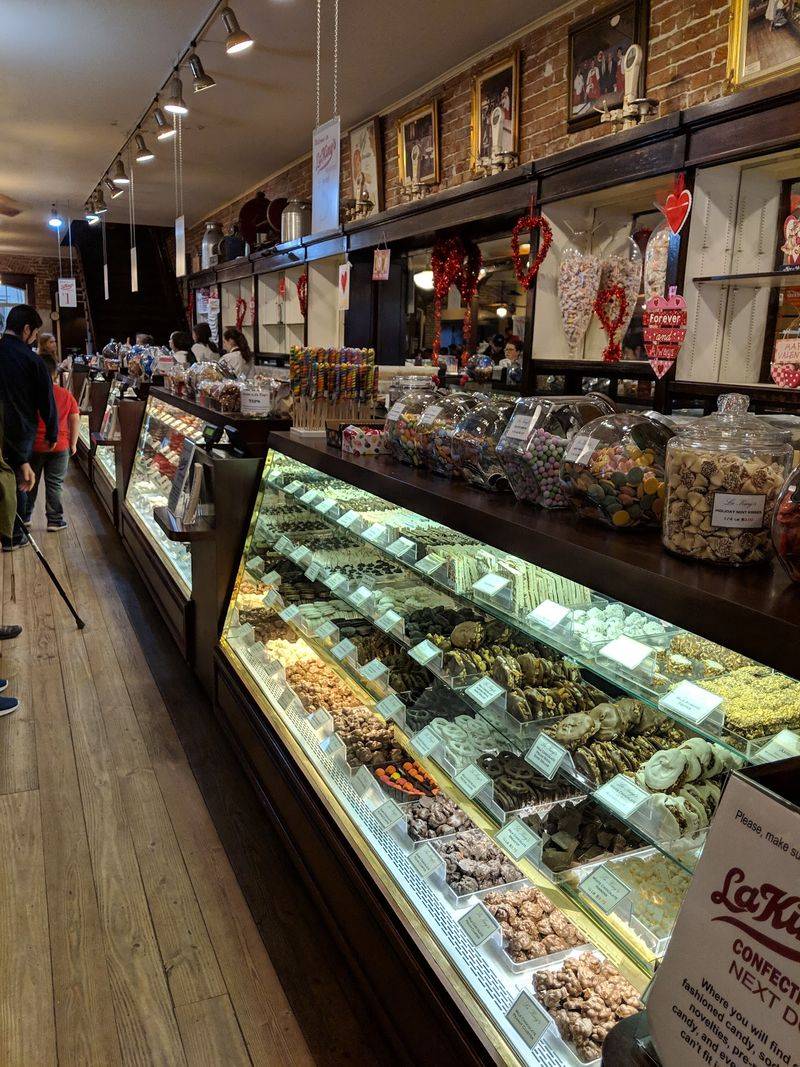
Choosing something here takes longer than expected, and that is part of the fun. The glass case runs deep, packed with trays of handmade confections lined up in neat rows.
More than fifty different candies come from old-time recipes. Peanut brittle and pecan brittle snap into shards, divinity sits pale and cloudlike, and pecan pralines gleam with sugar.
Hand-dipped chocolates fill a good stretch of the case. Fudge gets cut into thick squares that look almost too rich to finish in one sitting.
Texas pecans show up again and again, which feels right for a shop in this part of the country. The praline in particular is one of those regional classics worth trying even for people who normally skip sweets.
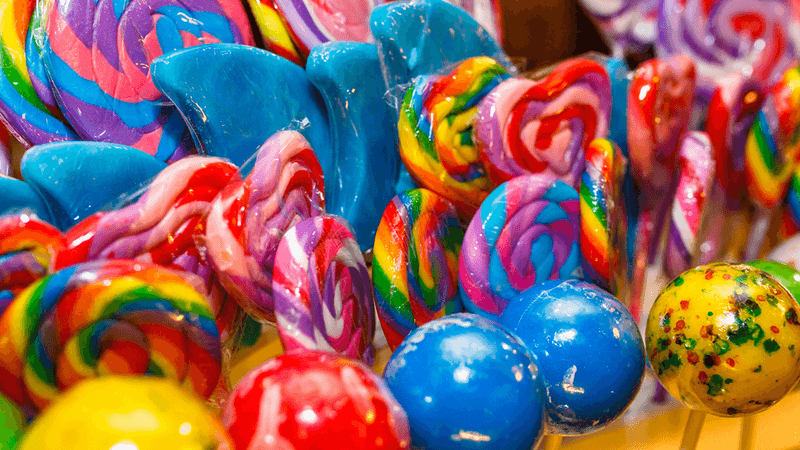
Novelty candies balance out the traditional side, and the cotton candy flavors take a hard left turn from expected. Pickle, pizza, watermelon, birthday cake, and buttered popcorn all make appearances.
My honest advice is to pick one classic and one strange thing. The contrast makes for a better story later, and sharing a pickle cotton candy with friends produces reliable reactions.
Staff behind the counter are used to indecision and will point out what came out of the kitchen most recently. Freshly made brittle has a fragility that older batches lose.
Take a slow lap before ordering. Rushing this counter is a small tragedy.
Barrels Of Saltwater Taffy In Every Flavor
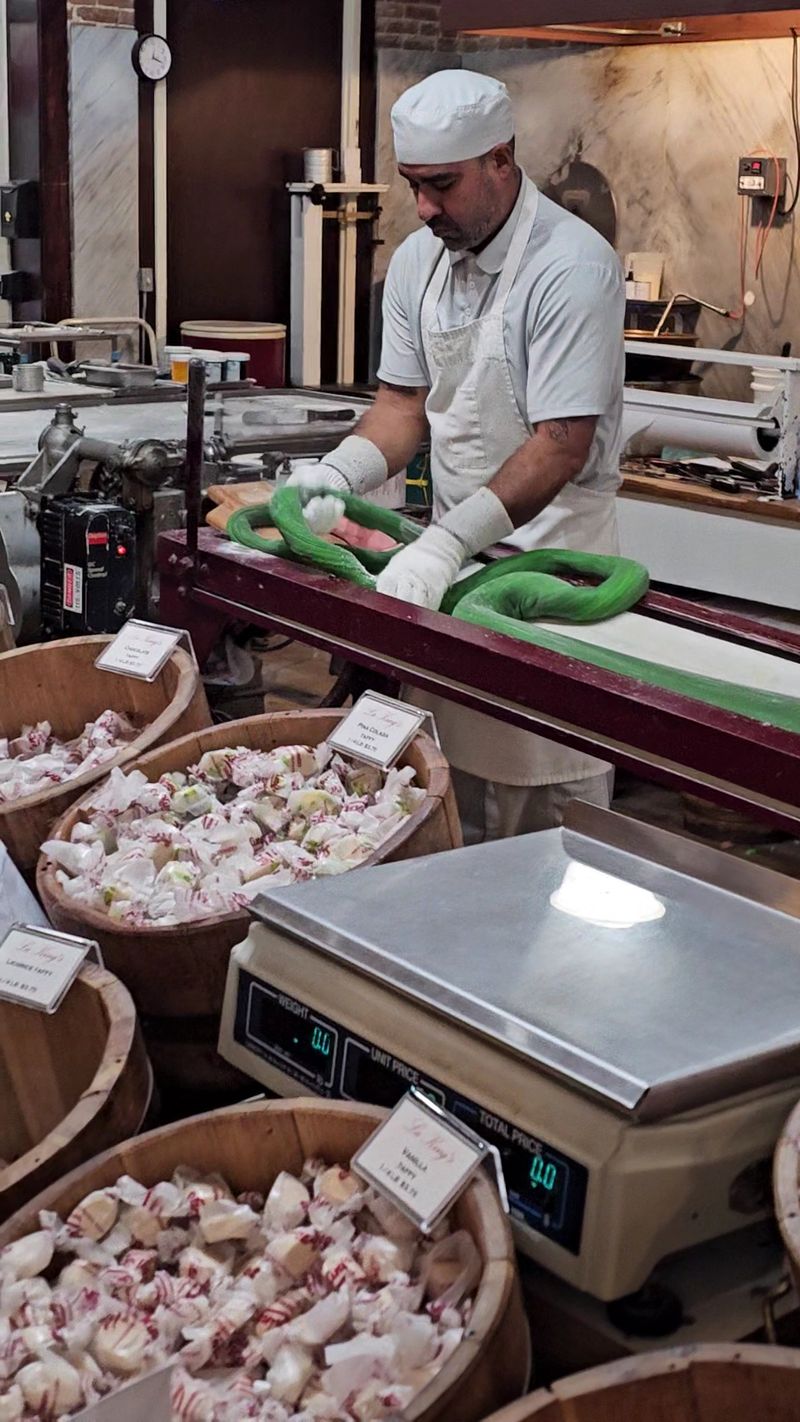
Scooping taffy from a barrel feels like a small ritual. Rows of them sit out with wrapped pieces sorted by flavor, and a paper bag fills up faster than good judgment allows.
The flavor list covers a lot of ground. Watermelon, licorice, chocolate, cinnamon, banana, lemon, grape, vanilla, tutti-frutti, strawberry banana, and lime are all in rotation.
Chocolate taffy surprised me the most. It tastes closer to a soft caramel than the fruit flavors and holds its own against anything in the chocolate case.
Cinnamon carries actual heat, so hand that one to someone who likes a bit of a kick. Licorice, as always, divides a group instantly.
Because the taffy is produced on site, the texture tends to be softer and more pliable than mass-produced versions. Older taffy turns stiff and chalky, and that is not the situation here.
A practical note for anyone visiting in summer: Galveston humidity and heat will turn a bag of taffy into a single mass if it sits in a hot car. Keep it in a cooler or eat it sooner rather than later.
Mixing a bag of assorted flavors makes a decent souvenir for people back home. It travels well, costs little in luggage space, and tastes like the trip.
Sampling straight from the barrel while standing near the taffy window is the full experience, though.
Purity Ice Cream And The 1920s Soda Fountain
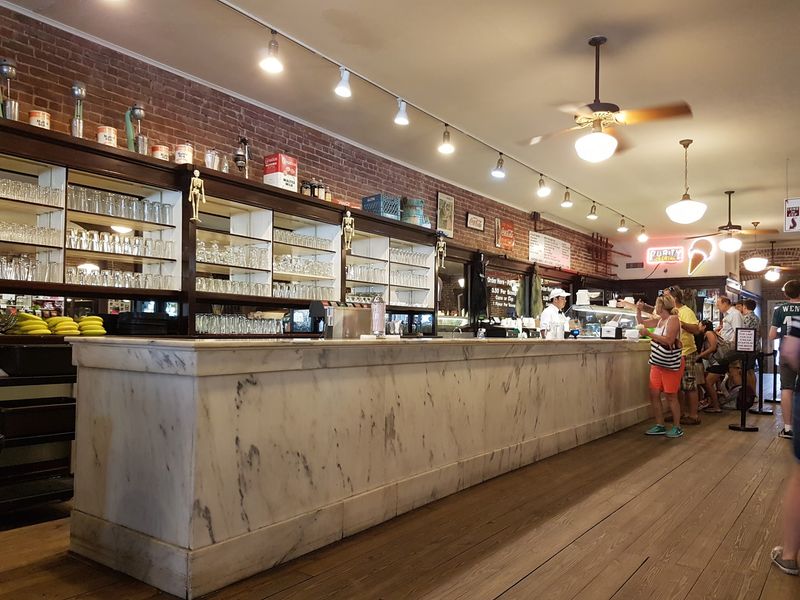
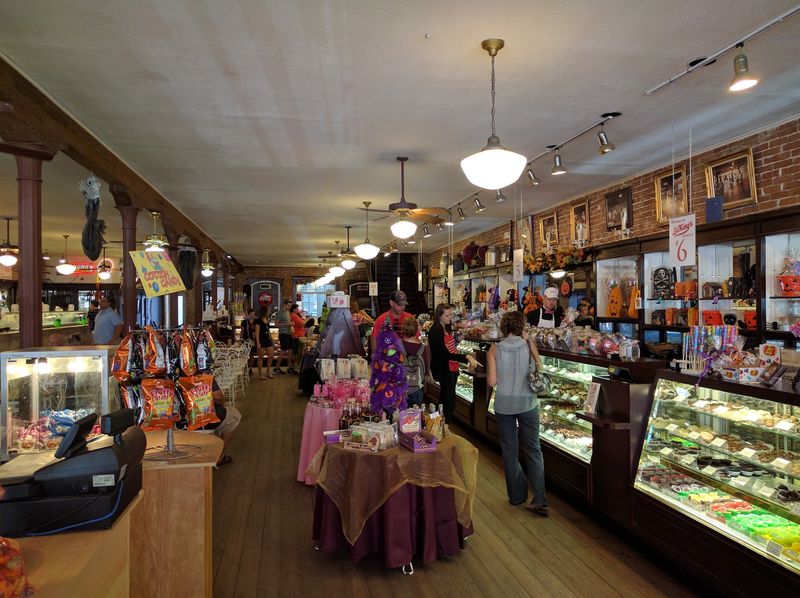
The back of the shop hides something special. A working soda fountain styled after the 1920s serves malts, shakes, ice cream sodas, sundaes, splits, and floats.
The ice cream carries the Purity name, and that name matters in Texas. Purity was the state’s first ice cream manufacturer, founded on Galveston Island in 1889.
La King’s brought the brand back in 1983 by acquiring the original equipment and recipes. Production now happens in a small in-house factory.
Thirty-six flavors come out of that operation, made exclusively for this parlor. Nothing gets shipped elsewhere, which means tasting it requires showing up in person.
Texture is where it stands apart. The ice cream is dense and creamy rather than airy, closer to what people describe when they talk about how ice cream used to taste.
An old-fashioned ice cream soda is worth ordering at least once, especially for anyone who has never had one. The fizz cuts through the cream in a way a milkshake never does.
Seating at the fountain is simple and functional, built for a short break rather than a long meal. Grab a stool, order something tall, and watch the room.
Staff sometimes wear classic parlor uniforms with paper hats, which ties the whole scene together nicely.
On a hot Galveston afternoon, this counter is one of the better places on the island to cool down for fifteen minutes.
How The Room Smells And Feels
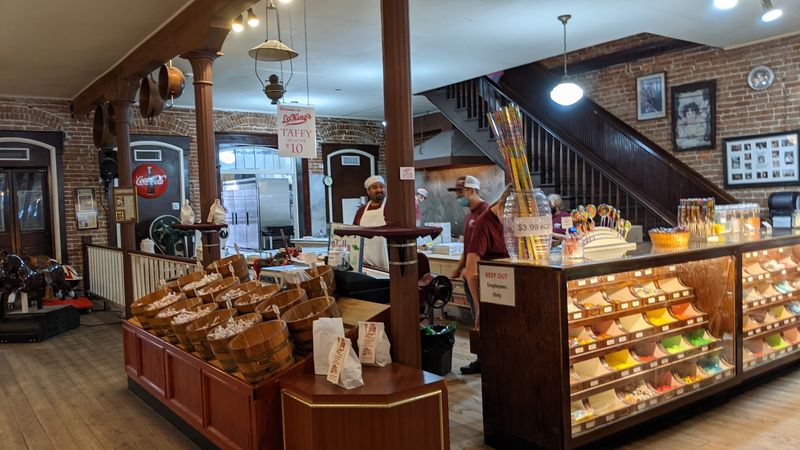
Scent arrives before anything else. Coffee, chocolate, and warm sugar mingle right at the doorway, and the mix is strong enough to stop conversation for a second.
Once inside, the room reads like a set from the 1920s or 1940s, except nothing about it feels manufactured. Red brick walls hold antique fixtures, vintage toys sit on shelves, and pine planks creak underfoot.
Details reward a slow look. Old signage, glass jars, and worn wooden surfaces all carry the marks of real use.
Weekends bring a livelier energy. Laughter bounces off the brick, families crowd the cases, and someone is always pointing at something behind the glass.
Employees in traditional parlor uniforms add to the effect without turning it into a costume show. It reads as continuity rather than theater.
Lighting is warm and a bit dim toward the back, which flatters the whole place. Photographers will find better shots near the front windows where daylight pours in.
Sound is part of the appeal too. The scrape of a scoop, the crack of brittle being broken, the hum of old equipment.
Quieter visits happen on weekday mornings, and there is something nice about having the counter mostly to yourself. Weekends deliver more atmosphere but less elbow room.
Either way, the room does not feel like a gift shop pretending to be historic. It feels like a working candy store that simply never modernized.
Coffee Break On The Front Left Side
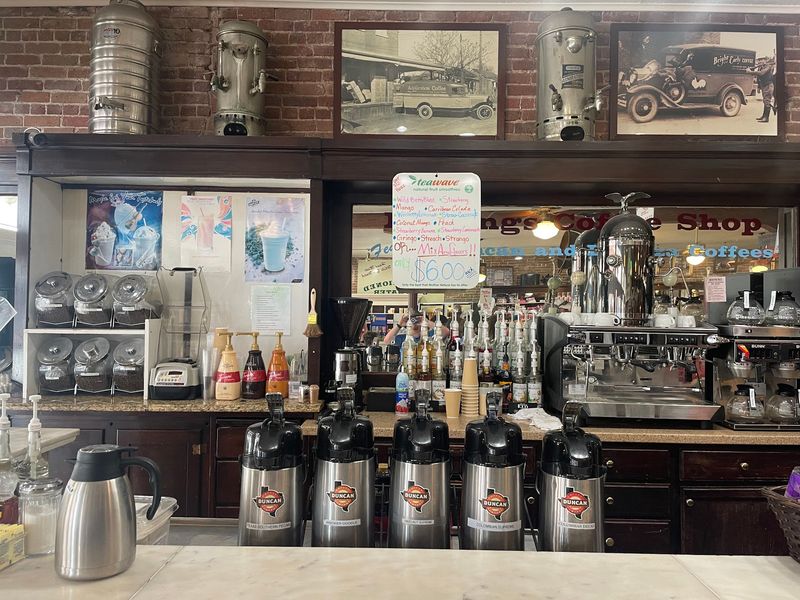
Not everyone wants sugar first thing. The coffee shop hidden into the front left side of the store solves that neatly.
Freshly brewed Duncan Coffee beans and espresso come out of this corner. The aroma is a big part of why the entrance smells the way it does.
Pairing a strong coffee with a piece of dark chocolate or a square of fudge is a smart move. The bitterness keeps the sweetness from taking over.
Milkshakes and bottled sodas are also available here, which makes it easy for a group with different cravings to order in one spot. Someone gets espresso, someone gets a shake, everyone is happy.
For anyone walking The Strand early in the day, this works well as a first stop. Caffeine, then candy, then the rest of the historic district.
The setup is compact rather than a full cafe with lounge seating. Think of it as a quick counter rather than a place to settle in with a laptop.
Bagged beans make a practical souvenir for coffee drinkers who would rather not haul home sugar. Duncan Coffee has local roots, which adds a nice touch.
A hot drink also gives hands something to do while waiting for the taffy demonstration to start.
Small addition, genuinely useful, and it rounds out the shop in a way that keeps non-candy people entertained.
Finding The Blue And Red Doors On The Strand
Spotting the place is easy even in a busy stretch of shops. Bright blue and red doors sit under an awning, with an A-frame sign parked on the sidewalk.
The address is 2323 The Strand, right in the middle of Galveston’s historic district. Iron-front buildings, museums, restaurants, and small shops fill the surrounding blocks.
Street parking exists but fills up quickly, especially on weekends and during festival season. Public lots nearby are the safer bet.
Directly across the street sits Saengerfest Park, home to oversized games and the well-known Welcome to Galveston mural. Kids can burn off sugar there while adults finish their coffee.
The layout makes this an easy addition to a walking afternoon. Galveston Railroad Museum, the harbor, and plenty of storefronts are all within a short stroll.
Cruise passengers often pass through this area, so mid-morning can get busier when ships are in port. Timing a visit around that helps.
Comfortable shoes matter more than expected. The sidewalks and streets are historic, and the surfaces are uneven in spots.
Anyone driving in from Houston should plan for roughly an hour on the road, which makes this a very doable day trip.
Pairing the shop with a walk to the seawall rounds out a solid Galveston itinerary. Candy first, ocean breeze second.
Why The Visit Sticks With You
Some stops on a trip blur together. This one does not, mostly because it engages more than just taste.
Watching sugar transform in real time creates a memory that a wrapped candy bar never could. Add the soda fountain, the antique surroundings, and the smell of the room, and the whole thing lands.
Plenty of visitors describe the feeling as being a kid again, and that reaction makes sense. The place taps into a version of a candy store that most people only know from photographs.
Practically speaking, plan for at least thirty to forty-five minutes. Rushing through means missing the taffy pull or the ice cream, and both deserve time.
Bring a little cash flexibility for gifts, since the handmade items travel well and make good presents. Brittle, pralines, and taffy all hold up in a suitcase.
Families do well here, but so do couples and solo travelers curious about food history. There is no age limit on being interested in how things are made.
Preservation is really the story underneath the sugar. Recipes from the 1800s, revived ice cream equipment, and a candy maker still working by hand add up to something worth protecting.
Galveston has beaches, historic homes, and a busy waterfront, yet this small shop earns its place on the list.
Go hungry, go curious, and stand by that window for a while.
Address: 2323 The Strand, Galveston, TX 77550
