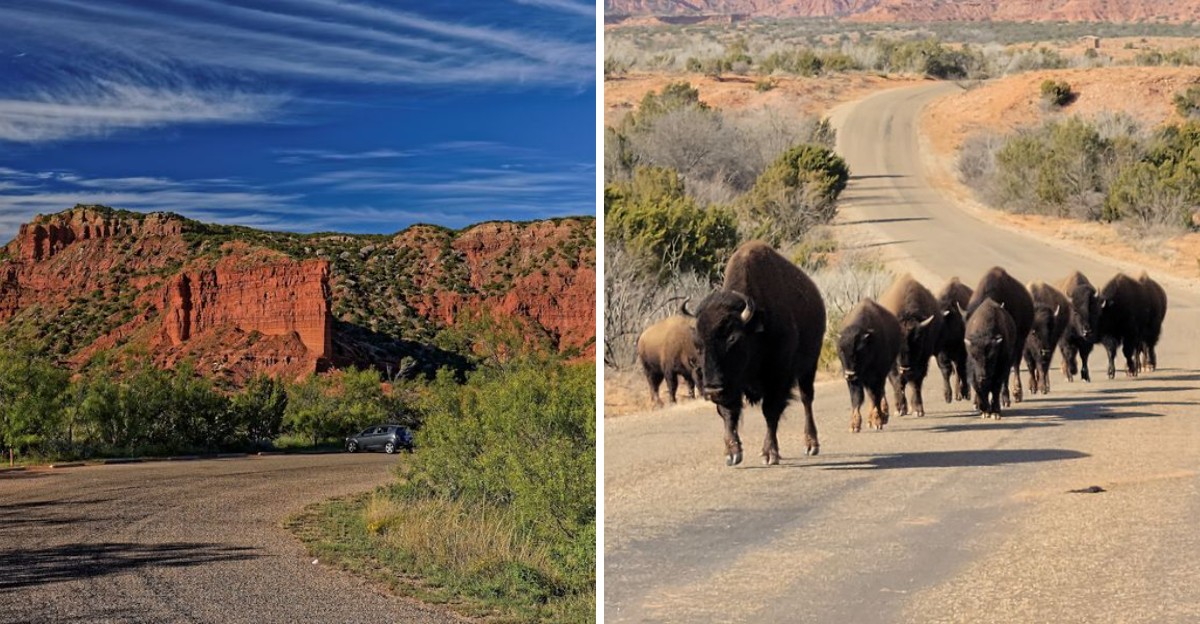
Bison once roamed across Texas in the millions. Now, seeing one in the wild feels like a glimpse of the past.
This canyon offers one of the best chances to spot them, especially in the fall. The weather cools, the prairie turns gold, and the herd moves slowly across the open land, grazing and wandering just as they have for centuries.
You can watch from a distance, camera in hand, as these massive animals go about their day. It is humbling, quiet, and unforgettable.
The canyon itself is beautiful, with rugged walls and wide open views. But the bison are the real draw.
They are a living reminder of what Texas used to be. Bring binoculars, patience, and a healthy respect for wild animals.
Do not approach them. Just watch, appreciate, and let them be.
Some sights are best enjoyed from afar.
Meeting the Texas State Bison Herd Up Close
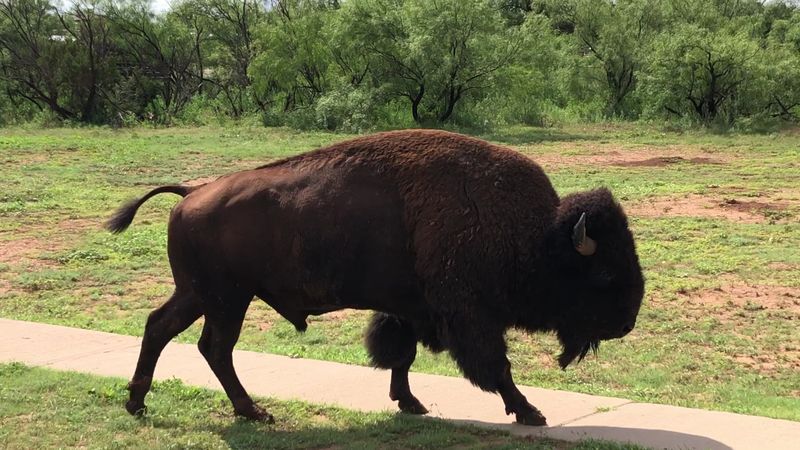
Few wildlife encounters in Texas feel as heavy, in the best way, as watching a two-thousand-pound animal stroll past your windshield. The bison here are not fenced into a viewing pen.
They wander freely across roughly 10,000 to 12,000 acres of the park, which means the herd decides where the herd goes.
Their story is worth knowing. In the late 1870s, as bison were being wiped out across the plains, Mary Ann Goodnight urged her husband, rancher Charles Goodnight, to rescue several orphaned calves.
Those few animals became the Goodnight Herd, and later genetic testing revealed something remarkable.
Rare markers showed they were the last genetic remnants of the Southern Plains bison. The JA Ranch donated the herd to Texas in 1996, and the animals arrived at the park in 1997.
In 2011, the Legislature officially named them the Texas State Bison Herd.
Sightings happen along park roads, near the visitor center, and sometimes right on the trails. Fall improves your odds because the animals move more when temperatures drop.
Fifty yards is the required distance, and that rule exists for good reason. Bison look slow and sleepy until they are not, and they can turn and sprint faster than most people expect.
Stay in your vehicle when they are close to the road. Let them pass at their own pace.
Honking, approaching, or trying to coax them into a better photo angle is both unsafe and against park rules.
Red Rock Walls That Hide Under a Flat Horizon
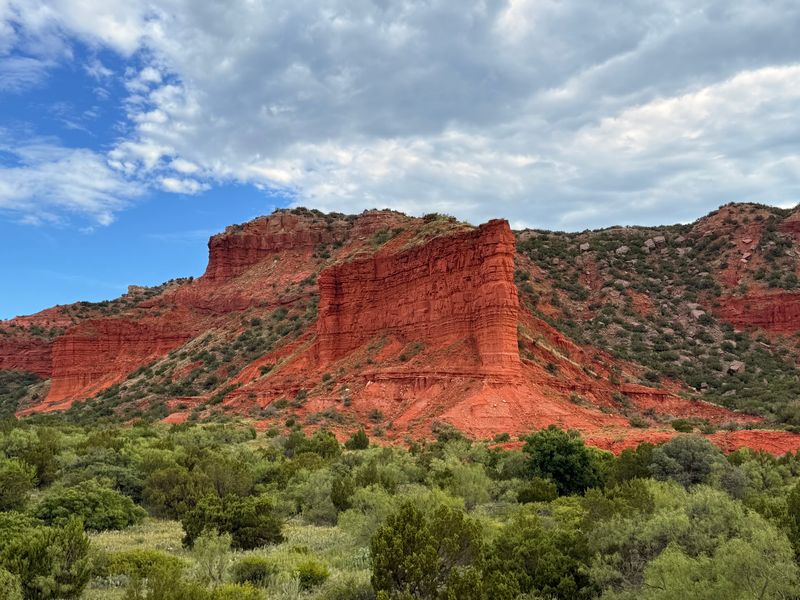
Early Mexican travelers crossing this country had a saying for what happens here: hay sierras debajo de los llanos, meaning there are mountains below the plains. Nothing describes the place better.
You approach across tabletop farmland and then the earth simply falls away.
The park sits along the Caprock Escarpment, the long geological seam separating the high, flat Llano Estacado from the rolling plains to the east. In places that escarpment drops close to a thousand feet.
Water did the carving. Streams flowing east chewed through soft rock over enormous spans of time, exposing layers from the Permian age Quartermaster formation, roughly 250 to 280 million years old.
The famous red beds give the canyons their color, a mix of shale, sandstone, siltstone, and mudstone in shades of rust, brick, and orange. Slicing across them are bright white bands of gypsum.
Those pale stripes are leftovers from an ancient inland sea that once covered this corner of Texas and slowly evaporated, leaving salt and mineral deposits behind. Knowing that makes the cliffs read like a book.
Rock fins, natural bridges, and hoodoo-ish spires appear as you move deeper into the canyon system. Colors shift constantly depending on cloud cover and time of day.
Late afternoon is when the walls really glow. Bring a camera, but also spend a few minutes just looking without a screen in the way, because photos flatten the scale badly.
Nearly 90 Miles of Trails Waiting for Your Boots
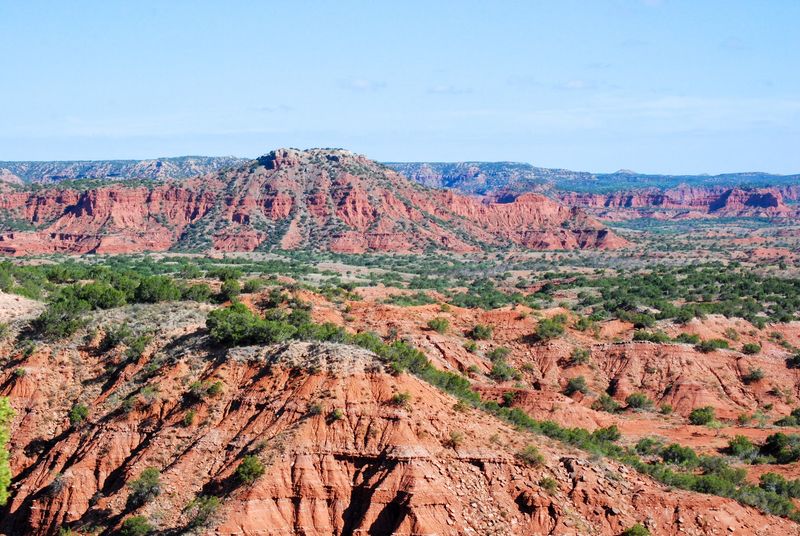
Trail options here run from a gentle stroll to something that will genuinely humble your legs. Roughly 90 miles of multi-use paths thread the park, open to hikers, mountain bikers, and horseback riders.
The Mesa Trail sits at the easy end, good for families and anyone wanting big views without big effort. Haynes Ridge Overlook is the opposite, a steep grind that regular visitors often name their favorite once their heart rate settles.
Upper North Prong, Upper South Prong, Eagle Point, and Canyon Rim round out the popular picks. Loop lengths range from a mile or so up to around fifteen, so you can plan an hour or a full day.
A word of warning about the footing. The red dirt is loose in stretches and your feet slide, which burns more energy than the mileage suggests.
Shade is scarce almost everywhere. Rangers recommend carrying as much as a gallon of water per person on longer hikes, and that guidance is not exaggerated.
Trail markings can get patchy in a few sections, and one route briefly dumps you onto a road before reconnecting. Cell service is unreliable deep in the canyons.
Download offline maps and grab a paper map at headquarters before setting out. Sturdy shoes matter more than fancy gear here.
Also, expect furry roadblocks. Bison use the trails too, and yielding to them is simply part of hiking this park.
Prairie Dog Towns and Other Small-Town Drama
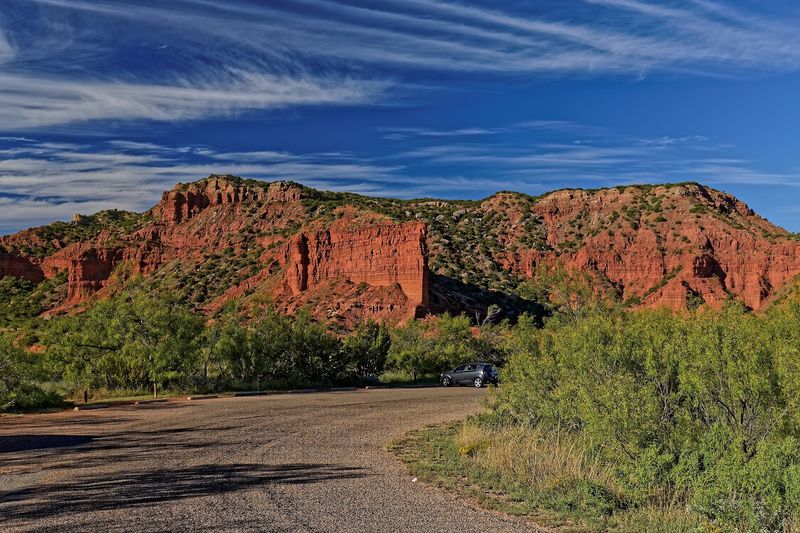
Bison get the headlines, but the black-tailed prairie dogs steal more actual viewing time. Their towns dot the grassy flats, and the residents are loud, nosy, and endlessly busy.
Watch for a few minutes and the system reveals itself. One stands sentry, barks a sharp warning, and the whole colony ripples with movement before settling again.
Kids love them. So do adults who claim they came for the geology.
Beyond the towns, the park supports a genuinely varied cast. Mule deer and white-tailed deer browse through the brush, often at dawn and dusk, and they will hold still and stare if you stay quiet.
Coyotes patrol the edges and announce themselves at night, which doubles as a very effective alarm clock for campers. Bobcats, grey foxes, raccoons, and jackrabbits share the terrain, and pronghorn occasionally flash across the open ground.
Birders do well here, with more than 175 species recorded. Roadrunners sprint along the shoulders, red-tailed hawks circle overhead, and golden eagles turn up for the lucky few.
Lake Theo pulls in waterfowl when conditions allow. Autumn also brings wildlife tracking programs where visitors learn to read prints and signs in the dirt.
Two practical notes. Rattlesnakes blend into the red rock remarkably well, so watch your step, and raccoons in the campgrounds are skilled climbers who will investigate anything left outside.
Sleeping Out Where the Herd Walks By
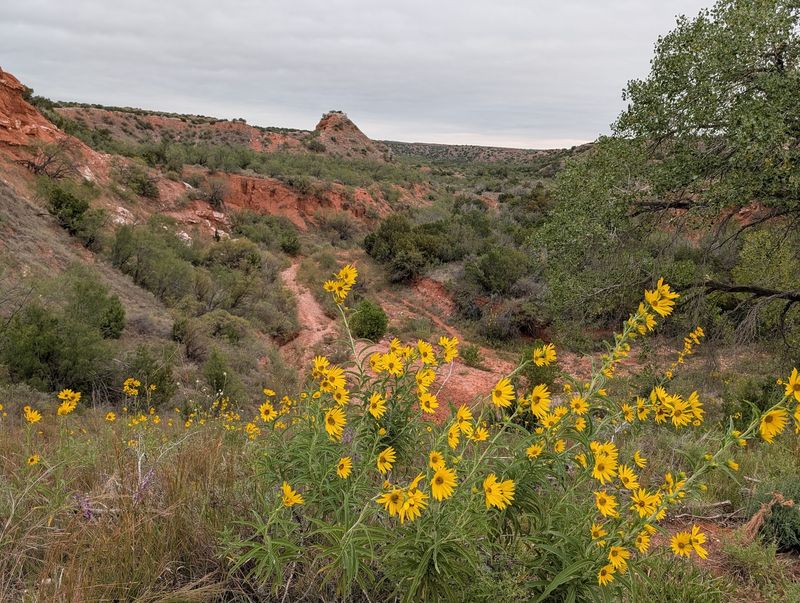
Waking up to bison grazing near your campsite is not a marketing promise here, it just happens. The herd roams freely, and the campgrounds sit inside their range.
Honey Flat is the developed choice, popular with RVs and vans. Sites come with water and electric hookups, shade shelters, picnic tables, and fire rings, plus restrooms with hot showers and a playground nearby for kids.
For something quieter, walk-in primitive sites at South Prong and Little Red deliver serious solitude. Little Red perches on a bluff above the river, while the Prong sites drop you into the canyon itself.
Hike-in camping along the Trailway exists for people who want distance from everything. Bring your own water for all primitive areas and pack every scrap of trash back out.
Equestrian sites with corrals are available for riders bringing horses. Lake Theo Lodge covers the roof-over-your-head crowd, with two bedrooms, a full kitchen, and a big living area.
Nights here get properly dark and properly quiet, aside from coyotes. Mornings are the payoff, with low sun setting the canyon walls on fire before most people are awake.
One small tip from repeat campers. Secure food, trash, and even toilet paper inside a vehicle or tent, because the local raccoons have figured out zippers and coolers.
Reserve early in fall. Sites fill fast during the cooler months.
Why Autumn Beats Every Other Season Here
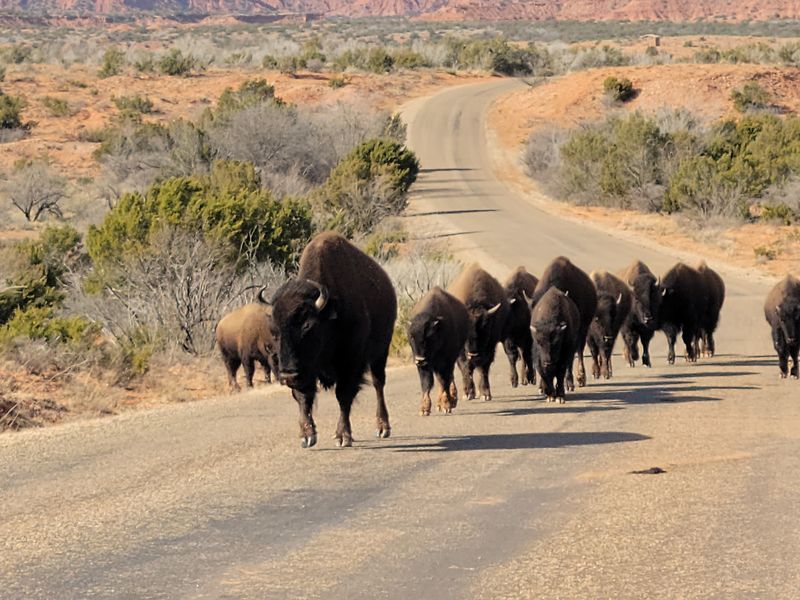
Summer in this part of Texas does not mess around. Air temperatures can climb past 110 degrees, ground temperatures run higher still, and the bison respond by hunkering down near water where visitors rarely see them.
Fall flips the script entirely. Cooler air makes hiking and biking pleasant instead of punishing, and the animals move around far more freely during daylight.
Light quality changes too. The lower autumn sun deepens the reds and oranges in the rock, and shadows stretch across the canyon floor in a way that summer glare completely erases.
Grasses shift to gold and tan, giving the whole landscape a warmer tone. Photographers get their best material in the hour after sunrise and the hour before sunset.
Spring earns honorable mention. Wildflowers carpet the prairie, temperatures stay mild, and bison calves trot alongside their mothers, which is hard to beat for pure charm.
Winter brings biting wind and freezing nights, but also crystal-clear visibility. A rare snowfall over red rock is a sight few Texans ever witness.
Because fall is one of the park’s busiest stretches, plan ahead rather than showing up hopeful. Reservations for camping and day use are strongly recommended, since capacity fills quickly.
Pack layers regardless. Autumn mornings can start cold enough for a jacket and finish warm enough for short sleeves, sometimes within the same hike.
The Trailway, Clarity Tunnel, and a Whole Lot of Bats
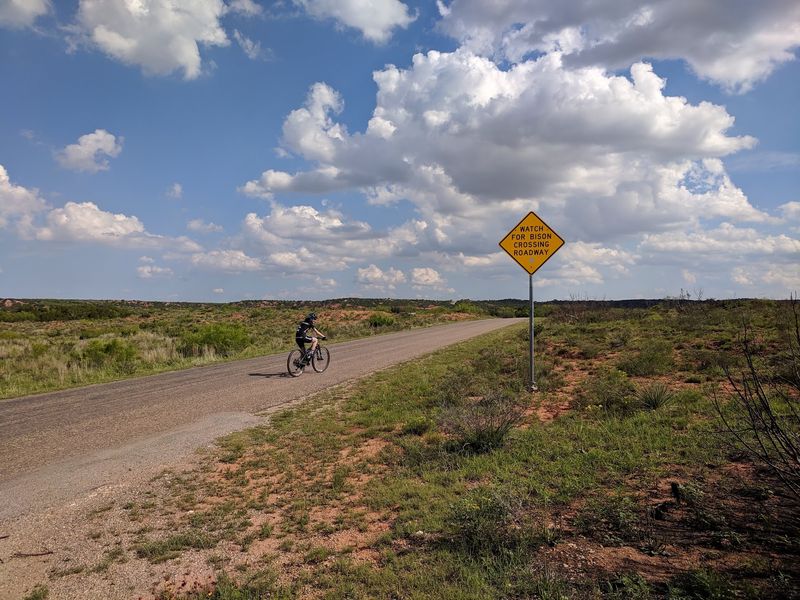
Old rail lines make excellent trails, and the Caprock Canyon Trailway proves it across 64 miles. The route passes through the park and keeps going, crossing 46 bridges along the way.
Cyclists and equestrians get the most out of it. Grades stay gentle because trains needed them that way, which turns a long ride into something sustainable rather than brutal.
The headline feature is Clarity Tunnel, a 528-foot passage bored straight through the rock. Riding or walking into that cool darkness after miles of open sun is a genuine shift in mood.
From late April through mid-October, the tunnel belongs to a large colony of Mexican free-tailed bats. At dusk they pour out to feed, and the emergence is one of the more dramatic natural shows in the Panhandle.
Guided van tours run during the warmer months for visitors who want to see it without a long ride in fading light. Check with headquarters for scheduling, since programs shift with the season.
By late fall the bats have moved on, but the tunnel and the bridges are still worth the trip. Autumn riding conditions along the Trailway are about as good as they get.
Carry more water than you think you need. Sections of the route run long and exposed, with no services between access points.
Bikes should be in decent shape before you start.
Smart Planning Makes the Whole Trip Better
A little prep separates a great visit from a frustrating one. Reservations for camping and day use are strongly encouraged, especially in fall, because the park can hit capacity and turn people away at the gate.
Book online or by phone ahead of time. Showing up on a pleasant October Saturday without a reservation is a gamble.
Gate hours generally run from 8 a.m. to 10 p.m. daily. Headquarters keeps office hours from 8:30 a.m. to 5 p.m., with a midday closure of about an hour.
Stop at the visitor center first. Staff there hand out maps, share current bison locations, and post program schedules, and they are consistently helpful about trail conditions.
Water is the single most important thing you pack. Shade is limited, the air is dry, and dehydration sneaks up fast on the exposed sections.
Sturdy footwear handles the rocky, loose terrain far better than sneakers. Sunscreen, a hat, and electrolytes belong in the bag too.
Check the forecast and dress in layers, since Panhandle weather changes quickly. Carry a paper map because cell coverage drops out in the canyons.
Wildlife rules are simple and non-negotiable. Keep at least 50 yards from bison, never feed or approach any animal, and remember that the herd has the right of way on roads and trails.
Pets are welcome, but heat and cactus require extra care.
