Starting a food business in a garage takes nerve, and turning that garage operation into a thirty year family business takes something even harder to define, which is exactly what this Texas Filipino food shop has managed to do.
What began as a small side project has grown into a full fledged kitchen serving lumpia, adobo, pancit, and other classics that taste like they came straight from a family gathering rather than a commercial operation, and the recipes have stayed true to their roots the entire time.
Multiple generations of the family have worked behind the counter over the years, which gives the whole place a warmth that no chain could replicate, and the regulars keep coming back because the food is consistent and the people behind it actually care.
Thirty years in business is a milestone worth celebrating, and this Texas spot has earned every bit of the loyalty it has built. Stop in for a plate and see what three decades of dedication tastes like.
A Garage, A Highway, And A Big Idea
Long road trips usually end with souvenirs, not a business plan. For Adam Valenzuela, though, the drive to Houston became a regular mission.
San Antonio simply did not carry many of the Filipino ingredients that local families wanted.
So he went and got them himself. The goods came back and landed in the family garage, where neighbors could stop by and pick up what they needed.
Many of the early customers were nurses, part of a close community that knew the Valenzuelas well and missed the flavors of home.
Honestly, it is hard not to love that picture. A suburban garage packed with boxes of sauces, snacks, and pantry staples sounds a little chaotic, sure.
It also sounds like the kind of place where everyone knew each other by name.
Adam and his wife Imelda saw something bigger in all those quick sales. People were not just buying food.
They were buying a piece of comfort and a link to the Philippines, which mattered a lot to families living far from their roots.
That garage stage is the true heart of the story. Every plate served today traces back to those trips and that crowded little space.
Knowing this history makes a visit feel different, because the shop never forgot why it started.
Tip for curious visitors. Ask staff about the early days if things are not too busy, since the family pride in this story runs deep.
Then grab a snack from the market and imagine it riding home from Houston.
From Tiny Storefront To Restaurant Pioneer
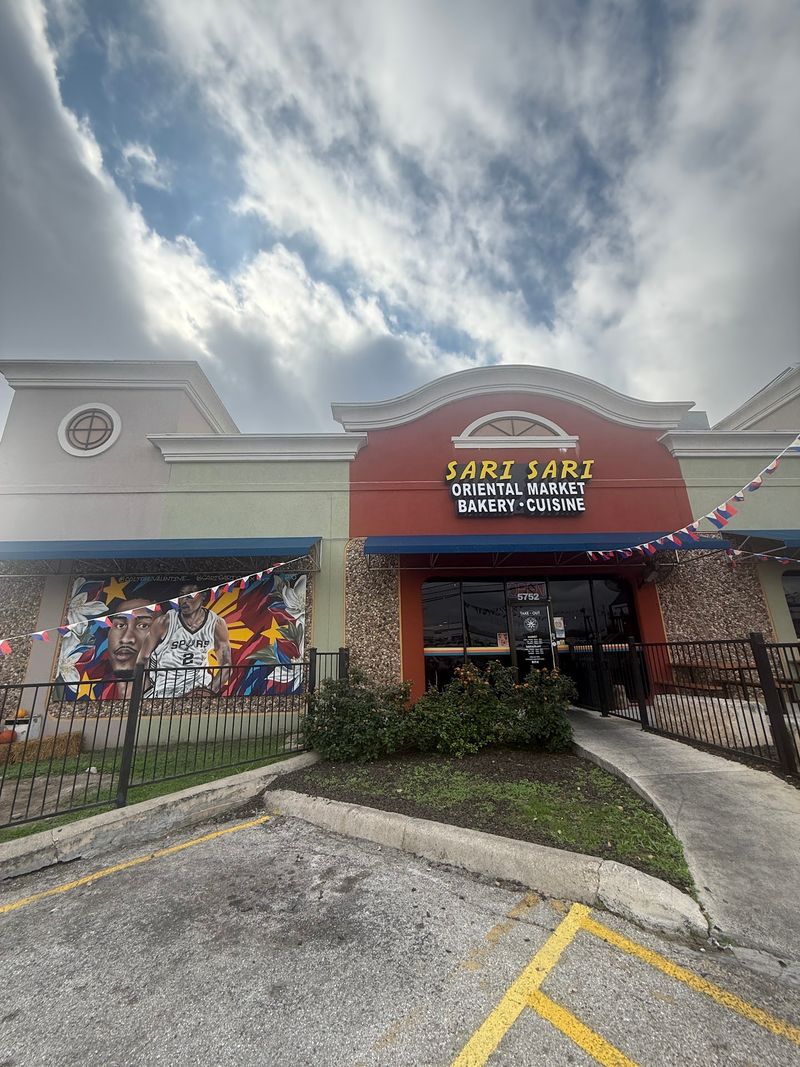
Moving out of a garage is a huge step for any family. Around 1995 or 1996, the Valenzuelas opened a small Filipino market on Wurzbach Road, just two doors down from where the business sits today.
It was a real storefront with real shelves, and that changed everything.
The name says a lot. In the Philippines, sari-sari stores are the small family-run shops found on nearly every street, and the word itself points to a good variety of things.
Choosing that name was a smart nod to home, and a promise of a little bit of everything.
Then came 1998. The family added a restaurant, which made it one of the first Filipino eateries in San Antonio.
That was a bold move at a time when many locals had never tasted adobo or lumpia.
Think about how risky that must have been. Cooking a cuisine that most diners did not know yet takes guts and a lot of patience.
It worked because the food was honest and the welcome was warm.
A bakery followed soon after, and the family brought a skilled baker straight from the Philippines. Fresh pandesal and traditional sweets suddenly had a home in Texas, which thrilled anyone who grew up eating them.
Today the whole operation lives at 5700 Wurzbach Rd, San Antonio, TX 78238. It sits near the end of a shopping center, so keep an eye out.
Missing it would be a real shame.
The Second Generation Takes The Wheel
Passing a family business to the next generation is never as simple as handing over keys. Around 2016, daughter Camille De Los Reyes and her husband Adrian stepped in to run Sari-Sari.
They inherited decades of recipes, regulars, and expectations all at once.
That is a lot of pressure. Still, the pair kept the original spirit alive while trying new ideas along the way.
They opened a market in Stone Oak, tested an elevated Filipino concept, and even rolled out a food truck called Jeepney Street Eats.
The jeepney name is a fun one. Jeepneys are the brightly painted shared rides famous across the Philippines, often covered in chrome and wild designs.
Naming a food truck after them was a clever wink to anyone who knows.
Eventually, the family pulled everything back to the original Wurzbach Road spot. Focusing on one location let them pour all their energy into the place that started it all.
Sometimes going smaller is the wisest choice.
Their bigger goal goes beyond good meals. Camille and Adrian want more people in San Antonio to understand Filipino culture, and food is a delicious way to teach.
Each first-time diner who leaves curious is a small win for that mission.
For visitors, this matters in a quiet way. The care shows in clean spaces, friendly servers, and dishes that taste like someone’s family recipe, because they are.
Supporting a place like this means supporting a story still being written.
Groceries First, Lunch Second
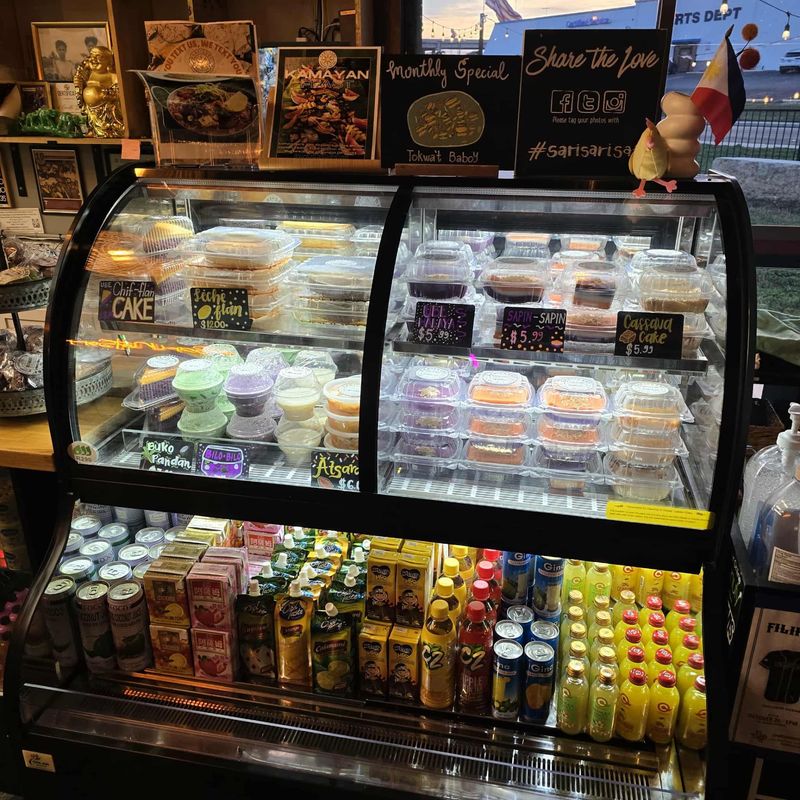
Most restaurants make you walk straight to a host stand. At Sari-Sari, the journey begins in a grocery store, and that twist sets the mood right away.
Shelves of Filipino and other Asian products greet guests before any menu does.
It is a fun way to arrive. Browsing the aisles feels like a quick tour of Filipino pantries, with sauces, noodles, snacks, and treats lined up neatly.
Shoppers often comment on how organized everything is, which makes finding things easy even for beginners.
Keep an eye on the freezer section. Authentic ube ice cream lives here, along with other frozen ube goodies that are hard to find elsewhere.
Ube, a purple yam, has become a huge trend lately, but Filipino families have loved it for generations.
There is also merch near the entrance. Shirts and small items let fans carry a bit of the shop home.
Not a bad souvenir for anyone visiting San Antonio.
A smart plan is to eat first and shop after. Once a dish wins you over, the market makes it easy to pick up ingredients or snacks to try recreating the flavors at home.
Some guests leave with a full bag and zero regrets.
This market is also the clearest link to the garage days. Selling hard-to-find Filipino goods to the community is exactly how everything began.
Thirty years later, that mission still sits right by the front door.
Parasols, Bamboo, And A Bahay Kubo Mural
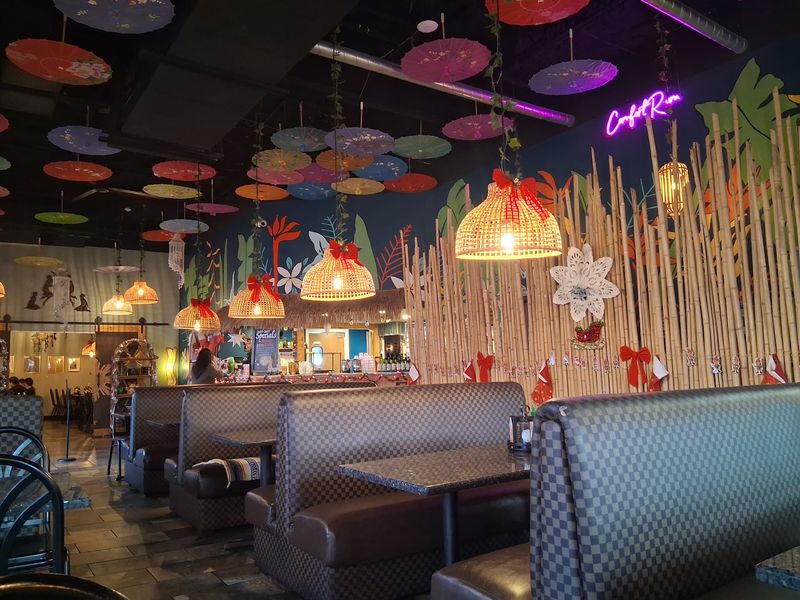
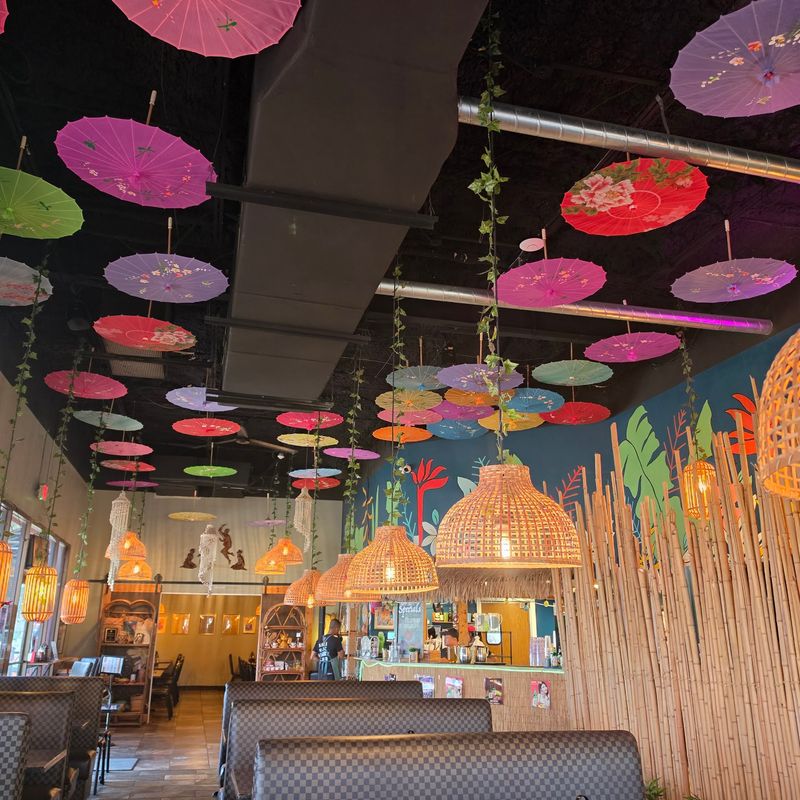
Look up. That is the first piece of advice for anyone stepping into the dining room, because the ceiling steals the show.
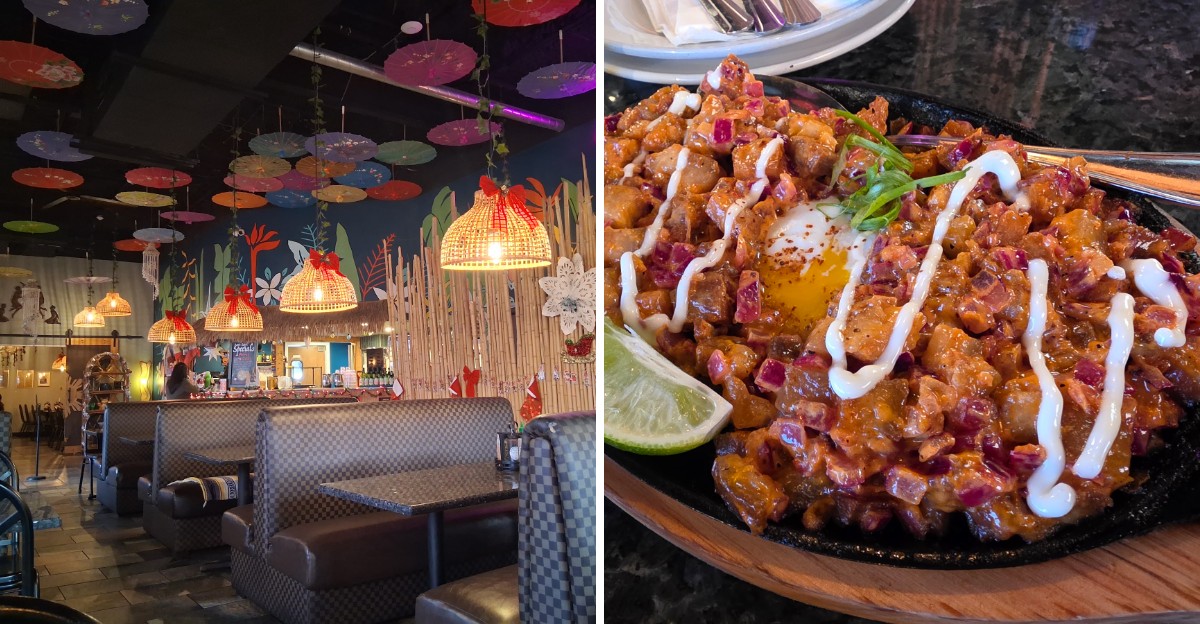
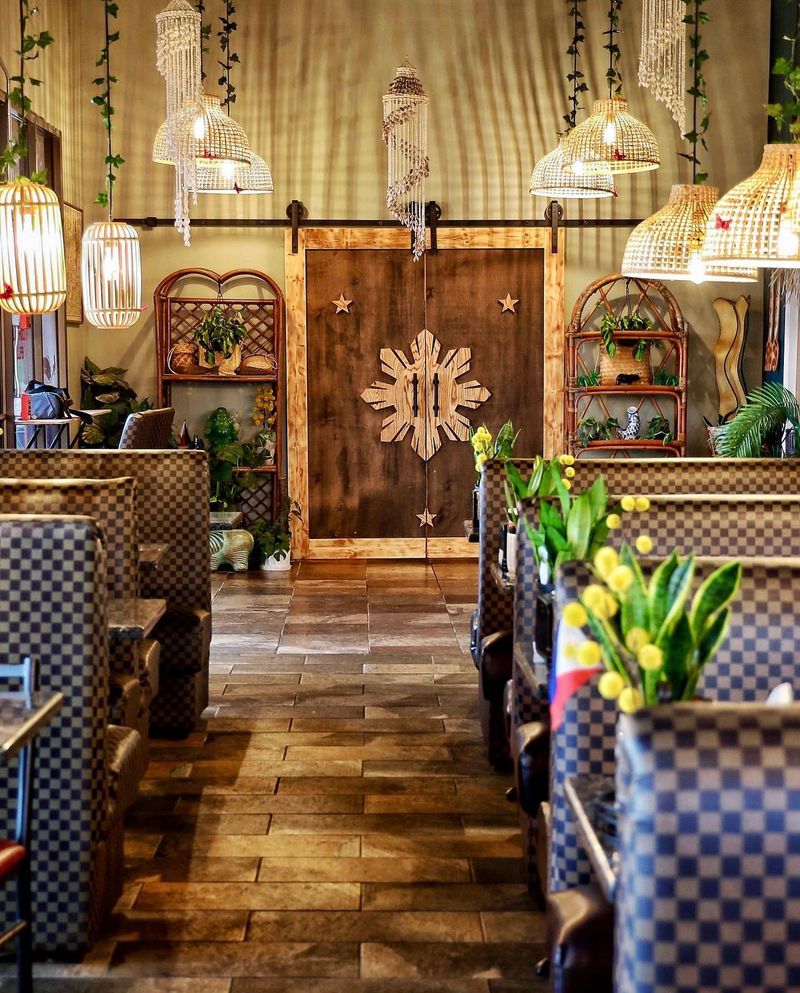
Bright, multicolored paper parasols hang upside down overhead, adding a cheerful splash to the whole space.
Below them, the style mixes wood and bamboo tones with stone tabletops and leafy artificial plants. Tiki umbrellas add a playful island touch.
The lighting stays soft and warm, which gives the room a festive, easygoing glow.
One wall features a mural of a Bahay Kubo. That is the traditional Filipino nipa hut, built on stilts with a thatched roof, and it shows up in a well-known folk song about the vegetables growing around it.
Seeing it painted here feels like a friendly hello from the countryside.
Families get extra love too. There is a kids menu and a gated outdoor play area, so little ones can burn off energy while grownups finish eating.
Parents tend to appreciate that more than any decoration.
Plenty of tables seat four or more people, which suits the shared-plate style of Filipino dining. Big groups, birthday crews, and casual weekend lunches all fit comfortably.
Music plays in the background without drowning out conversation.
The vibe lands somewhere between cozy and lively. It is relaxed enough for a slow Sunday meal, yet colorful enough to make a weeknight dinner feel like a small celebration.
Snap a photo of that ceiling before the food arrives.
Sizzling Plates And Slow-Simmered Classics
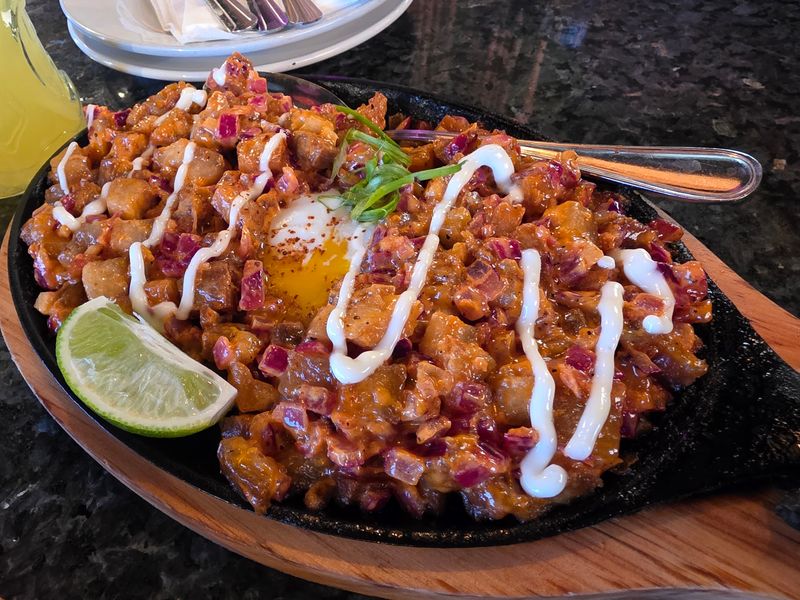
Hear that crackle? Sizzling Sisig arrives at the table still popping on a hot plate, with pork belly, roasted potato, onion, and a bright citrus chili sauce.
It is loud, a little dramatic, and very hard to share politely.
Adobo is the dish many people try first. The chicken or pork version here is sweet, tangy, and full of garlic, often so tender it falls off the bone.
Pair it with garlic fried rice and the meal basically completes itself.
Pork lovers have choices. Lechon Kawali brings crispy fried pork belly with a chewy, rich edge, while Crispy Pata is a giant five-pound fried pork shank meant for a crowd.
Order that one only with backup.
Kare-Kare is a comforting oxtail stew in peanut sauce, and it shines with a little bagoong, a salty shrimp paste served alongside. Sinigang offers a sour tamarind soup that wakes up the taste buds.
The Sari-Sari Express swims in a coconut milk broth with whole shrimp and vegetables.
Smaller bites help beginners. Crispy pork lumpia and grilled BBQ skewers are easy wins, and pancit noodles show up on many tables.
The Special Plate lets diners pick several meats in one go, which is perfect for indecisive eaters.
Breakfast fans should know about the silog plates. These come with garlic rice and egg, served all day, including Tocilog with sweet tocino and Bangsilog with marinated milkfish.
Portions run generous, so bring an appetite or plan for leftovers.
Eating With Your Hands At A Boodle Fight
Forks are optional, and that is the whole point. The Kamayan Boodle Fight turns dinner into a group adventure, with food laid out across fresh banana leaves for everyone to share by hand.
No individual plates, no fancy rules.
The word kamayan comes from kamay, the Filipino word for hand. Boodle fights have roots in Filipino military tradition, where soldiers gathered around one long spread to eat together as equals.
Today the custom shows up at parties, reunions, and celebrations of all kinds.
Picture rice piled down the center, surrounded by meats, seafood, and finger foods arranged with real care. It looks like edible art for about thirty seconds.
Then everyone dives in and the art becomes lunch.
Here is a practical tip. Wash hands well beforehand, and use your fingertips to scoop rice with a bit of meat, pushing it into your mouth with your thumb.
It takes a minute to learn, but most people get the hang of it quickly and laugh along the way.
This option works best for groups. Birthdays, family gatherings, and friend meetups all fit the communal style, and it makes a memorable first introduction to Filipino food culture.
Strangers at the table rarely stay strangers.
Ask the staff about planning one ahead of time, especially for larger parties. Servers here are known for explaining dishes patiently, so newcomers should not feel shy.
Eating together is a big part of Filipino life, and this feast captures it perfectly.
Halo-Halo, Ube, And A Very Purple Ending
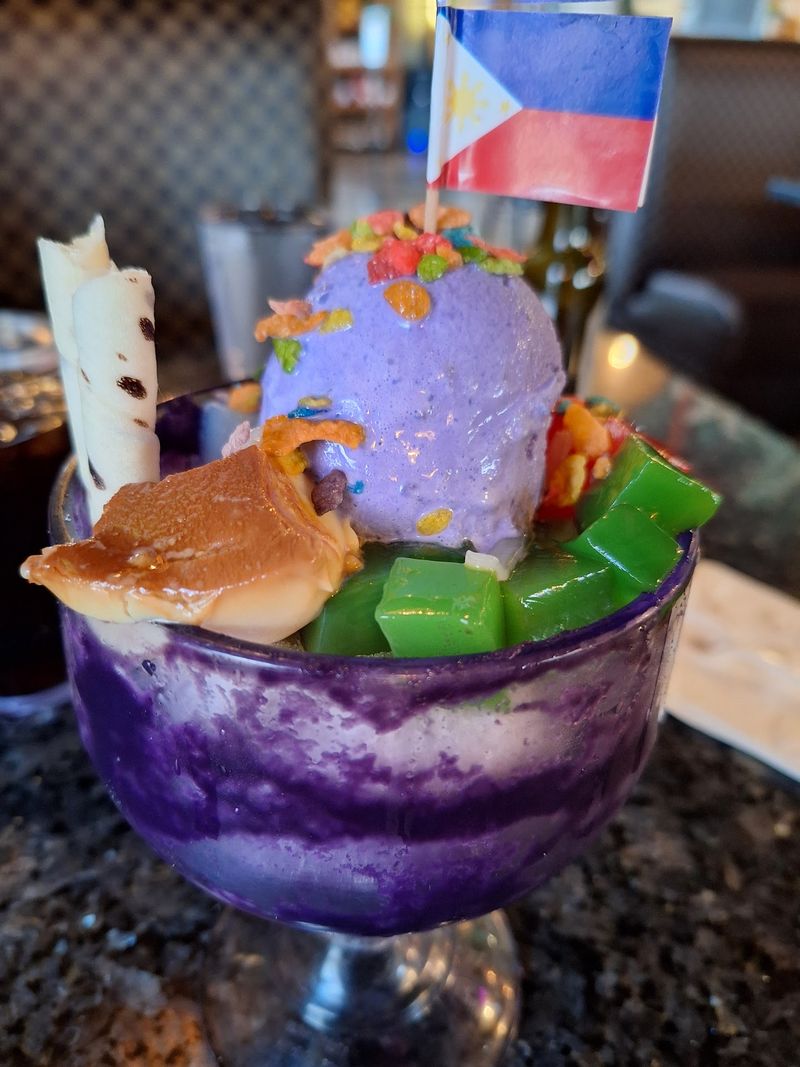
Save room. That warning matters here more than most places, because the bakery and dessert menu might be the sweetest part of the whole visit.
A good portion of guests end up wishing they had planned better.
Halo-halo is the star. The name means mix-mix, and the job is to stir everything together.
Shaved ice gets topped with sweetened condensed milk, coconut jellies, red beans, garbanzo beans, and a big scoop of ube ice cream. There is even a giant Texas-sized version for brave groups.
The pastry case near the register is dangerous in the best way. Sapin-Sapin offers soft, layered, gently sweet bites with a chewy texture.
Leche Flan is rich and silky, while the ube flan cake combines fluffy purple chiffon with creamy custard.
Colorful puto rice cakes and ube halaya, a thick purple yam spread, are also worth a look. Fresh baked goods can sell out, so arriving earlier in the day gives the best selection.
Late visitors sometimes leave with nothing but longing.
Drinks deserve attention too. Calamansi Limeade is bright and tart, made with a small Filipino citrus.
The dairy-free Ube Horchata blends two cultures in one cup, and CalamanTEA offers another refreshing option on hot Texas afternoons.
Desserts like these tie the story together. A baker brought from the Philippines helped start this tradition years ago, and the sweets still taste like home for many guests.
A purple ending feels exactly right.
