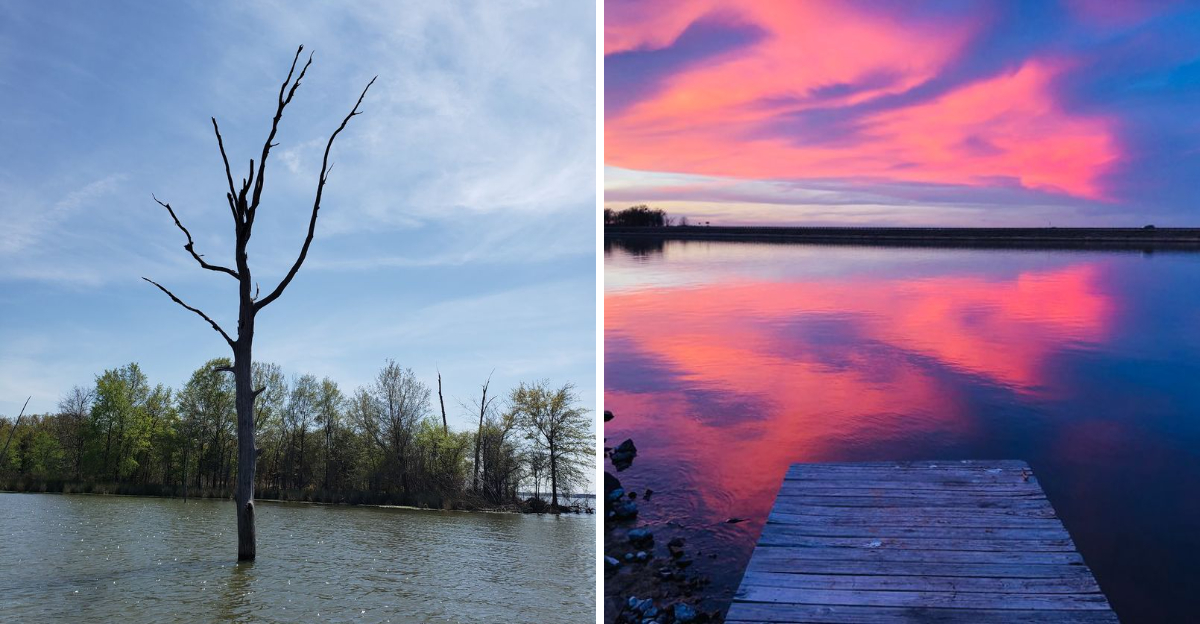
A normal lake already has enough going on, but this Texas reservoir added an underwater obstacle course of trees just to keep things interesting.
Standing and submerged timber remains throughout the lake, creating a strange landscape where trunks can rise from the water while many more hide below the surface.
Texas Parks and Wildlife specifically warns boaters that submerged timber is a substantial hazard, so this is definitely not the place for confidently inventing shortcuts across open water.
The same woody habitat is also one reason fish congregate here, helping make the reservoir especially famous among anglers.
Visually, though, the trees are what make this Texas lake feel unusual, as if somebody flooded a forest and then decided the remaining trunks were far too interesting to clean up.
The Flooded Forest That Never Left
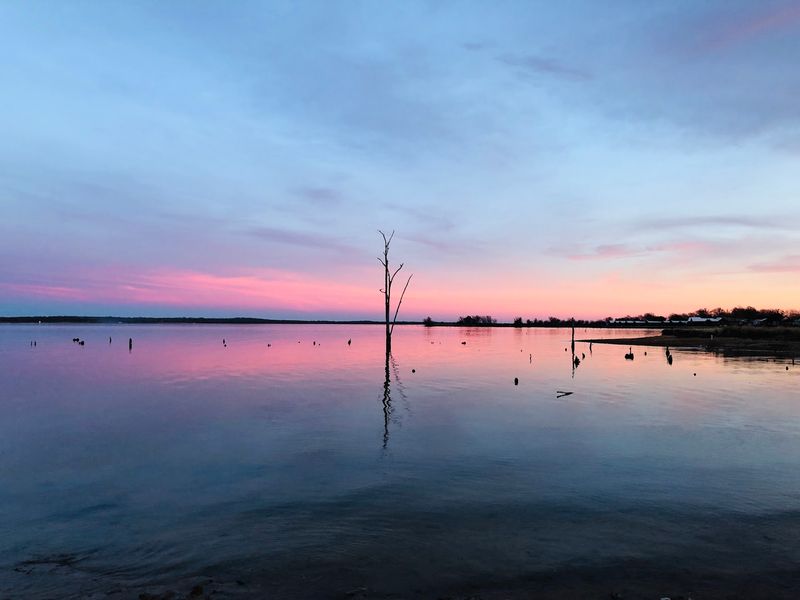
Those upright trunks are not an accident or a case of neglect. When the Sabine River Authority filled the reservoir, roughly 80 percent of the original trees were deliberately left in place.
Before the water arrived, the land here was a creek bottom stitched together with hundreds of small ponds. Lake Fork Creek, Big Caney Creek, Little Caney Creek, and Birch Creek all fed into the valley.
Construction of the dam started in 1975 and wrapped up in 1980, and by December 1985 the lake had reached its full conservation pool.
The result covers somewhere around 27,264 to 27,690 acres, with 315 miles of shoreline and a maximum depth near 70 feet. The lake takes a distinct V shape, with the dam sitting right at the point of that V.
What struck me most was how the scenery shifts with water levels. When the lake drops, more of the drowned forest reappears, and the sheer number of trunks becomes almost hard to believe.
The water carries a moderately clear brownish tint, which softens the reflections into something painterly rather than crisp. Trunks double themselves on the surface.
The effect is quiet and slightly eerie.
Anyone expecting a plain open reservoir will be surprised. Lake Fork looks more like a slowly submerged woodland that decided to keep its head above water, and that single detail explains almost everything else about the lake, from its fishing fame to the way boats have to move across it.
Why Anglers Talk About This Lake Like Legend
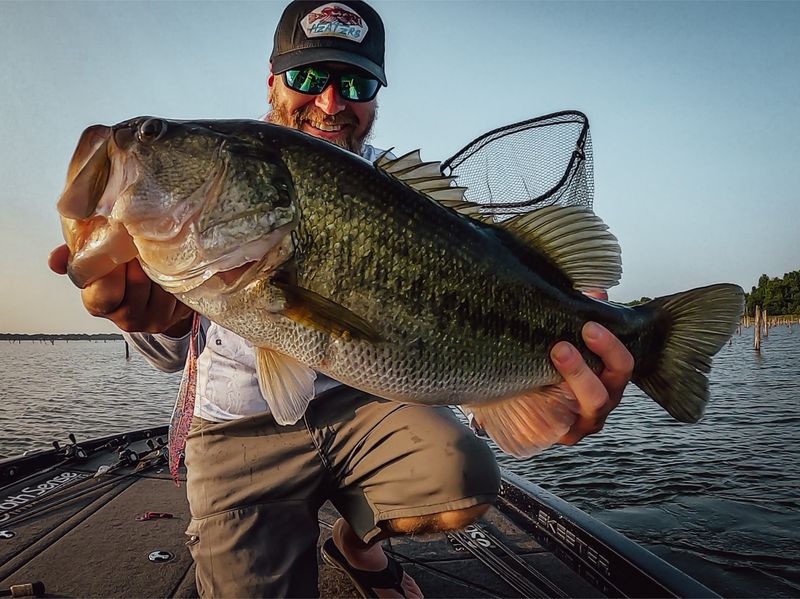
Ask around East Texas about trophy largemouth bass and Lake Fork comes up fast. The numbers behind that reputation are genuinely striking.
More than 65 percent of the top 50 largest bass ever recorded in Texas have come out of these waters, including the current state record.
Part of the credit goes to the Texas Parks and Wildlife Department, which stocked Florida-strain largemouth bass and continues to manage the fishery. The rest of the credit belongs to the trees.
Submerged timber and old stumps create shade, ambush points, and shelter, which is exactly what big bass want. Fish gather around standing trunks, hydrilla beds, boat houses, docks, lake points, and bridge pilings.
Regulations exist to protect all of that, including slot limits on bass and seasonal guidelines for crappie, so checking current rules before launching is simply part of the routine here.
Something I appreciated is how patient the fishing culture feels. People move slowly, watch the water, and read the timber like a map.
Even for someone who does not fish, watching boats thread between trunks at sunrise is oddly satisfying. There is a rhythm to it.
The lake also holds crappie, catfish, white bass, yellow bass, and sunfish, so nobody leaves empty handed for lack of options.
Trophy hunting gets the headlines, but the everyday fishing is what keeps locals coming back weekend after weekend, season after season, with coffee in hand and no particular hurry.
Navigating Boat Lanes Between the Trunks
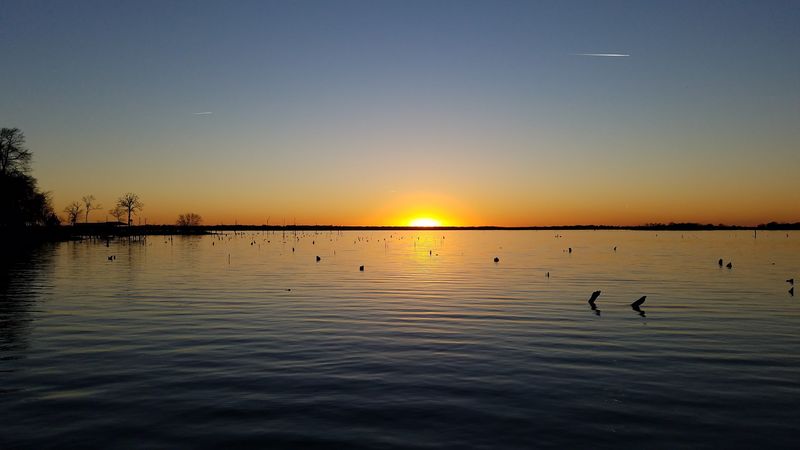
Driving a boat here comes with a rule that feels almost old fashioned. Stay in the lanes.
Because so much timber still stands beneath the surface, buoyed boat lanes crisscross the reservoir to guide vessels safely through the thickest stretches. Wandering outside them is how props meet hidden stumps.
Public boat ramps are scattered around the lake, which makes launching straightforward once a plan is in place.
Paddlers get some of the best seats. Kayaks, canoes, and paddleboards slip into narrow coves where motorboats will not follow, and jet ski rentals exist for anyone wanting speed instead of silence.
Hideaway Harbor on Little Caney Creek and Coffee Creek ramp on Coffee Creek, both near Yantis, are known as friendly starting points for paddle craft thanks to calm, sheltered water.
Texas law requires a life jacket for every person aboard a boat or paddle craft, and children under 13 must wear one while the vessel is underway or drifting. Simple, non-negotiable, worth repeating.
From a kayak, the sunken forest changes character completely. Trunks tower overhead instead of sitting in the distance, and sound carries strangely between them.
I found the coves to be the quietest part of the whole lake, with water so still that a paddle stroke felt loud. Turtles slid off logs.
Herons lifted off without a sound.
Slow travel suits this place better than speed, and the flooded woodland rewards anyone willing to drift a while and simply look around at what the water left standing.
Bald Eagles, Herons, and Winter Watching
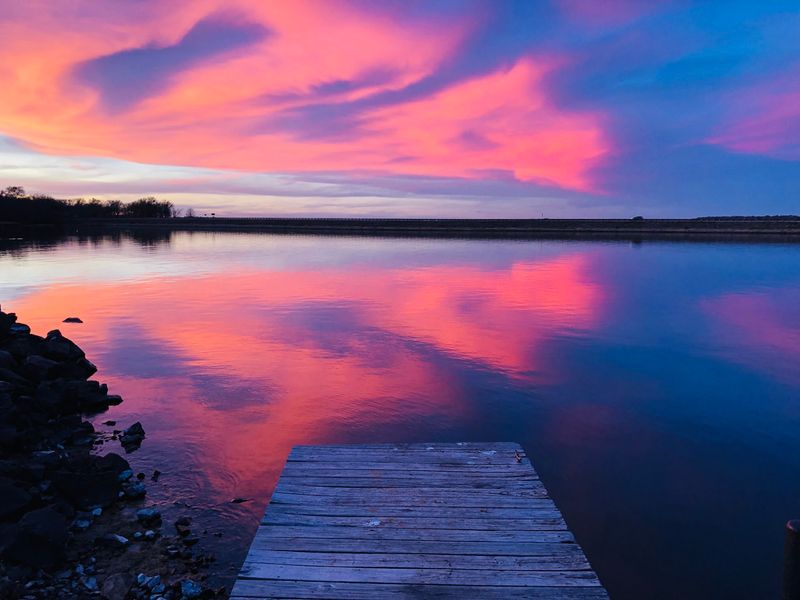
Winter turns Lake Fork into an unexpected birdwatching destination. Bald eagles arrive and stay noticeable from November through February.
Early mornings and late afternoons bring the best chances of seeing them, either soaring over open water or perched in tall trees along the banks. Caney Creek, Dale Creek, and the water near the Lake Fork Dam are known as reliable spots.
Spotting one perched on a bare trunk rising out of the lake is the sort of image that sticks with a person long after the trip ends.
Herons and egrets work the shallows year round, including great blue herons, little blue herons, and great egrets, while ospreys patrol overhead. Black-bellied whistling ducks, wood ducks, and neotropic cormorants show up too.
Barred owls, red-shouldered hawks, pileated woodpeckers, and turkey vultures round out a bird list long enough to keep binoculars busy.
Warmer months bring different residents. American alligators become active, sunning on logs or gliding through shallow water, so keeping a respectful distance matters.
Wild hogs and deer also appear along the shorelines, usually at dawn or dusk when the light is soft and the lake goes quiet.
Eco-tours run through prime wildlife habitat for anyone who prefers a guide with local knowledge, and they tend to be good for photography.
Honestly, even sitting still on a dock for twenty minutes produces sightings, because the standing timber gives so many birds a place to perch and hunt above the water.
Sunrise Fog and the Case for Getting Up Early
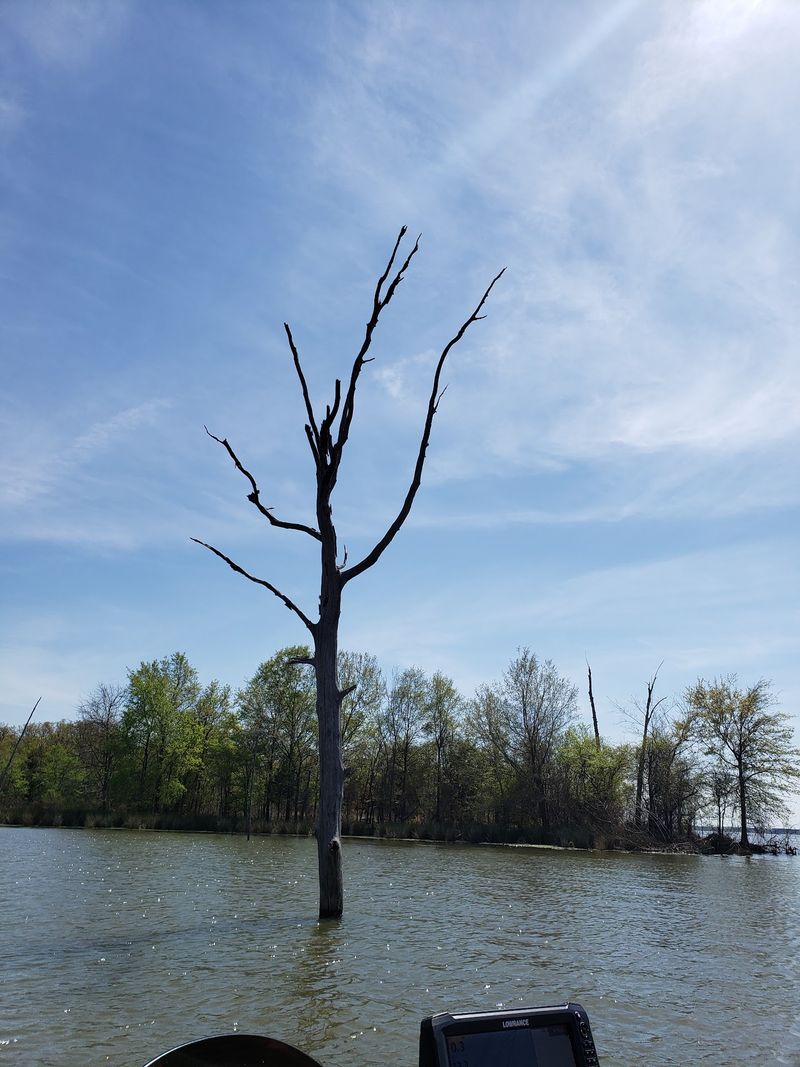
Sleeping in at Lake Fork feels like a small mistake. The best hour arrives before most people are awake.
Mist gathers low between the trunks, and the sky over the water shifts through pink, orange, and pale gold before settling into daylight. The reflection doubles everything.
Because the lake is so wide, sunrise stretches across a huge horizon, and the skeleton trees break it into fragments of light and shadow.
Evenings hold their own version of that magic. Late afternoon turns the water warm and coppery, and the trunks go dark against the glow, which makes for striking photographs without any special skill.
Sound plays a big role too. Bird calls carry across open water, and a light breeze through shoreline leaves creates the kind of background noise no speaker can imitate.
Paddling at these hours feels almost private. Boat traffic is thin, the surface stays glassy, and the pace naturally slows to match the surroundings.
I remember stopping mid-stroke just to listen. Nothing but water dripping off the paddle.
Photographers will want a wide lens for the tree lines and something longer for birds landing on distant trunks. A quiet spot along the shore works nearly as well as being on the water.
What makes Lake Fork memorable is not any single overlook but the way light keeps rearranging the same scene through the day. Come back to the same cove three hours later and it reads as a completely different place, which is a rare thing on a Texas reservoir.
Crappie, Catfish, and the Everyday Catch
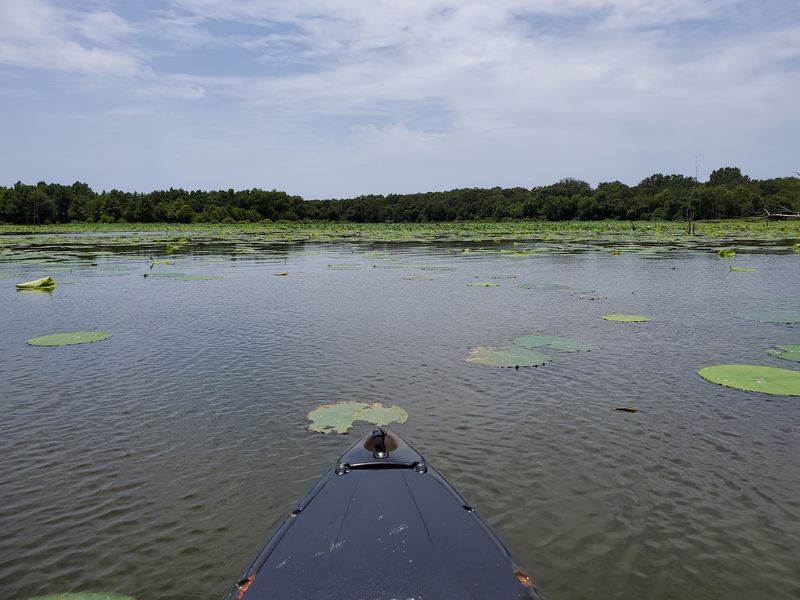
Trophy bass hog the spotlight, but plenty of people come to Lake Fork with entirely different plans. Crappie fishing may be the lake’s quiet strength.
Those fish gather inside the standing timber and beneath the bridges, which turns structure hunting into half the fun. Seasonal guidelines apply to crappie catches, so a quick regulation check pays off.
Catfish thrive here as well, and the catfish fishery has grown popular enough to draw its own crowd of dedicated anglers.
White bass numbers have increased, adding another sportfish to the mix and giving anglers something to chase when other bites slow down.
Yellow bass, often called barfish locally, show up regularly during cooler winter months. Their flavor gets compared to crappie, which says plenty about why people target them.
Sunfish, mostly bluegill, are everywhere through spring and summer, and they are ideal for kids learning to fish because the action rarely stops for long.
That variety is what makes Lake Fork friendly to beginners rather than intimidating. Not every trip needs to be about record books.
A folding chair near a bridge piling, a simple rod, and a couple of hours can be enough. Some of the most content people on the lake are the ones fishing from the bank.
Between the timber, the docks, the points, and the bridges, there is structure almost everywhere, which means a newcomer has a real chance at catching something on a first visit. That accessibility keeps this lake feeling welcoming instead of exclusive.
Safety Habits and Leaving the Lake Better
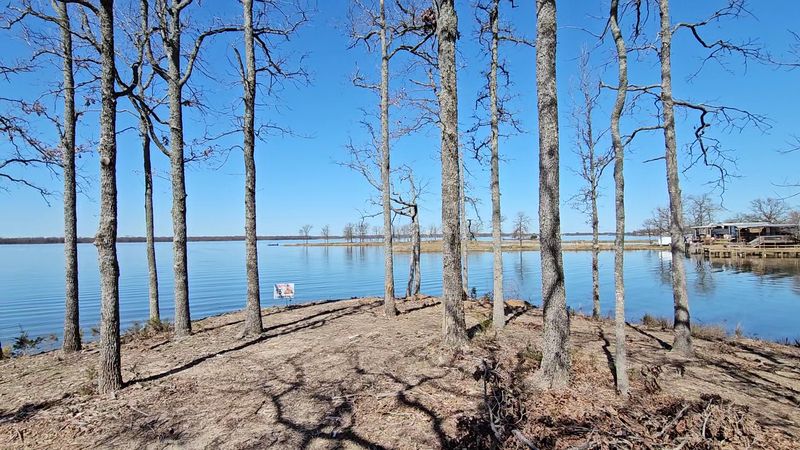
Hidden timber makes caution part of the experience rather than an afterthought. What sits below the surface is not always visible.
The Sabine River Authority of Texas owns and operates the reservoir, working alongside the Texas Parks and Wildlife Department to manage the water and the fishery. Their marked lanes exist for good reason.
Staying inside buoyed channels, watching speed, and respecting no wake zones keeps things smooth for everyone sharing the lake.
Life jackets are required for all occupants of a vessel under Texas law, with stricter rules for children under 13, who must wear one while underway or drifting. Wearing it beats carrying it.
Looking after the place matters just as much. Observing wildlife from a distance protects both the animals and the visitor, especially during alligator season.
Packing out trash, keeping fishing line off the banks, and leaving vegetation alone all help maintain the habitat that makes this lake special in the first place.
A few practical habits go far here. Check the forecast, since open water gets choppy quickly.
Bring more water than expected in summer.
Tell someone the launch point and expected return time, particularly when paddling into remote coves where the timber blocks sightlines.
Lake Fork rewards visitors who slow down, and slowing down happens to be the safest way to travel through a flooded forest anyway. Treat the trunks as landmarks rather than obstacles, and the whole reservoir starts to feel navigable, memorable, and genuinely worth the drive out to Wood County.
Address: 353 PR 5183, Quitman, TX 75783
