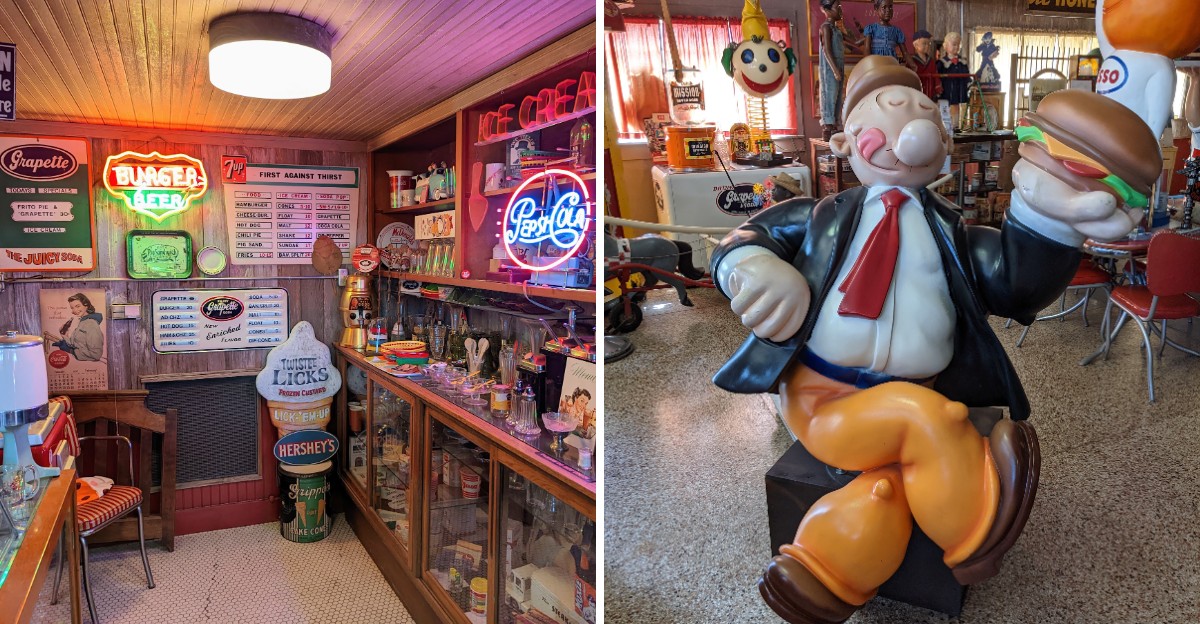
Nostalgia has a way of making even the strangest objects feel important, and this Texas museum leans into that feeling with a collection of retro signs, forgotten mascots, and odd pieces of Americana that would otherwise have disappeared entirely.
The displays trace decades of advertising and pop culture, showing how brands once tried to win attention with characters and slogans that seem almost unbelievable now, which is exactly what makes them so fascinating to look at.
Visitors wander through aisles of signs, statues, and curiosities that spark memories for some and pure confusion for others, and the mix keeps the experience interesting from start to finish. It is the kind of place where every corner holds something unexpected.
Whether you remember these relics or are seeing them for the first time, this Texas museum is worth the visit. Bring a camera and a sense of humor.
An Old Ford Dealership With a New Job
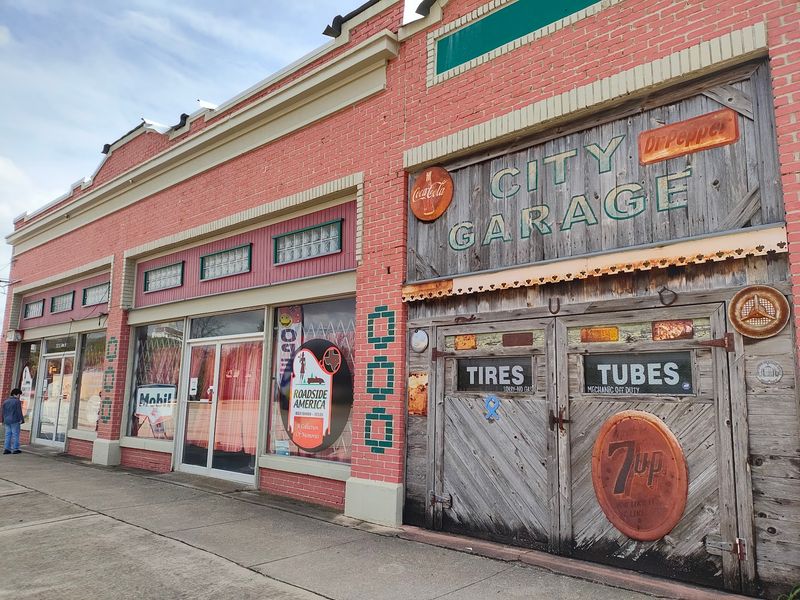
Some buildings retire quietly, but this one picked up a second career. The museum lives inside a former Ford dealership that is roughly 110 years old.
That history alone makes it a fitting home for a collection built around cars and roadside culture.
From the street, the red brick front catches attention right away. Vintage gas pumps stand outside like friendly greeters from another era.
Snap a photo here before heading in, because the light on the old brick looks great in the afternoon.
There is something fun about a car showroom turning into a showcase for car culture. Long ago, families likely came through these same doors to shop for shiny new Fords.
Now people come to admire machines and signs from that very same age. The building has basically gone full circle.
The space inside is roomier than many guests expect. High walls give plenty of room for signs to climb toward the ceiling.
Large floors leave space for cars, statues, and themed displays that stretch farther back than the front windows suggest.
One helpful tip is worth knowing before arrival. The building can look closed from the parking lot, even during open hours.
A phone number is posted on the door, and a quick call usually brings the owner or a guide over to open things up.
Do not let a dark window cause a drive-away. That small step is part of the charm.
It makes the visit feel personal right from the start, like being let in on a local secret.
A Riot of Neon and Painted Tin
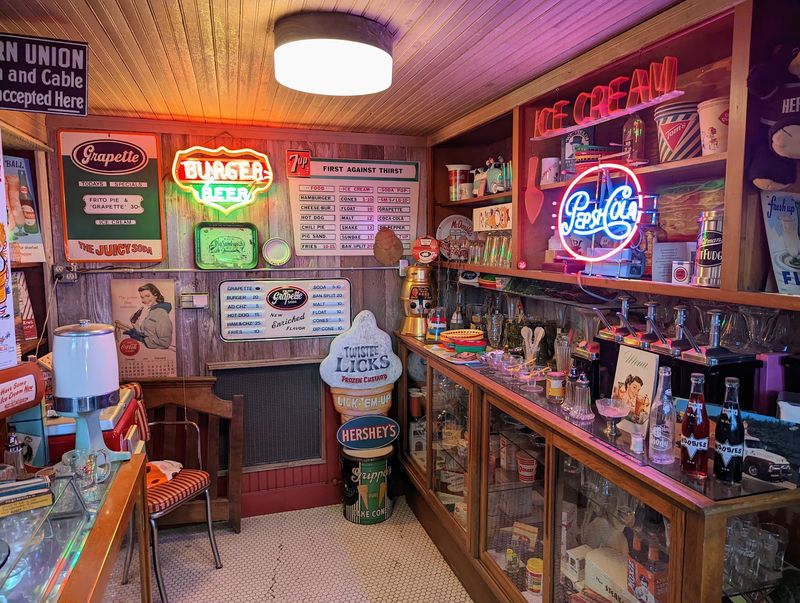
Color hits first. Nearly every surface inside is covered with vintage signs, and the effect is a happy kind of sensory overload.
Bright tin, faded paint, and glowing neon fight for attention on every wall.
The collection leans heavily on the 1940s and 1950s. Classic Coca-Cola signs show up often, with their bold red and cheerful lettering.
Signs for food and drink brands that disappeared long ago hang right beside them, which makes for a fun guessing game.
Try picking out a brand nobody in the group recognizes. Chances are good that at least one will stump everyone.
Those mystery logos tell a quiet story about how fast popular products can come and go.
The warm lighting adds a lot to the mood. Neon tubes cast soft glows across nearby displays, giving the room a feel close to an old diner at night.
It is cozy rather than harsh, and it makes the colors pop even more.
The arrangement does not follow a strict museum system. Instead, it embraces a more is more style, with items placed to build little scenes.
A sign might sit above a cooler, which sits beside a matching bottle, and suddenly a whole corner feels like a real shop.
Take things slow in these rooms. Rushing means missing small details, like a tiny price tag on an old container or a chipped corner on a sign that clearly survived decades outdoors.
Every scratch hints at a past life on some forgotten highway.
Big Boy and His Larger Than Life Friends
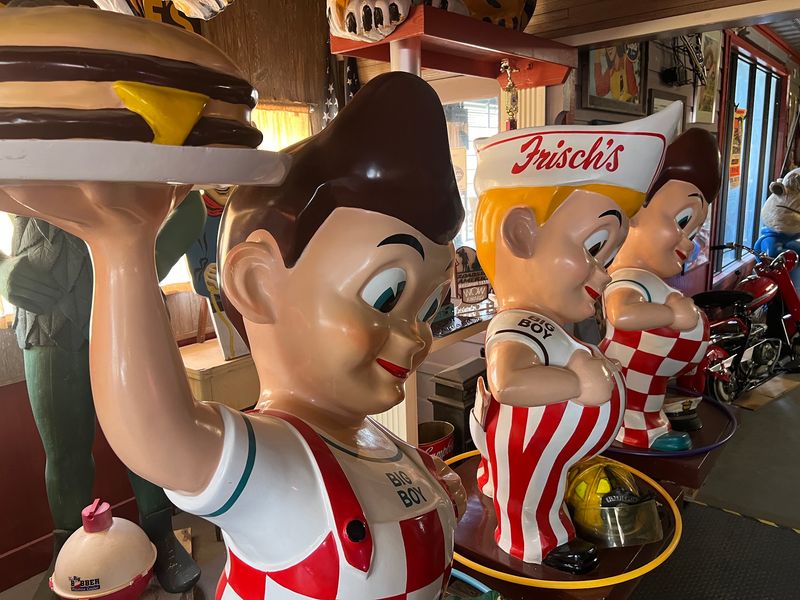
Eight feet tall and grinning, a Big Boy statue was the very first fiberglass figure Carroll Estes added to the collection. That single purchase opened the door to a whole crowd of oversized mascots.
Now these giants stand around the museum like they own the place.
Several Big Boy figures came from restaurants in Texas that have since closed. Each one once stood near a road, waving hungry travelers inside for a burger.
Seeing them up close shows just how big and bold roadside advertising used to be.
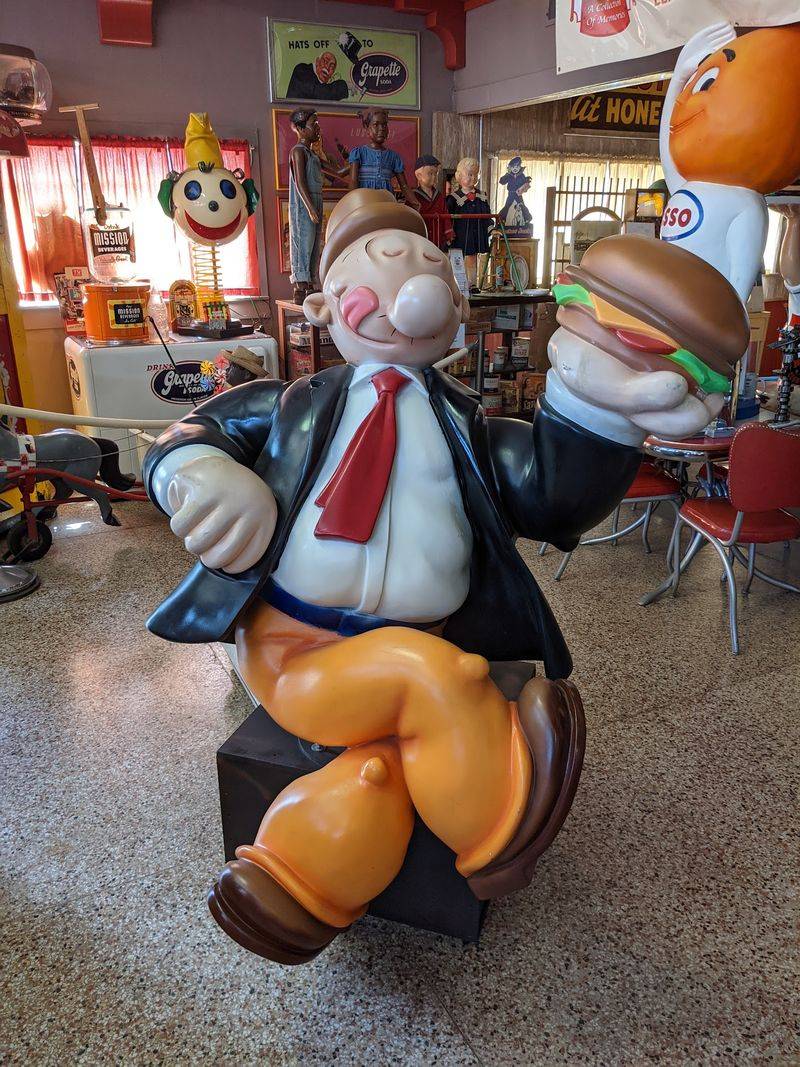
Fast food mascots from past decades show up here too. Some will look familiar to older visitors, while younger guests may wonder who on earth these characters were.
That mix of reactions is half the fun.
Here is a fun bit of history. Back in the mid-1900s, giant statues were a popular way to get drivers to pull over.
Before phones and maps apps, a huge smiling figure was basically the best sign around.
These statues also make great photo partners. Stand next to one for a size comparison, and the picture practically tells its own joke.
Kids especially love looking up at a mascot that towers over even the tallest adult in the group.
Notice the paint and the little wear marks on each figure. Those details show years of sun, wind, and Texas weather.
Rather than hiding that age, the scuffs add character, making each mascot feel like a survivor with stories it simply cannot tell out loud.
That’s Not All, Folks
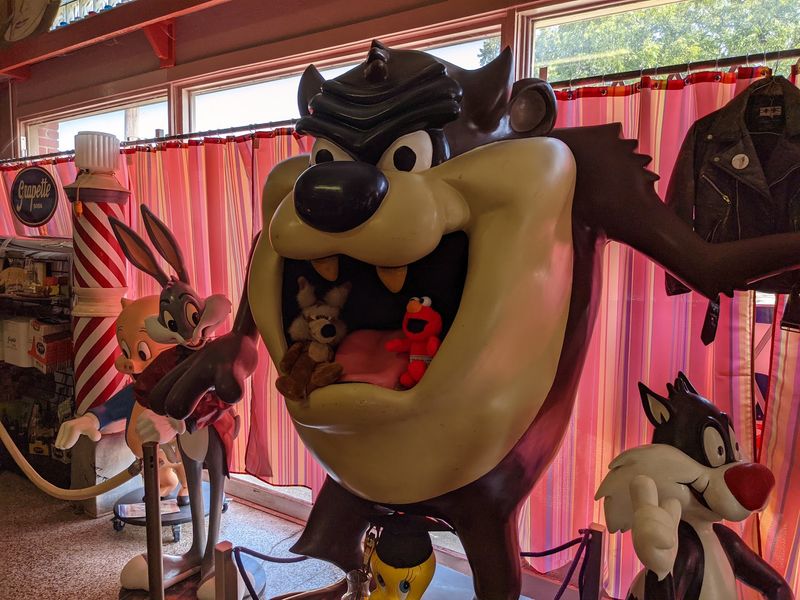
Bugs Bunny is here. So are Daffy Duck, Sylvester the Cat, and Pepe Le Pew, all in large figure form.
Spotting them feels like bumping into old Saturday morning friends in an unexpected place.
These cartoon characters bring a playful energy that balances the serious car talk elsewhere in the building. Their big expressions and bright colors almost seem to move.
It is hard not to smile when Daffy looks like he is about to start an argument.
The curator is reportedly working to collect the entire Looney Tunes cast. That means the lineup could grow over time.
Repeat visitors might find a new face waiting, maybe Tweety, Porky Pig, or the Road Runner zooming in at last.
For families, this corner is often a favorite. Kids who know these characters from reruns or streaming can connect with something familiar.
Parents and grandparents get a fun flashback to the cartoons they watched growing up.
Try a little challenge while here. Ask each person in the group to name their favorite Looney Tunes character, then see whether that one made it into the collection.
If not, well, now there is a reason to come back later.
These figures show that nostalgia is not only about old products and cars. Cartoons were a huge part of everyday American life, too.
Having them stand among the signs and mascots helps complete the picture of what growing up felt like during those decades.
Grapette, the Purple Heart of the Collection
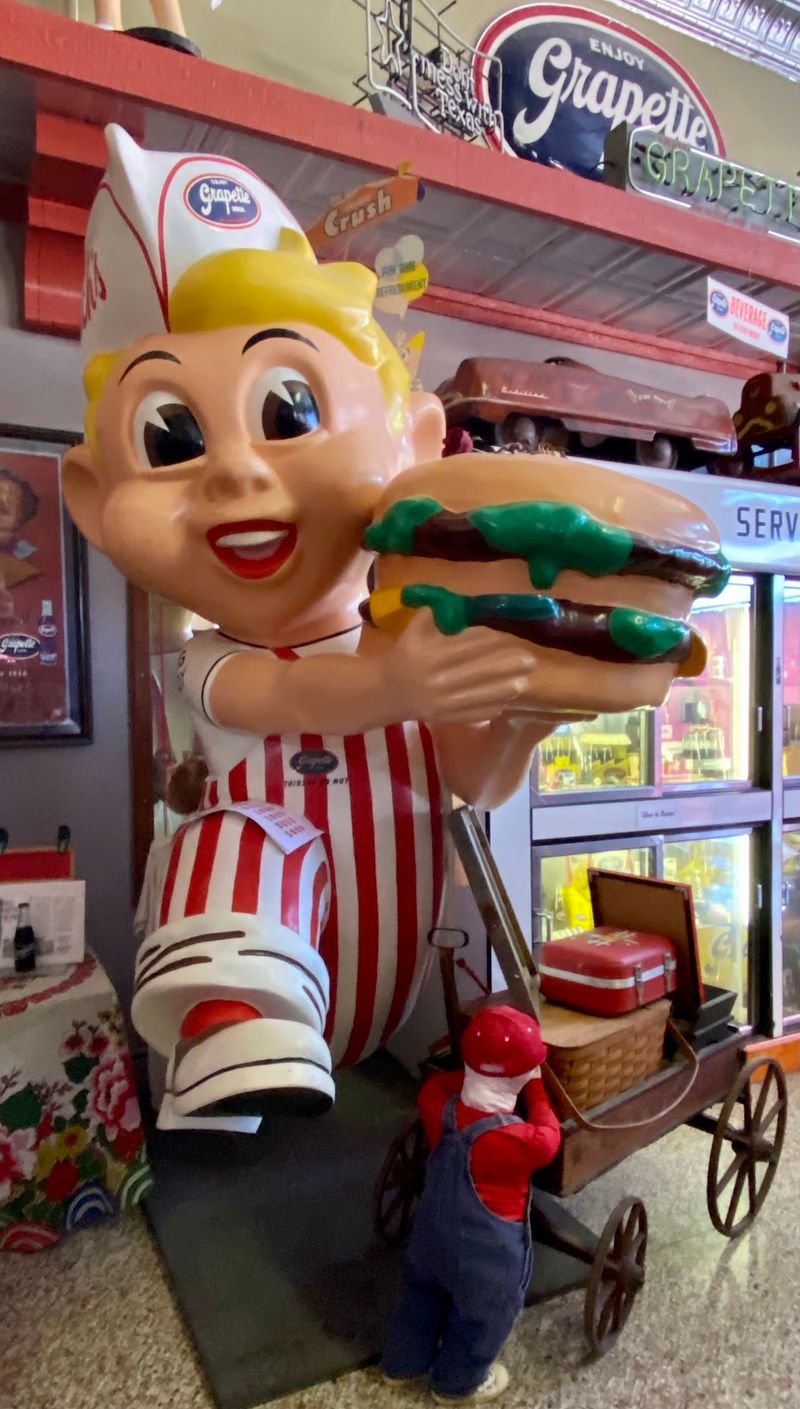
Every great collection has a starting point, and this one tastes like grape soda. Grapette was a childhood favorite of Carroll Estes.
His love for that drink helped spark the whole museum.
He believes his Grapette collection may be the largest in existence. Bottles, signs, crates, and other items fill the displays in cheerful shades of purple.
Even people who have never heard of the brand tend to get curious fast.
Grapette was a popular soda brand in the middle of the 1900s, especially in the South. Its small bottles and fun advertising made it a common treat at gas stations and country stores.
Many older visitors remember sipping one on a hot summer day.
Look closely at the bottle shapes and logos. Small changes in design can show how the brand updated its look across the years.
It is a neat way to see history through something as simple as a soda bottle.
This display also reveals something sweet about collecting. Sometimes the best collections come from a personal memory rather than a plan to get rich.
A favorite drink from childhood turned into decades of searching, saving, and showing others.
Ask about Grapette if a tour is happening. The curator has been known to share stories about the brand and his collection.
Hearing the history straight from the person who gathered it all makes those purple bottles feel a lot more meaningful than a typical shelf of glass.
Gleaming Classic Cars and a Prison Bus
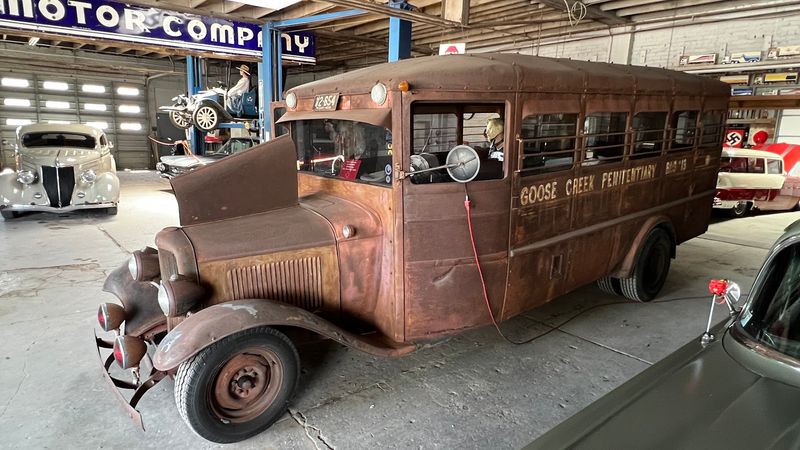
Chrome lovers, get ready. Carroll Estes spent years running Carroll’s Classic Auto Body, where he restored classic cars and built street rods.
That skill shows in every shiny fender here.
The car area holds beautifully restored vehicles from decades past. Some guests have mentioned old Packards and Corvettes, along with other rides that gearheads adore.
The paint jobs gleam like they just rolled off the showroom floor that once filled this very building.
Then comes the surprise. A 1932 Ford prison bus sits among the exhibits, and it is easily one of the strangest vehicles around.
Imagining it rumbling down an old Texas road adds a touch of mystery to the visit.
The curator has a special fondness for the 1950s, especially the year 1959. Fans of tail fins and bold designs will understand why.
Cars from that era had serious personality, with curves and colors that modern vehicles rarely match.
Some of these cars also travel to shows and competitions. That means certain vehicles might be away at times.
Anyone driving in specifically to see the cars should call ahead to check what is on display.
Even people who do not know much about engines can enjoy this space. Look at the dashboards, the hood ornaments, and the shiny grilles.
Each car is a rolling piece of art, and the care poured into restoring them is easy to feel just by standing nearby.
A General Store From Another Century
Hidden in the back of the museum, a rustic general store changes the mood completely. The neon glow fades, and weathered wood takes over.
It is like turning a page to an earlier chapter of American life.
The store was built from rustic materials and stocked with goods from around the turn of the century up through the 1940s. Shelves hold old tins, bottles, tools, and household items.
Everything sits neatly, just as a small-town shopkeeper might have arranged it long ago.
Back then, a general store was often the heart of a community. People bought flour, fabric, nails, and medicine all in one place.
Folks also swapped news there, since there was no internet to scroll.
Take a moment to read some of the old labels. Remedies and products from that time made some pretty bold promises.
A few of the names are so funny that they deserve a second look and maybe a laugh.
This section works well for curious kids. It invites questions about how people lived before supermarkets and online shopping.
Parents can turn the visit into a fun little history lesson without it feeling like school.
Some visitors also mention a diner area built nearby. Between the store and the diner, the back of the museum feels like a tiny town frozen in time.
It offers a calmer, quieter layer after the bright and busy front rooms.
Jukebox Tunes, Rotary Phones, and Tiny Treasures
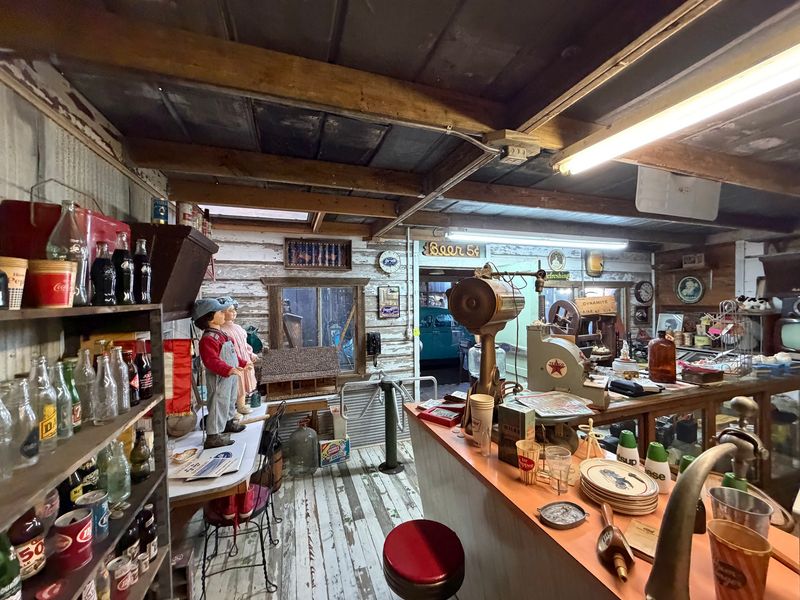
Music changes everything. The museum has a working jukebox, and the curator sometimes switches it on for guests.
Suddenly the whole room seems to sway back to the 1950s.
Nearby, smaller items reward anyone with sharp eyes. Rotary phones, old postage meters, and vintage records sit among the displays.
Kids often stare at those phones with total confusion, which is pretty entertaining to watch.
Motel key fobs from across the United States form another fun collection. Each fob once hung on a room key at some roadside stop.
Together, they map out a whole age of family road trips and neon vacancy signs.
Souvenir plates, spoons, and pennants from national parks and tourist spots add to the travel theme. Old road maps and road signs complete the picture.
Try finding a place that someone in the group has actually visited.
These little objects are easy to skip, but they carry big stories. A souvenir spoon might have been a proud memory for some family decades ago.
Now it sits here, quietly keeping that trip alive.
Fun fact for the younger crowd. Before phones could play any song instantly, people dropped coins into jukeboxes to hear a favorite tune at the local diner.
Choosing a song meant everyone in the room had to listen, so picking a good one really mattered. That shared music is part of what made those places feel so lively.
Planning the Stop in Hillsboro
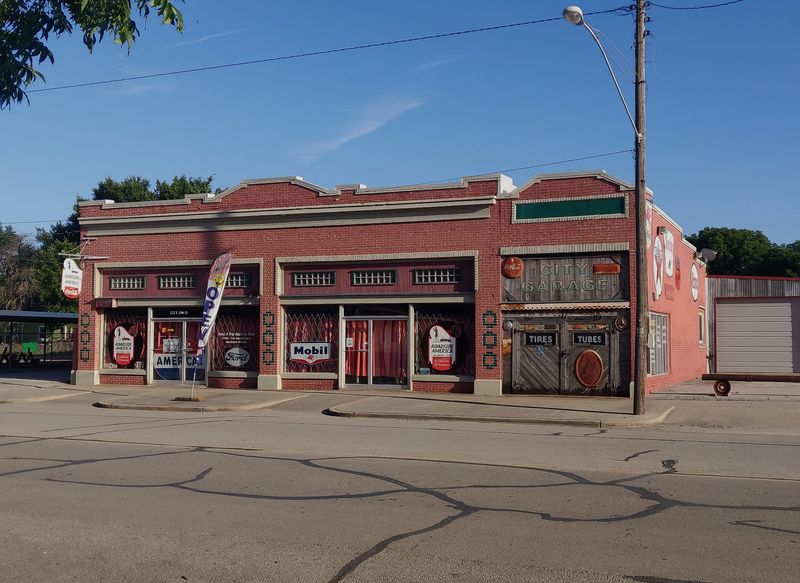
Good news for road trippers. Roadside America Museum sits at 212 E Elm St, Hillsboro, TX 76645, just a short hop off Interstate 35.
That makes it an easy break on a drive between Dallas and Waco.
Listed hours run from 10 AM to 5 PM every day of the week. Still, remember the door trick.
If the place looks dark, call the number posted on the door, and someone usually arrives quickly to let guests in.
Calling ahead is smart for anyone making a special trip. The curator lives on site and tries to keep someone available for tours.
But since some cars head off to shows, a quick check never hurts.
The guided tour is often the highlight. Many guests mention that the curator shares stories about the items and how he found them.
Bring questions, because the answers tend to be more interesting than any printed sign.
Plan for about an hour, though fans of cars or old signs may want longer. Some items in the collection are also for sale.
Keep that in mind if something on a shelf starts calling out.
Families with kids around ten years old and up seem to enjoy it a lot. Bring a camera, wear comfy shoes, and arrive curious.
The place rewards slow looking, friendly chatting, and plenty of pointing at things that spark old memories or brand new questions.
