An actual fighter jet is on display here, alongside tanks, helicopters, and rows of historic military vehicles. And admission costs absolutely nothing.
That’s an unexpected amount of hardware to encounter on a casual museum afternoon.
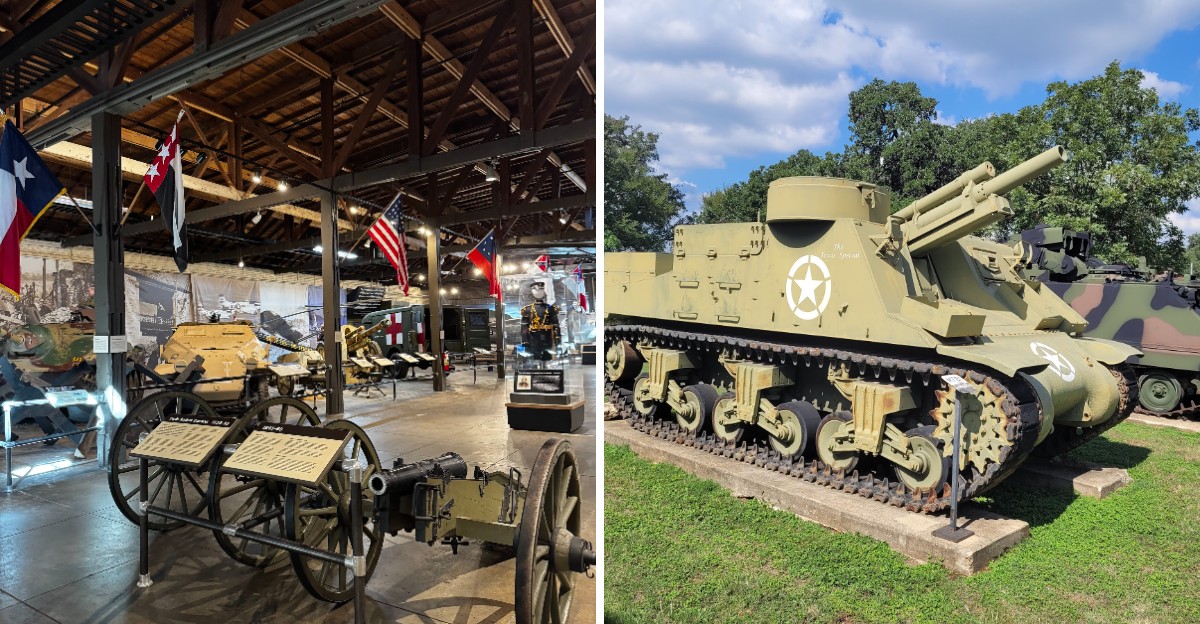
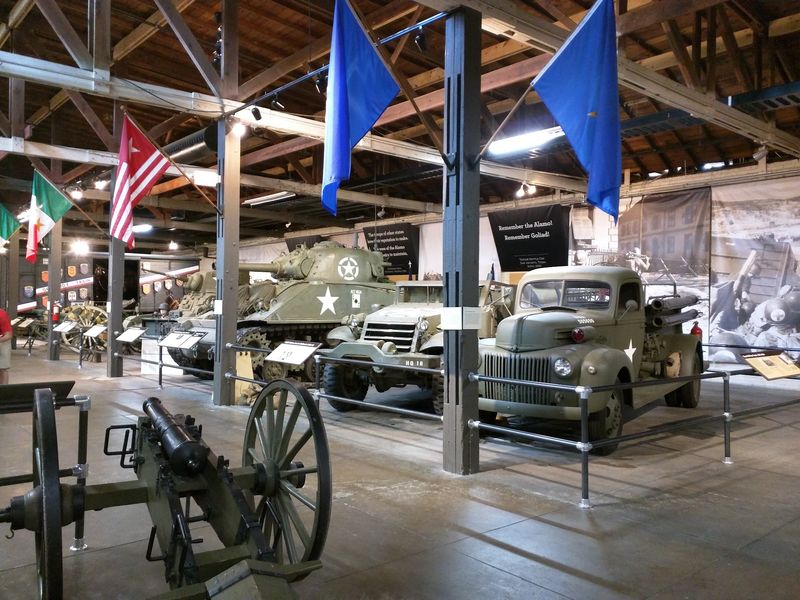
The Texas museum covers 45,000 square feet and follows the state’s military forces across two centuries. Inside, battlefield dioramas, uniforms, photographs, and soldiers’ personal belongings bring those years into focus.
Some exhibits recreate entire environments rather than leaving everything behind glass. Outside, more vehicles wait to be explored from a distance.
I find the personal objects especially compelling. A uniform or an old photograph can tell you more about someone’s everyday life than a massive machine ever could.
The collection is big enough to pull you in for hours, yet the most memorable details might be the smallest ones.
Free Admission Feels Almost Too Good To Be True
Museums with tanks usually come with a ticket booth. The Texas Military Forces Museum skips that part completely, and admission is free for everyone.
That one detail changes how you plan a day. You can visit for an hour, leave for lunch, and never feel like you wasted money.
Free parking helps too. Spaces sit right in front of the building, plus there’s an adjacent paved lot.
The museum is in Building 6 on Camp Mabry in Austin. Camp Mabry is a working military post, which makes the whole trip feel a little more official.
Families on a budget will love this setup. Homeschool groups and history buffs get a serious bargain as well.
Hours run from 10 AM to 4 PM. Still, the real deadline is earlier, so keep reading the access tips later in this list.
There’s no catch hiding in the fine print. You simply show up, pass through the gate process, and start exploring.
I believe free museums should teach and impress at the same time. This one pulls off both jobs with room to spare.
Your wallet stays happy, and your camera roll fills up fast.
Getting Through The Gate Takes A Little Planning
Here’s a museum with a security checkpoint. Since Camp Mabry is an active military base, every adult visitor gets vetted at the Visitor Control Center first.
Adults 18 and older need a valid photo ID. A state-issued driver’s license or ID works, and so do military IDs, US government IDs, and US visas.
Timing matters more than you’d think. The Visitor Control Center closes at 3 PM, so plan to reach the 35th Street entrance by 2:55 PM.
Miss that window and you’ll be admiring the fence instead of the tanks. Not a fun souvenir.
The GPS address for the entrance is 3038 W 35th St, Austin, TX 78703. Use it, and aim for the main gate on 35th Street.
Motorcycle riders have extra rules. Camp Mabry requires long pants, a long-sleeve shirt, and a motorcycle helmet.
Foreign visitors are currently not permitted on the post. That’s worth checking before you invite out-of-town friends from overseas.
A little prep goes a long way here. Bring your ID, arrive early, and the gate becomes just the first stop of a great day.
The Story Begins Way Back In 1823
Long before jets and armored vehicles, Texas defense meant volunteers with whatever gear they owned. The museum starts there, with the first militia muster in Stephen F.
Austin’s colony in 1823.
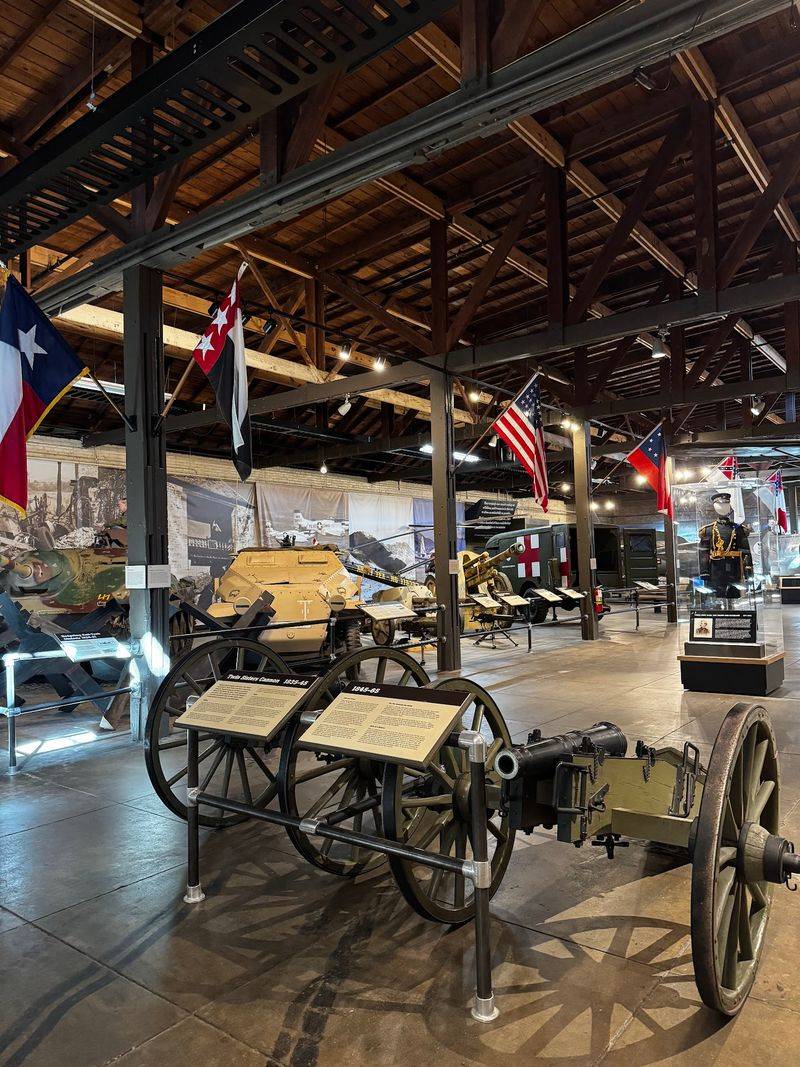
The 19th Century Gallery follows the militia and volunteer forces through 1903. You’ll see exhibits on the Texas Revolution, the Texas Navy, and the Texas Republic.
Yes, Texas once had its own navy. That fact alone makes a great trivia question for the car ride home.
Displays also cover the Mexican War and the Indian Frontier. The story keeps moving through the Spanish-American and Philippine-American conflicts.
Uniforms, weapons, equipment, and personal items bring each era into focus. Photographs and dioramas help younger visitors connect the dots.
I like how the personal items add a human side. A button or a belt buckle can say a lot about the person who carried it.
Read a few panels slowly here. The details reward anyone who loves Lone Star State history.
Kids who think history is boring may change their minds. A full navy for one state is hard to ignore.
Full-Scale Scenes Make The 20th Century Feel Real
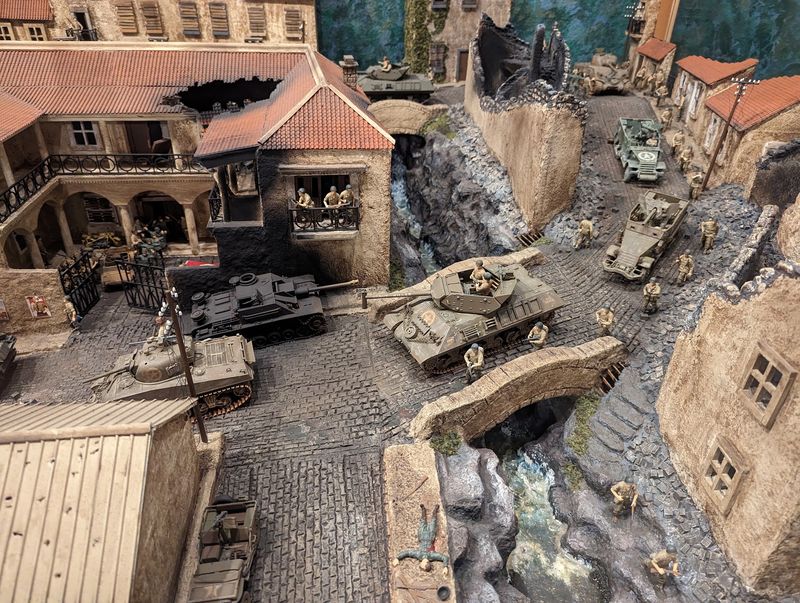
Some exhibits just tell you facts. The 36th Gallery puts you inside the scene with realistic full-scale environments.
From 1903 onward, the museum follows the Texas Army National Guard. Much of this gallery covers the 36th Division during World War I and World War II.
Film, music, and photographs add layers to the displays. Battle dioramas show how events unfolded in a way a textbook rarely can.
Plan to slow down in this section. The information panels are packed, so curious readers can easily lose track of time.
Families with older kids will find plenty to talk about here. Ask them which display they’d want to explain to a friend.
The museum also covers the Korean conflict in its galleries. Each period gets its own artifacts and stories.
I believe hands-on scenes stick in memory longer than plain cases. That’s why this part of the Texas Military Forces Museum works so well.
Bring a phone with plenty of storage. You’ll want photos of the dioramas to look at again later.
They pack in more detail than one pass can catch.
Climb Into An F-16 Cockpit And Feel Like A Pilot
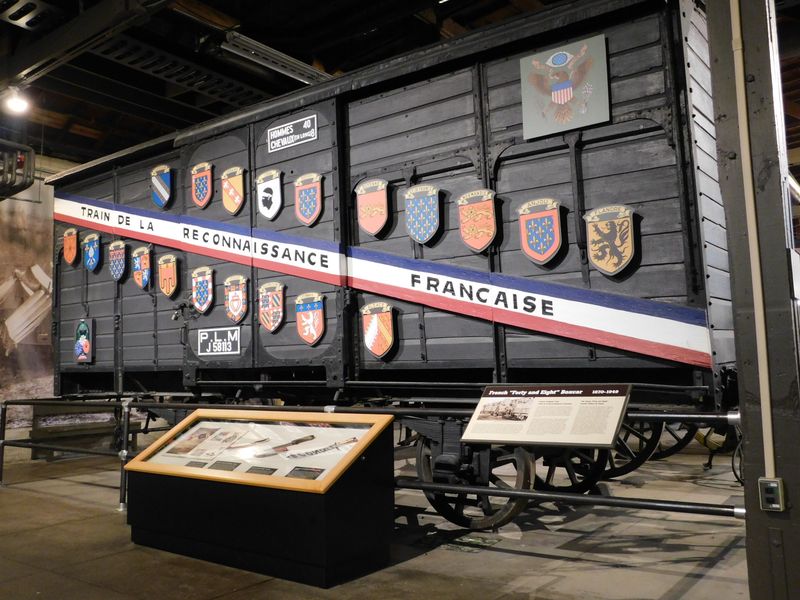
Every kid has dreamed of flying a fighter jet at least once. At this museum, an F-16 cockpit is open for public access.
That means you can actually sit where a pilot sits. Adults tend to grin just as wide as the kids do.
The field kitchen is another interactive exhibit. It shows how troops got fed far from home, which is a surprisingly fun detail to explore.
Hands-on spots like these break up the reading. They give younger visitors a chance to move around and touch something real.
Here’s a quick tip. Take turns in the cockpit and snap photos of everyone, because that picture will become a family favorite.
The Cold War to Global War on Terror Gallery brings things closer to today. Peacekeeping deployments also get their own space.
Modern exhibits feature the Texas Air National Guard and the Texas State Guard. Their work in peacetime gets attention too.
I can’t imagine a better museum moment for an aviation fan. Sitting in that cockpit makes the history feel personal.
Just don’t expect it to take off.
Tanks Line Up Outside Like A Parking Lot For Giants
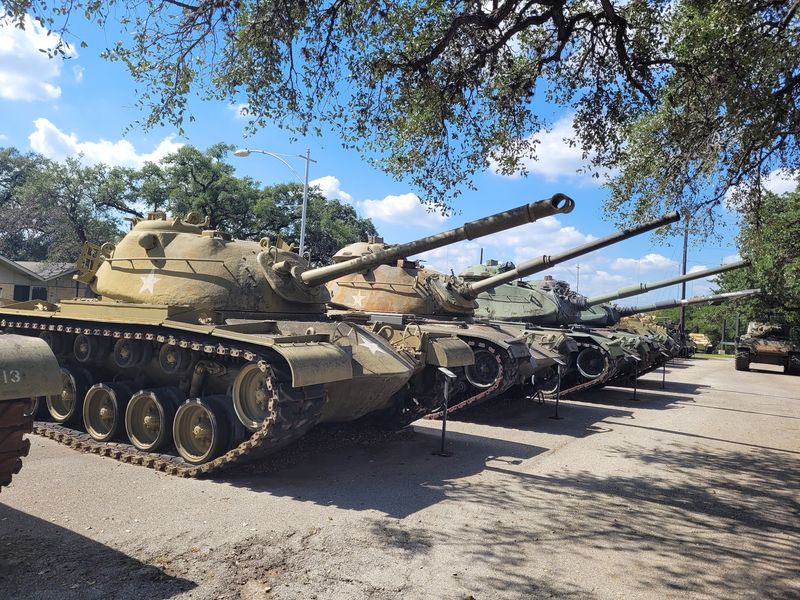
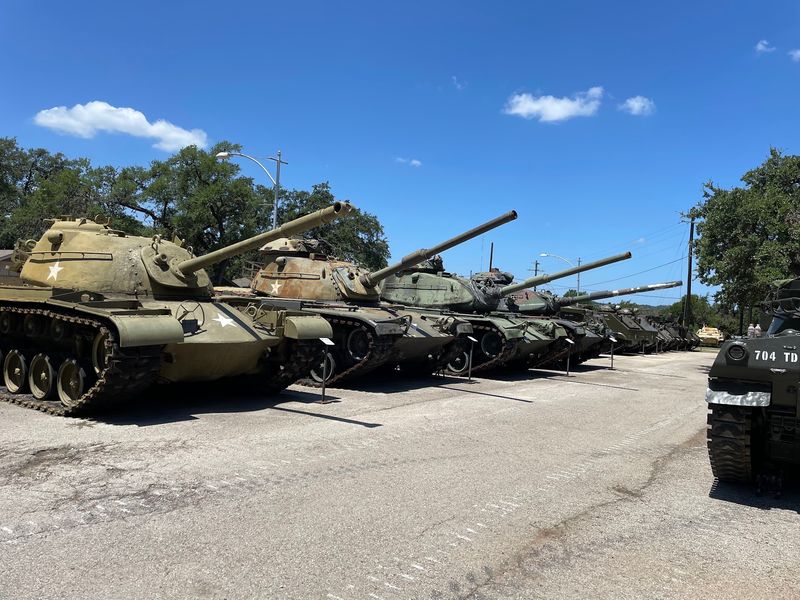
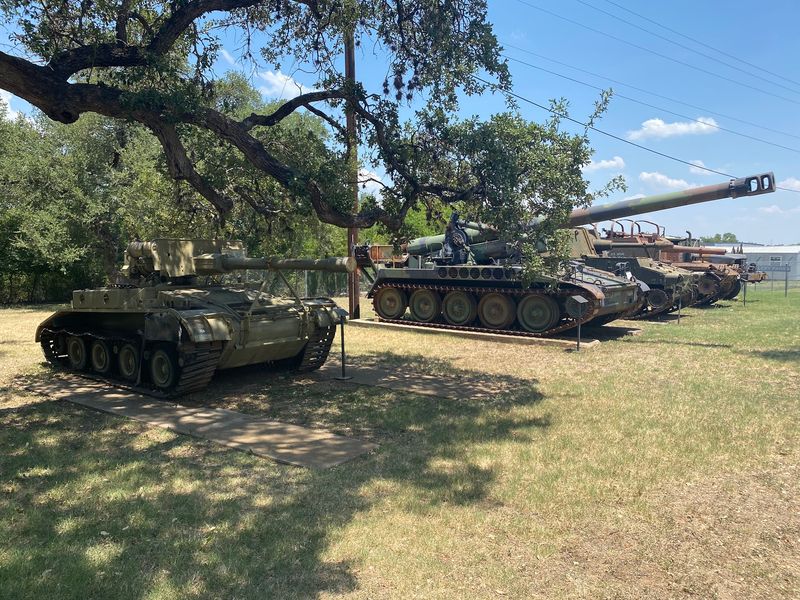
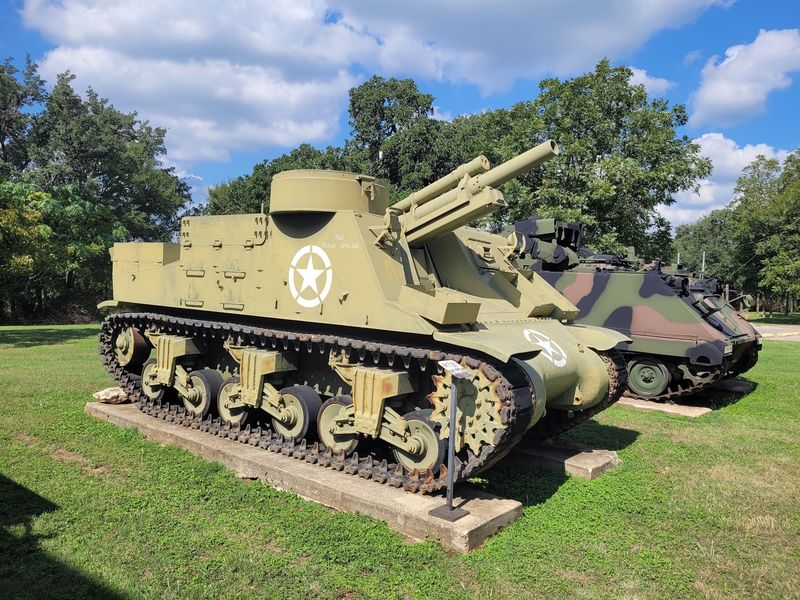
Count fast, because the tanks keep coming. The outdoor area holds dozens of tanks, armored personnel carriers, and self-propelled guns.
Trucks, jeeps, and towed artillery pieces join the lineup too. The heavy equipment spreads across the grounds with plenty of room for photos.
These outdoor exhibits stay open from dawn to dusk all year. Remember, though, you still need to clear the gate before 3 PM.
Texas sunshine can be intense, so pack water and sunscreen. A hat helps a lot on a hot afternoon.
The vehicles are big enough to make adults feel small. Standing beside one gives you a real sense of scale.
Tank fans will want to read the signs carefully. Each one helps you tell the different models apart.
This is the part of the visit where kids usually sprint ahead. Let them, and then catch up with the camera ready.
Honestly, I think the outdoor collection could be its own attraction. Paired with the indoor galleries, the Texas Military Forces Museum feels much bigger than one building.
Wear good shoes, because there’s a lot of ground to cover.
Helicopters And Jets Bring The Sky Down To Earth
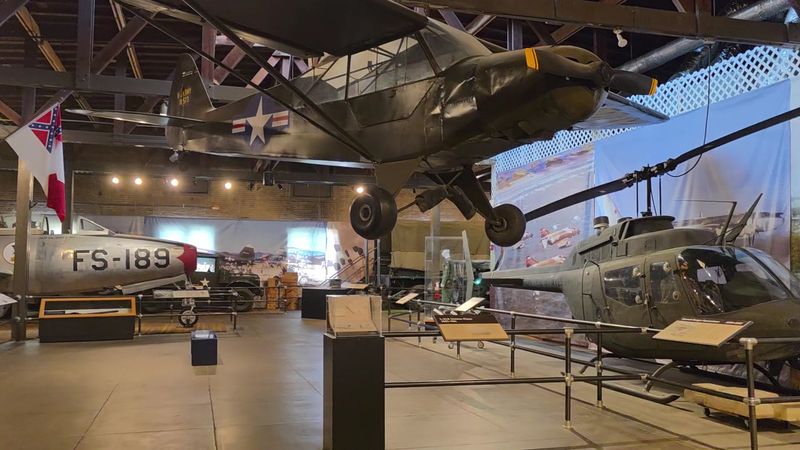
Not everything here rolls on treads. The collection also includes helicopters, jet fighters, and observation aircraft.
Aircraft look different when they’re parked right in front of you. You notice the size of the rotors and the shape of the wings.
These displays are great for comparing old and newer designs. Ask your group to guess which ones came first.
Photographers get a treat here. Wide shots show the full aircraft, while close-ups capture markings and details.
The aircraft connect to the story of the Texas Air National Guard. That link makes the outdoor walk feel like part of the museum, not a side trip.
Bring a little patience if you want photos without people in them. Then again, a crowd-free shot is never guaranteed anywhere.
Little aviation fans may want to linger the longest here. Big machines with wings tend to win kids over quickly.
I like how the aircraft and tanks share the grounds. Land and air history sit side by side, so you get the full picture in one stroll.
That’s a lot of horsepower for zero admission.
Researchers Can Dig Through Thousands Of Books
Behind the tanks and dioramas sits a quieter treasure. The research library holds about 6,000 books on military history and Texas military history.
An extensive field and technical manual library adds even more depth. Model builders and restorers could get lost in there.
The archives go further with personal memories from 36th Division members. You’ll also find World War I journals, newspapers, and scrapbooks.
Other holdings include histories of the Texas National Guard and 36th Division After Action Reports. World War I and II souvenir books and postcard books round it out.
Family history fans should take note. WWI service records for Texas soldiers are available online through FamilySearch.
A card file for WWII 36th Infantry Division members is also being added online. That could help someone finally trace a grandparent’s story.
Not every visitor needs the archives, of course. Still, it’s nice knowing the museum supports serious research too.
I believe this side of the museum deserves more attention. Artifacts tell a story, but journals and letters tell it in the soldiers’ own words.
That’s history you can really sit with.
Catch A Reenactment And Grab A Souvenir Before You Go
History gets loud and lively during special events. The museum hosts living history programs and battle reenactments throughout the year.
These events add motion to the experience. Watching reenactors brings the static displays to life in a fresh way.
Check the museum’s event calendar before you visit. Timing a trip around a reenactment can turn a good day into a great one.
Can’t make it to Austin yet? Virtual tours of several galleries are available online, including the Great Hall and the 19th Century Gallery.
The virtual tours also cover the 36th Gallery and the Cold War to Global War on Terror Gallery. They make a smart preview for planning.
Before leaving, stop by the gift shop. A small souvenir helps kids remember what they learned in Texas.
The museum is open daily from 10 AM to 4 PM. Just keep that 2:55 PM gate cutoff in mind.
I can’t think of a better free outing for history lovers. The Texas Military Forces Museum packs galleries, vehicles, and events into one visit.
Bring your ID, your curiosity, and maybe a second phone battery.
