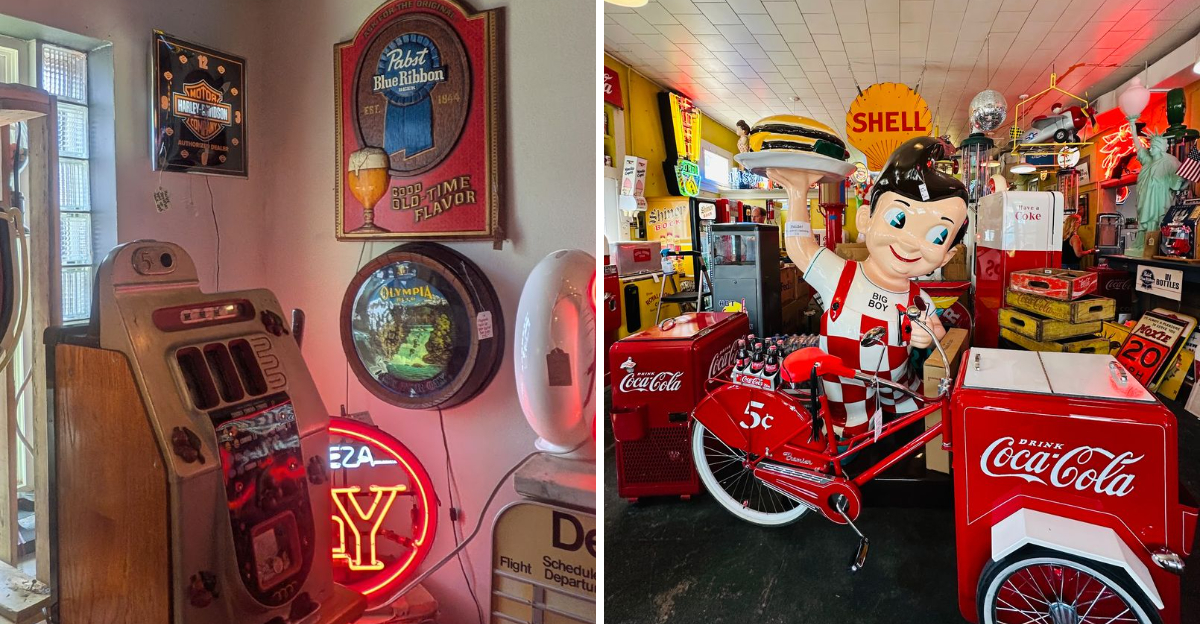
There are antique stores, and then there are places where you start wondering how half the objects from your childhood ended up under one roof somewhere in Texas.
This shop is packed with jukeboxes, pinball machines, vintage signs, soda machines, barber chairs, larger-than-life figures, and enough classic Americana to make a quick browse nearly impossible.
The fun is not just finding something to buy, because half the entertainment comes from spotting an object you have not seen in years and immediately remembering exactly who in your family used to own one.
Texas has plenty of serious antique hunting, but this place happily skips the serious part and turns nostalgia into something louder, stranger, and much more fun to wander through.
The Jukebox Collection That Actually Plays
There is something almost magical about hearing a jukebox fire up in the middle of a retail space. At Flashback Funtiques, the jukeboxes are not decorative props gathering dust behind a velvet rope.
They are restored, functional, and genuinely alive in a way that makes you stop mid-step just to listen.
Owner Billy Howard has spent decades sourcing and restoring these machines, and the craftsmanship shows. The chrome gleams under the shop lights.
The color selections on the buttons feel impossibly vibrant for machines that are sometimes 70 years old.
What makes these jukeboxes particularly special is the way they anchor the entire atmosphere of the store. The music they play is not background noise.
It becomes part of the experience, setting a rhythm for how you move through the space and what you notice. I caught myself humming along without even realizing it.
Classic American jukeboxes from the 1950s and 1960s are among the most sought-after collectibles in the vintage market, and seeing them in person rather than behind glass changes everything.
You get a real sense of how central they were to American social life, from diners to soda fountains to neighborhood hangouts.
For collectors, these machines represent serious investment pieces. For casual visitors, they are just pure joy.
Either way, spending a few minutes next to one of these beauties is one of the highlights of any trip to Flashback Funtiques.
Pinball Machines and Arcade Games From Another Era
Pac-Man and Galaga are not just video games. For millions of people, they are portals straight back to childhood afternoons at the local arcade, quarters clenched in sweaty palms.
Flashback Funtiques keeps several of these antique arcade cabinets on the floor, and they carry a weight of nostalgia that is hard to put into words.
The pinball machines are equally impressive. These are not the modern digital versions with LCD screens and programmed light shows.
The machines here are mechanical marvels, full of flippers, bumpers, and analog scoring reels that click satisfyingly with every point earned. Watching one run is like watching a small city operate.
What I appreciated most was how many of these units are restored to fully working condition. Billy Howard’s commitment to functionality rather than just display is what separates this store from a typical antique mall.
You are not just looking at history, you are interacting with it.
Arcade culture of the late 1970s and early 1980s was a genuine social phenomenon in America. These machines were gathering points, conversation starters, and competitive arenas all at once.
Seeing them restored and standing tall inside the Boerne shop gives them a dignity they fully deserve.
Even if you have never touched a pinball machine in your life, there is something irresistible about watching the silver ball careen around the playfield. It is kinetic, unpredictable, and oddly satisfying to witness.
This section of the store alone is worth the visit.
Neon Signs That Light Up the Room and Your Memory
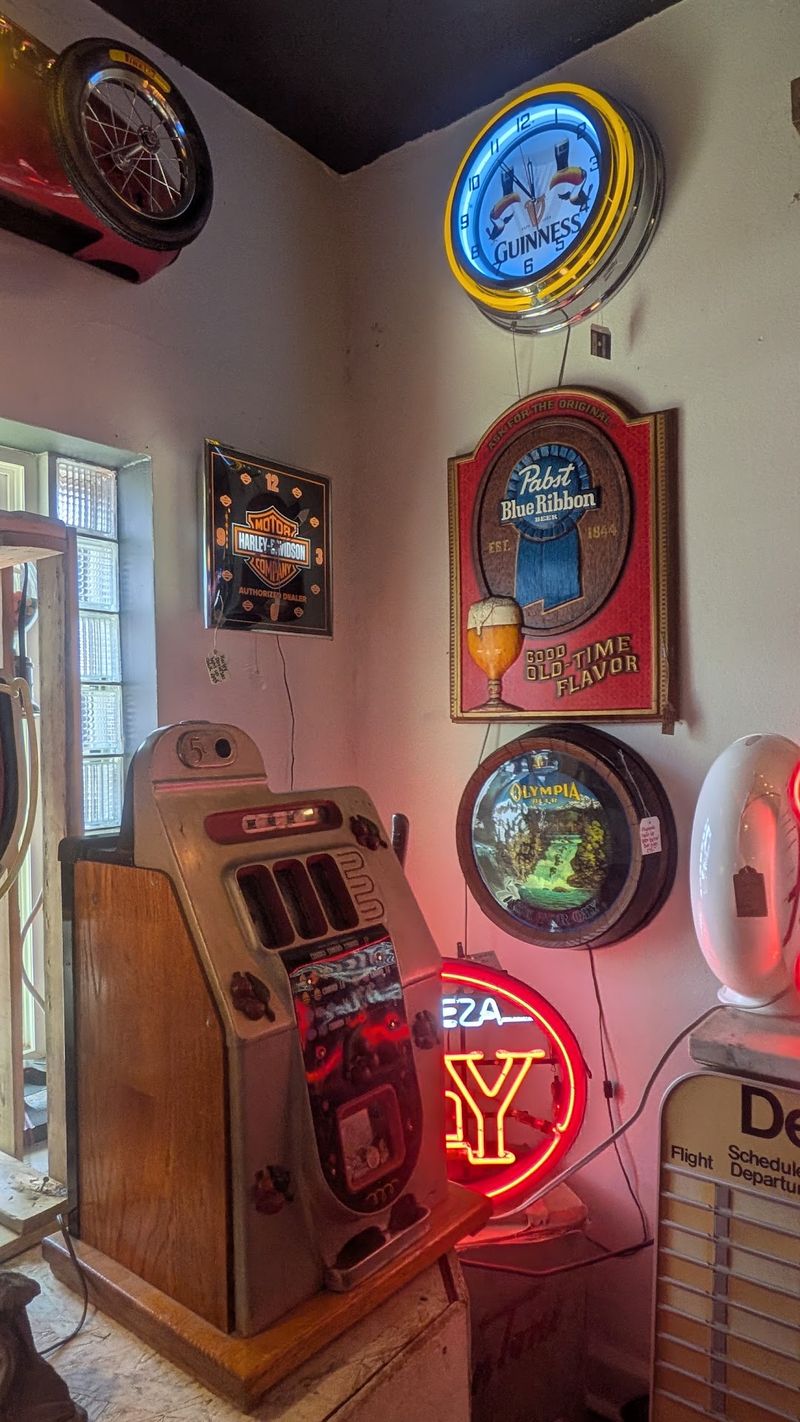
Neon signs have a personality that no LED reproduction has ever managed to replicate. The slight buzz, the warm glow, the way the color bleeds softly into the surrounding air, it all adds up to something that feels genuinely alive.
Flashback Funtiques has an impressive selection of authentic neon signs, and they transform the shop’s interior into something close to a living museum exhibit.
Some of the signs advertise brands that are still around today. Others promote businesses and products that have long since disappeared from American life.
That contrast is part of what makes them so fascinating to study. Each one is a small artifact of a specific cultural moment.
I noticed that people kept gravitating toward the neon section, phones in hand, trying to capture the glow on camera. It is one of those things that photographs beautifully but still looks better in person.
The warmth of the light is something a screen just cannot quite hold.
Restored neon signs are increasingly popular in home decor and interior design, particularly for game rooms, home bars, and retro-themed spaces.
Collectors prize original vintage pieces over reproductions because of the hand-bent glass tubes and genuine gas-filled glow that modern versions simply cannot duplicate.
For anyone who grew up in mid-century America, these signs carry a specific emotional charge. They recall roadside diners, drive-in theaters, and the golden age of American commercial design.
Seeing a whole wall of them together is genuinely striking in a way that surprises even skeptical visitors.
Vintage Vending Machines That Defined American Cool
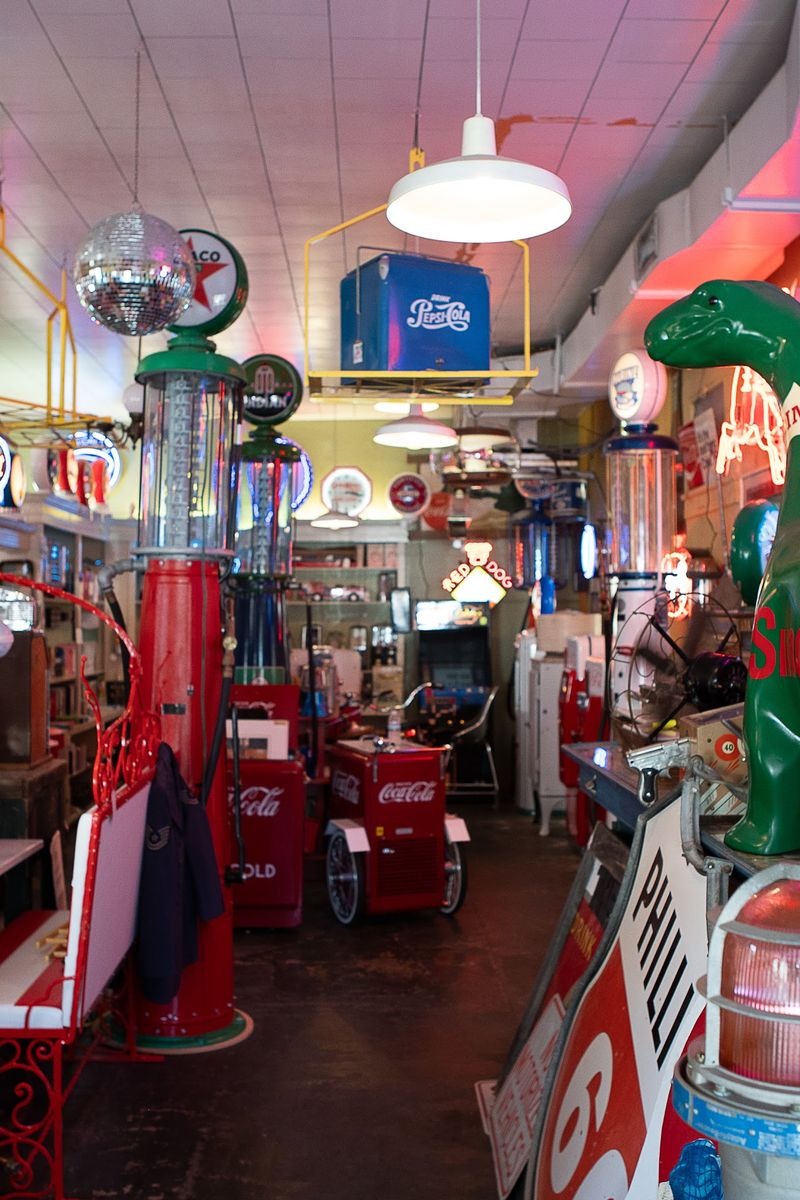
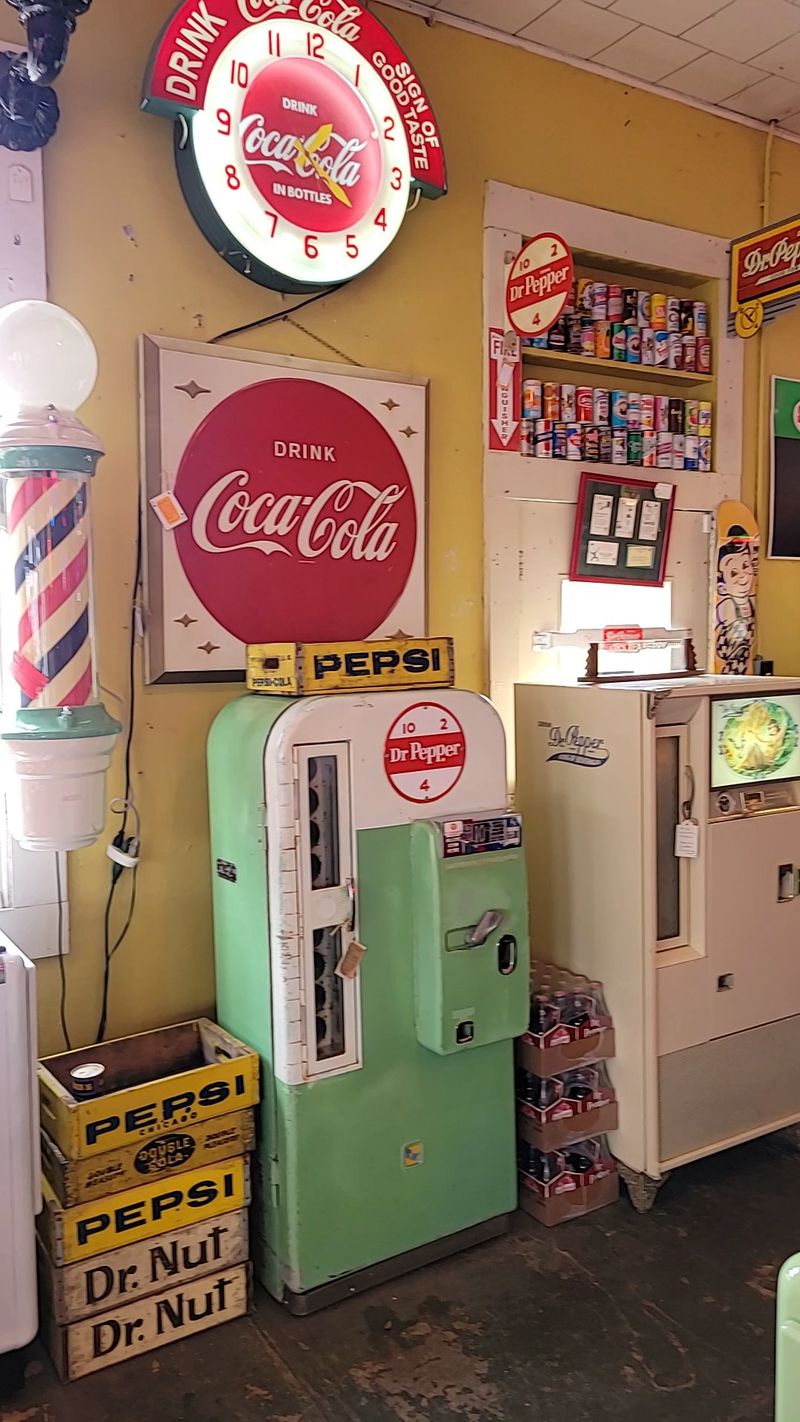
Few objects capture mid-century American consumer culture quite like a vintage vending machine. Flashback Funtiques has several of them, including restored Coca-Cola and RC Cola machines that look like they just rolled off the factory floor in 1955.
They are bold, rounded, and painted in colors so saturated they almost vibrate.
These machines were once a fixture of every gas station, diner, and factory break room in the country. Seeing them now, fully restored and gleaming under the shop lights, is a reminder of how much design philosophy has changed over the decades.
They were built to be noticed, and they still succeed at that completely.
What surprises most people is the quality of the restoration work. The mechanics inside many of these machines have been carefully rebuilt so they are operational, not just cosmetic showpieces.
That level of dedication to authenticity is something that sets Flashback Funtiques apart from shops that settle for surface-level restoration.
Vintage vending machines have become significant collector items, particularly the early Coca-Cola models, which are among the most recognized pieces of American commercial design from the 20th century.
Original examples in good condition are genuinely rare, and finding multiple restored units in one location is uncommon outside of major auctions.
Beyond their collector value, these machines simply make people smile. There is something about that chunky, optimistic design language that feels like a hug from a simpler time.
Honestly, just standing next to one of them puts you in a better mood without any effort at all.
Big Boy Statues and Roadside Americana Icons
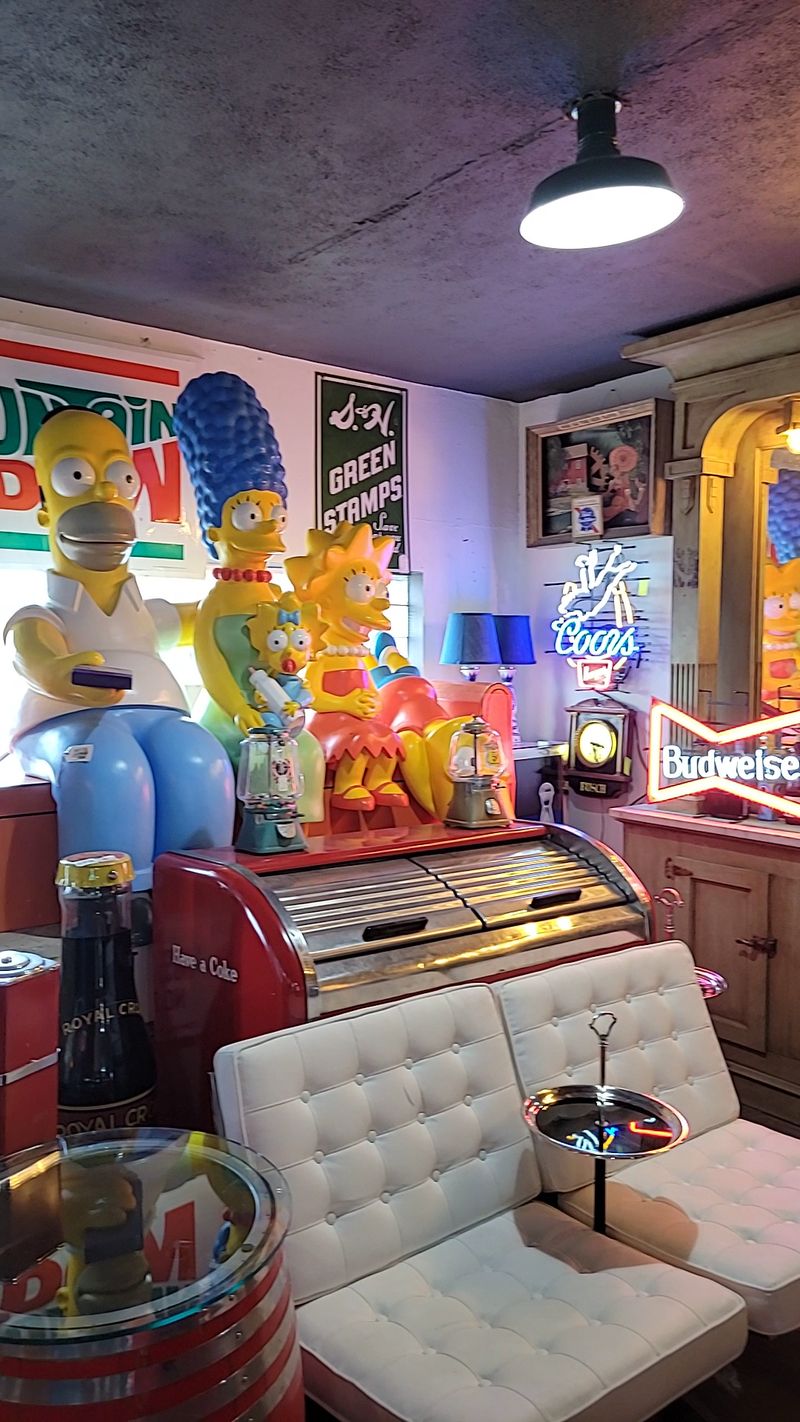
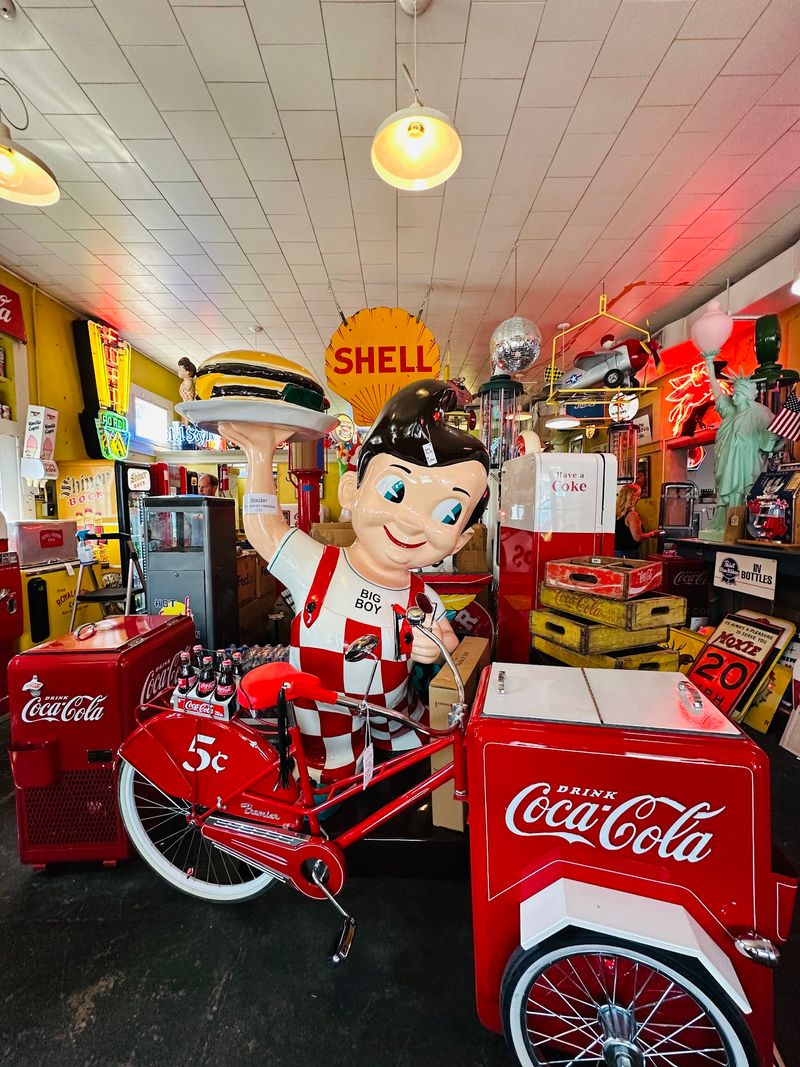
The Big Boy statue is one of those objects that hits differently depending on your age. If you grew up eating at a Big Boy restaurant, seeing one of these fiberglass figures standing in the corner of Flashback Funtiques triggers something immediate and warm.
If you have never encountered one before, you are simply looking at one of the most charming pieces of American roadside advertising ever created.
Flashback Funtiques carries these statues alongside other roadside Americana icons, creating a section of the store that feels like a highlight reel of 20th-century American commercial identity.
The visual language of these objects is so specific and so confident that it is hard not to admire the era that produced them.
Billy Howard has always had a particular affinity for items that trigger emotional memory in visitors. The Big Boy figures do exactly that.
Grown adults stop and laugh or go quiet in that particular way people do when something unexpected reminds them of someone they love or a time they miss.
Roadside Americana as a collecting category has grown significantly in recent years, driven by a renewed cultural interest in mid-century design and the vanishing landscape of classic American road travel.
These pieces represent a physical connection to a version of the country that largely no longer exists.
Seeing a Big Boy statue in person, especially one in excellent condition, is a genuinely funny and touching experience at the same time. It is goofy and grand all at once, which is maybe the most American thing possible.
Antique Gas Pumps and Automotive Advertising Signs
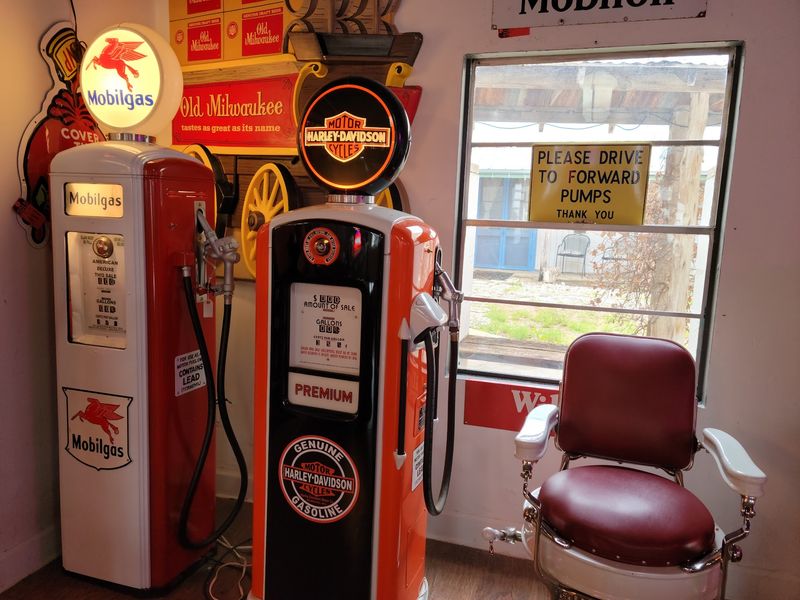
Vintage gas pumps are among the most visually commanding objects in any collection, and Flashback Funtiques uses them to full effect.
These tall, cylindrical relics from the early days of American car culture stand like sentinels throughout the shop, their original paint schemes and globe tops intact or expertly restored.
They demand attention the moment you spot them.
Paired with the gas pumps are historic automotive advertising signs, the kind that once hung in garages and service stations across the country promoting oil brands, tire companies, and motor parts.
The graphic design on these signs is remarkable, bold typography, vivid colors, and a confidence in composition that modern minimalist design rarely achieves.
I spent a good chunk of time in this corner of the store just reading the signs. Each one is a tiny window into how American businesses spoke to their customers, and how much of that communication was built around optimism and aspiration.
The road ahead was always open, always promising.
Gas pump collecting has a dedicated and passionate community behind it. Original pumps from the 1930s through the 1960s, particularly those with their original globes and visible cylinder mechanisms, are considered premium finds.
Having them displayed alongside period-accurate signage gives the whole presentation a coherent, almost cinematic quality.
For anyone with an interest in automotive history or classic car culture, this section of Flashback Funtiques is an absolute highlight. It captures the romance of the American road in a way that feels genuine and unhurried, not staged for effect.
Fortune Teller Machines and the Quirky Side of the Collection
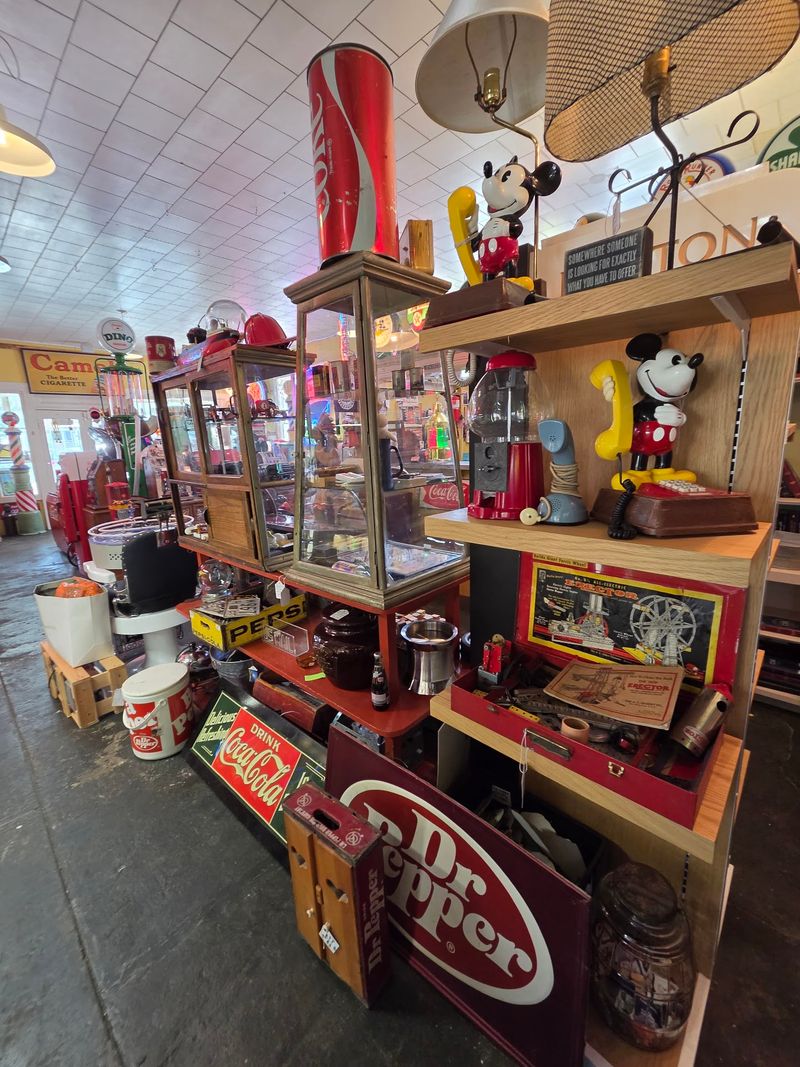
Among all the remarkable things packed into Flashback Funtiques, the fortune teller machines might be the most unexpectedly delightful. These coin-operated contraptions, with their glass enclosures and mechanical figures, occupy a strange and wonderful corner of American entertainment history.
They feel like something out of a dream, or maybe a slightly spooky carnival that you never quite forgot.
The craftsmanship on vintage fortune teller machines is genuinely impressive up close. The figures inside are detailed and expressive, and the mechanical movements they perform when activated have a theatrical quality that modern digital experiences rarely match.
There is a slowness to them that forces you to pay attention.
Visitors tend to linger here. Something about the combination of the uncanny and the nostalgic makes people want to stay a little longer, read the fortune card again, and wonder about the person who originally dropped a coin into this same slot decades ago.
It is a surprisingly meditative experience.
Fortune teller machines were a staple of American amusement parks, boardwalks, and penny arcades from the early 20th century onward. They represent an era when mechanical ingenuity and showmanship overlapped in the most entertaining way possible.
Finding one in good working condition is a genuine rarity outside of specialized collections.
This section of the store captures something important about what Flashback Funtiques does best. It does not just collect things.
It collects feelings, the particular mix of wonder and warmth that comes from encountering something from the past that still has life in it.
Why Boerne’s Historic Main Street Makes This Visit Even Better
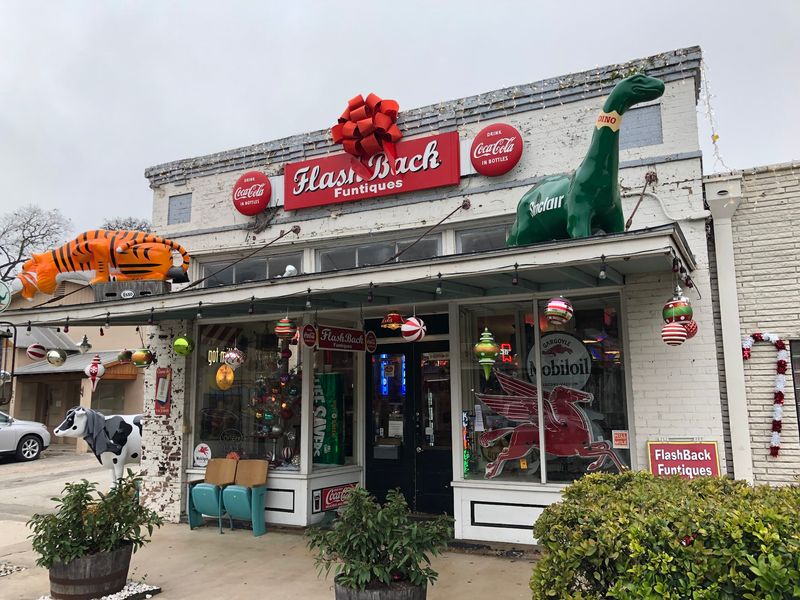
Flashback Funtiques did not land on just any street. Boerne’s South Main Street is one of those genuinely pleasant stretches of small-town Texas that makes you slow your pace automatically.
The buildings are historic, the foot traffic is relaxed, and the overall vibe is the kind of unhurried that feels increasingly rare in modern life.
Billy Howard moved the store from Houston to Boerne in 2012, and the fit is obvious. The town’s character, rooted in German Hill Country heritage and a strong appreciation for preservation, matches the store’s philosophy perfectly.
Both the street and the shop are committed to holding onto things worth keeping.
Spending a morning on Main Street means you can easily combine a visit to Flashback Funtiques with a stroll past other local shops, a bite at one of the nearby spots, and a general appreciation for a downtown that has managed to stay genuinely charming without feeling manufactured.
It rewards slow exploration.
The store’s position on a pedestrian-friendly block also means discovery happens naturally.
People who had no idea Flashback Funtiques existed walk past, catch a glimpse of something glowing or towering in the window, and find themselves inside before they have made a conscious decision to enter.
That is good retail design, but it is also just good luck to be on a street this alive.
Visiting Boerne and skipping this stop would be a genuine miss. The town is worth the drive from San Antonio on its own, and Flashback Funtiques gives you one more excellent reason to make the trip soon.
Address: 248 S Main St, Boerne, Texas
