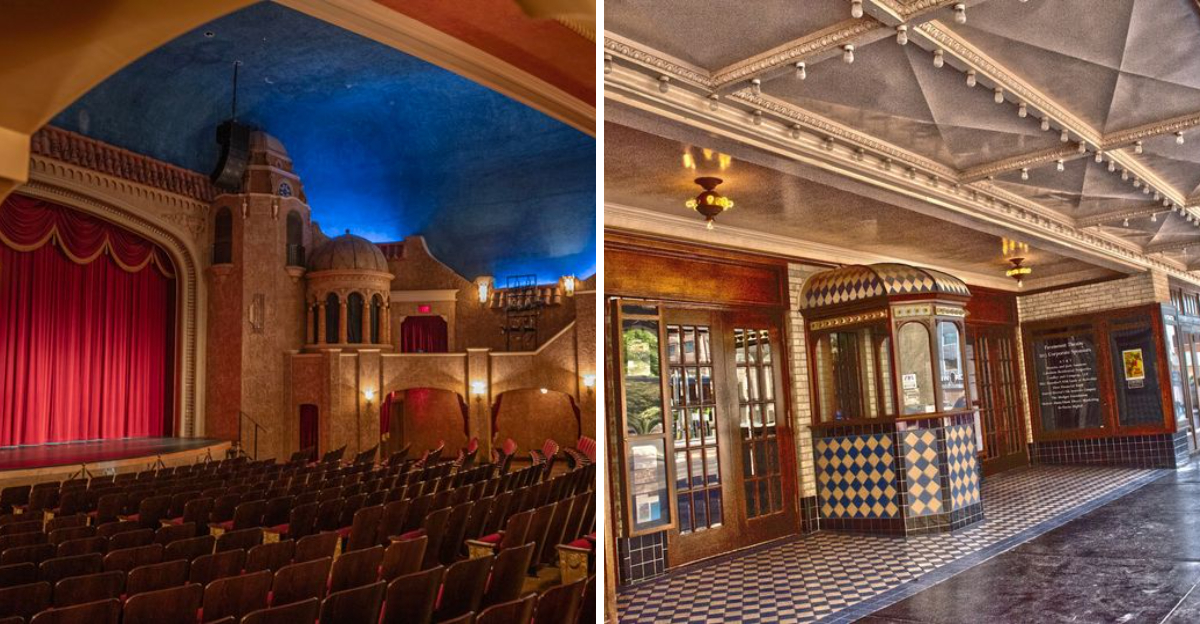
Modern movie theaters are very good at reclining seats and enormous soda cups, but they rarely greet you with a towering neon sign that looks like the evening should require a hat and a 25-cent ticket.
This historic Texas movie house opened in 1931 and was once the state’s largest suburban theater, built during the era when cinemas were designed to make simply arriving feel like part of the show.
A later midcentury remodel added the bold neon exterior that still helps define the building today, while the theater itself remains active rather than sitting around as a beautifully restored relic.
That combination is what makes it fun: this is genuine movie history where people still actually watch movies.
Texas has newer multiplexes everywhere, but very few can compete with a giant old neon sign glowing after dark.
The Marquee That Owns Cypress Street
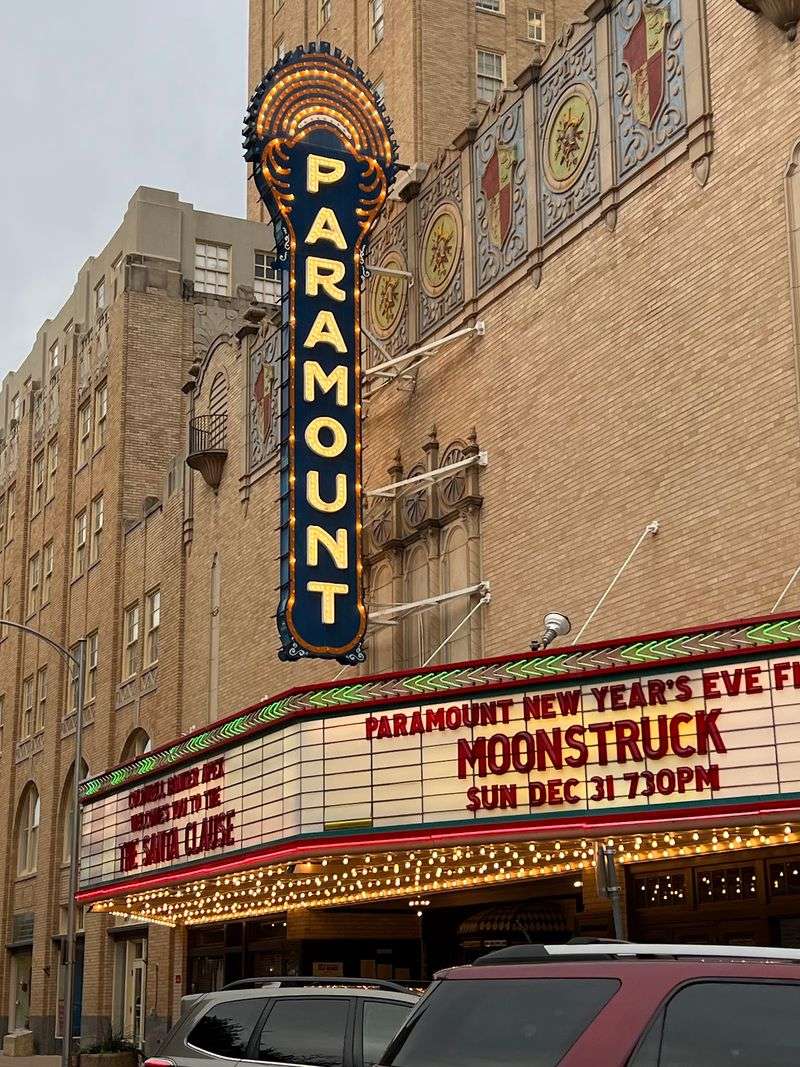
Neon does something to a downtown street that LED screens never manage. The Paramount marquee glows in layers, bright at the center and softer at the edges, and the vertical sign climbs the brick like a beacon you can spot blocks away.
Original opening night in May 1930 featured a 90-foot marquee lit by more than 1,400 electric bulbs, and the spectacle drew crowds who had never seen anything like it in West Texas. The marquee standing today is not the 1930 original, though it carries the same spirit.
Here is the detail I love most. Those big plastic letters spelling out each show get changed by hand, one at a time, by staff working from a ladder or pole.
No scrolling graphics, no digital display.
Photographers tend to gather around blue hour, when the sky still holds a little color and the neon reads at full strength. Park along Cypress or in nearby downtown lots and walk the block first, because the sign looks different from every angle.
Rain makes it better. Wet pavement doubles the glow, and the reflection stretches halfway across the street.
Locals treat the marquee as a landmark rather than a sight to visit, which says plenty about how deeply it belongs here. Show up before a performance and watch people slow down, look up, then pull out a phone.
Even people who pass it weekly still do it.
A Ceiling Full of Stars and Drifting Clouds
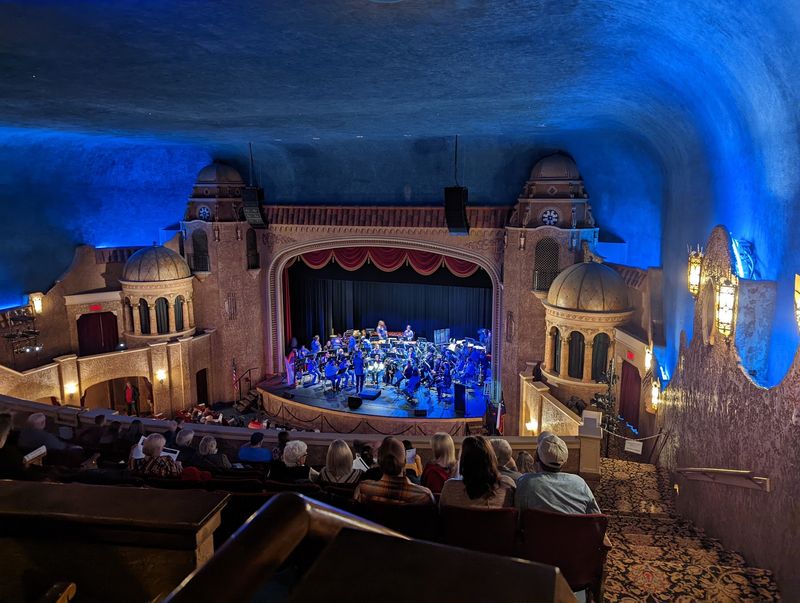
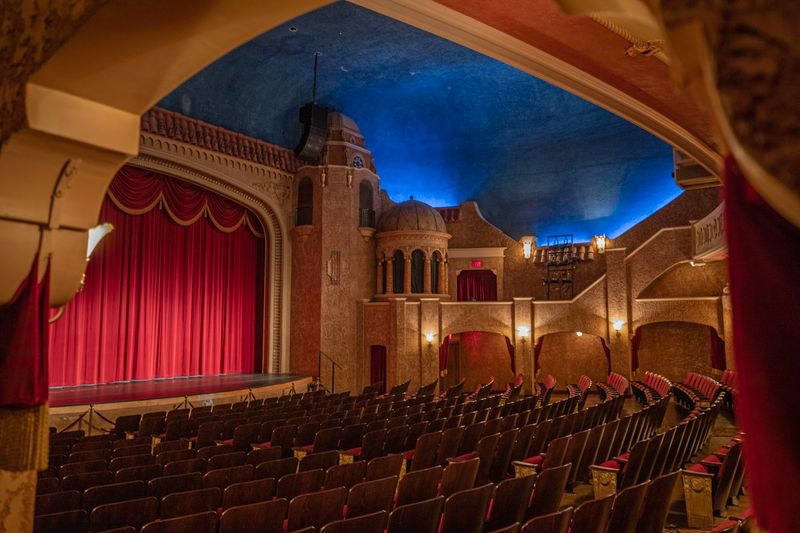
Sitting down and looking up is the moment most visitors remember forever. The auditorium ceiling was built to mimic a night sky above a Spanish courtyard, complete with pinpoint stars and clouds that drift slowly across the dome.
Theaters designed this way earned the name atmospheric movie palaces, and only a handful still work as intended. The 1930 design came from local architect David S.
Castle and Company, who leaned into Spanish-Moorish detail with a dash of Pueblo Deco.
Walls rise like the facades of old buildings around a plaza, with balconies, tile accents, and shaped rooflines that fool the eye. The illusion is that the roof simply vanished and the desert sky took over.
Cloud effects come from projection, and the stars twinkle with a soft flicker rather than a harsh sparkle. During a film, the house lights dim and the sky settles into deep blue, which feels oddly calming before the screen even lights up.
Arrive early. Seriously, get there fifteen or twenty minutes ahead, because the pre-show period is when the ceiling gets your full attention.
Balcony seats give a wider view of the dome, while center orchestra seats put the whole courtyard in your peripheral vision. Both work.
Kids react loudest, usually with a whispered wow that carries farther than they realize. Adults just quietly tilt their heads back and stay that way a while.
Details Worth Slowing Down For
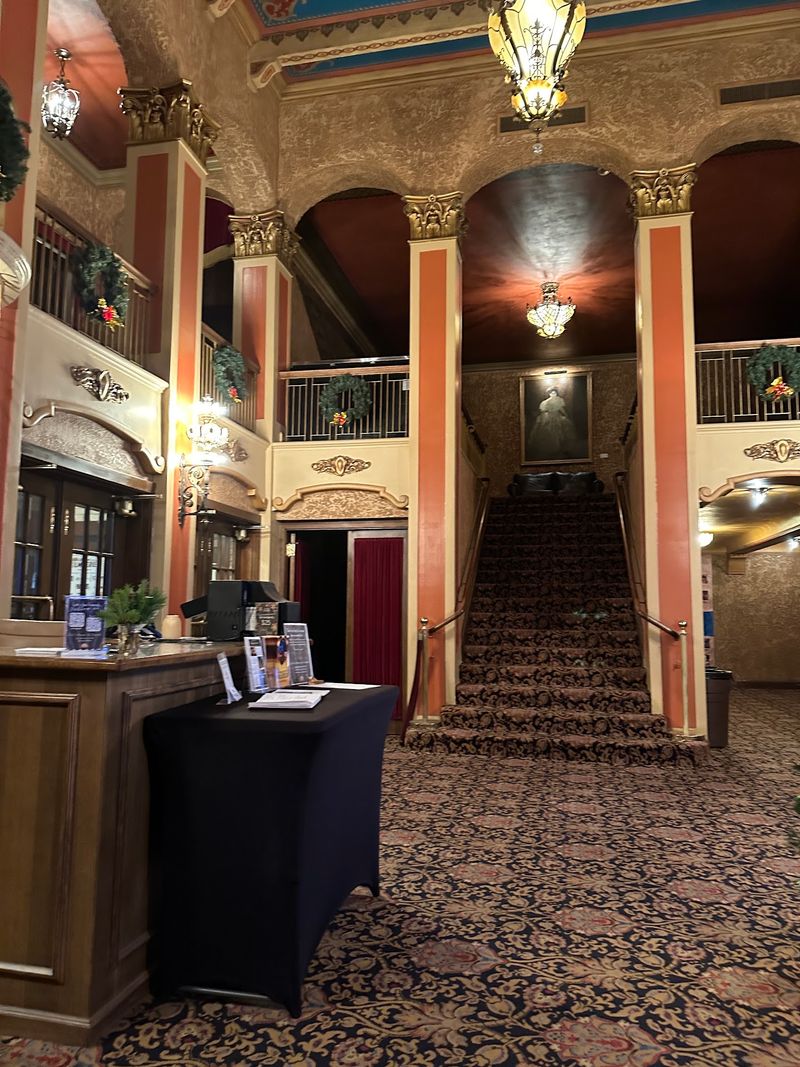
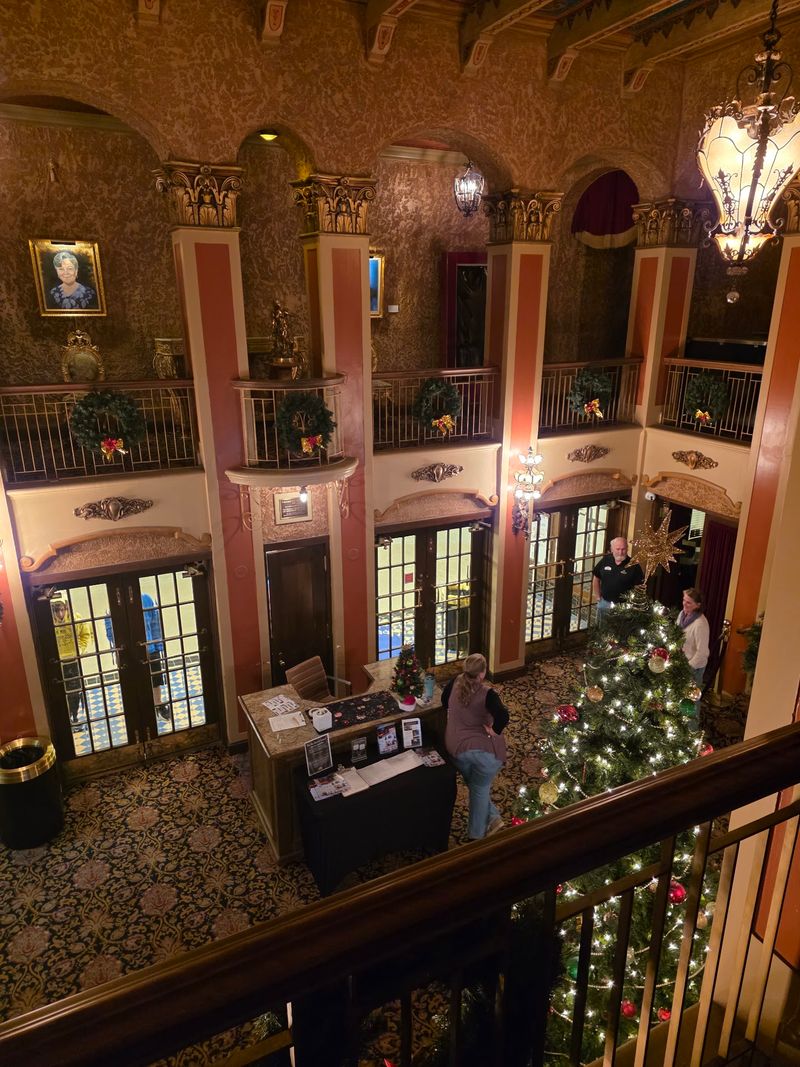
Ornament here rewards anyone willing to wander instead of rushing to a seat. Hand-blown glass chandeliers hang overhead, wrought iron sconces throw shadows on textured plaster, and filigree work curls around archways in patterns that repeat but never feel mechanical.
The carpet deserves a mention of its own. During restoration, the wool was re-loomed from the original 1930s pattern, so the floor underfoot matches what audiences walked on during the Great Depression.
Bishop’s chairs dating to roughly 1840 sit in the public areas, dark wood and high backs, older than the building itself by nearly a century. They look like furniture borrowed from a Spanish mission, which fits the theme perfectly.
Lighting plays a big role in how all of this lands. Fixtures glow amber rather than white, and that warm tone makes the plaster look like aged stone.
Take the stairs slowly. Landings and corridors hide tile work and iron railings that most people blow right past on their way to find a seat.
Photography inside varies by event, so ask staff before performances begin. Volunteers and ushers usually know the building inside out and enjoy pointing out things visitors miss.
What impressed me was the consistency. Nothing looks like a later shortcut or a cheap patch, and the restoration crews clearly cared about matching the original craftsmanship instead of just making things look presentable.
Opening Night in 1930 and the Grocer Who Made It Happen
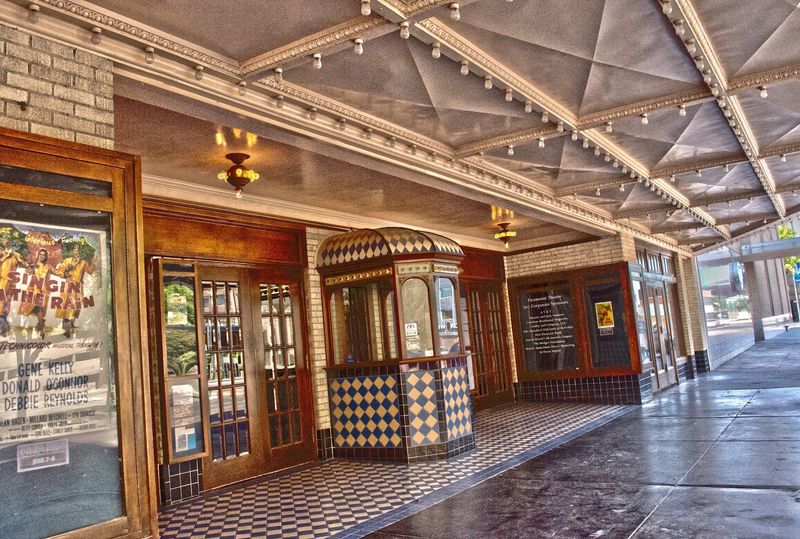
Credit for the whole place goes to Horace O. Wooten, a West Texas wholesale grocer who financed construction as a companion to his neighboring Wooten Hotel.
Business sense and showmanship apparently went hand in hand.
Doors opened on May 19, 1930, and the first film to flicker across the screen was Safety in Numbers, a musical comedy featuring Charles Buddy Rogers and Carole Lombard. Abilene treated the evening as a full social event, with crowds gathering under all those glowing bulbs.
Timing matters in that story. The country was sliding into the Great Depression, yet this ornate palace went up anyway, offering escape at exactly the moment people needed it.
One early booking still gets talked about. The theater screened the 1931 horror classic Dracula two days ahead of its official Valentine’s Day premiere, which put Abilene briefly ahead of much bigger cities.
Learning the backstory changes how the building feels. Those courtyard walls stop being decoration and start being a deliberate gift to a town that needed somewhere magical to sit for two hours.
Ask about the Wooten Hotel next door while you are in the area, since the two structures were always meant to work as a pair. Downtown Abilene grew around them.
History like this rarely stays this touchable. Walking the same lobby that 1930 audiences crossed is a small thrill that sticks with you.
Wartime Nights and a Hollywood Premiere
Soldiers found refuge inside these walls during World War II. Troops stationed at nearby Camp Barkley, and later Dyess Air Base, filled the seats for live stage shows and feature films, turning the Paramount into a piece of home for young men far from theirs.
Live acts shared the bill with movies back then, so an evening might include music, comedy, and a newsreel before the main picture. The stage got plenty of use.
Fast forward to November 1963 for the theater’s flashiest night. Abilene hosted the world premiere of Take Her, She’s Mine, and Jimmy Stewart and Sandra Dee both attended in person.
Think about that for a second. A world premiere, in West Texas, at a theater built by a grocer.
Stories like these explain why the building matters to generations of local families. Grandparents remember the wartime shows, parents remember the premiere buzz, and their kids now bring their own children to summer movies.
Staff occasionally share this history before screenings, and the annual Classic Film Series taps into the same vein of memory. Watching an old film in a room that showed it the first time around hits differently.
Nothing about it feels staged for tourists either. The Paramount simply kept doing what it always did, decade after decade, adjusting the marquee letters and opening the doors again.
Saved From the Wrecking Ball
Almost none of this survived. Downtown Abilene lost momentum through the 1970s, box office numbers slid, and the Paramount finally went dark in 1979 after decades of continuous operation as a movie house.
A brief second act came as the Paramount Opry, a country music venue, but that experiment did not last. By the early 1980s, demolition looked like a real possibility.
Enter the Abilene Preservation League, which formed a committee dedicated to saving the building. Their work paid off when the theater landed on the National Register of Historic Places on December 27, 1982.
That listing effectively pulled the Paramount back from the edge. Recognition alone did not fix the plaster, though.
Restoration followed, financed by a benefactor who chose to stay anonymous, with support connected to Julia Matthews and the Dodge Jones Foundation. Crews worked toward authenticity rather than convenience, matching original patterns and finishes wherever possible.
Upgrades came too, since a modern venue needs modern bones. Projection, sound, and lighting systems were improved, and the stage was adapted for live performances.
Doors reopened on May 21, 1987, nearly fifty-seven years after that first screening. Today a non-profit organization runs the place, which keeps the focus on preservation and community rather than profit margins.
Knowing how close Abilene came to losing it makes every glowing bulb outside feel a little more earned.
What Fills the Calendar Now
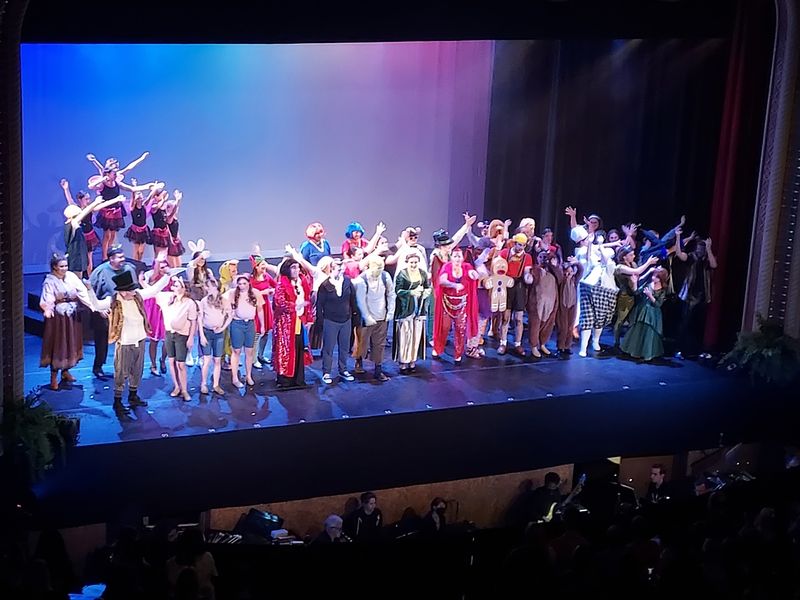
Variety is the real strength of the modern Paramount. One weekend brings a classic film on the big screen, the next a ballet, then a concert, then stand-up comedy, then a children’s play packed with squirming kids.
The Classic Film Series draws people who want to see older movies the way they were meant to be seen, in a dark room with a crowd. A Summer Film Series leans family-friendly, which makes hot afternoons much easier to handle.
Live theater matters here too. The annual Paramount Summer Musical has become a local tradition, and the stage regularly hosts plays and youth productions.
Several local groups call the building home. Abilene Ballet Theatre, the Abilene Opera Association, the Celebration Singers, and the Abilene Community Band all perform here, which keeps the room busy year-round.
Seating runs somewhere around 1,187 to 1,199, large enough to feel like an event and small enough that nobody sits impossibly far from the stage. Acoustics favor live music nicely.
Practical tip. Check the schedule before planning a trip through Abilene, because catching an actual performance beats simply admiring the exterior.
Dress however you like. Some people arrive in boots and jeans, others in something nicer, and nobody seems to care either way.
The mix of programming is what keeps the theater from becoming a museum piece. It works because people actually use it.
Making a Full Evening of It Downtown
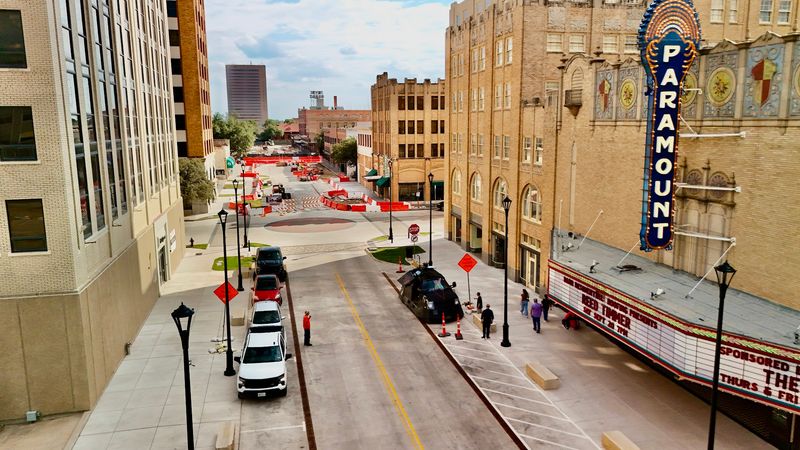
Cypress Street rewards a slow walk before showtime. Downtown Abilene has been steadily coming back to life, and the blocks around the theater hold restored brick buildings, storefronts, and public art worth a detour.
Storybook sculptures scattered through the area make for a fun stroll, especially with children in tow. Abilene leans hard into its identity as a storybook capital, and the bronze figures pop up in small plazas and along sidewalks.
Parking rarely causes stress. Street spots and nearby lots usually cover the crowd, though arriving thirty minutes early keeps everything relaxed.
Grab a meal downtown first, then time the walk back so the marquee lights up while you approach. That sequence is worth planning for.
Weather plays into the experience more than you might expect. West Texas evenings can turn windy fast, so a light jacket saves the outdoor photo session.
Once inside, resist the urge to sit down immediately. Circle the lobby, look at the ironwork, then find your seat and let the ceiling do its thing.
What lingers afterward is the contrast. Step out of a fake Spanish courtyard under painted stars, straight onto a real Texas street under actual ones, and the transition feels almost funny.
Few places manage that kind of small magic anymore. This one still does, night after night, one hand-placed letter at a time.
Address: 352 Cypress St, Abilene, TX 79601
