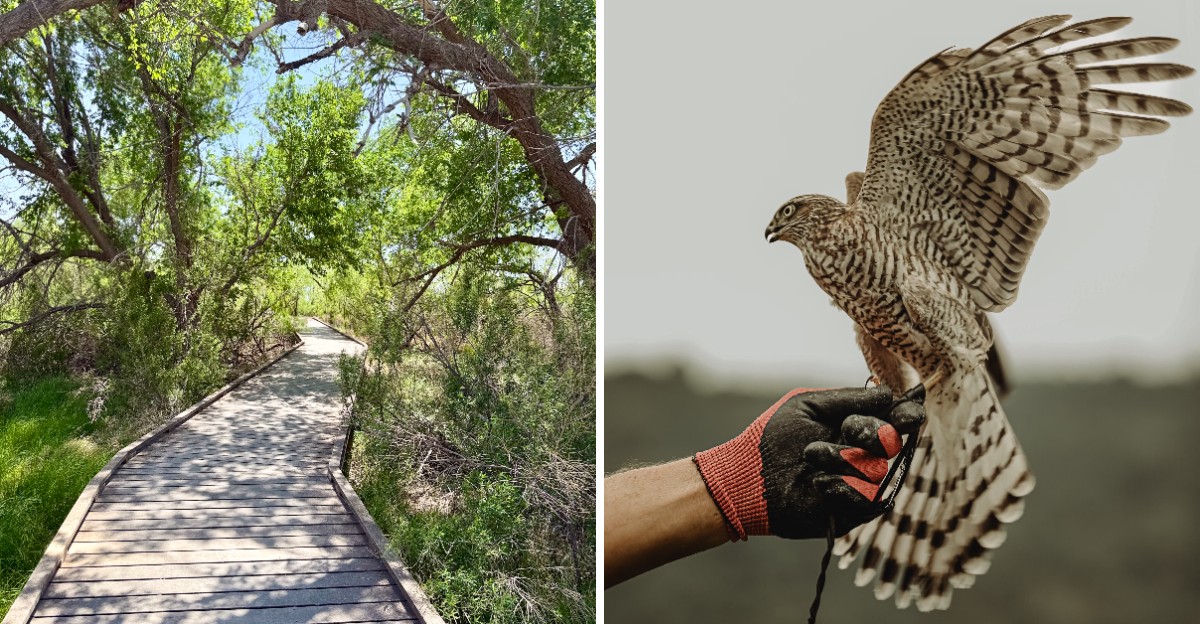
Green herons hunt beside a raised boardwalk while Texas horned lizards dart beneath it. That’s the scene at a wetland tucked into a landscape better known for dry ground.
The water comes and goes with rainfall, so even the view can change between visits.
A trail of roughly 1.4 miles leads past ponds, bird blinds, and butterfly gardens. There’s also a 24-foot observation tower, giving you a higher vantage point over the vegetation.
Admission is free, and the preserve offers more trails if you feel like exploring beyond the main loop.
I’d be curious to see which birds turn up on an ordinary afternoon. You can pause at a blind, listen for movement in the reeds, or follow the boardwalk without rushing.
The unexpected part isn’t just finding a wetland here. It’s how much wildlife can gather around temporary water.
A Wetland Where Nobody Expects One
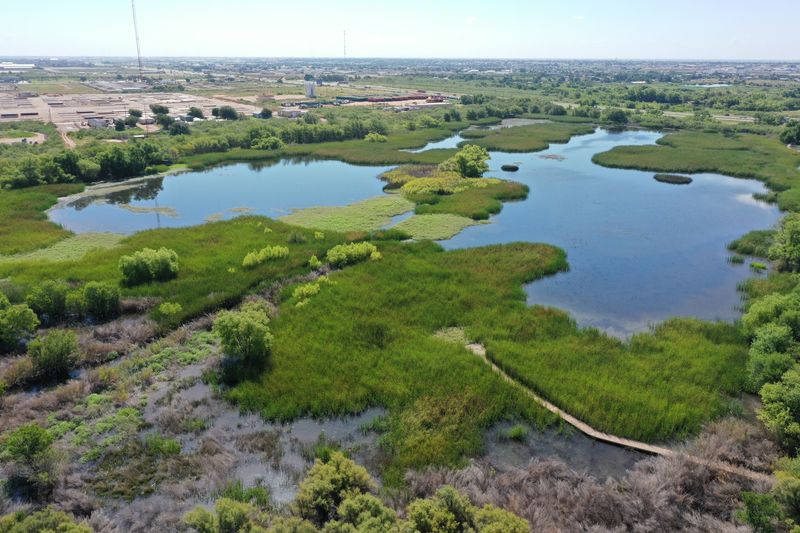
Most folks think of the Permian Basin as pumpjacks, mesquite, and wind. Watersong Wild Space flips that picture with a 100-acre riparian forest wrapped around open water.
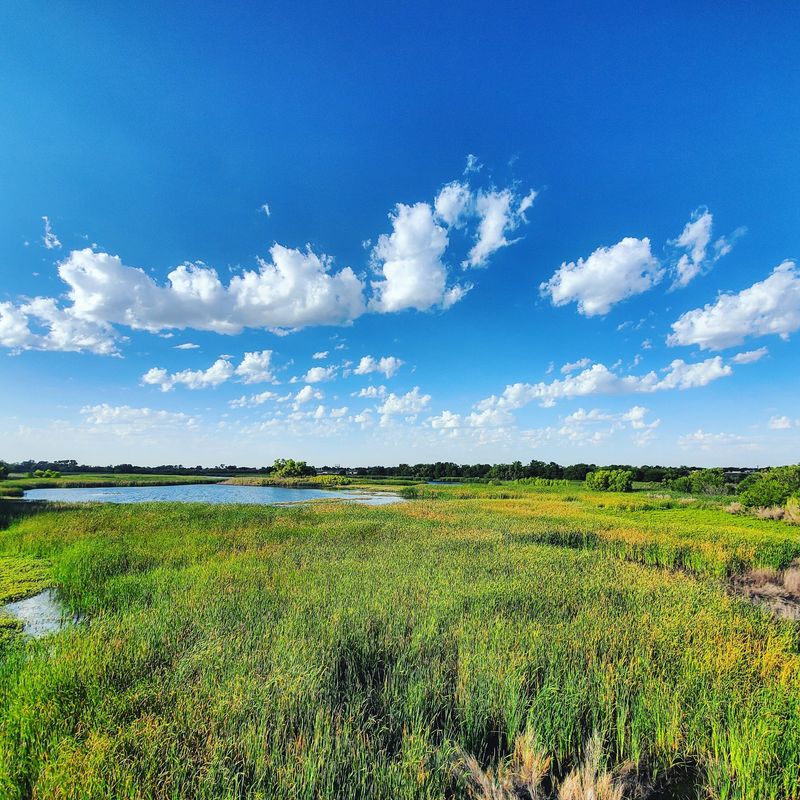
The heart of the place is an 86-acre urban playa lake. Playas are ephemeral wetlands, which means they fill with rain and shrink during dry spells.
That changing water level shapes everything you see. One visit might show a shimmering lake, while another reveals muddy flats and busy shorebirds.
These shallow basins matter far beyond the preserve. Playas like this one act as a significant recharge source for the Ogallala Aquifer, a huge underground water supply.
So the lake isn’t just pretty scenery. It quietly helps refill water that the region depends on, which makes it a true workhorse with a nice view.
Plants respond to that moisture in a big way. Trees, grasses, and wetland greenery crowd the edges, creating shade and shelter you rarely find in this part of Texas.
My tip is simple. Visit more than once in different seasons, because the water decides the show, and it rarely repeats itself the same way twice.
The 1.4-Mile Loop That Floats Above the Ground
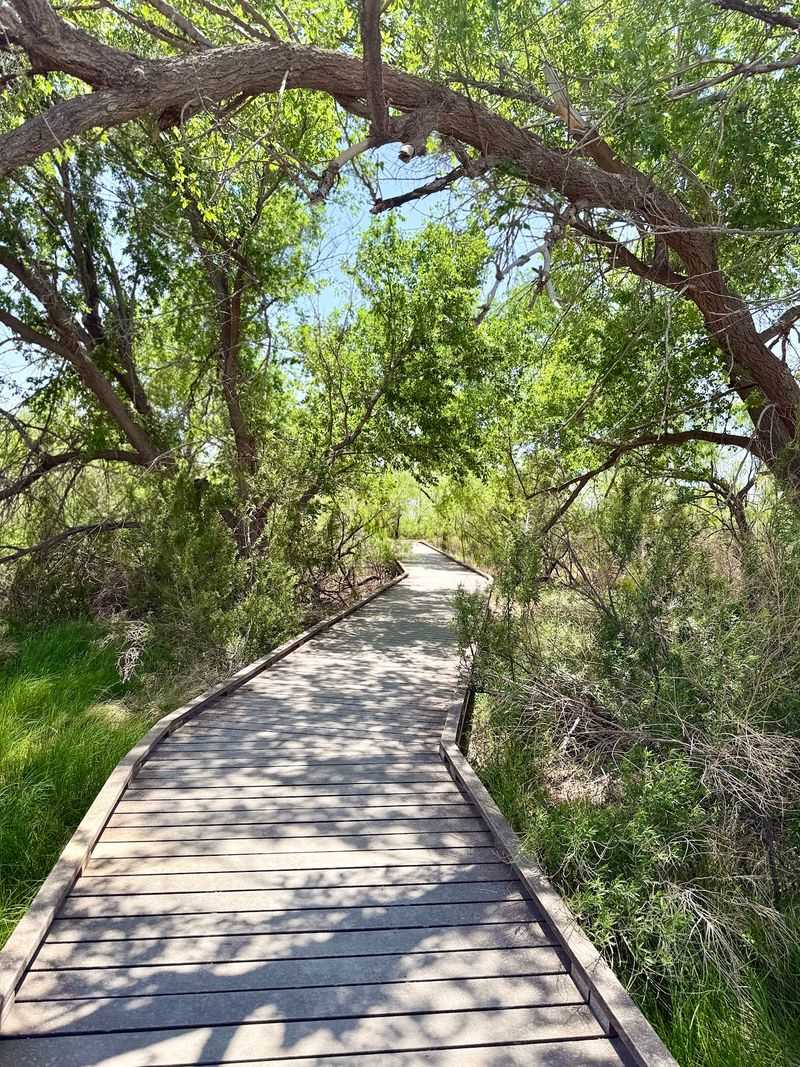
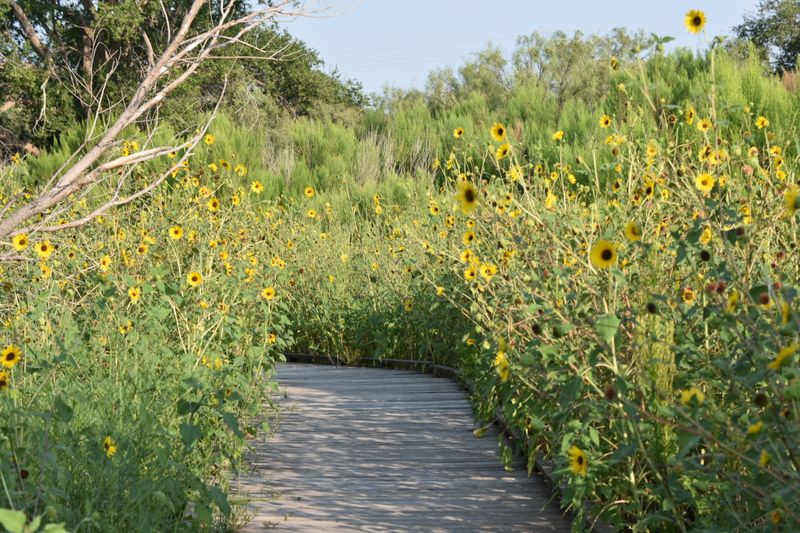
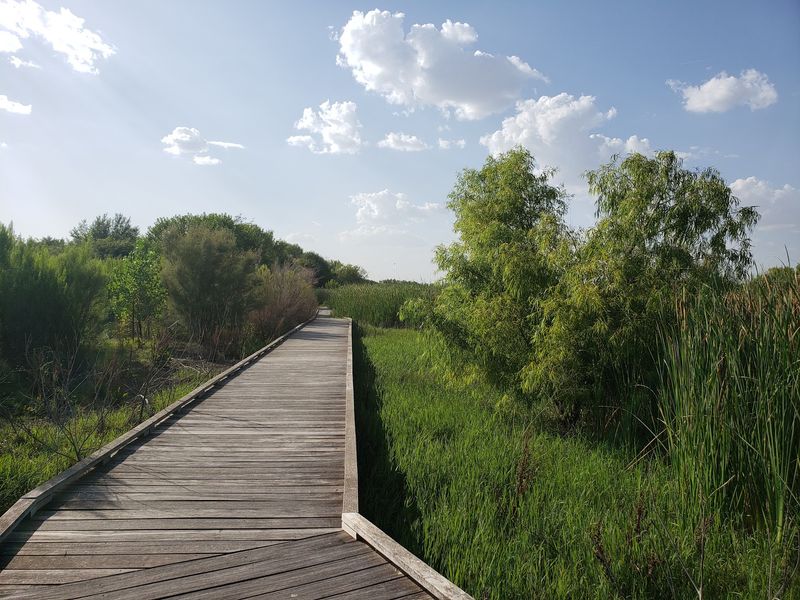
Ipe wood boardwalks lift you right over the wetlands here. It’s a little like walking on a stage where the actors have feathers and scales.
The main trail loops about 1.4 miles around the playa lake. It weaves through wetlands, meadows, and riparian forest, so the scenery keeps shifting as you go.
Those raised sections serve a real purpose. They protect fragile ground and give you elevated views into tree branches and marshy spots.
Want more than the main loop? The full trail system stretches about 3.4 miles, with plenty of side routes to explore.
Accessibility gets serious attention too. About 1.35 miles of trail are ADA-compliant, which opens the experience to wheelchair users and families with strollers.
Pacing is up to you. A slow stroll with frequent stops for birds can easily stretch your visit, so don’t rush the good parts.
Pack water and a hat for warm months. Then pick a direction at the start and see which version of the loop surprises you most.
Over 1,000 Species Live Here, and Jolene Is the Celebrity
Let’s talk about the neighbors. More than 1,000 species have been identified within Watersong Wild Space, which is a staggering number for a city preserve.
The list reads like a nature documentary. Green herons, egrets, ducks, sandpipers, and flycatchers share space with turtles, raccoons, rabbits, and pocket gophers.
Smaller stars count too. Dragonflies zip over the water, amphibians tuck into damp spots, and Texas horned lizards hold their ground on the trail edges.
Then there’s Jolene. Preserve employees have noted sightings of a bobcat by that name, along with her cubs, which is about as charming as wildlife news gets.
Don’t expect a guaranteed appearance, though. Wild animals keep their own schedules and rarely check yours first.
Snakes live here as well, including rattlesnakes. The preserve advises watching trail edges during warm months, so keep your eyes down as often as up.
Bring binoculars and some patience for the best results. Quiet footsteps and slow movements give you a better shot at meeting the locals.
Seven Bird Blinds and a Tower Built for Hawk Fans
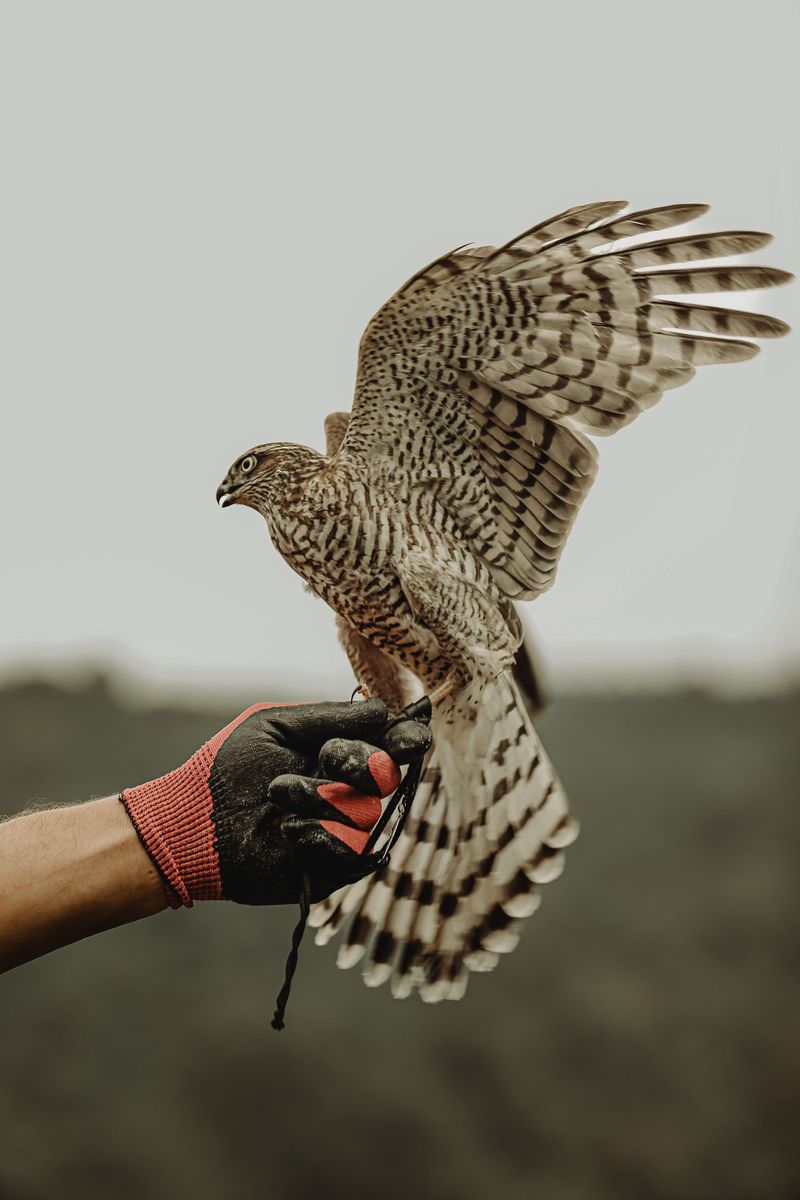
Birders, this one’s for you. Seven bird blinds sit along the trails, giving you hidden spots to watch without spooking anything.
A blind works like a polite wall. You peer through openings while the birds go about their business, unaware they have an audience.
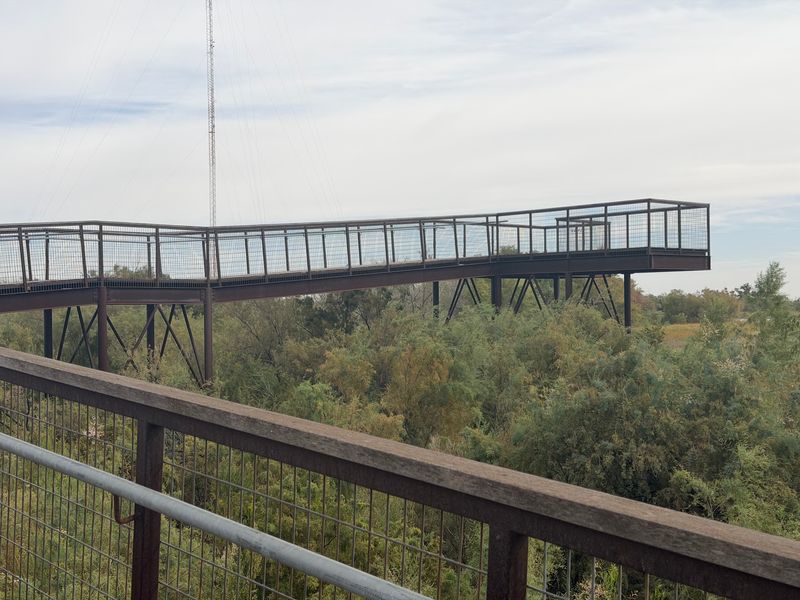
For a bigger view, head to the 24-foot hawk tower. It was installed in partnership with the Texas Parks and Wildlife Department.
Height changes everything for spotting raptors. From up there, you can scan treetops and open sky where hawks like to cruise.
Observation decks add more chances to pause. Each one frames the landscape a little differently, so it pays to stop at several.
Photographers will appreciate these setups. A steady perch and a clear sightline make wildlife shots far easier than chasing birds through brush.
Early mornings and evenings tend to feel cooler for long sits. Bring a camera, a field guide, or just curiosity, and let the birds decide who shows up first.
Butterfly Gardens That Steal the Spotlight
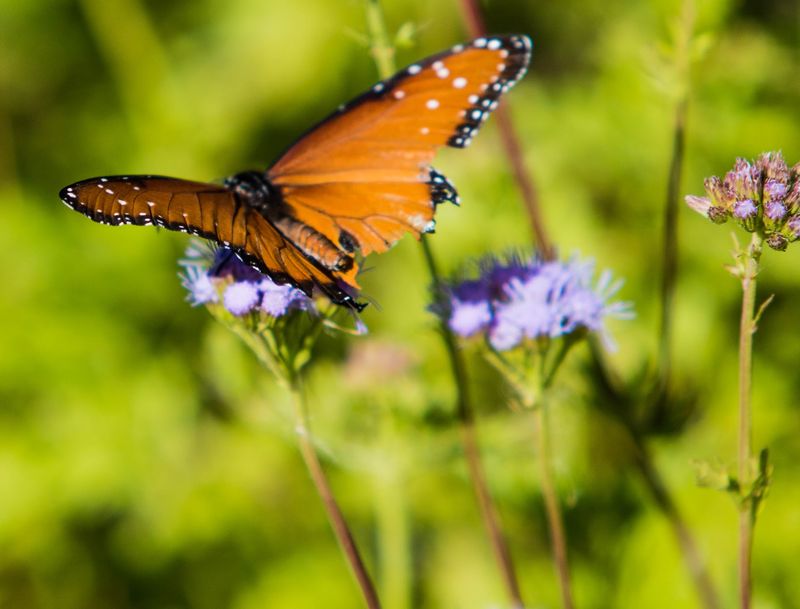
Flutter alert. Four butterfly gardens bloom along the paths at Watersong, and they bring a splash of color to the green and brown palette.
Pollinator gardens like these support butterflies, bees, and other tiny helpers. They also make lovely resting spots when your legs want a break.
Monarchs and other butterflies may drift through depending on the season. Cooler weather can mean fewer visitors with wings, so timing plays a role.
Nearby, four teaching platforms give groups space to gather and learn. These spots let educators point out plants and animals in real time.
The preserve also features ponds, gardens, and memorial areas. One of them is the Quail Trail, a peaceful stretch worth adding to your route.
Gardens are a smart place to bring young kids. Colors grab attention fast, and spotting a butterfly feels like winning a tiny prize.
Here’s an easy idea for home. Notice which flowers attract the most action, then think about planting native blooms in your own yard to help pollinators beyond the preserve.
School Is in Session, and the Classroom Has Turtles
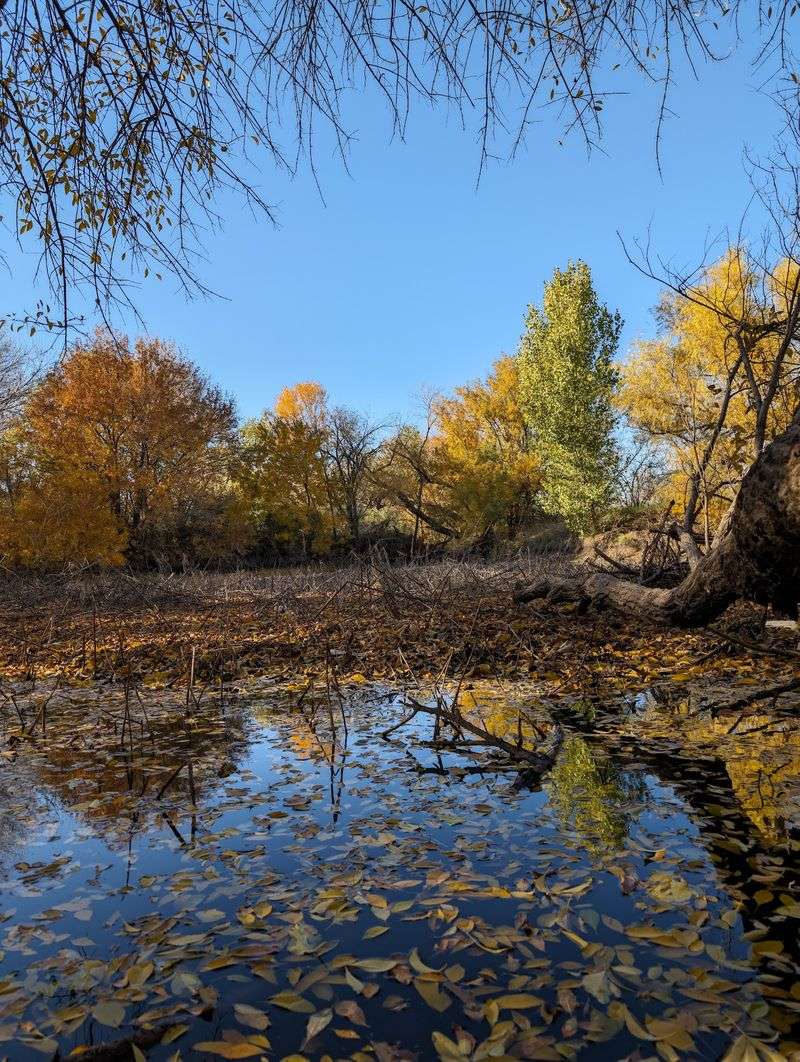
Some classrooms have whiteboards. This one has dragonflies, mud, and a playa lake, which honestly sounds like a better deal.
Watersong offers education programs for nearly every age. Little Ecologist School and Playtime at the Playa welcome kids as young as two.
Older students get STEM-based programs designed for kindergarten through 12th grade. Learning outdoors makes science feel real instead of distant.
Teens have an exciting option too. A paid summer Conservation Job Corps gives high school students hands-on work experience in nature.
Adults aren’t left out. Classes cover topics like community science, wildlife, and landscaping for anyone who wants to learn more.
Educators and youth leaders can also join Project WILD facilitator training. That program helps them bring wildlife lessons back to their own groups.
If you have a curious kid, check the program calendar before your visit. A guided session can turn a regular walk into an afternoon of questions, discoveries, and maybe a new favorite animal.
Your Phone Can Help Science Here
Snapping photos of birds? You might be helping researchers without even knowing it.
Watersong encourages visitors to use nature apps like iNaturalist and eBird. You record what you see, and those observations support ongoing research and conservation work.
It’s surprisingly fun. Photograph a mystery bug, upload it, and the community can help identify it.
Each sighting adds to the bigger picture of life in this Texas wetland. That’s part of how a place reaches a species count above 1,000.
Wellness is another big piece of the puzzle. The preserve hosts regular yoga classes and guided walks for people who want calm with their nature.
Guided walks are a great choice for first-timers. An expert can point out details you might otherwise miss, like a hidden nest or a camouflaged lizard.
Charge your phone before you go and download an app ahead of time. Then treat the trail like a scavenger hunt, where every frog, flower, and feather counts toward something meaningful.
From a 1960s Land Gift to a Brand-New Name
Patience built this place. The 100-acre property was donated to the City of Midland in the late 1960s with plans for a park, but budget limits delayed it.
For more than two decades, the Midland Naturalists and other volunteers kept watch over the land. Their care kept the habitat alive while bigger plans waited.
A master plan arrived in 2007. Its goal was to open the space to the public and offer educational opportunities.
In 2008, the organization signed a 40-year lease with the city. That agreement runs through 2050, and the City of Midland still owns the land.
The preserve opened to the public in 2013 as the I-20 Wildlife Preserve. Plenty of longtime fans may still call it that out of habit.
In 2025, it officially became Watersong Wild Space. The new name better reflects the playa lake and the water-dependent ecosystem at its core.
Honestly, it’s a fitting upgrade. A highway name never quite matched a place filled with birdsong and rippling water.
Smart Moves Before You Head Out
Good news first. Admission is free, and donations are welcome at the entrance box or online.
You’ll find Watersong Wild Space at 2201 S Midland Dr, Midland, TX 79703. Seasonal hours usually run from 8 a.m. to 8 p.m., Tuesday through Sunday.
Mondays are closed, so plan around that. Hours can change for events, weather, or maintenance, which makes a quick check before leaving a wise move.
Volunteers manage the gates. The preserve asks visitors to start heading out 15 minutes before closing time.
A few rules protect both people and wildlife. Pets are not allowed except service animals, and bicycles and fishing are off the list too.
Picnics aren’t permitted either. Trail snacks are fine as long as every wrapper leaves with you.
Rattlesnakes do live here, so watch trail edges in warm months. Pack sunscreen, water, and bug spray for comfort.
A pavilion and parking lot make arrival easy. After that, it’s just you, the boardwalk, and a West Texas wetland full of surprises.
