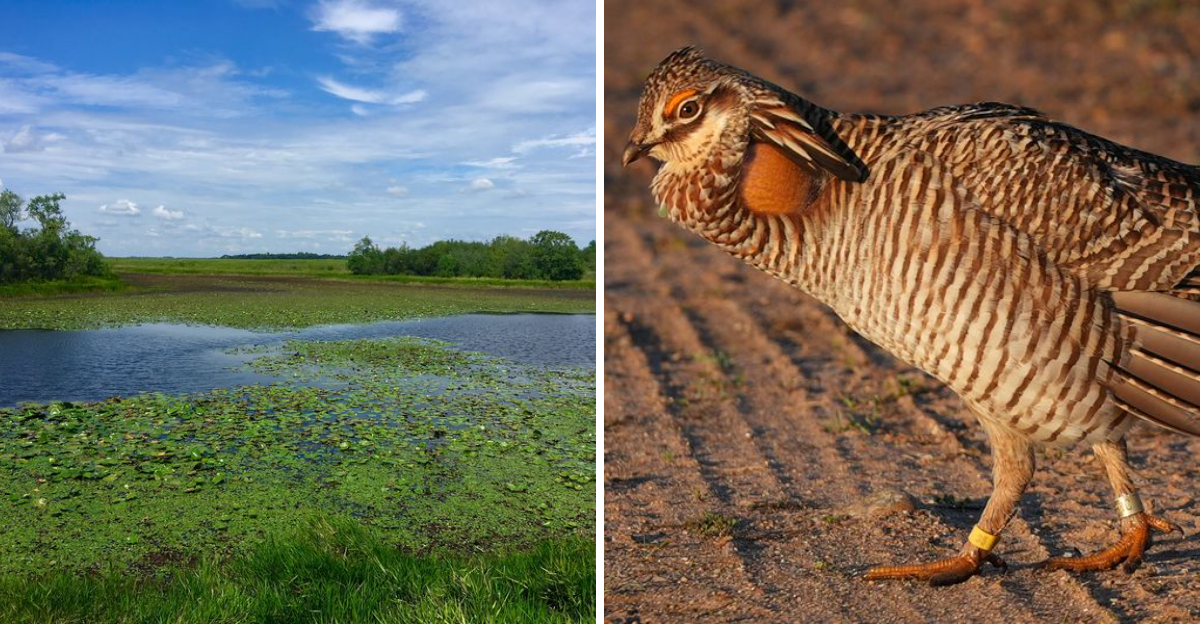
First surprise: it is not actually a chicken. The Attwater’s prairie-chicken is a grouse, and it has become one of North America’s most endangered birds after losing most of the coastal prairie habitat it once depended on.
This Texas refuge was created specifically to help keep the species from disappearing, while also protecting one of the largest remaining pieces of native coastal prairie in southeast Texas.
More than 500 additional acres were protected in 2026, bringing the refuge to over 11,000 acres as recovery work continues.
The bird itself can be frustratingly difficult to spot, but that almost makes the story more fascinating: an entire Texas landscape is being carefully managed for a creature most people have probably never even heard of.
The Attwater’s Prairie Chicken, A Bird on the Edge of Survival
Few birds carry a story as urgent and heartbreaking as the Attwater’s prairie chicken.
Once numbering close to one million individuals across the coastal prairies of Texas and Louisiana, this stocky, ground-dwelling grouse saw its population collapse so dramatically that by 2003, fewer than 50 birds remained in the wild.
That number is almost impossible to sit with.
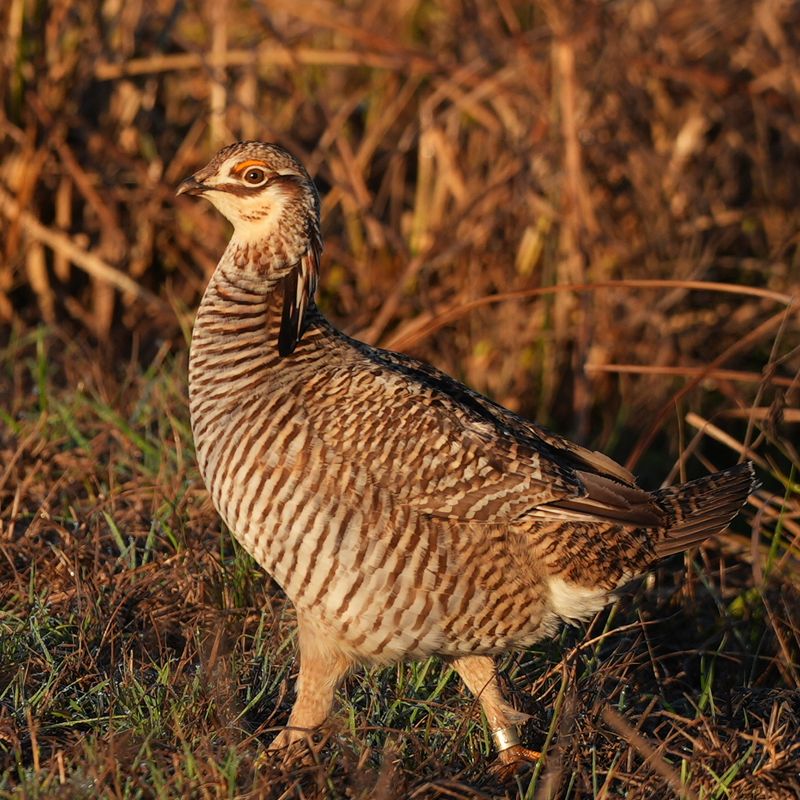
The Attwater’s prairie chicken, known scientifically as Tympanuchus cupido attwateri, is a distinct subspecies of the greater prairie chicken. It measures roughly 17 to 18 inches long with a wingspan near 28 inches.
Its feathers display vertical stripes of dark brown and dusty white, a natural camouflage that makes it nearly invisible in tall grass.
The bird’s diet includes grass roots, flower petals, seeds, and insects like grasshoppers. Chicks depend heavily on insects in their earliest weeks of life, which makes the health of the surrounding prairie ecosystem directly tied to their survival.
Habitat loss, overhunting, and invasive species all played roles in the population crash.
What makes this species so remarkable beyond its rarity is its elaborate courtship behavior.
Males gather at specific patches of short grass called leks or booming grounds, where they puff up vivid golden air sacs on their necks and produce a low, haunting boom that carries nearly half a mile across the open prairie.
Watching this display, even from a distance, feels like witnessing something ancient and irreplaceable. The Attwater’s prairie chicken is not just a bird.
It is a living signal of how fragile wild places can be.
The Coastal Prairie Habitat That Makes This Refuge Unique
Not every open field is a prairie, and the distinction matters enormously here.
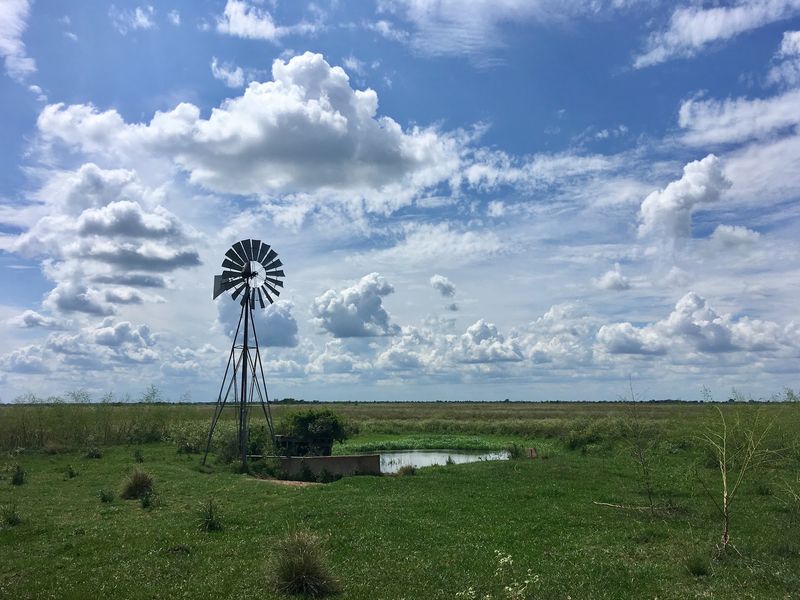
The Gulf Coast grasslands preserved within this refuge represent one of the largest remaining fragments of native coastal prairie in all of southeast Texas, a habitat so rare that it has largely vanished from the broader landscape.
What once covered millions of acres now survives in scattered patches, and this refuge protects one of the most significant of those remnants.
The plant community here is genuinely diverse. Mid to tall grass species like big bluestem, little bluestem, Indiangrass, and switchgrass form the backbone of the ecosystem.
These grasses are not just scenery. They provide nesting cover, summer shade, protection from predators, and a direct food source for the prairie chickens and dozens of other species that call this place home.
Historically, the coastal prairie was shaped by natural forces. American bison once grazed across these grasslands, and periodic wildfires swept through, clearing dead vegetation and preventing woody shrubs from taking over.
Without those natural disturbances, the prairie slowly gives way to brush and trees, making it unsuitable for ground-nesting birds like the Attwater’s prairie chicken.
Spring brings a wildflower bloom that transforms the refuge into something almost dreamlike. Indian paintbrush, bluebonnets, and butterfly milkweed color the landscape in vivid patches.
Even visitors who come purely for birding often find themselves stopping just to absorb the quiet beauty of the prairie itself. It is a landscape that rewards slowness and attention in equal measure.
The Captive Breeding Program Keeping the Species Alive
When a species drops to fewer than 50 individuals in the wild, conventional conservation measures are rarely enough on their own. That reality led to the creation of a captive breeding network that has become one of the most critical lifelines for the Attwater’s prairie chicken.
Several well-known institutions participate in this effort, including the Houston Zoo, Fossil Rim Wildlife Center, Texas A&M University, SeaWorld San Antonio, Abilene Zoo, Caldwell Zoo, and San Antonio Zoo.
Birds raised in these facilities are hatched, monitored, and eventually released into the refuge to supplement the wild population. It is a painstaking process that requires careful genetic management to maintain diversity within a small population.
Each bird that successfully reproduces in the wild represents a genuine victory for the program.
After release, biologists attach radio transmitters to the birds to track their movements, nesting attempts, and survival rates. This data is invaluable.
It helps researchers understand which release strategies work best, where birds tend to settle, and what threats they face once they are back on the prairie. The information shapes future decisions about everything from release timing to habitat management priorities.
The program is not without its setbacks. Severe weather events, including floods and hurricanes, have caused significant population dips in the past.
But the collaborative nature of the effort, with multiple institutions sharing knowledge and resources, gives the species a fighting chance it would not otherwise have. It is conservation in its most hands-on, determined form, and the refuge stands as its proving ground.
Prescribed Burns and Habitat Management on the Ground
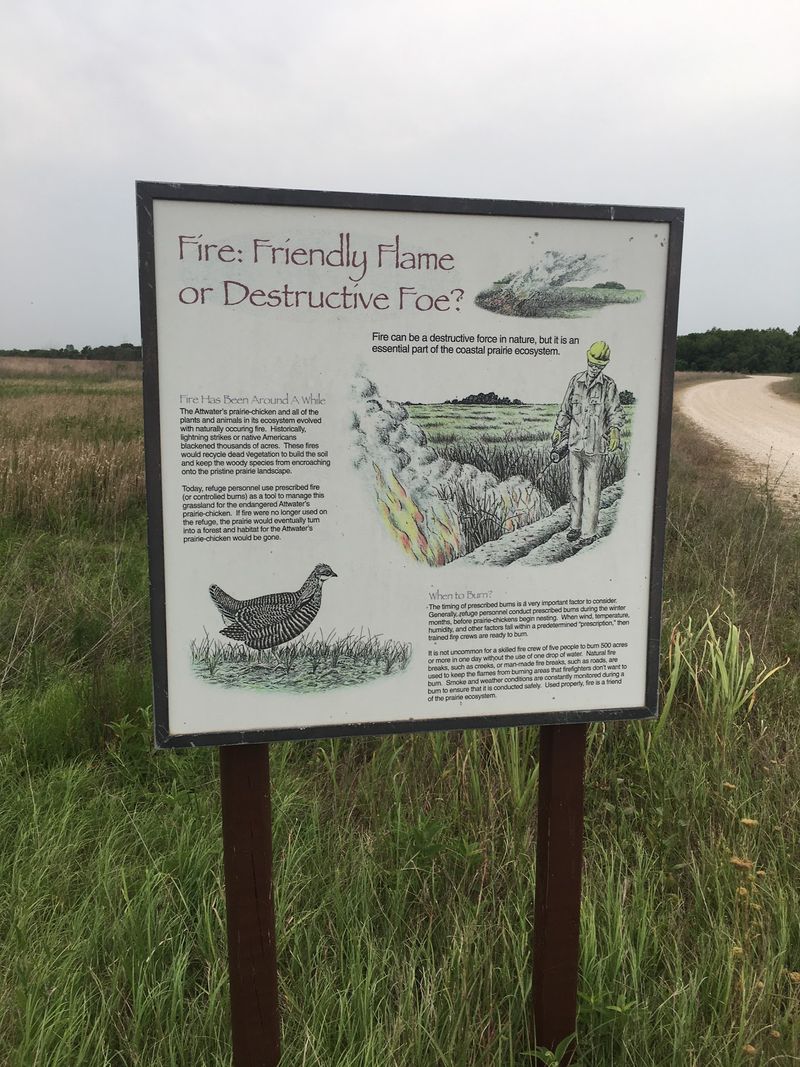
There is something counterintuitive about setting a prairie on fire to protect it. But prescribed burning is one of the most effective tools refuge managers have for keeping the coastal prairie healthy and suitable for Attwater’s prairie chickens.
Fire mimics the natural disturbances that once shaped this ecosystem, clearing out dead plant matter and stopping woody species from creeping in and choking out the open grassland structure the birds need.
Invasive plants are a serious problem here. Chinese Tallow trees, introduced from Asia, spread aggressively into disturbed or unmanaged prairie areas and fundamentally alter the habitat.
Once established, they shade out native grasses and reduce the open sightlines that prairie chickens rely on to detect predators. Controlling this invasion requires consistent, active management year after year.
Controlled grazing is another method used alongside prescribed burns. Cattle are brought in strategically to graze specific sections of the refuge, replicating some of the ecological effects that bison once provided.
The goal is not to graze everything uniformly but to create a mosaic of grass heights and densities that benefits a range of species at different life stages.
Formerly cultivated lands within the refuge are also being actively restored to native prairie. This means replanting with appropriate grass species and managing the land for years before it begins to function as true prairie habitat.
Restoration is slow work. But seeing a field that was once a crop row transform into waving bluestem grasses is its own kind of reward, and it adds real acreage to the prairie chickens’ available territory.
The Booming Grounds, Watching the Spring Courtship Display
If there is one experience at this refuge that feels truly once-in-a-lifetime, it is watching the spring courtship display of the Attwater’s prairie chicken.
From late February through early April, male birds return to the same patches of short grass they have used before, known as booming grounds or leks, and begin one of the most theatrical performances in the bird world.
Arriving before sunrise is the move. The display peaks in the early morning hours just after first light.
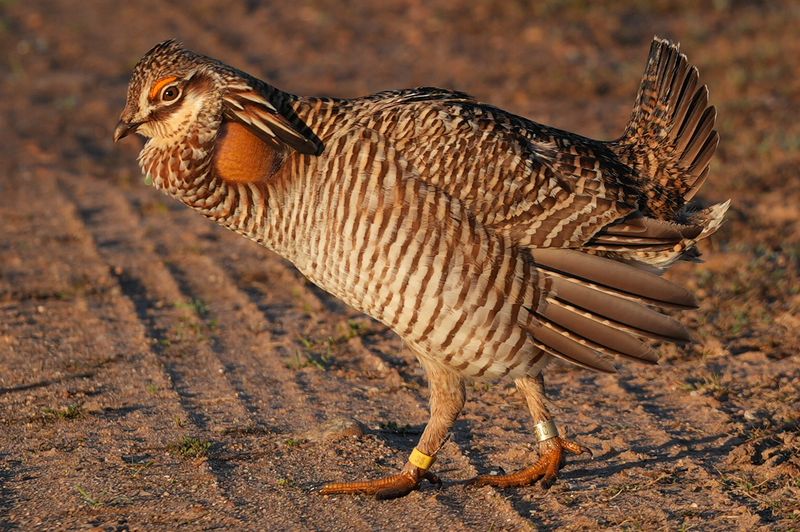
Males spread their tail feathers, lower their wings, and stomp rapidly with their feet in a kind of frantic dance. The real showstopper, though, is the boom.
They inflate those bright golden air sacs on the sides of their necks and release a deep, resonant call that drifts across the prairie like something from a different era. It is low and mournful and surprisingly loud for a bird of that size.
Guided van tours are offered on the first Saturday of most months, with bi-monthly tours during the peak March to April lekking season. These tours provide access to parts of the refuge not open to the general public, significantly increasing the chances of actually seeing a prairie chicken.
Spots fill up, so planning ahead is essential.
Even on a morning when no prairie chickens appear, the booming grounds have a particular atmosphere. The air is cool, the grass is still, and the prairie feels impossibly wide.
That sense of space and possibility is something I did not expect to carry home with me, but I did.
Birdwatching Beyond the Prairie Chicken, Over 250 Species Await
The Attwater’s prairie chicken gets top billing, but the refuge holds a remarkable supporting cast. More than 250 bird species have been recorded here across different seasons, making it a genuinely rewarding destination for birders at any level of experience.
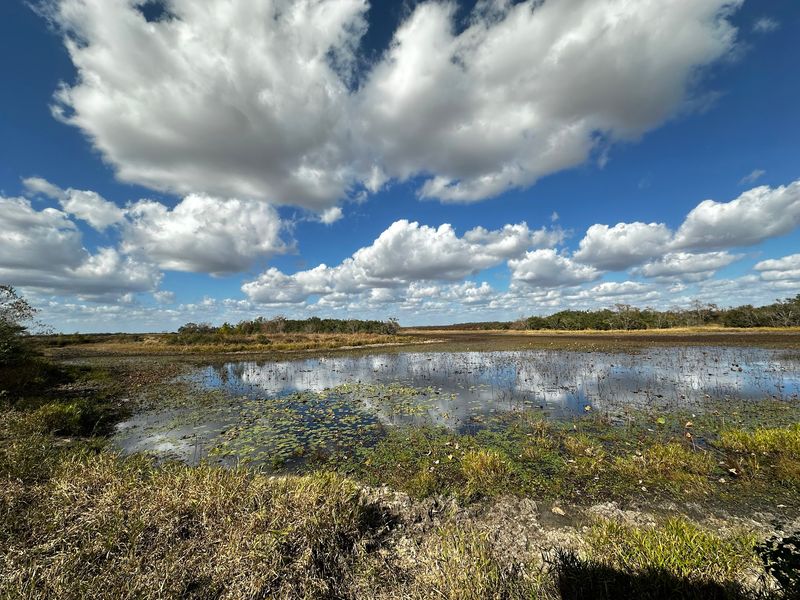
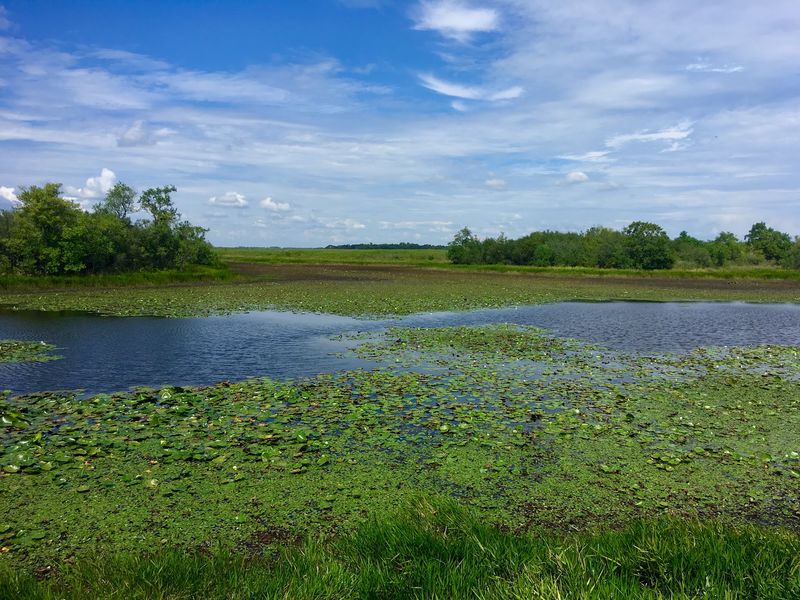
The diversity of habitats, including open grassland, riparian corridors along Coushatta Creek, and seasonal ponds, draws an impressive range of species throughout the year.
Crested Caracaras are a consistent highlight. These striking raptors with bold black and white plumage and bare orange-red faces are year-round residents of the Texas coastal plain, and spotting one perched on a fence post along the auto tour loop is a reliable thrill.
White-tailed Hawks, Dickcissels, and a variety of sparrows also make regular appearances across the grasslands.
Winter brings its own excitement. Sandhill Cranes pass through in numbers, and Bald Eagles have been frequently observed soaring over nearby Eagle Lake during the colder months.
Rarer sightings have included Least Grebes, Masked Ducks, and even Golden Eagles, which keeps dedicated birders coming back season after season with genuine anticipation.
Spring migration turns the refuge into something especially dynamic. Warblers, shorebirds, and other migrants move through in waves, adding species to checklists rapidly during peak movement periods.
Bringing a good field guide and a solid pair of binoculars is strongly recommended. The refuge rewards careful observation, and the birding here has a quality that feels genuinely wild rather than curated or managed for spectacle.
That authenticity is part of what makes it special.
Trails, the Auto Tour Loop, and How to Explore the Refuge
Getting around the refuge is straightforward, and the options suit different levels of energy and interest.
The five-mile Auto Tour Loop is the most popular way to experience the landscape, winding through diverse coastal prairie habitat and offering excellent wildlife viewing from the comfort of a vehicle.
It is open daily from sunrise to sunset, which means early birds and evening visitors both have a shot at catching wildlife in the best light.
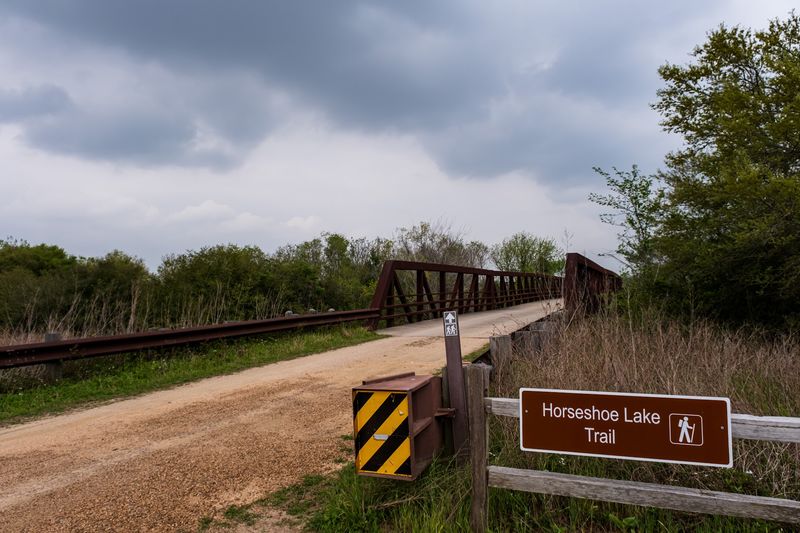
For those who prefer to stretch their legs, hiking trails add a closer, quieter dimension to the visit. The Sycamore Trail and Horseshoe Lake Trail both pass through varied terrain, including riparian areas along Coushatta Creek where the vegetation changes noticeably from the open grassland.
Turtles, frogs, and alligators can be spotted near the water, adding a different kind of wildlife encounter to the mix.
The Visitor Center is worth a stop when it is open. From November through May, it operates Tuesday through Saturday from 8:00 AM to 3:30 PM.
From June through October, those hours shift to Thursday through Saturday during the same window. Even when the center is closed, maps and informational fact sheets are available at a kiosk near the parking lot.
Public restrooms remain accessible near the Visitor Center at all times, which is a practical detail worth knowing before heading out on a trail.
Parking is easy and uncrowded on most visits. The pace here is unhurried by nature.
Taking time to stop the car, roll down the window, and simply listen to the prairie is one of the best things to do on any visit.
Wildlife Beyond Birds, Deer, Alligators, and Prairie Wildflowers
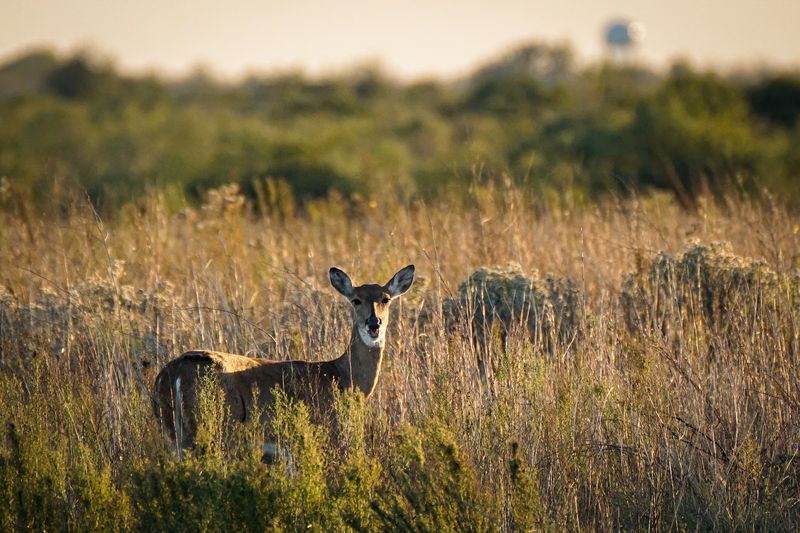
Birds are the main draw, but the refuge holds plenty of surprises for visitors who slow down and look beyond the sky. White-tailed deer browse through the grasslands in the early morning and late afternoon, often unconcerned by vehicles moving slowly along the auto tour loop.
Black-tailed jackrabbits dart through the grass with startling speed, their oversized ears catching the breeze as they go. Seeing one up close is genuinely fun.
Bobcats and coyotes also inhabit the refuge, though sightings require patience and a bit of luck. Spotted skunks have been recorded here as well, adding to the list of mammals that use the coastal prairie as their home range.
The predator and prey dynamic plays out quietly across this landscape in ways that are easy to miss if attention stays fixed only on the treetops.
The ponds and creek areas support American alligators and softshell turtles, both of which can be observed basking or moving through shallow water. American bullfrogs and upland chorus frogs add their voices to the ambient soundtrack of the refuge, especially after rain.
Those sounds layer beautifully with the wind and the birds into something that feels genuinely immersive.
Wildflowers deserve their own moment of appreciation. The spring bloom season brings Indian paintbrush, bluebonnets, and butterfly milkweed in vivid abundance across the open prairie.
Butterflies, beetles, caterpillars, and lizards round out the smaller-scale wildlife encounters that make every visit feel fresh. The refuge rewards curiosity at every scale, from the rarest bird to the tiniest beetle moving through the grass.
Address: 1206 Apc Nwr Rd, Eagle Lake, TX 77434
