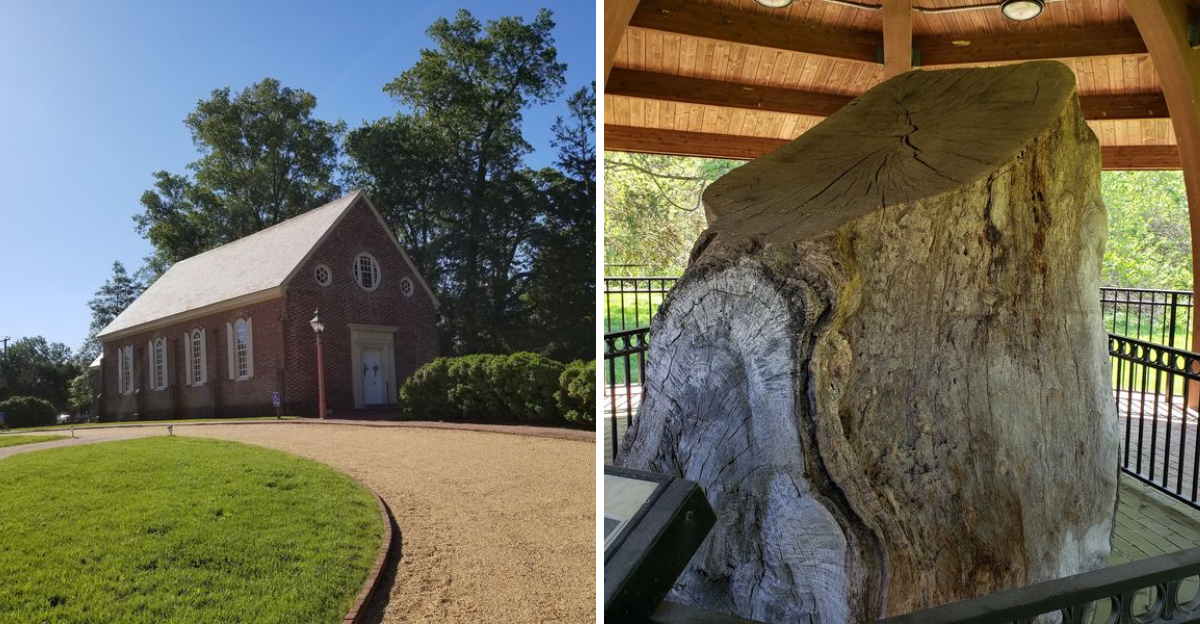
Most Maryland state parks are known for trails, waterfalls, or lakes, but this tiny spot became famous because of one absolutely enormous resident.
The legendary white oak that once stood here was believed to be more than 460 years old, reached 96 feet tall, and spread its crown across 119 feet before a thunderstorm toppled it in 2002.
For decades, it was recognized as the largest white oak in the United States and became such a Maryland icon that the state purchased the tree and surrounding land in 1939. The giant itself is gone, but its story still makes this little park far more interesting than its size suggests.
Maryland has bigger parks by practically every measurement, but very few can claim a former resident with a biography spanning nearly five centuries.
A 29 Acre Park Built Around One Extraordinary Tree
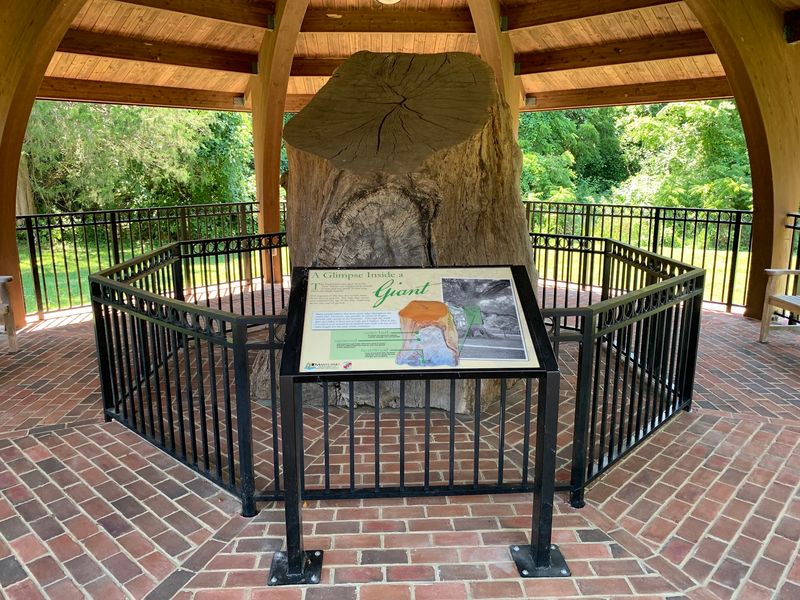
Most state parks make you work for their highlights. Here, the main attraction sits about forty steps from the parking area, and that simplicity is part of the charm.
The whole property covers just 29 acres in Talbot County, hidden along a rural stretch of the Eastern Shore. Fields press in on one side, woods on the other, and a small stream valley sits protected at the edge of the land.
What makes the place unusual is its reason for existing. Maryland did not set this aside for lakes, campgrounds, or scenic overlooks.
The state protected it because of a single white oak, Quercus alba, that grew here for more than four centuries.
In 1939 the Maryland General Assembly purchased the tree and created the park around it. That decision was the first of its kind in the country, a government buying one tree for preservation.
Visiting feels less like hiking and more like paying a short visit to something important. Picnic tables sit near the clearing, interpretive signs explain the timeline, and short trails give legs a stretch.
Plan on thirty to sixty minutes unless you like lingering, which I did. Bring a snack, since there are no concessions nearby.
The scale surprised me most. Something this small holding a story this large makes the stop feel like a secret, especially compared with the busier waterfront parks scattered across Maryland.
Come on a weekday morning and you may have the entire clearing to yourself, with only birdsong and passing farm traffic for company.
How an Acorn From the 1540s Became Maryland’s Most Famous Resident
Numbers rarely give me goosebumps, but these did. The acorn that produced the Wye Oak is believed to have germinated around 1540, meaning the tree was already growing before the first colonists reached Maryland’s shores.
By the time it fell, it had lived roughly 460 years. Generations of families passed beneath its branches, and the tree simply kept adding rings.
Its measurements read like something from a tall tale. The trunk stretched 31 feet 10 inches around at breast height, the crown spread 119 feet wide, and the whole thing rose 96 feet into the sky.
The main bole alone weighed more than 61,000 pounds. Picture that resting on a single root system in soft Eastern Shore soil.
Interpretive panels at the park lay out these details clearly, and reading them while standing in the open clearing does something to your imagination. The empty space above suddenly fills in.
I found myself pacing out 119 feet across the grass just to understand the crown. It took a while.
What sticks with me is how ordinary the beginning was. One acorn, dropped by chance, in a place where nobody cut it down.
Four centuries of storms, droughts, and changing hands, and the tree kept going. Learning that timeline before exploring the rest of the park gave every other stop here more meaning, from the preserved trunk section to the young clone growing in its place.
The Storm of June 2002 and the Day Maryland Lost Its State Tree

June 6, 2002 started as an ordinary summer day on the Eastern Shore. A severe thunderstorm rolled through with high winds that afternoon, and the Wye Oak came down.
After 460 years, it took only minutes.
The detail that hit me hardest appears on the park’s signage. When the tree toppled, it was still carrying a maturing crop of acorns.
It had not given up or stopped growing. It was doing exactly what it had always done, right up until the wind won.
News of the collapse traveled fast across Maryland, because the Wye Oak had been the State Tree since 1941. Losing it felt personal to a lot of people who had visited as schoolchildren.
Crews arrived to salvage what they could rather than haul the wood away. That choice shaped everything visitors see here today.
Standing in the clearing on a breezy day makes the story land differently. Wind moves through the surrounding trees, and it takes very little effort to imagine that afternoon.
There is no wreckage to view, no dramatic scar in the ground. Just grass, a pavilion, and a young oak.
I appreciated that the park does not treat the fall as a tragedy to dwell on. Signs explain the event plainly, then move straight into what came next.
The tone throughout the site leans hopeful, which suits a place built around a tree that left behind acorns, clones, and offspring still growing today.
Getting Close to the Preserved Trunk Beneath the Pavilion
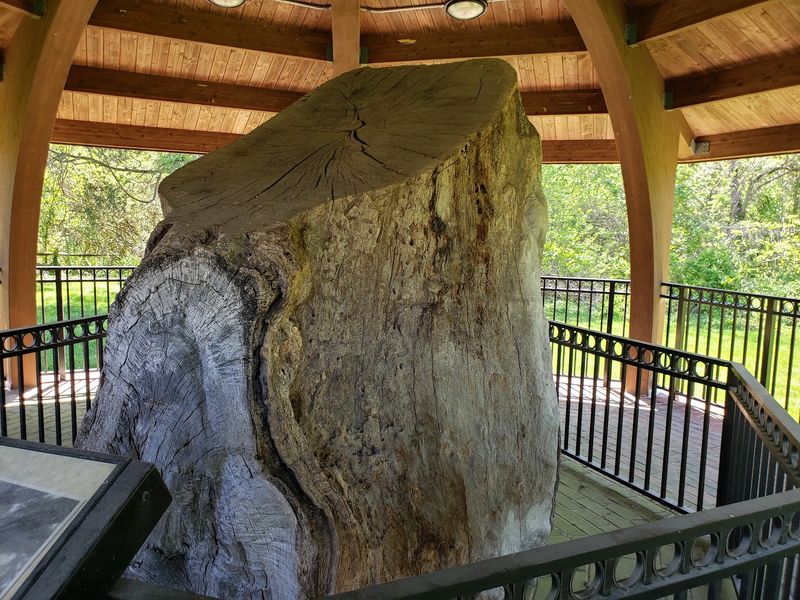
Photographs of the Wye Oak are impressive. Seeing a piece of it in person is something else entirely.
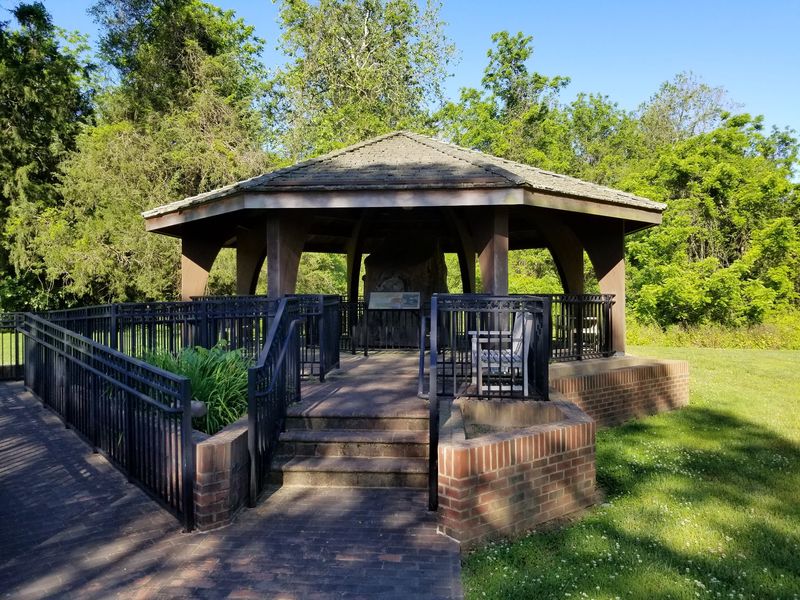
A pavilion within the park shelters a section of the original trunk, and it stops most visitors cold. The wood is enormous, weathered, and unmistakably ancient, the kind of object that makes measurements suddenly feel real.
Circling it slowly is worth the time. Grain patterns twist in ways that hint at centuries of growth, storm damage, and repair.
Kids tend to reach out and touch it, which feels like the right instinct.
Shade from the pavilion makes this the most comfortable spot in the park on a hot afternoon. I ended up sitting on a nearby bench longer than planned, just looking at it.
Photographers should know the light under the roof stays fairly dim, so a steady hand helps. Including a person in the frame gives the scale context that a close-up cannot.
Interpretive displays near the pavilion connect the wood to the tree’s history, and reading them beside the actual trunk beats any museum label.
What struck me was the texture. Smooth in places, rough and split in others, like a record of every rough season the tree survived.
Bring a small flashlight if you love details, since the grain shows more clearly with a little extra light. And take a moment before moving on, because the rest of the park makes more sense once you have stood next to this.
Meeting the Genetic Clone Growing Where the Original Once Stood
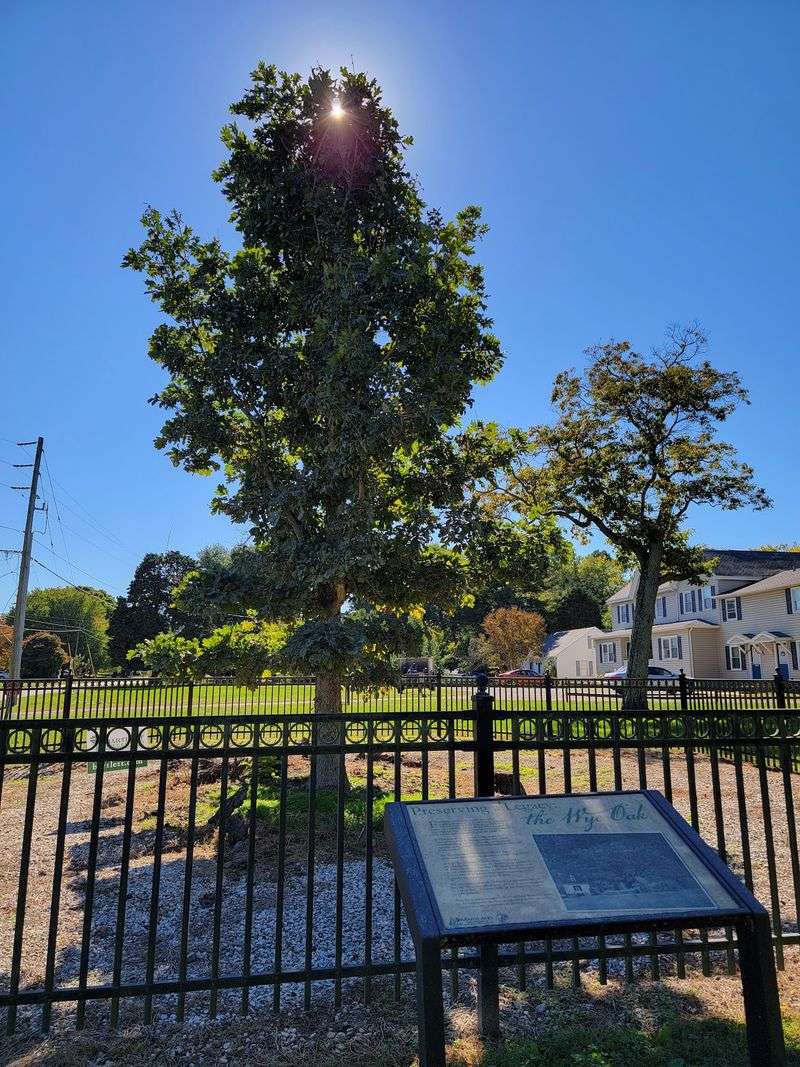
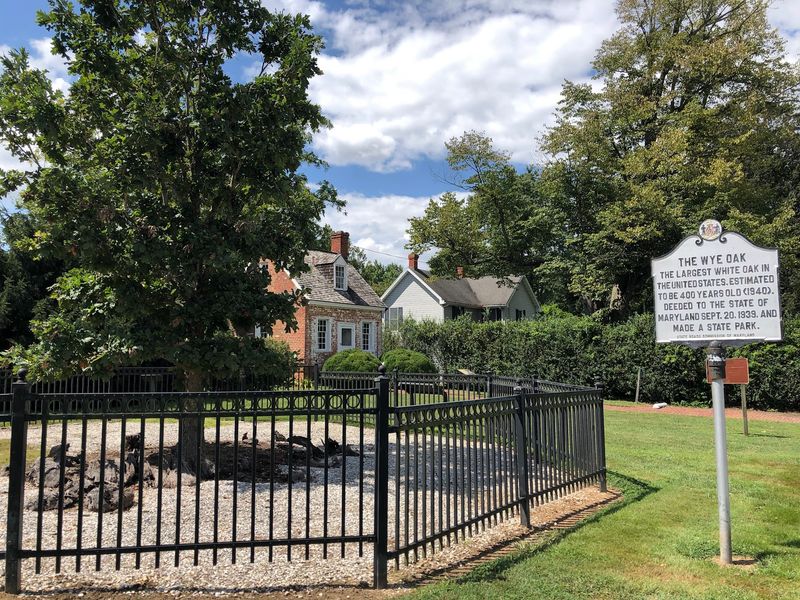
Here is the part of the visit that genuinely surprised me. A true genetic clone of the Wye Oak grows on the exact site, planted within the remains of the original trunk.
The ceremony took place on June 6, 2006, four years to the day after the storm. A marker nearby commemorates the planting.
Seeing a young oak rising from the footprint of its ancestor does something unexpected to the mood of the place. What could feel like a memorial instead feels like a beginning.
The tree is still modest in size, nothing like the giant it descends from. Give it a few hundred years.
Clones from the Wye Oak have been planted at other meaningful locations too, including Mount Vernon. Offspring trees now produce their own acorns, which means the genetic line keeps spreading well beyond Talbot County.
Reading that marker, I liked the quiet ambition of it. Somebody decided this story was not finished.
Visit in late spring or early summer and the young oak’s leaves look especially bright against the open field. Autumn brings warmer color and fewer insects.
Photograph the clone with the pavilion in the background if you want one image that captures the whole idea, past and future in the same frame.
Children seem to grasp the concept quickly, which makes this a useful teaching stop for families driving between Annapolis and the Chesapeake beaches. It is a short lesson in patience, planted in real soil.
A Colonial One Room Schoolhouse Hiding in Plain Sight
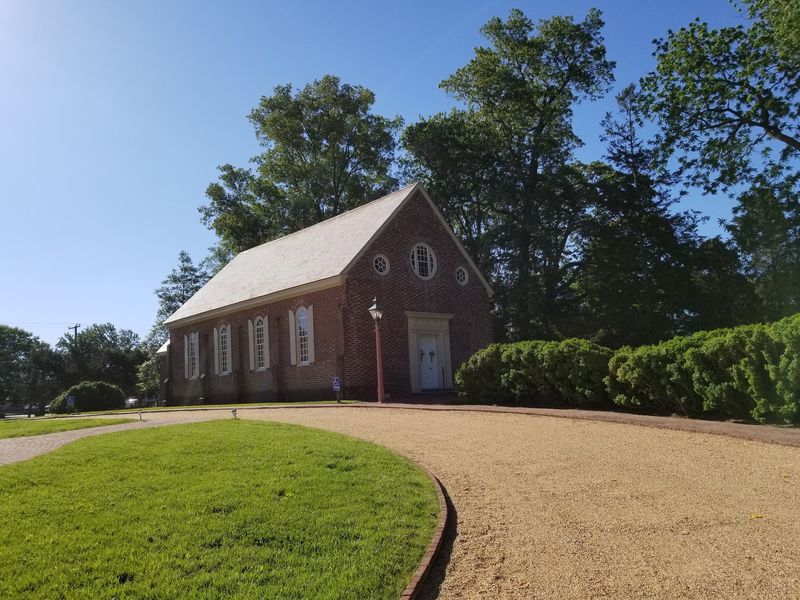
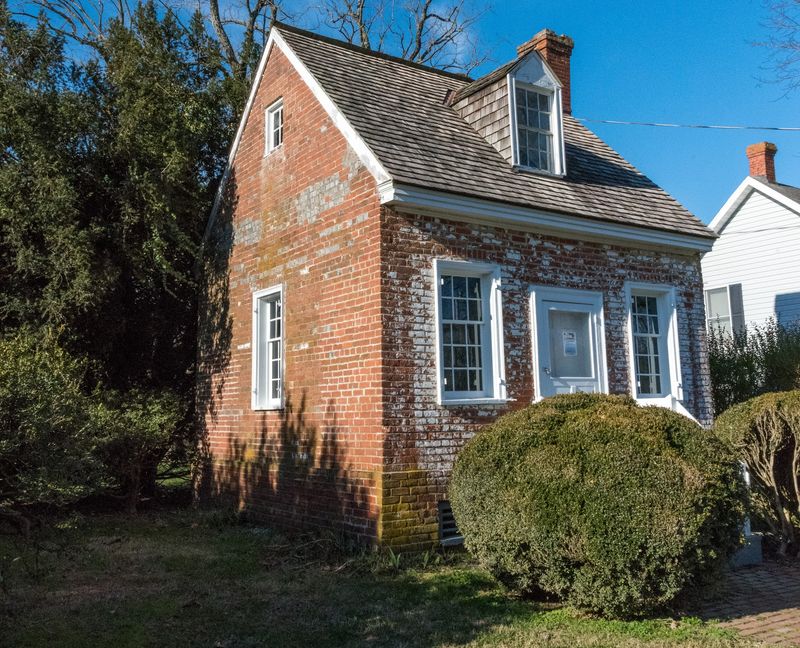
Nobody told me there was a schoolhouse here, so finding one felt like a bonus discovery. Small, brick, and only one and a half stories tall, it sits near the clearing looking almost too tidy to be old.
The building dates to colonial times and is believed to be the second oldest schoolhouse in Talbot County.
The Queen Anne Garden Club restored it carefully in 1952, and the interior reflects what a country classroom once looked like. Inside sits a schoolmaster’s desk and stool, a long pine table with benches, and a dunce stool.
That last item always gets a reaction from visitors.
Peering through the doorway, the room feels impossibly small for a whole school. No rows of desks, no chalkboard wall, just shared benches and hard wood.
Children who visit usually go quiet for a second, then start asking questions.
Access to the interior can vary, so check with Maryland Park Service before counting on going inside. Even from outside, the brickwork and proportions reward a close look.
Pairing the schoolhouse with the oak makes the stop feel bigger than its acreage. One structure taught local children, one tree watched them grow up, and both survived long enough to become landmarks.
I liked how unfussy it all is. No ropes, no gift shop, no crowds shuffling past.
Take a slow lap around the building, read the marker, then head back toward the pavilion. The contrast between fragile old brick and massive old wood sticks with you.
Trails, Picnic Tables, and the Quiet Stream Valley Out Back
Do not expect a full day of hiking, and that is fine. Wye Oak State Park keeps things simple with well-maintained trails good for walking, jogging, or an easy stroll after a long drive.
Paths stay short and level, which suits strollers and grandparents equally.
Beyond the mowed clearing, the park protects a nearby stream valley from development. Slipping into that shaded stretch changes the soundtrack quickly, trading road noise for water, leaves, and woodpeckers.
Songbirds are busy here in spring.
Picnic tables sit near the pavilion, making this a genuinely good lunch stop for anyone crossing the Eastern Shore. Pack food ahead of time, spread out, and enjoy the fact that you probably will not have to compete for a table.
I ate a sandwich there and watched a hawk circle over the field.
Bug spray earns its place in the bag from late spring through summer, especially near the stream. Sturdy shoes help after rain, when low spots stay soft.
Interpretive displays scattered around the grounds turn a short walk into a history lesson without feeling like homework. Read a few, skip a few, whatever fits your mood.
The overall pace here is unhurried, which is exactly why the park works so well as a break between longer stops. Nothing demands rushing.
Leave time to sit still for five minutes before getting back in the car. In a place shaped by a tree that stood for centuries, slowing down feels appropriate.
Where the Wood Went, From a Governor’s Desk to Tiny Leaf Jewelry
Salvaging the Wye Oak turned into one of the most creative preservation projects Maryland has attempted. Rather than losing the wood, the state distributed it widely, and pieces of the tree now live in surprising places.
A substantial section became a new desk for the Maryland governor’s office.
Artists and craftspeople received wood as well, producing carvings, sculptures, furnishings, serving pieces, and even three-dimensional collages. Oil paintings joined the collection too.
One statue made from the tree shows two children planting a sapling, and it stands in the Tawes State Office Building in Annapolis.
The smallest detail delighted me most. Leaves from the tree were preserved and crafted into jewelry, each piece issued with a certificate of authenticity.
A 460-year-old oak, reduced to something wearable.
Learning about these afterlives while standing in the park changes the visit. The clearing may look empty, but the tree is scattered across the state in desks, artwork, and keepsakes.
Anyone heading toward Annapolis can build a small itinerary around it, starting in Wye Mills and finishing near the statue. That drive turns a fifteen-minute roadside stop into a genuine day trip.
Offspring trees are producing acorns now, so the biological legacy continues alongside the artistic one.
Between the clones, the carvings, and the preserved trunk, this little park pulls off something rare. A tree that fell more than twenty years ago still feels present, still feels useful, still feels like it belongs to everyone.
Address: 14214 Old Wye Mills Rd, Wye Mills, MD 21679
