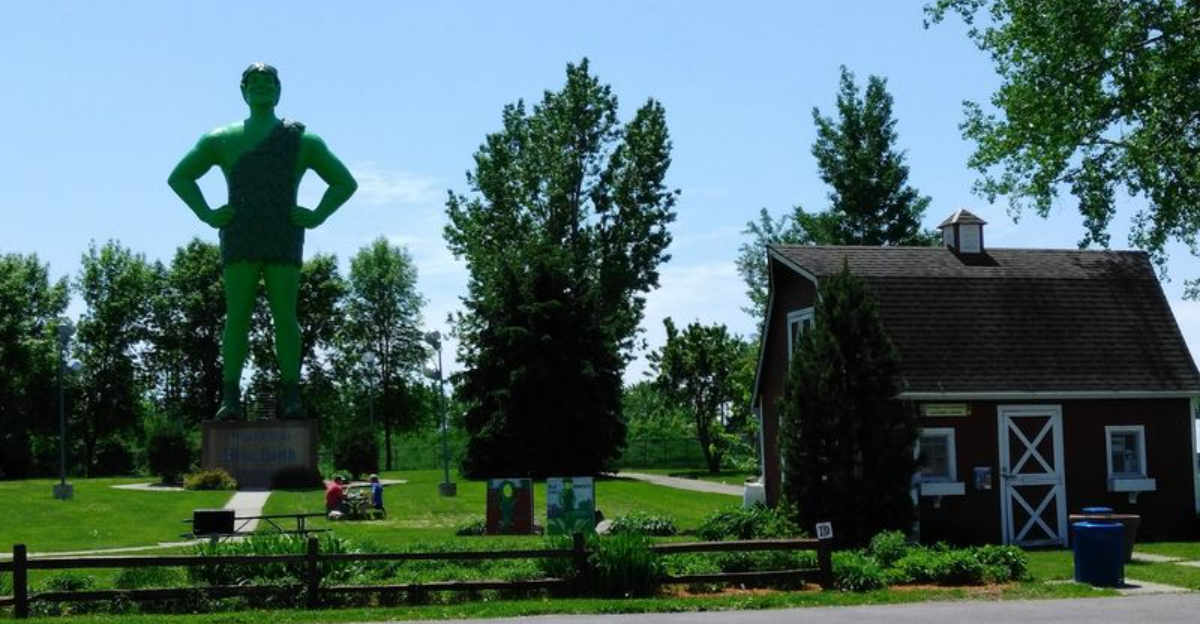
Nothing about this town suggests excitement at first. Quiet streets, small storefronts, the kind of place you’d drive through without a second thought. Then something enormous comes into view, and every assumption gets thrown out immediately.
A giant figure towers over the town, visible long before you actually arrive. Kids press their faces against car windows, pointing and shouting, while parents pull over just to get a closer look. It’s the kind of roadside stop nobody plans for yet everyone remembers.
Minnesota has its share of quirky small towns, but few pull off surprise quite like this one. Locals seem used to the attention by now, greeting wide eyed visitors with knowing smiles. Minnesota summers bring steady streams of travelers detouring just to see it themselves.
Some towns whisper their secrets. This one stands tall and shouts.
Roadside Royalty on Green Giant Lane
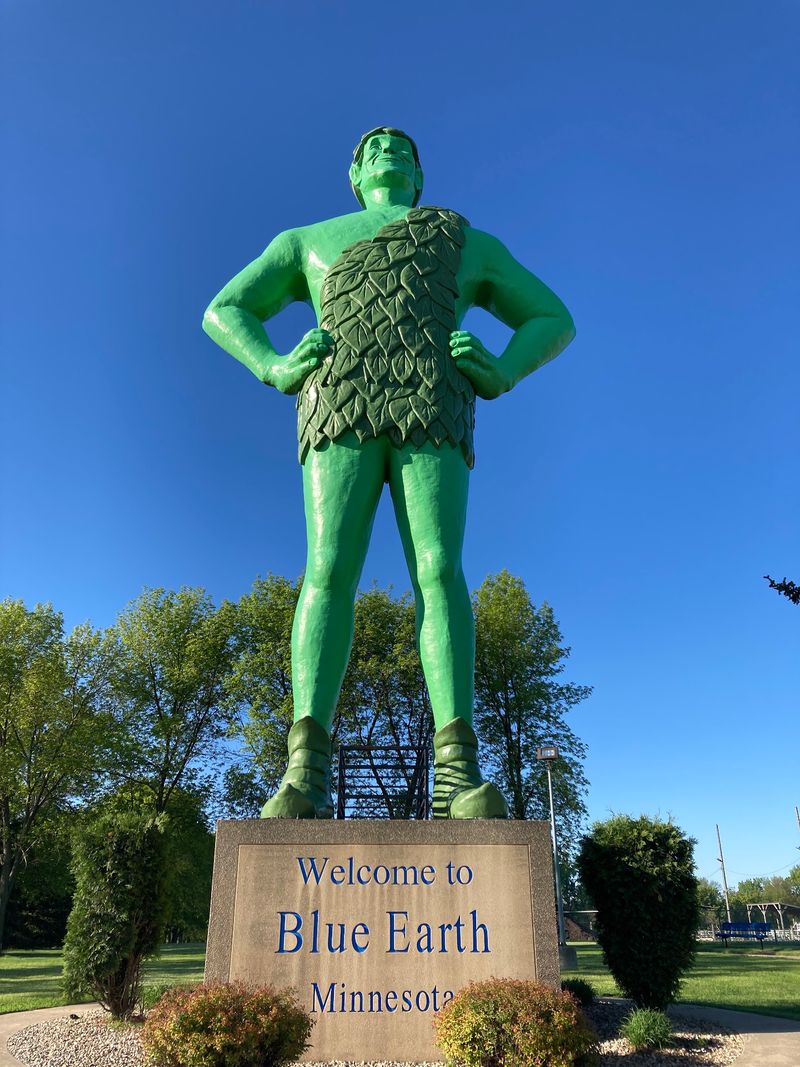
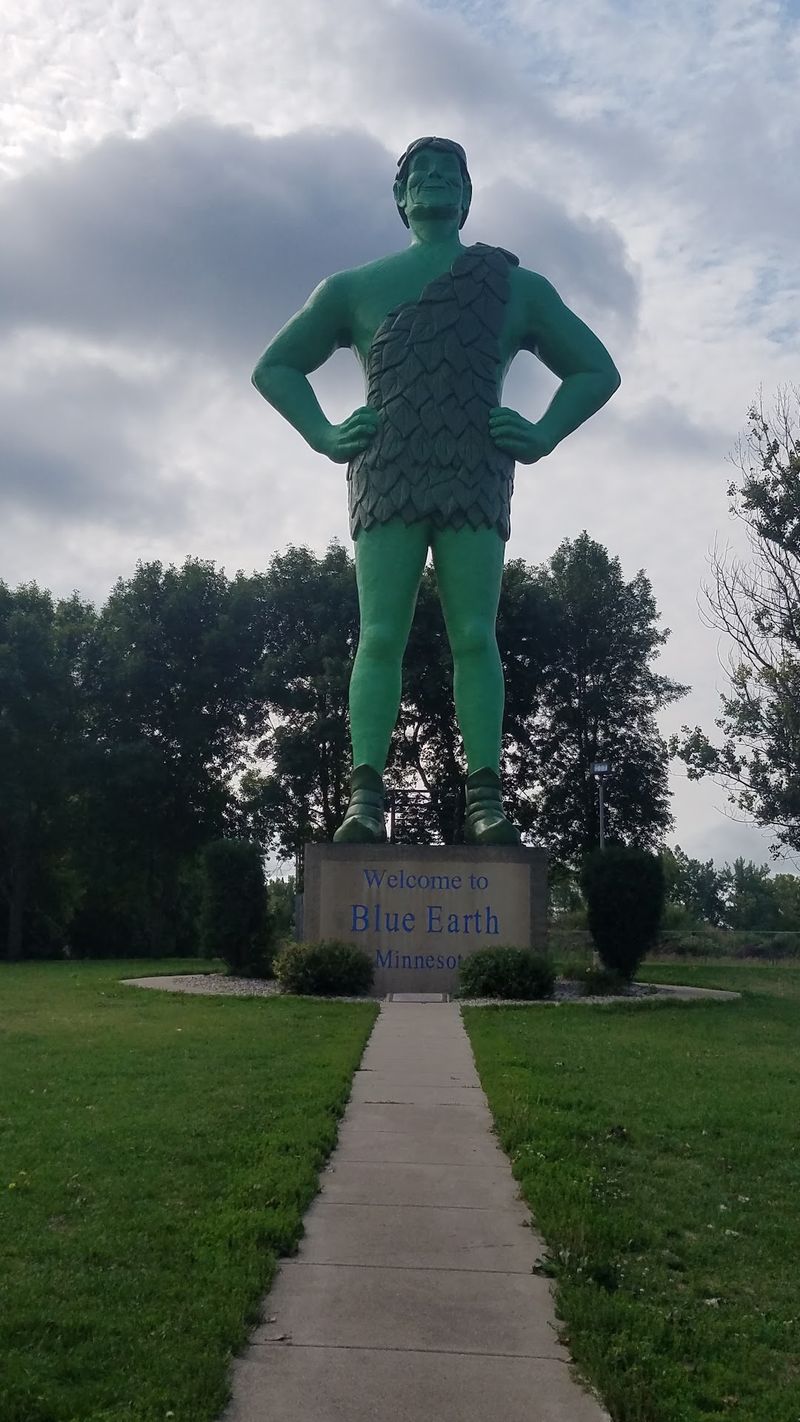
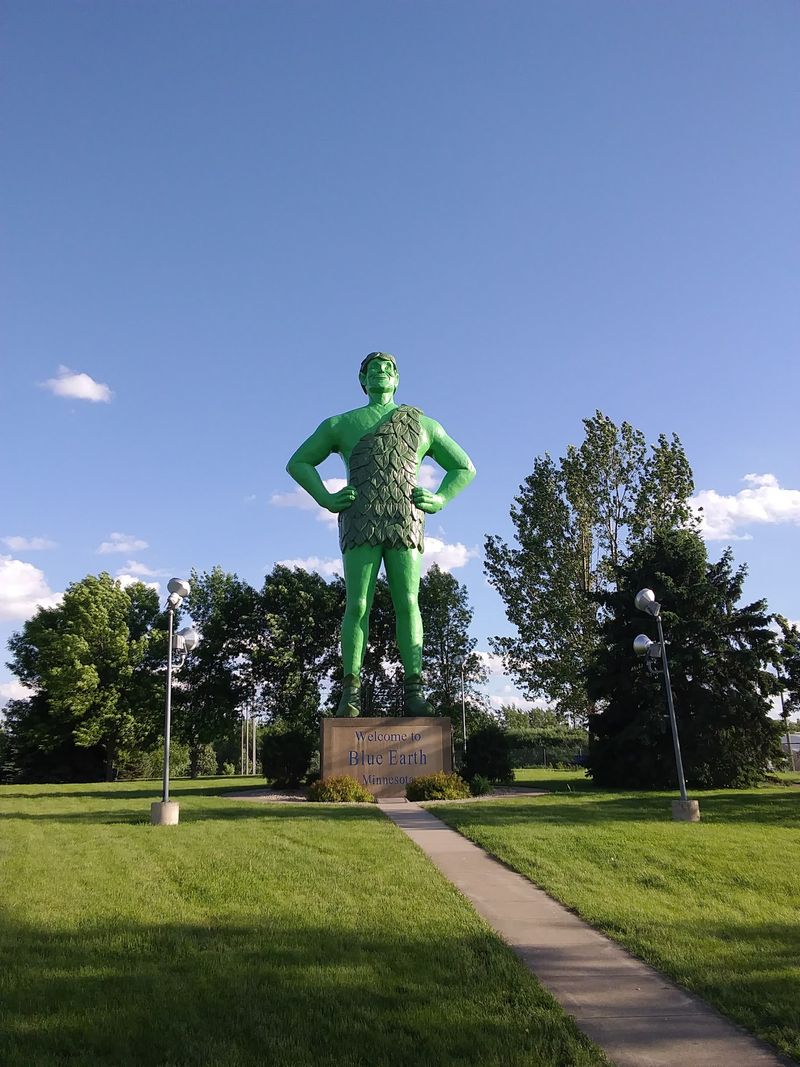
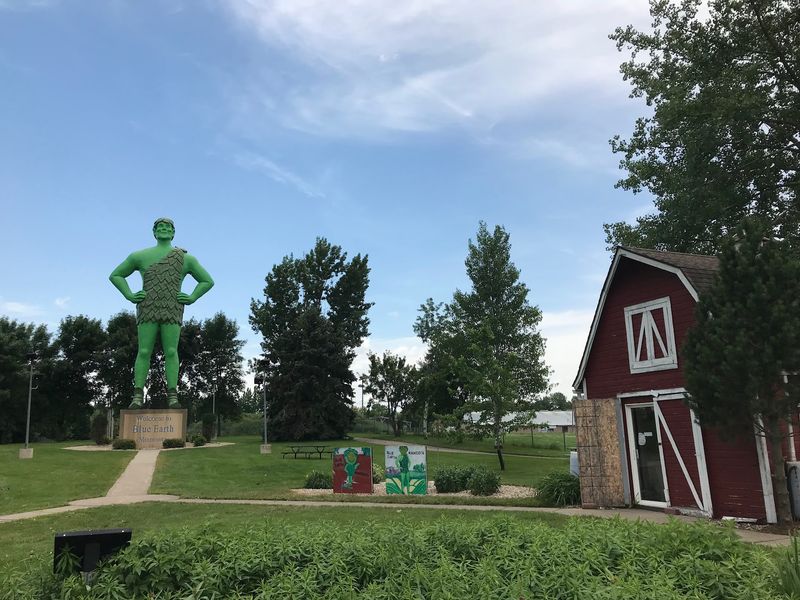
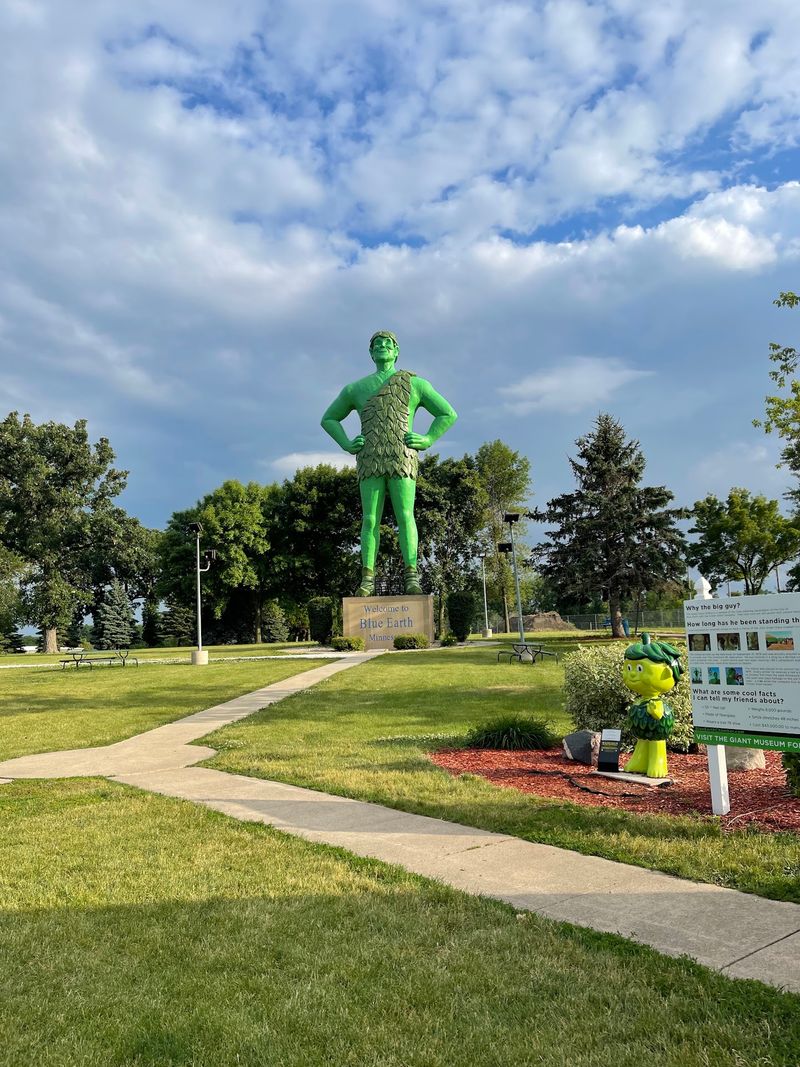
Few small towns get to brag about a 55 foot mascot, but Blue Earth has one grinning down from a hill just off Interstate 90. The statue went up in 1979, and it still pulls cars off the highway every single day.
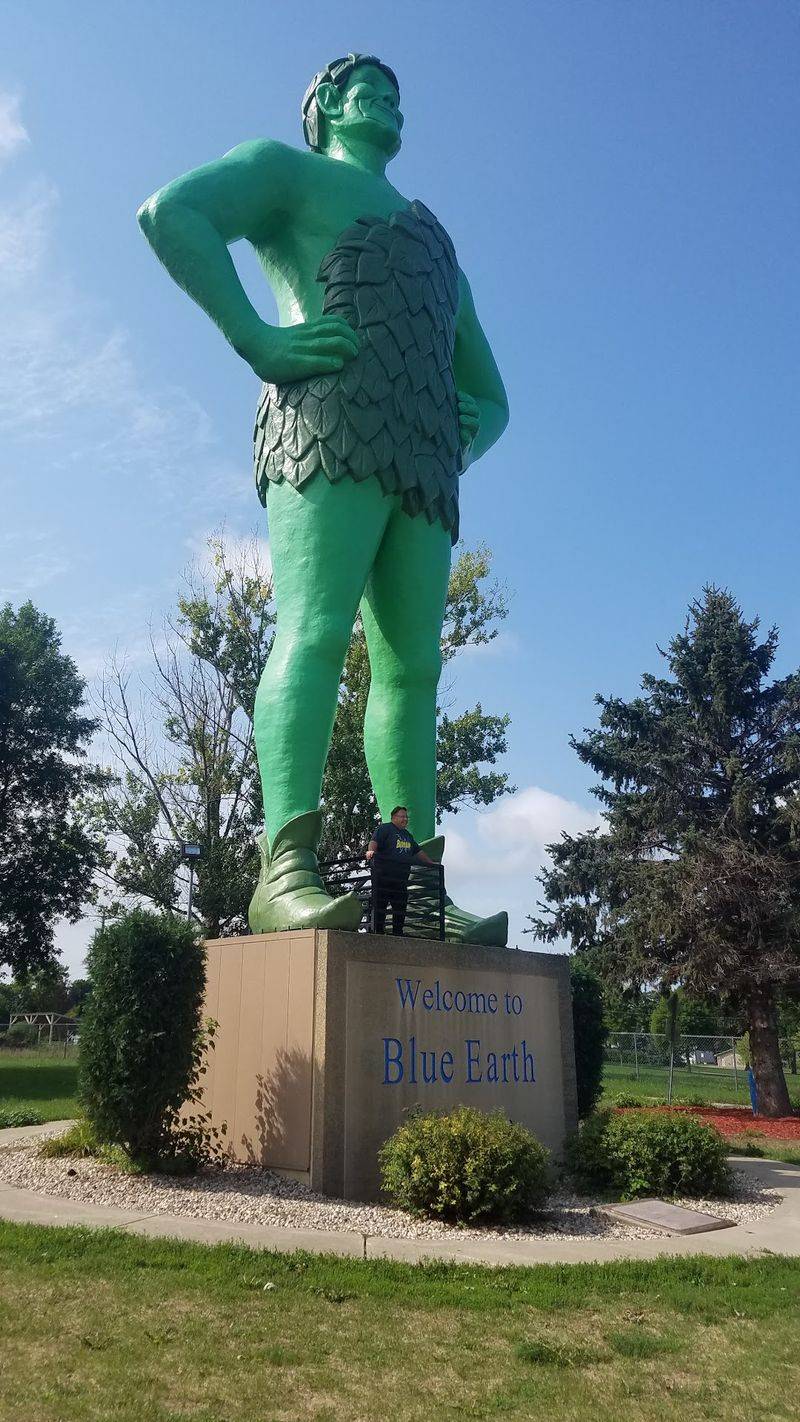
Up close, the scale is genuinely funny. His shoe alone stretches about six feet long, which makes the photo op almost impossible to resist.
Visitors climb the steps, stand between those massive green legs, and try to fit the whole thing into one frame. Nobody manages it on the first try.
Blue Earth earned the statue because the Green Giant canning company packed peas and corn here for decades, feeding a big share of the local economy.
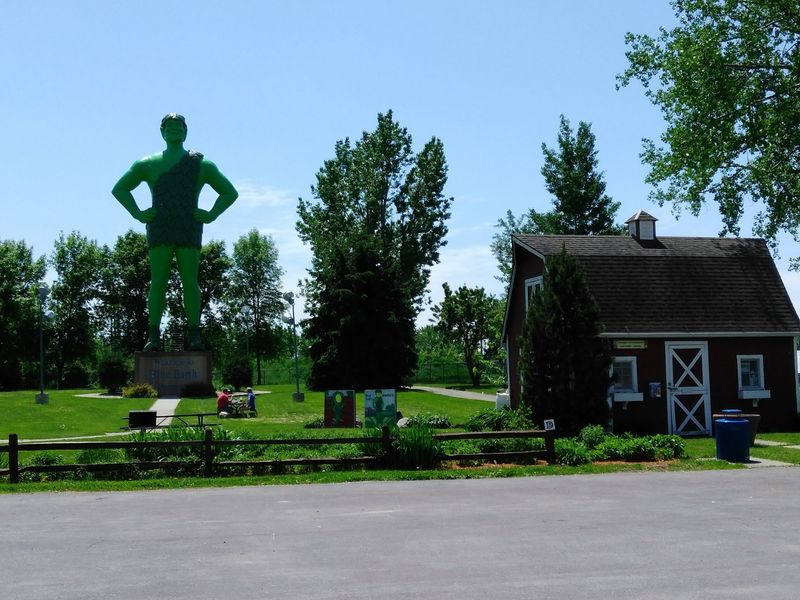
Come at sunset if the timing works, when the light deepens the paint and the parking lot empties out. There is a picnic area nearby, plus a wide lawn for stretching legs after a long drive. Find him at 1126 Green Giant Lane, right where the frontage road curves.
Cans, Labels and Sprout at the Green Giant Museum
A short walk from the statue, a modest building holds decades of canning history that most people never expect to find in a town this size. The Green Giant Museum is packed with labels, cans, plush Sprouts, and old factory equipment.
Volunteers keep it running, and the displays feel personal rather than corporate. Many pieces were donated by families who worked the lines when the plant was busy.
Shelves hold advertising art from the middle of the last century, along with lunch boxes, playing cards, and salt shakers shaped like the Giant himself.
Photographs of the old cannery show workers sorting peas by hand during harvest season. Reading the captions gives a clearer picture of why the statue matters so much here.
Hours change with the seasons, so a quick check before driving over saves disappointment. The museum shares the same address as the Giant, 1126 Green Giant Lane, which makes the pairing easy.
Give it thirty minutes, maybe longer if conversation starts. Souvenirs are available near the door.
The Golden Spike Where Interstate 90 Finally Closed
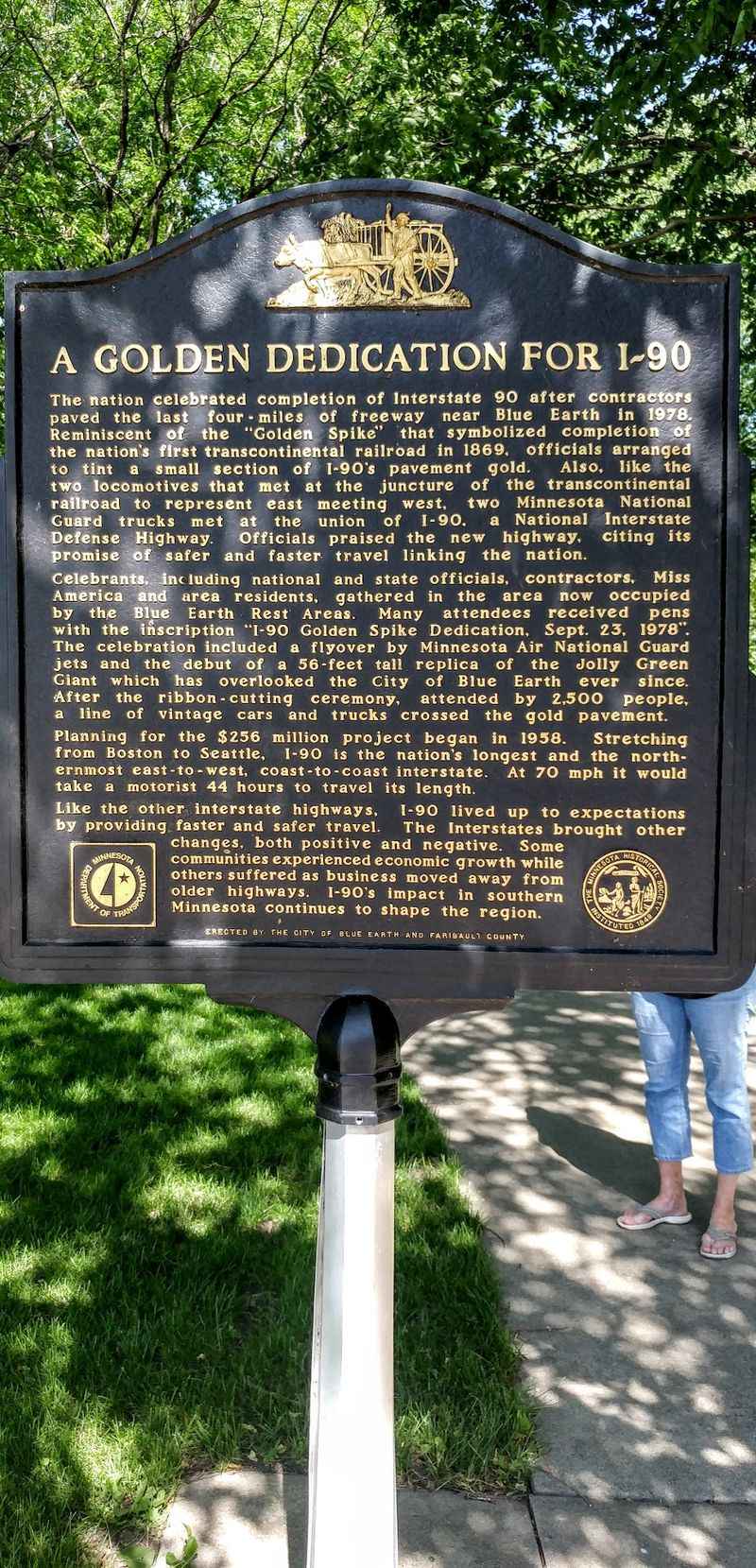
Interstate 90 stretches from Boston to Seattle, and the very last piece of it was finished right here in 1978. A gold painted strip of concrete marks the spot.
Locals call it the Golden Spike, borrowing the phrase from the transcontinental railroad. A monument near the highway explains the story for anyone curious enough to pull over.
It is a strange thing to celebrate a road, yet the moment carried real weight for a farming county that suddenly sat on a coast to coast route. Trucks rolled through. Motels filled. The Giant got more visitors than ever.
The marker sits close to the statue, so the two stops fold neatly into one break from driving. Photos here are less dramatic, but the plaque rewards a few minutes of reading. Kids usually shrug at it. Adults who have driven long stretches of I-90 tend to linger.
Bring a jacket in spring, because wind rips across the flat land with nothing to slow it down. Then continue with a better story than a gas station stop.
A Slow Lap Around Main Street
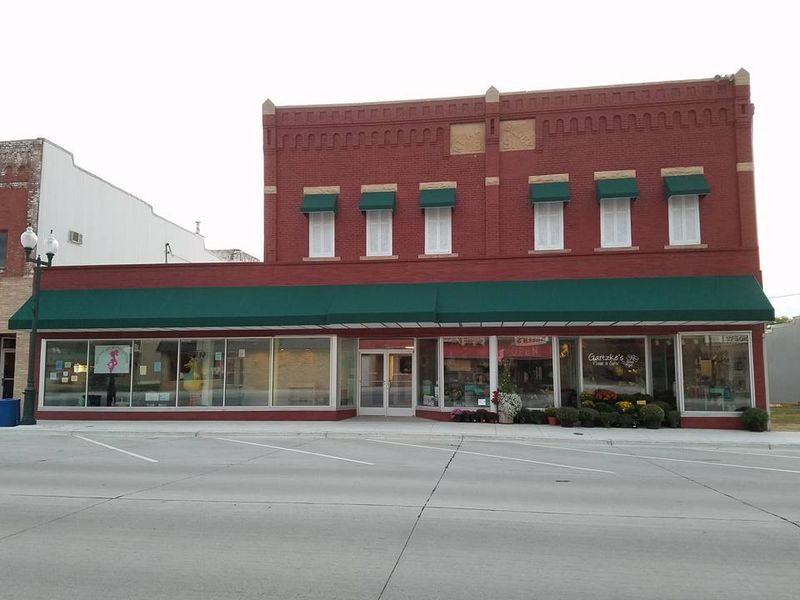
Main Street here is short, tidy, and lined with brick storefronts that never got knocked down for a strip mall. That alone makes it worth a slow lap on foot. Windows show hardware displays, gifts, quilting fabric, and secondhand finds. Shopkeepers say hello without making it awkward.
The Faribault County Courthouse anchors the north end, a limestone landmark from 1891 with a clock tower visible from several blocks away.
Coffee is easy to find, and a mid morning break at a corner table gives a decent view of small town traffic, which mostly means pickups and bicycles. Sidewalk planters change with the seasons. Holiday lights go up early and stay up late.
What surprised me most was how quiet it stays even at lunchtime, though the cafes fill in a steady, unhurried way. Parking is free and plentiful, right along the curb.
Photographers will like the painted signs on older buildings, the kind that fade beautifully after decades of Minnesota weather. Give yourself an hour. That is enough time to circle the block twice.
Victorian Rooms Inside the Wakefield House
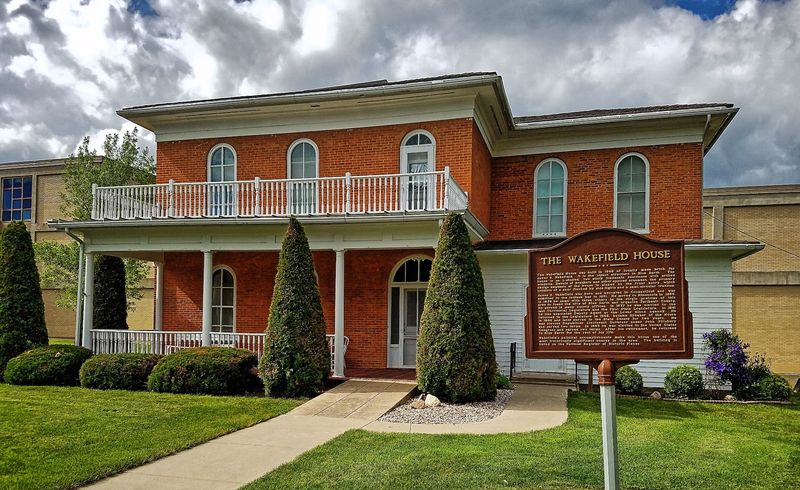
Built in 1868, the Wakefield House is the oldest brick home in Faribault County and the kind of place that rewards slow looking.
Rooms are furnished the way a prosperous family might have kept them, with heavy wood, patterned wallpaper, and a parlor that feels frozen mid conversation. The Faribault County Historical Society runs the site along with the Etta C. Ross Museum next door.
Displays cover farming tools, school records, war memorabilia, and household objects that once counted as real luxuries. A one room schoolhouse and a log cabin sit on the grounds. Both are small enough to walk through in minutes, big enough to make history feel physical.
Guides know the collection well and point out details that are easy to miss. Opening times are limited and often seasonal, so calling ahead matters more here than at bigger museums.
The address is 405 East Sixth Street, an easy few blocks from downtown. Genealogy researchers use the archives regularly, and anyone with roots in southern Minnesota might spot a familiar surname. Bring a notebook.
Giant Days Turns the Streets Loose
Late summer brings Giant Days, the town celebration that turns quiet streets into something closer to a block party. There is a parade, a car show, food stands, and games set up for kids who have been waiting all year. Music plays in the park. Neighbors drag lawn chairs to the curb hours early.
Small town festivals can blur together after a while, but this one keeps its charm because it is genuinely local. Floats are homemade. Candy gets thrown by the handful. Vendors sell fair style food, and the smell of mini donuts drifts down the whole route.
Weekend visitors should arrange lodging early, since rooms in a town this size disappear fast during festival dates. Exact dates shift each year, so the city website is the place to confirm before planning a trip around it.
Arrive in the morning if crowds bother you, or stay into the evening when the pace loosens and families spread across the grass. The Giant watches the whole thing from his hill, unbothered and permanently cheerful.
July Belongs to the Faribault County Fair
One of Minnesota’s oldest county fairs happens right here, and it has been running since the 1800s. July is fair month, which means livestock barns, 4-H exhibits, grandstand events, and a midway that lights up after dark.
Kids show cattle and sheep with a seriousness that is genuinely impressive. Judging tables fill with pies, garden vegetables, sewing projects, and photographs entered by people who have been competing for decades.
The barns are the best part for anyone who did not grow up around agriculture. Everything smells like hay and fresh sawdust. Grandstand nights bring racing and music, and seats fill quickly. Food stands lean classic, with corn dogs, cheese curds, and lemonade poured over crushed ice.
Wear shoes you do not mind getting dusty, and carry cash for smaller booths that skip card readers. Afternoons get hot on the open grounds, so shade near the exhibit halls becomes valuable around two o’clock.
The fairgrounds sit on the edge of town, a short drive from downtown. Parking is usually a grass lot with volunteers waving traffic along.
Where Two Branches of the Blue Earth River Meet
Two branches of the Blue Earth River meet just outside town, and that confluence is the reason a settlement started here in the first place. Water runs clay tinged and slow between wooded banks. Anglers work the channels for catfish and walleye, especially in the warmer months.
Paddlers can put in and drift through farmland scenery that changes color dramatically between June and October. The name comes from the blue green clay found along the banks, which Dakota people used and described long before European settlers arrived.
Trails near the water stay quiet on weekday mornings. Deer, herons, and turtles show up often enough to make binoculars worthwhile. Spring runoff can raise levels quickly, so checking conditions before paddling is simple common sense.
Fall might be the finest season out here, when cottonwoods turn gold and the air smells like harvest dust. Bring bug spray in July. The riverbank does not forgive unprepared visitors. Even a short walk along the water shows why this spot mattered, long before highways and giant statues.
Ball Fields, Shade Trees and Small Town Parks
Green space is not in short supply, and the city parks do a lot of quiet work for a town of roughly three thousand people. Ball fields host summer league games most evenings, with families spread across the bleachers. Playgrounds are modern enough to keep kids busy for a solid hour.
A public pool handles hot July afternoons, and shelters get reserved for birthdays and reunions all season long. Picnic tables sit under mature trees, the kind planted generations ago that now throw serious shade.
Walking paths connect neighborhoods, and the flat terrain makes cycling easy for almost anyone. Winter changes the mood completely. Sledding hills get busy, and the cold sharpens everything, including the quiet.
What I liked was how unfussy it all felt, with no gates, no crowds, and no need to plan ahead. Restrooms are available at the larger parks during the warm months.
Pack a lunch from a local grocery, claim a table, and let the afternoon stretch out while the Giant stands watch a few blocks away.
Making a Real Trip Out of It
Getting here is simple, since Blue Earth sits directly on Interstate 90 about two hours southwest of Minneapolis. Most travelers stop for an hour. Staying overnight changes the experience considerably.
Summer offers festivals, the fair, and long evenings, while fall brings harvest activity and cooler air for walking. Winter runs quiet and cold, though the Giant wearing a dusting of snow is a photo worth the detour. Lodging options are limited, so weekends during events should be arranged well ahead.
Fuel up before leaving, because stretches of highway out here run long between exits. A full day covers the statue, museum, downtown, and the river with time left over. Pair the visit with nearby stops in southern Minnesota or northern Iowa if the schedule allows.
What makes the town memorable is not just the roadside giant, but the way ordinary streets feel welcoming without trying. Ask a question at a shop counter and expect a real answer.
For maps, event dates, and city information, look toward Blue Earth City Township, MN 56013, then plan around whichever season suits the trip.
