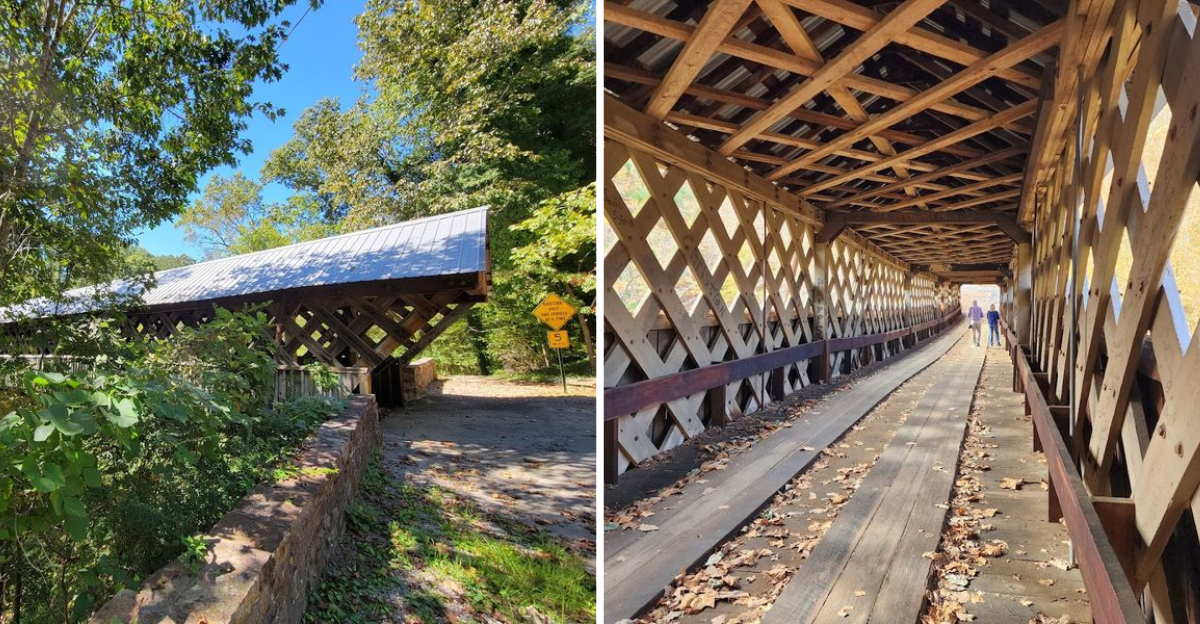
Certain roadside stops make you slow down before you even reach the parking area. Alabama has places where history, craftsmanship, and natural scenery come together in ways that feel genuinely unexpected. Covered bridges bring a special kind of charm, especially when their design and setting make them stand out.
Seeing an old wooden structure above rushing water creates a moment that feels disconnected from the usual pace of travel. It is a memorable stop for anyone who enjoys unique landmarks, scenic drives, and stories hidden in the details of places that have stood the test of time.
A Record-Breaking Height That Will Make Your Jaw Drop
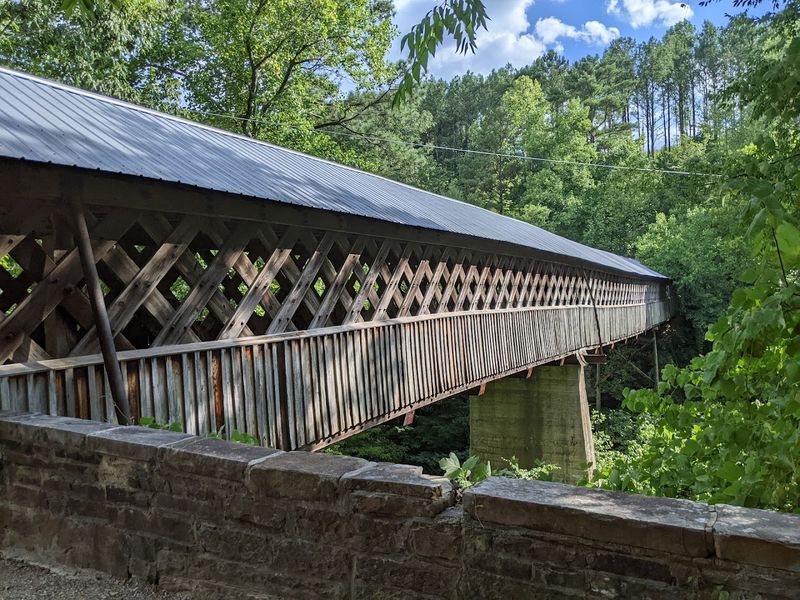
Seventy feet does not sound like much until you are standing at the edge of the bridge deck and looking down at the river far below. Horton Mill Bridge holds a remarkable distinction as the highest covered bridge above any waterway in the United States, soaring 70 feet above the Calvert Prong of the Little Warrior River in Blount County, Alabama.
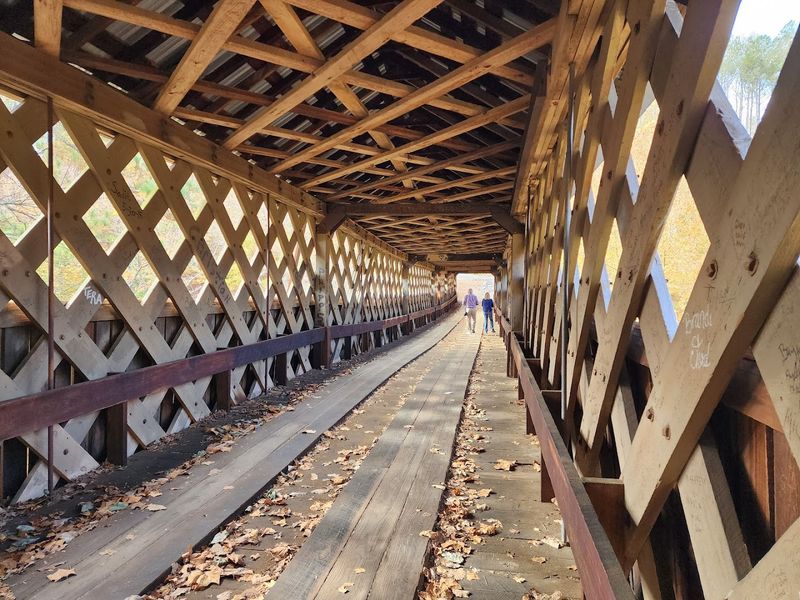
What makes this even more impressive is that the bridge does not feel terrifying from the inside. The tall wooden lattice walls enclose you as you walk across, so the dramatic drop is mostly hidden until you peek through the gaps or step to either end.
It is a strange and wonderful combination of feeling sheltered and exposed at the same time.
The total length stretches 220 feet, making it a substantial crossing by any standard. From below, looking up at the timber frame rising against the treetops, the scale of this structure really sinks in.
Visiting from that lower vantage point along the nature trail gives you a completely different perspective that most visitors miss entirely. It is worth the extra steps down to fully appreciate just how extraordinary this bridge truly is.
Built by Hand: The Story Behind the Construction
There were no power tools, no cranes, and no modern machinery involved in building Horton Mill Bridge. A crew of 15 men, led by Talmedge Horton, a descendant of the original builder Thurman M.
Horton, spent a full year and a half completing this structure entirely by hand between 1934 and 1935. That kind of effort is almost impossible to imagine today.
The original Horton Mill Covered Bridge was built back in 1894, roughly three-quarters of a mile downstream from where the current bridge stands. When the new bridge was constructed at its present site, the crew used approximately 42,000 board feet of lumber, all shaped and assembled without the help of modern equipment.
Foreman Zelma C. Tidwell and his uncle Forrest Tidwell were key figures on the crew, and they also contributed to building other famous covered bridges in Blount County, including Easley, Nectar, and Swann.
The Town Lattice truss design they used creates that distinctive diagonal wooden grid pattern you see along the interior walls. Every single joint and beam reflects the kind of skilled craftsmanship that simply does not exist at this scale anymore.
It is genuinely humbling to walk through something built with that level of dedication.
National Historic Recognition It Rightfully Earned
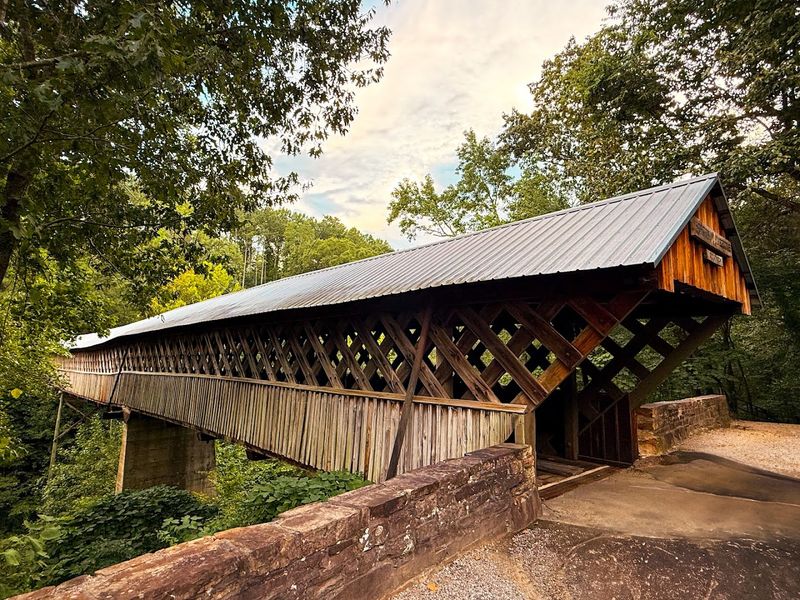
Not every old bridge earns a spot on the National Register of Historic Places, but Horton Mill Bridge did, and it did so first. On December 29, 1970, it became the first covered bridge in the entire southeastern United States to receive this prestigious designation.
That is a pretty remarkable milestone for a rural timber structure in north-central Alabama.
The listing reflects just how significant this bridge is, not only to Alabama but to American architectural and engineering history. Covered bridges of this size and design were already becoming rare by the mid-20th century, and preserving one this well-maintained is genuinely something to celebrate.
The Alabama Historical Commission and the Blount County Commission took that responsibility seriously. They oversaw a restoration effort in 1974, followed by additional work in 1990 and a major restoration project that ran from 2011 to 2013.
The bridge was closed to motor vehicle traffic in 2007 due to safety concerns and officially reopened for pedestrians on March 11, 2013. Since April 2022, it has been a pedestrian-only crossing, which honestly makes the experience feel more personal and peaceful.
You get to move at your own pace without worrying about traffic, which suits a place this historic perfectly.
The Nature Trail That Runs Alongside the River
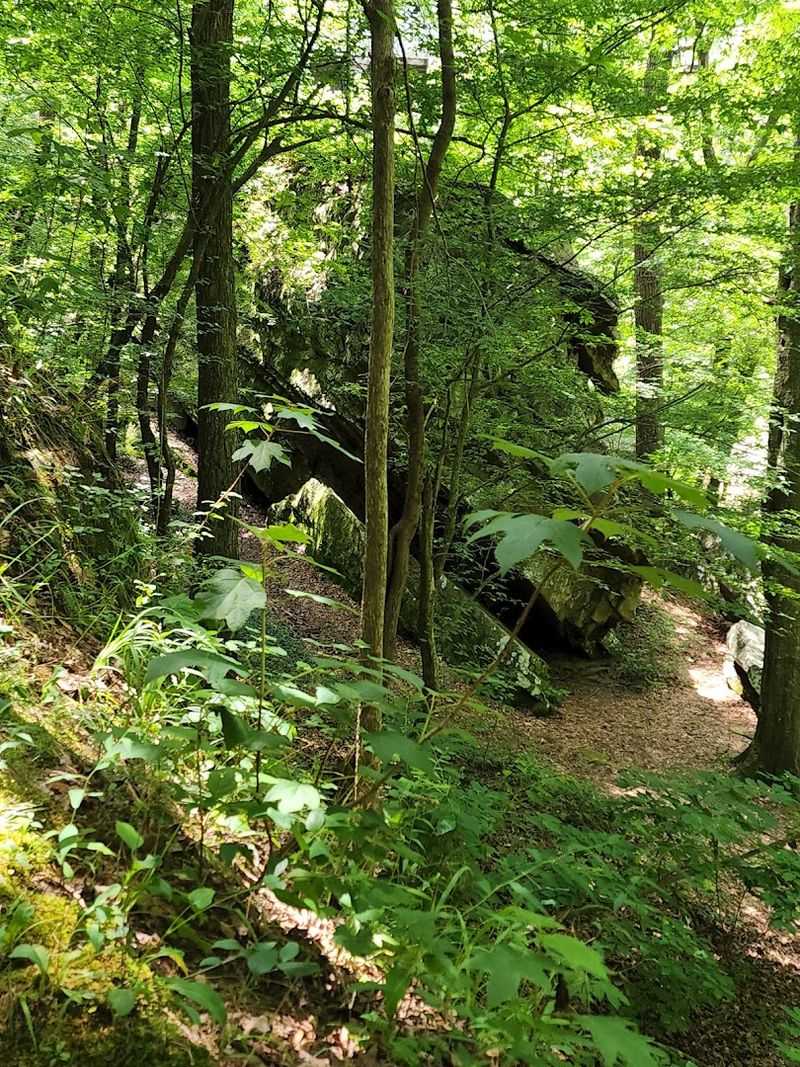
Most visitors cross the bridge and call it a day, but there is a whole other layer to this place waiting just below the surface. A dedicated nature trail follows the Calvert Prong of the Little Warrior River, winding through one of the more ecologically rich patches of land in this part of Alabama.
The trail is unimproved and gets steep in several spots, so solid footwear is genuinely important here. Flip-flops are not going to cut it.
Sneakers with good grip or light hiking shoes will make the experience much more enjoyable and safe.
What makes the trail special is the incredible variety of plant life along the way. Over a hundred plant species have been documented in the area, including 27 different types of ferns.
In April and early May, rare Yellow Ladies Slipper Orchids bloom along the trail, which is a genuinely surprising sight in the middle of an Alabama forest. Birdwatchers will also find plenty to get excited about, with species like vireos, tanagers, warblers, Yellow-billed Cuckoos, and Pileated Woodpeckers making regular appearances.
The trail also offers the best views looking up at the bridge from below, which is an angle worth every bit of the effort it takes to get there.
Blount County: Alabama’s Covered Bridge Capital
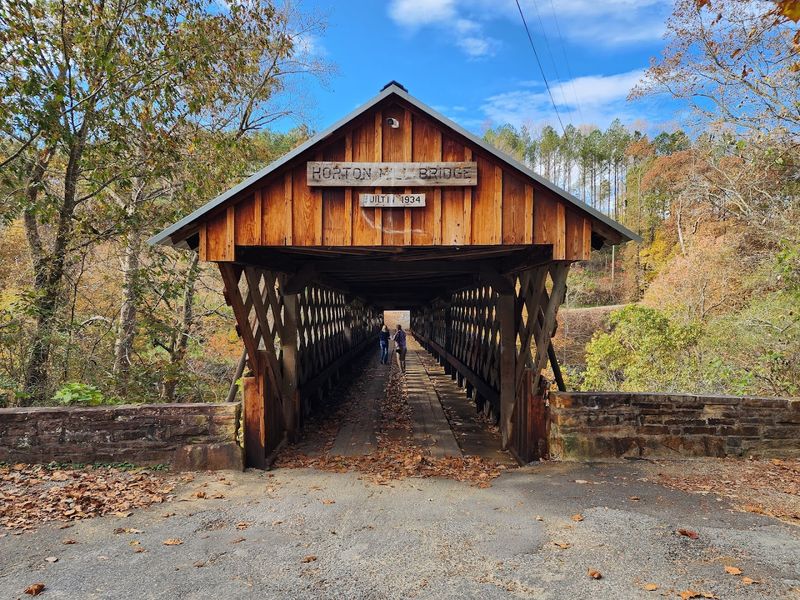
Blount County wears the title of Alabama’s Covered Bridge Capital with real pride, and honestly, it has earned it. Horton Mill Bridge is one of three historic covered bridges still standing in the county, alongside Swann Covered Bridge and Old Easley Covered Bridge.
Each one has its own character, its own story, and its own setting.
Visiting all three in a single day trip is completely doable and makes for a satisfying road trip through some genuinely beautiful Alabama countryside. The roads between them wind through small towns, farmland, and forested hills that feel a long way from city life.
Every fall, Blount County hosts its annual Covered Bridge Festival in downtown Oneonta, celebrating this unique regional heritage with events that sometimes include guided tours out to the bridges themselves. It is one of those local traditions that has a real sense of community pride behind it.
If you time your visit around the festival, you get the bonus of fall foliage color turning the whole landscape into something out of a painting. Horton Mill Bridge surrounded by autumn leaves is one of those visuals that stays with you long after you have driven back home.
The county has done a thoughtful job of preserving what makes this corner of Alabama so distinctly itself.
What to Expect When You Visit
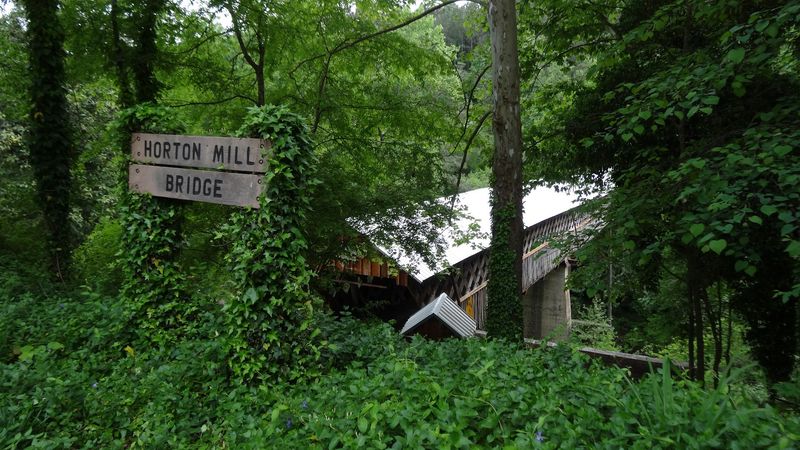
Getting to Horton Mill Bridge is straightforward once you know what to expect. The bridge sits about 5 miles north of Oneonta off State Route 75, and parking is available in a small lot just above the bridge.
From there, stone steps lead down to the bridge entrance, which gives you a nice gradual reveal as you descend.
The site is open 24 hours a day, every day of the week, and admission is completely free. There are no entrance fees, no tickets, and no reservations needed.
Just show up, park, and explore at your own pace.
A few practical things worth knowing before you go: there are no restrooms on site, so plan accordingly. There are reportedly some picnic tables near the parking area, which makes it a decent spot for a quick outdoor lunch before or after your walk.
The bridge deck itself is 11.2 feet wide, which feels comfortable for pedestrians and cyclists passing through. Surveillance cameras are installed inside the bridge, which keeps the site well-monitored.
If you have mobility concerns, there is a sloping road closer to the bridge level, though turning around on it can be a bit tricky. The address is 25 Covered Bridge Circle, Oneonta, AL 35121.
Why This Bridge Deserves a Spot on Your Alabama Bucket List
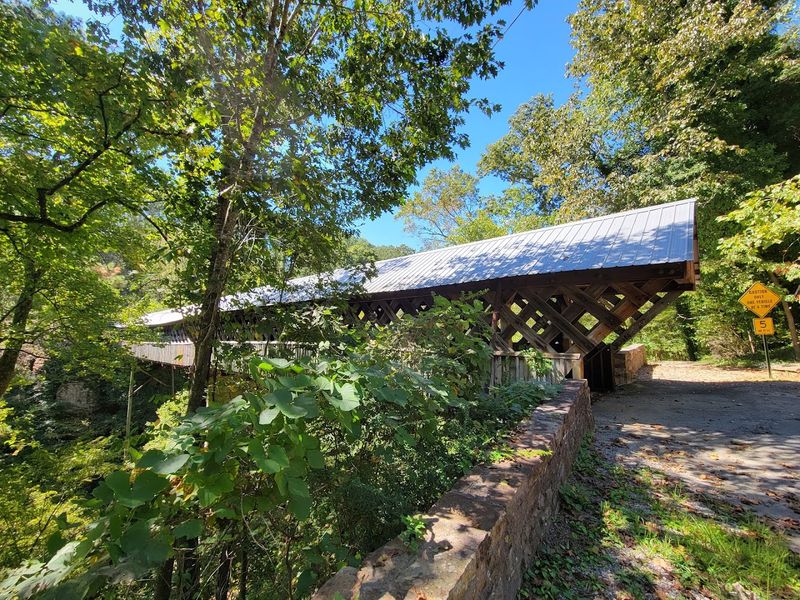
Some places earn their reputation through marketing and some earn it through genuine, quiet excellence. Horton Mill Bridge falls firmly in the second category.
There is no gift shop, no admission booth, and no crowd management system. It is just a 90-year-old timber bridge hanging 70 feet above a river, doing exactly what it was built to do.
The experience of walking across it is surprisingly peaceful. The enclosed wooden walls block out the noise of the highway, and the only sounds are footsteps on old planks and the faint rush of water far below.
It feels like a small pocket of time that somehow survived intact.
For photographers, the light inside the bridge at different times of day creates some genuinely beautiful shots, especially in the late afternoon when warm light filters through the lattice pattern and casts long shadows across the deck. Fall is widely considered the best season to visit, when the surrounding forest turns gold and red and frames the bridge in color.
But honestly, any season has its own appeal here. Spring brings wildflower blooms along the trail.
Summer keeps things green and lush. Winter strips the trees back and reveals the bridge in sharp relief against the sky.
However you find it, Horton Mill Bridge tends to leave a lasting impression.
