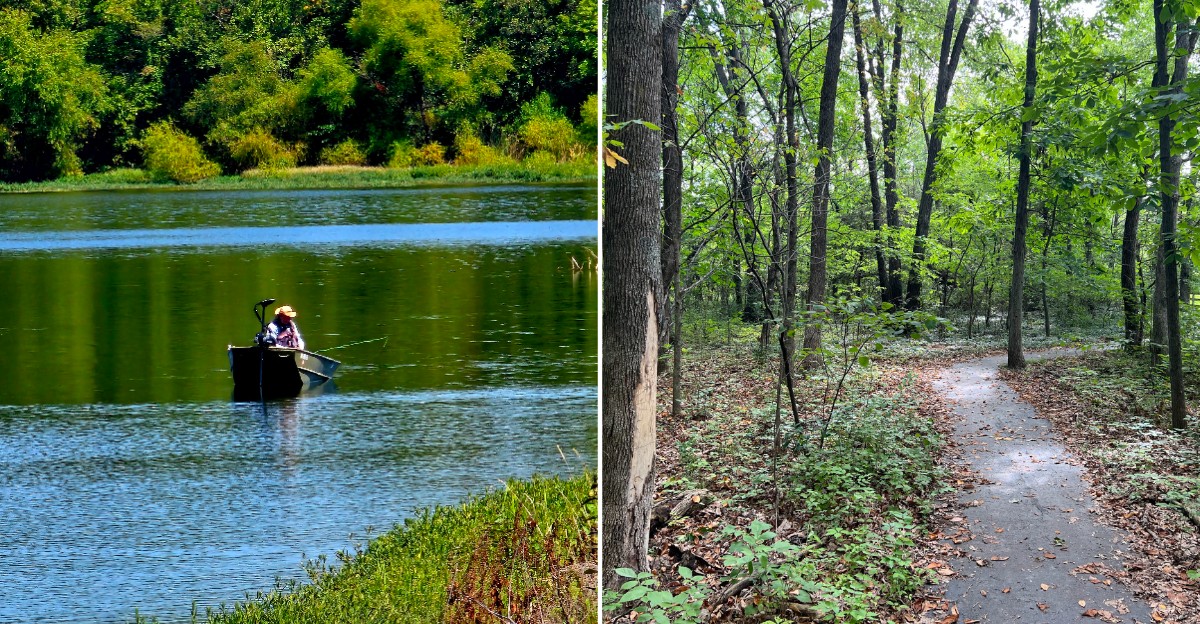
Gas outboard motors are allowed on this 205-acre lake, but motors exceeding 10 horsepower must operate at slow, no-wake speed.
That one rule sets the whole mood. Bass, crappie, and catfish share the water with lake sturgeon and paddlefish.
Bald eagles and ospreys show up overhead, too.
I like how this Missouri spot keeps things simple. You get docks, jetties, shady trails, and a picnic pavilion.
You won’t find jet skis buzzing past or a gift shop selling keychains.
I also love its backstory. Back in 1957, Owl Creek was dammed here to create Little Dixie Lake.
Locals still fish, paddle, and wander here more than sixty years later.
You Can Thank A Dammed-Up Creek For All This Calm
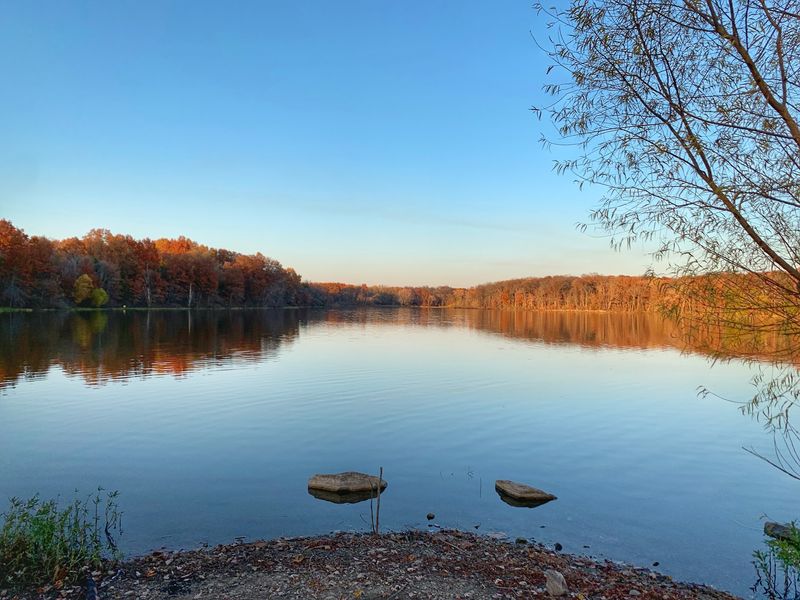
Owl Creek probably had no idea what it was getting into. In 1957, it was dammed to create Little Dixie Lake Conservation Area’s centerpiece lake.
That same year, the Missouri Department of Conservation bought the original 467 acres. The project became one of Missouri’s early community lakes.
Today, the whole area covers 733 acres. The lake takes up 205 of them, and the rest is woods, fields, and prairie.
The name has roots too. Early settlers from Kentucky, Tennessee, and North Carolina moved into this region.
They brought strong cultural ties to the South, and the Little Dixie nickname stuck.
So when you stand on the shore, you’re looking at real history. This lake helped show what a shared community fishing spot could look like in the state.
That legacy matters more than it sounds. A place built for neighbors to fish together still works that way decades later.
Here’s a tip for first-timers. Bring a little curiosity along with your gear, because the land around the water tells its own story.
Oak-hickory forest, old fields, and restored prairie all sit within easy reach of the parking lots and trails.
Bring A Tackle Box With Room For Surprises
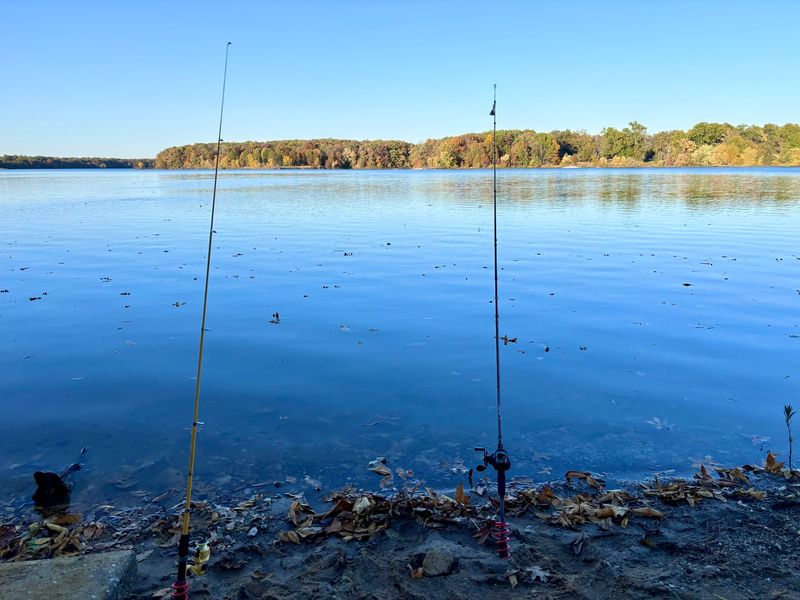
Largemouth bass, channel catfish, blue catfish, black and white crappie, bluegill, and redear sunfish all live here. Then the list gets wild with paddlefish and lake sturgeon.
Yes, sturgeon. Large ones are present in the lake, so that quiet tug might turn into a story.
The latest outlook looks promising. Largemouth bass fishing is expected to be good, with many fish around 10 to 11 inches.
Some bass should land in the 12 to 15 inch range too.
Redear sunfish should be good, while bluegill looks fair. Every October, the lake gets stocked with around 2,000 channel catfish and 500 blue catfish.
Know the rules before you cast. Fishing is pole and line only, and bass between 12 and 15 inches are protected.
The bass daily limit is six fish.
Catfish allow four per day combined, and crappie allow 30. All other fish combined top out at 20.
Common carp are overabundant here, so don’t be shocked if one crashes your bass plans. Pack extra bait, a measuring tape, and your Missouri fishing permit.
Anglers can fish during public access hours, from 4 a.m. to 10 p.m.
No Boat? Nine Jetties Say That’s Totally Fine
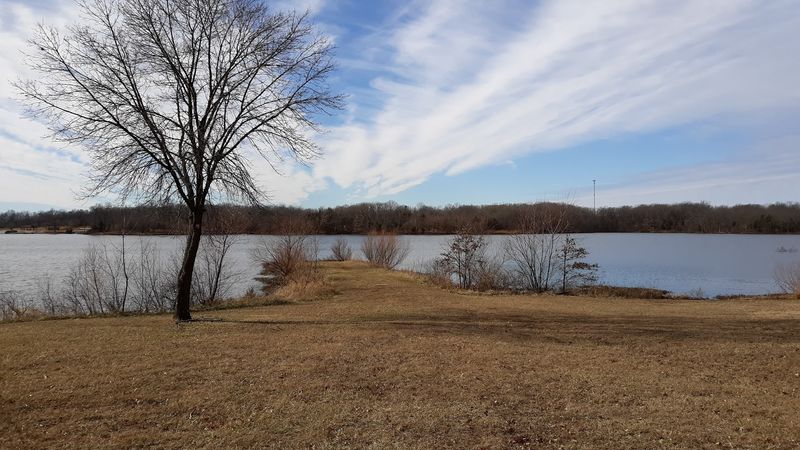
Shore anglers get plenty of love at Little Dixie Lake Conservation Area. Nine fishing jetties poke out into the water, giving you a better shot at deeper spots.
There’s also a fishing dock, plus a separate boat dock near the ramp. That’s a lot of options for folks who just want to cast and sit.
Jetties are a smart pick for kids. They give young anglers a defined spot and a little reach into the lake without needing a boat.
For easier footing, start near the parking areas. Several lots sit right by the water, so you don’t have to haul gear very far.
Plan your trip around the hours. The area is open daily from 4 a.m. to 10 p.m., including for fishing.
Early mornings are a classic time for bass. Evening works nicely for catfish, when the lake gets even quieter.
Pack a folding chair, sunscreen, and a small trash bag. Leaving your spot cleaner than you found it keeps these jetties pleasant for everyone.
Your future self, back for another round of bluegill, will appreciate it too.
Quiet Paddling Is The Whole Point Out Here
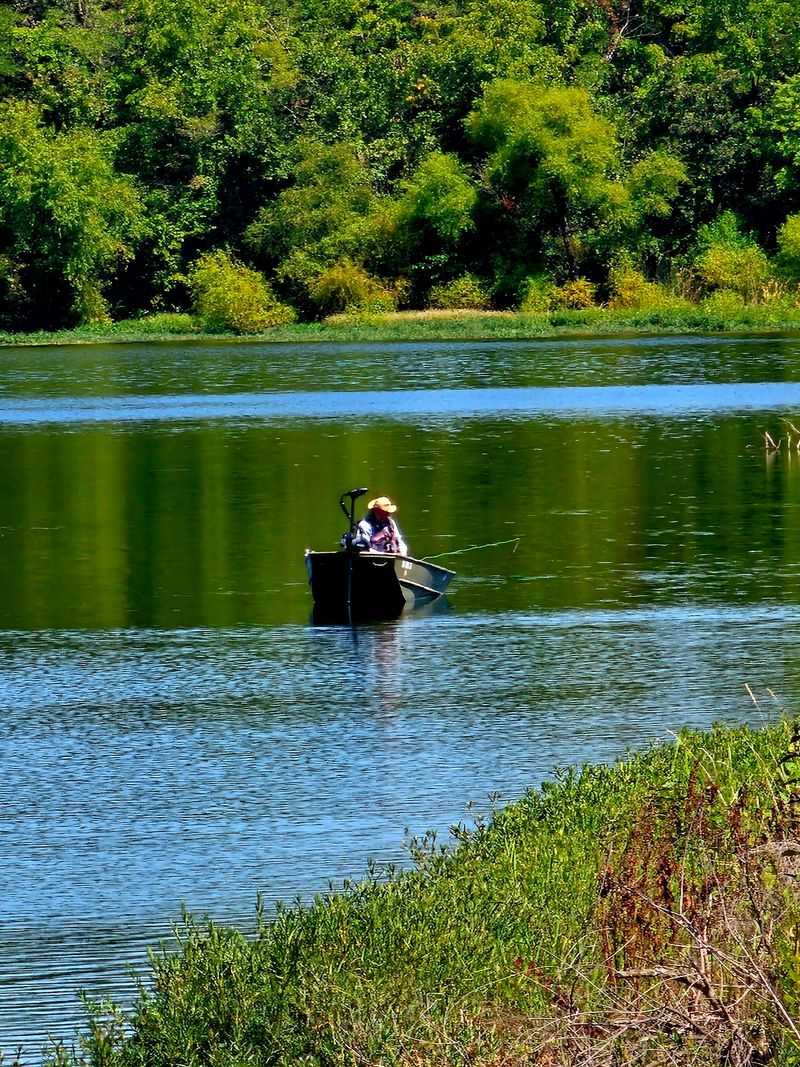
Silence is the rule on the water. Electric and gas outboard motors are allowed on this 205-acre lake, with slow, no-wake operation required for outboards exceeding 10 horsepower.
That makes it a dream for canoes, kayaks, and paddleboards. You can glide along without dodging speedboat wakes every few minutes.
Some craft are off the list completely. Houseboats, airboats, and personal watercraft are prohibited, so leave the jet ski at home.
The boat ramp makes launching simple. A boat dock sits nearby, and public boat access is available from 4 a.m. to 10 p.m.
Follow the basics before you shove off. All watercraft must meet Missouri registration and safety equipment requirements, so check those life jackets.
Another rule surprises some people. Boats can’t be left unattended overnight, so pack up when you head home.
A slow paddle along the shoreline is a great way to explore. You can peek into quiet coves and watch the forest edge drift by.
Bring a dry bag for your phone, snacks, and binoculars. Herons, cormorants, and other birds often make the trip feel like a floating nature show.
Honestly, the lake moves at its own pace, and you’ll probably start matching it.
Birders, Keep Those Binoculars Close
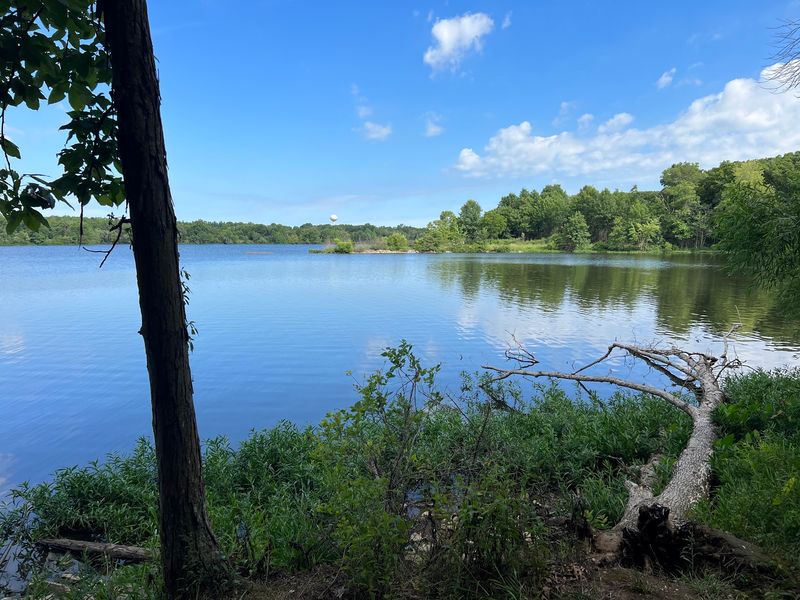
Twenty-two duck species. That’s at least how many have been recorded here, which feels like a lot for one central Missouri lake.
Late fall and winter bring the waterfowl crowd. Snow geese, greater white-fronted geese, and cackling geese have all appeared on the lake.
Big raptors make cameos too. Bald eagles and ospreys hunt over the water, and double-crested cormorants dive for snacks.
Rare visitors keep things exciting. Common loons, eared grebes, and horned grebes have all shown up here at different times.
Warmer months shift the spotlight to songbirds. Summer tanagers, orchard orioles, dickcissels, and eastern meadowlarks use the forests and fields.
The prairie zones hold a real prize. Between April and August, the shy Henslow’s sparrow has been recorded in the restored prairie.
Bring a field guide or a birding app. Patience matters more than gear, so pick a bench or shoreline spot and just wait.
Mornings tend to be busy with bird activity in spring and summer. Winter afternoons along the shore can be productive for ducks and geese.
Either way, the variety here makes even a short walk feel worth it.
Twenty-Two Footbridges Await On The Shoreline Trail
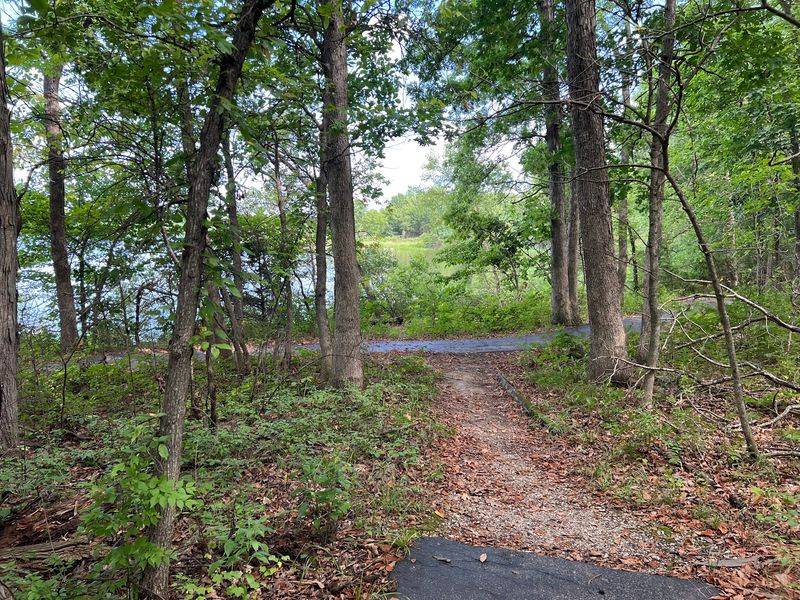
Count the bridges if you want a mini game. The Shoreline Trail crosses 22 footbridges over its 4.5 miles.
It’s for hiking only, so you won’t share it with bikes. The trail hugs the lake and connects with the Boundary Trail in several places.
Want a bigger loop? The Boundary Trail covers about six miles and circles the whole area.
Hikers and bikers can both use it.
Altogether, the area offers more than 10 miles of hiking trails. That’s enough to fill a lazy morning or a full day.
Mountain bikers and trail runners have room to roam as well. Roughly 20 miles of unpaved multi-use trails wind across the property.
Road cyclists aren’t left out either. About seven miles of paved roads work well for an easy spin.
One warning for spring planners. Trails can get muddy early in the season, so wear shoes you don’t mind scrubbing later.
Fall is an especially pretty time to go. The oak-hickory forest turns color, and the lake reflects it back.
Bring water, bug spray, and a snack for the bridge you decide is your favorite.
A Short Paved Path Makes Nature Easy For Everyone
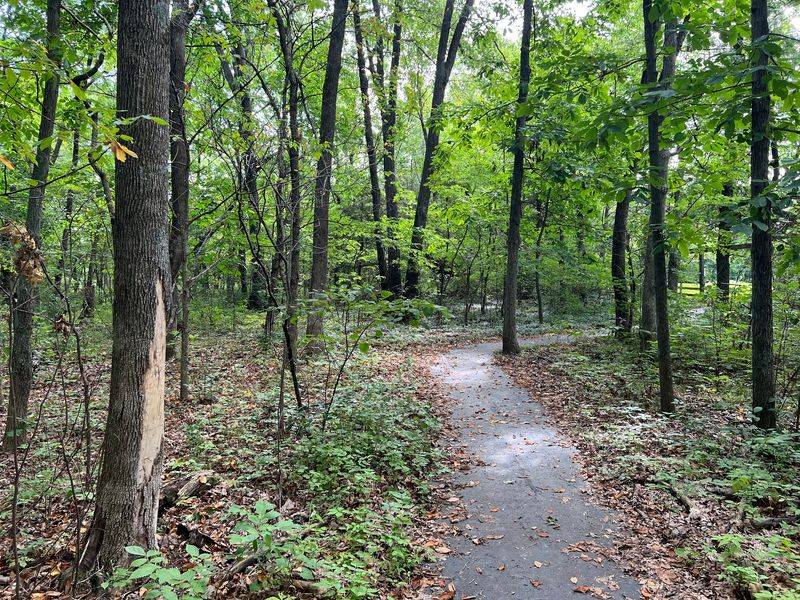
At just 0.4 miles, the Dixie Woods Nature Trail is short and sweet. It’s paved and ADA accessible, which opens the woods to more visitors.
Rest pull-offs along the way give wheelchair users places to pause. The path winds gently through the trees and a small glade.
This trail is great for grandparents, toddlers, and strollers. Anyone who wants a quick dose of green without a long hike will enjoy it.
It also works as a warm-up. Take a short loop first, then decide if you want to tackle longer trails afterward.
The rest of the area is partially wheelchair accessible. Some fishing spots near the parking lots are easier to reach than others.
Plan restroom stops ahead of time. Three privies sit at the lakeside parking lots, and they are basic pit toilets.
Leashed pets are welcome, and service animals are always allowed. Your dog will likely approve of the shade.
Bring a camera if you can. Nature photography is popular here, and the glade offers nice light on sunny afternoons.
Even a quick walk can turn into a relaxing break from screens and schedules.
Pack A Cooler And Claim A Picnic Table
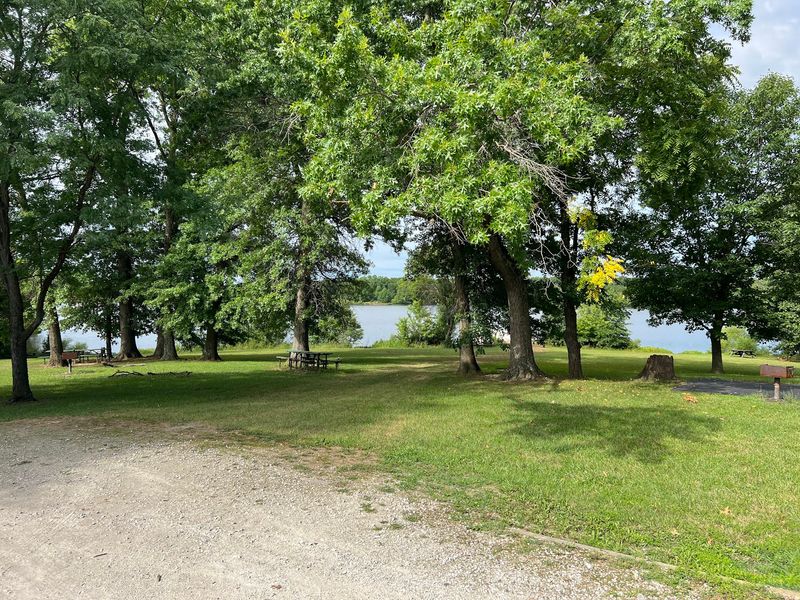
Sandwiches simply taste better near water. Little Dixie Lake Conservation Area offers picnic areas and a pavilion close to the lake.
That makes it easy to mix fishing with lunch. Cast a line, grab a snack, then go back for round two.
Families can turn this into a full outing. Kids can fish, hike a short trail, and still have energy left for chips and lemonade.
Since camping isn’t allowed, think of it as a day trip. Gates open at 4 a.m. and close at 10 p.m.
Bring everything you need from home. The area keeps things simple, so plan on packing water, food, and trash bags.
Shade helps on hot Missouri afternoons. The pavilion offers cover, and the wooded trails stay cooler than open shoreline.
A few extras make the day smoother. Bug spray, sunscreen, and a blanket can save the afternoon.
Pets on leashes can join the picnic too. Just keep them away from fishing lines and hooks.
When you’re done, pack out every wrapper. Clean tables mean the next family gets the same easygoing lunch you just enjoyed, and that’s a nice tradition to keep.
Finding It Takes Just A Quick Hop Off I-70
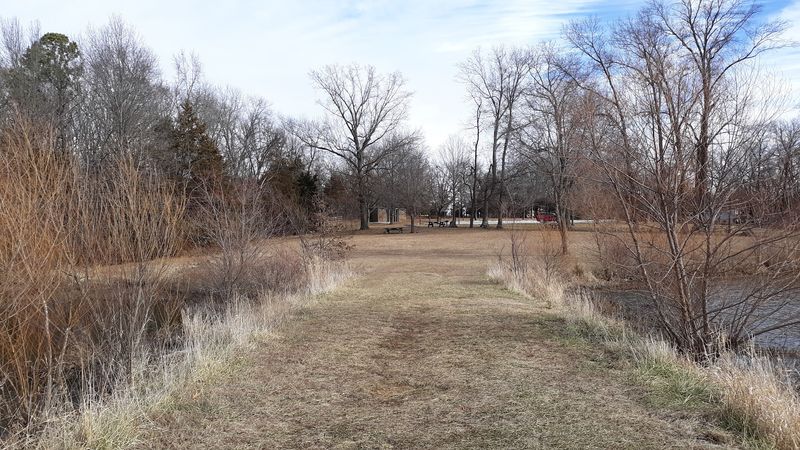
Columbia sits roughly 15 miles to the west. That makes Little Dixie Lake Conservation Area an easy escape for a half day outdoors.
The listed address is 1821 Route RA, Fulton, MO 65251. The main parking area sits off Route RA where it meets Route J near Millersburg.
It’s in Callaway County, west of Kingdom City. Travelers on I-70 can swing over for a quick stretch and some fresh air.
Several parking lots ring the lake. Some lead straight to the water, while others connect to the Boundary Trail.
Behind the scenes, science happens here too. The area holds 22 research ponds used to study fish reproduction, stocking rates, and management techniques.
Missouri Department of Conservation staff and University of Missouri graduate students use those ponds. Your weekend fishing spot doubles as an outdoor classroom.
Small fishless ponds dot the woods as well. They’re built for woodland wildlife, and the lake supports amphibians like the blue-spotted salamander.
Hunters can use designated zones during their seasons, so wear bright colors in fall. Then slow down, grab a bench, and let this Missouri lake do what it does best.
