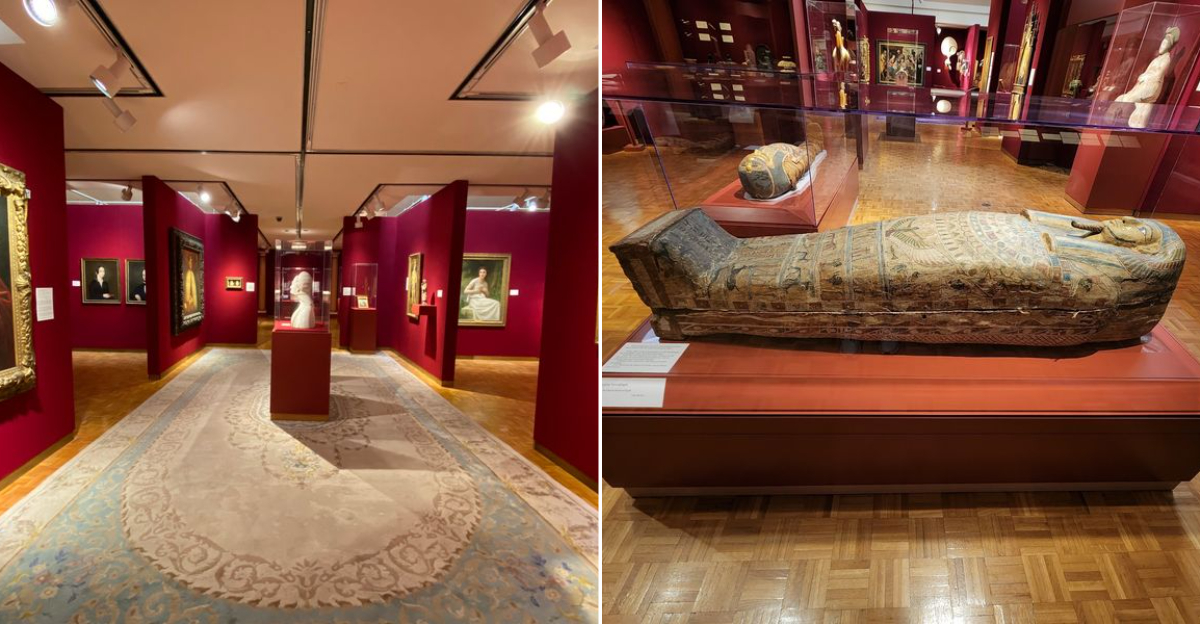
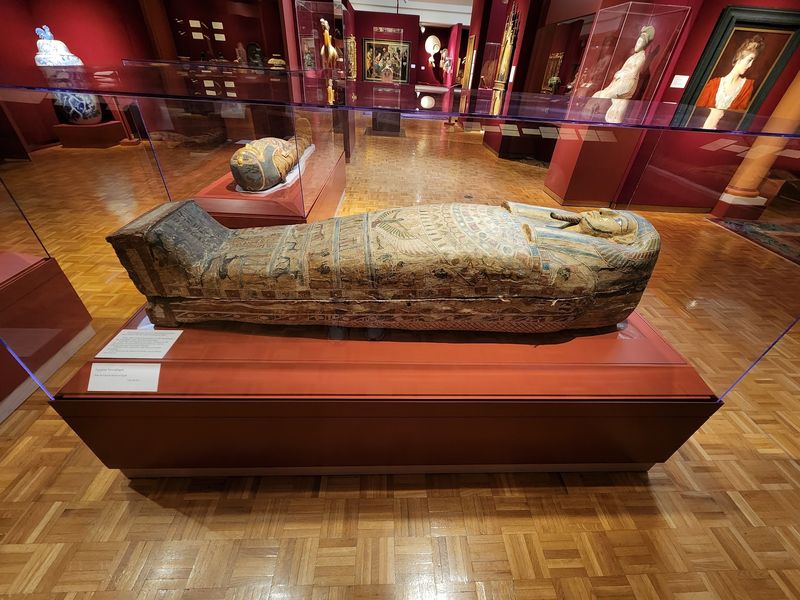
A small museum in Oklahoma holds a secret that most people would never expect to find in the middle of the country. Two ancient Egyptian mummies rest in glass cases, their painted sarcophagi still vibrant after thousands of years.
They are the only human mummies in the state, a rare sight that draws visitors from across the region. The building itself is modest and easy to miss, but the collection inside tells a much bigger story.
One of the mummies is believed to be Princess Menne, a royal figure from the 23rd dynasty. Animal mummies, canopic jars, and other artifacts from the Nile Valley fill the surrounding galleries.
The museum was founded by a Benedictine monk who traveled the world collecting art and objects. His vision turned a small Oklahoma institution into an unexpected home for ancient treasures.
Walking through the doors feels like stepping into another world, one that has no business being hidden in plain sight.
The Museum That Does Not Look Like Much From Outside
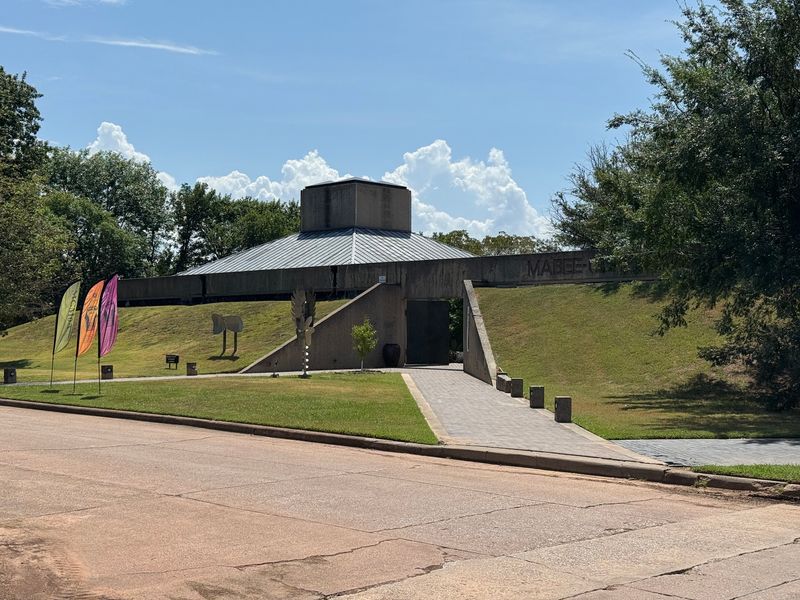
You know how we always end up loving the places that do not advertise themselves? The Mabee-Gerrer Museum of Art fits that description perfectly, because from the outside it reads as a calm, low, unremarkable building sitting on a college campus in a small Oklahoma city.
Nothing about the exterior warns you that ancient Egypt is waiting on the other side of the doors. That contrast is genuinely part of the fun, and it makes the moment you walk into the galleries feel bigger than it would in some enormous museum where you already expect wonders.
The collection covers a huge sweep of human history, with thousands of objects representing cultures scattered across the globe. Visitors often describe being surprised by the sheer range of what is packed inside a building of that size, which tells you the curators have been thoughtful about how much they display.
If you are the kind of traveler who likes bragging rights on unexpected finds, this one delivers without much effort on your part. It sits close enough to Oklahoma City that a detour barely dents your day, and you leave with a story most people have never heard before.
Where To Actually Point Your Car
Let me save you the trouble of digging through your phone for directions. The museum sits at 1900 W MacArthur Street, Shawnee, OK 74804, which puts it on the grounds of St. Gregory’s in a quiet part of town that is easy to navigate even if you have never driven through before.
Getting there from the interstate is straightforward, and parking is not the kind of headache you deal with in bigger cities. That alone makes it an appealing stop when you are already crossing Oklahoma and want something more interesting than another gas station stretch break.
Because the building is on a campus, the surrounding area feels calm and green rather than crowded and commercial. You can take your time walking in without dodging traffic or hunting for a meter, which sets a nice tone before you even see the first gallery.
I would suggest checking their current hours before you commit, since smaller museums tend to keep more limited schedules than the giant institutions do. A quick look at their website ahead of time means you show up when the doors are actually open and the mummies are on view.
Two Genuine Egyptian Mummies Under One Roof
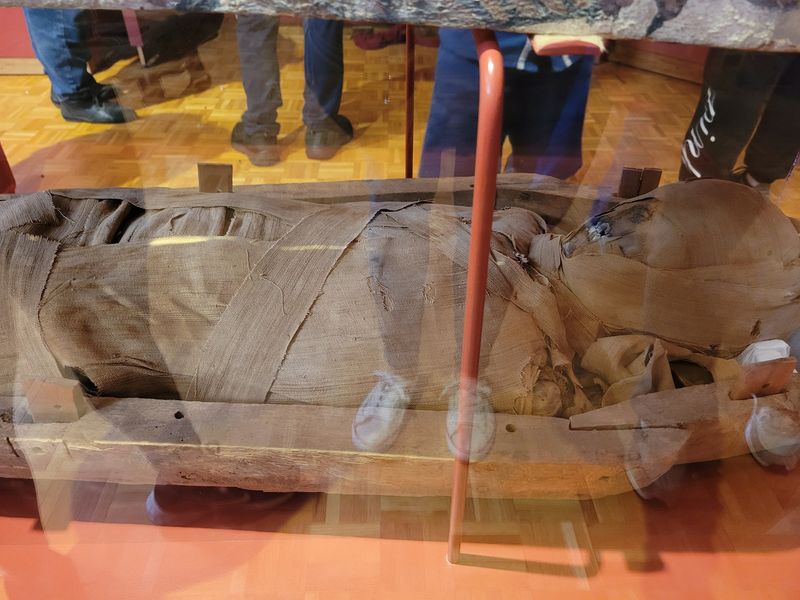
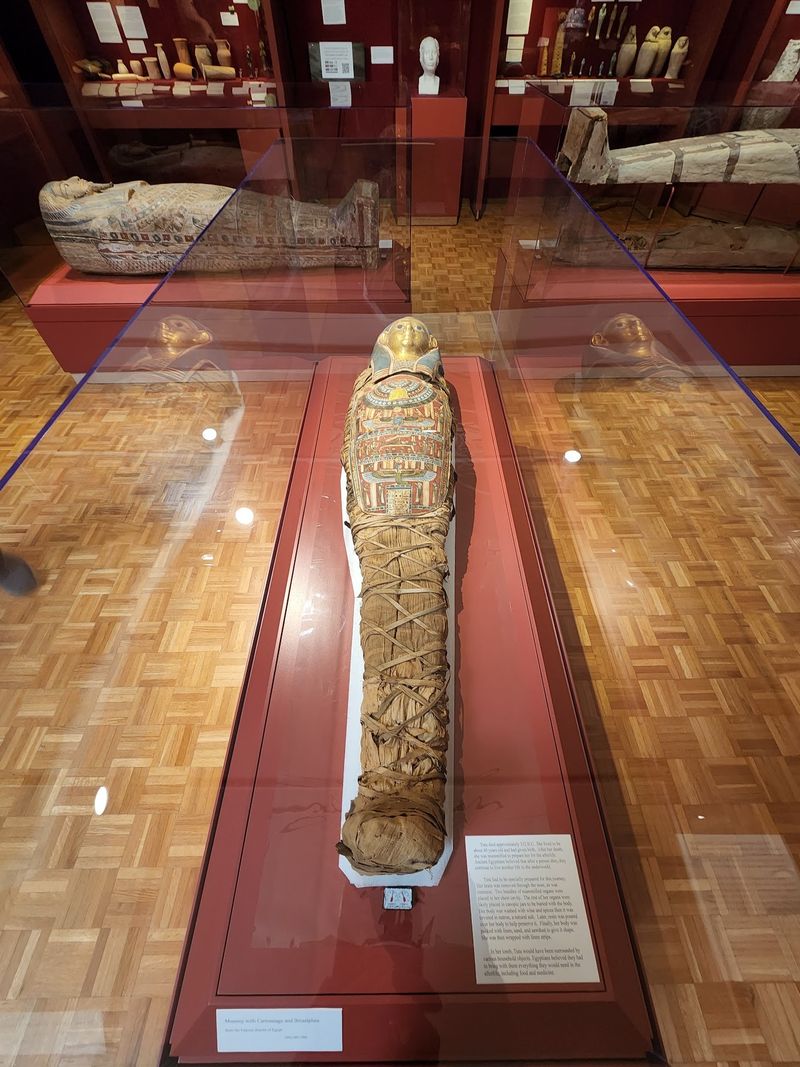
Here is the part that made me sit up straight when I first read about it. The museum holds two human Egyptian mummies, and one of them, a woman known as Tutu, dates back to the Ptolemaic era, while the other comes from the Roman period of Egyptian history.
Standing near something that ancient does something strange to your sense of time, and people who visit tend to talk about that feeling long after they leave. It is one thing to read about mummification in a textbook, and something entirely different to see the linen wrappings a few feet away from your own face.
What makes it even more remarkable is that this is the only place in the state of Oklahoma where you can see real Egyptian mummies on display. Most folks assume you need to travel to Chicago or New York or overseas for that kind of encounter.
The display is handled respectfully, with information panels that explain who these people were and how they were prepared for the afterlife. That context matters, because it turns a spectacle into an actual lesson about a civilization that shaped so much of human history.
Mummified Animals Are Part Of The Deal Too
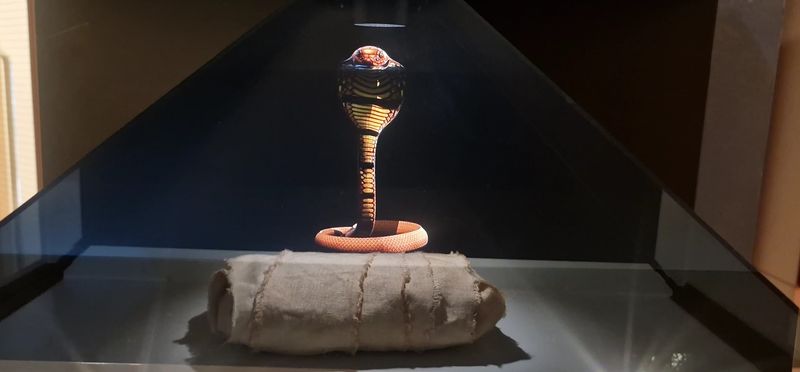
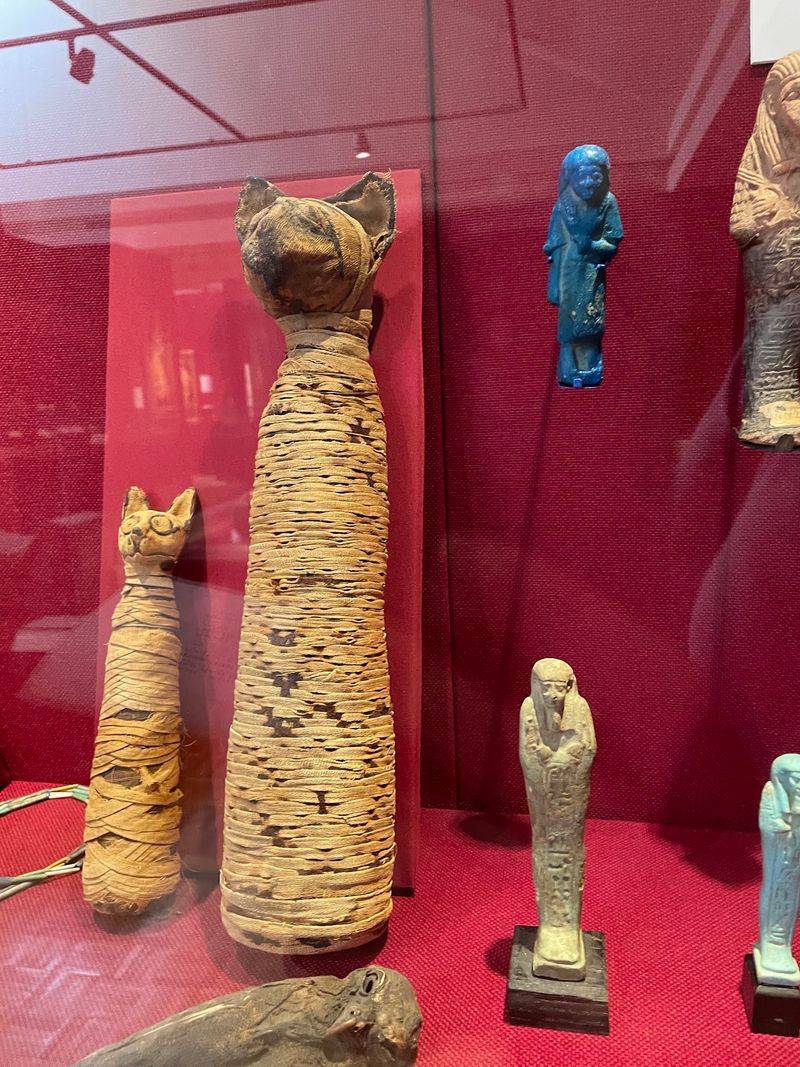
Turns out humans were not the only ones getting wrapped in linen back then. The collection also includes ancient Egyptian animal mummies, which is one of those details that catches people completely off guard when they wander into that gallery.
Animals held serious religious meaning in ancient Egypt, and many were preserved as offerings connected to specific gods or as companions meant to travel with someone into the next life. Seeing the care that went into those small bundles tells you a lot about what people believed and valued.
Kids especially seem to latch onto this part of the museum, since the idea of a mummified creature is both a little spooky and completely fascinating at the same time. If you are traveling with younger family members, this is the section that keeps them talking in the car afterward.
For adults, the animal mummies work as a window into daily life and spiritual practice rather than just royalty and pharaohs. History gets a lot more relatable when you realize ordinary people were making these choices about their pets and their beliefs, and that thread runs straight through to how we treat animals today.
A Traveling Monk Built The Whole Thing
Every good museum has an origin story, and this one belongs to Father Gregory Gerrer, a Benedictine monk with an unusually strong case of wanderlust. He traveled through Europe, Africa, and South America, and everywhere he went he gathered art and cultural objects to bring back to Oklahoma.
Think about how ambitious that is for a moment. A monk based in a small prairie town decided the people around him deserved access to world art and history, and then he actually went out and made it happen piece by piece.
He was a painter himself, which explains his eye for quality and his instinct for what deserved preserving. That artistic background shows up in how the collection was assembled, because it leans toward objects that are both historically important and genuinely beautiful to look at.
Knowing his story changes how the galleries feel while you walk through them. Instead of a random assortment of artifacts, you are looking at one man’s lifelong project, and there is something moving about the fact that his vision of bringing the wider world home to Oklahoma is still going strong long after he stopped traveling.
It All Began With One Tiny Scarab
Small beginnings are my favorite kind of story, and this one is about as small as it gets. Father Gregory was given an Egyptian scarab carved with a goose symbol during a mission trip to the Holy Land, and that single object became the seed of everything you see today.
From that one little carving grew a collection spanning roughly eight thousand years of human creativity and containing thousands of individual artifacts. It is honestly hard to wrap your head around that kind of growth from such a modest start.
Scarabs were enormously meaningful in ancient Egypt, associated with rebirth and the daily journey of the sun across the sky. Egyptians carried them as amulets, used them as seals, and placed them with the dead, so the symbolism runs deep.
When you visit, it is worth pausing over the smaller items rather than rushing to the headline attractions. The tiny pieces often carry the most interesting stories, and knowing that one modest amulet sparked an entire museum in Oklahoma gives you a reason to slow down and actually look at what is in front of you.
Greek, Roman, And Renaissance Treasures Fill The Rooms
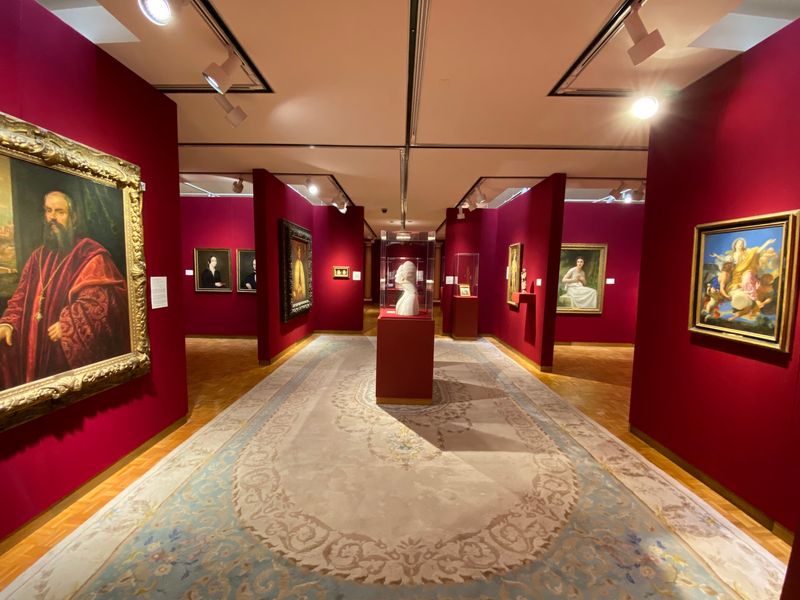
Mummies get all the attention, but they are honestly just one chapter of the story here. The museum also holds substantial collections of Greek and Roman objects, plus paintings and works from the Renaissance and the Middle Ages.
That combination is unusual for a museum this size, and it means you can wander from ancient Egypt into classical antiquity and then into European religious art without ever leaving the building. The transitions feel surprisingly natural once you are moving through the galleries.
Pottery, sculpture, coins, and painted panels give you a real sense of how artistic ideas traveled and changed across centuries. Art history stops feeling abstract when the objects are sitting right there in front of you in a quiet room.
Plan for more time than you think you need, because it is easy to underestimate a smaller museum and then find yourself absorbed for a couple of hours. Bring your curiosity and read the labels, since the staff clearly put effort into explaining what each object meant to the people who made it and why it ended up in Oklahoma of all places.
Modern Scans Revealed What Was Under The Wrappings
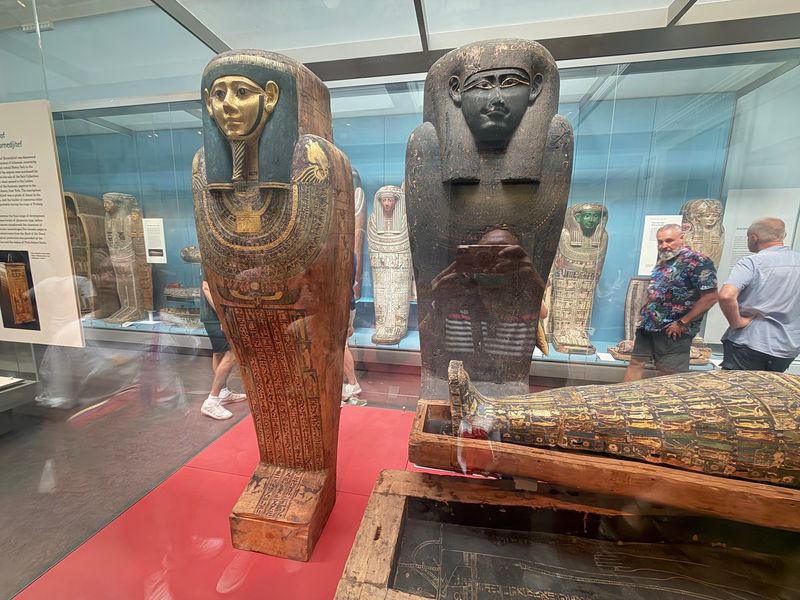
Science got involved with these mummies in a big way, and the results are genuinely fascinating. Researchers ran CT scans on the museum’s mummies, which let them look beneath the linen without disturbing anything at all.
Those scans revealed that Tutu’s organs had been mummified individually and then carefully returned to her body before the wrapping process began. That is a specific and slightly startling detail about ancient embalming practice that you simply cannot learn by looking at the outside.
Imaging technology has transformed how museums study fragile remains, replacing invasive examination with something respectful and non-destructive. It is a nice reminder that archaeology keeps evolving, and objects sitting in a case for decades can still yield brand new information.
The museum shares findings like these with visitors, which means you are not just staring at an old artifact but learning about active research. That layer of discovery makes the visit feel current rather than dusty, and it gives you something concrete to talk about afterward when you tell people you saw a mummy in Oklahoma and they assume you are joking with them.
Experts Rank This Egyptian Collection Among The Nation’s Best
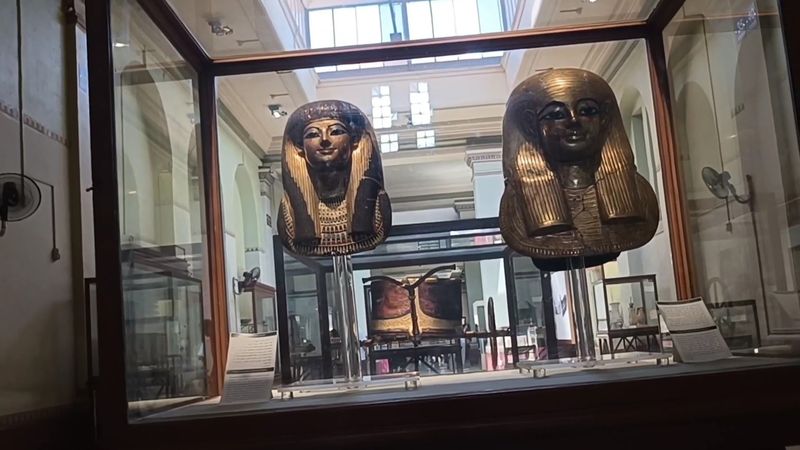
Here is the detail that really surprised me. Specialists have described the Egyptian holdings here as one of the finest collections in the country, and some have specifically called it among the best you will find between Chicago and Los Angeles.
That is an enormous claim for a museum in a small city, and it completely reframes what you might expect walking in. This is not a token display of a few odds and ends but a serious, respected assemblage of ancient material.
Reputation like that usually follows careful acquisition, good conservation, and scholarship over many decades. All three have clearly been at work here, thanks to the founder’s original eye and the caretakers who followed him.
For travelers, the practical takeaway is simple enough. You get access to world-class ancient Egyptian material without the crowds, the ticket lines, or the exhausting scale of a metropolitan museum, which means you can actually stand in front of an object and study it for as long as you want.
That kind of unhurried looking is rare, and it is one of the best reasons to choose a smaller institution.
