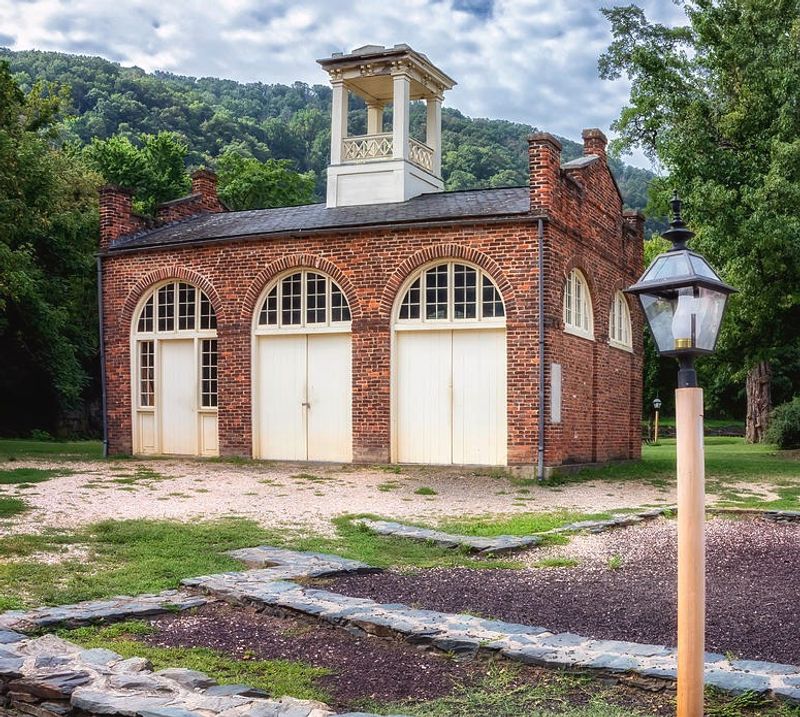
You could walk right past it and never guess. Tucked into a quiet corner of West Virginia sits a small red brick building about the size of a big family garage, with a little bell tower on top.
Yet inside those plain walls, a three-day standoff in 1859 helped push the whole country toward the Civil War. Once you hear the story, you will never look at a simple old firehouse the same way again.
A Small Brick Building With an Outsized Story
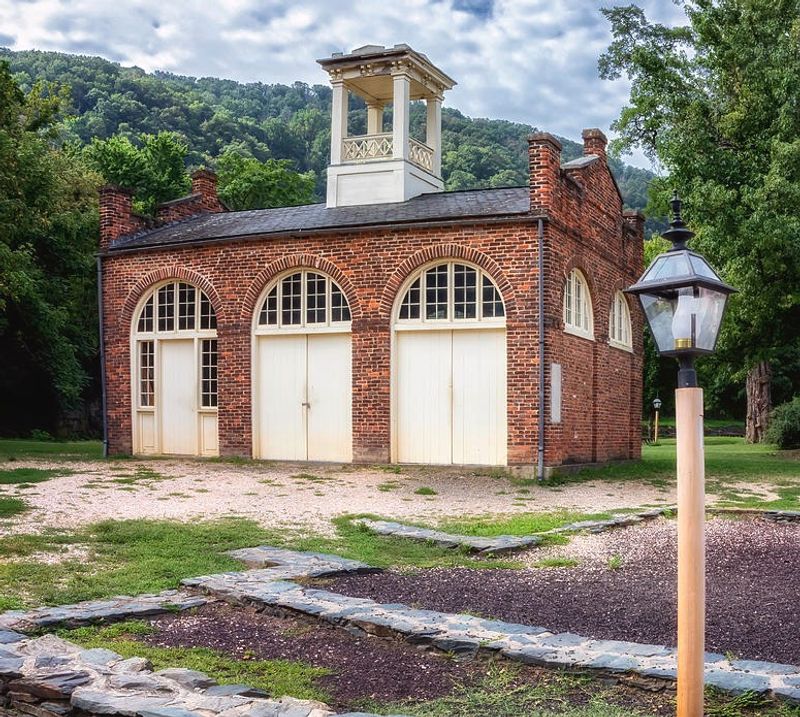
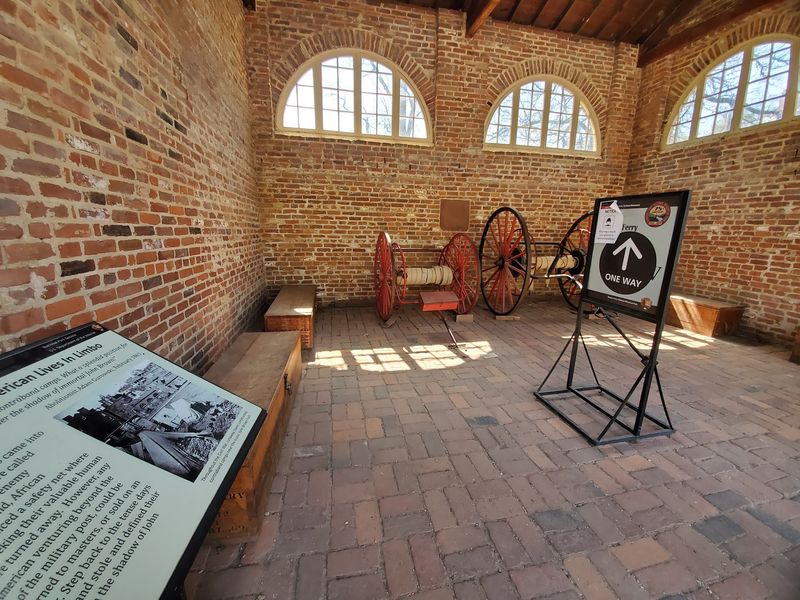
Picture a one-story brick firehouse with three arched doors and a tidy little cupola. It looks like something you might find behind an old county courthouse, the kind of place where a volunteer crew once kept a hand-pumped engine polished and ready.
Most folks expect a castle when they hear the word fort, so the first reaction is often a surprised laugh.
Visitors regularly describe it as a somewhat tiny red brick building, and they are right. The magic is not in the size.
It is in what happened here, and in how many times this humble structure has refused to fade away.
Known today as John Brown’s Fort, the building sits inside a national historical park in the Eastern Panhandle of West Virginia. It marks the spot where abolitionist John Brown made his final stand during a raid that shook the nation in October 1859.
Historians often point to that raid as one of the sparks that lit the road to the Civil War.
For West Virginians who grew up hearing bits of this story in school, standing in front of it feels like meeting a famous name from a textbook in person. Small building, big shoes to fill.
Built for Fire Buckets, Not Fame
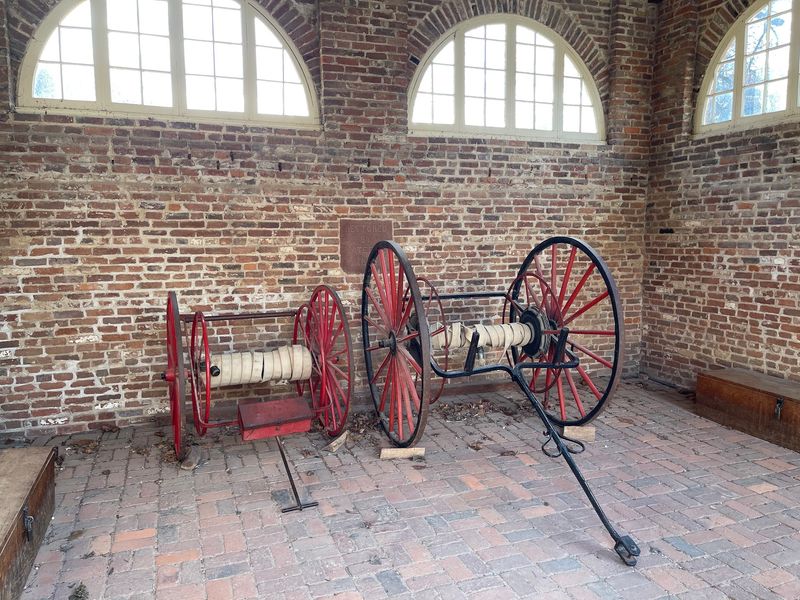
Nobody in 1848 was thinking about history books. The federal government simply needed a sturdy spot to store fire equipment and post guards at the United States Armory and Arsenal, a busy complex that turned out gear for the young nation.
So workers put up a modest building measuring roughly 35 and a half by 24 feet. An 1848 military report described it as a single-story brick structure with a slate roof, plus copper gutters and downspouts.
That is a fancy finish for a firehouse, and it hints at how seriously the government took its armory property.
The building had two jobs. One side held the fire engine, the wheeled pump that crews would roll out if flames broke out in the shops.
The other side served as a guard house, a place where watchmen could keep an eye on the grounds.
For about eleven years, it did exactly that, quietly and without much notice. Think of it as the dependable neighbor nobody talks about until something big happens.
Then, one chilly October night, ordinary purpose gave way to an extraordinary chapter, and this practical little building became one of the most talked-about structures in America.
A Rented Maryland Farm and a Bold Plan
Months before anyone heard a bell ring at the armory, a group of men was lying low on a rented farm in Maryland. The place sat just a few miles from the West Virginia line, close enough to reach the armory on foot, far enough to avoid nosy neighbors.
John Brown was a fierce opponent of slavery, and he had a sweeping idea. He hoped to seize the federal armory and arsenal, then pass its supplies to enslaved people so they could rise up and break the system holding them in bondage.
It was an enormous gamble built on hope that others would join once the first move was made.
His band numbered 21 men. According to the National Park Service and other historical sources, 16 were white and 5 were Black, a mixed group that was unusual for its time and says a lot about the cause that brought them together.
Life on that farm was reportedly cramped and secretive, with the men staying out of sight for long stretches. Imagine waiting week after week, knowing the plan could change the country or fall apart in a single night.
That nervous patience is part of the story many visitors find most human.
The Night of October 16, 1859
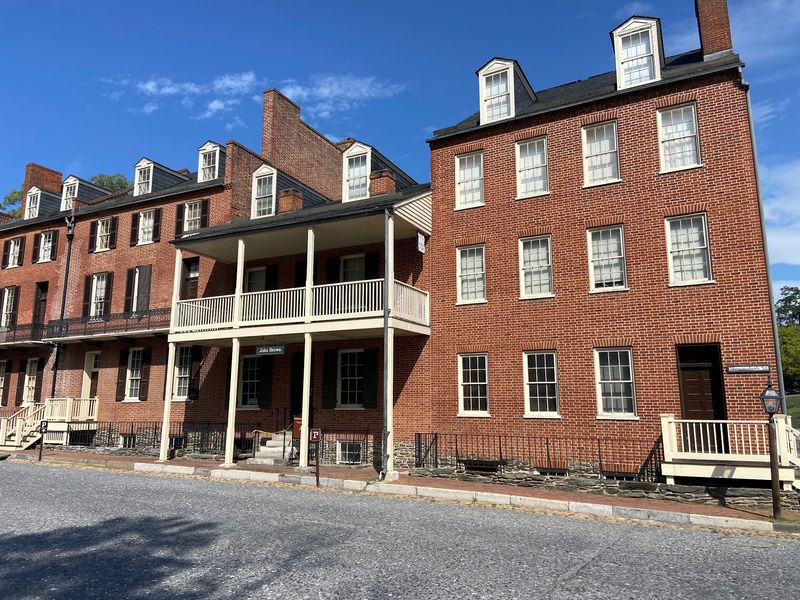
Sunday evening, October 16, 1859. The town was settling in for the night when Brown and his men moved out under the cover of darkness.
Things went fast at first. The raiders overwhelmed the night watchmen, took control of the federal armory and arsenal, and gathered several prominent local citizens as captives.
In just a few hours, a small group had seized one of the most important federal sites in the region.
One captive carried a famous family name. Lewis Washington was a direct descendant of George Washington, and Brown also took a sword and other prized heirlooms that had once belonged to the first president.
Brown reportedly kept that sword with him during the raid, a detail that still makes history fans raise an eyebrow.
Here is where the plan started to wobble. Brown had counted on enslaved people from the surrounding countryside flooding in to join him.
That large-scale support never came, and every passing hour gave local folks time to figure out what was going on.
By sunrise, word was spreading through the valley like wildfire. The bold opening act was over, and a much tougher chapter was about to begin.
Retreat to the Engine House
Local militias didn’t waste time. As news of the raid traveled, armed townsfolk and volunteer companies poured in and started surrounding the armory grounds.
By the afternoon of October 17, the militia had taken back parts of the armory. Brown, his remaining followers, and their captives fell back to the one spot that offered thick walls and heavy doors: the fire engine house.
A building meant for buckets and hoses suddenly became a hideout.
Inside, Brown held Lewis Washington and about ten others. Many of those captives later said they were treated without harm while they waited it out, which surprises a lot of people hearing the story for the first time.
They shared cramped quarters with the raiders through a long, tense night.
Just think about the scene for a moment. Cold brick, a fire engine pushed aside, people from two very different sides of a national argument stuck together and listening to the crowd outside.
Every creak of the door must have felt enormous.
That is the moment that gave the building its nickname. The little firehouse had turned into a fort, and the name John Brown’s Fort would stick for well over a century and a half.
Marines, a Ladder, and the Morning of October 18
Few people expect a ladder to play a starring role in American history. Yet that is exactly what broke the standoff.
United States Marines arrived on the scene under the command of Lieutenant Colonel Robert E. Lee, with Lieutenant J.E.B.
Stuart at his side. Both names would become famous a few short years later during the Civil War, which adds a strange twist to the tale.
In 1859, though, they were federal officers sent to end a crisis at a government armory.
On the morning of October 18, Brown was given a demand to surrender. He refused.
Stuart signaled, and the Marine storming party moved in.
The doors held at first, so the Marines grabbed a ladder and used it as a battering ram. After the doors gave way, they rushed inside and captured Brown along with several of his men, some of whom were wounded.
Brown himself was among the injured.
One bright spot stands out in the record. None of the captives inside were harmed during the storming.
The whole raid had lasted only about a day and a half, but the echoes would carry across the country for years to come.
The Town at the Meeting of Two Rivers
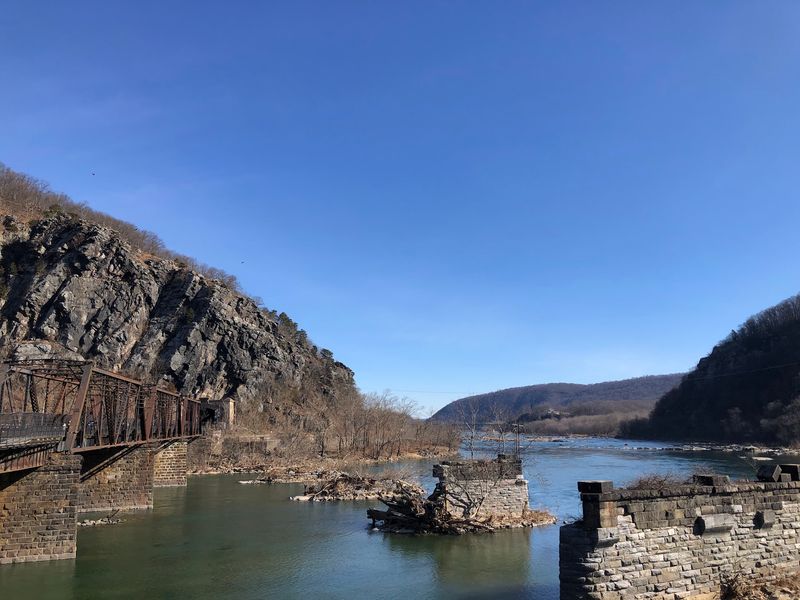
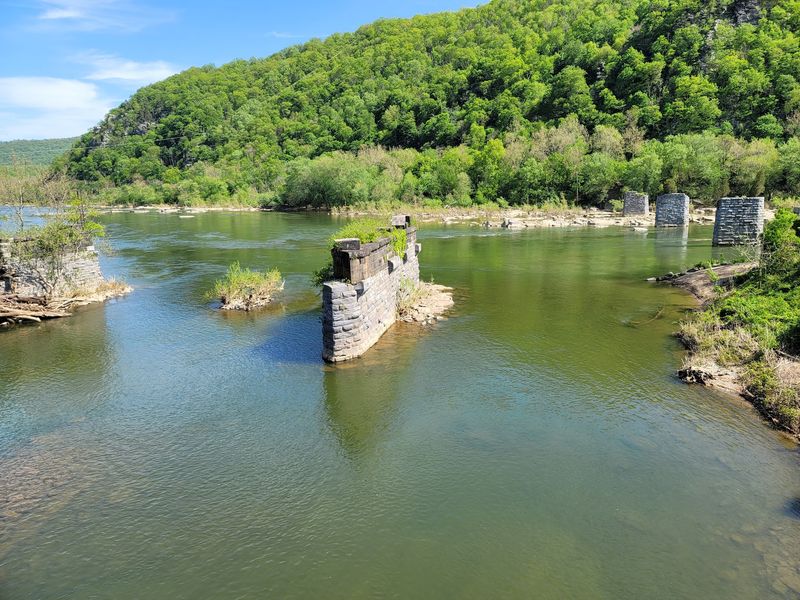
So where exactly did all of this unfold? The answer is Harpers Ferry, the little Jefferson County town where the Shenandoah River meets the Potomac.
Visitors rave about that setting, and for good reason. The two rivers come together beneath steep wooded ridges, and the old brick storefronts of Lower Town tumble down the hillside toward the water.
One visitor called the scenery beautiful and the whole place a unique little town well worn by past wars, which sums it up nicely.
The armory that drew John Brown here was a big deal in its day, and the town grew around it. Today the lower part of town is part of Harpers Ferry National Historical Park, and many of the old storefronts have been turned into small museums.
Walking those streets feels a lot like stepping back into the 1800s.
For locals, this corner of the Eastern Panhandle has always been a point of pride. Mention it to a West Virginian of a certain age and you might hear about a school field trip, a family picnic by the river, or a first look at the Appalachian Trail, which passes right through town.
From Courtroom to Crossroads of a Nation
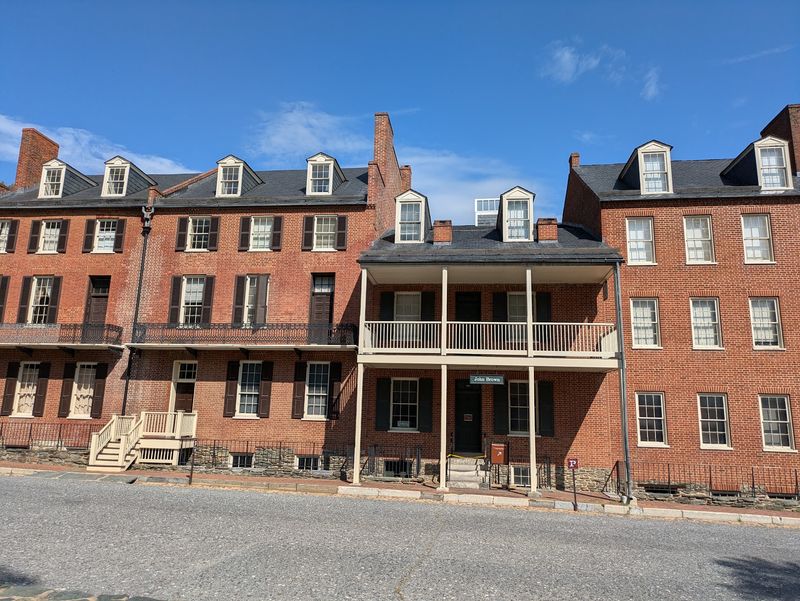
After his capture, Brown and his surviving men were taken a short ride away to Charles Town, then part of Virginia and now part of West Virginia. It is still the county seat of Jefferson County today.
Brown faced charges of treason against the Commonwealth of Virginia, conspiring with enslaved people to rebel, and causing harm during the raid. His trial began on October 27, 1859.
Just five days later, the jury found him guilty on every count.
On December 2, 1859, his sentence was carried out. The country reacted in two very different ways.
Many in the North saw him as a hero who stood up for freedom, while many in the South viewed the raid as proof of their worst fears.
Historians often say that split helped deepen the national divide in the run-up to the Civil War. A raid that lasted barely two days ended up rippling through the whole decade.
That is part of why the little firehouse matters so much. It is not just where one man made his stand.
It is a marker for a turning point, a reminder of how quickly the country’s mood shifted after those few October days.
The Most Well-Traveled Firehouse in America
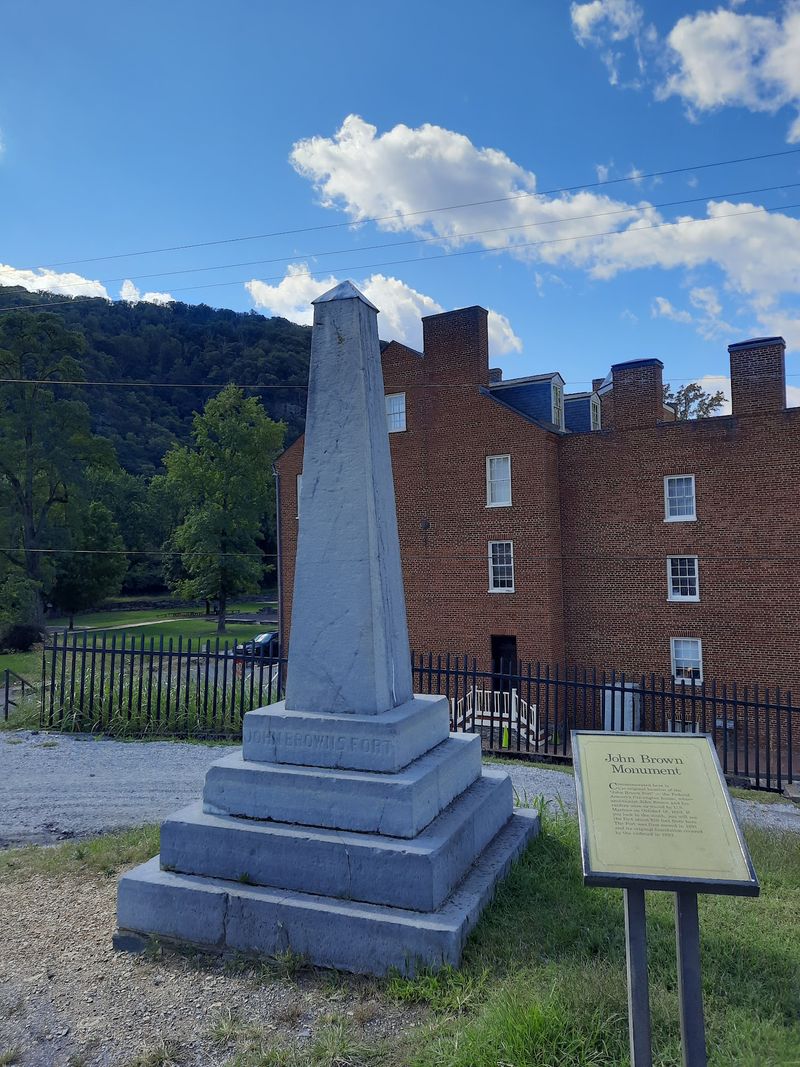
Here is a fun fact to share at the next family reunion. The building that sheltered John Brown has seen more of the country than a lot of us have.
It was reportedly the only armory building in Harpers Ferry to survive the Civil War. During and after the war, it served as a holding spot and a storage room, and soldiers from both sides, plus curious travelers, sometimes chipped off pieces to carry home as keepsakes.
Then came the road trips. In 1891, the fort was taken apart and shipped all the way to Chicago for display near the World’s Columbian Exposition.
By 1895 it was back in the area, reassembled on the Murphey Farm outside town.
In 1909 it moved again, this time to the campus of Storer College, a historically Black school in Harpers Ferry. There it became a museum, and students often led the tours themselves.
For generations of African Americans, the building stood as a powerful emblem of freedom.
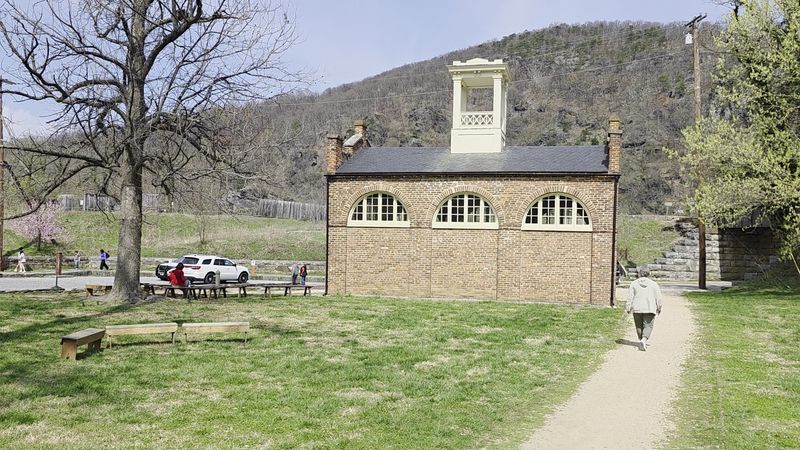
Finally, in 1968, the National Park Service moved it to Lower Town, about 150 feet east of where it first stood. Not bad for a building that started life storing a fire pump.
An Obelisk Worth Hunting For
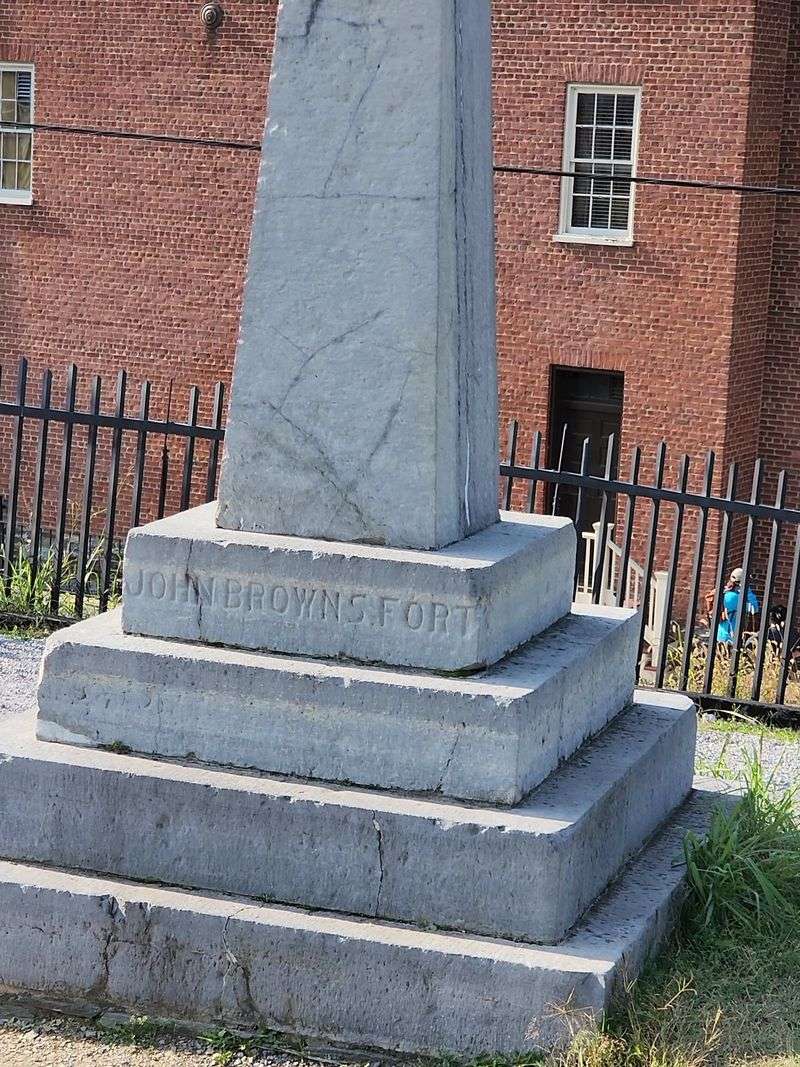
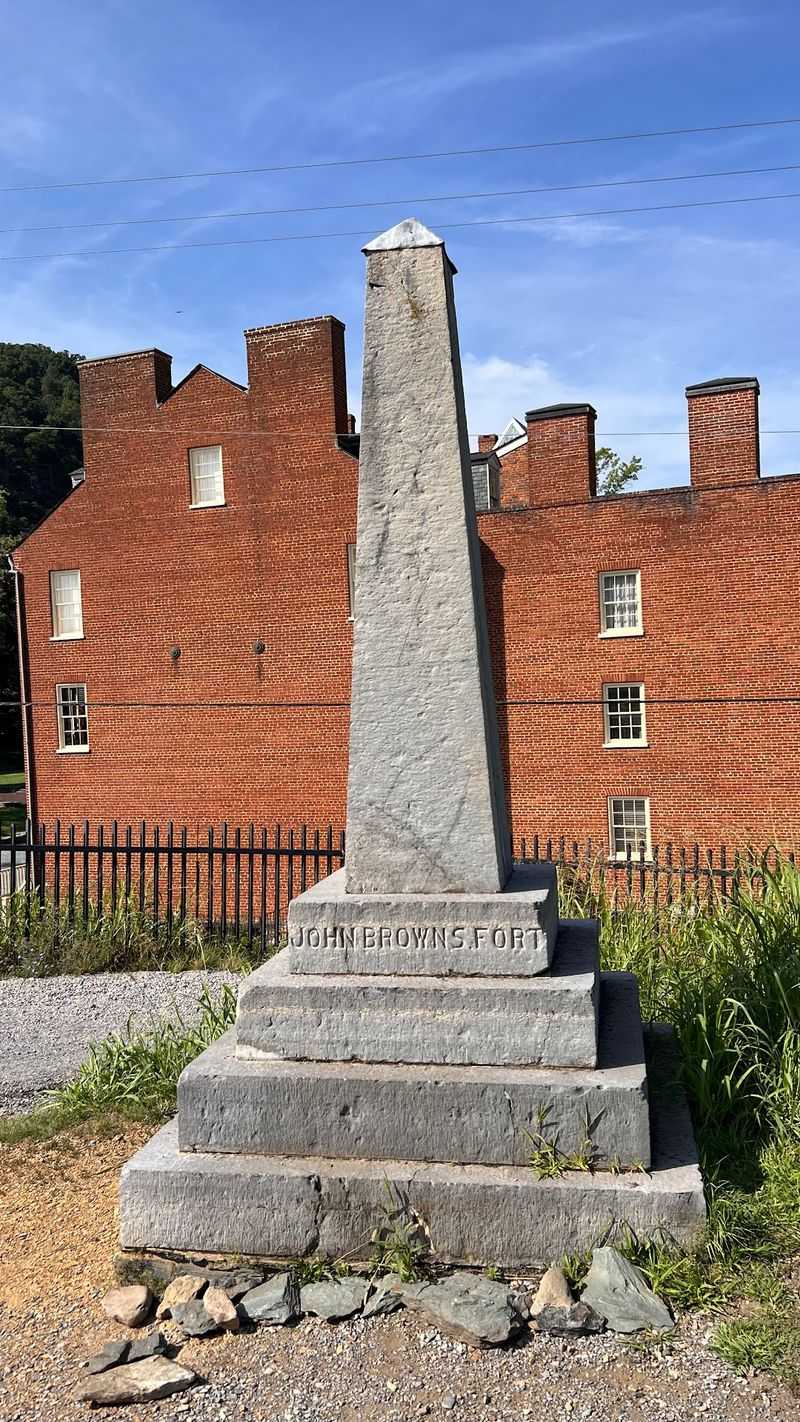
Sharp-eyed visitors love a little scavenger hunt, and this one comes built in. Because the fort has moved, the exact spot where the 1859 standoff happened is marked separately.
Look for a stone obelisk. Several visitors mention spotting it and say it helps them picture the original layout, which once sat a few hundred feet away on what is now an embankment.
Snapping a photo of both the marker and the fort makes a neat before-and-after story for the scrapbook.
Some folks admit they felt a twinge of disappointment learning the building is not on its original footprint. That reaction is understandable.
Still, most come around to the idea that the walls themselves are what carry the weight, no matter where they stand.
One visitor put it well, describing the fort as less a place to visit and more a place to learn in context. That is good advice.
Spend a few minutes reading the nearby signs, find the obelisk, and look around at the rivers and ridges.
Suddenly the whole scene clicks into place, and the October 1859 events feel much closer than a textbook ever made them seem.
Ranger Talks, Ghost Lore, and Lower Town Charm
Ask anyone who has lingered here and they will likely bring up the rangers first. Visitors describe the staff as friendly and knowledgeable, and some recall an hour-long afternoon ranger talk about John Brown that held their attention start to finish.
One visitor even got permission to photograph a pair of Dalmatians in front of the firehouse, a charming nod to the building’s original purpose. Others mention booking tours through the National Park Service and loving every minute.
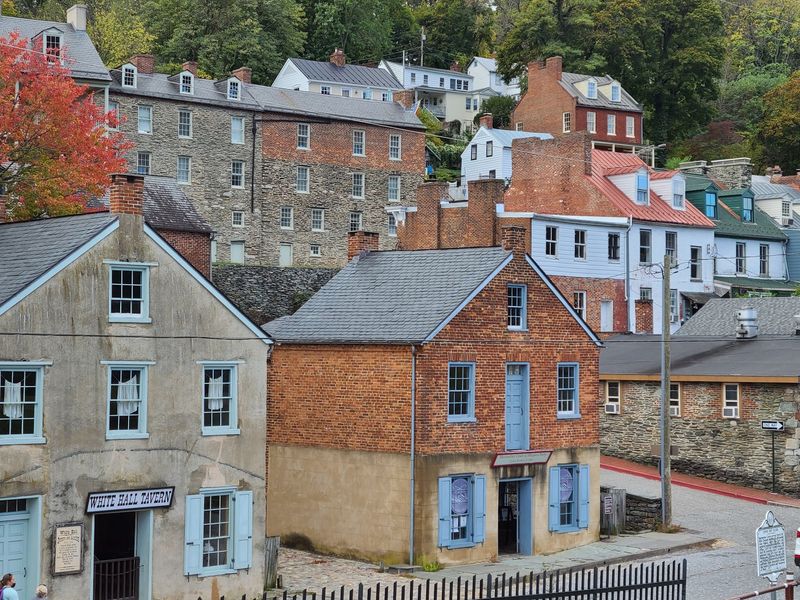
The mood in Lower Town is part of the appeal too. Folks talk about the 1800s atmosphere, shopfronts that look close to how they did long ago, and exhibits on everything from period clothing to architecture.
Some even mention the ghost lore whispered around every bend, which makes an evening stroll a little more fun.
So who will enjoy it most? History buffs, of course, along with photographers, hikers, and families who like learning on foot.
School groups visit often on weekdays.
If you are a quick-look type, the fort itself takes only a few minutes. Pair it with nearby museums and exhibits, though, and some visitors say the experience easily stretches into a few hours.
Hours, Fees, Shuttles, and Comfortable Shoes
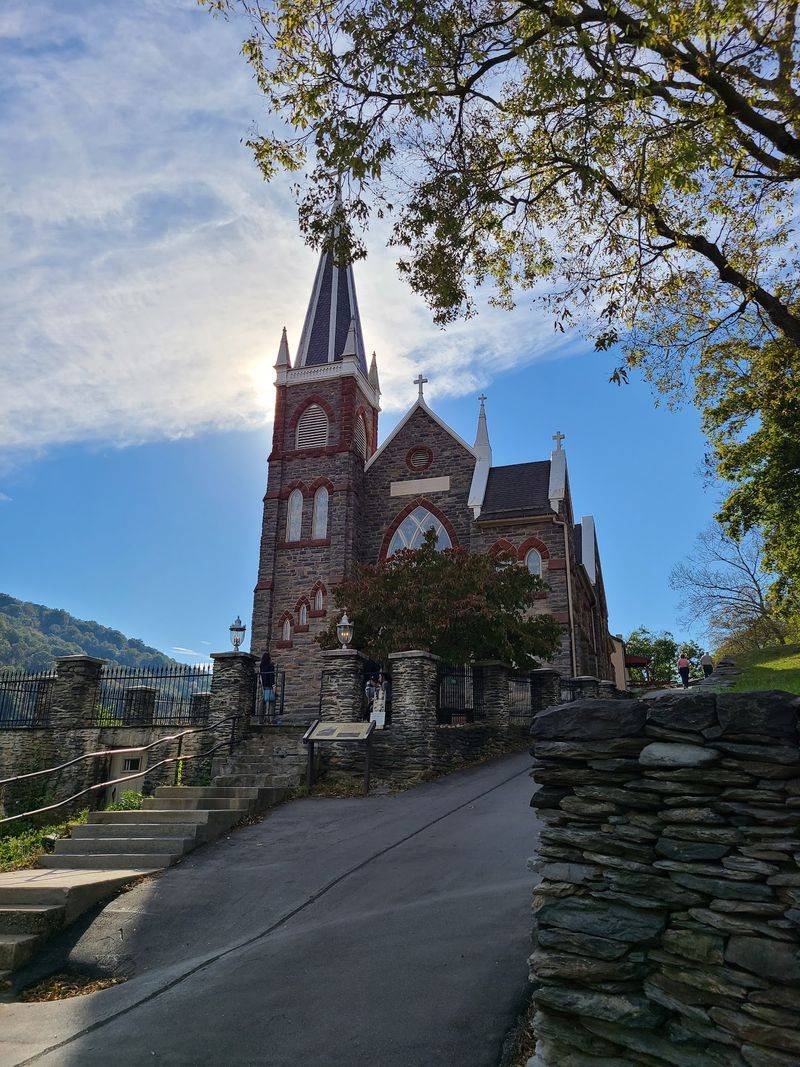
Good news for early risers and late planners alike. John Brown’s Fort is open every day of the week from 9 AM to 6 PM, according to its current listing.
You will find it at 814 Shenandoah St, Harpers Ferry, WV 25425, at the corner of Shenandoah and Potomac Streets in Lower Town. Parking right in town is very limited, so most people leave the car at the park’s visitor center about two miles away.
From there, you have two choices. Shuttle buses reportedly run roughly every 15 minutes, or you can walk a scenic trail along the Shenandoah River.
Either way, expect plenty of walking, including some uphill stretches once you are exploring the shops and small museums.
As for cost, this is a national park, so there is an entrance fee per vehicle unless you carry an America the Beautiful pass. One visitor noted a few years back that it was about $20 a car for three days of access, though prices may have changed, so check the National Park Service website before you go.
A quick tip from spring visitors: gnats can be pesky in April. A folded park pamphlet makes a handy fan.
Why a Few Quiet Minutes Here Stay With You
Some places wow you right away. Others sneak up on you, and this little firehouse definitely belongs to the second group.
Honestly, the building itself will not take long to see. A few visitors call it a quick stop, and that is fair.
But plenty of them also say they were awed by the conviction of the men involved and moved by the respect the park pays to their story.
That is the real gift of a visit. You stand beside plain brick walls, glance toward the rivers, and realize ordinary spots in our own West Virginia backyard helped shape the whole country.
It is the kind of hometown pride that does not need fireworks.
For retirees looking for an easygoing day trip, families wanting a lesson that does not feel like homework, or anyone who loves a good story, it is worth the drive. Make a day of it with the museums, the riverside trail, and a bite to eat in town.
And if you visited on a school trip years ago, it might be time to go back. Bring the grandkids, find the obelisk, and tell them what you remember about the little fort that once held its ground.
