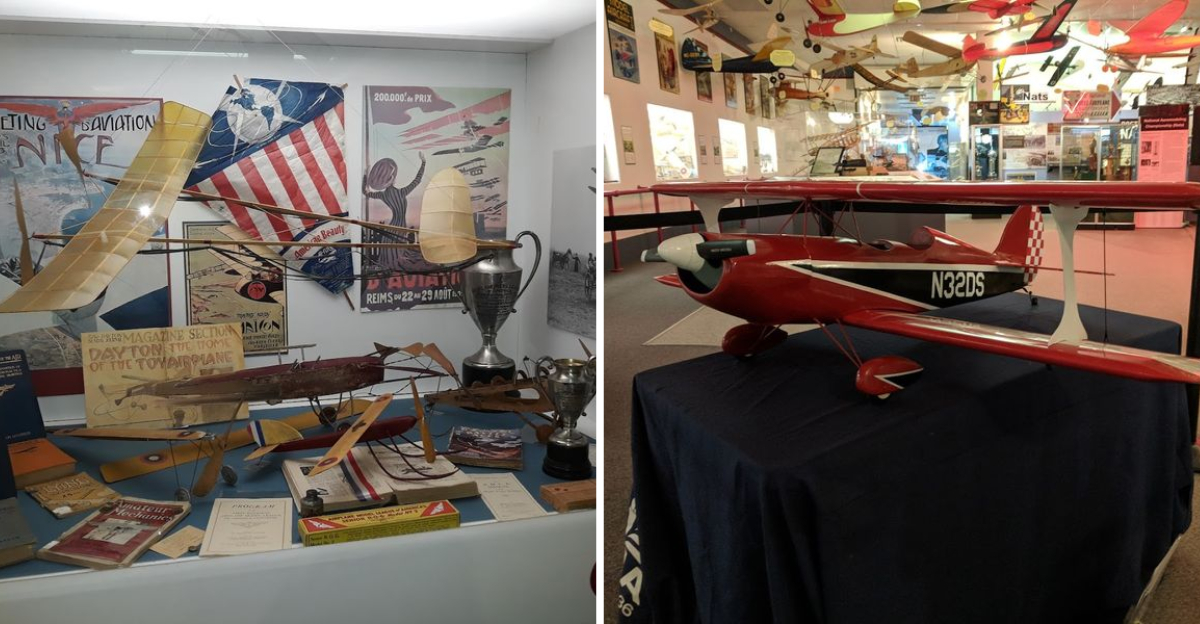
Over 11,000 model aircraft artifacts packed into one Indiana museum. Century old compressed air planes to modern radio controlled drones.
The largest collection of model aircraft on the planet, sitting quietly in a city you would not expect. I pulled into the parking lot not knowing what to expect, and walked out genuinely impressed. The kind of museum that makes you slow down, look closer, and ask questions you never thought to ask before.
Aviation enthusiast or just passing through, this place has a way of pulling you in and not letting go.
A Collection That Breaks Every Record

Numbers alone do not always tell the full story, but in this case, they are a great place to start. The National Model Aviation Museum holds over 11,000 artifacts in its permanent collection, making it the largest collection of model aircraft anywhere in the world.
That is not a small claim, and the museum absolutely backs it up.
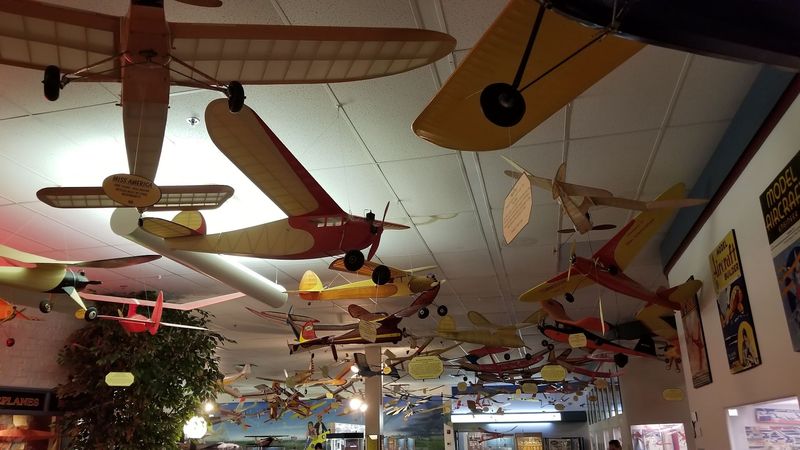
Spread across a thoughtfully organized space, the collection covers more than a century of model aviation history. You will find everything from fragile balsa wood gliders and rubber-band-powered planes to sleek electric models that look like they belong in a tech showroom.
The range is genuinely staggering.
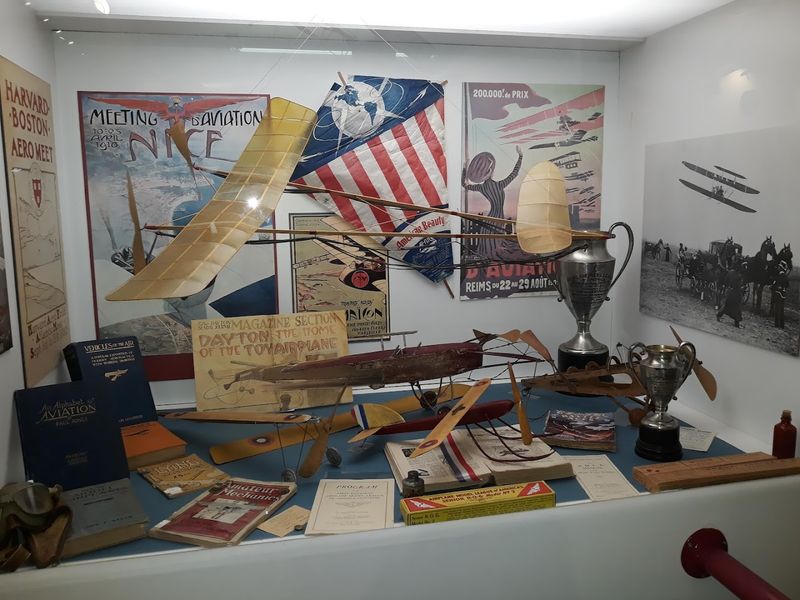
One of the oldest pieces on display is the Bing Auto Plane, manufactured in 1914 by the Bing toy company and powered by compressed air. Seeing something that old still intact is quietly humbling.
Each artifact in this museum represents someone’s passion, someone’s weekend project, someone’s dream of flight. The sheer variety on display makes it clear that model aviation is not just a hobby.
It is a living, evolving art form that has helped shape how humans understand the sky.
The History Behind the Museum’s Origins
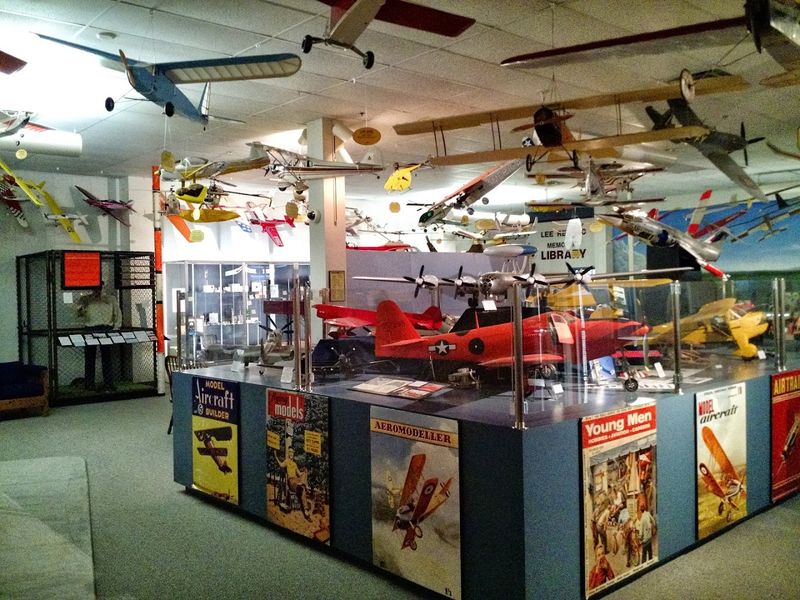
Not every museum has a backstory this interesting. The National Model Aviation Museum was first established in 1978 in Virginia, operating near Washington, D.C., before eventually relocating to Muncie, Indiana, in 1993 and reopening to the public in 1994.
The move brought it to the home base of the Academy of Model Aeronautics, known as the AMA.
The AMA itself was founded in 1936, making it one of the oldest organizations dedicated to promoting model aviation as both a hobby and a competitive sport. The museum serves as the official repository for AMA history and artifacts, giving it a sense of institutional weight that most small-town museums simply do not have.
Learning about this background gave me a deeper appreciation for what I was looking at. These were not just pretty models on shelves.
They were pieces of a larger story about how ordinary people, tinkerers and dreamers, contributed to the development of modern flight technology. The museum makes that connection feel real and meaningful rather than distant or academic.
It is the kind of history that actually sticks with you long after you have driven back home.
Three Disciplines That Define the Hobby
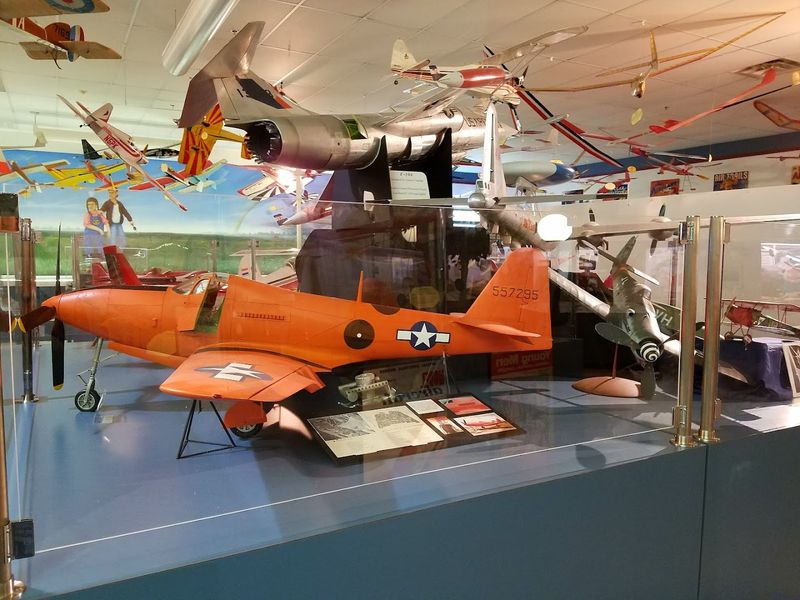
Model aviation is not one thing. It is actually three distinct disciplines, and the museum does a fantastic job of explaining each one in a way that even a total beginner can follow.
Understanding the differences genuinely changes how you look at every aircraft on display.
Free-flight is the oldest form, where a model is launched and then flies entirely on its own without any further input from the pilot. It is pure aerodynamics, shaped by the design of the plane and the conditions of the air.
There is something almost poetic about that.
Control-line flying is the next step, where the plane is attached to the pilot by a pair of wires and flies in a circular path. It requires real skill and timing to manage speed, altitude, and maneuvers.
Radio control is the most familiar discipline today, where pilots use handheld transmitters to guide their aircraft through the air with precision. Each of these three categories has its own culture, its own competitions, and its own community of dedicated enthusiasts.
Seeing them laid out side by side in the museum helped me understand just how broad and deep this hobby really runs. It is far more than flying toys around a backyard.
Interactive Exhibits and the Flight Simulator
Some museums ask you to stand back and observe. This one actually invites you to get involved.
The flight simulator is one of the most talked-about features at the National Model Aviation Museum, and for good reason. It gives visitors a real taste of what it feels like to pilot a model aircraft without any prior experience required.
I gave it a try, and I will be honest, it is harder than it looks. Keeping a virtual plane level while navigating turns takes more coordination than you might expect.
But that is part of the fun, and it made me respect the hobby on a whole new level.
Beyond the simulator, the museum features hands-on learning stations where guests can explore the physics of flight, aerodynamics, and the engineering principles that make model aircraft work. These stations are designed to be engaging for kids and adults alike, which is a tricky balance to strike and one the museum pulls off well.
The interactive approach makes the science feel accessible rather than intimidating. You leave with a genuine understanding of how and why these machines fly, not just a vague impression that it all seems very complicated.
The Nostalgic 1950s Hobby Shop Recreation
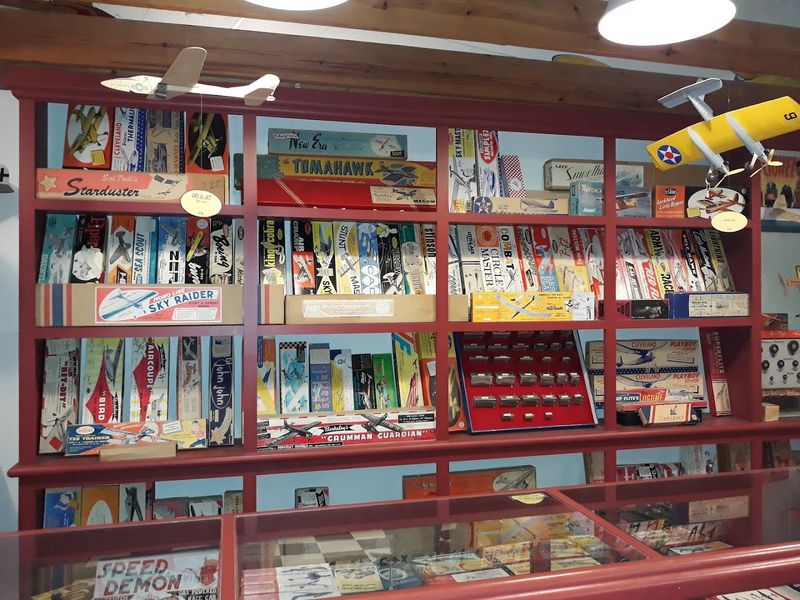
There is one exhibit in this museum that stops almost every visitor in their tracks, and it is not the most technologically impressive thing on display. It is a faithful recreation of a hobby shop from around the 1950s, complete with boxed stick and paper model kits lining the shelves, a mannequin sales clerk standing behind the counter, and an antique cash register that looks like it belongs in a black-and-white photograph.
The detail in this recreation is genuinely impressive. The packaging on the model kits looks period-accurate, and the overall atmosphere gives you a strong sense of what Saturday afternoons must have felt like for kids growing up in that era.
It is warm and a little melancholy in the best possible way.
For visitors who grew up building model planes at the kitchen table, this exhibit hits differently. It is a tangible reminder of a slower time when building something with your hands was how you spent your free hours.
For younger visitors, it offers a window into a world before screens and digital entertainment. Either way, it is one of those displays that makes you pause, look around, and feel something real.
That is the mark of good museum curation.
The Model Aviation Hall of Fame and NASA Connections
Not many local museums can say they have NASA hardware on display, but the National Model Aviation Museum is not a typical local museum. Among its more surprising exhibits is a collection of equipment and hardware on loan from NASA, pieces that were actually used in the space program.
Seeing those items in the context of model aviation history creates an unexpected and genuinely fascinating connection.
The museum also houses the Model Aviation Hall of Fame, which pays tribute to the pioneers and legends who shaped the hobby and sport over the decades. These are the people who spent lifetimes refining designs, pushing boundaries, and inspiring others to look up at the sky with curiosity.
Reading through the Hall of Fame entries gives you a real appreciation for how much individual passion has driven this field forward. These were not large corporations or government agencies making breakthroughs.
They were often hobbyists working in garages and backyards, solving problems one small aircraft at a time. The NASA connection brings that full circle in a powerful way, suggesting that the gap between a backyard model and a spacecraft is smaller than most of us would ever assume.
That idea alone is worth the trip to Muncie.
The International Aeromodeling Center and What Lies Beyond the Museum Doors
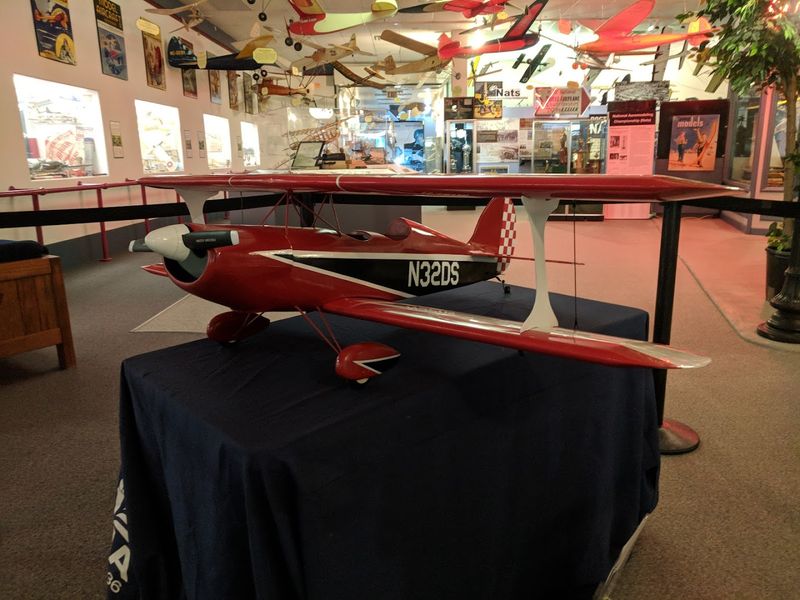
The museum itself is remarkable, but what surrounds it takes the whole experience to another level entirely. Right next door is the International Aeromodeling Center, a sprawling 1,100-acre outdoor flying site that serves as the national headquarters for AMA competitions.
Driving through it feels a bit surreal, like stumbling onto a small airfield that somehow exists in the middle of Indiana farmland.
On the right day, you can watch model aircraft of all kinds taking to the sky during competitions and club events. The Lee Renaud Memorial Library is also located within the complex, housing an extensive collection of books, magazines, and model aviation media that researchers and enthusiasts travel from far away to access.
The museum is open Monday through Thursday from 10 AM to 4 PM, so planning your visit around those hours is worth doing in advance. If you time it right and there is an event happening at the flying fields, you get to experience model aviation as a living, breathing community rather than just a preserved history.
That combination of indoor museum and outdoor flying center is what makes this destination feel truly one of a kind. Muncie might be a small town, but what it has here is world-class in every sense of the word.
Address: 5151 E Memorial Dr, Muncie, IN 47302
