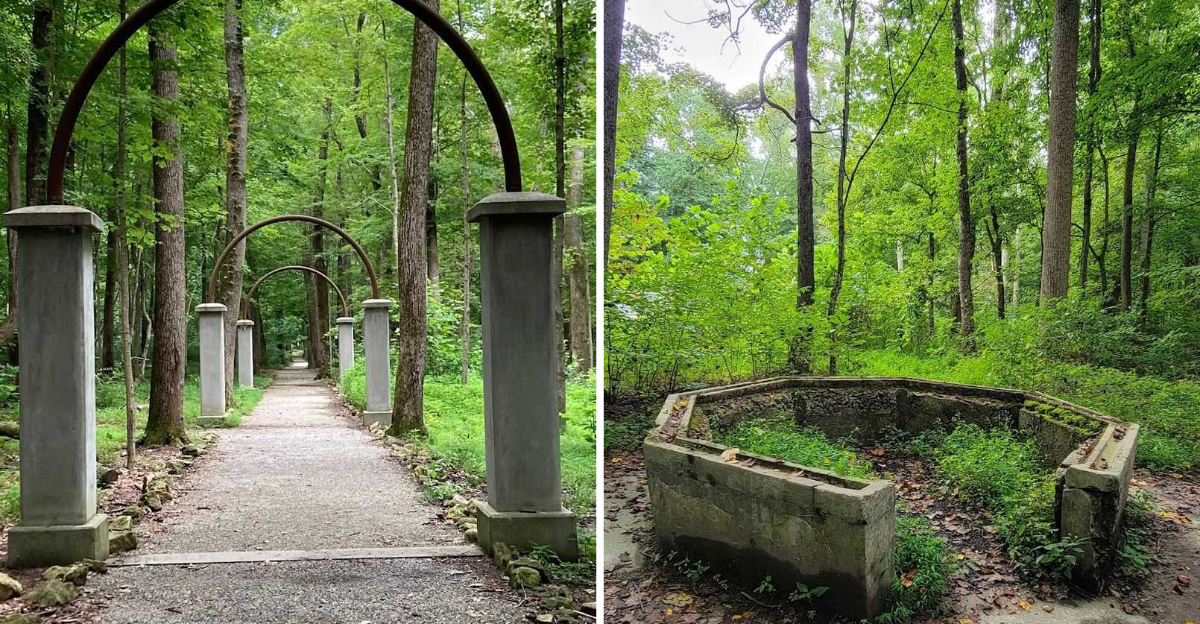
Booming amusement park in the nineteen twenties, drawing over a hundred thousand visitors a year with roller coasters, a zoo, and a dance hall. Then the flood of nineteen thirty seven swallowed it whole.
Nature took it back. Now a quiet gravel loop winds through the ruins, past mossy stone foundations and old pool railings still standing in the earth. No cars, no pavement, just birds and rustling leaves.
History and wilderness side by side in Indiana. The whole experience feels genuinely unlike anything else in the state.
The Story Behind Rose Island and Why It Vanished
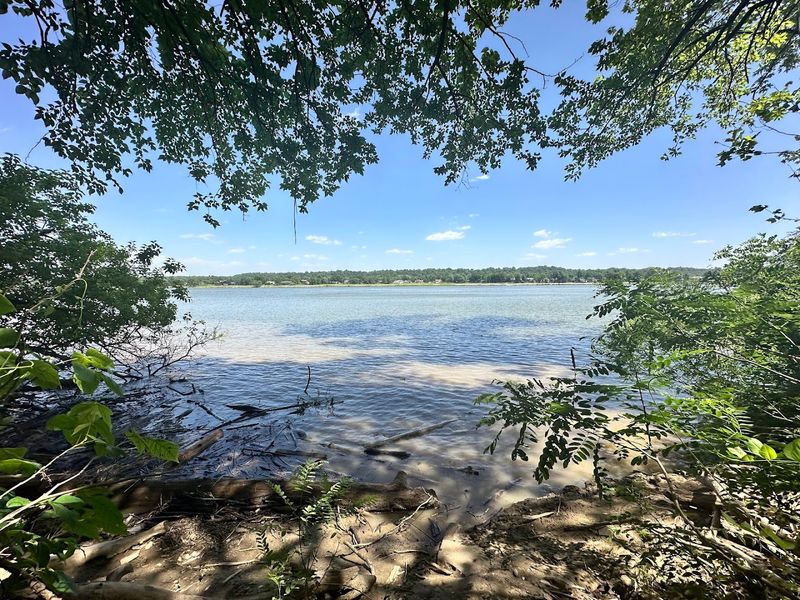
Before it became a hauntingly peaceful hiking loop, Rose Island was the kind of place people planned their whole summer around. Louisville businessman David Rose purchased the property in 1923 and transformed what had been a quiet church picnic spot, known as Fern Grove since the 1880s, into a full-scale resort and amusement park.
At its peak, the park welcomed up to 135,000 visitors in a single year. People arrived by steamboat from Louisville, Cincinnati, and Madison, or crossed a suspension footbridge by car.
The park had a wooden roller coaster called the Devil’s Backbone, a small zoo with a bear named Teddy Roosevelt, a Ferris wheel, a dance hall, and a hotel.
Then January 1937 arrived, and the Ohio River rose without mercy. The entire park went under ten feet of water, and the damage was so severe that it never reopened.
What Rose built over years was erased in days. That dramatic ending is part of what makes visiting the ruins feel so powerful, because you can almost sense how suddenly everything stopped.
You walk through the same grounds where families once laughed and children screamed on roller coasters. The stone foundations are still there, half hidden under moss and leaves.
A few concrete pillars from the swimming pool still stand upright. The quiet is the loudest part of the whole experience, a silence that fills the space where music and shouting and joy used to live.
Getting There: Trail 3 and the Historic Portersville Bridge
Reaching Rose Island takes a little effort, and honestly, that effort is part of what makes it feel special. Trail 3 is the main route down, a steep paved path that drops through shaded forest toward Fourteen Mile Creek at the bottom of the bluff.
The descent is manageable, but your legs will definitely know about it on the way back up.
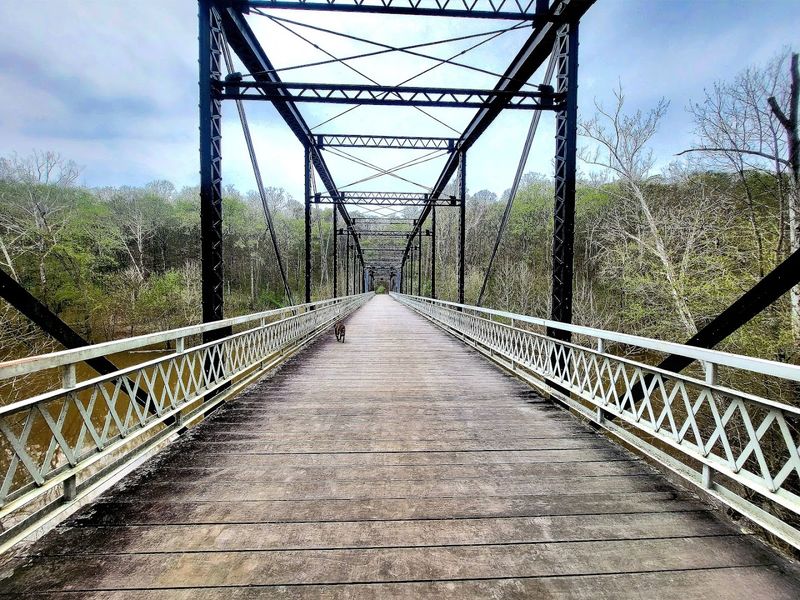
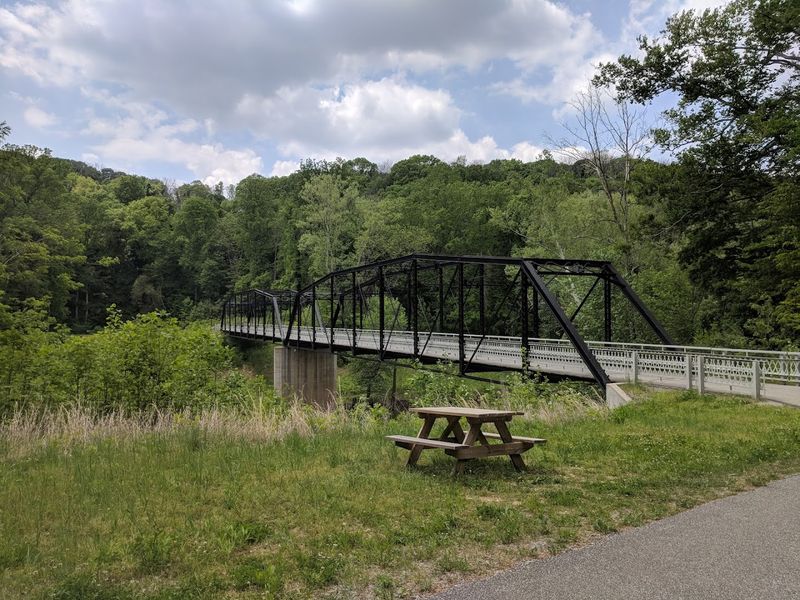
At the bottom, you cross the Portersville Bridge, a historic iron truss bridge that was relocated and reconstructed between 2008 and 2011 specifically to give visitors access to the Rose Island peninsula. Crossing it feels like crossing a threshold into a different era.
The creek moves quietly below, and the trees on the other side close in around you almost immediately.
One thing worth knowing before you go: the hill back up is no joke. Multiple visitors have noted that benches along the paved path make great rest stops.
Bring water, wear shoes with grip, and give yourself more time than you think you need. The park opens at 7 AM daily, so an early start means cooler air and fewer people on the trail.
The Rose Island Loop: A 0.9-Mile Walk Through Ruins
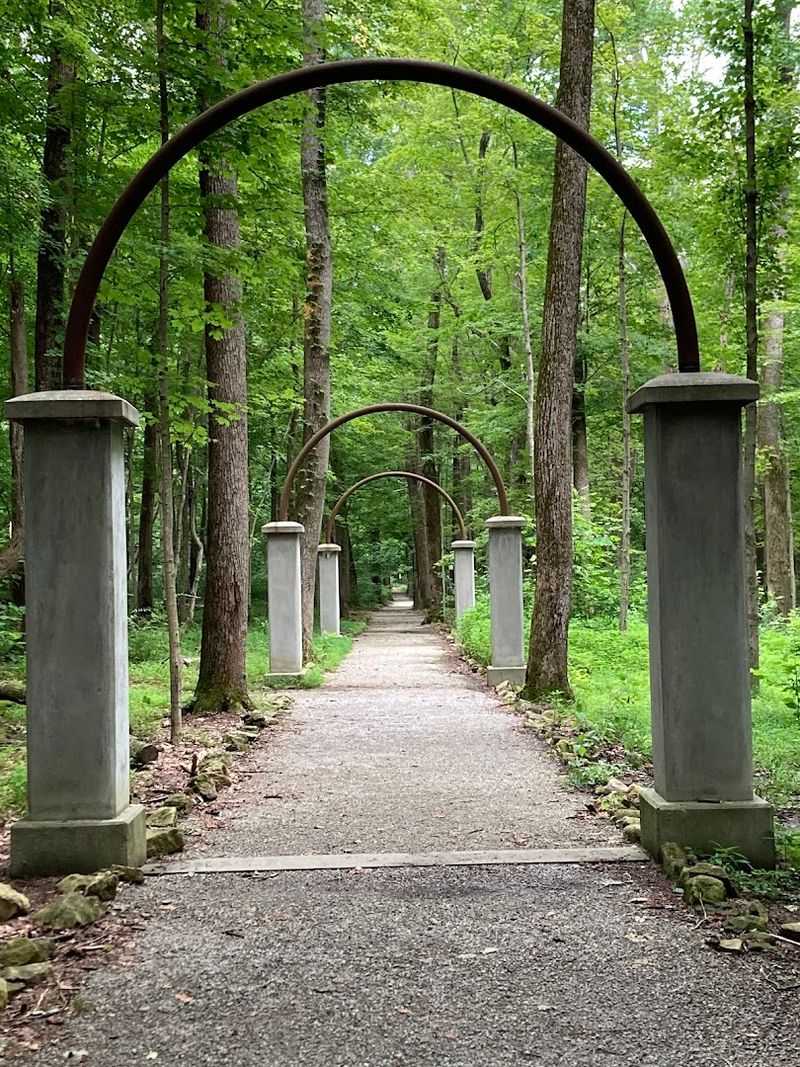
Once you cross the bridge, the Rose Island Loop, officially Trail 7, begins. It stretches just 0.9 miles and runs along relatively flat, gravel-covered ground through the wooded peninsula.
The loop is calm and unhurried, the kind of trail where you naturally slow your pace without even meaning to.
No cars access this area. No paved roads cut through it.
The gravel path and scattered ruins are all that remain of what was once a premier Midwestern destination. That absence of modern infrastructure is exactly what gives the loop its eerie, untouched atmosphere.
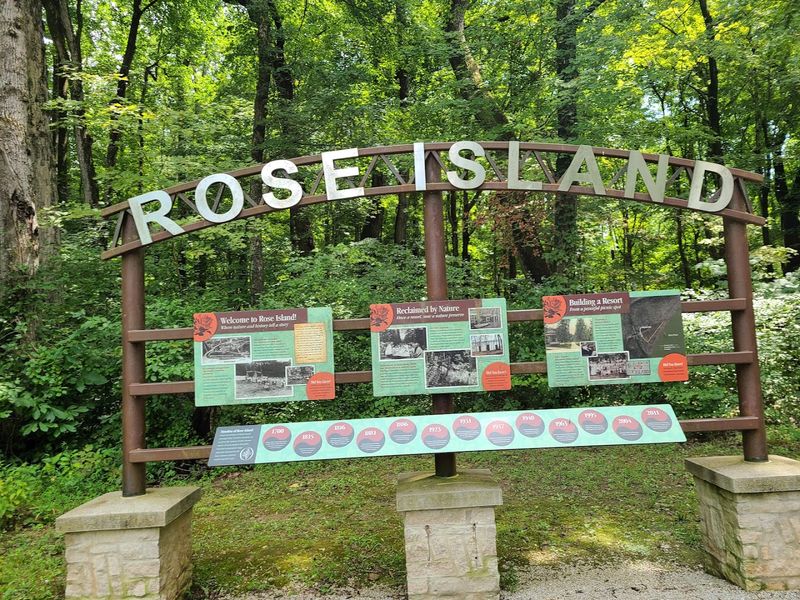
Scattered along the trail are informative signs and hand-crank audio stations that bring the history to life without needing a screen or a signal. You can actually hear recorded descriptions of what each ruin used to be.
Some people breeze through in 30 minutes. Others spend well over an hour reading every sign, working the audio stations, and just sitting quietly among the old foundations, letting the place settle around them.
Both approaches feel completely right.
What the Ruins Actually Look Like Up Close
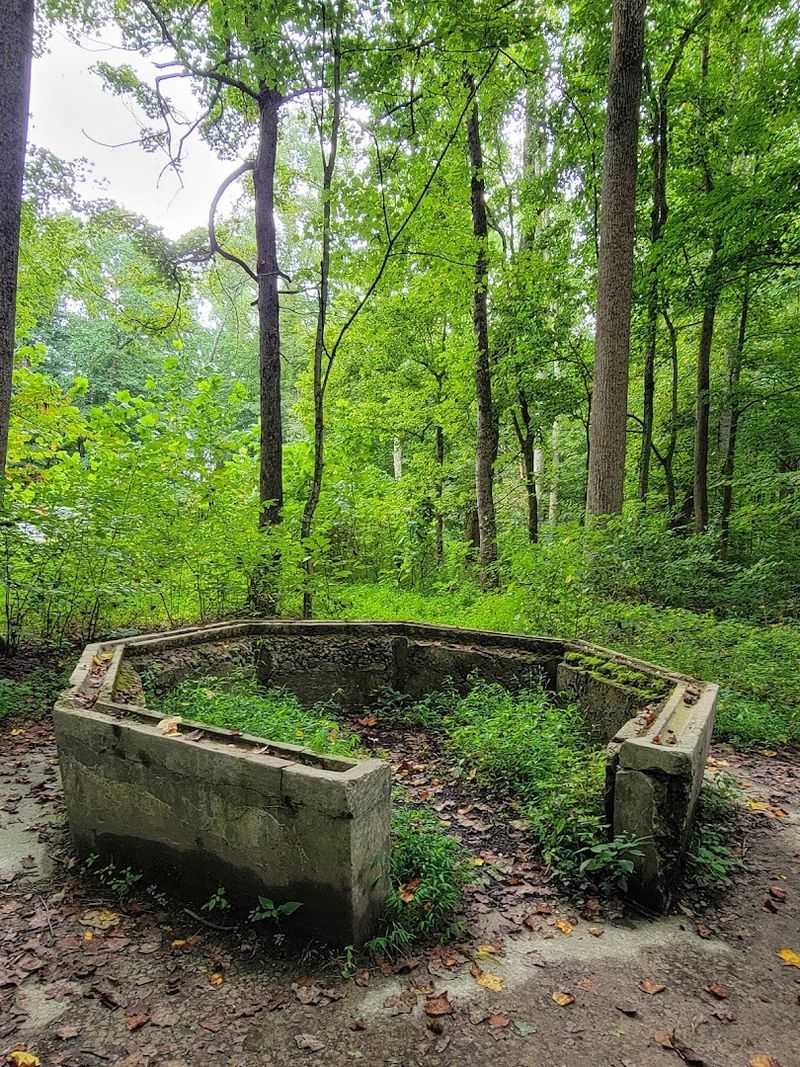
The ruins at Rose Island are subtle rather than dramatic, and that subtlety is actually what makes them interesting. The swimming pool basin is one of the most recognizable remnants.
It sits partially filled with gravel now, but the original metal ladders and railings are still attached to the concrete walls, frozen in place like a snapshot from 1936.
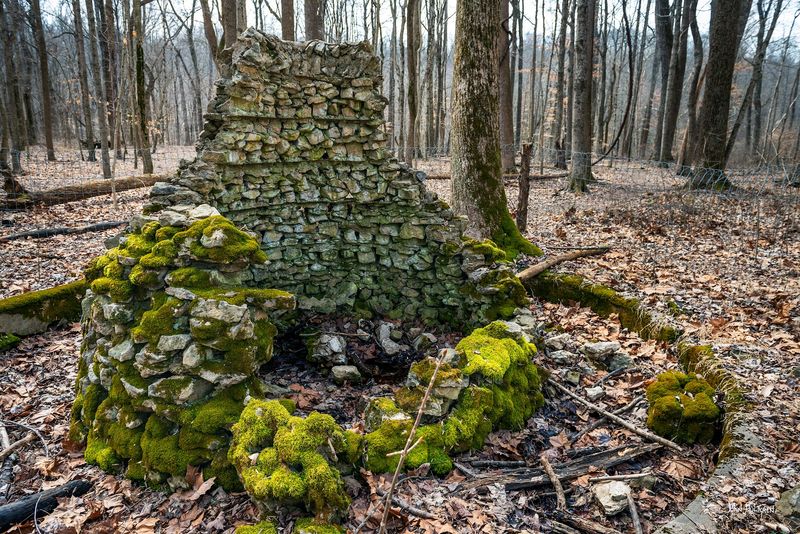
Stone arches from a promenade called the Walkway of Roses still stand in sections, draped in moss and surrounded by tree roots. A crumbling fountain base marks where guests once gathered.
Concrete pilings from the original suspension footbridge jut up near the water, silent reminders of the thousands of people who once crossed them.
Some visitors come expecting a dramatic, cinematic ruin scene and feel underwhelmed at first. The site is not that.
What it offers instead is a slower kind of discovery, where you look carefully and start noticing details that tell a real story. The flood markers along the trail show the height the water reached in 1937, and seeing that measurement in person makes the disaster feel suddenly, genuinely real.
Wildlife and Wild Nature Along the Creek and Bluffs
Charlestown State Park, Indiana covers more than 5,100 acres, and the land surrounding the Rose Island loop is genuinely alive with wildlife. The park has documented 72 bird species, and the variety is impressive enough that birders make special trips just for that reason.
Bald Eagles and Osprey appear along the Ohio River corridor, while Indigo Buntings and Summer Tanagers flash color through the forest understory.
Fourteen Mile Creek draws kingfishers and herons, and if you pause on the Portersville Bridge long enough, you have a good chance of spotting one hunting in the shallows below. Eastern Bluebirds and Prairie Warblers are common in the open meadow areas further into the park.
The landscape itself shifts dramatically across the park, from river floodplains to steep limestone bluffs to karst sinkhole topography.
Spring is particularly rewarding here. Wildflowers push up through the forest floor, and Devonian fossil outcrops appear in rocky creek beds for those who know to look.
Dogs are welcome on all trails as long as they are leashed, which makes this a solid option for people who want to bring their pets along for the adventure.
Guided Tours and the Best Way to Experience Rose Island
There is a meaningful difference between walking the Rose Island loop on your own and experiencing it through a guided tour. The guided option transforms the ruins from quiet curiosities into vivid, story-filled places.
Tour guides bring context that the signs alone cannot fully deliver, connecting individual remnants to the broader arc of what Rose Island was and what it meant to the region.
Tours have historically been offered on select days of the week, and the park ranger station is the best place to confirm current availability and timing before your visit. For families with younger kids, seniors, or anyone who finds the steep hill challenging, the guided van option provides access without requiring the full climb.
It is worth asking about when you call ahead.
If you prefer going solo, the hand-crank audio stations along the loop are genuinely helpful and add real texture to the experience. Reading every interpretive sign takes time but is absolutely worth it.
Going early in the morning on a weekday tends to mean fewer people on the trail, which makes the quieter, more reflective mood of the ruins much easier to settle into.
Practical Tips Before You Head to Charlestown State Park
A few practical things can make a real difference on this trip. Water is non-negotiable, especially in warmer months.
The hike down to Rose Island is easy enough, but the climb back up Trail 3 is steep and exposed in sections. Bring more water than you think you will need, and wear shoes with solid traction rather than sandals or flat sneakers.
The park is open daily from 7 AM to 11 PM, which gives you a wide window to plan your visit. Arriving early keeps you ahead of midday heat and gives you the ruins mostly to yourself, which is a genuinely different experience from arriving when other groups are already there.
Restrooms are available at the park office and gift shop near the entrance.
There is no food or drink available on the loop itself, so pack snacks if you plan to spend extended time in the park. Cell service can be spotty in the lower areas near the creek, so downloading a trail map before you arrive is a smart move.
The park phone number is 812-256-5600 if you want to call ahead about trail conditions or tour schedules. Address: 12500 Indiana 62, Charlestown, IN 47111.
