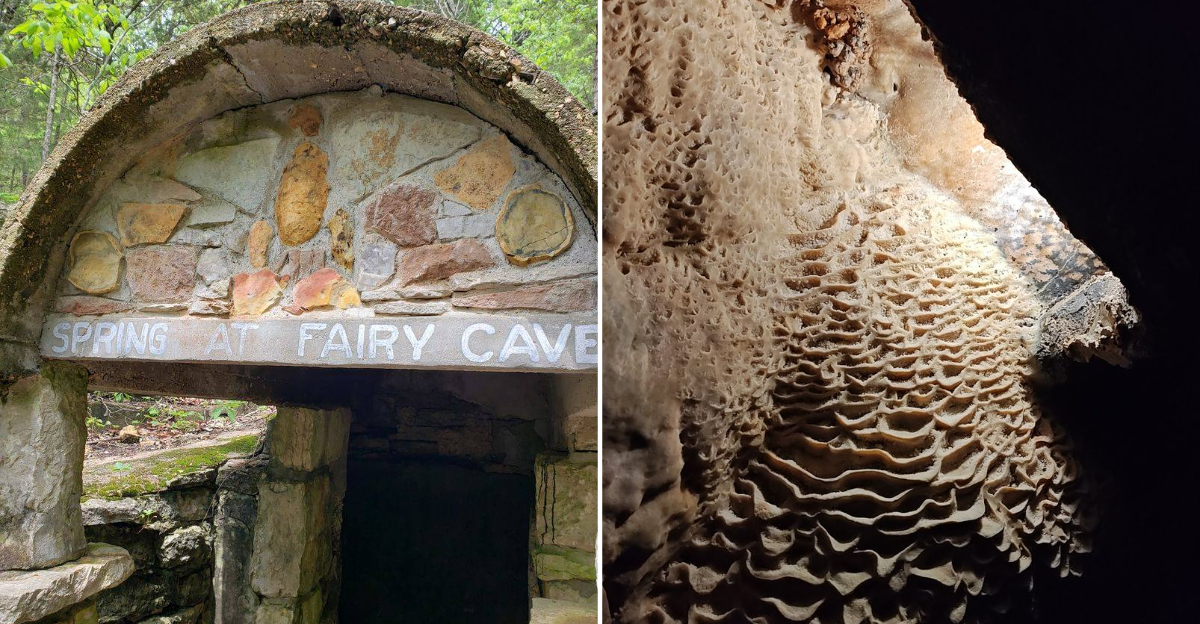
A staircase descends into the earth, and the air turns cool and still. Each step takes you deeper into a world that has been forming for millions of years.
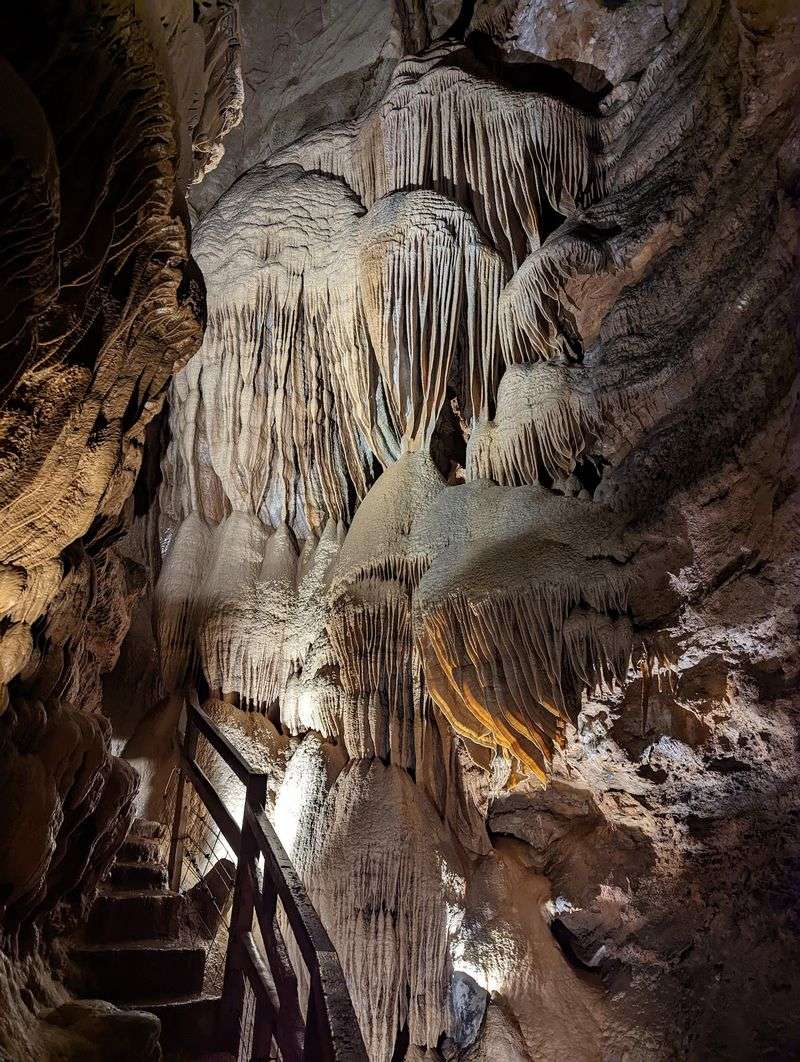
The walls close in, lined with glittering crystal deposits that catch the light in unexpected ways. Stalactites hang from the ceiling, and delicate draperies of stone cascade down the rock faces.
The temperature stays a constant sixty-three degrees year-round, a natural sanctuary from the summer heat. This is not a casual stroll, it is a journey into the heart of the Ozarks.
The path includes two hundred sixty-five stairs, a descent that rewards the curious with views of formations that look like they belong in a cathedral. At the bottom, the cave opens into a chamber that feels both ancient and alive.
For anyone willing to make the climb, the payoff is a glimpse of something truly extraordinary in Missouri.
Stepping Into Another World Underground
You know that moment when the temperature drops and your ears notice how quiet everything got? That is basically the first thirty seconds of this tour, and it happens fast enough that people usually stop talking without meaning to.
The entrance takes you out of the Ozark heat and into a chamber that feels far bigger than you would guess from the outside, with rock shapes stacked and layered in every direction. Sound behaves strangely down there because the walls absorb some of it and bounce the rest around, so voices carry in an odd, soft way.
What surprises most visitors is how much room there is. Caves in movies tend to look cramped and tight, but the main chamber here opens up and gives you real space to look around and take it all in.
Bring a light layer even if it is blazing outside, because the underground temperature stays cool all year and does not care what the weather is doing above ground in Missouri. A jacket tied around your waist is enough.
Give yourself a minute at the top before you start walking. Your eyes need time to adjust, and rushing the first stretch means missing some of the best detail.
Where The Descent Actually Begins
Here is the address you will want in your phone before you lose signal on those winding Ozark roads: 423 Fairy Cave Lane, Branson West, MO 65737. The turnoff is easy to miss if you are not watching for it.
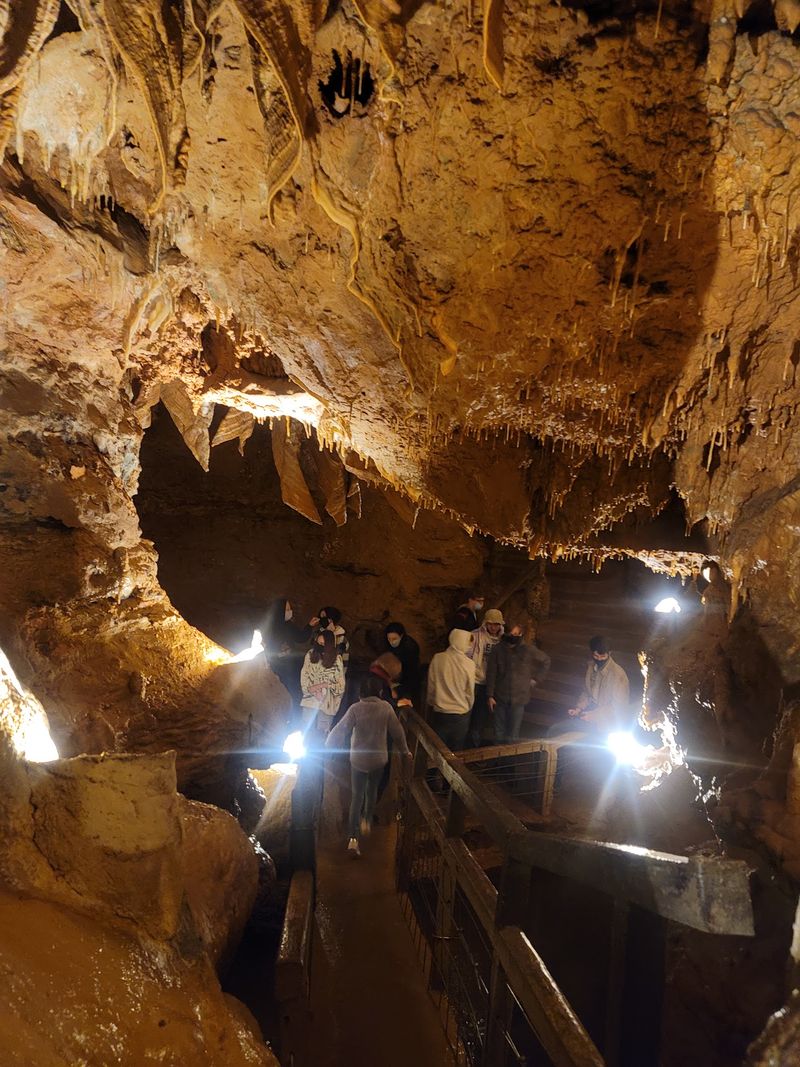
Once the tour starts, the walkway begins tilting downward almost immediately, and you realize pretty quickly that this is not a stroll on flat ground. The concrete steps are solid and wide, with sturdy handrails running along the sides, so footing is not the problem people worry about.
Guides lead the whole thing, which I like, because they stop at natural landing points and let everyone catch their breath while they explain what you are looking at.
Shoes matter more than anything else here. Closed toes with decent grip will make the descent comfortable, while sandals will just make you nervous on the damp sections.
The drive out from Branson takes you through some genuinely pretty country, so leave a little early and enjoy the ride rather than racing the clock. Parking sits right near the entrance building, and the walk from your car to the start of the tour is short and easy.
Taking Each Of The 265 Steps Mindfully
Two hundred sixty five steps sounds intimidating when you read it on paper, and I understand why people hesitate. In practice the count gets spread across the whole guided route, broken up by stops and landings, so you are never grinding through a giant staircase all at once.
The pace stays relaxed because the guide keeps pausing to point things out, which gives your legs regular breaks whether you asked for them or not.
Going down is the easy part, and everybody figures that out about halfway through. Coming back up is where you feel it, so pace yourself early instead of racing ahead of the group.
If stairs are a real concern for you, it is worth calling ahead to talk through the route before you commit to the trip. The staff can tell you exactly what to expect.
Water helps more than you think, and hydrating before the tour makes the climb back noticeably easier. Kids tend to fly through it without complaint, while the rest of us take our time.
Handrails run the length of the path, so use them freely and do not feel self conscious about it at all.
Walls Absolutely Alive With Sparkle
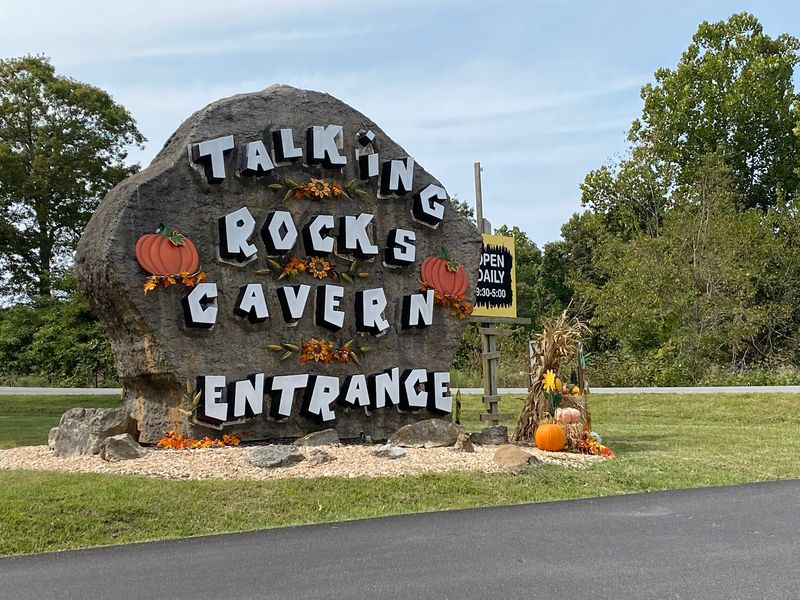
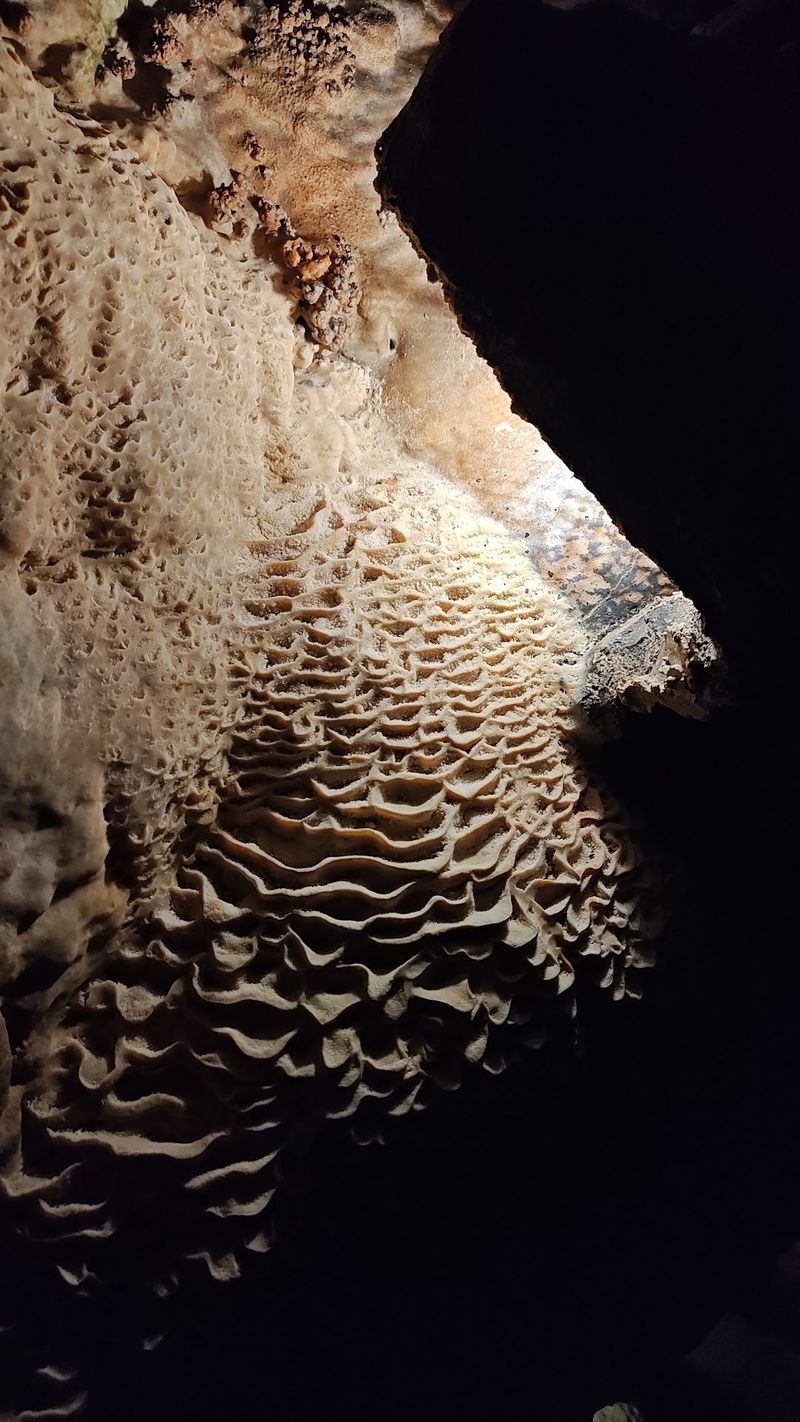
Ever seen rock that looks like it was dusted with sugar? That is the closest comparison I can make for what is happening on these cavern walls, because the mineral surfaces catch the light and throw it back at you.
Water has been seeping through this limestone for an unimaginably long stretch of time, leaving behind calcite deposits that built up grain by grain into the formations you see now.
Some sections look chunky and rough, while others are smooth and glassy enough to almost look polished. The variety within a few feet of wall is genuinely surprising.
Lighting along the route was clearly planned with these surfaces in mind, hitting them at angles that make the crystals pop rather than washing everything out flat.
Do not touch anything, even though the urge is strong. Oils from human hands stop formations from growing, and these took far longer to form than any of us will be around.
Photographers should know that flash rarely helps in a place like this, so steady hands and a phone set for low light will serve you better. Take a moment to just look before you start shooting pictures.
Spotting The Curtain And Bacon Formations
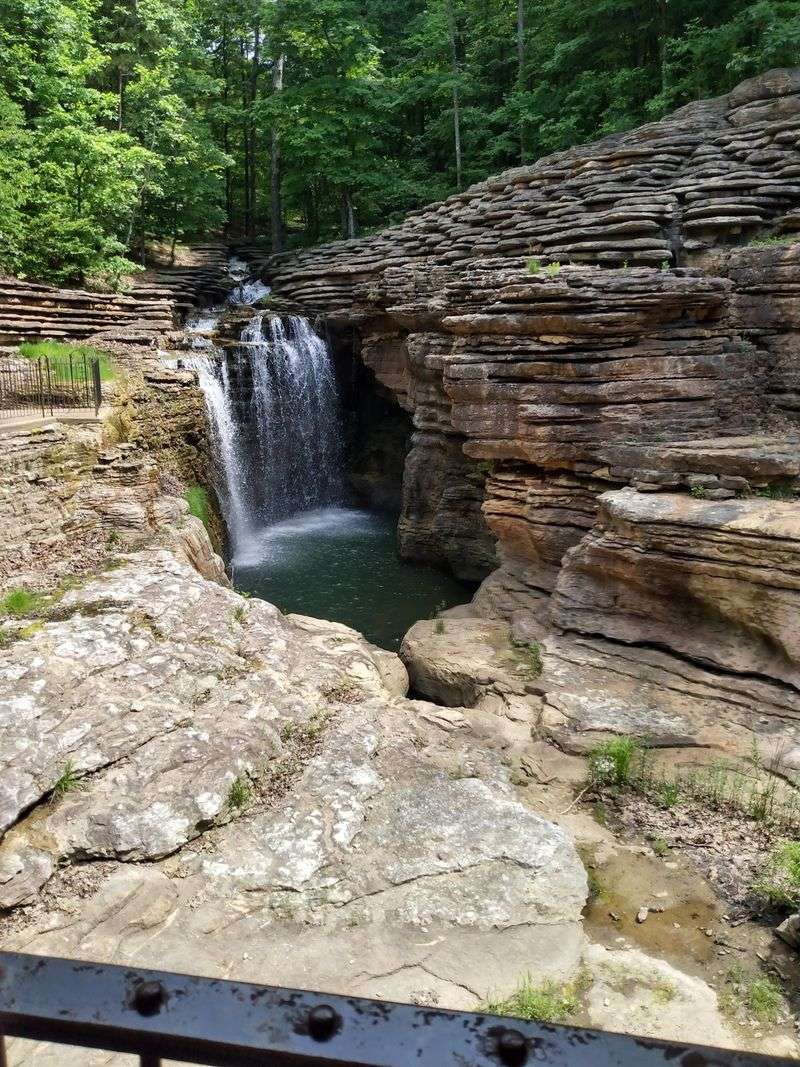
Cave people, meaning geologists and guides, have a real talent for naming things after food. The formation called cave bacon earns it completely, because thin sheets of mineral hang down with reddish and cream colored bands running through them.
When light shines from behind, those stripes glow and the whole thing looks like it belongs in a kitchen rather than underground.
Curtain formations work the same way, draping down in wavy folds that look soft even though they are solid stone. Your brain keeps insisting they should ripple in a breeze.
Guides usually point these out and give you a second to get a photo, so listen for the cue rather than wandering ahead of the group.
What makes these shapes happen is water running down a slanted surface instead of dripping straight off a point, which is why they form sheets rather than the classic icicle shapes.
Missouri has plenty of caves, and this one shows off a nice range of formation types in a compact stretch. Ask your guide about the differences between stalactites, stalagmites and flowstone if you are curious, because they usually enjoy explaining it.
A Genuinely Vertical Journey Downward
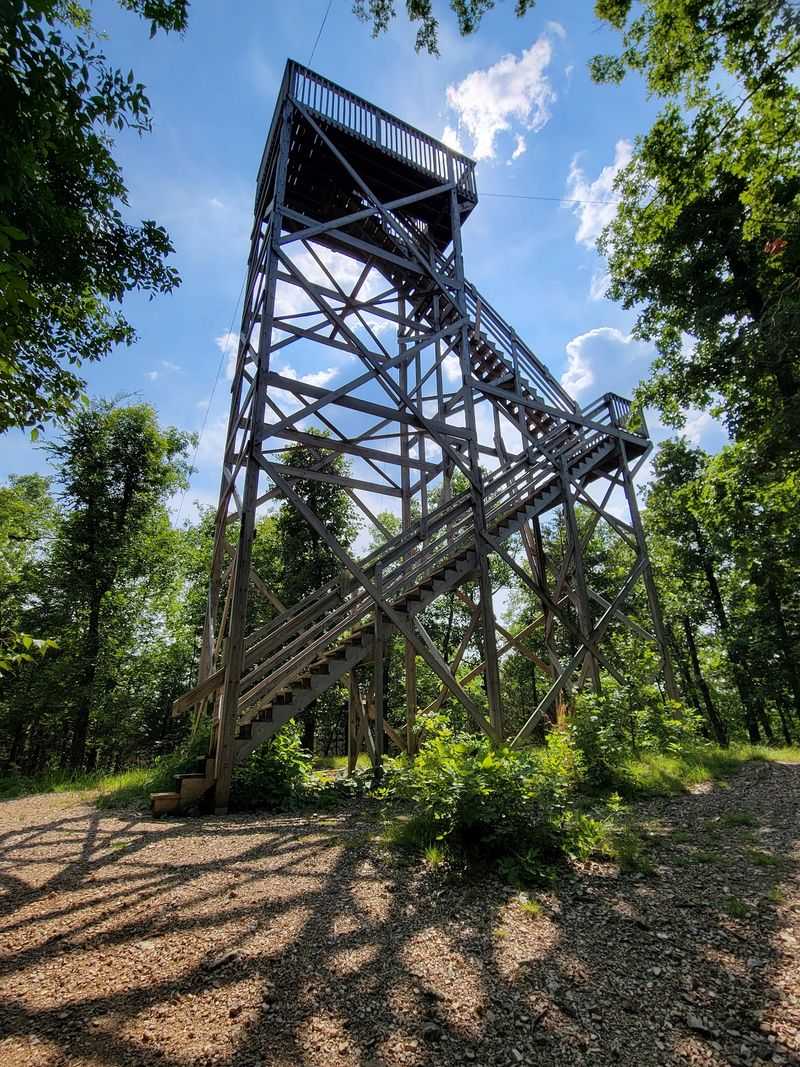
Most cave tours walk you forward through tunnels, and you end up with a sense of distance but not much sense of depth. This one flips that entirely, because the main chamber drops away beneath you and you spend the tour working your way down through it.
From the highest viewing point you are looking down close to a hundred feet, which is a very different sensation than staring down a hallway of rock.
The vertical layout means you keep seeing the same chamber from new angles as you descend, and formations you noticed from above look completely different once you are level with them.
Anyone uneasy with heights should know the walkways are enclosed with railings the entire way, so nothing feels exposed or precarious.
Looking straight up from the bottom is the part people tend to remember, since all those layers you just walked through stack overhead at once.
Take the descent slowly enough to actually look sideways rather than only at your feet. The best views happen between the stairs, not at the ends of them, and hurrying costs you the whole point of the design.
The Light And Sound Show Down Below
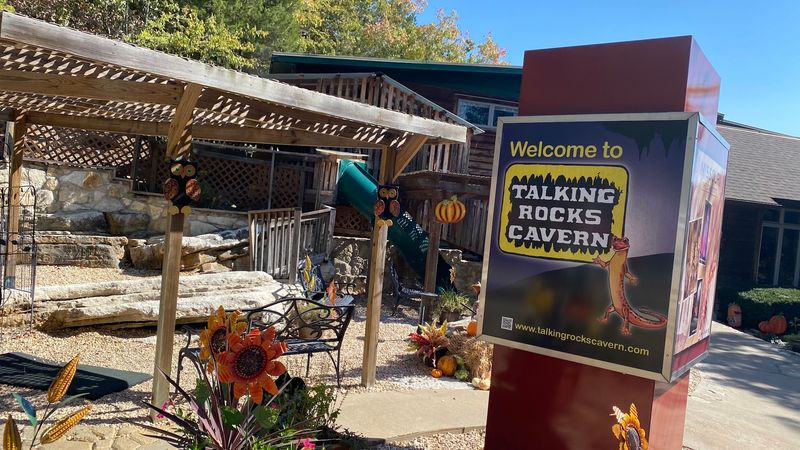
Somewhere along the route the guide pauses the group and starts a light and sound presentation that shifts the mood of the entire chamber. Colors move across the rock, and formations that looked one way suddenly reveal shapes you completely missed a minute earlier.
It is not flashy or overdone, which I appreciate, because the point is highlighting the cave rather than turning it into a theme ride.
Shadows do half the work in a space like this, and watching them shift as the lighting changes makes the scale of the chamber much easier to understand.
Kids in particular tend to lock in during this part, since it breaks up the walking with something they can just stand and watch.
Try to keep your phone down for at least part of it, because screens rarely capture what your eyes are actually seeing in low light.
The moment when the lights dim fully is worth experiencing without distraction, since true darkness underground is something almost nobody encounters in daily life. Missouri has a long history of showing off its caves this way, and this one handles it with a light touch.
Back When It Was Called Fairy Cave
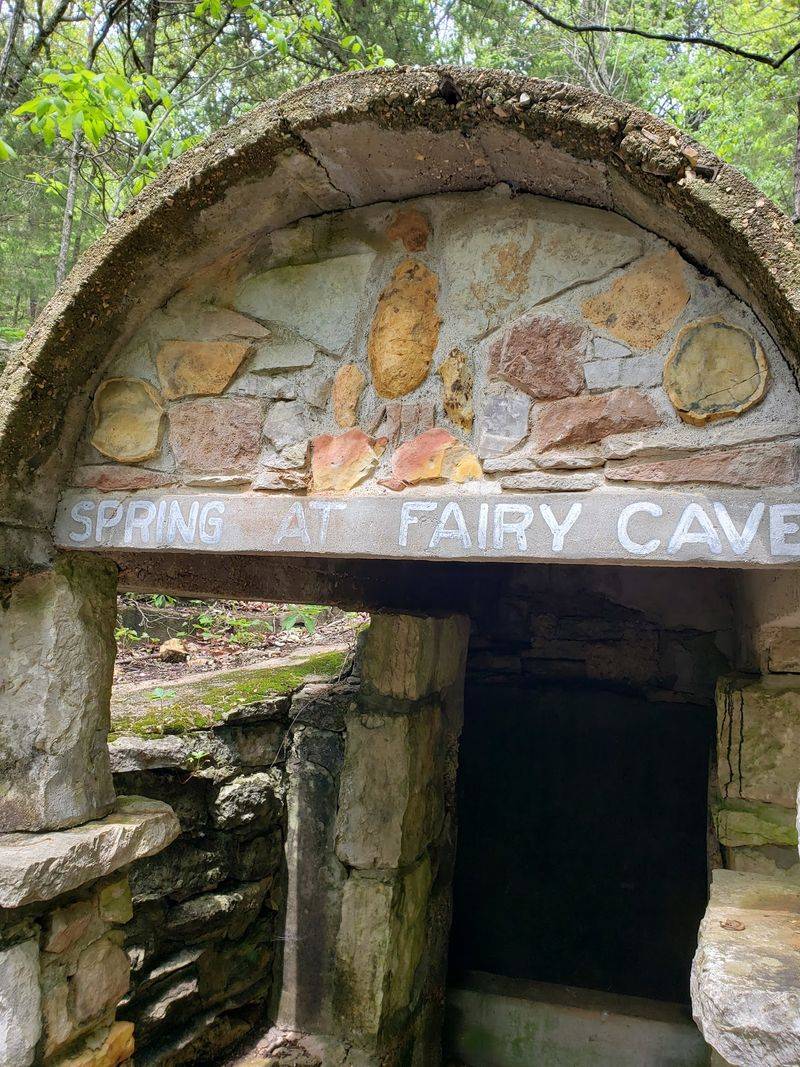
Did you know this place carried a completely different name for a long stretch of its history? It was known as Fairy Cave, which is why the road leading to it still carries that name today.
People have been coming down here as a tourist attraction since the early part of the last century, back when Ozark cave tours were becoming a real draw for travelers passing through.
There is something satisfying about walking a route that generations of visitors walked before you, even though the lighting and stairways have obviously improved a great deal since then.
Early explorers would have made their way down with lanterns and rope rather than handrails and electric lights, which puts the modern experience in perspective.
Guides often work bits of this history into the tour, so ask questions if the origin story interests you.
Missouri is sometimes called the cave state because of how many of these systems run beneath the surface, and this one earned its place among the well known ones a very long time ago. Knowing that backstory makes the descent feel a little heavier in a good way.
Everything Waiting Beyond The Main Chamber
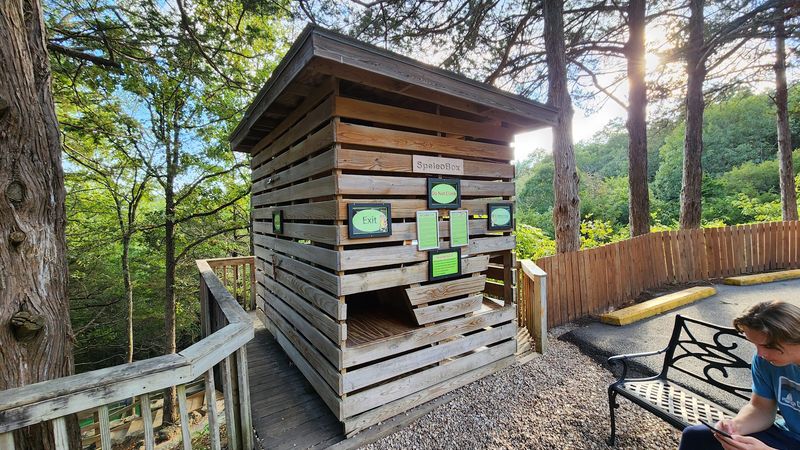
The tour route covers the principal chamber, and that alone is plenty to fill your visit. What gets my imagination going is knowing that the passages keep going well past where the walkway ends.
Side corridors branch off into sections that are not part of the public tour, and they stay closed for good reasons involving safety and preservation.
Peering into a dark opening and realizing it leads somewhere nobody is walking today gives the whole experience a bit of mystery.
Above ground there is more to do than just the cave, with walking paths and viewpoints across the property that let you stretch your legs after all those stairs.
Plan for extra time rather than treating this as a quick in and out stop, because the surrounding grounds are worth wandering.
If you are building a trip around the Branson area, this pairs nicely with the lakes and hills nearby and gives your day some variety. Missouri packs a lot of underground surprises into a small radius, and finishing this tour usually leaves people curious about which cave to visit next.
