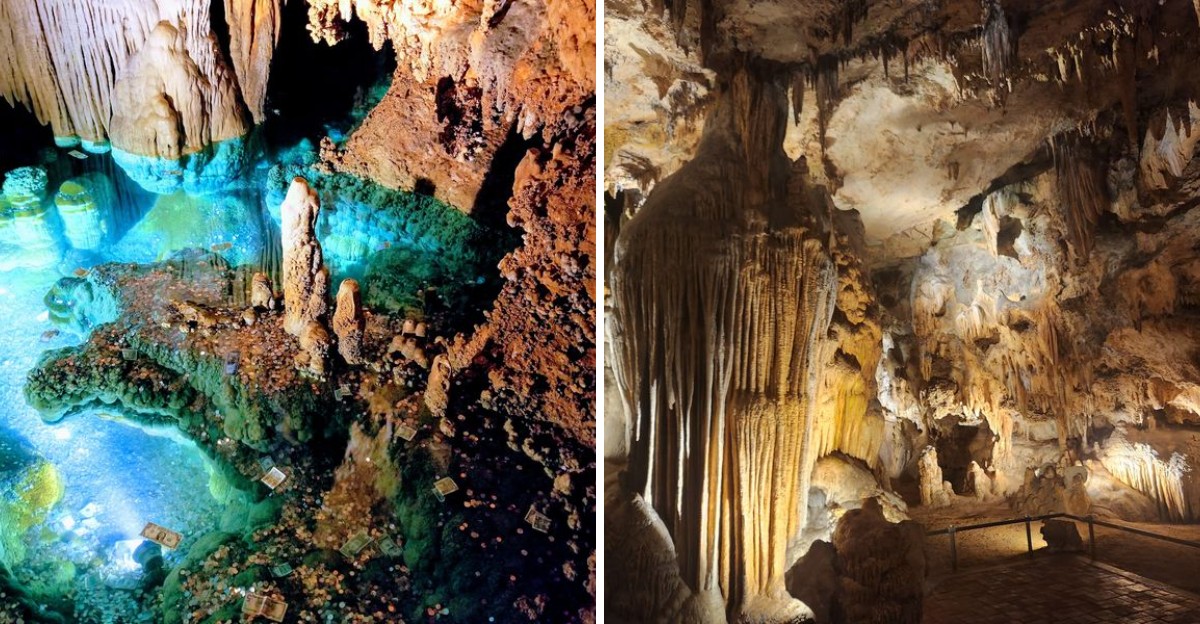
You walk through the cave, the air cool and damp, the formations rising around you like ancient sculptures. Then you hear it.
Music, deep and resonant, echoing through the chambers. This Virginia cave holds a Guinness World Record for an instrument unlike any other, a sound that has to be heard to be believed.
I stood in the Great Stalacpipe Organ chamber and listened as the stalactites were tapped, each one producing a tone that seemed to come from the earth itself. The organ is a one-of-a-kind creation, using the natural formations of the cave to create music that is both haunting and beautiful.
The cave itself is spectacular, with towering columns and delicate formations that have been growing for millennia. But the organ is the highlight, a reminder that nature and human ingenuity can come together in unexpected ways.
Virginia has plenty of caves, but this one has a sound all its own.
The Great Stalacpipe Organ Earns Its World Record
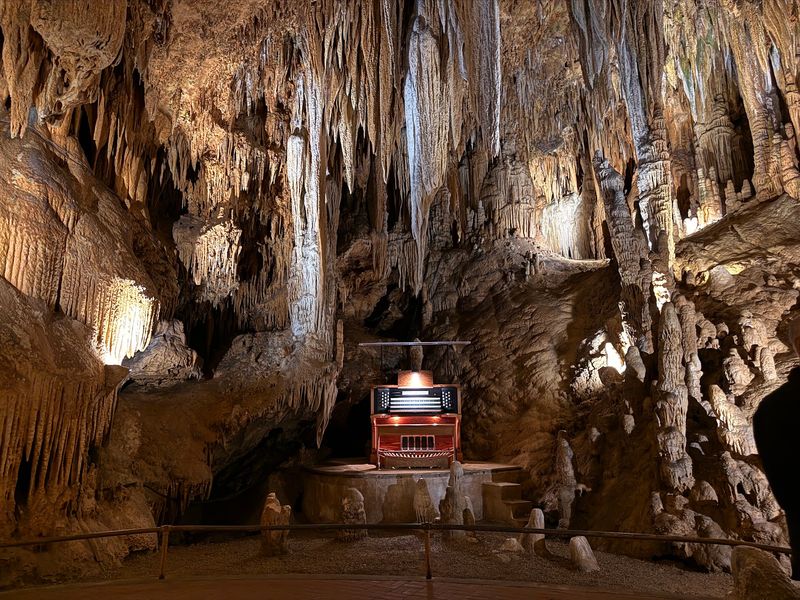
Record books do not usually mention caves, yet here we are. The Great Stalacpipe Organ holds the Guinness World Record as the largest musical instrument on the planet, and it does not have a single traditional pipe.
Instead, rubber tipped mallets connected to a four keyboard console tap stalactites scattered across acres of cave chambers. Each formation was tested and tuned by hand until it rang at the right pitch.
The result is a sound that seems to come from everywhere and nowhere. It floats, it hums, it hangs in the damp air like fog.
Do not expect a thunderous cathedral blast. The tone is soft and haunting, more lullaby than fanfare, and that gentleness is exactly what makes it unforgettable.
Stand still in the Cathedral Room when it plays. Close your eyes and the rock itself seems to be singing to you.
Luray Caverns built its reputation on scale and beauty, but the organ is the detail that sticks in your memory long after you climb back into daylight.
My advice is simple. Stop talking, stop filming, and just listen for a full minute.
How Rocks Learned To Sing
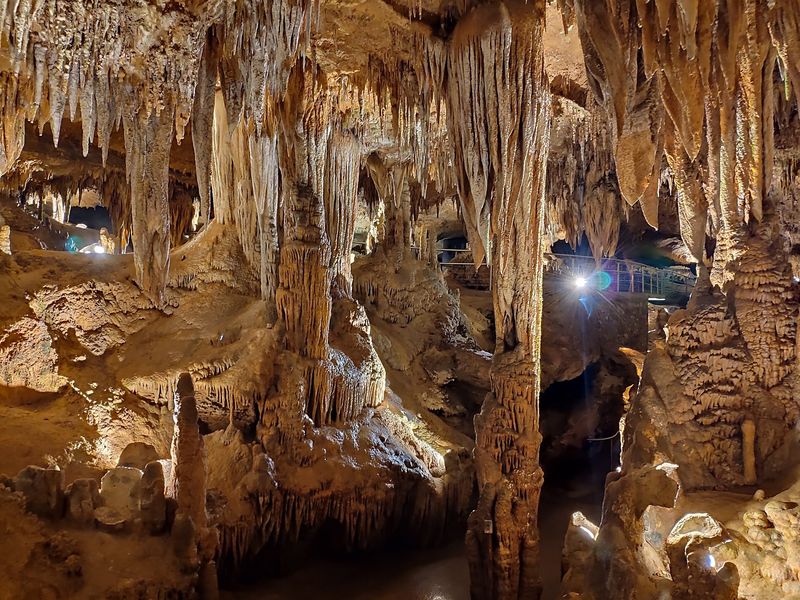
The backstory is gloriously nerdy. A mathematician and electronics tinkerer noticed that certain stalactites gave off musical tones when struck, and he became obsessed with turning a cave into an instrument.
Years of tapping, measuring, and shaving stone followed. Some formations needed careful sanding to hit the correct note, a process that required patience most of us simply do not possess.
Wires now run through the chambers, connecting the console to strikers positioned on individual stalactites. Press a key, a mallet swings, and a rock hundreds of feet away answers.
Think of it as the world’s slowest built xylophone, assembled by nature over eons and finished by one determined human.
What fascinates me is the restraint involved. Nothing was drilled, blasted, or replaced with metal substitutes.
The cave stayed the cave. It just got a keyboard.
Kids grasp the concept instantly, which makes it a great teaching moment about sound waves and vibration without anyone feeling like they are in class.
Ask at the entrance about when the organ plays so you can time your walk and catch it live.
Dream Lake And Its Mirror Trick
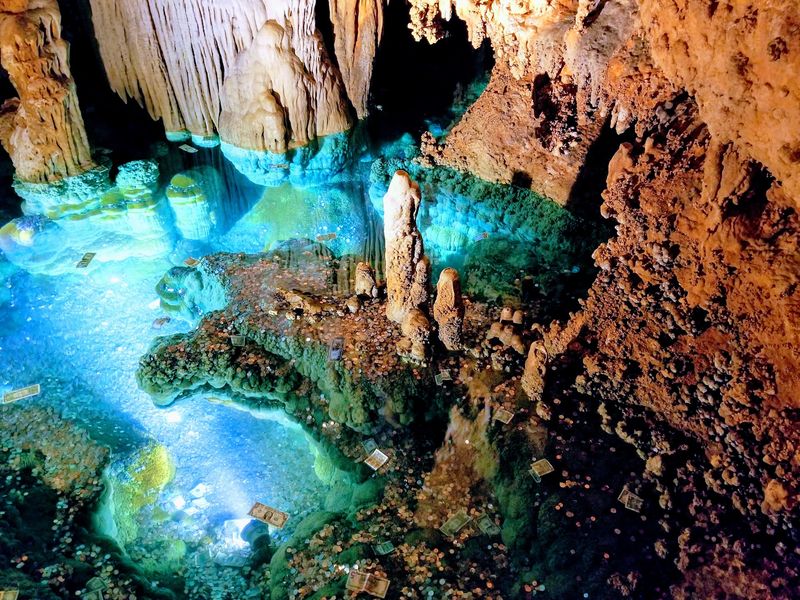
Optical illusions do not get much better than this. Dream Lake looks impossibly deep, filled with jagged spires reaching up from the bottom.
Look again. The water sits only a few inches deep, and every spike you see is a reflection of the stalactites above.
Perfect stillness makes it work. There is no breeze underground, so the surface behaves like polished glass.
Photos rarely capture it properly, which is oddly comforting in an age when everything gets flattened into a phone screen. You have to be there.
Crouch low near the railing for the best angle, and give your eyes a moment to adjust before deciding which half is real.
The lighting design deserves credit too. Warm bulbs pick out texture and color that would otherwise vanish into blackness.
Among all the chambers inside Luray Caverns, this one draws the longest pauses.
Bring a jacket if you chill easily, since the air holds steady in the mid fifties no matter what the calendar says outside.
Giants Underfoot In The Hall Of Giants
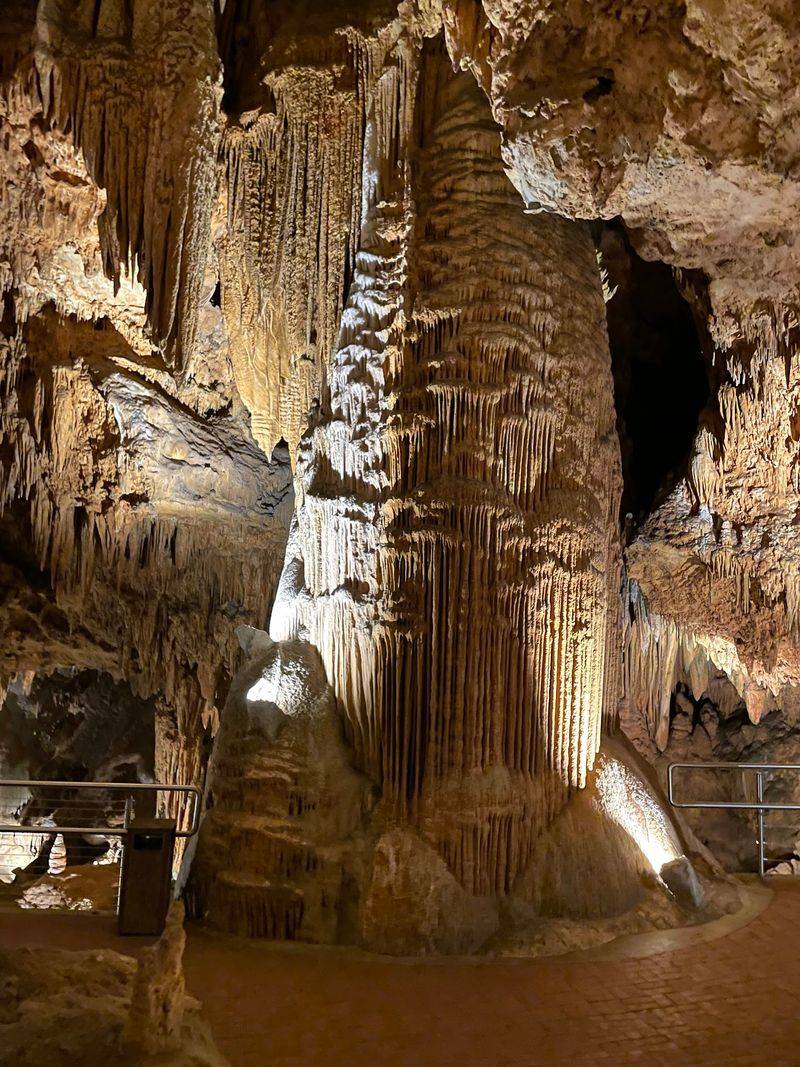
Some rooms make you feel small. This one makes you feel microscopic.
Columns stretch skyward like the pillars of a sunken temple, with the tallest formations climbing roughly fourteen stories from floor to ceiling.
Each one began as a single drip. Water carrying dissolved limestone left behind a whisper of mineral, over and over, for a stretch of time our brains cannot really process.
Neck strain is guaranteed. Bring a sense of humor about it.
Sound behaves strangely here as well, which is precisely why the organ was wired into these chambers. The volume of open space acts like a natural amplifier.
Walking through, I kept thinking about how ordinary the hillside looks from the parking area. Green grass, blue mountains, nothing hinting at the cathedral below.
Virginia hides its best architecture underground, apparently.
Wear shoes with grip since the brick paths pick up moisture, and take the slopes slowly rather than racing ahead.
A Fifty Four Degree Escape From Summer
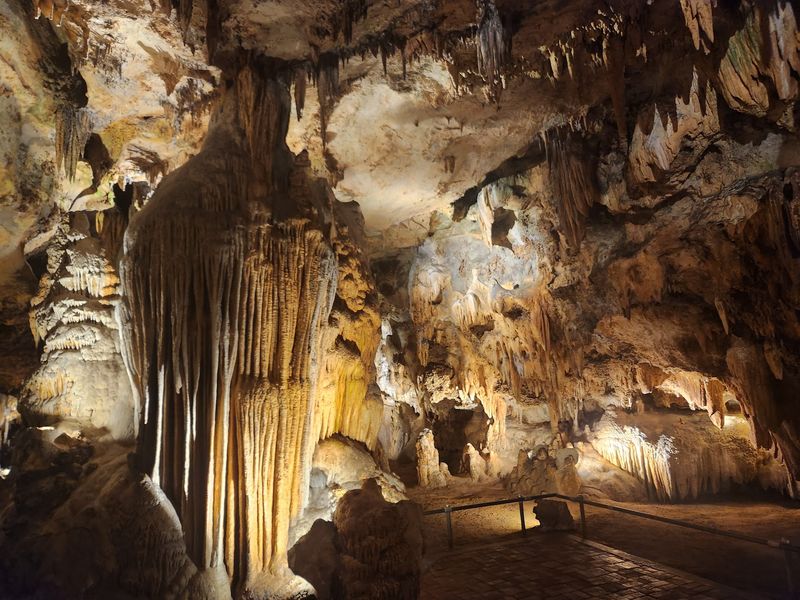
Air conditioning has nothing on a cave. The temperature underground barely budges across the seasons, hovering around the mid fifties whether it is a swampy July afternoon or a frosty January morning.
That consistency turns a cavern visit into the smartest weather hack in the region.
Steamy day outside? Descend and feel your shoulders drop.
Bitter cold up top? It actually feels mild down there.
Light layers work best. A thin jacket or hoodie handles it, and small children tend to feel the chill faster than adults do.
Humidity runs high, so glasses and camera lenses may fog for the first minute or two. Give them a moment to adjust.
The walk covers roughly a mile and a quarter on paved and bricked pathways with railings throughout, gentle enough for most fitness levels.
Rain plans in the Shenandoah Valley basically write themselves once you know this place exists.
Go early in the day if crowds make you twitchy, because mornings feel noticeably calmer than midday.
Wishing Well Coins And The Fallen Column
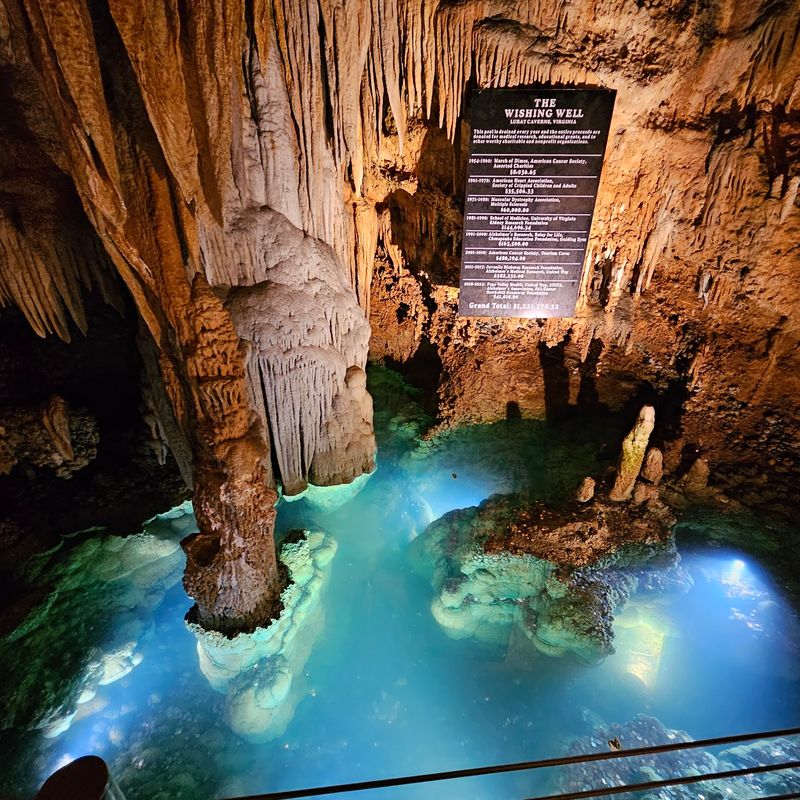
Two very different attractions sit close together, and both stop people in their tracks.
The wishing well glitters with coins tossed into the water, an accidental treasury that gets collected and donated to charitable causes.
Opinions differ on whether the coins spoil the pool’s natural blue. I lean toward liking the tradition, though I understand the grumbling.
Nearby lies the Fallen Column, a toppled giant that broke away in some ancient shift long before anyone held a lantern down here.
Seeing it lying sideways gives real perspective on the sheer weight of these formations. Nature builds slowly and occasionally drops things.
Guides point out shapes hiding in the rock along the way, and once someone shows you a face or a fried egg in the stone, you cannot unsee it.
Half the fun of Luray Caverns is turning the whole tour into a scavenger hunt for imaginary creatures.
Grab the free numbered booklet at the entrance so you know what you are looking at as you go.
Self Guided Wandering Versus The Early Tour
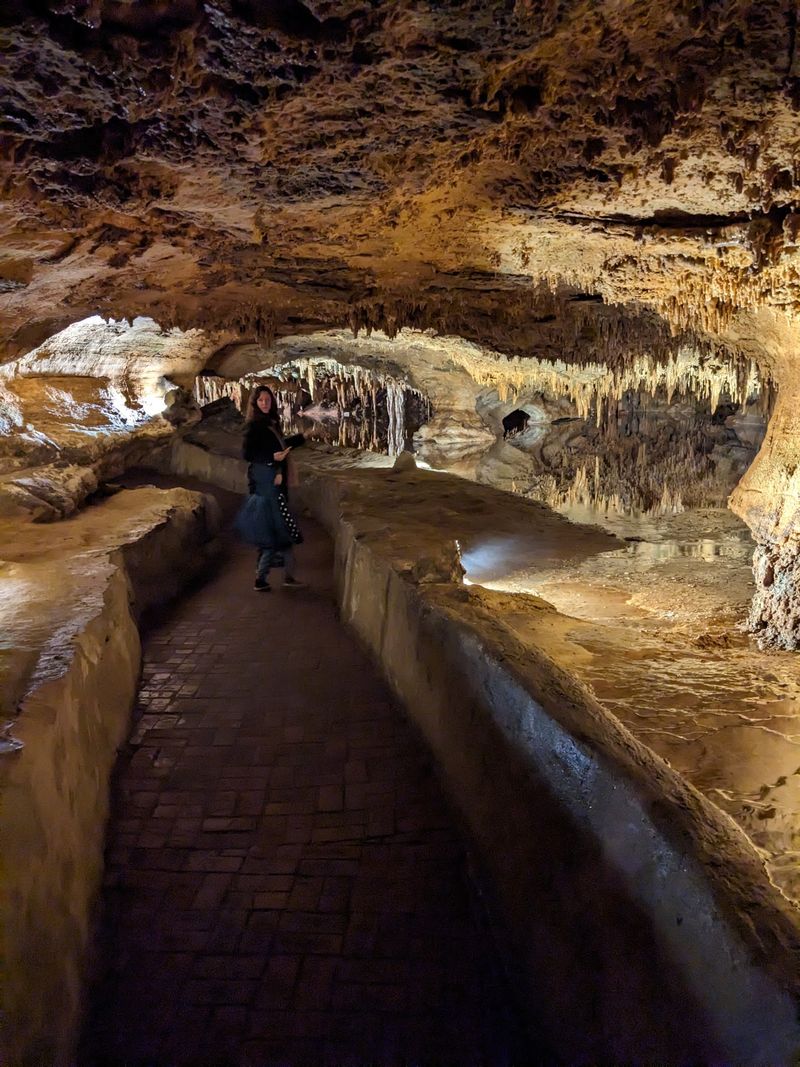
Pace matters more than you think. Most of the day runs on a self guided system, meaning you set your own speed and linger wherever your curiosity pulls you.
Numbered stops line the route, matched to a printed guide that explains what formed and why.
Photographers love this freedom. So do people who hate being rushed past the good stuff.
A guided option runs first thing in the morning for anyone who prefers stories delivered out loud, complete with geology explanations and local history.
My honest take is that the self guided route wins for flexibility, but arriving early beats everything.
Narrow sections can bottleneck when big groups arrive, and standing shoulder to shoulder under a stalactite dulls the magic.
Show up soon after opening, let the school groups pass if they appear, and enjoy long stretches of quiet.
Ticket lines grow noticeably after midmorning, so buying ahead saves you standing around in the Virginia sunshine.
Above Ground Extras Worth Your Afternoon
Surfacing does not mean the day is over. Admission covers several attractions spread across the grounds, and they are genuinely good rather than filler.
Classic automobiles and horse drawn carriages fill the Car and Carriage Caravan Museum, tracing how people got around before highways existed.
Toy Town Junction pulls out the nostalgia hammer with antique playthings that grandparents recognize instantly.
Shenandoah Heritage Village recreates early valley life through relocated historic buildings you can walk through at your own pace.
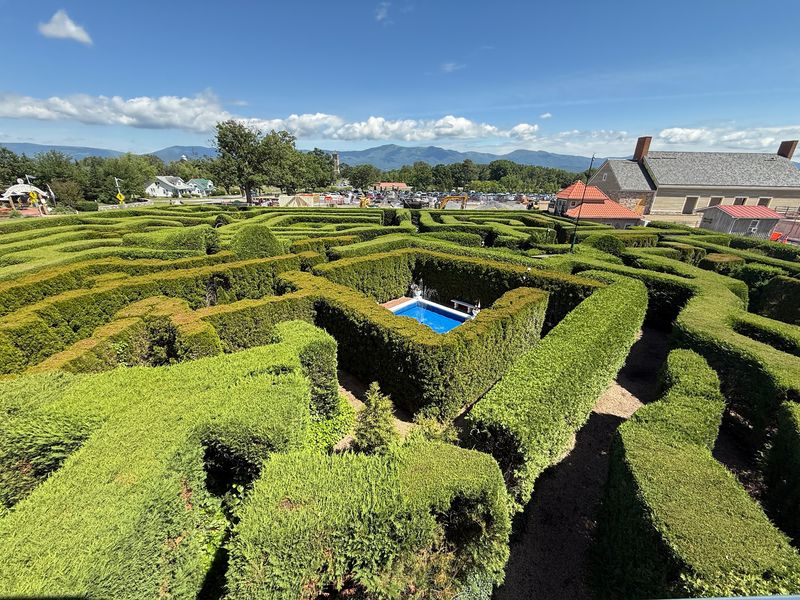
Separate ticketed fun includes the garden hedge maze, a rope adventure park, and gem sifting for anyone hoping to strike sparkly gold.
Kids burn energy, adults get shade and history, everybody wins.
Gift shops cluster near the exit, and the grounds stay tidy with plenty of free parking, which removes one classic road trip headache.
Budget several hours if you want to see it all without sprinting, because rushing this property would be a shame.
The Valley Above The Cave
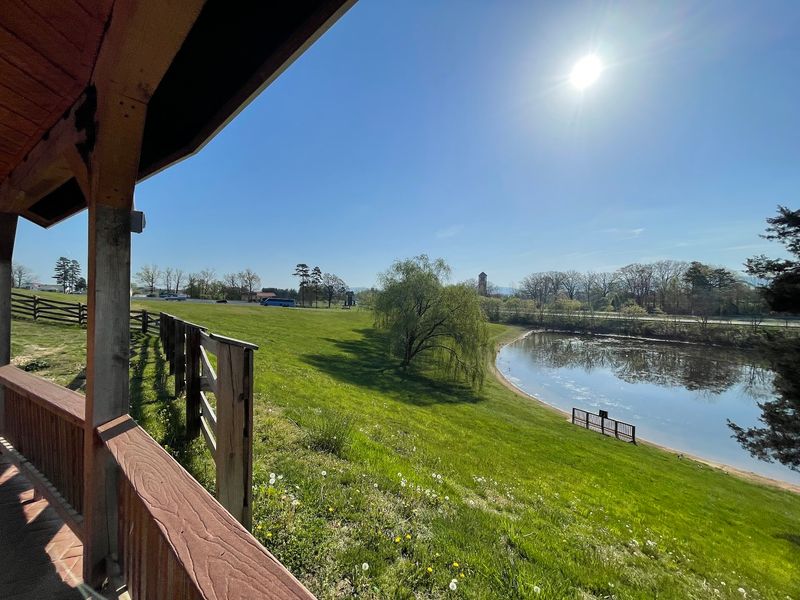
Step outside and the scenery competes with the cave. Rolling farmland spreads toward the Blue Ridge Mountains, and a pretty lake with a stone tower sits within easy walking distance of the grounds.
Skyline Drive and Shenandoah National Park wait just up the road, so a single trip can pair underground wonders with ridgetop overlooks.
Autumn turns the whole corridor into a color show. Spring brings wildflowers and waterfalls running full.
The town itself moves at an unhurried pace, with local restaurants, small shops, and dog friendly lodging scattered nearby.
Anyone road tripping through Virginia should treat this as a full stop rather than a quick detour.
Morning fog settling in the valley is worth waking up early for, and the light on those ridges near sunset is ridiculous.
Pack a picnic, plan a hike, and let the schedule stay loose.
Two days here beats one, and you will not run out of things to look at.
Planning Your Trip And Finding The Front Door
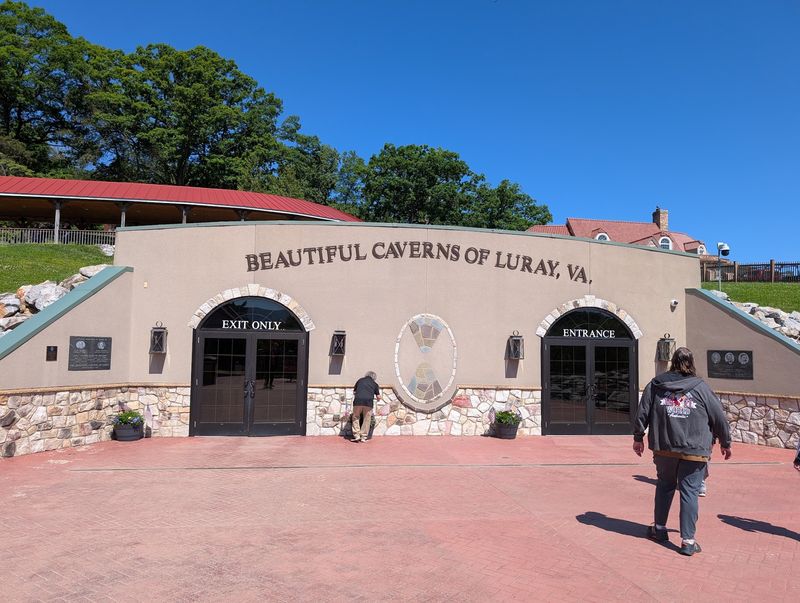
Logistics time, and thankfully they are painless. Doors open at nine in the morning every day of the week and stay open until seven in the evening, which leaves generous room for both early birds and slow starters.
You will find the entrance at 101 Cave Hill Rd, Luray, VA 22835, tucked just off the main road with parking that rarely runs out.
Buying tickets online ahead of time is the move if you plan to arrive after midmorning.
Comfortable shoes with decent tread matter, since damp brick gets slick. Skip the heels.
Restrooms sit near the entry and exit, and gift shops handle the souvenir cravings on your way out.
Weekends draw the biggest numbers, so a weekday visit rewards you with elbow room and quieter chambers.
The staff at Luray Caverns keep the property spotless and the route clearly marked, which makes navigating simple even with restless kids in tow.
Now go book it, hear the singing rocks yourself, and come back to settle that overhyped debate once and for all.
