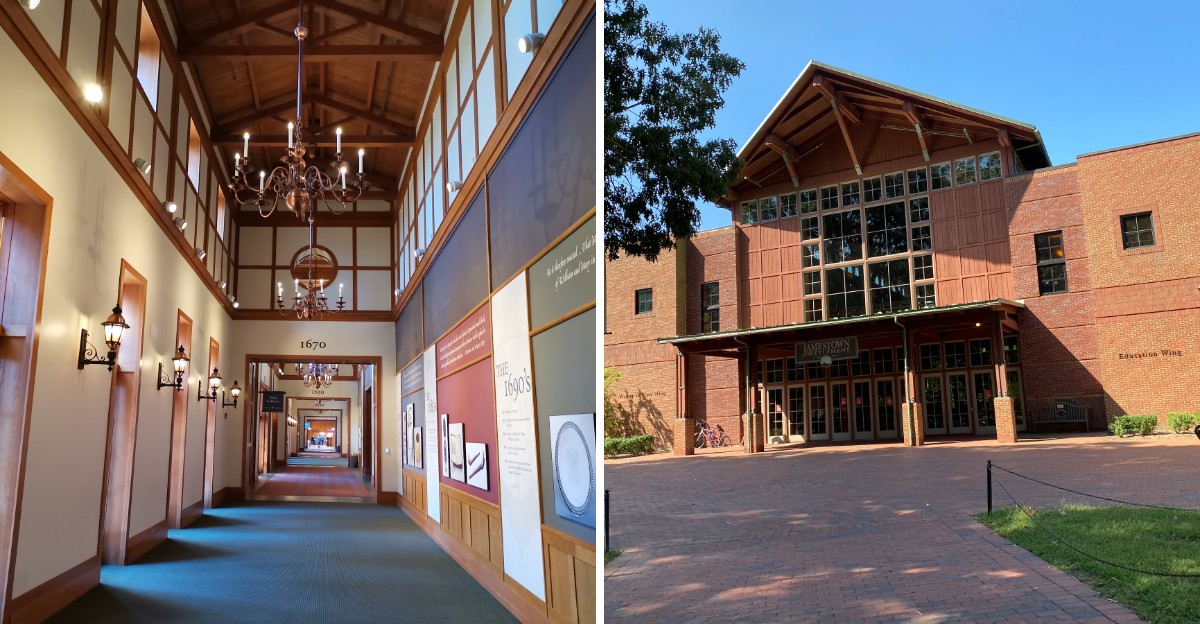
You can try on a reproduction armor helmet and breastplate here, then climb aboard a re-created 17th-century ship. Seniors pay less than twenty bucks for the whole adventure.
That’s a bargain with real swagger.
This Virginia museum doesn’t stop at one era or one story. It brings together the Powhatan people, English colonists, and West Central Africans.
Costumed interpreters work at real tasks, like shaping dugout canoes and running a blacksmith forge.
I like how history here feels hands-on instead of dusty. You can step inside reed-covered homes and walk a fort with thatched roofs.
Indoors, hundreds of rare objects wait in calm, cool galleries.
I can’t imagine a better way to meet America’s beginnings face to face. So where should you start first, the ships or the fort?
The Senior Ticket Price Is Almost Too Good To Believe
Ten percent off might not sound dramatic at first. At Jamestown Settlement, though, that small discount turns a general admission ticket into a deal for seniors 62 and older.
The math lands right around the price in this article’s title. That’s less than many people spend on a movie and snacks, and the experience lasts far longer.
Bring a photo ID to the museum so staff can apply the offer. The discount works on a single museum general admission ticket, which keeps things simple.
There are a few rules to keep in mind. The senior offer can’t be combined with other discounts, coupons, or special event tickets.
So what does that ticket unlock? You get indoor galleries, films, re-created ships, a Powhatan town, and a colonial fort.
That’s a full day of 17th-century Virginia packed into one stop. Many museums charge more for far less ground to cover.
Planning a bigger trip around the Historic Triangle? Combination tickets with the American Revolution Museum at Yorktown are also sold, so compare options before you buy.
Either way, free parking sweetens the deal even more. Your wallet gets to relax while your curiosity does all the heavy lifting.
Honestly, it’s tough to find a smarter way to spend a morning.
Climb Aboard Ships That Crossed An Ocean For Months
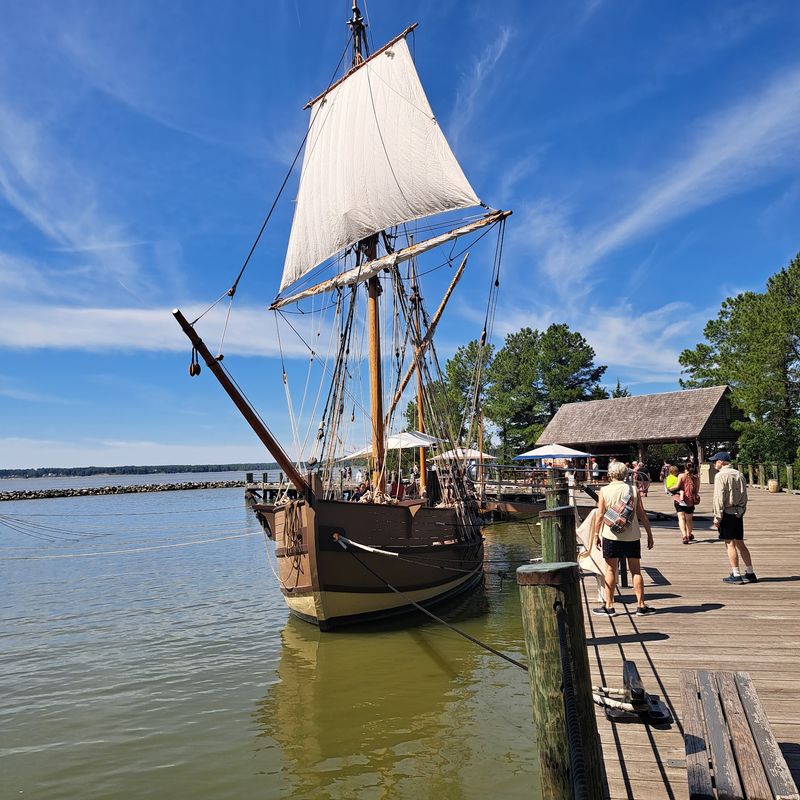
A 144-day voyage sounds rough on paper. Standing on the deck of a re-created ship makes that number feel very real.
Jamestown Settlement keeps full-scale re-creations of the ships that carried English colonists to Virginia in 1607. They sit along the James River, and visitors can board them.
The Godspeed and the Discovery are the stars right now. The flagship, Susan Constant, has been away for restoration, so check status before you go.
These decks are tighter than you might expect. One quick look around, and you’ll wonder how anyone shared that space for months.
Interpreters bring the voyage to life with periodic demonstrations. Topics include piloting, navigation, knot-tying, and handling sails.
Kids may even get a chance to help with a sail. Grandparents get front-row seats to watch, which might be the best job of all.
The pier also offers wide views of the river. It’s a lovely spot to pause, snap photos, and catch your breath.
Wear shoes with good grip for climbing around the ships. Decks and ladders weren’t built with modern comfort in mind.
Sailors in 1607 had no handrails or snack bars nearby. You get both history and a much easier commute home.
Reed-Covered Homes Reveal Life Before The Colonists Arrived
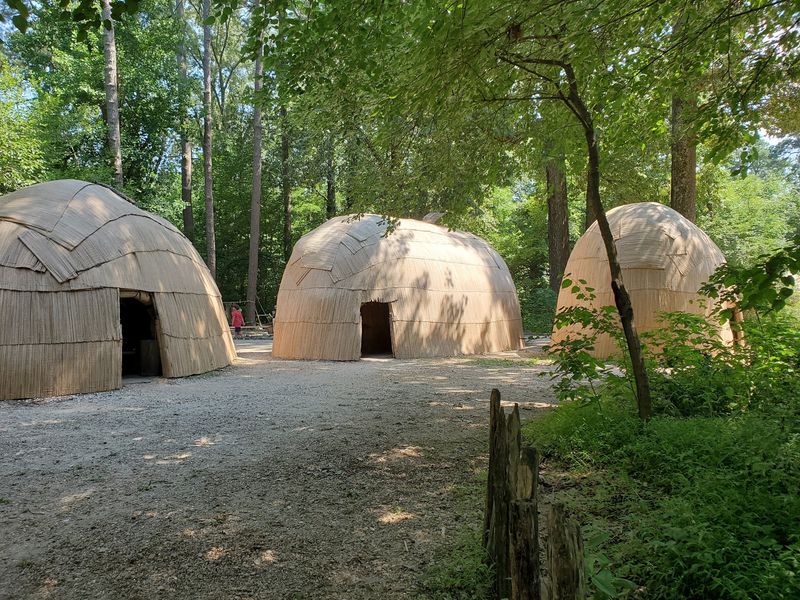
Long before English ships showed up, the Powhatan people had thriving towns along these rivers. The re-created Paspahegh town shows what one of them looked like.
Dirt paths lead you between dwellings covered in reed mats. The design draws on archaeological findings and written descriptions from English colonists.
Here’s a pleasant surprise for many first-timers. Visitors can step inside the homes and look around.
Costumed interpreters handle daily tasks right in front of you. They show how food was grown and prepared and how animal hides were processed.
Watch for the dugout canoes taking shape. Building one took patience, skill, and plenty of elbow grease.
Tools, pottery, and cordage made from plant fibers also get attention. Those twisted fibers held a lot together, quite literally.
Ask questions as you wander. The interpreters know their craft and love sharing details you’d never find on a sign.
This area makes a great first stop on cooler mornings. The shade and open layout make strolling easy at an unhurried pace.
Leave a little extra time here. Once you start chatting about canoe building, the minutes tend to slip away quietly.
Try On Armor Inside A Fort With Thatched Roofs
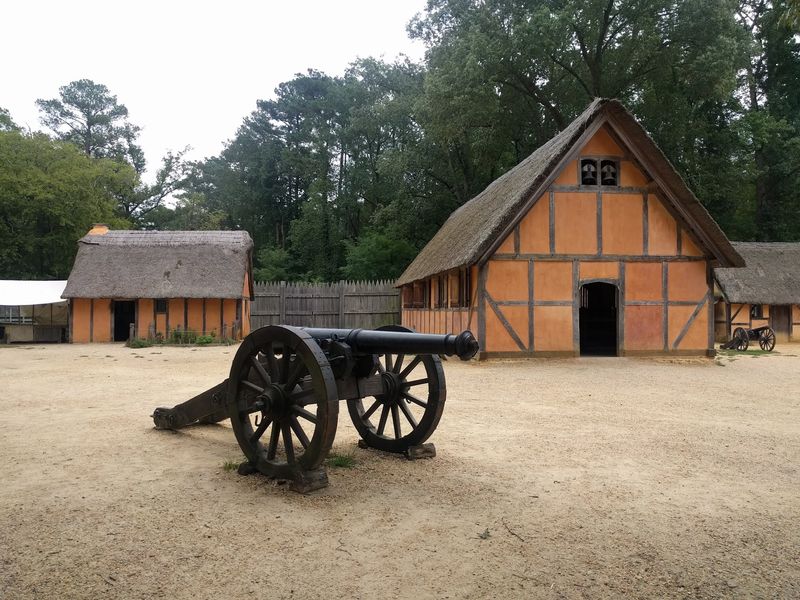
Ever wondered how heavy a breastplate really feels? Inside the re-created James Fort, you can find out by trying on reproduction armor.
The fort reflects the colony between 1610 and 1614. During those years, it served both military and trading purposes.
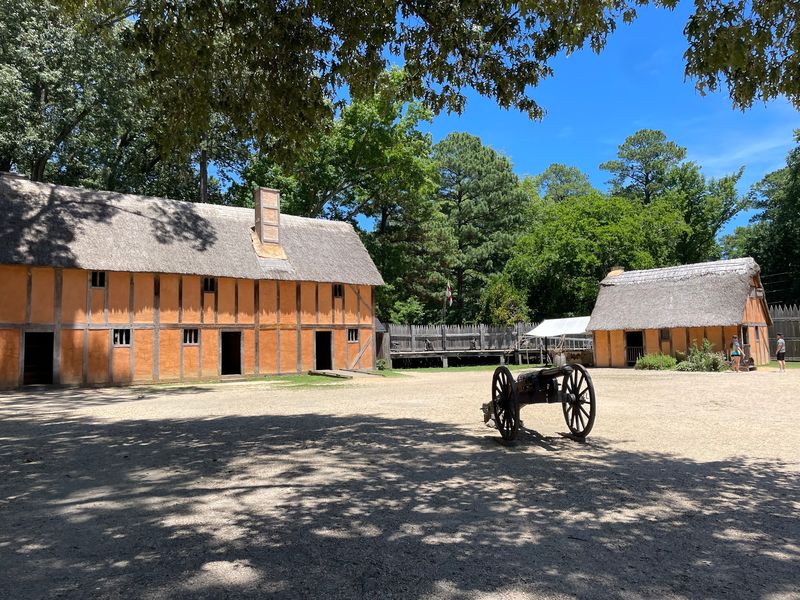
Tall wooden palisade walls surround the whole area. Inside, buildings with orange wattle-and-daub walls and thatched roofs line packed-earth paths.
Interpreters keep busy with period crafts. Woodworking, leatherwork, sewing, and cooking all happen here throughout the day.
Listen for the clang of a blacksmith’s forge. You might also catch a musket demonstration, so keep an ear open.
Chickens sometimes wander the grounds too. They act like they own the place, and honestly, nobody argues.
Comparing these homes to the Powhatan dwellings is fascinating. Both show how people built with whatever the land offered.
Summer days can get hot inside the walls. Bring water and wear a hat, since shade is limited in spots.
The helmet is a must for photos. Grandkids will probably beg for a turn, and you’ll want proof that you looked fierce.
More Than 500 Artifacts Wait Inside The Cool Galleries
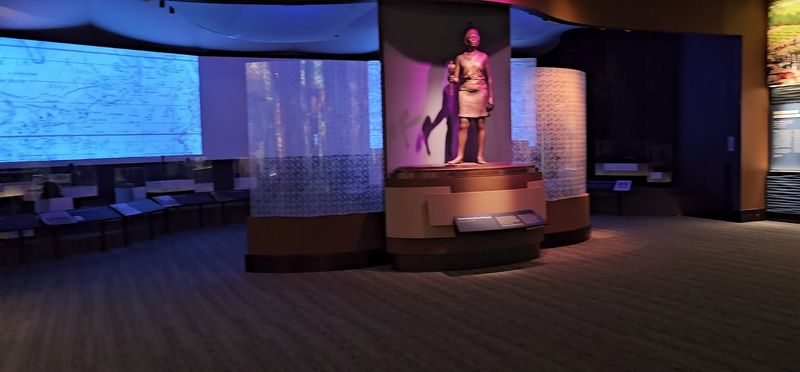
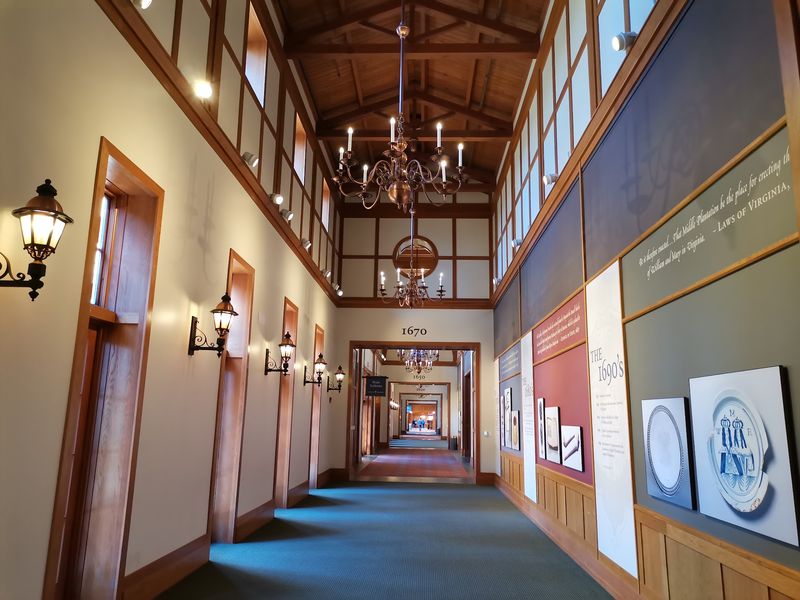
Portraits, documents, toys, and archaeological finds fill the indoor galleries. Over 500 period objects from Virginia, Europe, and Africa are on display.
Some pieces have been shown here for the first time. That gives the collection a real sense of discovery.
Begin with the film “1607: A Nation Takes Root” in the Robins Foundation Theater. It runs every 30 minutes and sets the stage nicely.
The film follows the Virginia Company and relations between colonists and the Powhatan people. It also covers the first recorded Africans arriving in 1619.
The galleries let you explore at your own speed. Walk through in order, or jump straight to topics that grab you.
Women’s lives in early Jamestown get thoughtful attention here. So do the many groups whose paths crossed in this place.
Need a break from Virginia humidity? The air-conditioned galleries offer a comfortable place to cool off between outdoor stops.
Restrooms and benches make longer visits easier on tired feet. That matters when there’s this much to see.
Don’t rush this part. The details in those glass cases tell stories textbooks only hint at.
A 4D Theater Puts You Right In The Middle Of 1676
History rarely comes with special effects. At this museum, one theater changes that in a big way.
Jamestown Settlement features a one-of-a-kind 4D multisensory projection theater. The film tells the story of Bacon’s Rebellion, a 1676 uprising in colonial Virginia.
Effects add to the drama as the story unfolds. It’s a lively change from reading a placard and nodding politely.
Bacon’s Rebellion often gets just a sentence in school lessons. This presentation gives it room to breathe and makes the stakes easier to grasp.
The theater is a fun pick for families visiting together. Teens who roll their eyes at museums may suddenly sit up straight.
Plan it around the main film and gallery time. Fitting it in midway gives your feet a welcome rest too.
Sensitive to motion or loud sounds? Ask staff about the experience before heading in, so there are no surprises.
Most visitors walk out talking about it. That’s a good sign for a story more than three centuries old.
It’s proof that old history can still pack plenty of punch. Popcorn not included, sadly.
Brunswick Stew And Homemade Cookies Keep Explorers Going
Walking a fort, a village, and two ships builds an appetite fast. Luckily, the Jamestown Settlement Café sits right on site.
The menu covers breakfast and lunch with plenty of variety. Gourmet pizzas, Angus burgers, sandwiches, and garden salads all make appearances.
Heartier picks include house-made pulled pork and mac ‘n cheese. Soups and classic Brunswick stew bring some Virginia comfort to the table.
Vegetarian and gluten-free options are available too. That makes group meals much easier to sort out.
Save a little room for dessert. Cakes, pies, and homemade cookies round out the lineup nicely.
Seating holds about 190 people indoors. A seasonal outdoor patio adds space for roughly 100 more on pleasant days.
The café keeps the same hours as the museum. You can grab a bite without leaving the grounds or moving the car.
Eating midway through works well for a full-day visit. You’ll recharge before tackling whatever you skipped earlier.
Settlers in 1607 would’ve traded a lot for a warm bowl of stew. You only need to walk a few steps.
Brick Patterns Out Front Quietly Nod To The 1600s
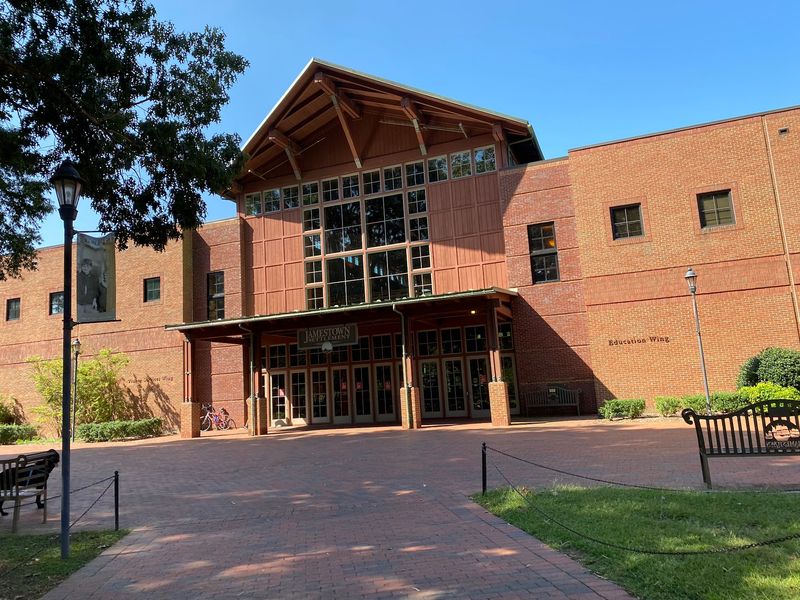
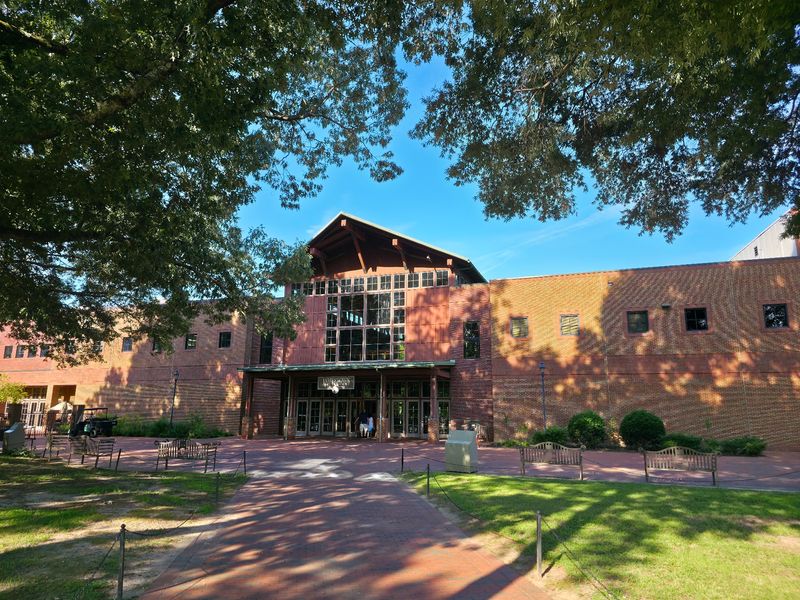
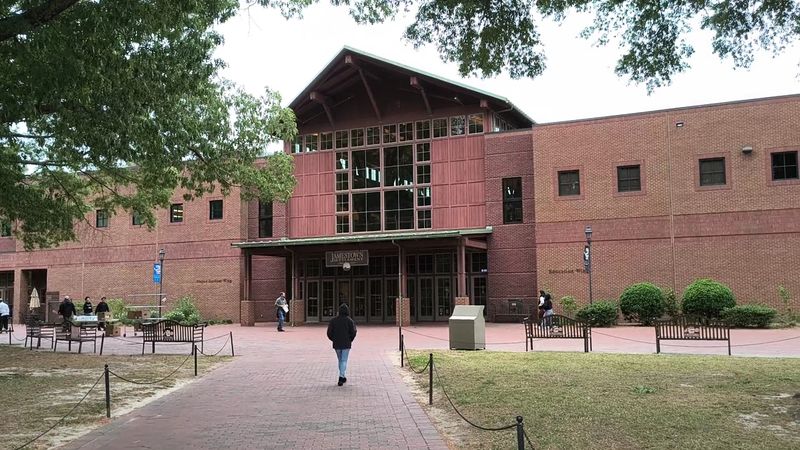
Look closely at the brickwork before heading inside. That crisscross design is called a diaper pattern, and it echoes Jacobean architecture.
It’s a clever touch for a museum about the early 1600s. The building hints at the era before you even buy a ticket.
Glavé and Holmes Architecture designed the visitor center. It opened in phases between 1998 and 1999.
A striking two-story wood and glass pavilion greets visitors at the entrance. Light pours in and makes the space feel open and welcoming.
The layout connects pavilions with sloped-roof halls. Moving between areas feels natural rather than maze-like.
Out front, a row of state flags adds color. Signs share snippets about each state’s founding, a fun warm-up before the main event.
The museum also has a long backstory. It started life as Jamestown Festival Park before becoming what visitors see today.
Modern design and old craft live side by side here. Glass and brick sit just steps from thatch and clay.
Architecture fans will enjoy that contrast. Everyone else gets a pretty backdrop for photos.
Give Yourself Half A Day And A Little Extra Wiggle Room
Three to four hours is a smart starting estimate. Curious visitors can easily stay longer, so don’t overbook the afternoon.
You’ll find Jamestown Settlement at 2110 Jamestown Road, Williamsburg, VA 23185. It sits on Route 31 South, right next to Historic Jamestowne.
Historic Jamestowne is the actual archaeological site of the original colony. It’s a separate attraction, so plan time for both if you can.
Colonial Williamsburg is about a ten-minute drive away. That makes this an easy anchor for a Virginia history road trip.
The museum is open daily from 9 a.m. to 5 p.m. It closes only on Thanksgiving, Christmas, and New Year’s Day.
Bad weather sometimes closes the outdoor areas temporarily. The indoor galleries and films stay open, so the trip isn’t wasted.
Arriving near opening helps on hot summer days. Outdoor stops feel much nicer before the afternoon heat kicks in.
Parking is free and easy to find. That’s one less thing to fuss over when traveling with a group.
Comfortable shoes, water, and a photo ID are all you need. The 1600s will handle the rest.
