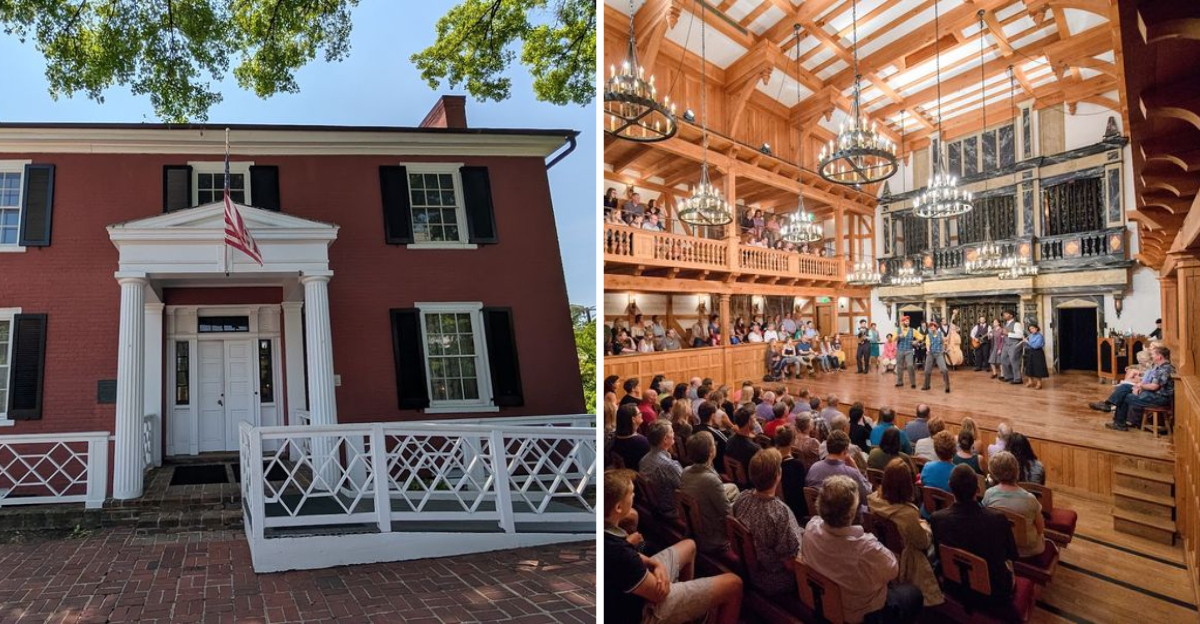
This Virginia town still feels like it belongs to another century, and I stumbled onto it almost by accident.
Wrapped in brick sidewalks, ornate facades, and the kind of unhurried pace that most towns traded away long ago, the moment you turn onto the main street, something shifts.
It is not nostalgia exactly, more like the feeling of reading a letter written by someone who really knew how to slow down.
I parked the car and spent the next few hours just walking, peering into shop windows, and watching the afternoon light bounce off old brick like it had no particular place to be.
National publications have named it one of America’s best-preserved downtowns, and honestly, that title does not do it full justice.
This is a town that did not just survive history, it held onto it with both hands.
The Downtown Historic District: A Street That Forgot to Age
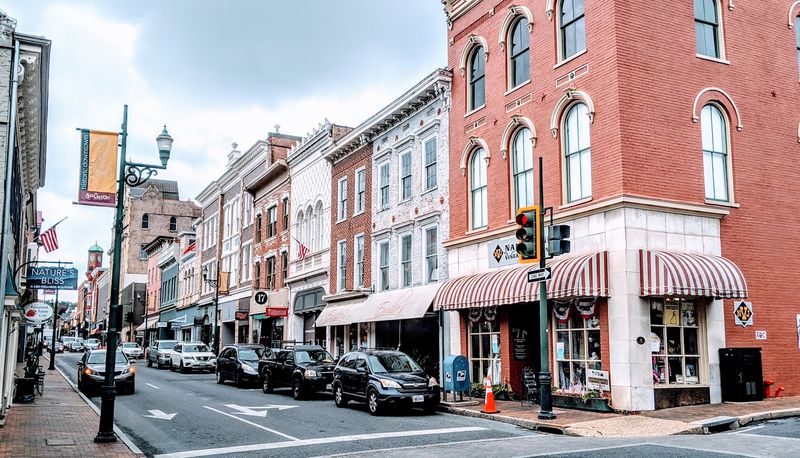
Beverley Street does not announce itself with fanfare.
You just find yourself on it, looking up at rooflines decorated with Romanesque arches and Italianate cornices, wondering how a town this beautiful stayed so quietly tucked away.
The downtown historic district forms the beating heart of Staunton, and it earned its place on the National Register of Historic Places for good reason.
Most of the buildings lining these blocks date from 1870 to 1920, a golden era of craftsmanship when builders took their time and meant every detail.
What makes it feel alive rather than museum-like is the mix. Independent boutiques, local art galleries, cozy cafes, and specialty shops fill these 19th-century spaces without ever feeling out of place.
The brick sidewalks underfoot add a texture that modern concrete simply cannot replicate.
Forbes recognized Staunton’s downtown as one of America’s best-preserved, and foot traffic here tells the same story.
Locals grab coffee, browse storefronts, and chat on corners like the rest of the world is running at a completely different speed.
Nothing here feels performed or staged for tourists. It just feels real, warm, and genuinely rooted in a time when buildings were built to last generations, not lease cycles.
Six Historic Districts, One Unforgettable City
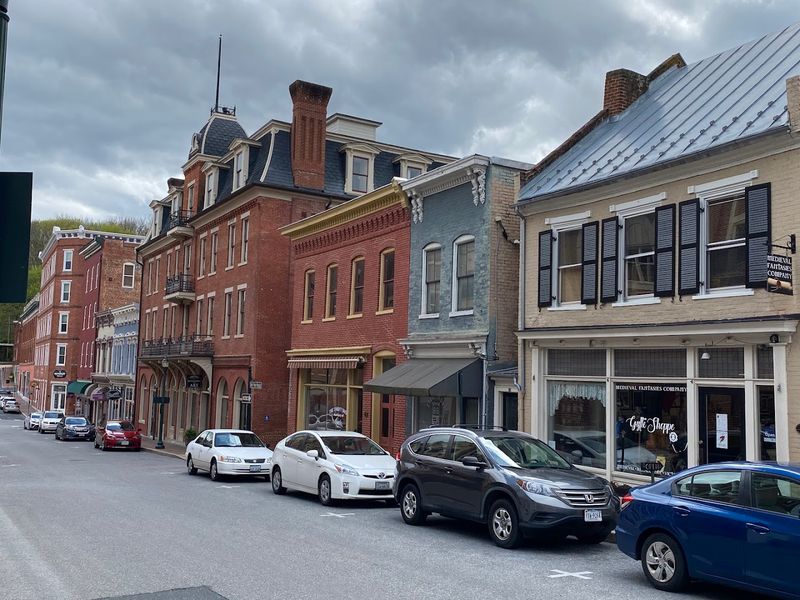
Most towns have one historic district. Staunton has six, and each one tells a different chapter of the same long story.
Beverley, Wharf, Newtown, Stuart Addition, Gospel Hill, and the Villages of Staunton are all listed on the National Register of Historic Places.
Newtown is the oldest residential neighborhood, with homes spanning Federal, Greek Revival, and Victorian styles tucked along tree-shaded streets.
Gospel Hill feels quieter and more graceful, with elegant residences that seem to exhale history from every porch column.
The Wharf District developed around the old train depot, and its repurposed warehouses now house modern businesses while cobblestone streets still run between them.
That contrast, old bones carrying new life, is exactly what makes Staunton so layered and interesting to explore on foot.
The Villages of Staunton District has its own remarkable origin.
It was established in 1832 as the Western State Lunatic Asylum and features buildings designed by Thomas R. Blackburn, who trained under Thomas Jefferson himself.
The site is currently undergoing redevelopment, but its architectural legacy remains striking.
Moving through all six districts feels less like a history lesson and more like reading a well-written novel where every neighborhood is its own chapter.
T.J. Collins and the Architect Who Shaped a Skyline
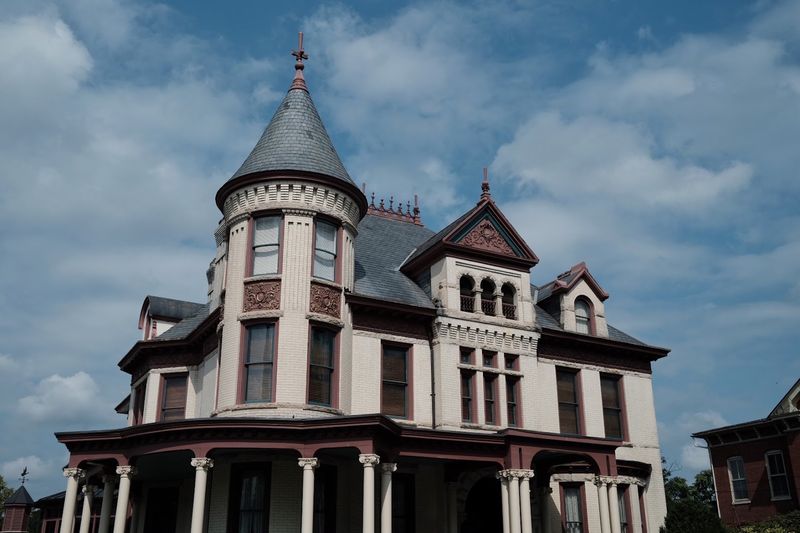
One man’s fingerprints are all over Staunton, and most visitors walk past his work dozens of times without knowing his name. T.J.
Collins was a prolific local architect whose designs, along with those of his family, shaped over 200 buildings across the city’s historic districts.
His style leaned heavily into Romanesque Revival and Italianate influences, the kind of architecture that favors bold arches, decorative brickwork, and facades that reward a long, slow look.
Collins understood that a building should feel like it belongs to its place, and Staunton is better for that conviction.
You can spot his influence in the rounded windows above storefronts, the carved stone details on corner buildings, and the confident proportions of structures that have stood for well over a century. None of it feels accidental.
Every choice was deliberate, and the result is a streetscape that has a coherent visual personality.
For architecture enthusiasts, tracing Collins’s work through the downtown district is genuinely absorbing.
It turns an ordinary walk into something more like a treasure hunt, where the prize is noticing a detail you almost missed.
Staunton’s skyline is essentially a biography written in brick and stone, and Collins is its most important author.
The Blackfriars Playhouse: Shakespeare the Way It Was Meant to Be Seen
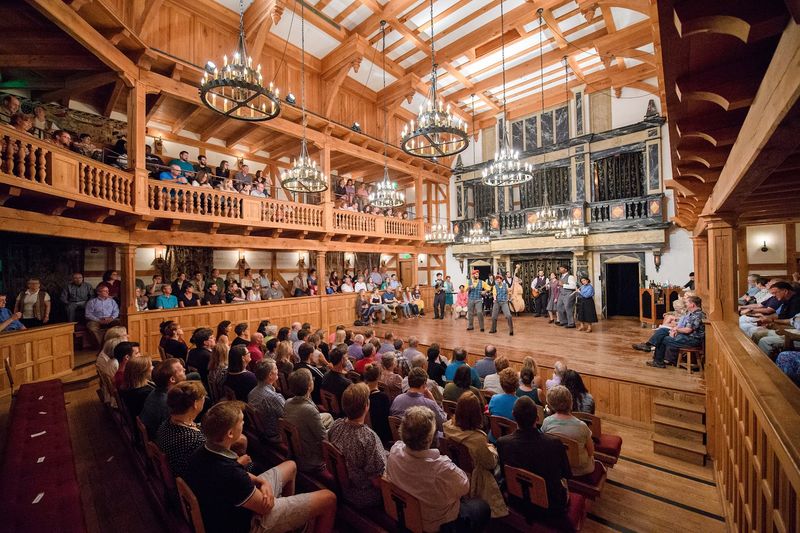
There is only one place in the world where you can watch Shakespeare performed in a faithful re-creation of his original indoor theater.
It sits right here in Staunton, and it is one of those experiences that stays with you long after the final bow.
The American Shakespeare Center’s Blackfriars Playhouse is built to match the dimensions and spirit of the original London theater where Shakespeare’s company performed.
The stage is lit by chandeliers, actors share the same light as the audience, and the intimacy of the space makes every performance feel almost conspiratorial.
Some shows are performed entirely by candlelight, which sounds like a gimmick until you actually sit in that warm, flickering glow and realize it changes everything about how you receive the language.
The actors engage the audience directly, sometimes pulling someone into the scene, which keeps the energy alive and unpredictable.
Even if Shakespeare was never your thing in school, this version of it probably will be. The productions here are lively, physical, and surprisingly funny.
The Playhouse is located at 10 S. Market Street, Staunton, VA 24401.
Going once is usually enough to make you want to come back for every new season they program.
Woodrow Wilson’s Birthplace: Where a President Began
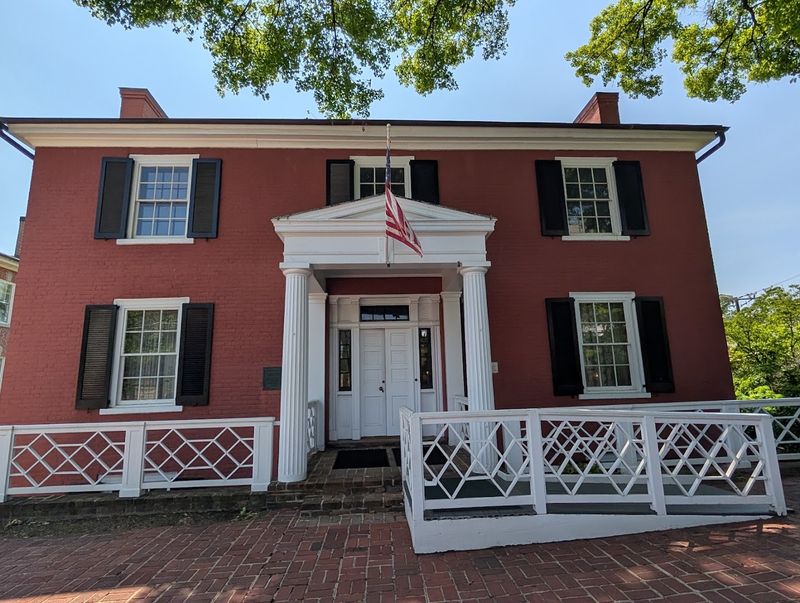
Staunton is the birthplace of the 28th President of the United States, and the site where Woodrow Wilson came into the world is one of the most thoughtfully preserved presidential homes in the country.
The Greek Revival house on Coalter Street has a quiet dignity that matches the gravity of what it represents.
The Woodrow Wilson Presidential Library and Museum sits at 20 N. Coalter Street, Staunton, VA 24401.
Beyond the birthplace home itself, the museum holds engaging exhibits that trace Wilson’s path from this small Virginia city to the world stage, including his role in shaping the post-World War I international order.
The historic gardens surrounding the property are serene and beautifully maintained. They offer a peaceful counterpoint to the weight of the history inside the museum walls.
Wandering through them on a clear afternoon feels like a genuine privilege.
What makes the site feel special is how personal it remains. This is not a grand monument to political power.
It is a home, modest and human in scale, that happens to be where a consequential life began. That grounding in the ordinary makes the extraordinary parts of Wilson’s story land with more weight.
It is well worth at least two hours of your time.
Frontier Culture Museum: Where Early American Life Still Breathes
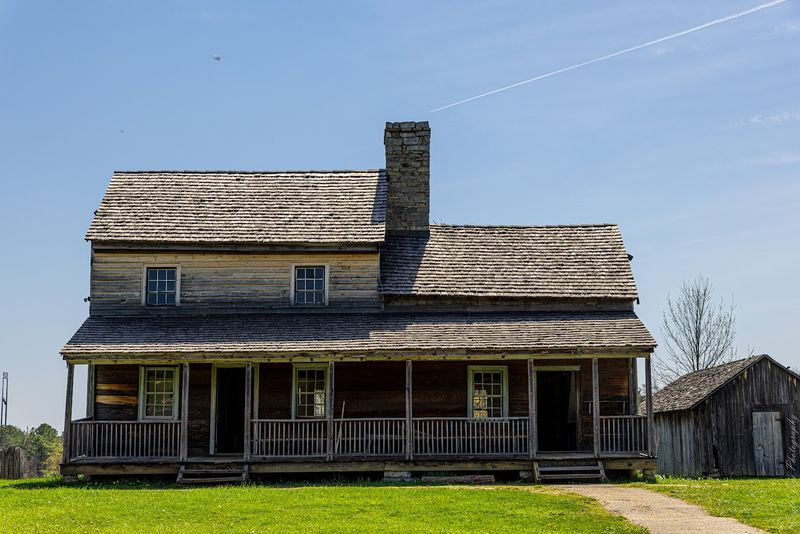
History has a way of feeling abstract until someone in period clothing hands you a freshly made candle and explains exactly how it was done in 1750.
That is the kind of moment the Frontier Culture Museum delivers, and it does so with a warmth that textbooks simply cannot replicate.
This outdoor living-history museum sits just outside downtown Staunton and features authentic farmsteads transplanted from Europe and early America.
Each one represents a different wave of settlers who shaped the Shenandoah Valley, from West African, German, and Irish traditions to the distinctly American frontier culture they created together.
Costumed interpreters move through the farmsteads doing actual work, tending gardens, working forges, and demonstrating crafts that most people have only read about. The detail is remarkable.
Nothing here is decorative prop work.
Kids tend to love this place, but adults often find themselves equally absorbed. There is something disarming about watching a skill performed slowly and deliberately by hand, whether it is spinning wool or shaping a clay pot.
The museum is located at 1290 Richmond Road, Staunton, VA 24401. Plan for at least three hours if you want to move through it properly, because rushing through this one would be a genuine shame.
Sunspots Studios and the Art of Slowing Down
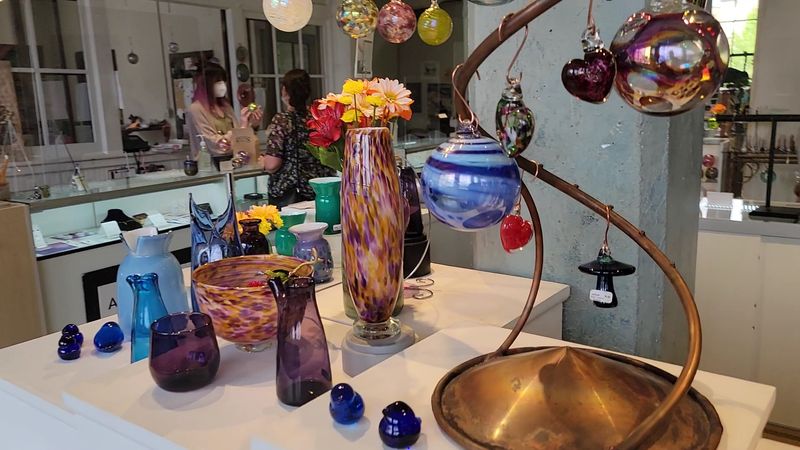
There is a particular kind of magic in watching molten glass take shape at the end of a long metal pipe, and Sunspots Studios on Beverley Street is where that magic happens on a regular basis.
Live glassblowing demonstrations here are free to watch and genuinely mesmerizing.
The studio produces handcrafted glass art sold right on-site, from ornaments and vases to one-of-a-kind sculptural pieces. Every item carries the warmth of something made by a human being who cared about the outcome.
That is rarer than it sounds in a world full of mass-produced souvenirs.
Sunspots is located at 25 E. Beverley Street, Staunton, Virginia 24401, right in the heart of the historic downtown.
Stopping in even for fifteen minutes tends to stretch into much longer. It is hard to leave once you are watching the process unfold in real time.
Nearby, the R.R. Smith Center for History and Art at 20 S.
New Street adds another cultural layer worth exploring. Housed in an 1894 hotel building, it serves as a gathering point for local historical societies and rotating art exhibitions.
Together, these two spots represent something Staunton does particularly well: turning creative work into something accessible, unhurried, and genuinely connected to the community around it.
