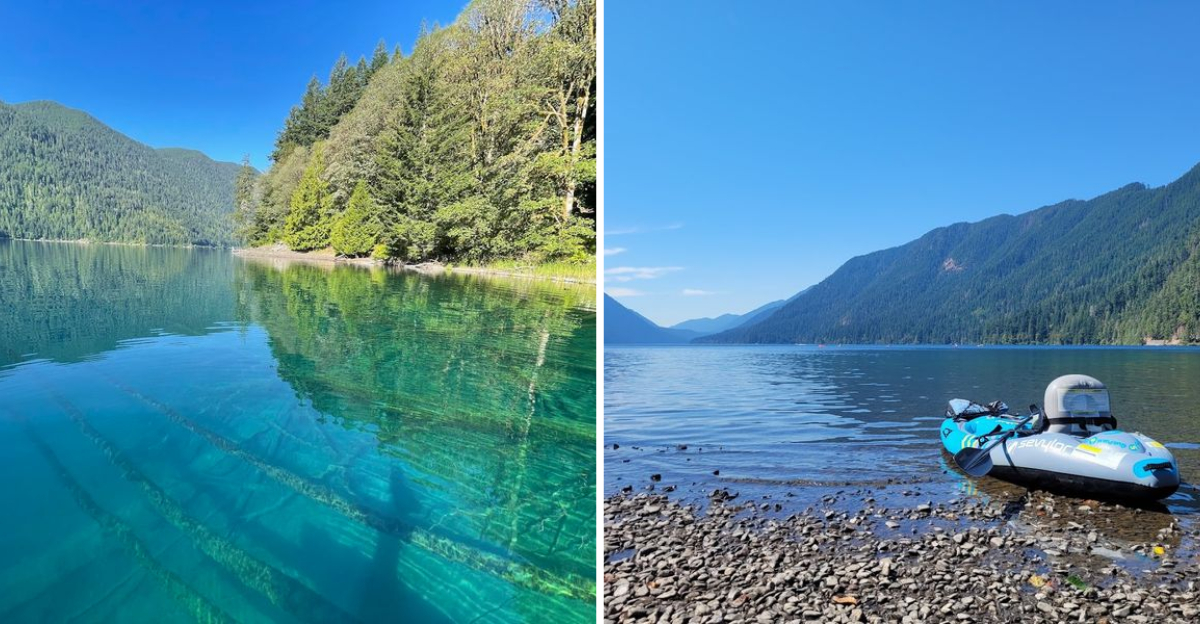
The water in this Washington lake is so impossibly clear that you can see the bottom from sixty feet above it, and no filter in the world could make it look more stunning than it already does.
Sitting quietly between forested mountain ridges, it looks like something out of a dream that you are not quite ready to wake up from. The first time I saw that blue-green shimmer through the trees, I genuinely slowed the car down because I thought my eyes were playing tricks on me.
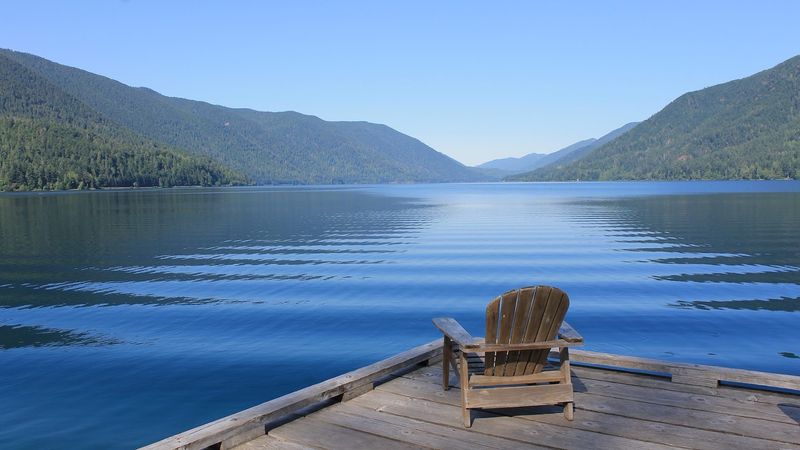
They were not. This place makes you feel small in the best possible way, surrounded by ancient trees, cold air, and water so still some mornings it looks like polished glass.
I pulled over and just stood there, not reaching for my phone, not thinking about anything except how lucky I felt to be standing in that exact spot.
Chasing a hike, a paddle, or just a quiet place to sit and stare? This place delivers something that is very hard to find anywhere else.
The Science Behind the Stunning Clarity
Most lakes cloud up over time because of nutrients that feed algae and tiny plant life floating just below the surface. Lake Crescent skips that process almost entirely, and the reason comes down to one key element: nitrogen.
The lake is classified as ultra-oligotrophic, which is a fancy way of saying it has almost no nitrogen in its water.
Without nitrogen, phytoplankton cannot grow. Without phytoplankton, there is nothing to scatter or absorb light as it passes through the water column.
The result is visibility that stretches down 60 to 70 feet on a calm, clear day. That is not an estimate or an exaggeration.
The lake sits at a maximum depth of 624 feet, making it the second deepest lake in Washington State after Lake Chelan. Even with all that depth, the upper layers stay remarkably transparent.
The cold temperature of the water, which hovers around the mid-40s Fahrenheit, also slows down biological activity that would otherwise reduce clarity.
It is one of those rare situations where geology, chemistry, and geography all cooperate at the same time to produce something genuinely extraordinary. The lake was carved by glaciers thousands of years ago, and the steep surrounding mountains limit the runoff of nutrients into the water.
So the clarity is not accidental. It is the product of a very specific set of natural conditions that have been in place for thousands of years, and that is exactly what makes it feel so unreal when you see it for the first time.
How a Landslide Created Two Lakes and Two Unique Trout
Around 7,000 to 8,000 years ago, a massive landslide tumbled down from the surrounding mountains and split one large body of water into two separate lakes. That event gave us Lake Crescent to the west and Lake Sutherland to the east.
It sounds dramatic because it was.
That separation did something remarkable over thousands of years. The trout populations in each lake evolved independently, cut off from the rest of the world by mountains and geography.
Lake Crescent ended up with two fish species found absolutely nowhere else on Earth: the Crescenti trout and the Beardslee trout. Both are subspecies of rainbow trout, but their genetic makeup is entirely their own.
The Klallam people, who have lived in this region for generations, have a legend that speaks to the lake’s formation. A mountain spirit, angered by conflict between the Klallam and Quileute tribes, hurled a giant boulder that dammed a river and created the lake.
Geological records do support the idea of a major large-scale disturbance, which gives the story a grounding in real earth history that feels almost poetic.
It is one of those places where science and storytelling land in the same spot, each making the other more interesting. The trout, the landslide, the tribal legend, the twin lakes, all of it points to a location that carries real geological weight.
You are not just looking at a pretty lake. You are looking at thousands of years of Earth doing something quietly spectacular.
Trails That Show You the Lake From Every Angle
The trail system around Lake Crescent is one of those rare setups where you can choose your own level of adventure and still come away completely satisfied. Easy walks, moderate routes, and genuinely challenging climbs all exist within a short drive of each other, and every single one of them rewards you with a different perspective on the lake.
The Spruce Railroad Trail runs about 5.5 miles one-way along the north shore, following an old railroad bed that makes the path flat and accessible. It leads to Devil’s Punchbowl, a natural swimming hole with water so clear and blue it looks artificially colored.
The trail is paved in sections and works well for bikes too.
Marymere Falls is the crowd-pleaser, an easy 1.8-mile round trip through old-growth forest that ends at a lovely waterfall. Families with kids tend to love it because the payoff is big and the effort is manageable.
For something more demanding, Mount Storm King climbs 4.2 miles round trip with serious elevation gain and rope-assisted sections near the top.
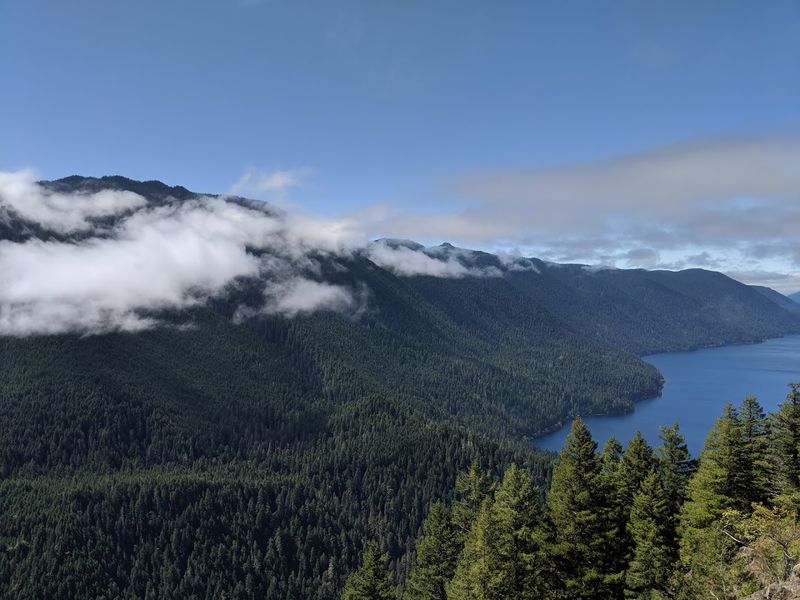
From the summit of Mount Storm King, the lake spreads out below you like a painting you cannot quite believe is real. The Pyramid Peak Trail and Ancient Groves Trail round out the options for those who want to go deeper into the forest.
Whatever pace you set, the trails here feel less like exercise and more like the landscape pulling you forward one step at a time, which is a feeling worth chasing.
Getting Out on the Water and Why It Changes Everything
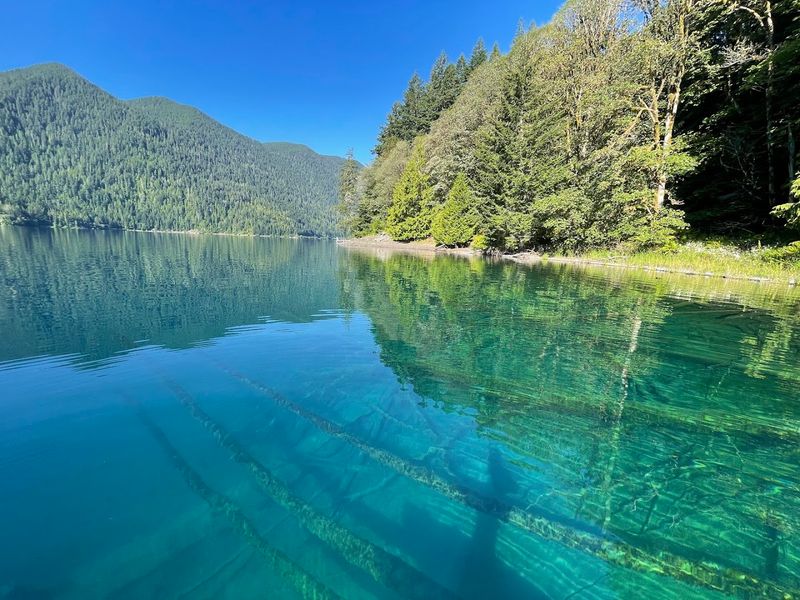
There is a specific moment when you are out on a kayak and you look straight down into the water below you and realize you can see the lake floor. Not just a vague shadowy outline, but actual rocks, submerged logs, and sandy patches sitting 20 or 30 feet beneath the surface.
That moment at Lake Crescent hits differently than almost anywhere else.
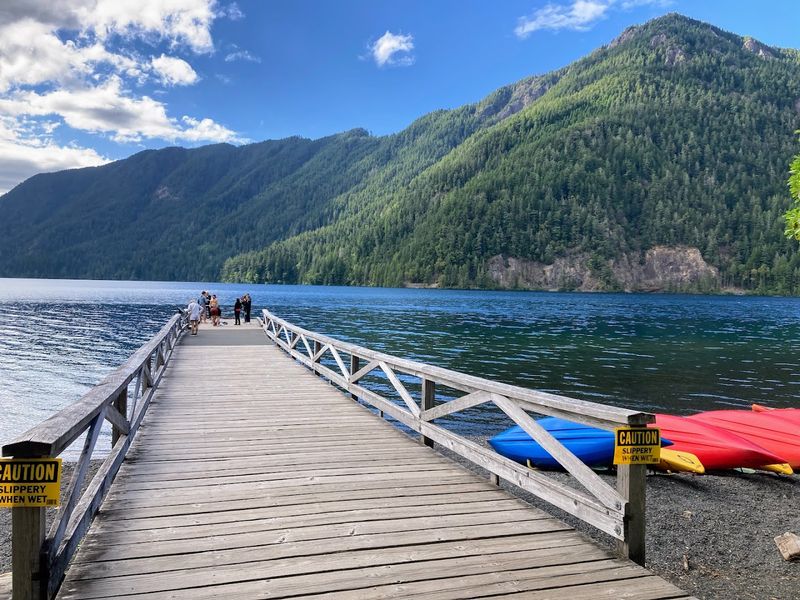
Kayaking, canoeing, and stand-up paddleboarding are all popular here, and rowboats can be rented from Lake Crescent Lodge if you want something a bit more relaxed. Motorized boats are also permitted on the lake, so the water sees a nice mix of activity during the summer months.
The lake is large enough that it never feels crowded on the water even when the parking lots are busy.
Swimming is possible, especially at East Beach and Devil’s Punchbowl, though the water temperature tends to stay in the mid-40s Fahrenheit, so most people get in, gasp, laugh, and get back out fairly quickly. Kids seem to mind the cold considerably less than adults do.
Scuba divers have their own reason to visit: Barnes Point is home to a submerged forest sitting about 60 feet underwater, which is as surreal as it sounds.
Even if you just sit at the shoreline and watch the water, the lake has a way of holding your attention. On calm mornings it goes completely still, and the reflection of the mountains and trees on the surface is so precise it looks like the world has been doubled and flipped upside down.
Lake Crescent Lodge and Where to Base Yourself
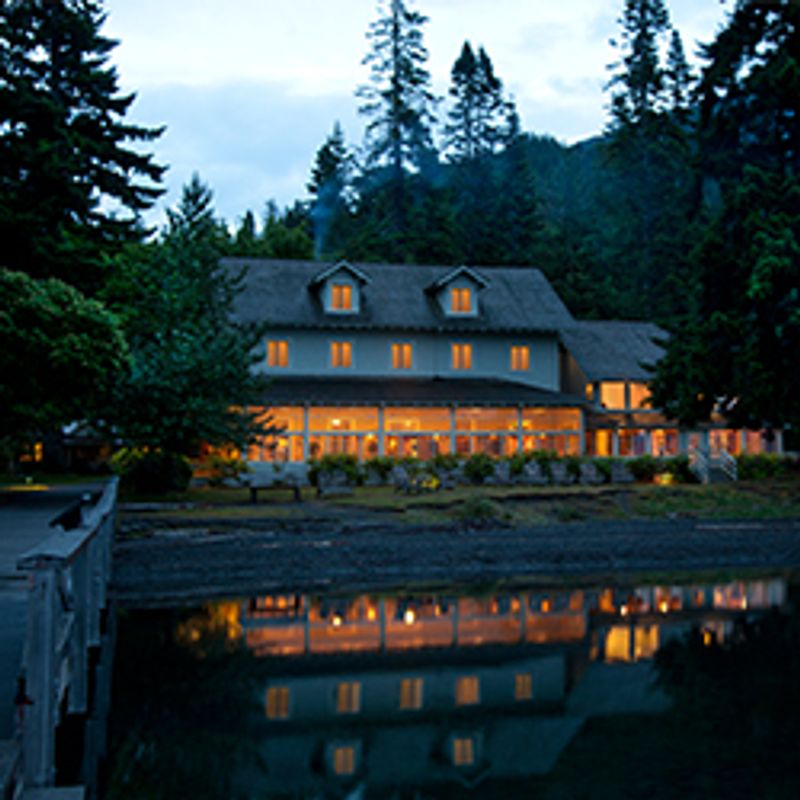
Built in 1915, Lake Crescent Lodge has a warmth to it that newer buildings rarely manage to replicate. The structure sits right at the edge of the water, tucked under tall trees, and the view from the front of the lodge looking out toward the lake is the kind of thing you want to photograph but also just want to sit and absorb without a screen in between.
The lodge serves as the trailhead for both Marymere Falls and Mount Storm King, which makes it a genuinely convenient base if you plan to hike. Adirondack chairs line the waterfront area, and on a quiet afternoon, settling into one of those chairs with the mountains across the lake is hard to beat.
The lodge is generally open from late spring through early fall.
For campers, the Fairholme campground on the west end of the lake offers 87 sites and puts you right in the thick of the forest. The Log Cabin Resort on East Beach Road provides another solid option for those who want something between camping and a full lodge experience.
Both the lodge and the resort give you easy access to the water.
Lake Crescent also works well as a base for the wider Olympic Peninsula. Sol Duc Falls is about 45 minutes away, Hurricane Ridge is roughly an hour and ten minutes, and the Hoh Rain Forest sits about an hour from the west end of the lake.
Address: 416 Lake Crescent Rd., Port Angeles, WA 98363.
Tips for Visiting and Making the Most of Your Time Here
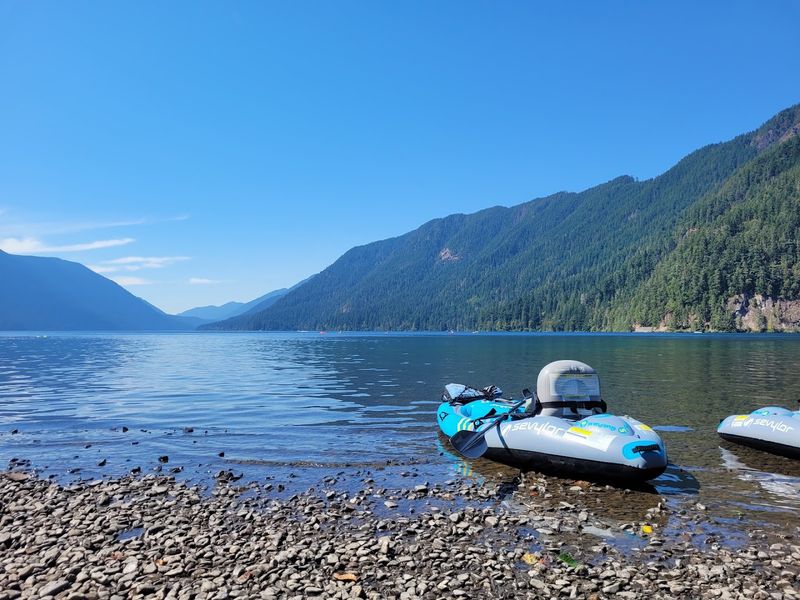
Cell service around Lake Crescent is limited, and that is not a complaint, it is a feature. Downloading offline maps before you leave is genuinely useful, especially if you plan to explore trails beyond the main parking areas.
A paper map from the Olympic National Park visitor center in Port Angeles works just as well and costs almost nothing.
Layers are essential regardless of the season. Temperatures near the water feel noticeably cooler than inland areas, and mornings can be crisp even in July.
A light windbreaker stuffed in a day pack takes up almost no space and saves a lot of discomfort. Water shoes are worth bringing if you plan to wade or swim, because the rocky shoreline is hard on bare feet.
Parking fills up quickly at the Lodge and Marymere Falls trailhead on summer weekends. Arriving before 9 AM or after 3 PM tends to give you a much easier experience.
Weekday visits in the shoulder seasons, like late September or early October, offer a noticeably quieter and often more beautiful version of the lake, with autumn colors mixing into the evergreen hillsides.
Wildlife sightings are common here. Deer graze near the water with surprising regularity, and bald eagles have been spotted along the shoreline.
Binoculars are worth the bag space. The lake is accessible via U.S.
Route 101, about 17 to 18 miles west of Port Angeles. Address: Washington 98363.
