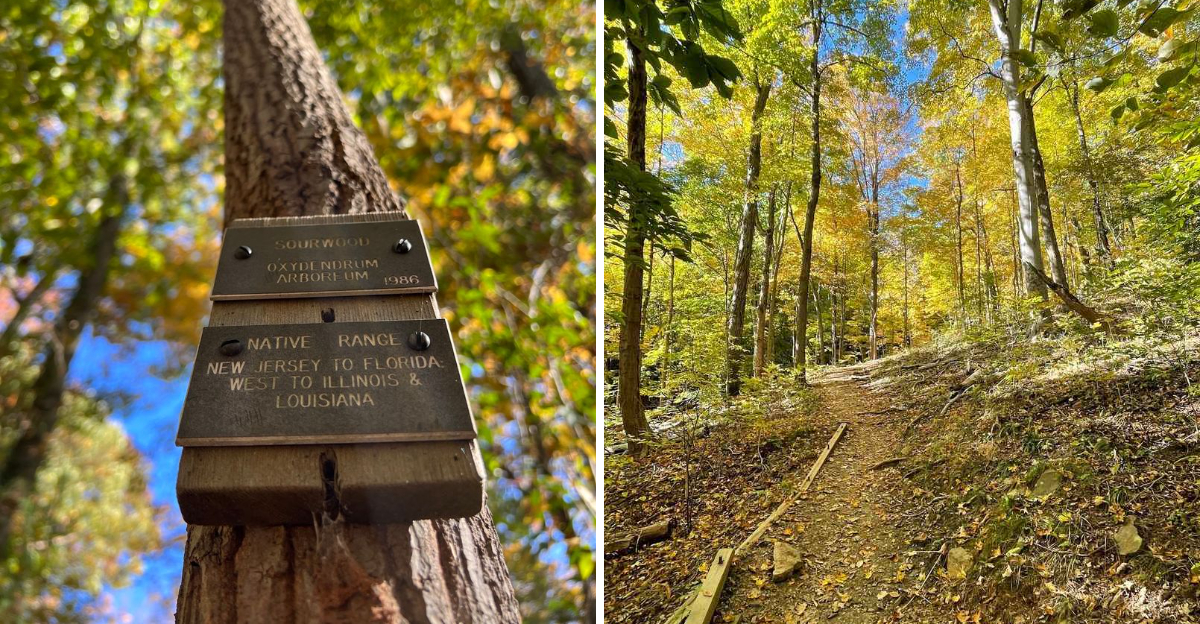
There is a spot in West Virginia where you can park beside a busy boulevard, walk about two minutes downhill, and suddenly hear nothing but birds and leaves.
I still think about how quickly the traffic noise disappears once the trail drops below road level.
Huge oaks lean over the path, some of them likely older than the state itself, and the ground in spring turns into a carpet of tiny blue and white flowers.
Down at the bottom, a wide river slides past a floodplain forest full of silver maples and pawpaw trees.
It is free, open every day, and somehow still feels like a secret even though a university campus sits right above it.
If you like the idea of a real forest hiding in the middle of a college town, this one deserves a slow afternoon.
Old Giants That Have Been Standing For Two Centuries
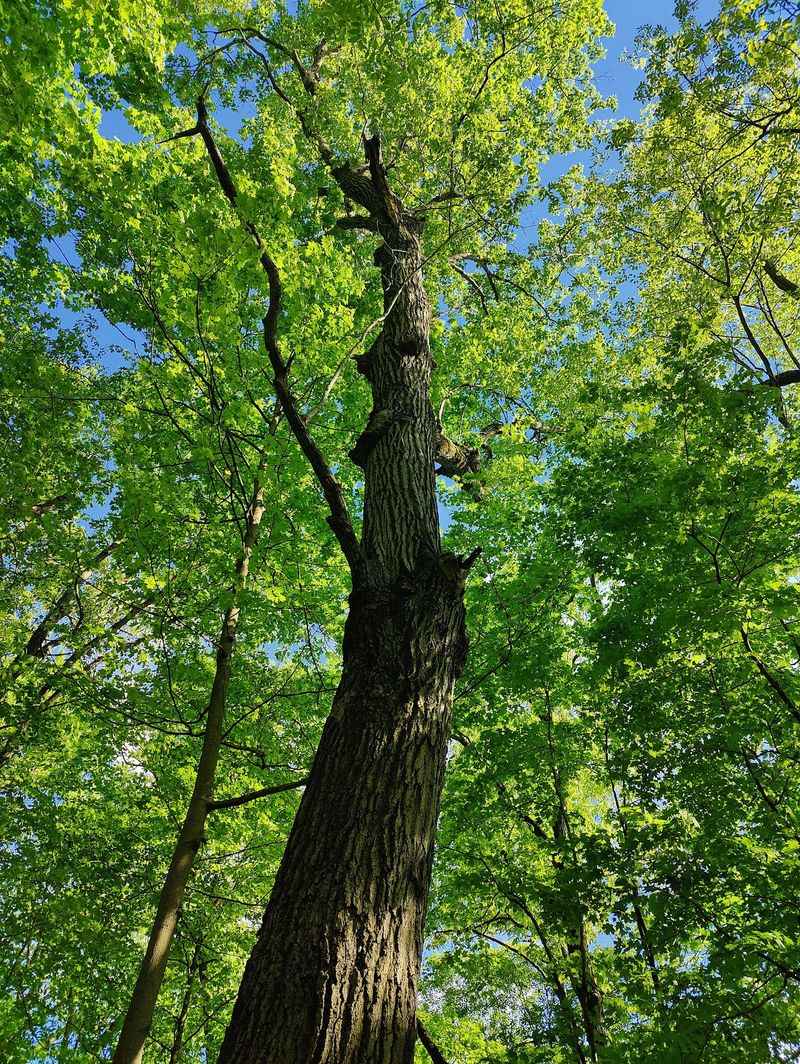
Some of the trees here were already tall when Morgantown was a scattering of cabins.
Many of the largest specimens in the arboretum are likely more than 200 years old, and you feel that age in the bark, which looks less like wood and more like stone.
Old-growth forest survives on both the hillside and the floodplain, which is rare for a place this close to a city. A large red oak waits near the bottom of the Service Road, and huge oaks appear again and again as the path curls along the slope.
What surprises most visitors is the scale. You tilt your head back, lose the top of the tree in the canopy, and realize photos will not capture it.
Bring a friend if you want a sense of proportion in your pictures. Standing beside one of these trunks is the fastest way to understand just how small two centuries makes a person feel.
Three And A Half Miles Of Trails With Real Variety
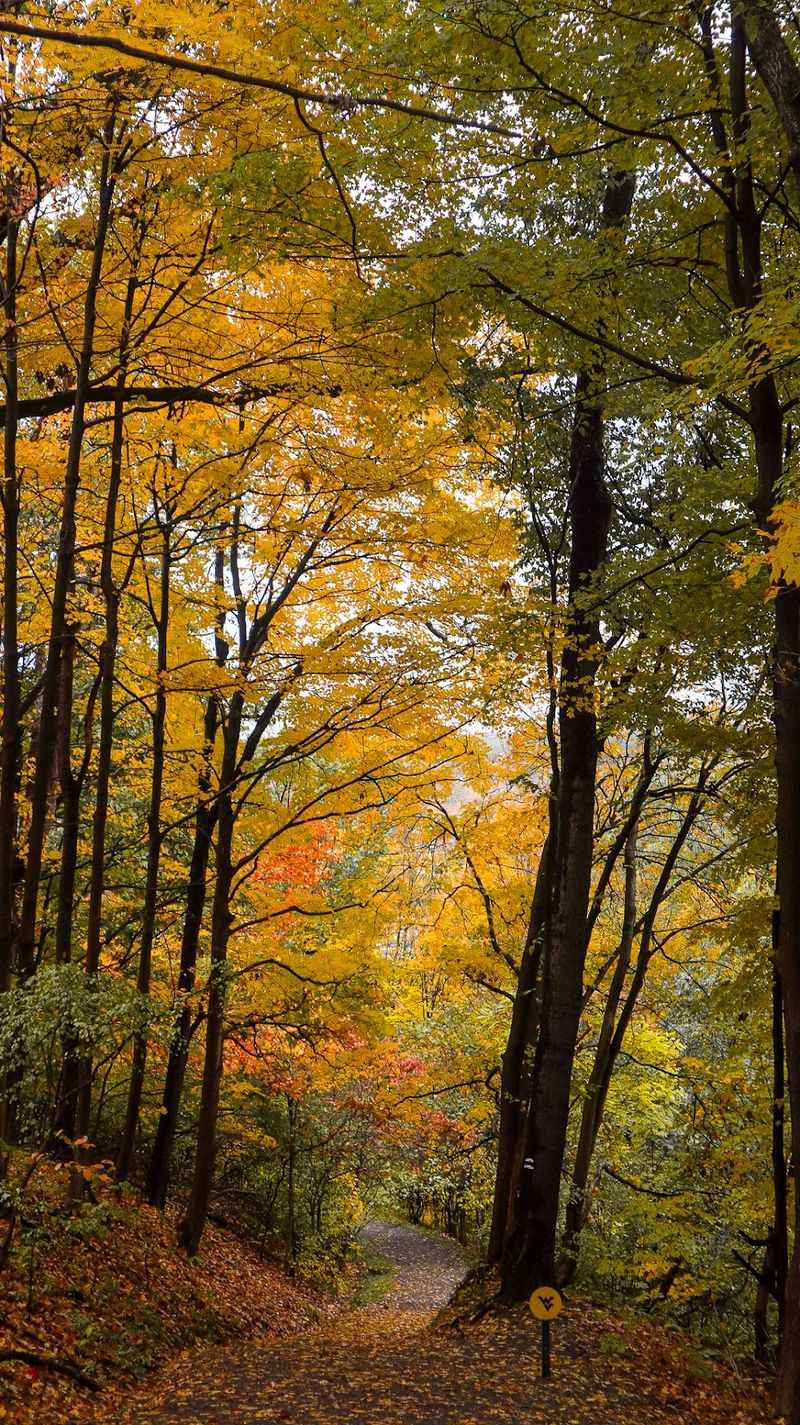
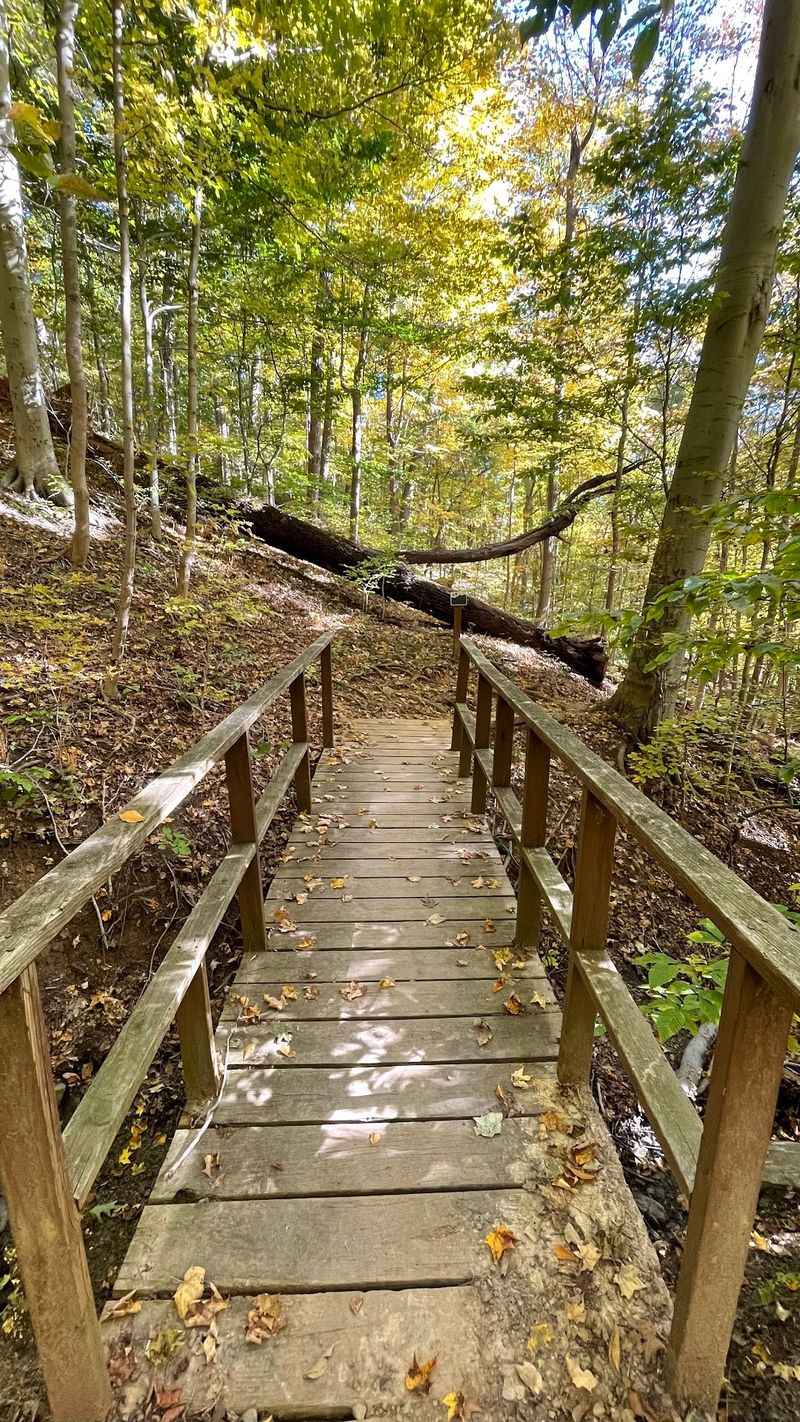
Roughly 3.5 miles of foot trails thread through the 91 acres, and they do not all feel the same. Some sections stay fairly flat and wide, while others drop down the ravine with loose footing and tree roots that work like natural stairs.
Named routes give the network its shape. The Strausbaugh, Sheldon, Nuttall, Silver Maple, Taylor, Rumsey, Melvin Brown and Cliff Trails all connect, along with the Guthrie Loop and the Granville Island Trail.
Because everything sits between a boulevard and a river, getting truly lost is unlikely. Still, the layout rewards a little planning.
Trail markers are clear and a map is available at the information kiosk, so grab one before you head down. My honest advice is simple: whatever goes down must come back up, so save some energy for the climb out.
Sturdy shoes matter far more here than fancy gear.
Spring Wildflowers That Take Over The Forest Floor
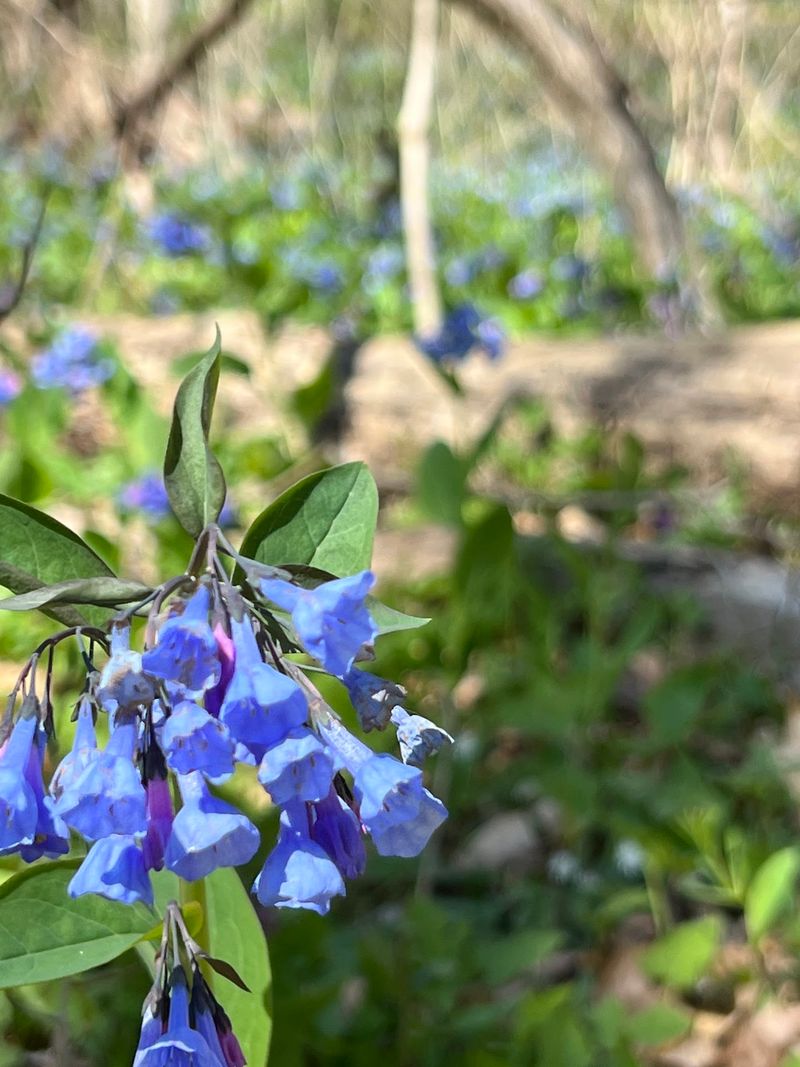
Late March through early May is when this place shows off. Spring ephemeral wildflowers blanket the ground before the canopy leafs out, and the arboretum is genuinely known across the region for the display.
Virginia bluebells put on the biggest show, especially along the Sheldon Trail, where they spread out in soft blue drifts. Wild ginger tucks itself low beside the path, easy to miss unless you slow down and look.
The trick is timing. Ephemerals live fast, bloom hard, and vanish once the leaves above them close in.
Visit twice a couple of weeks apart and you will see two completely different forests. More than 250 species of herbaceous plants grow here, so even after the peak fades there is plenty to notice underfoot.
Kneel down, take the close-up photo, and try not to step off the trail while you do it.
Record Setting Trees You Can Actually Walk Up To
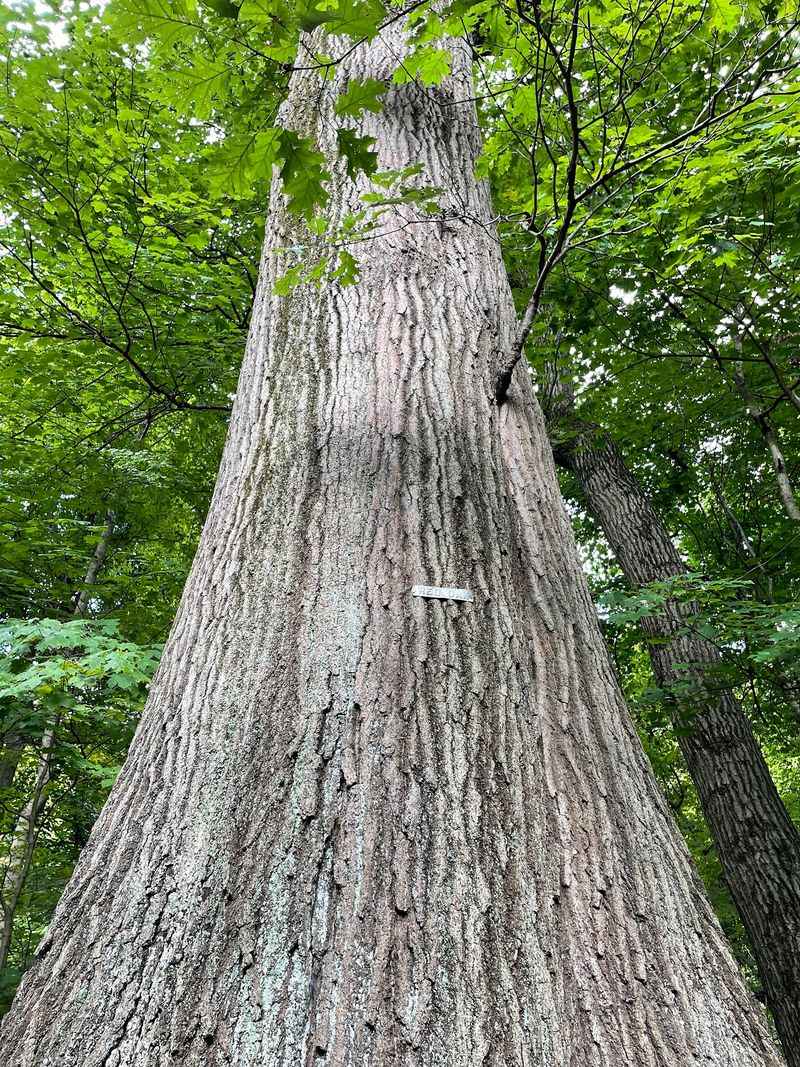
Champion trees usually live in remote hollows. Not here.
The tallest measured silver maple in West Virginia grows near the Nuttall Trail and Granville Island Trail, stretching more than 115 feet into the sky. The second largest scarlet oak in the state stands somewhere on the hillside, quietly going about its business.
There is also a ghost of a giant. Until it died in 2000, the arboretum was home to the third largest chinquapin oak in the world, a tree estimated at around 600 years old.
Its hollow stump still sits near the junction of the Sheldon and Nuttall Trails, and it is worth a respectful pause.
Other registered big trees on the property include Ohio buckeye, horse chestnut, mockernut hickory, dwarf hackberry, yellowwood, bear oak and Table Mountain pine.
Tree nerds could spend a whole morning here. Everyone else will still walk out impressed.
Labeled Trees That Turn A Walk Into A Lesson
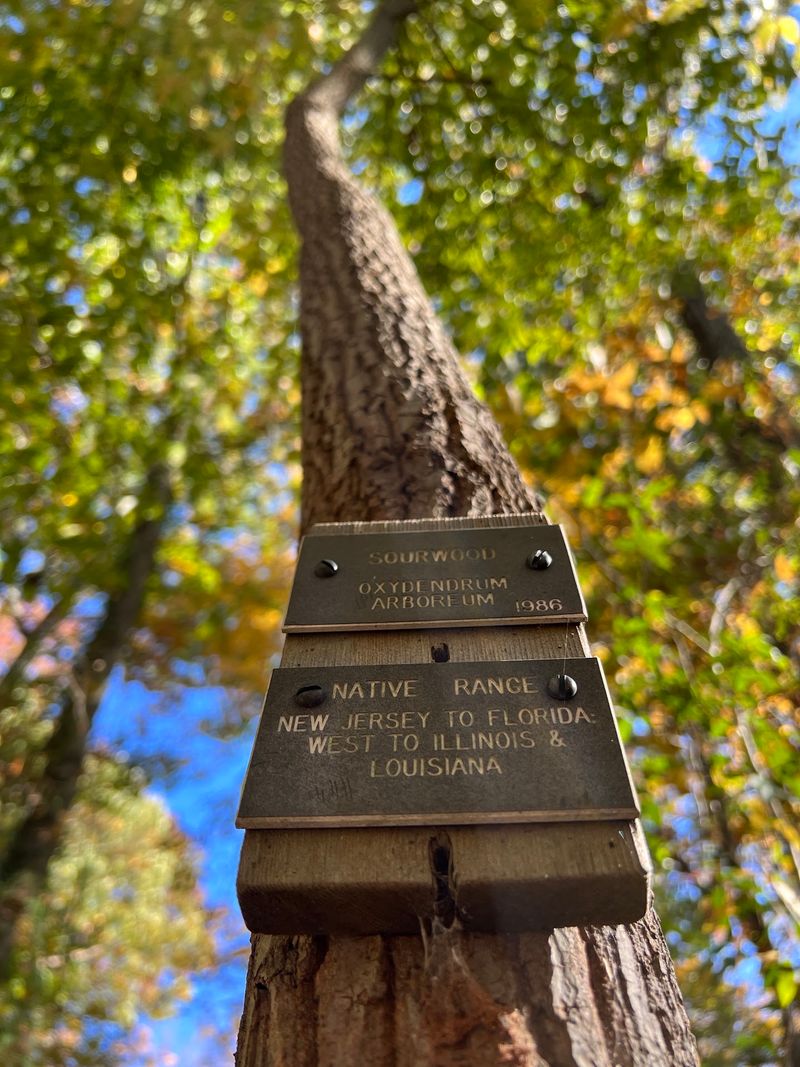
Plenty of mature trees along the trails wear small labels, and that one detail changes the whole visit. Instead of a green blur, the forest becomes a cast of characters you can name.
The hillside forest leans toward sugar maple, black maple, several oak species, hackberry and hickory. Down on the floodplain, silver maple, sycamore and wild black cherry dominate, which makes the contrast between upper and lower trails easy to spot once you know what to look for.
Interpretive signs fill in the rest. They explain habitats, plant relationships and why one slope looks so different from another.
Kids tend to love this part, mostly because it turns into a game. Adults quietly learn just as much.
Over 300 species of woody plants grow across the property, so nobody is going to memorize everything in one trip. Pick five names, remember them, and you will start seeing those trees everywhere back home.
Birdwatching Along The River Corridor
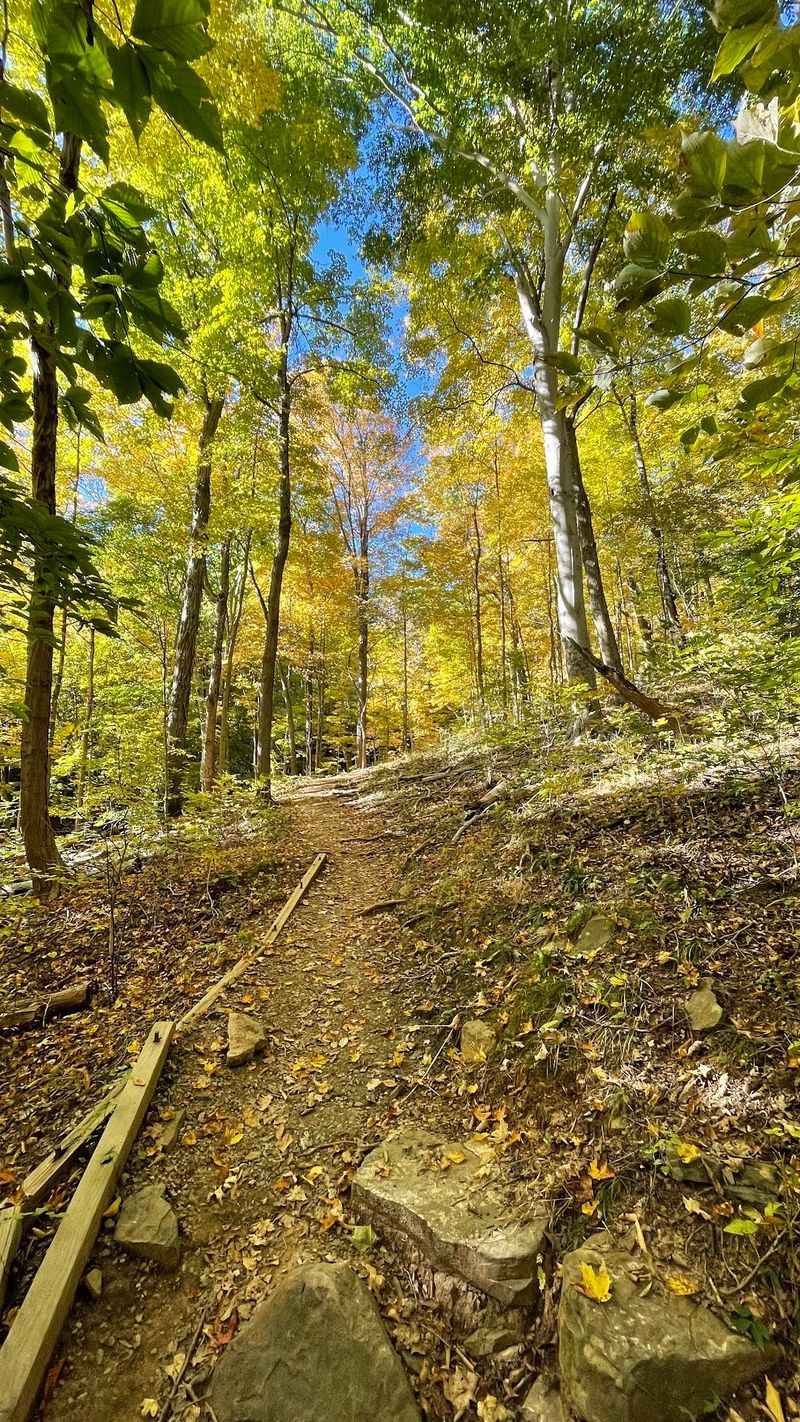
Over 180 bird species have been reported at the arboretum, which is a big number for 91 acres. The mix of hillside forest, floodplain, open river edge and shrubby understory gives birds a lot of options.
Early morning is the sweet spot. Sound carries differently down in the ravine, and the traffic above fades enough that you can pick out individual calls.
Spring migration brings the most activity, though winter has its own quiet rewards when bare branches make everything easier to see. Hawks turn up here too, sometimes perched close enough to the trail that you notice them before you notice the view.
Binoculars are worth carrying, even small ones. Benches along the trails give you a legitimate excuse to sit still and wait.
Patience pays off more than distance covered. Some of the best sightings happen when you stop walking entirely and let the forest forget you are there.
Pawpaw And Spicebush Filling The Understory
Look below the canopy and you will notice something almost tropical. Dense stands of pawpaw grow through the understory, their broad drooping leaves catching light in a way that feels out of place in Appalachia.
Spicebush grows thick alongside them, and if you crush a leaf between your fingers, the scent is sharp and citrusy. It is one of those small sensory moments that sticks with you longer than any overlook.
Pawpaw happens to be North America’s largest native fruit, and the arboretum hosts annual pawpaw tasting events in the fall. That is a legitimate reason to plan an autumn trip.
The understory also matters ecologically, providing cover for birds and food for wildlife. It is easy to overlook while chasing big trees.
Slow down through these sections. The forest gets denser, greener and a little strange, in the best possible way.
The Riverside Floodplain And Lagoon Detour
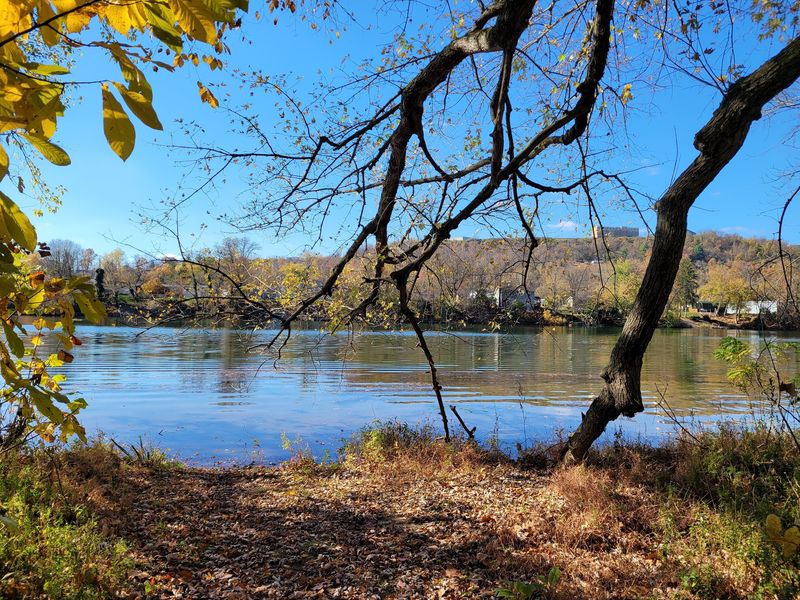
Reaching the bottom of the hill feels like arriving somewhere else entirely. The land flattens out, the trees change, and the Monongahela River opens up wide and slow beside the trail.
Silver maples and sycamores tower over this stretch, thriving in soil that floods. The Nuttall Trail leads toward a lagoon where arrowheads, cattails and other aquatic plants grow, adding a marshy texture you will not find higher up.
Be warned, the floodplain gets soggy after rain. Boots you do not mind muddying are the right call.
The Caperton Rail-Trail also runs through this lower section, which means cyclists and runners pass by on a flat, easy surface. It makes a natural turnaround point or connection if you want to extend the outing.
Sitting near the water here, with the hillside forest rising behind you, is the moment most people remember. The city may be minutes away, but it does not feel like it.
A Running Loop, An Amphitheater And Benches Everywhere
Runners get their own designated route, and it is a smart one. A 1.75-mile Running and Walking Loop moves through the prettiest sections while dodging the steepest climbs, which makes steady pacing actually possible.
Scattered throughout the property are trailside benches, placed where the views or the shade earn a rest. They come in handy on the way back up.
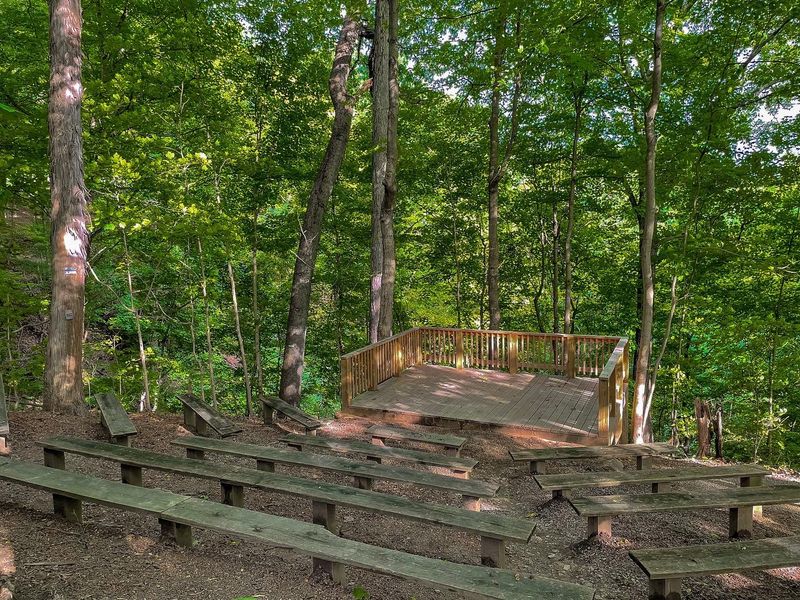
A small woodland amphitheater sits into the hillside, tucked among the trees and used as an outdoor space for programs and gatherings. Even empty, it is a pleasant place to sit for a few minutes.
The arboretum operates as a facility for education, research and recreation under the WVU Department of Biology, and that mix shows in how thoughtfully things are laid out.
Bring water, since there is none available on site. Portable toilets sit in the parking lot, with restrooms nearby at the WVU Creative Arts Center when it is open.
Planning Your Visit, Parking And Best Timing
Getting here is refreshingly simple. The arboretum sits along Monongahela Boulevard next to the WVU Coliseum, directly across the road from the WVU Creative Arts Center.
Entry is free and the grounds are open to the public every day from dawn to dusk. Free parking is available in the small arboretum lot with a three-hour limit, and it fills quickly, so the adjacent Coliseum lot serves as backup with a weekday fee and free evenings and weekends.
Stop at the information kiosk first. Trail maps and details live there, and the botanical garden section near the parking lot includes planted oaks, pines, a dawn redwood, plus rhododendrons and azaleas worth a look before you descend.
Spring wins for wildflowers, fall wins for color and pawpaws, and winter opens up the views. Wear shoes with grip, pack insect repellent in warmer months, and give yourself more time than you think you need.
Address: Core Arboretum, Monongahela Blvd, Morgantown, WV 26505
