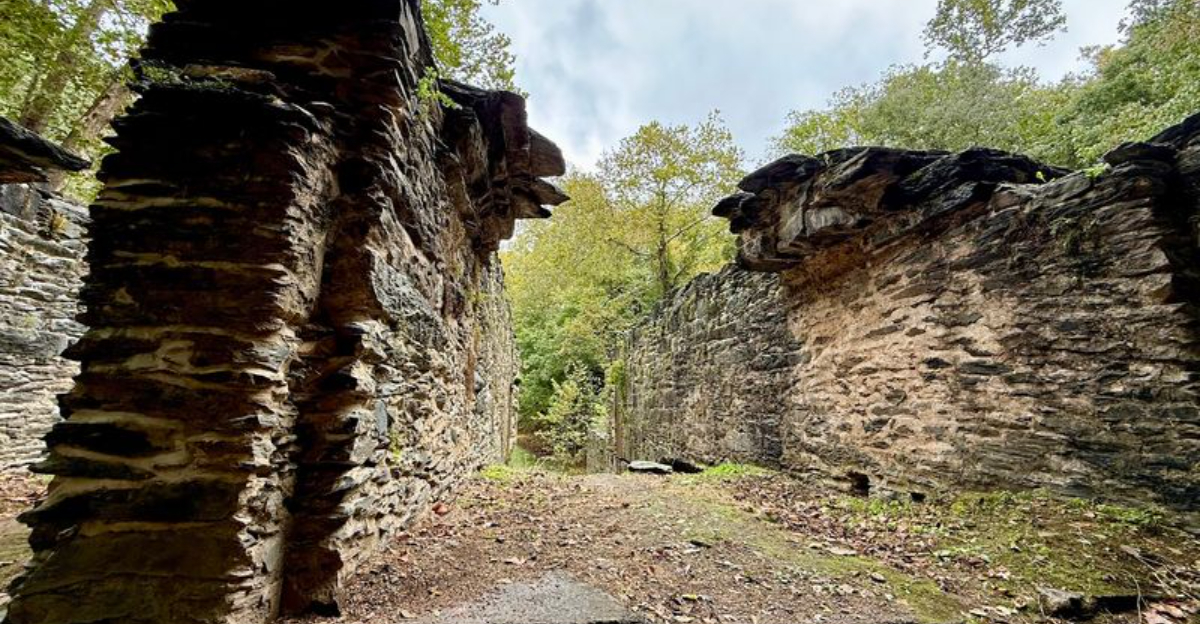
Stand right here and try to imagine the roar. The thunder of multiple turbines churning out tons of wood pulp every single day.
That was the rhythm of this West Virginia spot for decades.
It was the last great water-powered mill on the island, the final beat of an industrial heartbeat that had defined this place for generations.
Then the money ran dry. The turbines fell silent.
And just a year later, the river remembered its power. A devastating flood swept through, reducing the giant mill to the stone bones you see today.
It is a quiet ruin now. But listen closely, and you can almost hear the echo of a lost industry.
It is a beautiful, haunting spot. And it is a story you have to see to believe.
Virginius Island and the Man Who Bet on Water
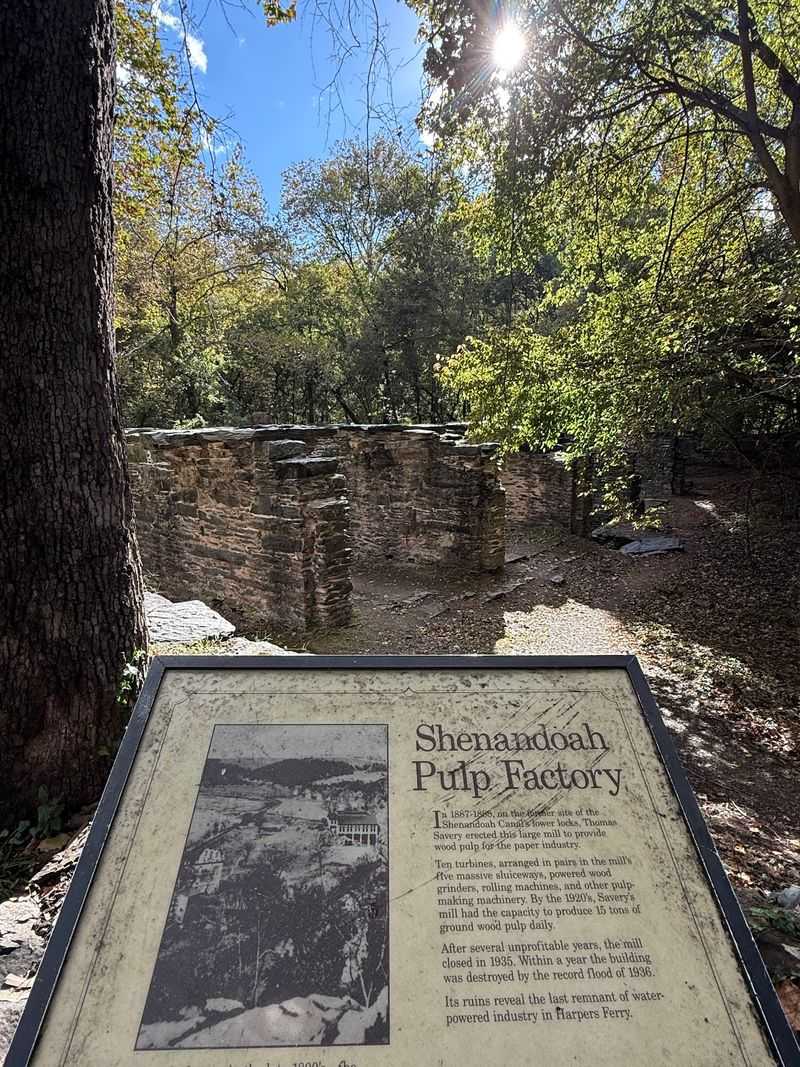
Back in 1887, a businessman named Thomas Savery looked at a stretch of riverbank on Virginius Island and saw opportunity where others saw leftover canal locks. Construction ran into 1888.
He chose the site of the Shenandoah Canal’s lower locks on purpose, because the water there already had somewhere to go and plenty of force behind it. Free power, essentially, delivered by the river every hour of every day.
The plan was to grind raw timber into wood pulp for the paper industry, which was growing fast at the time. Newspapers needed material, and pulp mills fed that hunger.
What strikes me now is how little of that ambition is obvious from the road. You see stone, brush, and water, not a factory floor.
Take a minute at the interpretive sign before you wander closer, since it lays out the layout of the island clearly. Knowing where the locks once sat makes the surviving walls suddenly readable, almost like a map drawn in masonry.
Ten Turbines, Five Sluiceways, One Very Loud Building
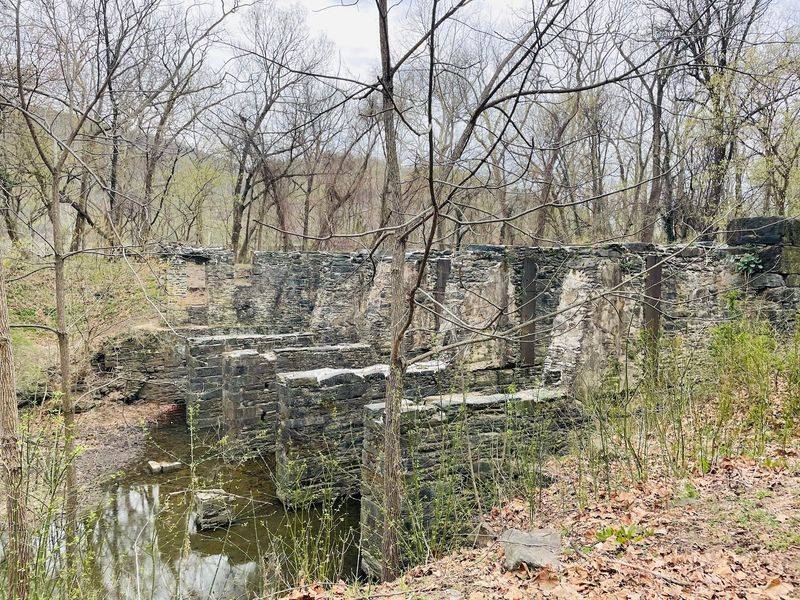
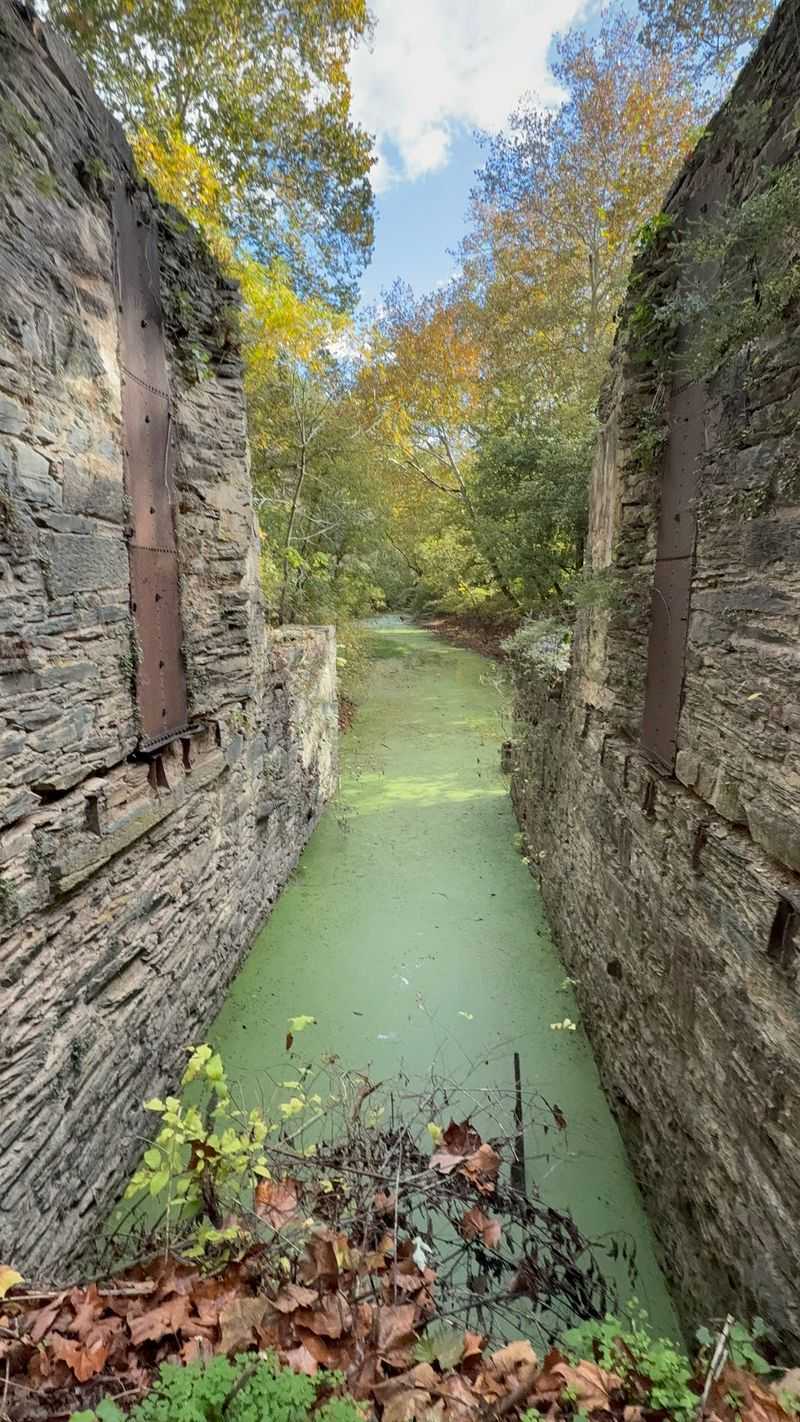
The engineering here was not shy. Ten turbines were installed in pairs inside five enormous sluiceways, each one fed by the Shenandoah River rushing through carved stone channels.
That arrangement powered wood grinders, rolling machines, and the rest of the equipment needed to reduce logs into soggy pulp. No steam plant, no electricity grid, just moving water doing the heavy lifting.
Standing beside those channels today, the scale is easier to feel than to describe. The walls are thick, squared off, and clearly built by people who expected them to last.
One visitor review mentioned the sheer effort of diverting water to this spot with the tools available in the 1880s, and honestly, that thought sticks with you.
Look for the paired openings if you can spot them from a safe distance, because they hint at how the turbines were arranged. Bring a camera with a decent zoom, since getting close to the edges is genuinely risky and not worth the shot.
Fifteen Tons a Day at Full Steam
By the 1920s, this mill was hitting its stride and producing fifteen tons of ground wood pulp every single day. That is a number worth sitting with for a second.
Fifteen tons meant a steady stream of logs arriving, machines running long hours, and workers keeping everything fed and moving. The output went on to become newsprint, book pages, and everyday paper goods.
Considering the equipment available back then, the efficiency is remarkable. There were no computers regulating flow, only experienced hands and mechanical judgment.
The mill also mattered locally, supporting jobs and anchoring Harpers Ferry as more than a scenic river town.
What I enjoy most is the contrast. The site is peaceful now, with water trickling and leaves rustling, yet it once operated at a pace that would have made conversation nearly impossible.
Read the production figures on the sign, then close your eyes for a moment. The quiet suddenly feels like something the place earned.
When the Numbers Stopped Adding Up
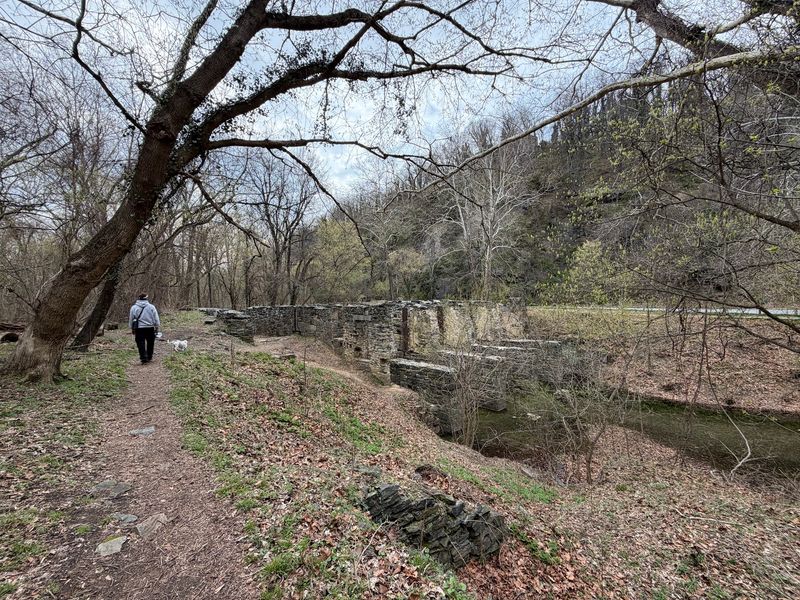
Success did not last forever, and the mill eventually slid into unprofitable years. Markets change, competition grows, and older machinery gets harder to justify.
Operations ceased in 1935, closing the book on nearly half a century of production on Virginius Island. For the workers, that must have been a heavy season.
There is something quietly sad about industrial endings. Buildings do not just stop, they empty out, and the silence arrives before the ruin does.
Reading about that final year while standing near the old walls added weight to the visit for me. The stone looks confident, almost permanent, yet the business inside it had already run out of road.
Timelines like this one make Harpers Ferry a good place to think about change, since the town has watched industries rise and vanish more than once.
Give yourself a few unhurried minutes here. The story lands better when you are not rushing back to the car.
March 1936 and a Record 36.5 Feet of River
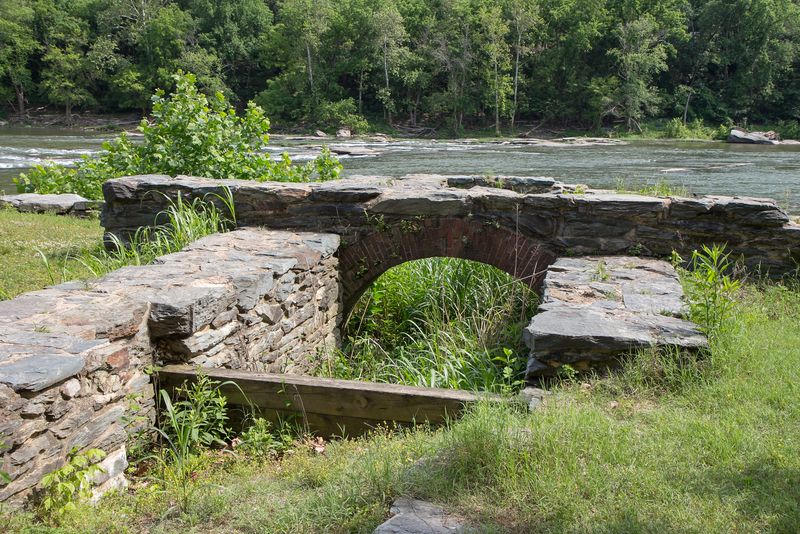
Nature had the final word, and it was not gentle. On March 18 and 19 of 1936, floodwaters at Harpers Ferry crested at 36.5 feet, still the all-time record for the town.
The river tore through the confluence area with force that is hard to picture on a calm day. The already closed pulp mill stood directly in its path.
Three upper floors were swept off the structure, reducing much of the building to rubble in a matter of hours.
Only a year separated the mill’s shutdown from its destruction, which is one of those historical coincidences that feels almost scripted.
When you visit during low water, the river looks harmless, even playful over the rocks. Come after heavy rain and the mood changes completely, brown and fast and loud.
Check river conditions before you go, since high water changes what you can safely see and where the paths stay walkable.
Stone Piers That Refused to Leave
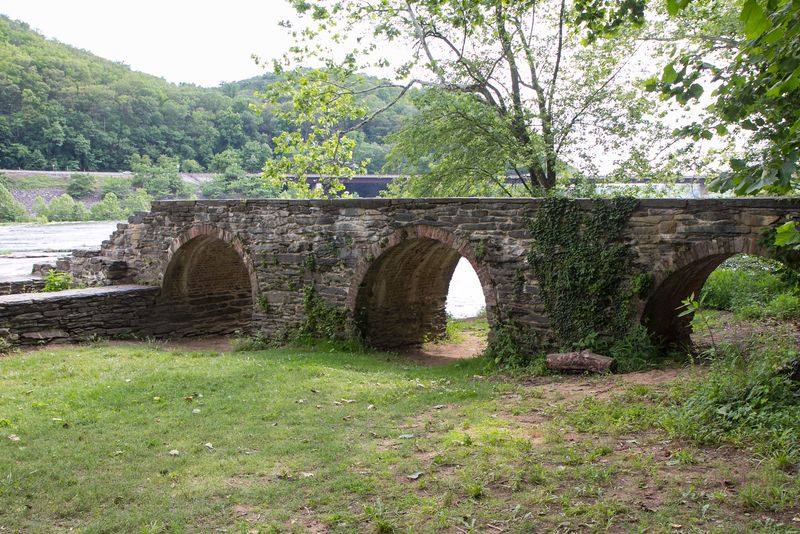
What survived the flood is genuinely impressive. Massive stone piers still line up along the riverbank, along with long sections of the original sluice walls.
They rise out of the ground like columns from an ancient site, except these were built for grinding wood, not worship. The masonry is rough, cool to the touch, and speckled with moss.
These remains are an important artifact of hydraulic technology in the Potomac River Valley, showing how water was captured, steered, and put to work.
The National Park Service looks after the site as part of Harpers Ferry National Historical Park, managing vegetation and pulling invasive plants that can crack old foundations.
Photographers do well here in late afternoon, when light rakes across the stone and picks out every joint and seam.
Watch your footing, though. Loose soil and sudden drops are real, and the edges near the water deserve serious respect.
Wandering the Trails Around the Island
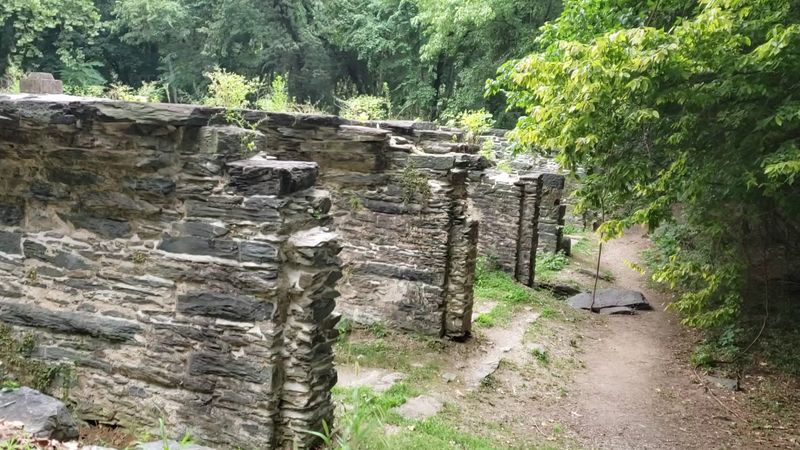
A short walk turns this stop into an actual outing. Trails thread through Virginius Island and connect toward Lower Town, passing other remnants scattered among the trees.
The Harpers Ferry Lower Town Trail Loop is a popular option, mostly level and manageable for a range of fitness levels. Paths are dirt and can be soft after rain.
Behind the pulp factory ruins, a trail continues along the river, and several visitors mention old water tunnels worth spotting on the way.
Bring insect repellent in warm months, because the riverside brush is generous with mosquitoes. That is not a small detail in July.
Sturdy shoes help more than you would expect on the uneven stretches near the ruins.
What makes the walk special is the layering. Foundations, canal cuts, and quiet forest sit side by side, and you keep discovering things you did not notice on the way in.
The Last Water Powered Operation on the Island
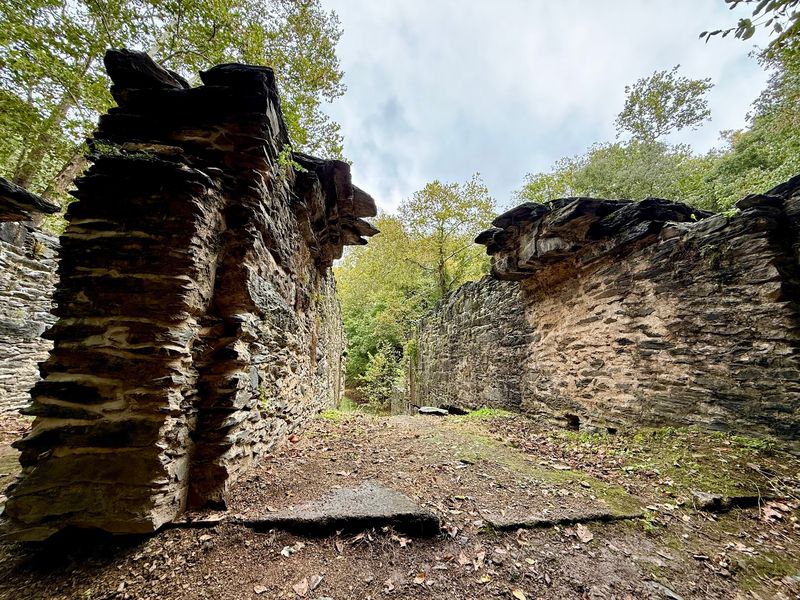
Water power built this town long before the pulp mill arrived. The National Armory was established in 1798, using the same rivers for the same basic reason.
Savery’s factory turned out to be the last water powered operation on Virginius Island, closing a chapter that had run for well over a century.
When the 1936 flood finished the building, it also ended that industrial era on the island permanently. Nothing replaced it, and the land slowly returned to trees and quiet.
Seeing the site in that context changes how it reads. These are not random ruins, they are the final entry in a long local tradition of harnessing moving water.
Harpers Ferry sits at the meeting of the Potomac and Shenandoah, which explains both the prosperity and the flooding.
Pair the pulp factory with a stroll through Lower Town if you have the time, since the two halves of the story fit together neatly.
Parking, Signage and Practical Bits Worth Knowing
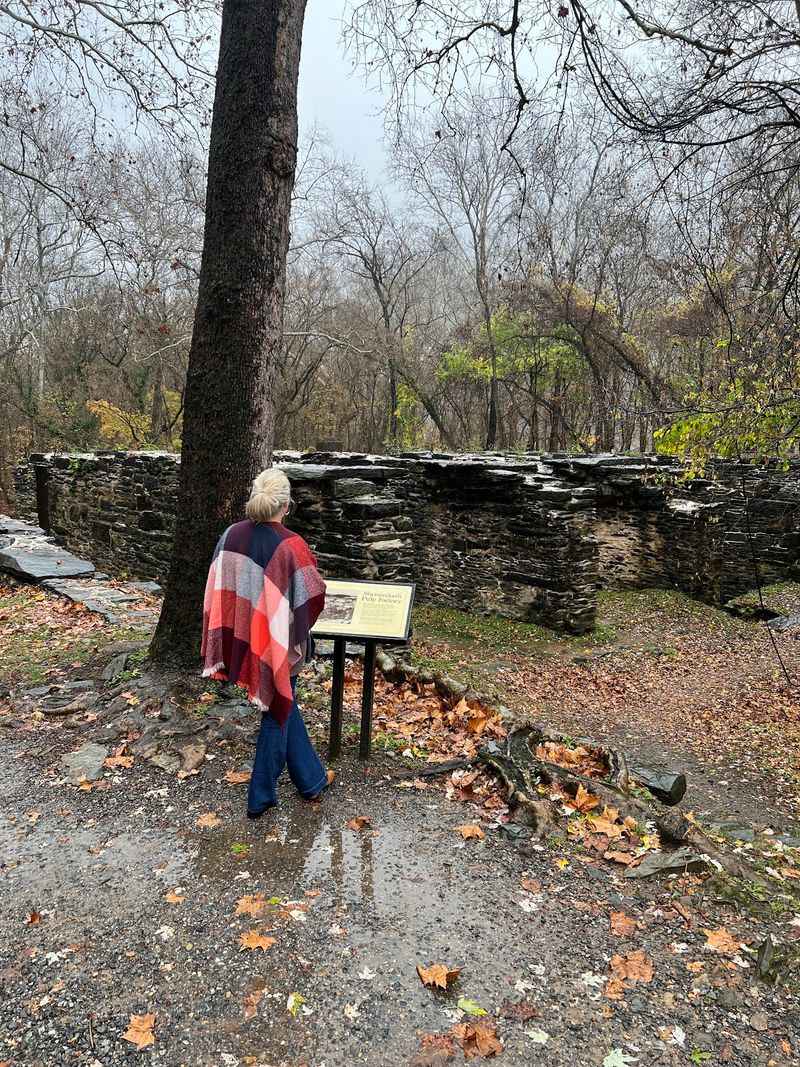
Here is the honest logistics rundown. A small gravel pullover sits right beside the ruins, and it fits only a couple of cars at a time with a short stay limit.
Because of that, timing matters. Early mornings and weekdays tend to be easier than sunny weekend afternoons.
An interpretive sign near the road explains the mill’s history and stays in good condition, so you can learn the basics without hiking anywhere.
The site is also reachable on foot from Virginius Island, which is my preferred approach if the parking spot is taken.
Gates open at 8 AM and the area closes at 6 PM daily, and the ruins fall under Harpers Ferry National Historical Park management.
Keep children and pets close, since the canal water sits near the path edges without barriers. Common sense goes a long way here, and the visit stays enjoyable when nobody wanders too near the drop offs.
Why These Old Walls Keep Pulling People Back
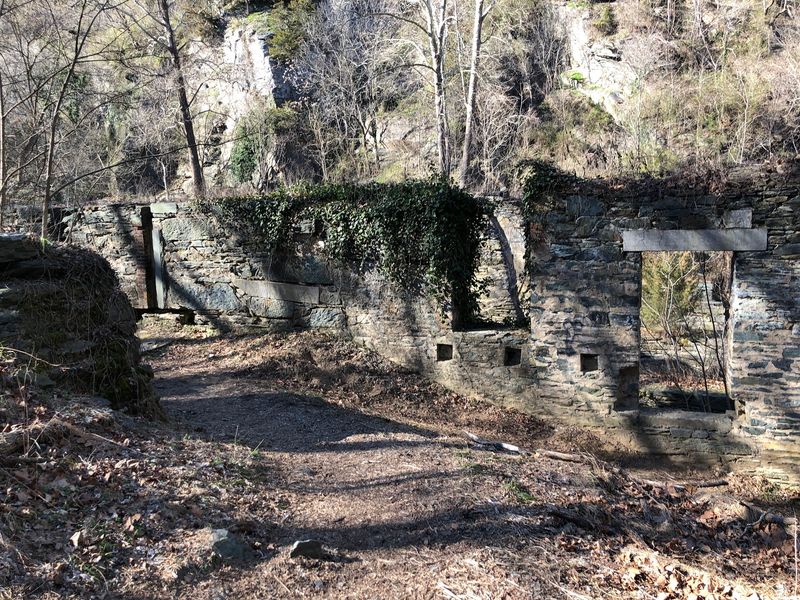
Ruins have a pull that finished buildings rarely manage. Something about broken stone invites you to fill in the blanks yourself.
Here, the blanks include grinding wheels, shouted instructions, and fifteen tons of pulp leaving the building every day. All of it gone, replaced by birdsong and slow green water.
When river levels drop, more of the structure becomes visible, and the layout of the channels reads clearly from the bank.
The setting does a lot of the work too. Trees lean over the stone, the Shenandoah murmurs nearby, and the light shifts constantly through the canopy.
I came expecting a five minute photo stop and stayed considerably longer, mostly because the place keeps offering new angles.
Come away with a real appreciation for how hard people worked to build something this ambitious, and for how quickly a river can rewrite the plan.
Address: Ruins of Shenandoah Pulp Factory, Harpers Ferry, WV 25425, United States
