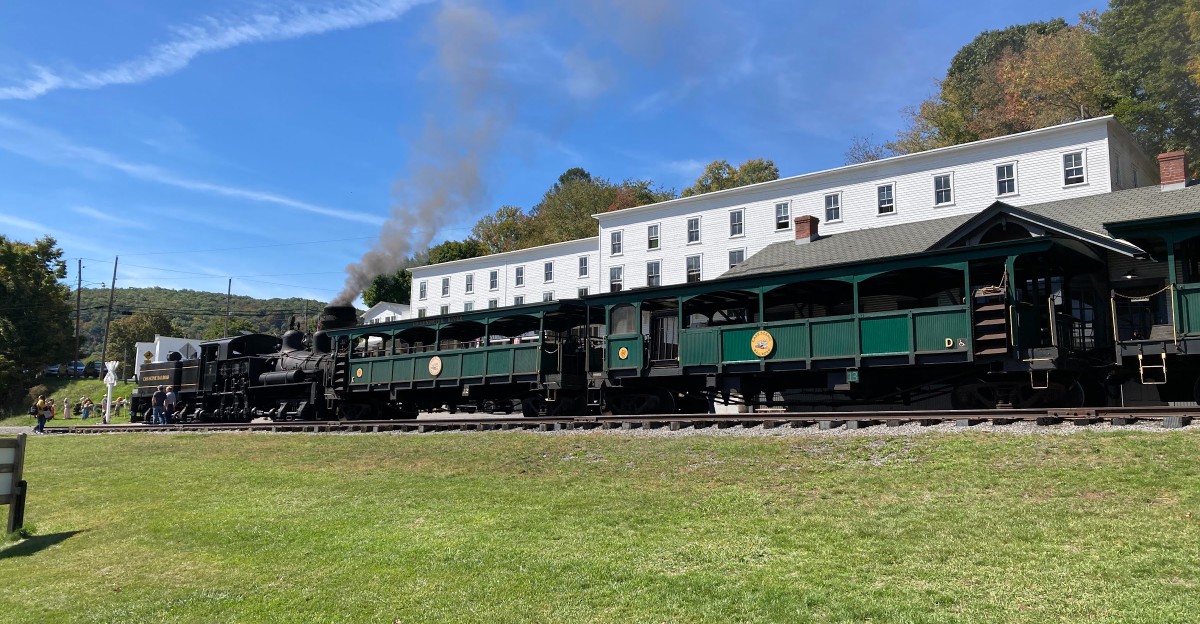
A steam engine built in 1905 still climbs grades that can reach an astonishing ten percent. Most highways would blush at that slope.
This one is a logging railroad, and it keeps working.
The locomotives are geared Shays, built to haul timber out of steep country. One of them was the very last Shay ever made.
It rolled out in 1945 and still has a job in the mountains of West Virginia.
I like how nothing here feels staged. The coal smoke is real, the whistle is loud, and the cinders are honest.
You ride in converted logging cars on wooden benches, so a cushion is a smart idea.
The longest trip climbs to one of the highest points in the state. The view at the top reaches across two states.
So how does a sawmill town end up running the show?
A Company Town Where The Trains Still Run The Show
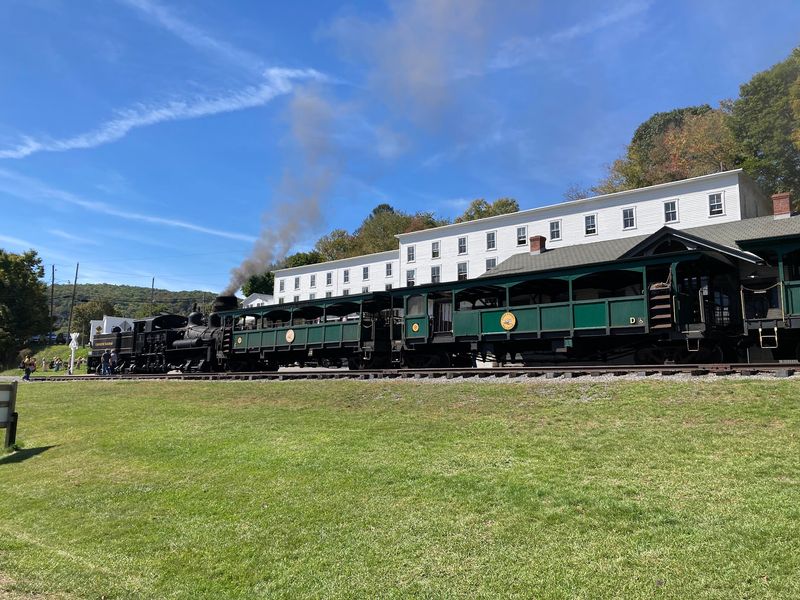
Cass Scenic Railroad State Park sits in the high country of Pocahontas County. It’s a whole preserved logging town with a working steam railroad at its heart.
You don’t visit a museum here so much as a place that kept its machinery breathing.
The park blends a few experiences into one stop. There’s the depot, the trains, a historic company store, and rows of white company houses.
Wilderness rises on every side, and the Monongahela National Forest sits right next door.
What makes it special is simple. The engines are the same kind of geared steam locomotives that once dragged timber off these ridges.
They still climb the original grades, puffing coal smoke and whistling through the hollows.
West Virginia has plenty of scenic drives, but few let you ride the actual tools of its timber boom. The trip options range from a two-hour run to an all-day climb.
That gives casual riders and serious rail fans equal reason to show up.
Plan to stay longer than the train ride itself. The town, the shops, and the trails easily fill a day.
Many folks book lodging and make a weekend of it, which says plenty about the pull of this mountain valley.
How Spruce, Hemlock, And Paper Built A Railroad
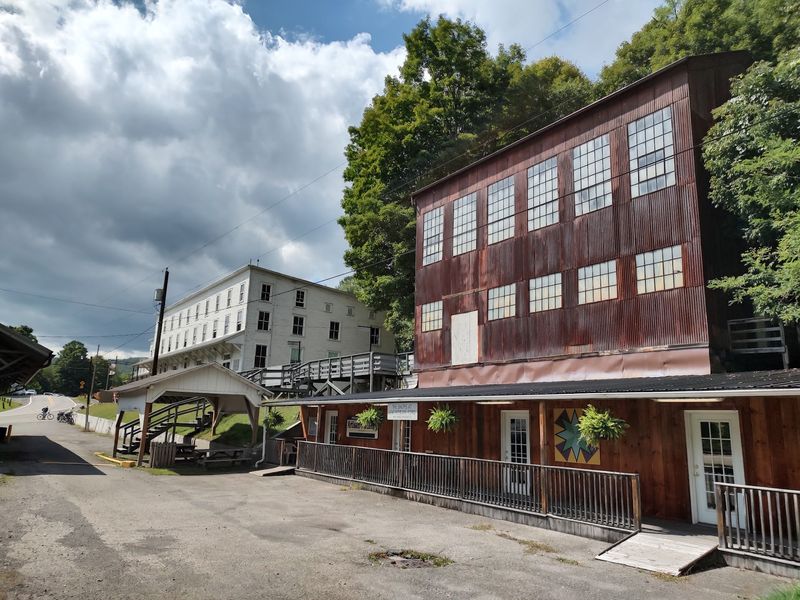
Paper started it all. In 1901, the West Virginia Pulp and Paper Company built the railroad to haul spruce and hemlock from the surrounding mountains.
A company town grew up around the operation, and Cass was born.
The sawmill here was reportedly the largest double-band sawmill in the world at one point. Over its working life, it may have processed about 1.25 billion board feet of lumber.
That’s a staggering pile of boards for one small valley.
Timber booms don’t last forever, though. As the logging industry faded, the railroad shut down in 1960.
Plenty of old West Virginia rail lines simply vanished after that kind of ending.
This one got a second act instead. The state acquired the line in 1963 and turned it into a state park.
The first tourist train left the Cass depot in June 1963, just days before West Virginia turned 100.
The state later acquired the company town itself in 1977. That move protected the houses and buildings you see today.
It’s a fine example of mountain pride refusing to let a good story disappear into the weeds.
Gears Instead Of Rods On These Mountain Climbers
Ordinary steam engines would spin their wheels on these slopes. Shays, Heislers, and Climaxes were built differently.
They use gears to deliver steady power, trading speed for raw climbing muscle.
Cass keeps several of these geared engines in service, and the roster is a rail fan’s dream. Shay No. 5 dates to 1905.
It’s considered the oldest operating Shay anywhere, which is quite a résumé for a machine.
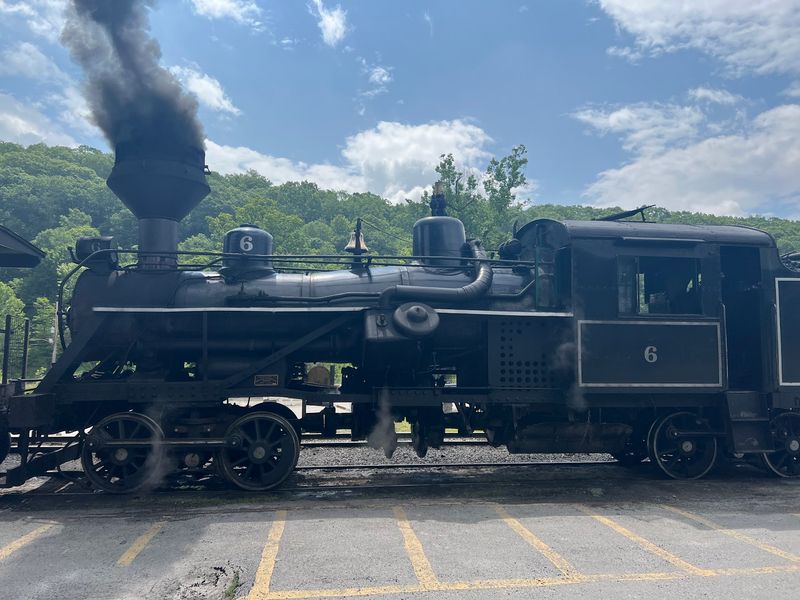
Then there’s Shay No. 6, nicknamed Big 6. It’s the largest surviving Shay and the last one Lima Locomotive Works ever built, back in 1945.
Riding behind a final edition feels a little like owning the last page of a great book.
The noise is part of the charm. Expect hissing steam, chuffing exhaust, and a whistle that carries across the valley.
Smoke and cinders come with the deal, since these are true coal-fired logging engines.
Even if you can’t tell a piston from a pickle, watching one of these engines work is fascinating. The side-mounted cylinders and spinning shafts look gloriously odd.
You’ll understand quickly why mountain railroaders trusted them.
Grades That Would Make A Pickup Truck Sweat
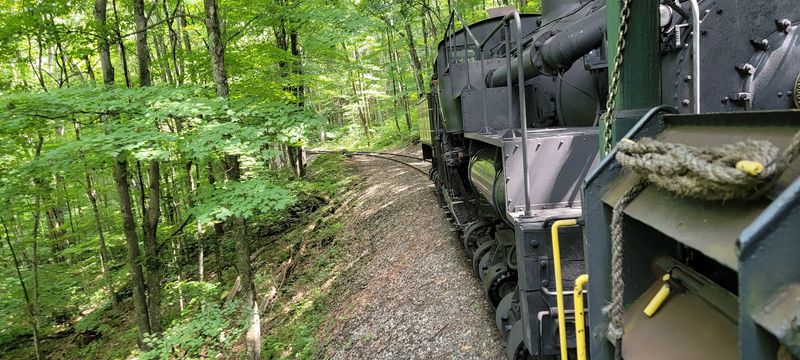
Four to five percent is the average grade on parts of this line. Some stretches reportedly hit ten percent, which is wildly steep for any railroad.
Most mainline tracks stay around one or two percent.
To handle that climb, the engines often push the cars uphill instead of pulling them. It’s a practical old logging trick that keeps everything safer on the slope.
You’ll feel the effort through the floorboards.
The line also uses switchbacks. The train runs forward up one leg, stops, then backs up the next zigzag.
It’s a clever answer to mountains that refused to make room for gentle curves.
Curves were cut into the mountainside more than a century ago. Crews built this route without modern machinery, and the work shows.
Every bend tells you somebody sweated hard to put rails here.
For engineering fans, this is the real show. For everyone else, it’s a surprisingly gripping ride.
There’s something oddly suspenseful about a 1900s locomotive slowly winning an argument with a mountain. Spoiler alert: the engine usually wins, one patient chuff at a time.
The Two-Hour Run Up To Whittaker Station
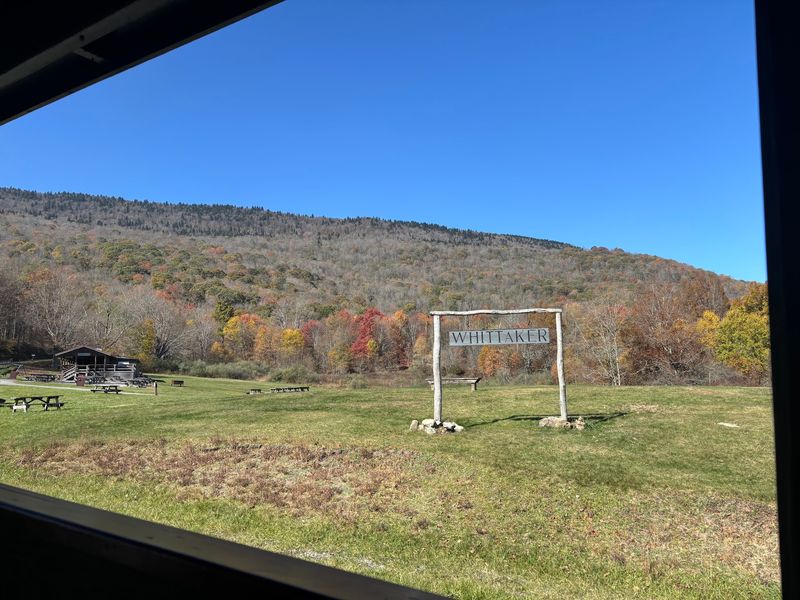
Short on time but long on curiosity? The Whittaker Station trip runs about two hours round trip.
It’s the easiest way to get a taste of Cass Scenic Railroad State Park.
The destination is a reconstructed logging camp. Historic equipment sits on display, helping tell the story of the crews who lived and worked in these remote woods.
It’s a peek at a rough, hardworking mountain life.
Keep an eye out for the skidder parked there. It’s reportedly one of only two left in the world.
Signage can be thin, so a little homework before the ride helps you appreciate what you’re seeing.
The route runs through thick forest with switchbacks along the way. In autumn, those trees turn the whole trip colorful.
In midsummer, the scenery stays mostly green and leafy.
Timing can stretch a bit, especially if the train waits for another one to pass. Leave some slack in your plans for the day.
This trip suits rail fans and history lovers best, since the switchbacks and logging relics are the real highlights. Big panoramic views are saved for the longer climb.
Bald Knob Hands Out A View Across Two States
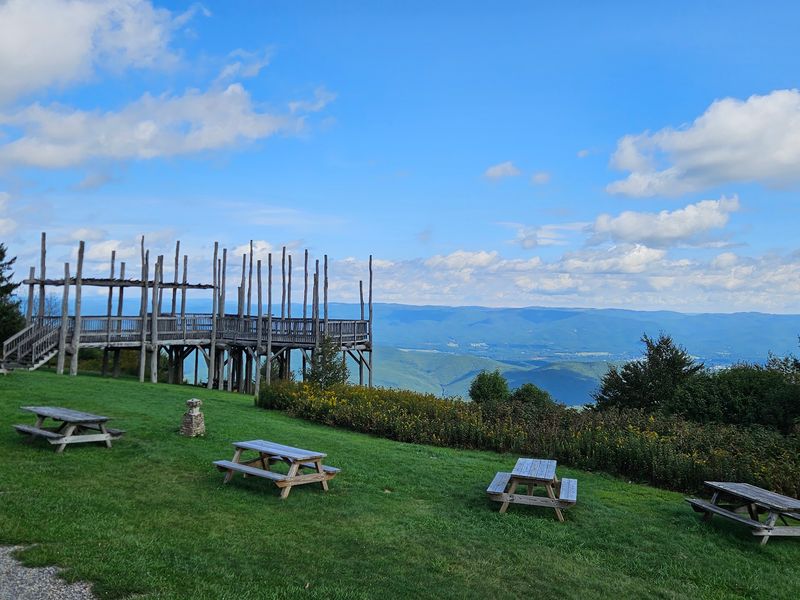
At 4,842 feet, Bald Knob ranks as the third-highest point in West Virginia. The train climbs all the way up there.
That alone makes this the headline trip for most riders.
The excursion runs about four and a half hours round trip, and some days it stretches closer to five. It’s an all-day commitment, so pack sunscreen and water.
Cell service is poor or missing along the way.
The views open up as you climb. Vegetation changes with the elevation, shifting the forest’s look as you go higher.
At the top, the overlook stretches across vast wilderness and into two states.
On clear days, you may even spot the Green Bank Observatory from along the route. That giant radio telescope makes a strange and wonderful landmark in the mountains.
Old steam and modern science share the same skyline here.
Fall is a favorite time to ride, with foliage painting the ridges. Expect a seasonal surcharge on autumn tickets.
Book early too, because summer dates can fill up fast. Grabbing a seat on the side facing the valley helps, since the hillside side mostly shows rock and trees.
Lunch On The Mountain And Other Trip Comforts
Nobody climbs a mountain on an empty stomach. The Bald Knob trip includes a simple bag lunch with cold cut sandwich fixings, plus water.
Chips and cookies round it out.
Small coolers are allowed on board, which is handy if you want your own snacks. Stops along the way also offer concession options.
A field stop includes a restroom break and a shelter with coolers.
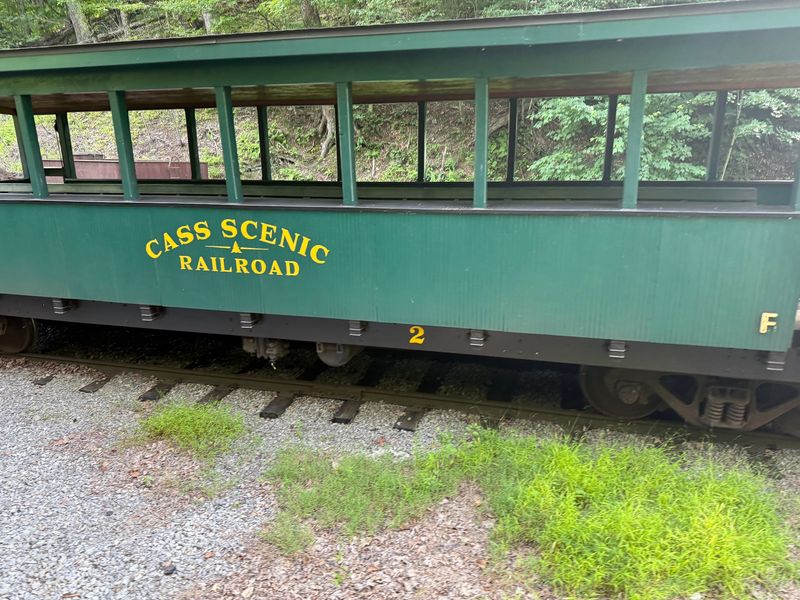
Now for the practical bit. The seats are wooden benches in converted logging cars, a little like old church pews.
A small cushion makes hours of riding much kinder on your back.
Bring a pair of glasses or sunglasses too. Coal-fired engines toss out cinders, and protecting your eyes is a smart move.
A light jacket helps as well, since mountain weather changes quickly up high.
Watch your step getting off at stops. Some car steps sit high without a step stool beneath them.
Taking it slow is wise, especially for older riders. A little preparation turns a long, rustic ride into a comfortable one, and nobody wants to remember a beautiful day for a sore ankle.
Fifteen Miles Of River Track Back In Business
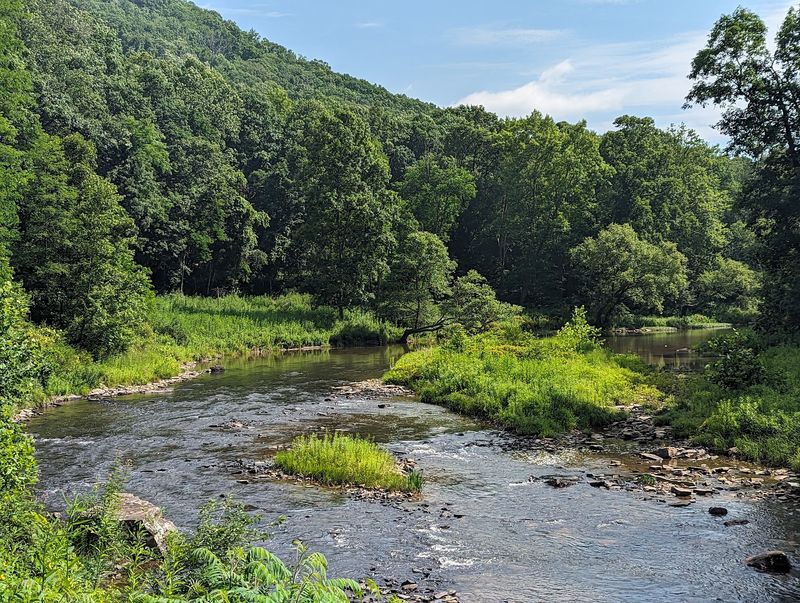
Floods in 1985 knocked out the rail connection between Cass and Durbin. For decades, that stretch sat broken.
Then in May 2023, the 15-mile link along the Greenbrier River reopened.
That restoration gave the region another rail experience. The river route offers different scenery from the steep mountain climbs.
Water, valley views, and gentle curves replace switchbacks and dramatic grades.
Some trains on this line even include games on board. That makes the ride a lighthearted outing for groups of friends or families.
Laughing with your crew while the river slides by is hard to beat.
Here’s a nice detail too. In cars with green bench seating, the seat backs can flip.
That lets your party sit face to face, which beats talking to the back of someone’s head.
The reopening shows how much West Virginia’s rail preservationists care about these lines. Fixing flood damage on old track is no small job.
Riding it feels like a quiet thank-you to everyone who refused to give up on it.
Where Old Steam Engines Go For Heavy Repairs
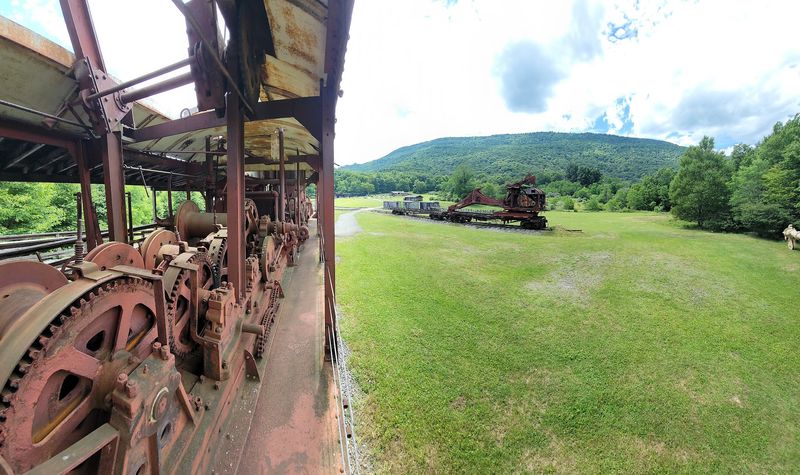
Keeping a 1905 locomotive running isn’t a weekend hobby. It takes skilled hands, special tools, and a proper shop.
Cass has exactly that.
The Cass railroad shops are the only facilities in West Virginia that can handle heavy repairs on steam locomotives. That’s a big deal for a state with deep railroad roots.
Without them, these engines would likely sit cold.
Steam engines need constant care. Parts wear, boilers need inspection, and moving pieces need regular greasing.
You’ll likely notice crews oiling and checking things at stops along the line.
Water stops are part of the rhythm too. Steam is just boiling water, after all, and the engines get thirsty on steep climbs.
Watching the crew refill a tank feels like a scene from an old photograph.
I believe the shops are the quiet heroes of this whole place. The trains get the applause, but the repair work keeps the story alive.
Every whistle echoing off the ridges owes something to people with grease on their sleeves. That dedication is why future generations should still hear Shays chugging up these mountains.
Meatloaf, Ice Cream, And A Classic Company Store
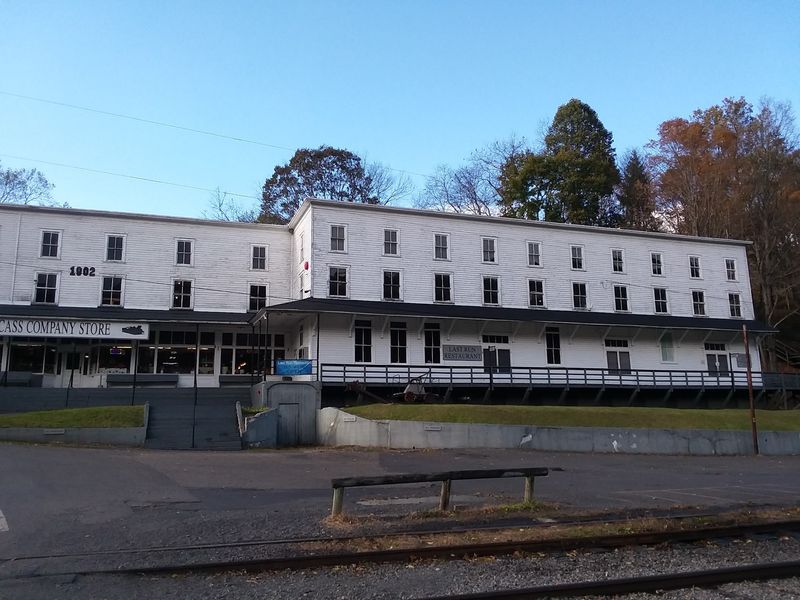
Hungry after the ride? The Company Store sits just up the street from the depot.
It’s one of the historic centerpieces of town and still bustles with activity.
Inside, Shays Restaurant serves meals that riders often pair with a train trip. Meatloaf gets warm mentions, which feels exactly right for a mountain railroad town.
A soda fountain and ice cream round out the sweet side.
The store also holds a well-stocked gift shop. Train souvenirs, books, and keepsakes fill the shelves.
It’s easy to lose track of time browsing before your departure.
A separate shop on site sells handmade local goods. That’s a nice way to bring home something made in West Virginia.
Supporting local craftspeople feels good, and the pieces make thoughtful gifts.
Plan an hour or more before your train to explore. The store has that old-time general store charm that’s getting rare these days.
Even if you skip the ride entirely, a bowl of ice cream on a mountain afternoon is hardly a sacrifice. Grandkids and grandparents tend to agree on that one.
A Museum, A Theater, And The Story Behind The Smoke
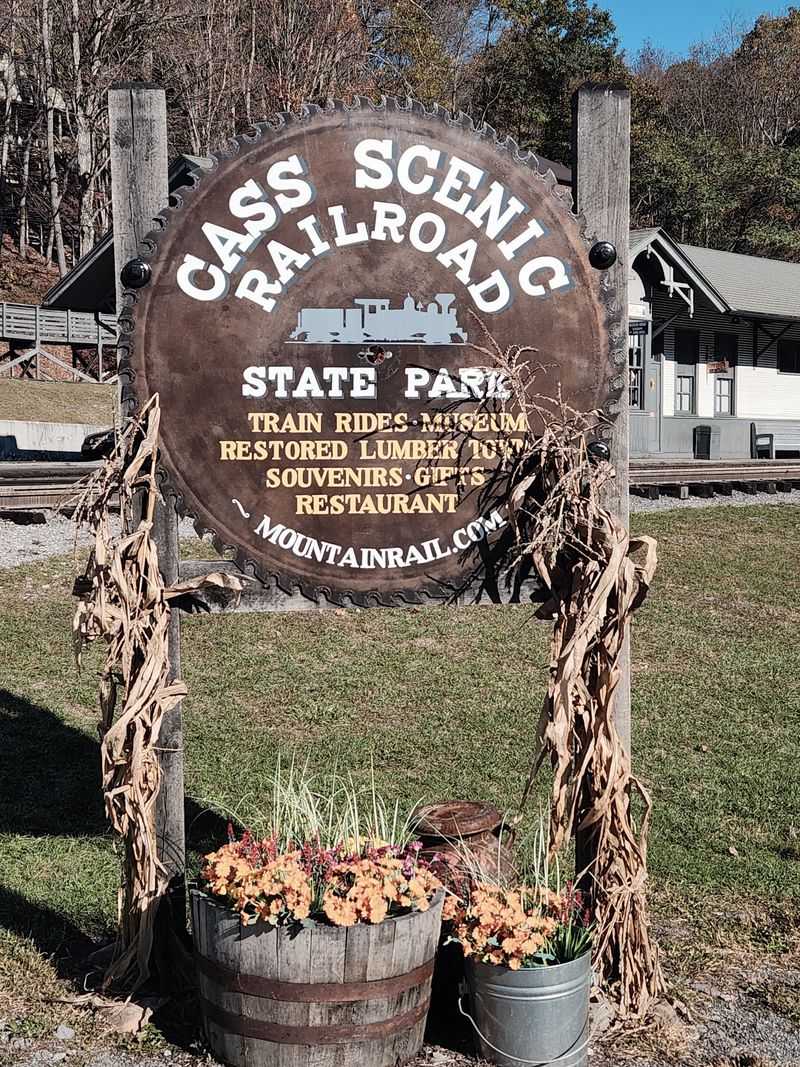
Questions pile up fast after riding a geared locomotive. Why the gears?
Who lived here? The town has answers waiting.
The Cass Historical Museum holds photographs, artifacts, and information on the railroad and its logging past. It’s a great way to connect the dots between the engines and the people who ran them.
History feels personal when you see their tools and faces.
The Cass Historic Theater shows documentaries about the area. A short film on Cass gives helpful background before your ride.
Watching it first makes the trip much richer, especially since narration onboard can be limited.
Wandering the town itself adds plenty more. The company houses still line the streets, looking much as they did in the early 1900s.
The town has changed remarkably little over the years.
Even on a rainy or snowy day when the train isn’t appealing, strolling Cass is worthwhile. Plenty of folks walk the town and leave happy.
Every porch and rooftop hints at a time when timber ruled these mountains, and the town wears that history proudly.
Sleep Where Logging Families Once Lived
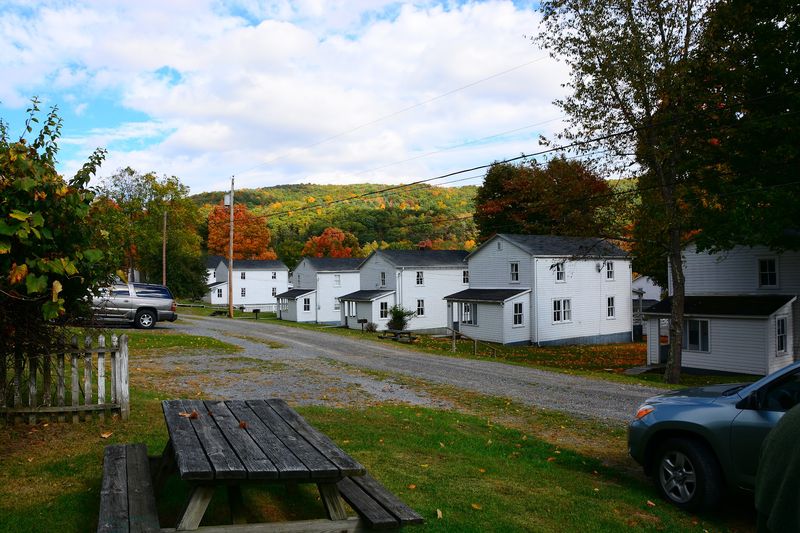
Why drive home when you can spend the night in a piece of history? Cass Scenic Railroad State Park rents its restored company houses year-round.
These homes once sheltered logging families.
The cottages accommodate different group sizes. Some lodging includes kitchens, which helps families and budget-minded travelers save on meals.
Staying right in town means you can stroll to the depot and store.
Camping fans have a shiny new option too. The park opened a new campground with 100 sites offering water and 50-amp electric service.
Two modern bathhouses and an RV dump station are part of the package.
The campground sits less than a mile from the depot and Shays Restaurant. That’s an easy hop for breakfast or a morning train.
The bathhouses even include shower benches, a thoughtful touch for anyone who appreciates a seat.
Free parking and free Wi-Fi add practical comfort. Waking up in a quiet mountain valley, then hearing a steam whistle before coffee, sounds like a pretty great morning.
It’s the kind of stay that makes a day trip feel too short.
Trails, Bikes, And A National Forest Next Door
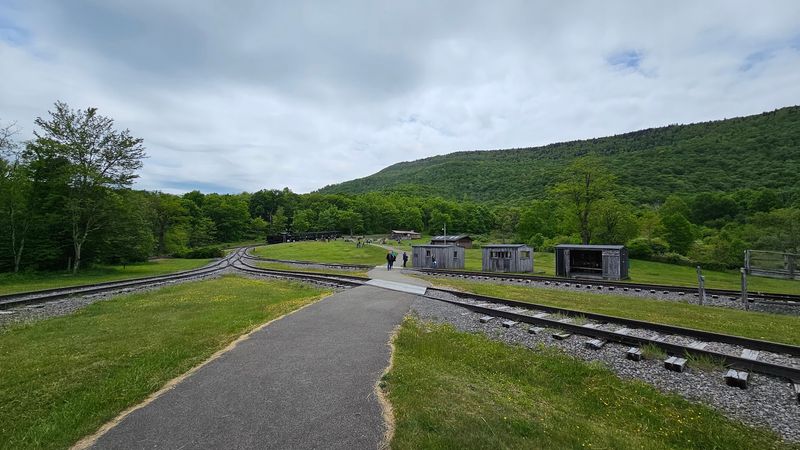
Trains aren’t the only way to move through these mountains. The Greenbrier River Trail is reachable right from the park.
It’s a popular path for biking, hiking, and spotting wildlife.
No bike? No problem.
The Company Store rents mountain bikes and e-bikes, making it easy to hit the trail without hauling gear from home. An e-bike might be the closest thing to having your own little Shay.
Fishing and geocaching are also available within the park’s boundaries. Those quieter activities balance out the noise and smoke of the steam engines nicely.
Some folks fill an entire afternoon outdoors after a morning ride.
The Monongahela National Forest borders the park, opening up even more room to explore. Scenic roads wind through the surrounding mountains too.
Motorcyclists and leaf-peepers love these routes.
Families with active kids will appreciate having so many options. But this setting rewards grown-ups just as much.
A slow walk along the river with mountain air in your lungs is good for the soul. West Virginia rarely runs short of beautiful ground, and this corner proves it.
Before You Go, Book Early And Pack Smart
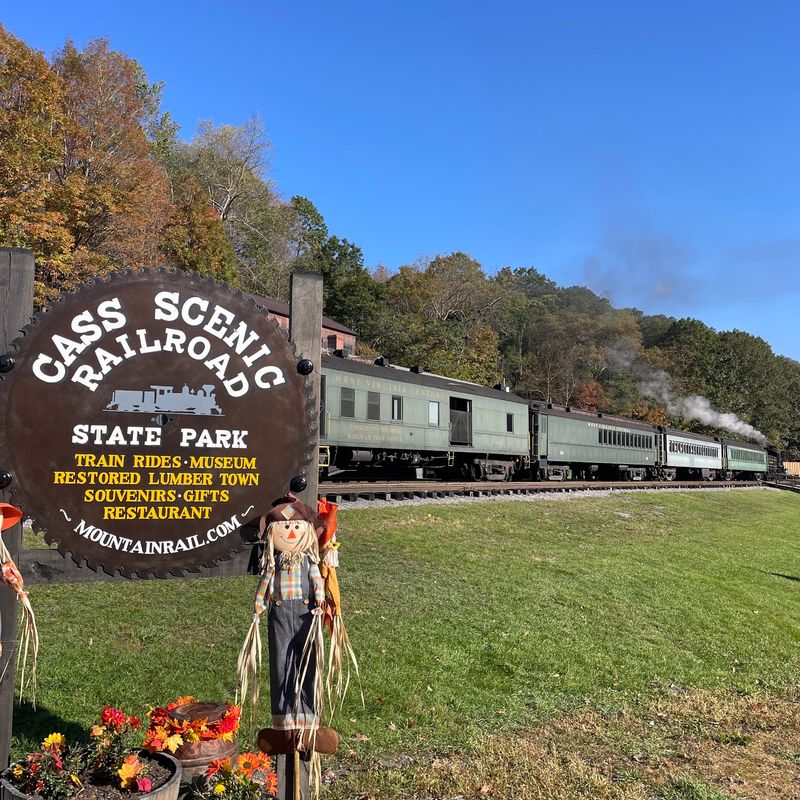
You’ll find Cass Scenic Railroad State Park at 12363 Cass Rd, Cass, WV 24927. The drive winds into remote mountain country.
Give yourself extra time and download directions before you lose signal.
Park hours generally run 8 a.m. to 6 p.m., stretching to 8 p.m. on Thursdays and Fridays. Train schedules vary by season, so check departure times ahead.
Parking is free, and the park is listed as accessible and smoke-free.
Booking tickets in advance is a must. Summer and fall dates can sell out, sometimes for days at a time.
The Bald Knob trip costs more than the shorter runs, and fall rides carry a seasonal surcharge.
Pack a cushion, eye protection, sunscreen, and water. Arrive early to visit the museum, catch the film, and browse the store.
Wear clothes you don’t mind smelling a bit like coal smoke.
Is it worth the trip? For anyone who loves history, machinery, or mountain air, I can’t imagine a better day in the state.
Some riders have returned since the 1970s, and that whistle still pulls them back.
