Narrow footpaths curl through towering rhododendrons and mossy old-growth spruce in that Oregon garden, and the whole place feels like a secret the coast has been quietly keeping for decades.
I found it tucked behind a cluster of art galleries, and it stopped me in my tracks the first time I walked in.
That botanical preserve winds through a wooded hillside, plants gathered from every corner of the globe, and the air carries that damp, earthy smell of a forest that knows how to take its time.
I spent an hour wandering those paths, ducking under branches and peering at unfamiliar leaves, feeling like I had stumbled onto something truly special.
Built over nearly thirty years by a retired professor and his wife, that place turned a single acre into one of the most remarkable private botanical preserves on the West Coast.
If you love plants, forests, or simply being somewhere that feels genuinely alive and unhurried, that trail belongs on your list.
A Hidden Oasis on the Oregon Coast
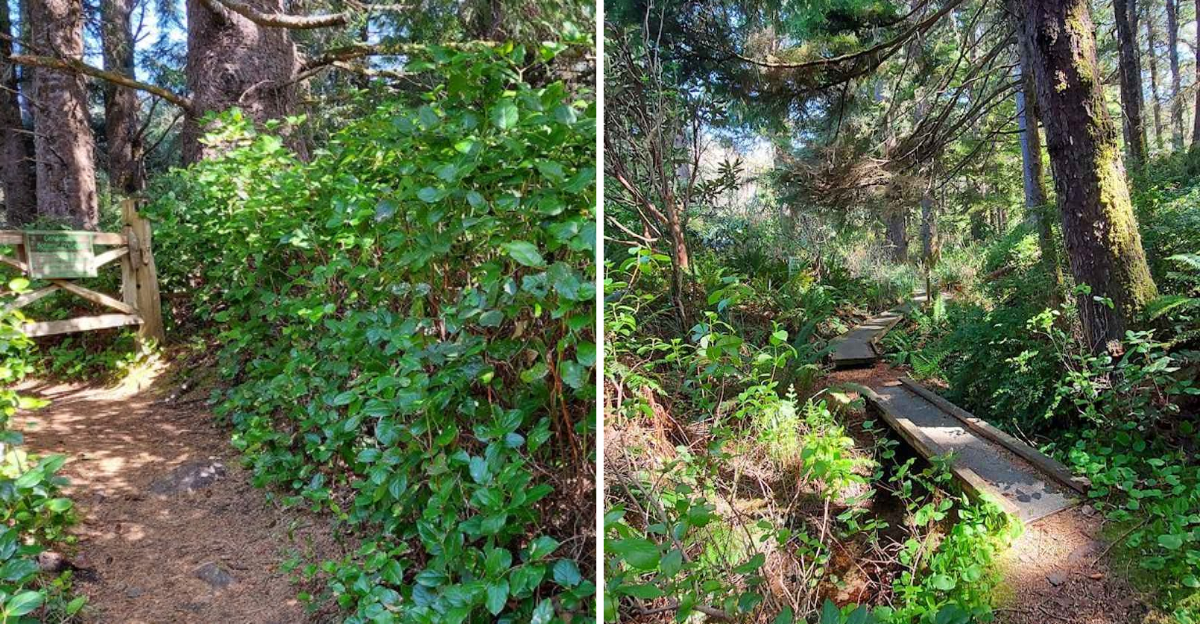
The moment you pass through the wooden gate behind the Earthworks Galleries on Highway 101 North, something shifts. The noise of the road fades quickly, replaced by birdsong and the soft creak of old conifers swaying overhead.
Gerdemann Garden does not announce itself loudly; it draws you in quietly, the way a good book does in the first few pages.
The trail is narrow and unpaved, winding uphill through a layered landscape that feels almost impossible for a coastal town this size.
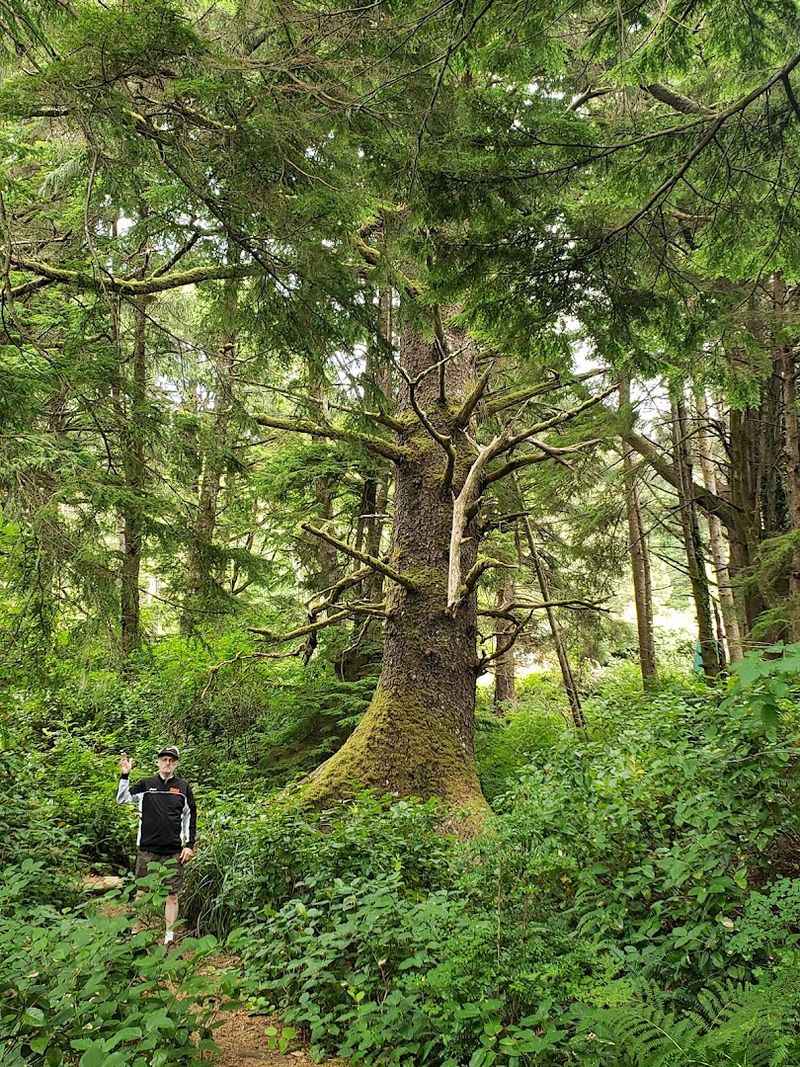
Ancient Sitka spruce and western hemlock form a high canopy above you, their roots weaving across the path in ways that make every step feel deliberate.
The air has that particular coastal dampness that makes everything smell clean and alive.
Jim Gerdemann, a retired plant pathology professor, and his wife Janice purchased the initial acre here in 1981. Over the next three decades, they expanded the preserve and filled it with plants gathered from their travels across the globe.
The sloped hillside, with its many microclimates, turned out to be ideal for testing the hardiness of rare and unusual species.
Since 2015, caretaker Andreea Ghetie has continued tending this living legacy with obvious care. The trail is maintained by Yachats Trails and is open year-round from 8 AM to 8 PM daily.
Dogs are not permitted on the public footpath, but the experience is so absorbing that most visitors barely notice the absence of their four-legged companions.
The Rhododendron Tapestry That Covers the Hillside
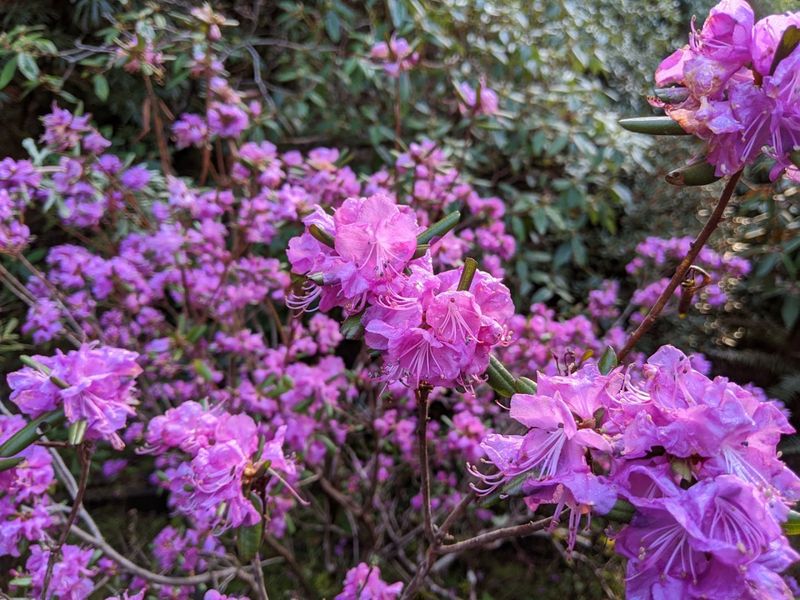
Roughly 700 rhododendron plants grow across the Gerdemann preserve, and that number alone is enough to make any plant lover stop and stare. These are not the tidy, trimmed shrubs you might see lining a suburban driveway.
Many of them are several meters tall, with enormous leathery leaves that drape over the path like a canopy inside a canopy.
Jim Gerdemann spent years hand-crossing tropical vireya rhododendrons, creating unique hybrids that exist nowhere else on earth.
Some remain officially unnamed, known only to those who have walked this trail and paused long enough to read the small labels tucked near the base of each plant.
The Himalayan species are particularly striking, their scale almost surreal against the Pacific Northwest backdrop.
Spring is when the hillside truly ignites. From March through the end of May, blossoms in shades of deep crimson, soft lavender, creamy white, and vivid pink open across the preserve in staggered waves.
Each week brings a slightly different palette, which means two visits a month apart can feel like two entirely different gardens.
Even outside of bloom season, the rhododendrons hold their own.
Their structural presence, with those broad, glossy leaves and gnarled trunks, gives the garden a year-round drama that keeps it interesting through autumn and even into the quieter winter months.
It is a collection built with genuine botanical ambition, and it shows at every turn.
Pathways, Steps, and a Bridge Over Mitchell Creek
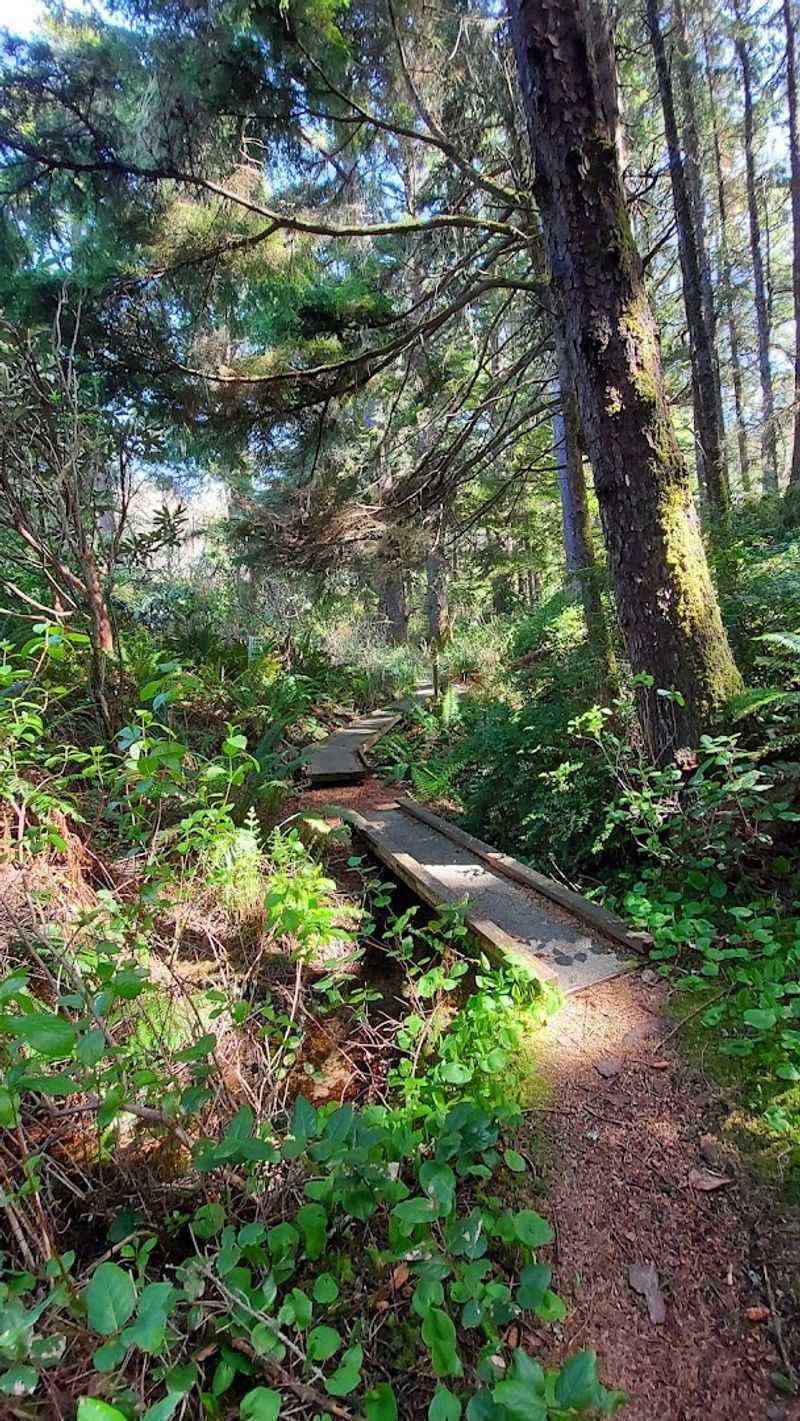
The footpath itself is one of the more charming aspects of this preserve, and not just because of what lines its edges.
It is genuinely humble in the best possible way: narrow, sometimes muddy, occasionally steep, with sections of wooden steps built into the hillside to help you navigate the terrain without sliding sideways into a rhododendron.
One of my favorite moments on the trail is crossing the small bridge over Mitchell Creek. The sound of the water below is gentle and constant, and the bridge itself sits low enough that you feel connected to the creek rather than just passing over it.
Visitors who have walked this path in winter mention spotting a remarkable feature: a grandmother Sitka spruce whose massive roots straddle the creek, the water flowing right underneath her base.
It is the kind of detail that makes you slow down and look more carefully at everything around you.
The trail connects to the Ya’Xaik Trail, a moderate 0.7-mile loop that winds through second-growth coastal forest before linking into the garden’s public footpath.
You can enter from the wooden gate behind the galleries or from the east end of Diversity Drive off Highway 101.
Either way, the transition from the wider forest trail into the garden feels like moving through a threshold.
On stormy coast days, the dense tree cover here offers real shelter from the wind and rain. The path stays navigable through most of the year, though sturdy shoes are always a smart idea given the roots, steps, and occasional wet patches underfoot.
Plants From Every Corner of the Globe
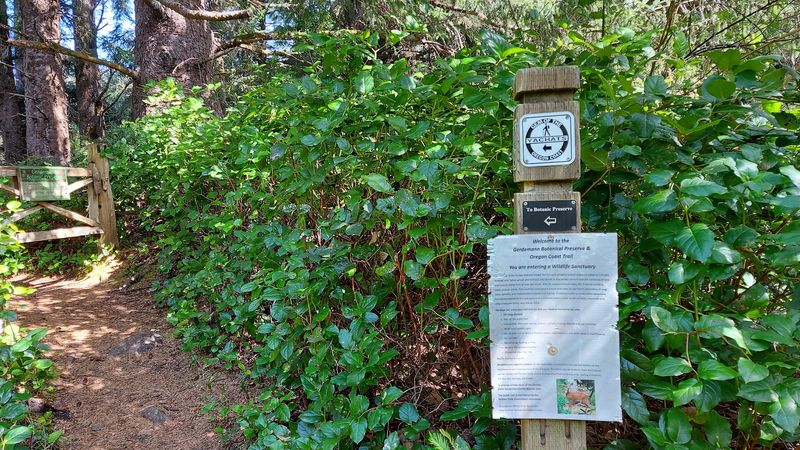
What makes Gerdemann Garden genuinely unusual is not just the rhododendrons.
The preserve holds a remarkable cast of supporting characters gathered from distant continents, all somehow thriving in a coastal Oregon microclimate that most gardeners would never dare test them in.
Magnolias and camellias grow alongside species from South Africa, South America, Australia, and China.
Jim Gerdemann’s deep knowledge of mycorrhizal fungi, the underground networks that help plant roots absorb nutrients, played a significant role in his ability to establish plants that experts often considered too tender or too finicky for this climate.
The results speak for themselves in the form of thriving specimens that have no business being this far north.
The glasshouse on the property shelters some of the more delicate tropical vireya rhododendrons, protecting them through the cooler coastal winters.
These hybrids, many of them hand-crossed by Jim himself, represent decades of careful observation and patient cultivation.
Visiting the preserve, you get a genuine sense of how much botanical knowledge went into every planting decision.
Labels and plant write-ups are placed throughout the garden, which adds an educational layer to the walk without making it feel like a classroom.
You can pause at a shrub from the Southern Hemisphere and actually learn where it came from and why it ended up here.
For anyone curious about plants beyond the usual garden center offerings, this preserve is a quiet revelation that rewards slow, attentive exploration.
Fungi, Moss, and the Forest Floor Details
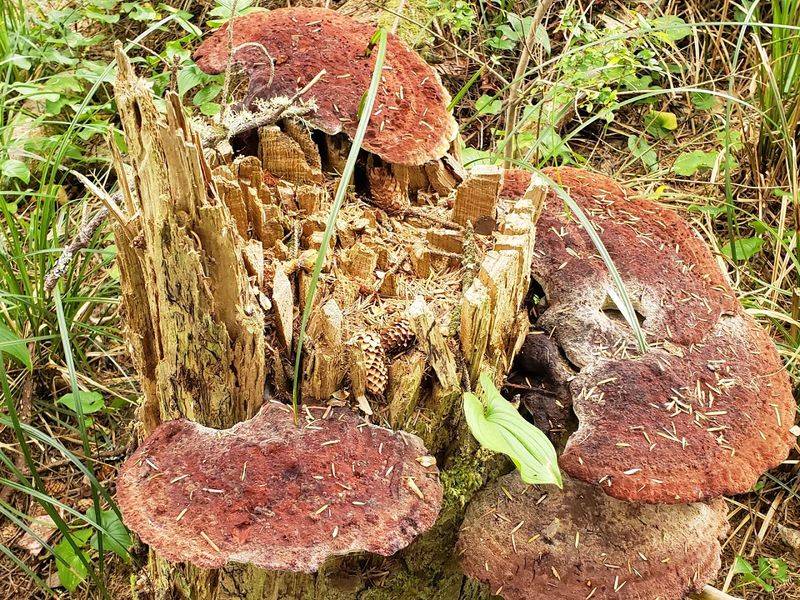
Plenty of visitors come to Gerdemann Garden specifically for the rhododendrons, but there is a whole other world happening at ankle height that deserves equal attention.
The forest floor here is extraordinarily rich, layered with mosses, ferns, sedges, and a rotating cast of fungi that appear and disappear with the seasons.
Jim Gerdemann spent much of his academic career studying mycorrhizal fungi at the University of Illinois, so it is no surprise that the soil beneath this garden supports an unusually healthy fungal community.
Mushrooms pop up in unexpected places along the trail, some brilliantly colored, others subtle and shelf-like, clinging to the sides of fallen logs.
For visitors who love fungi, this is a genuine bonus that not every botanical garden can offer.
Western trilliums appear in spring, their white three-petaled blooms bright against the dark forest floor. Skunk cabbage, azaleas, and native sedges fill in the lower layers, giving the understory a lush, almost tropical density.
Ancient moss-draped logs lie across the hillside in various states of slow, graceful decomposition, each one hosting its own tiny ecosystem.
The interplay between native coastal habitat and the cultivated plant collection is one of the most compelling things about this preserve. It never feels sterile or overly manicured.
The garden and the forest exist in genuine conversation with each other, and the result is a space that feels wild and tended at the same time, which is a harder balance to strike than it might seem.
Planning Your Visit to Gerdemann Garden
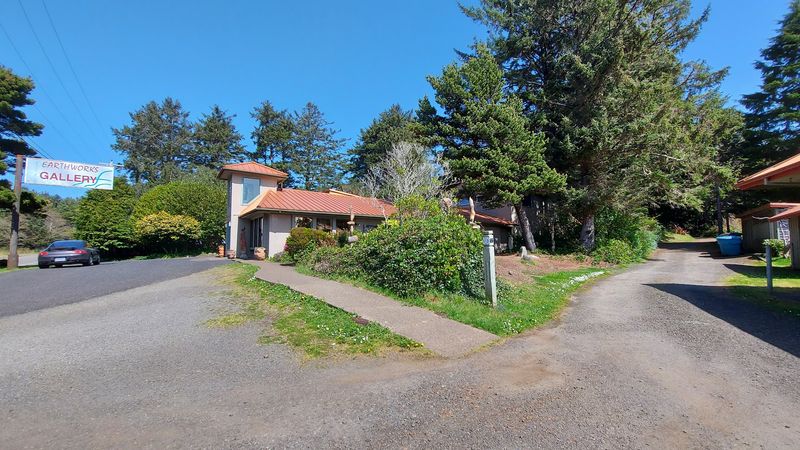
Getting to Gerdemann Garden is straightforward once you know what to look for. The main public access point is a wooden gate located behind the art galleries just north of Diversity Drive in Yachats, right off Highway 101 North.
You can also reach the garden’s footpath by connecting from the Ya’Xaik Trail, which starts at the east end of Diversity Drive and makes a pleasant 0.7-mile loop through second-growth coastal forest before joining the preserve.
The trail is open year-round, every day from 8 AM to 8 PM. March through the end of May is the prime window for seeing the rhododendrons in full bloom, though the garden holds genuine interest in every season.
Autumn brings a quieter beauty, and even winter visits reward those willing to bundle up and look carefully at the structural details of the plantings.
A few practical notes worth keeping in mind: pets are not permitted on the public footpath within the preserve. The nearest restrooms are at Smelt Sands State Park, just across Highway 101 to the west.
The trail includes steps and uneven terrain, so comfortable, supportive footwear makes a real difference. Bikes are not suitable for this path.
Private tours with caretaker Andreea Ghetie offer a deeper look at the full property, with her botanical knowledge and genuine enthusiasm for the garden adding a layer that a solo walk simply cannot replicate.
Whether you visit independently or with a guide, Gerdemann Garden is the kind of place that stays with you long after you have left.
Address: Behind Art Galleries, 2222 Hwy 101 N, Yachats, OR 97498
