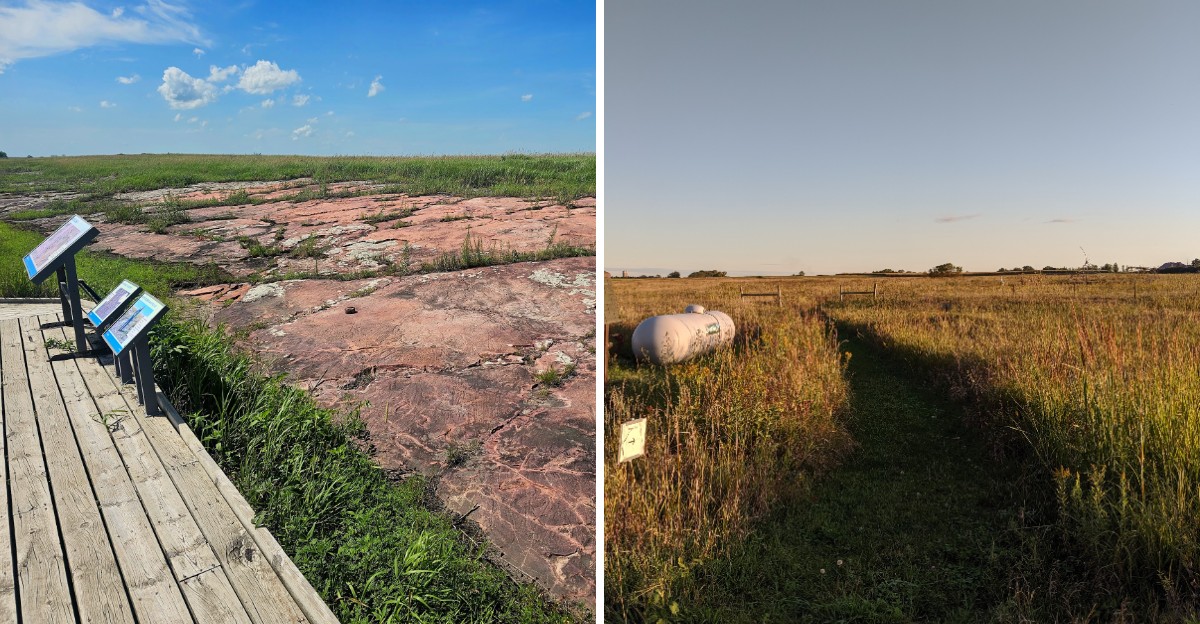
Some of the carvings on this rock are up to 9,000 years old, and people kept adding new ones until about 250 years ago. That’s thousands of years of artists sharing the same stone canvas.
The pictures include thunderbirds, turtles, bison, handprints, and even ancient spear-throwers. Experts count around 5,000 carvings, and thousands of them stayed hidden under lichen until recently. Somehow the rock keeps revealing more.
Here’s the twist that hooks me. The images are tricky to spot at midday. They show up best at dawn and dusk, when low sunlight throws shadows into every groove.
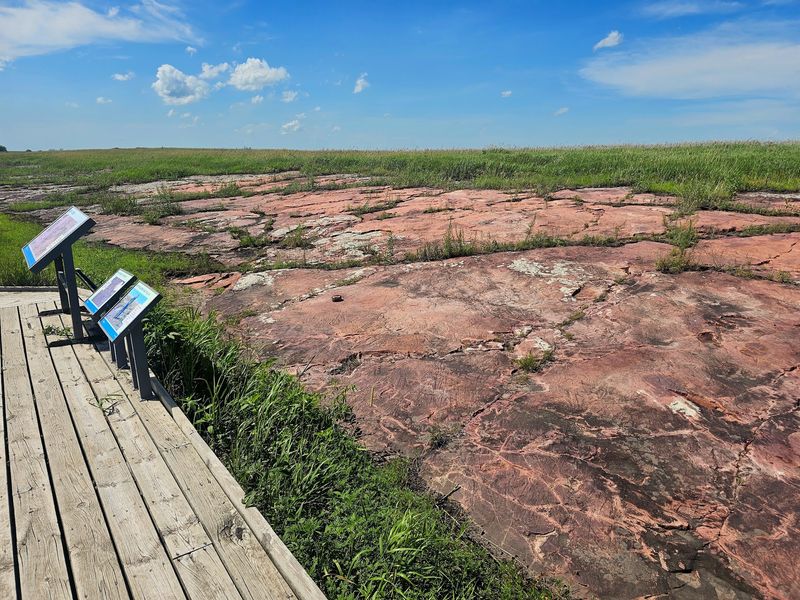
All of this sits on a pink rock ridge surrounded by native prairie in southwestern Minnesota.
A Pink Stone Canvas That Kept Thousands Of Years Of Stories
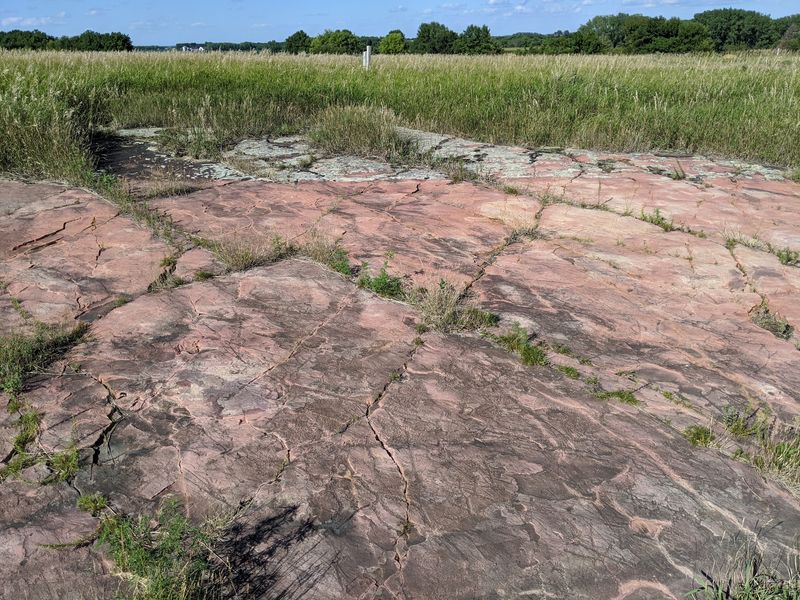
Few spots in the Midwest can match the sheer number of carvings found at Jeffers Petroglyphs. It holds the largest concentration of Indigenous petroglyphs in the Midwestern United States.
The canvas itself is a big deal too. Carvers worked on an outcrop of Sioux Quartzite, part of the 23-mile-long Red Rock Ridge. That rock started as sand deposited more than 1.6 billion years ago.
Over time, heat and pressure turned the sand into one of the toughest stones in Minnesota. That toughness explains why the images survived so long. Softer rock would have worn smooth ages ago.
The exposed rock surface measures roughly 150 by 900 feet, with thousands of ancient carvings spread across the Sioux Quartzite outcrop. That’s a lot of space to explore, so give yourself time. You won’t spot everything in a quick walk.
The oldest carvings date back an estimated 7,000 to 9,000 years. The newest are only a few centuries old. That makes this one of the longest continuously used sacred sites in the world.
I love that one rock connects so many generations. Each groove adds another chapter. Standing beside it, you’re reading a story that took thousands of years to write, and nobody rushed the ending.
Thunderbirds, Turtles, And A Surprising Corn Stalk Await Your Eyes
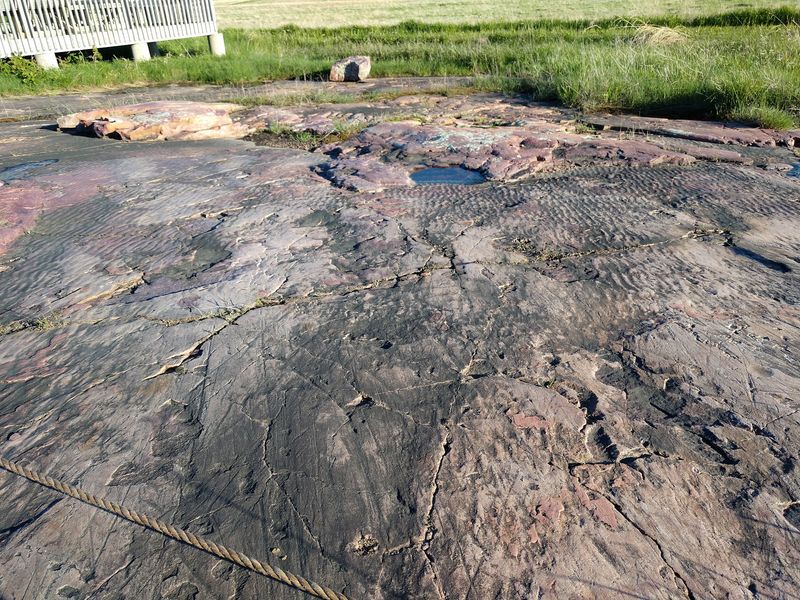
Stick figures, bison, elk, and deer show up across the stone. So do salamanders, rabbits, wolves, and birds of many kinds. It’s like a nature guide drawn by hand, one peck at a time.
Some symbols carry deep spiritual meaning. Thunderbirds are believed to cause thunder, lightning, and wind. They’re often seen as rivals of the Great Horned Serpent.
Turtles represent Mother Earth and fertility. Handprints are said to show that Native people are still here. They also stand for friendship and understanding, which feels like a pretty great message to leave behind.
Tools appear as well. Look for atlatls, spear points, arrowheads, lances, and leather bags. Other carvings seem to work like maps, with dots for trails, circles for towns, and wiggly lines for rivers.
A recent exhibit even highlights a petroglyph of a corn stalk. Footprints and bird tracks add to the mix. Every image hints at how people lived and what they valued.
Something is missing, though. No horses appear anywhere on the rock. That suggests the latest carvings came before horses spread among tribes in this region, which is a clever clue hiding in plain sight.
Timing Your Visit Changes Everything You See
Midday sun is not your friend here. Bright overhead light flattens the rock, and the carvings almost vanish. That surprises plenty of first-timers.
Dawn and dusk work best. When the sun sits low, shadows fill each pecked groove. Suddenly a faint shape turns into a bison or a person.
The site leans into this with summer evening hours. From May 28 through August 2, 2026, Jeffers Petroglyphs was open Thursday through Saturday from 10 a.m. to 8 p.m. and Sunday from 11 a.m. to 5 p.m., with reduced hours later in the season.
Guides also help a lot. They point out images you’d likely miss on your own. Spotting a carving after staring at bare stone feels a little like solving a puzzle.
Plan ahead before you drive out. The season generally runs from late May into fall, and the site closes during winter months. Tuesdays and Wednesdays in summer are set aside for field trips and private bookings.
One more tip worth remembering. Photography of the petroglyphs themselves isn’t allowed, but visitors can photograph the surrounding prairie and landscape. Honestly, that makes the moment feel more personal, and your memory becomes the only souvenir of what the rock showed you.
Show Respect, Because This Ground Is Still Sacred
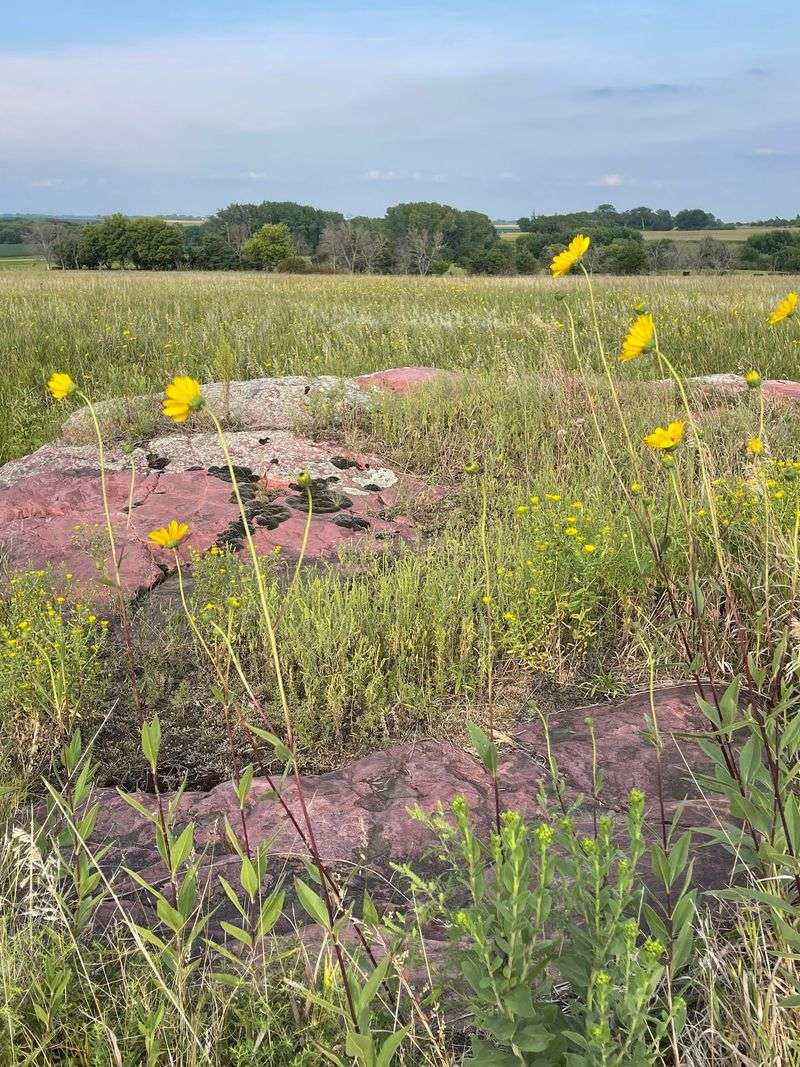
Many Native nations consider Jeffers Petroglyphs a sacred place. These include the Dakota, Cheyenne, Arapaho, Iowa, Otoe, and Ojibwe. That list alone shows how far its meaning reaches.
This isn’t only a past-tense story. The site remains a place of prayer and worship. Some people still hold ceremonies here today.
The carvings are often described as an encyclopedia of Native history. They record presence, events, beliefs, and ways of life. They also link the spiritual world with the physical one.
Knowing that changes how you visit. Walk gently, listen to your guide, and follow site rules. The no-photo policy is part of honoring the carvings.
I like how the site treats visitors as guests rather than spectators. You’re welcome to learn and look closely. You’re also reminded that this place belongs to living communities.
Bring curiosity and a quiet voice. Kids can still have fun while learning why respect matters. A sacred site can feel joyful and meaningful at the same time, especially when you understand that the stories carved here still matter to real families today, not just to history books.
A Rubber Blanket Uncovered Thousands Of Hidden Carvings
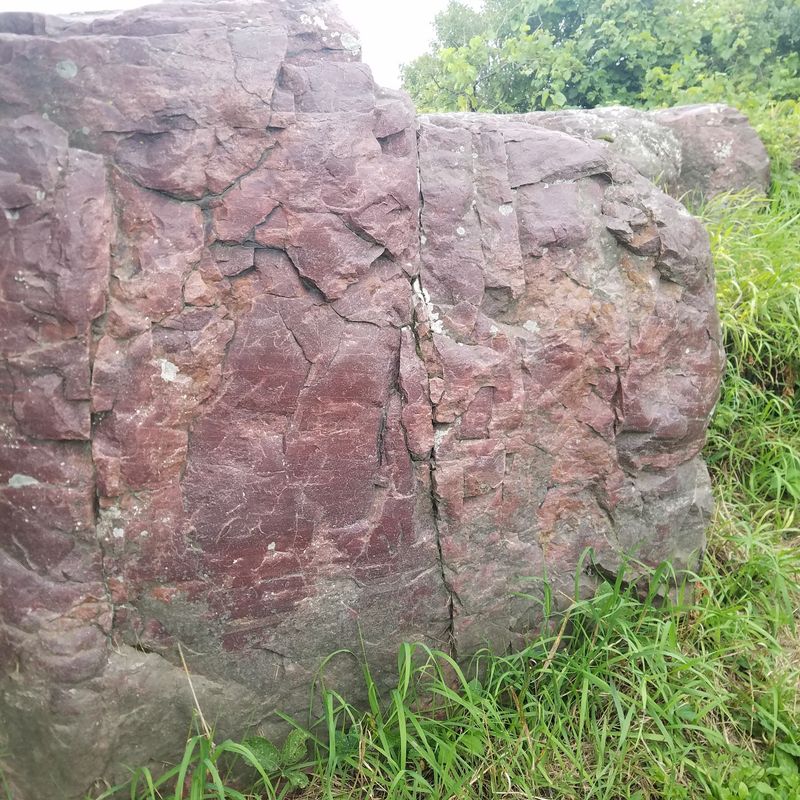
Lichen turned out to be a sneaky villain. The crusty growth slowly covered many carvings, hiding them from view. For years, experts knew of about 2,000 images.
Then came the Jeffers Conservation Project in 2006. Crews used a synthetic rubber membrane to block sunlight from the lichen. Without light, the lichen couldn’t hang on.
The results were stunning. About 3,000 more carvings appeared, bringing the total to around 5,000. Some estimates go as high as 8,000.
That’s right, the known number more than doubled. Imagine a library finding extra shelves of books behind a wall. That’s basically what happened here, only the books are carved in stone.
The team also used white light scanning. This method creates precise records without touching or harming the rock. It’s high-tech care for very old art.
The Minnesota Historical Society has protected the site since buying it in 1966. An interpretive center followed in 1998. Each step helped keep the carvings safe for future visitors.
So when you look at the rock, remember that some images you see were invisible not long ago. Good luck not wondering what else might still be out there.
Bring Your Throwing Arm To The Atlatl Range
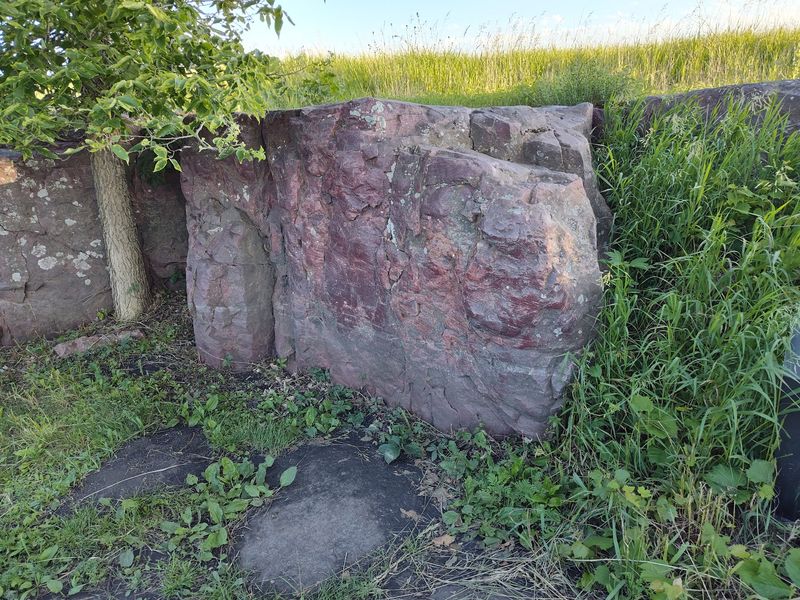
Spears thrown with a stick? Yes, and you can try it yourself. The site has an atlatl range where guests learn to launch ancient Native American spears.
An atlatl is a spear-throwing tool. It came before the bow and arrow. It works like an extension of your arm, giving each throw extra power.
Here’s the fun connection. Atlatls appear among the carvings on the rock. After seeing them in stone, you get to hold the real idea in your hands.
It’s harder than it looks, so don’t expect perfect aim right away. The learning is part of the fun. Families often turn it into a friendly competition.
Daily programs also cover natural and cultural history. These activities make the past feel active instead of dusty. Kids especially seem to remember lessons they can actually do.
Guided tours add even more. Guides explain the carvings and share stories behind the symbols. Pair a tour with a few atlatl throws, and you’ll leave with a much richer picture of ancient life.
Just a heads-up. Your first spear may wobble a bit. Ancient hunters surely had practice days too.
Tallgrass Prairie That Never Met A Plow
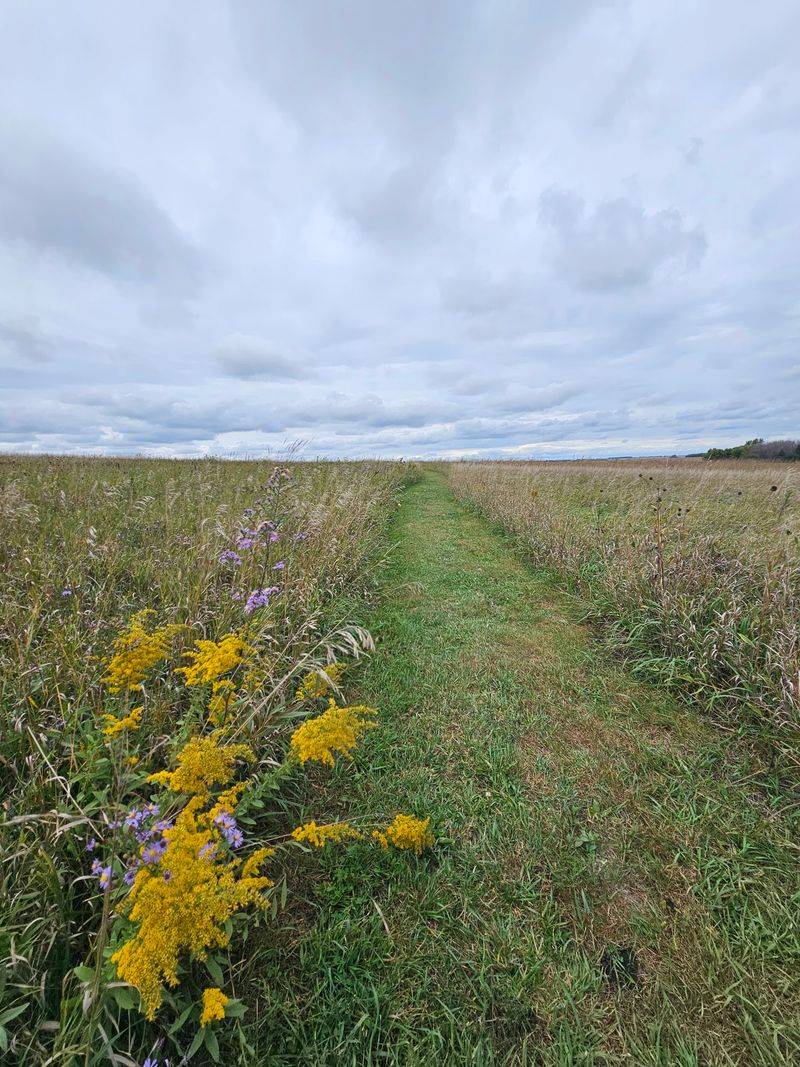
Farmers never broke this ground, and the reason is pretty great. The bedrock sits too close to the surface for plowing. So the native prairie simply stayed put.
Today, 160 acres of virgin and restored tallgrass prairie surround the rock. More than 300 plant species grow here. That’s a lot of green for one stop.
Look for big bluestem, Indian grass, gray-headed coneflower, and Maximilian’s sunflower. Rattlesnake master and cup plants add interesting shapes. Prickly pear cactus grows here too, so watch your step.
The prairie holds a globally significant population of prairie bush clover. That plant is federally threatened. Finding a strong population is a real win for conservation.
Wildlife joins the show. The upland sandpiper lives here, along with the regal fritillary and the Poweshiek skipper butterfly. Keep your eyes open during your walk.
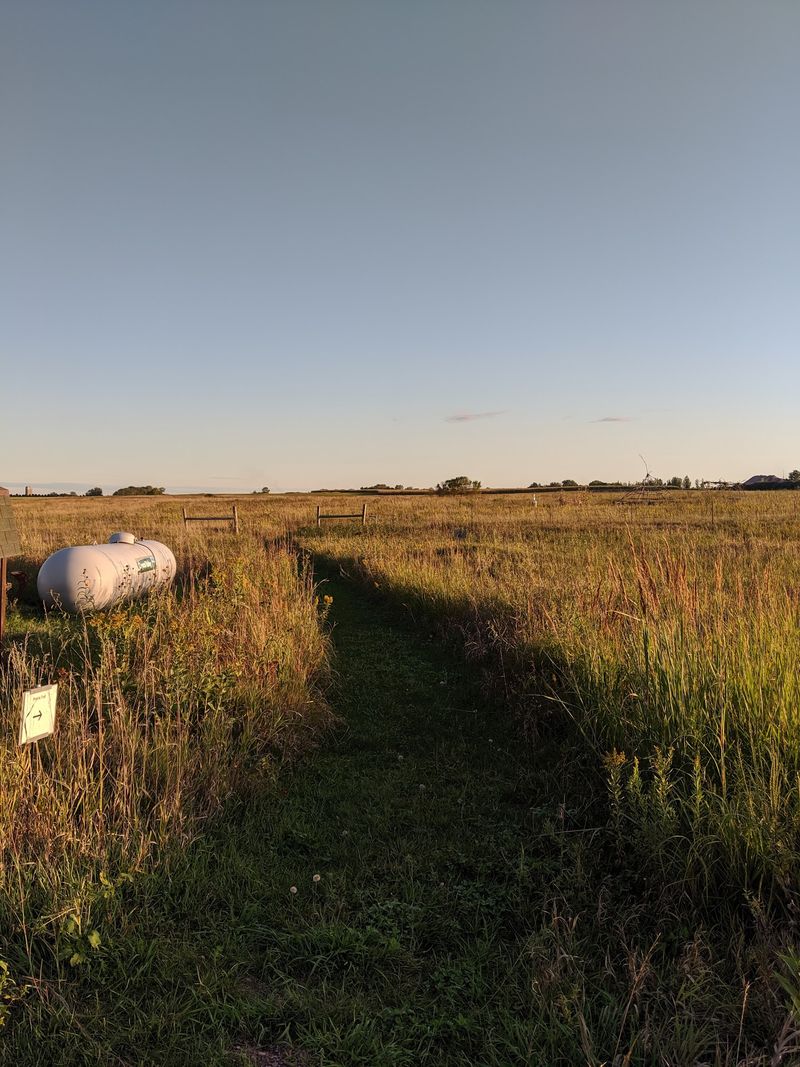
Trails wind through the grasses toward the carvings. The walk lets you see the land much as early carvers might have. It also feels calm and open.
Wagon trail ruts still cross the site, too. One is believed to be a stagecoach route between New Ulm and Sioux Falls. History shows up in the dirt, not just the stone.
Start Inside With Murals, Media, And Buffalo Hide Art
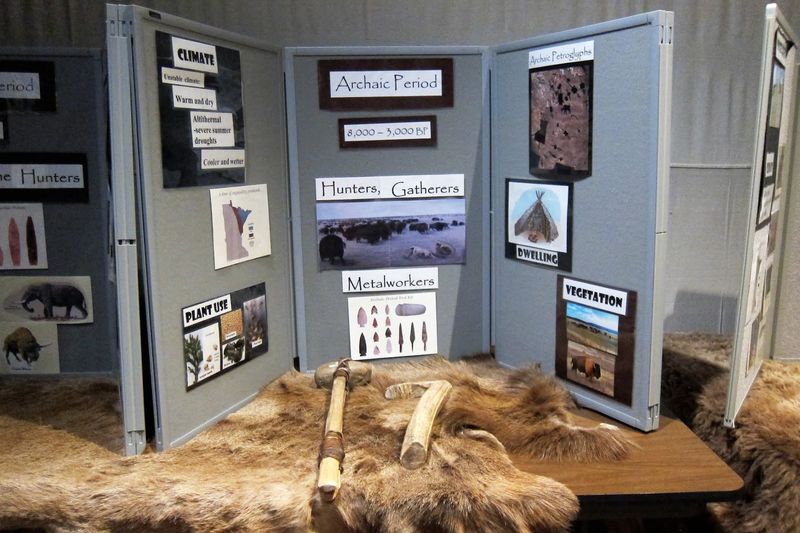
Before heading to the rock, spend time in the visitor center. It recently got a redesign with updated displays and interactive elements. New multimedia installations help explain the stories and symbols.
Art plays a big role here. Dakota artist Holly Young created a mural for the space. Sisseton Wahpeton Oyate artist Fern Cloud made a large buffalo hide artwork.
Those pieces connect the ancient carvings with today’s Native artists. That link makes the story feel alive. It’s a smart way to show continuity.
Hands-on exhibits invite you to touch and explore. A multimedia presentation gives helpful background. You’ll head outside knowing what to look for.
There’s also a gift shop and modern restrooms. A picnic shelter outside works well if you pack your own lunch. Plan for that, since the site sits out in the countryside.
Accessibility gets real attention. All-terrain wheelchairs are available, and a golf cart shuttle can take you to the rock. Restrooms include accessible stalls.
American Sign Language interpreters can be arranged with two weeks’ notice. These thoughtful touches help more people enjoy the site. Everyone deserves a turn with history this remarkable.
Make A Road Trip Out Of This Corner Of Minnesota
Getting there is part of the adventure. You’ll find Jeffers Petroglyphs at 27160 County Road 2, Comfrey, MN 56019. It sits in Cottonwood County in southwestern Minnesota.
Fields and open sky surround the area. The drive feels peaceful and wide. Use your map app, since you’ll be heading down country roads.
Pair your visit with nearby stops. Pipestone National Monument is roughly an hour away. It offers another powerful look at Native history.
Blue Mounds State Park makes a great addition too. Red Rock Falls County Park and Higman’s Dam are also in the region. Together they make a fun weekend loop.
Remember that the petroglyphs can be accessed even when the visitor center is closed. Still, guided tours and programs happen during open hours. Check the schedule before you go.
Special events pop up occasionally. Starry Night, Prairie Night tours focus on constellations and nocturnal wildlife. Picture ancient carvings below and bright stars above, all in one evening.
Minnesota has plenty of lakes and woods to brag about. This spot offers something rarer. It’s a place where the land, the sky, and thousands of years of stories all meet on one rock.
