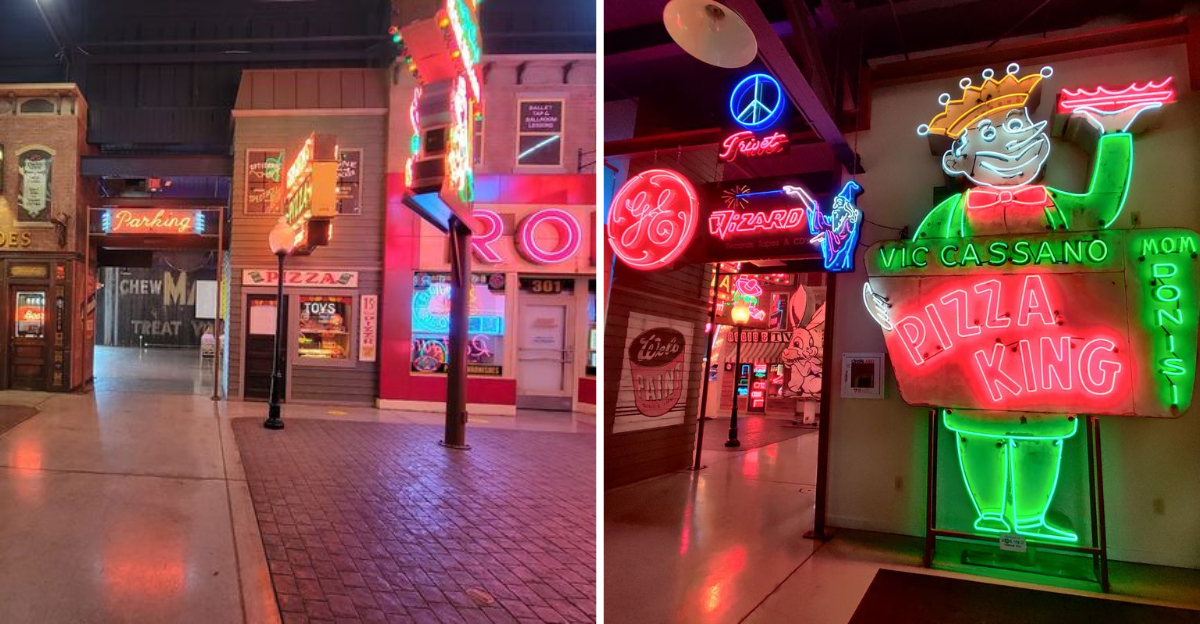
Those glowing neon signs cast colors across the floor like a living painting, and I was not prepared for how much they would stop me in my tracks. I walked into a room full of humming light, hundreds of signs that once lit up storefronts, diners, and roadsides across the country, and I forgot about everything else.
The collection holds thousands of objects, some of them more than a century old, and yet here they glow as vivid and bold as ever. The museum opened to the public in 2005 and has grown into the largest public sign museum in the entire United States.
I spent hours walking through the aisles, watching the colors shift from red to green to gold, each sign carrying a piece of American history that most people drive right past without a second glance.
The building itself is unassuming from the outside, but inside it hums with the kind of energy that only comes from preserving something people once took for granted.
Historians, design lovers, and road trip enthusiasts will all find something here that stops them in their tracks. This Ohio museum genuinely surprised me, and I think it will surprise you too.
The Origins of the American Sign Museum
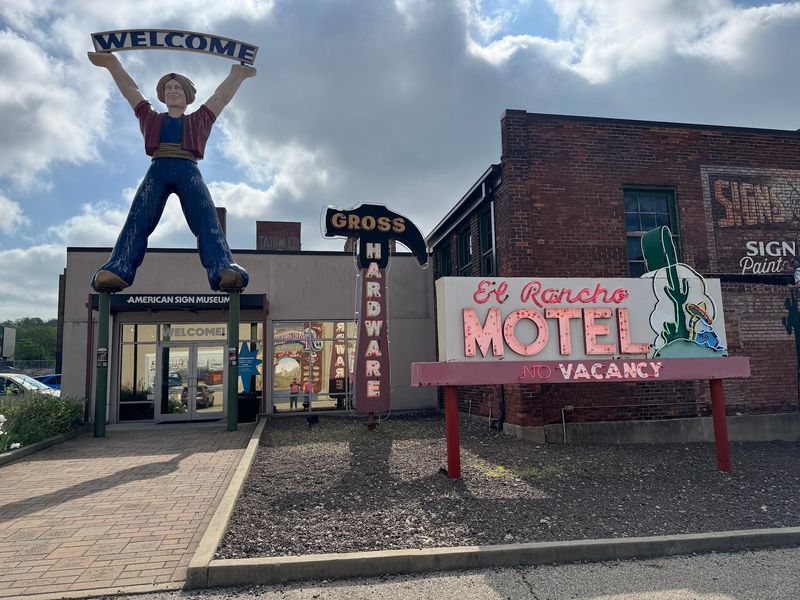
Not every great museum starts with a massive budget or a famous founder. The American Sign Museum in Ohio grew out of one man’s deep passion for a trade most people walk right past without a second thought.
Tod Swormstedt, a fourth-generation editor of the industry journal “Signs of the Times,” launched the museum in 1999 as a non-profit project with a clear mission: save American signs before they disappeared forever.
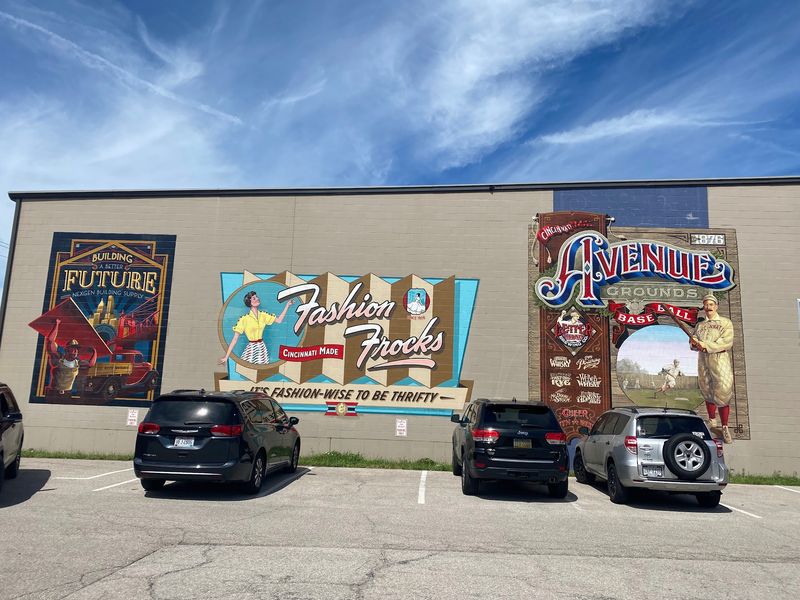
The museum first opened its doors to the public in 2005. It quickly outgrew its original space, which is a good problem to have, and relocated in June 2012 to its current 42,000-square-foot home in the Camp Washington neighborhood of Cincinnati.
That building, part of the historic Oesterlein Machine Company-Fashion Frocks, Inc. Complex, is listed on the National Register of Historic Places. The combination of a storied building and a jaw-dropping collection gives the museum a personality that feels layered and genuinely earned.
A major 20,000-square-foot expansion completed in July 2024 has only added to its depth. It is a place built on conviction, and you can feel that the moment you walk through the front door.
The Scale of the Collection
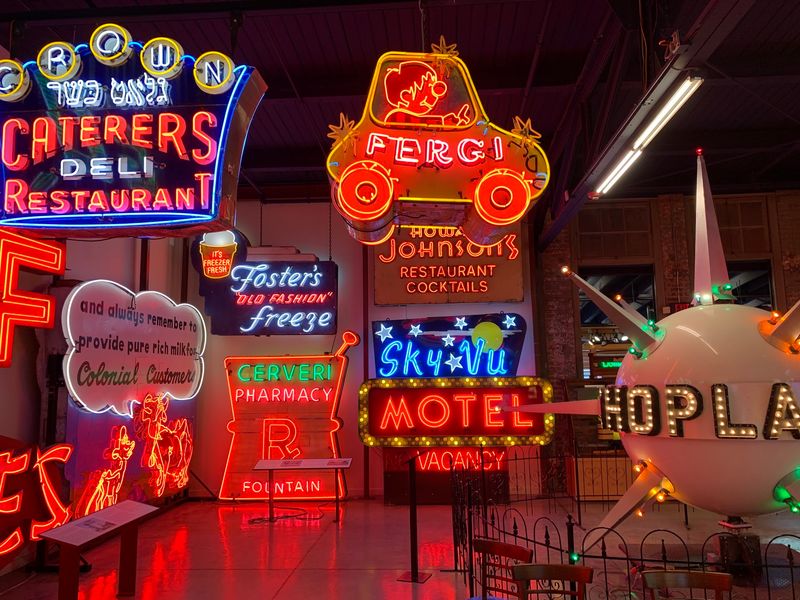
Numbers can be dry, but sometimes they genuinely tell the story. The American Sign Museum holds over 4,000 objects in its permanent collection, including more than 800 signs, 1,500 photographs, 175 artworks, and 300 tools and pieces of equipment used in sign-making throughout history.
That is not a small collection by any stretch of the imagination.
At any given time, around 500 signs and artifacts are on display, covering more than a century of American sign history from the late 1800s through the 1970s. About half of the collection came through donations, which means many of these pieces were rescued from garages, warehouses, and demolition sites by people who refused to let them be forgotten.
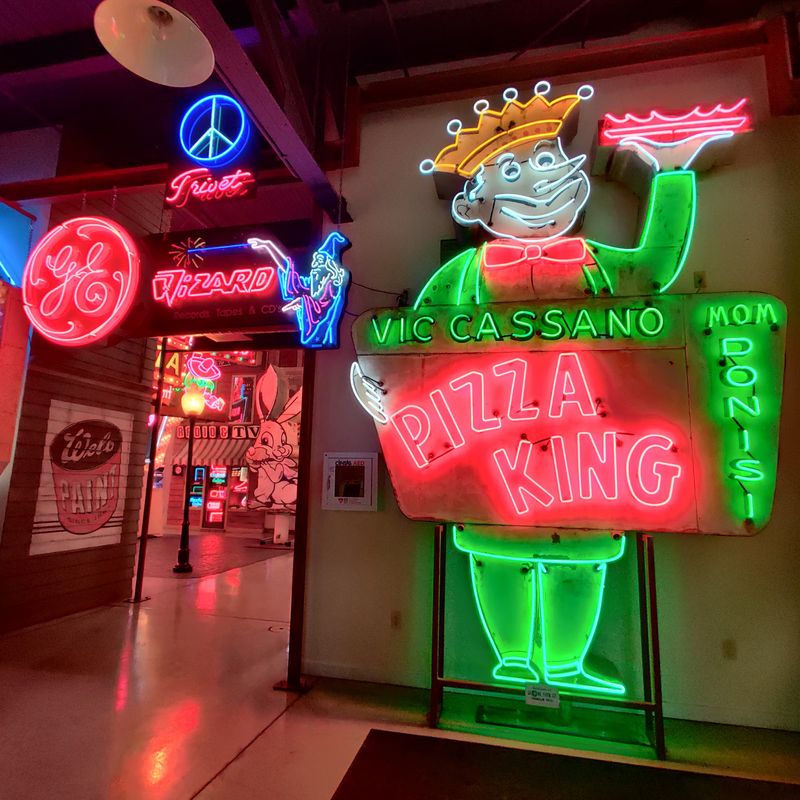
Seeing the sheer variety up close is genuinely overwhelming in the best way. There are hand-painted wooden signs, porcelain enamel pieces, enormous plastic displays, and of course, the glowing neon work that makes the main hall feel like something out of a dream.
Each object carries a story from a specific time and place in American life. The scale of what has been preserved here is something that takes a few minutes to fully absorb.
Pre-Electric Signs and Early Craftsmanship
Before electricity changed everything, sign-makers were already doing extraordinary work. The museum’s collection of pre-electric signs showcases gold leaf lettering, carved wood, and painted surfaces that required patience, precision, and real artistic skill.
Some of these pieces date back to the late 1800s, and they look remarkably refined for their age.
Gold leaf work is particularly striking up close. The process involves applying ultra-thin sheets of real gold to a surface using a delicate adhesive technique, and the results have a warmth and depth that printed graphics simply cannot replicate.
Seeing these signs next to the electric ones that came later tells a clear story about how the trade evolved without ever losing its craft roots.
Carved wooden signs from this era also show incredible detail. Letters were shaped by hand using chisels and gouges, then painted or gilded for maximum visual impact.
Many of these pieces advertised local businesses, hotels, and services that no longer exist, making them time capsules as much as artworks. The museum treats these early examples with real respect, giving them prominent placement so visitors can appreciate the foundation on which American commercial art was built.
Signville, The Recreated Street Experience
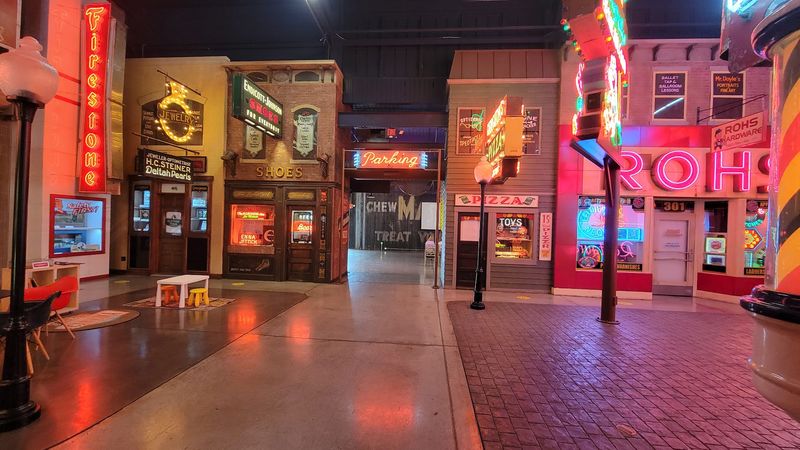
One of the most talked-about features of the museum is the immersive street recreation often called Signville or Signs on Main Street. Instead of just hanging signs on white walls, the museum built a simulated streetscape where signs appear in context, mounted on recreated storefronts and building facades that feel straight out of mid-century America.
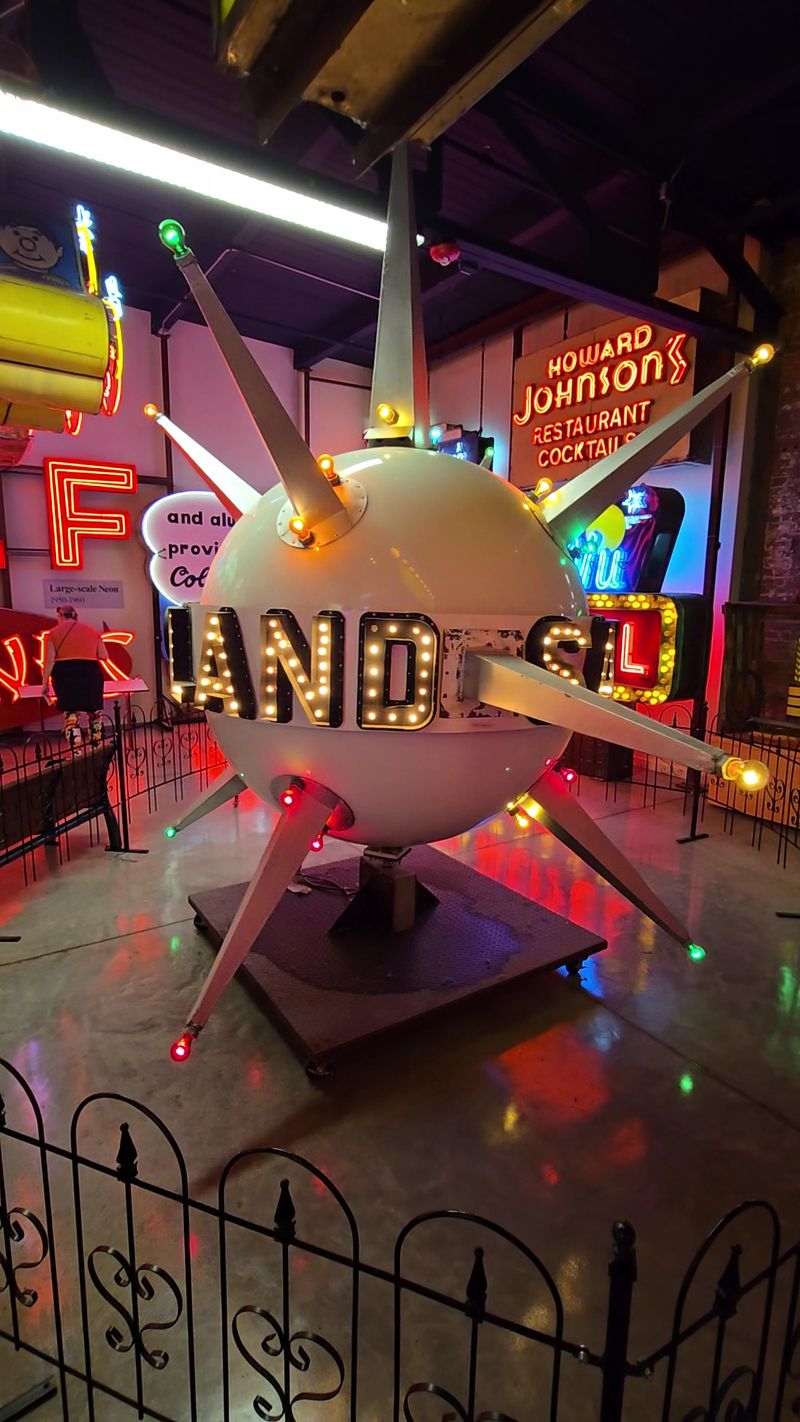
Stepping into that section is genuinely disorienting in a fun way. The lighting is dim, the signs provide most of the glow, and the colors bounce off the floor and ceiling in ways that make the whole space feel alive.
It is the kind of environment where you slow down automatically, turning your head to catch every detail.
The recreated street format also helps younger visitors understand what these signs actually looked like in their original settings. A neon diner sign means something different when it is mounted above a simulated counter than when it is hanging in a gallery.
That context matters, and the museum clearly understands that. Families tend to linger here longer than anywhere else in the building.
It is easy to see why, because the whole setup has a theatrical quality that makes history feel immediate and personal.
Notable Pieces You Cannot Miss
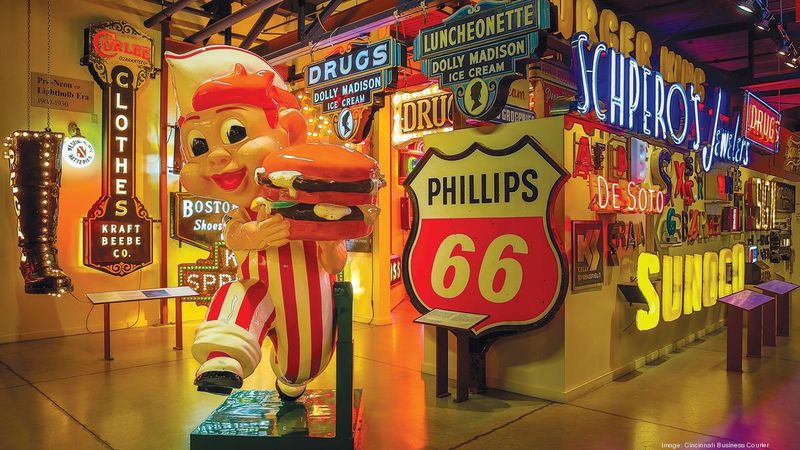
Some museums have anchor pieces that become the reason people visit, and the American Sign Museum has several. A 20-foot-tall fiberglass genie is one of the first things that catches your eye.
It is enormous, colorful, and slightly surreal in the best possible way, the kind of object that makes you genuinely laugh with surprise when you first see it.
A 1963 McDonald’s sign featuring the original Speedee character is another standout. Speedee, a winking chef mascot, predates the Golden Arches as McDonald’s primary symbol, and seeing him here is a genuine piece of fast food history.
There is also a rotating neon windmill that still spins, Las Vegas showcards that feel impossibly glamorous, and a fiberglass Frisch’s Big Boy statue that carries serious regional nostalgia for anyone who grew up in the Midwest.
Signs from Howard Johnson’s, Gulf Oil, and Big Bear Stores round out the highlights. Each piece carries a specific cultural weight from its era.
The museum does not just display these objects; it frames them with enough context to help visitors understand why they mattered to the communities that saw them every day. That attention to meaning is what separates a great collection from a great museum.
Neonworks of Cincinnati, Live Sign Making
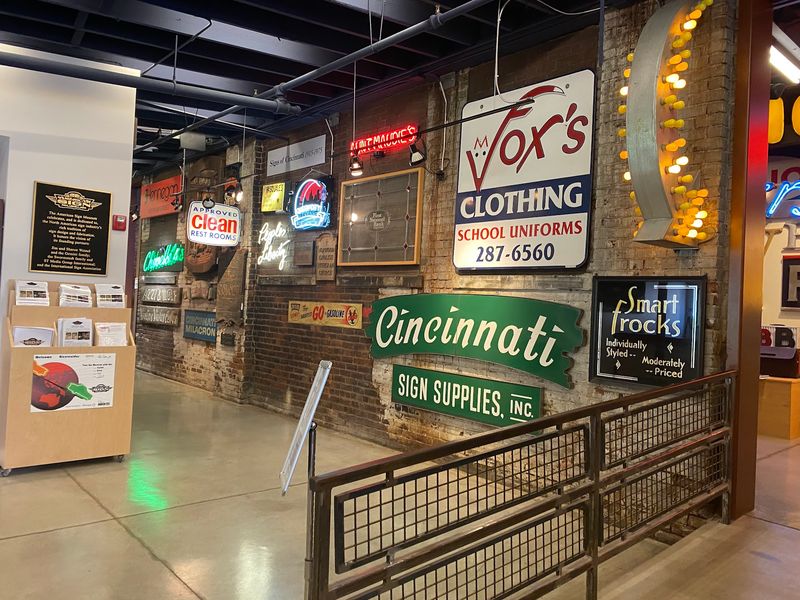
Most museums ask you to look but not touch. The American Sign Museum goes a step further by hosting an actual working neon sign shop right inside the building.
Neonworks of Cincinnati operates within the museum space, and on Saturdays, visitors can watch live neon tube bending demonstrations up close.
Watching someone bend glass tubing by hand is genuinely hypnotic. The process involves heating sections of glass tube over a flame until they become pliable, then carefully shaping them into letters or designs before they cool and harden.
It looks deceptively simple from a distance, but the precision required is extraordinary. A single mistake can crack the tube or ruin the shape entirely.
Having a working shop on-site does something important for the museum’s mission. It shows that neon sign-making is not just a historical craft but a living one.
Skilled artists are still doing this work today, and seeing it happen in real time connects the vintage collection in the main hall to the present in a meaningful way. If you visit on a Saturday, plan to spend a few extra minutes at the Neonworks area.
Watching the craft in action adds a whole new layer to everything else you have already seen.
Porcelain Enamel and Plastic Signs of the Post-War Era
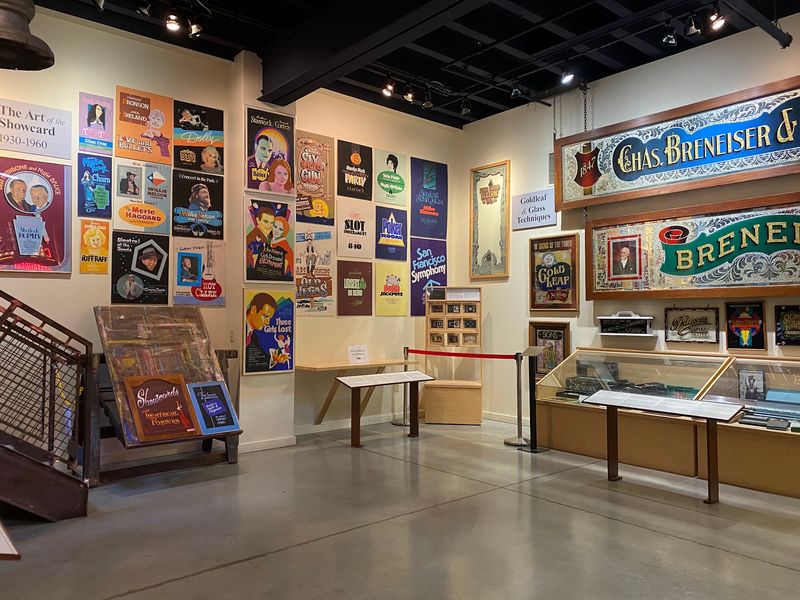
After World War II, American manufacturing shifted fast, and the sign industry shifted right along with it. Two materials came to define the postwar commercial landscape: porcelain enamel and plastic.
The museum’s collection of signs from this era is one of the most visually satisfying parts of the entire visit.
Porcelain enamel signs were made by fusing powdered glass onto metal at extremely high temperatures, creating a surface that was nearly indestructible and brilliantly colorful. Gas stations, diners, and hardware stores used them everywhere.
The colors on the best examples still look sharp and saturated decades later, which explains why so many collectors actively seek them out today.
Plastic signs arrived in the postwar years as manufacturing costs dropped and new materials became available. Backlit plastic panels allowed businesses to display their logos in a clean, uniform style that looked modern and professional.
Seeing the shift from hand-crafted porcelain pieces to mass-produced plastic panels laid out chronologically tells a fascinating story about American consumer culture and industrial change.
Touring the Museum, What to Expect
Planning a visit is pretty straightforward, and the museum makes it easy to tailor the experience to your group. Guided tours run on Saturdays and Sundays, led by knowledgeable staff who can point out details you might miss on your own.
For people who prefer to move at their own pace, audio tours and braille book tours are both available for self-guided exploration.
A typical visit runs between 60 and 90 minutes, though it is easy to stretch that if you are the type to read every label and linger over every display. The main halls are kept dimly lit so the signs themselves provide most of the illumination, which creates an atmosphere that is genuinely unlike any other museum experience.
Colors pop differently when they are the primary light source in the room.
The museum is accessible and family-friendly, making it a solid choice for groups with mixed ages. Kids tend to respond strongly to the visual energy of the space, while adults often find themselves getting unexpectedly emotional over signs from businesses they remember.
Why the American Sign Museum Matters
At first glance, a museum dedicated entirely to signs might seem like a niche idea. Spend an hour inside and that thought disappears completely.
The American Sign Museum preserves something that most people never think to protect: the visual language of everyday American life. Storefronts, highways, diners, and gas stations all spoke through their signs, and those signs shaped how people understood their world.
The museum’s mission is to educate the public about the history of the sign industry and its cultural impact on American commerce and landscapes. That sounds formal, but the experience itself is anything but.
There is real joy in this building, the kind that comes from seeing something familiar from a completely new angle.
Roughly half the collection was donated by individuals and businesses who wanted these objects to survive. That speaks to a shared feeling that something important would be lost if these signs were simply thrown away.
The museum honors that instinct by giving each piece a proper home and a proper story. If you find yourself in Cincinnati, even for just a day, this is the kind of stop that stays with you long after you have left.
Address: 1330 Monmouth Avenue, Cincinnati, Ohio 45225.
