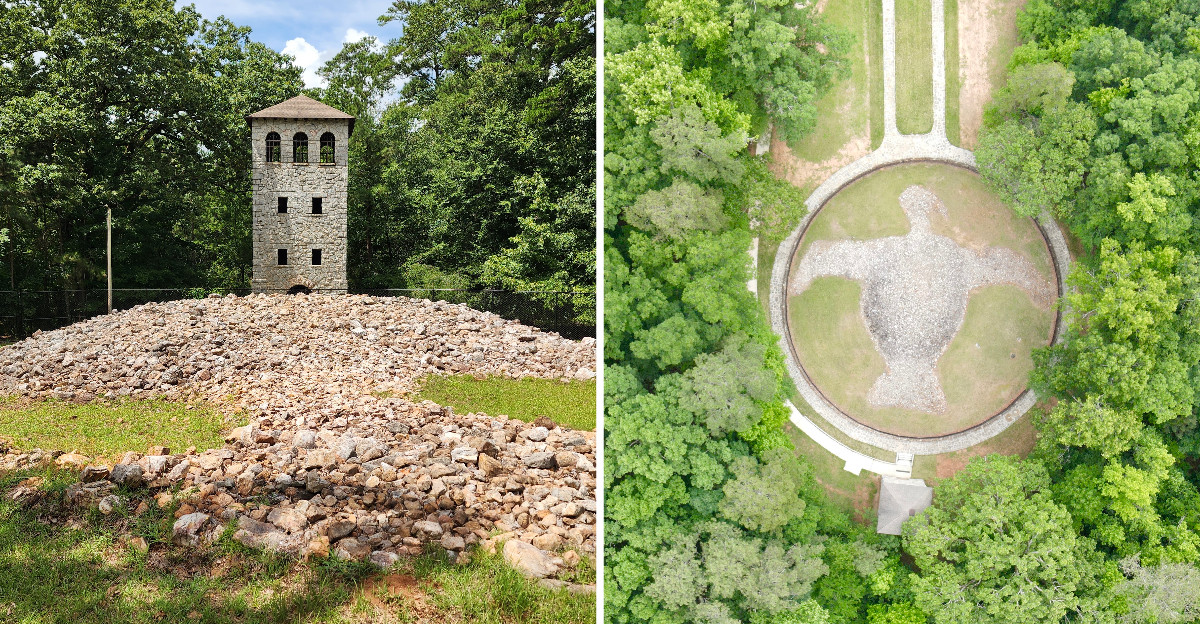
White quartz rocks form a giant bird in the Georgia pines, stretching 102 feet head to tail. Native Americans built it somewhere between 1,000 and 3,000 years ago, and its wings spread a full 120 feet across.
I pulled off a quiet road expecting a quick roadside stop and ended up staying far longer than planned. Climbing an old stone tower to see the whole shape at once made my jaw drop a little.
The strangest part is that nobody knows for sure why it was made or even what kind of bird it shows. Walking the grounds, the silence feels heavy with questions that may never be answered.
The site is free to visit, and it rewards anyone who takes the time to look. This mysterious spot is one of the coolest stops in the state.
A Giant Bird Hiding in the Georgia Pines
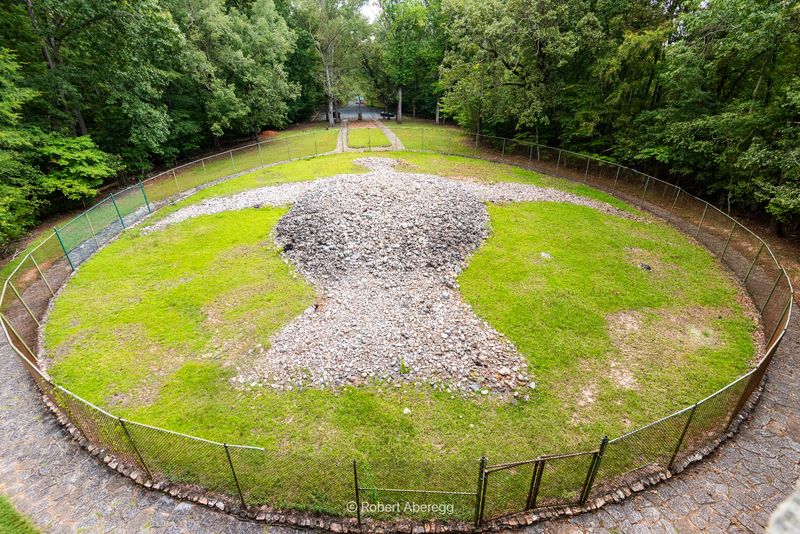
My first glimpse came through a gap in the trees, and at ground level it looked like a low, grassy hill sprinkled with pale stones. Only later did the full bird reveal itself.
That slow surprise is part of the fun.
The effigy stretches 102 feet from its head to the tip of its tail. Its wings reach 120 feet from one side to the other, which is wider than many houses are long.
Right at the center, the breast rises about 8 feet off the ground, giving the bird a round, puffed-up chest.
Thousands of chunks of white quartzite make up the shape. Picture people long ago gathering every single rock, carrying them by hand, and placing them with care.
No machines, no trucks, just teamwork and patience.
Archaeologists think it was built by Native Americans during the Middle Woodland Period, likely around 100 to 300 A.D. That puts the bird somewhere between 1,000 and 3,000 years old, depending on which estimate you follow.
Give yourself a moment to just look before reading any signs. Notice the head pointing toward the east, where the sun comes up each morning.
That small detail made me wonder what the builders were thinking.
Eagle, Buzzard, or Something Else?
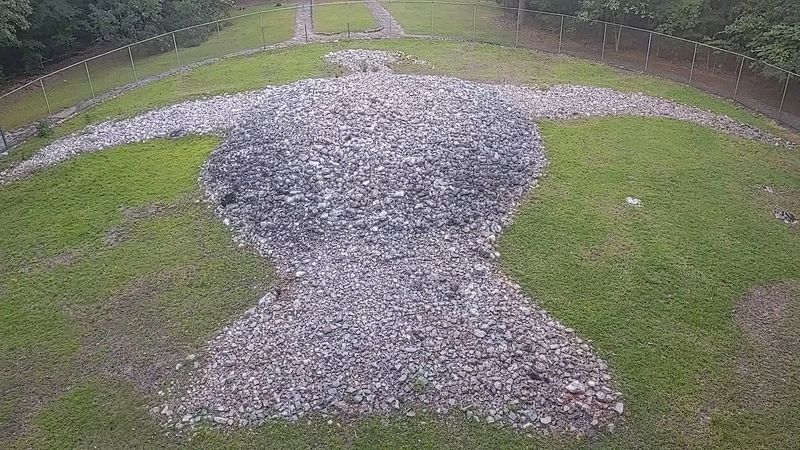
Here is a fun twist. Everyone calls it Rock Eagle, but scholars are not fully sure the builders meant to make an eagle at all.
Some experts think the shape looks more like a buzzard or a vulture. When I studied the outline from above, I could kind of see both.
The head is small and the wings are broad, which fits a soaring bird that glides in big, lazy circles.
Vultures might sound like an odd choice for a giant monument. Still, many cultures have viewed these birds with respect, since they clean up the land and fly high toward the sky.
That idea made the mystery feel deeper to me, not creepier.
The name Rock Eagle stuck because eagles are easy for most people to picture. Names often come from later visitors rather than the original makers, and that seems to be the case here.
Try this when you visit. Look at the bird from the tower and decide for yourself what it is.
Bring a friend or a kid along and compare guesses, because everyone seems to see something a little different. There is no wrong answer, since even the experts are still debating it.
The Mystery Nobody Has Solved
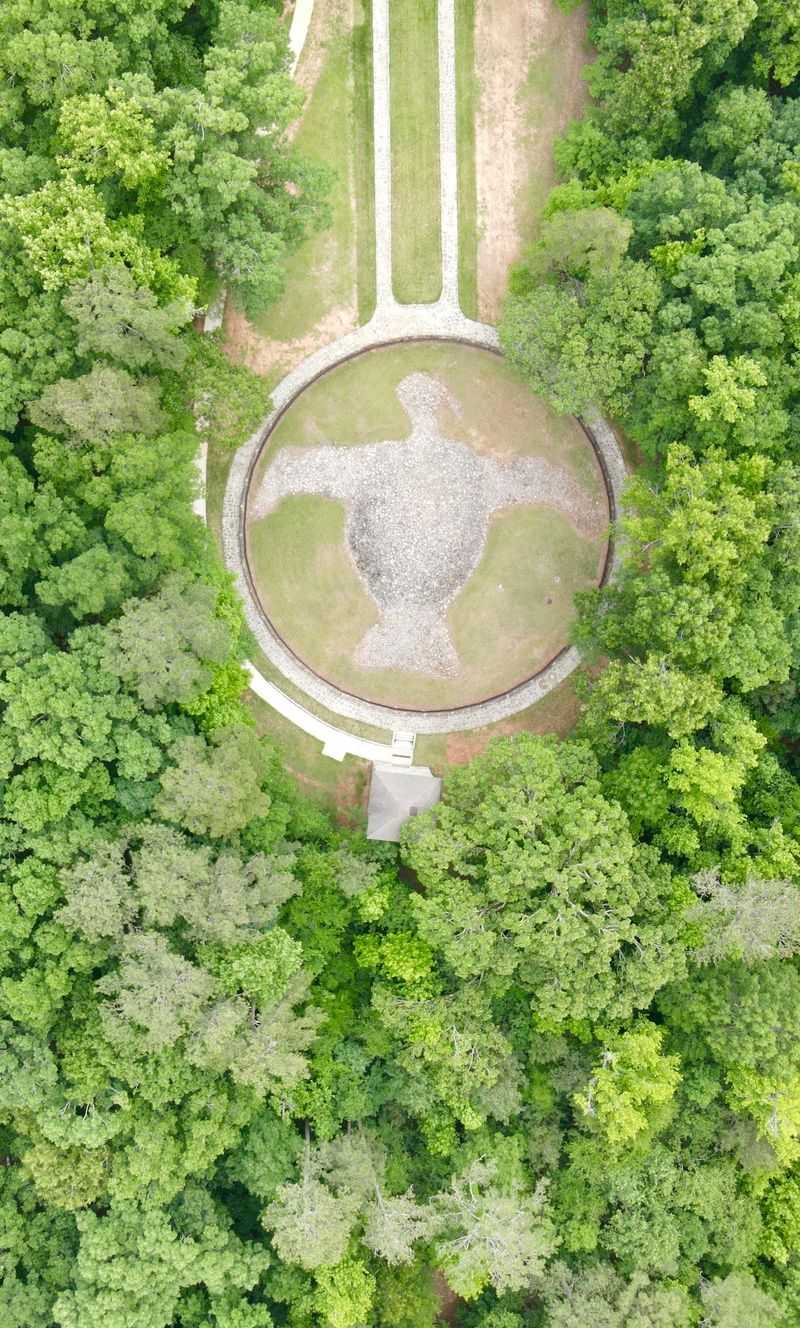
Researchers have studied this site for decades, yet the biggest question still has no clear answer. Why build a giant stone bird in the first place?
Most theories point to a ceremonial or religious purpose. It may have been a sacred gathering spot, a central burial place, or even a kind of message meant for the gods.
Since the bird faces the rising sun, some people link it to beliefs about light, life, or new beginnings.
During digs in the 1950s, archaeologists found small amounts of cremated human bone along with a projectile point, which is like a stone spearhead. Those finds hint at a connection to burial or ritual.
Even so, they do not tell the whole story.
I found myself reading the interpretive panels twice. They share what is known and are honest about what is not, which I appreciated.
One helpful tip is to read up a little before you go. A few visitors have mentioned that signs on site are limited, so some background makes the experience richer.
Then stand quietly for a bit and let your imagination fill in the gaps. Not knowing turns out to be strangely exciting.
Climbing the Old Stone Tower
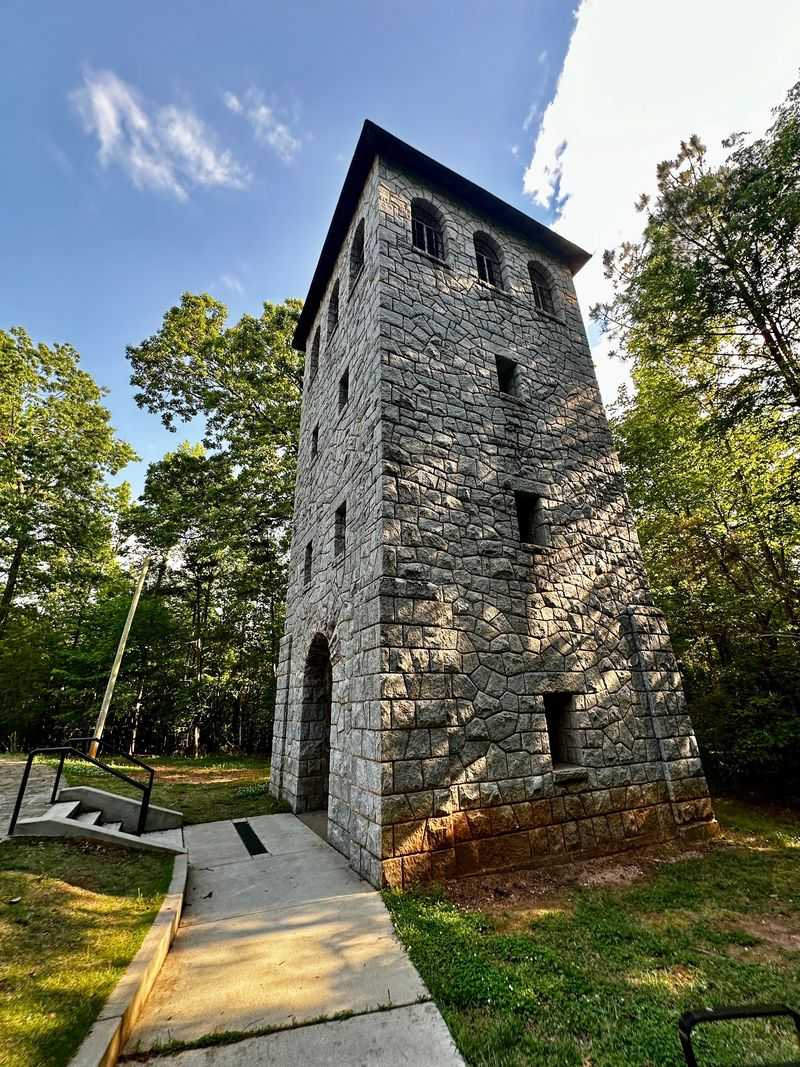
My legs felt it a little by the top, but wow, that view paid me back instantly. The observation tower is the real secret to seeing the bird properly.
Workers from the Civilian Conservation Corps built this sturdy stone structure in the 1930s, during a time when the country put people to work on public projects. It has several levels, so you can stop and peek at the effigy from different heights.
Each floor shows the shape a bit more clearly.
From the very top, the whole bird finally makes sense. Wings, tail, head, all of it lines up like a drawing on the ground.
Keep in mind that the tower has only stairs, with no elevator. The steps have railings, and most visitors find the climb manageable if they take their time.
The inside is not lit, so daylight visits work best.
Bring your camera or phone and wait for a cloud to pass. Bright sun makes the white quartz pop against the grass, and photos look sharper.
Morning light is lovely too, especially since the bird faces east. I lingered at the top longer than planned just enjoying the breeze.
A Path Around the Past
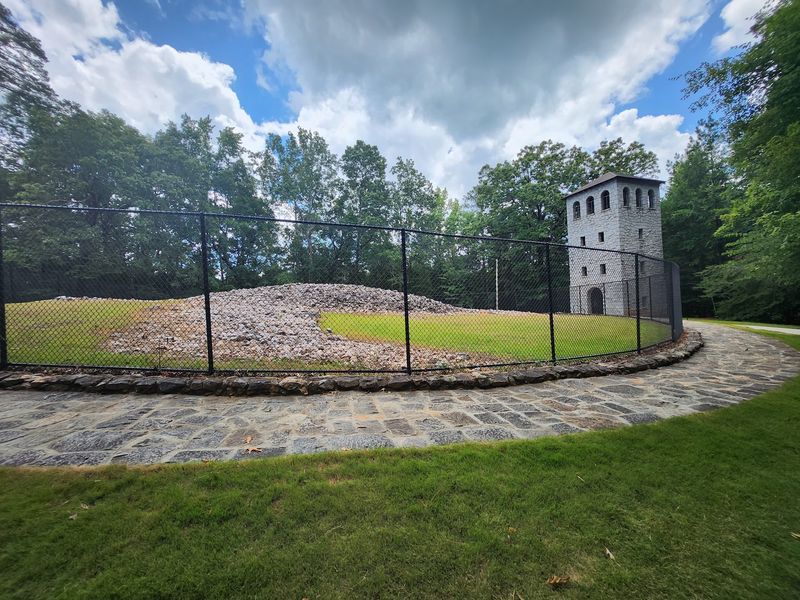
Slow loops are the best way to soak this place in. A paved walkway circles the effigy, letting you see the bird from every side at ground level.
The path is described as ADA accessible, which opens the ground view to more visitors. Some people have noted that the stone walkway leading from the parking area to the tower can feel uneven, though.
Wear comfy shoes and watch your step, especially if the ground is damp.
A tall fence surrounds the mound itself. At first I wished I could get closer, but the reason quickly made sense to me.
Protecting the rocks keeps this ancient work safe for future visitors. Thousands of feet climbing on it over the years would slowly wear it down or knock stones loose.
Walking on the mound is not allowed, so enjoy it with your eyes instead.
Along the way, interpretive panels share history about the builders and the dig discoveries. There is also a silver plaque with a poem by Pulitzer Prize-winning author Alice Walker, who grew up in Eatonton.
Reading it beside the bird added a thoughtful moment to my walk. Plan for about thirty minutes if you want to read everything.
Meet the Bird’s Rare Cousin
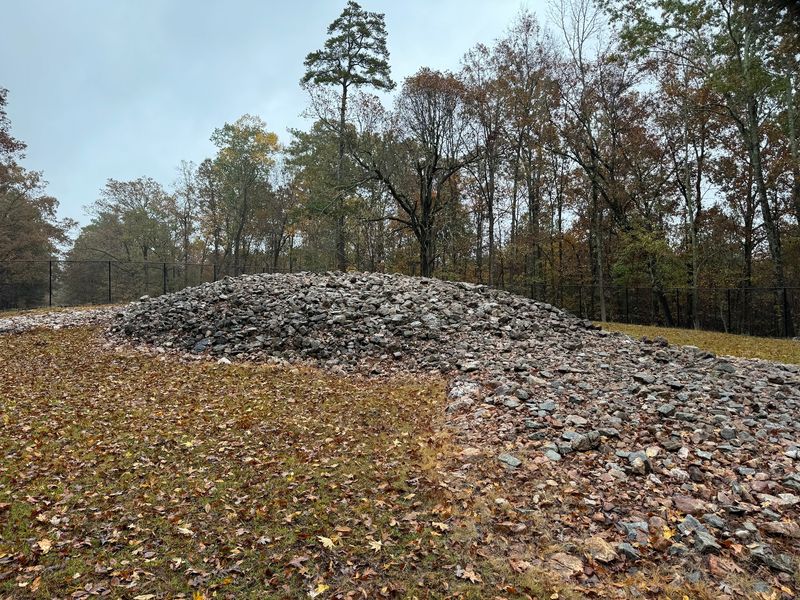
Did you know there are only two known bird effigy mounds east of the Mississippi River? Both of them sit right here in Putnam County.
Rock Eagle is the famous one, but its partner is called Rock Hawk. It is also made of stones arranged in a bird shape, and it lies a short drive away near Lake Oconee.
Having two such rare sites in one county makes this corner of Georgia pretty special.
Several visitors suggest seeing both on the same trip. One even recommends starting with the hawk first, then saving the eagle for later.
Either order works, and comparing the two shapes is a neat way to spend an afternoon.
I loved thinking about how these birds might be connected. Did the same group build both?
Were they used for similar ceremonies? Nobody can say for certain, which adds to the adventure.
If you are a history fan, this pairing is a treat. Kids also tend to enjoy the idea of a scavenger hunt for giant stone birds hidden in the woods.
Check directions ahead of time, since rural roads and cell signal can be a little tricky out here.
Tips for a Smooth Visit
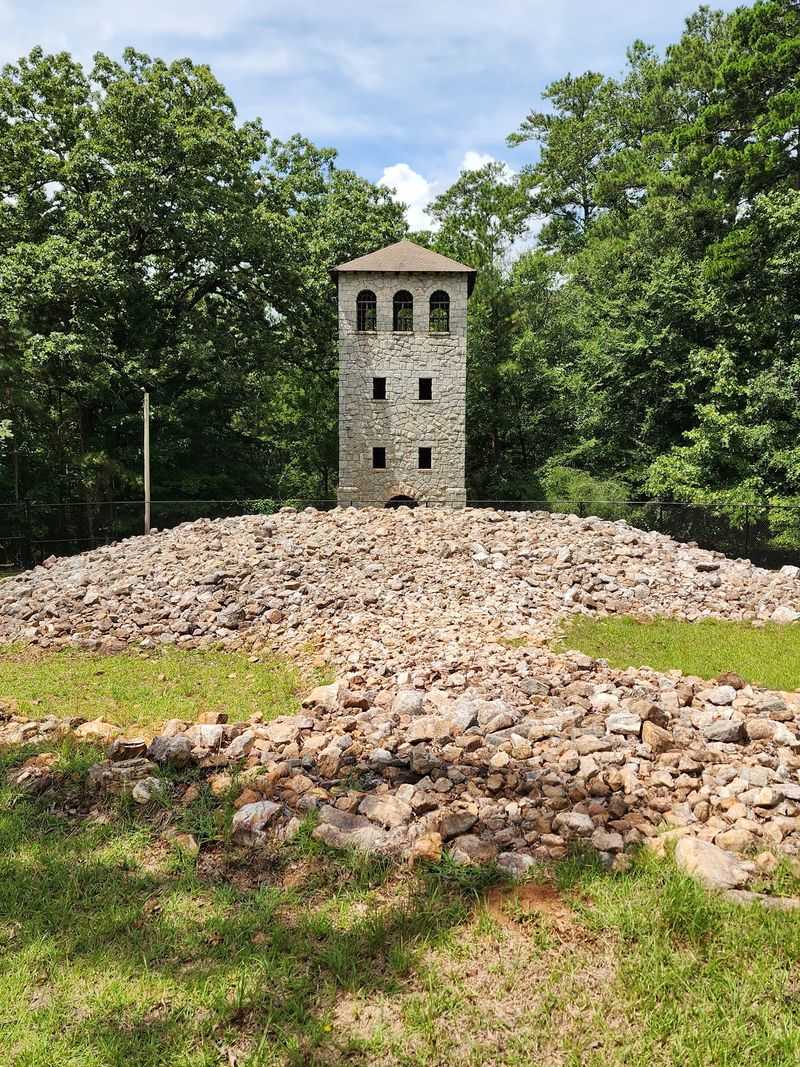
Good news first. Visiting the effigy costs nothing, and parking is free as well.
The site sits within the Rock Eagle 4-H Center, run by the University of Georgia, just off Highway 441 between Madison and Eatonton. Official hours are sunrise to dusk.
One visitor did find parking closed on a particular day, so a quick check before driving out is smart.
Finding the mound can take a moment. Follow the roadside signs and keep going past the large building, since the effigy is separate from the main camp area.
Some visitors mention a rest area with picnic tables near the start of the main road, which is handy for a snack break.
Restrooms and stores are not right at the effigy, so plan ahead. Pack water, especially on hot summer days.
A light bug spray helps too, since one guest warned about spiders along the trail.
Fall is a gorgeous time to come, with crisp air and colorful leaves framing the white stones. The wider 4-H Center also offers hiking trails and nature programs if you want to stay longer.
I left already planning a return trip.
Address: 350 Rock Eagle Rd, Eatonton, GA 31024
