Live oaks close overhead like a green tunnel, and tires crunch over packed dirt before the foot even touches the brake. The famous beach full of bleached, fallen trees draws the crowds, but what stays in memory is smaller and quieter.
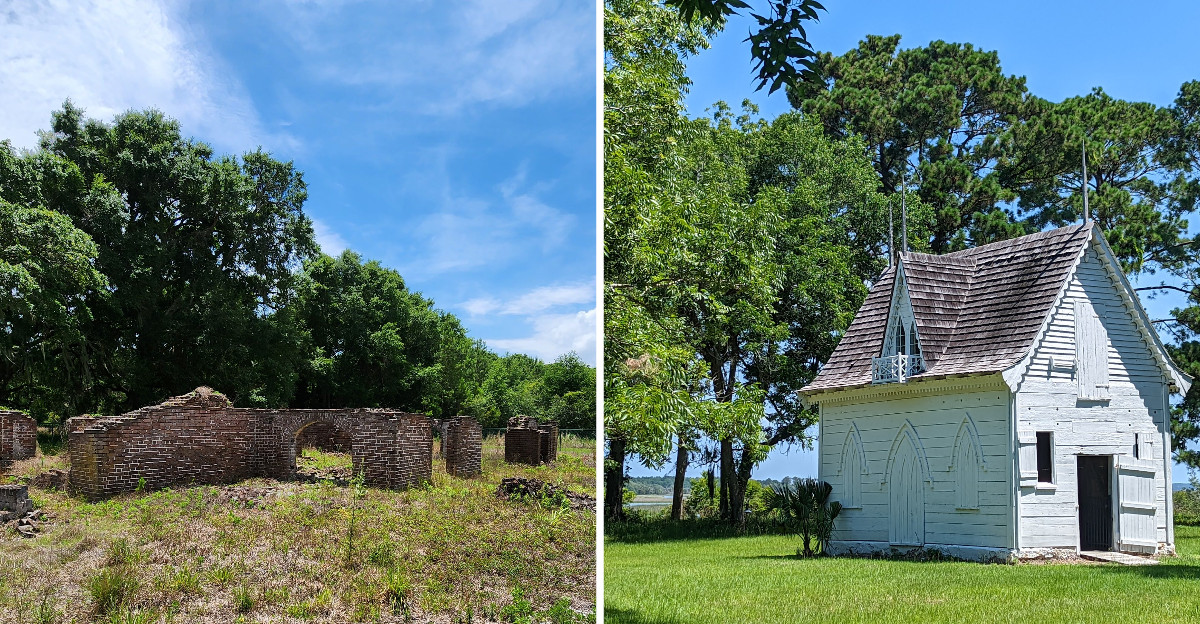
Three modest buildings from the 1840s sit along a driving loop, survivors of a plantation whose main houses, cotton fields, and fortunes have all vanished. One has pointed windows and tiny balconies that look like they belong on a storybook chapel rather than a farm.
Half a day passed while stopping constantly, reading little signs, and watching fiddler crabs scatter across the causeway. History and wild nature tangle together in this corner of South Carolina, and the effect is hard to shake.
The main house is gone, the fields have grown back, and the tabby walls still stand. Salt air moves through the ruins, and the marsh keeps its own pace.
The Icehouse With Its Storybook Windows
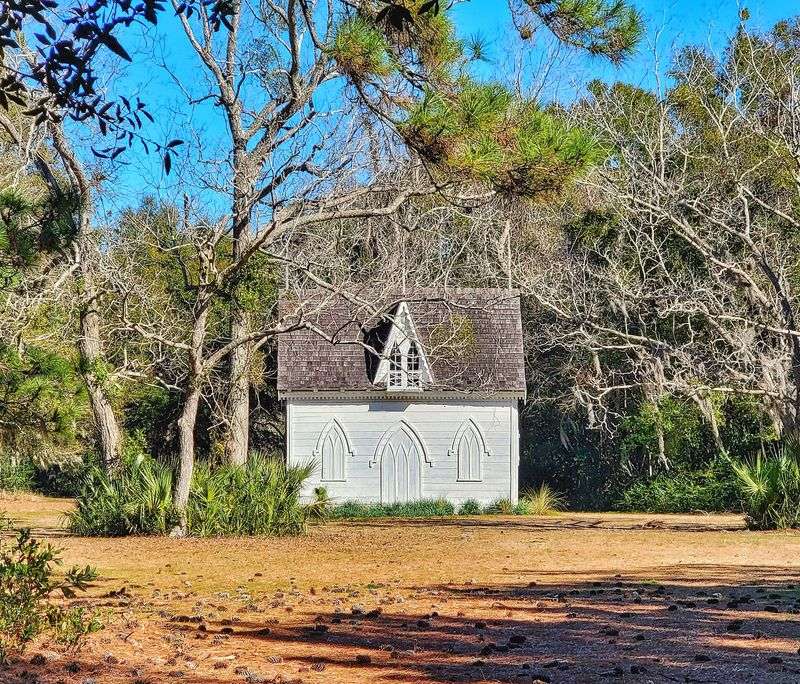
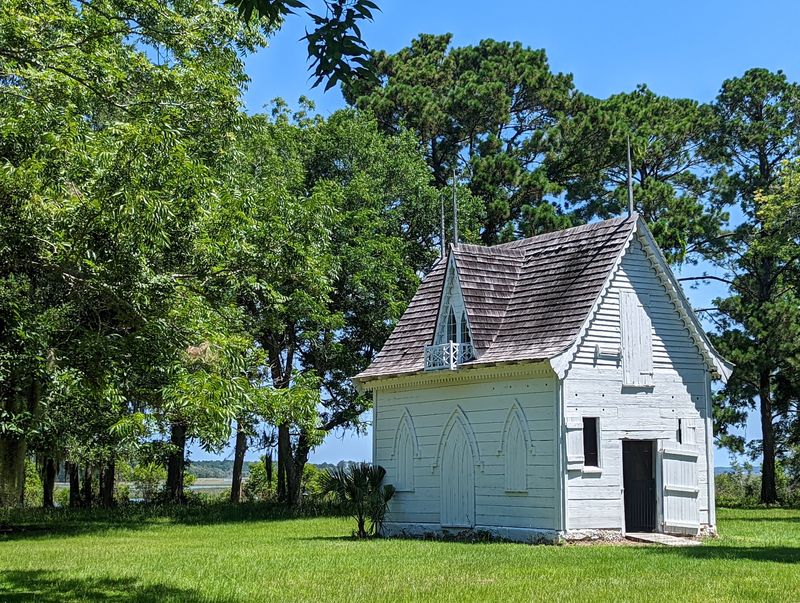
Of all the stops on the loop, the icehouse is the one that made me pull over twice. It is a 1.5-story wooden building sitting on a partial basement made of tabby, that gritty old coastal concrete mixed with oyster shells.
The roof rises steeply, and on the east and west sides you get high triangular dormers, each with two pointed windows and a little balcony barely big enough to lean on. It looks far too fancy for its job.
And what a job it had. Ice was shipped down from the north and packed in sawdust here to keep it from melting in the Lowcountry heat.
Over the years the same structure also worked as a carriage house and plain storage, which explains the size. Photographers love it, and I understand why now.
My advice is to visit in early morning light when the Spanish moss throws soft shadows across the boards. Stay on the marked areas and look rather than touch, since the building is delicate and protected.
Nothing else on the property gives you that same jolt of surprise. A fairytale silhouette in the middle of a wildlife preserve is not what you expect.
A Tabby Gardener’s Shed Beside a Vanished Japanese Garden
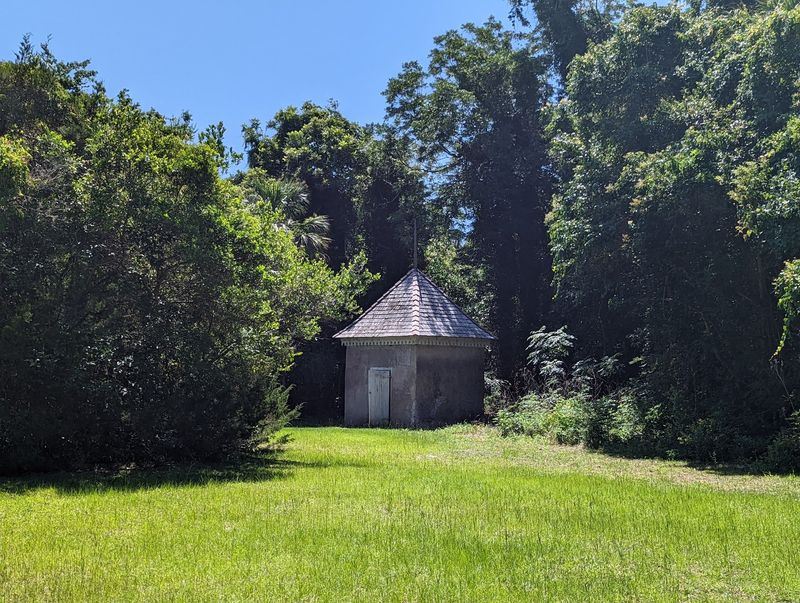
Small buildings rarely get the attention they deserve, and the gardener’s shed proves it. Built from tabby, its walls have that speckled, shell-flecked texture you can spot from a few feet away.
What makes it special is what used to sit beside it. This shed stood next to a Japanese formal garden, said to be the first of its kind in North America, planted on the grounds of Bleak Hall.
The garden is gone. Grass, weeds, and palmetto fronds have taken over, and unless you read the sign you would never guess what once grew here.
I stood there trying to picture it, clipped beds and careful paths in the middle of a cotton plantation on a sea island. It felt almost impossible.
Bring bug spray if you plan to linger, because the low vegetation around the shed hides plenty of mosquitoes in warmer months. Sturdy shoes help too.
Take the time to notice how the tabby has worn unevenly, with shells poking out where the surface has crumbled. That texture is basically a fingerprint of coastal South Carolina building, made from sand, lime, water, and oyster shells burned for their lime content.
The Barn That Lost Its Roof and Kept Its Story
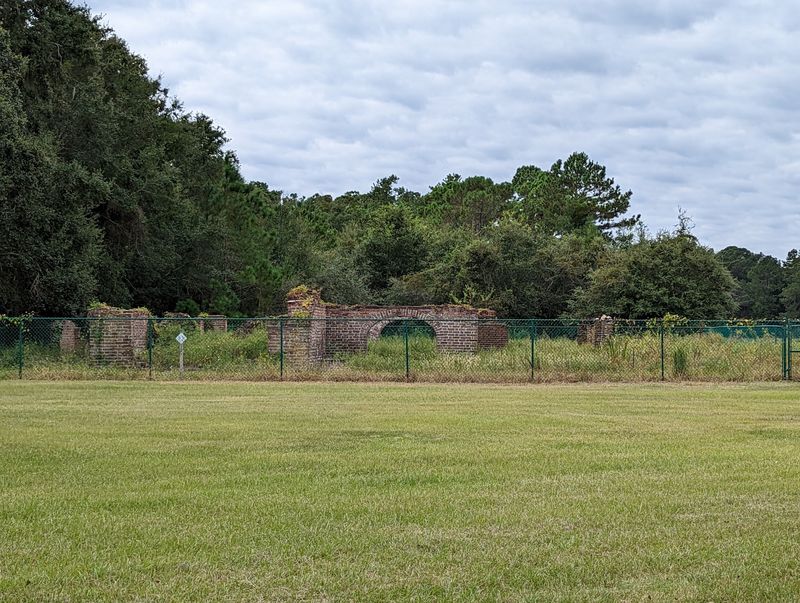
Ruins have a way of being more honest than restored buildings, and the old barn near the Bleak Hall home site fits that perfectly. Another tabby structure, it once had a proper roof over it.
That roof was lost in 1977 when an agricultural burn got away from someone, which feels like a rough ending after more than a century of use. The walls stayed.
Its most surprising chapter came during World War II. The building stored hay and feed for horses the Coast Guard rode on beach patrols, watching the shoreline for anything unusual.
So a barn built for a cotton plantation ended up supporting wartime coastal defense. History rarely stays in one lane.
When you visit, walk the perimeter slowly and look at how thick those walls are. Tabby was cheap, local, and surprisingly tough, which is exactly why these three buildings outlasted the grand houses.
Do not climb on the remnants, and keep kids close, since uneven ground and loose material are part of the deal with any ruin. Photos from a few steps back actually look better anyway, letting you catch the oaks and open sky framing the walls.
Where the Big Houses Used to Be
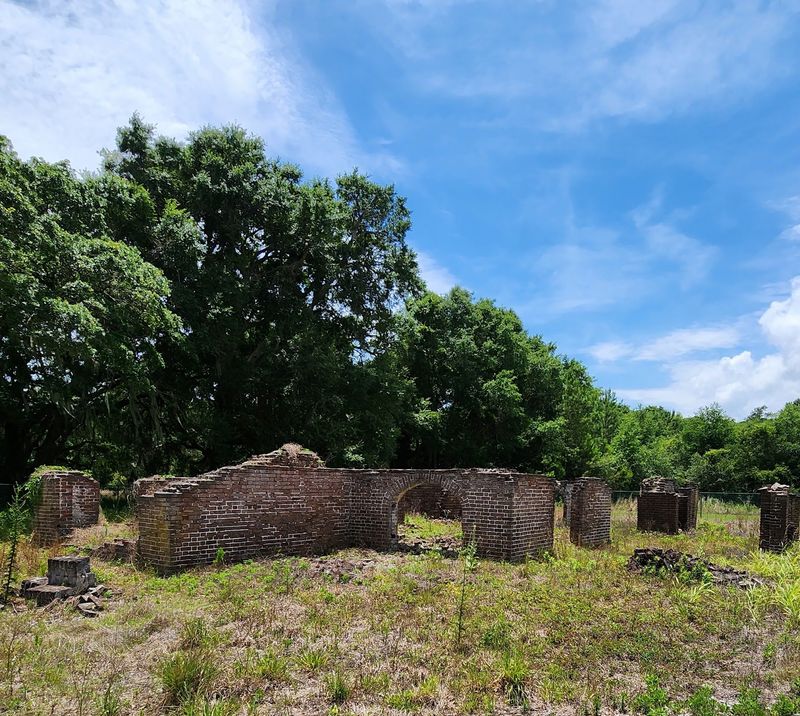
Here is the strange part about Botany Bay: the mansions are the things that disappeared. The original Bleak Hall house went up around 1805 and burned during or shortly after the Civil War.
A replacement was built in 1866, then torn down in the 1930s. Nothing of either one greets you today.
Sea Cloud, the other estate that was folded into this property, had a house built around 1825. Only remnants survive out there now.
Walking those empty home sites was oddly moving for me. You get foundations, old oaks planted for shade, and a lot of sky where rooms used to be.
The preserve came together in the 1930s when the two old estates were combined, and it was left to South Carolina by John Meyer and his wife Margaret in 1977. Public access finally opened in 2008.
Read the interpretive signs at these stops rather than skipping ahead to the beach. They explain who lived and labored here, and that context changes how the whole drive feels.
Three humble outbuildings outlived every grand house on the place, which says something about what actually lasts.
The Sea Island Cotton Boom That Ended With a Beetle
Money built those pointed windows, and the money came from Sea Island cotton. Long-fiber and famously fine, it made Edisto planters wealthy in the 1800s, and John Townsend, who inherited Bleak Hall in 1842, is believed to have put up the three surviving outbuildings.
Then a beetle ended the whole thing. The boll weevil infestation of 1917 wrecked the crop, and the cotton economy on the island collapsed.
Landowners turned to harvesting timber instead, which is why parts of the preserve still show loblolly pine stands mixed with older maritime forest. The fields you drive past were once full of cotton rows.
I found it wild that something the size of a fingernail unraveled decades of agriculture. Nature had the final vote.
As you drive the loop, notice how the open fields are managed today for wildlife rather than crops. Deer graze in them, and birds work the edges at dawn and dusk.
If you want the best chance at animal sightings, arrive close to opening time. The preserve welcomes visitors from an hour before sunrise, and the early light across those fields is genuinely lovely.
Driving the Loop Under a Ceiling of Live Oaks
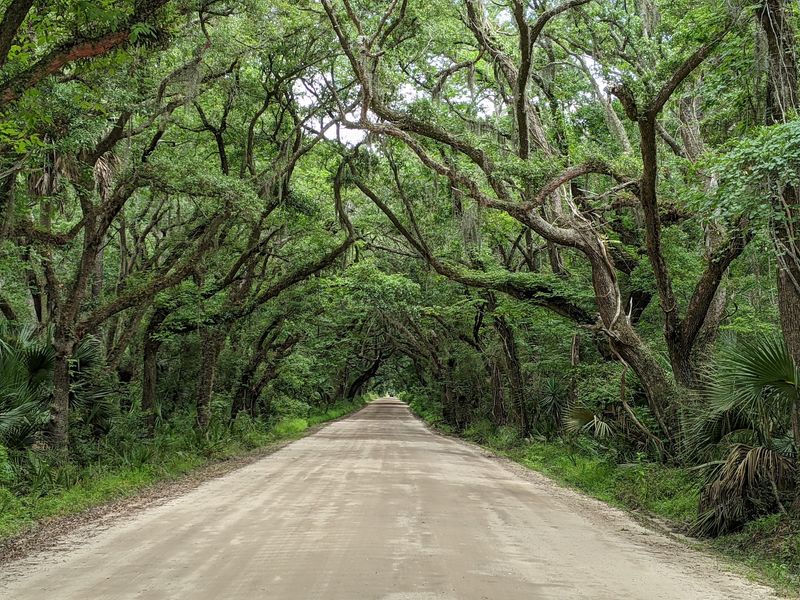
The self-guided driving tour is the backbone of a visit, roughly six and a half miles of dirt road that curls past fields, ponds, marsh views, and the historic buildings. My car handled it fine, and most vehicles will.
Spanish moss hangs low over the lane in places, mixed with cabbage palmettos and pines. It genuinely looks like a film set.
Go slowly. The whole point is stopping often, and rushing through it would be a waste of a beautiful drive.
Wildlife shows up when you least expect it. Deer, alligators in the freshwater ponds, raccoons, shorebirds along the tidal creeks, and sea turtles nesting on the beach in summer all share these 4,600 or so acres.
Grab the day pass at the kiosk by the main gate on your way in, since every visitor needs one. Admission costs nothing, and the paperwork takes a minute.
Plan around the closures too. Gates stay shut on Tuesdays and during scheduled hunts, so checking the official page before driving out saves disappointment.
There are no restrooms and no trash cans anywhere on the property, so come prepared and carry out everything you bring.
Boneyard Beach and the Rules That Keep It Whole
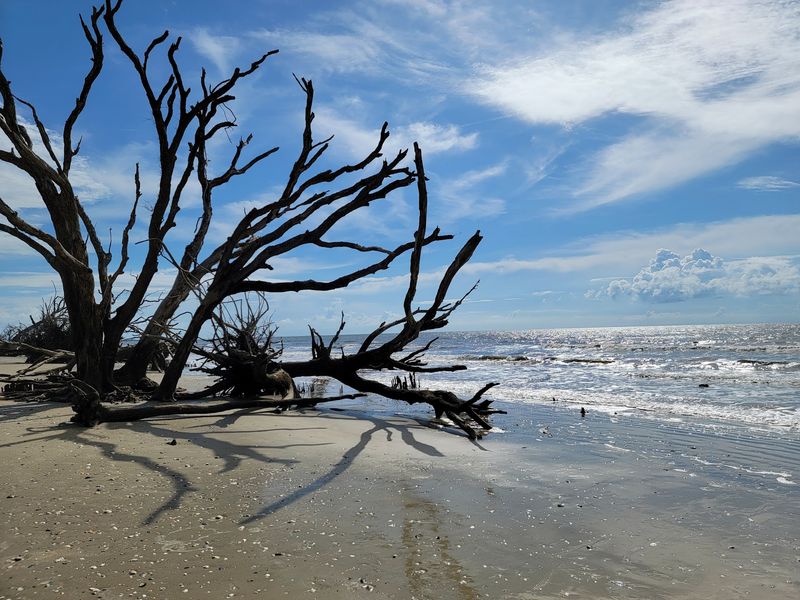
Nothing quite prepares you for the walk out to Boneyard Beach. From the parking area it is about half a mile along a hard-packed causeway through marsh, with fiddler crabs darting sideways as you pass.
Then the trees appear. Sun-bleached trunks stand and lie across the sand, destroyed by saltwater as the shoreline retreats year after year.
Tides rule everything here. At high tide the beach practically vanishes and water reaches the entrance, so check a tide chart and aim to arrive as the water is falling.
Shells pile up thickly because nobody is allowed to take them. Collecting shells, fossils, or any cultural artifacts is prohibited anywhere in the preserve, beach included, and that rule is why the place still looks untouched.
Dogs and horses are not permitted on the causeway or the beach, which surprises some visitors who bring pets for the driving loop.
Bring water, sun protection, and shoes you do not mind getting wet. I would give yourself two or three hours minimum, longer if you want the buildings and the shoreline both.
Address: 1066 Botany Bay Rd, Edisto Island, SC
