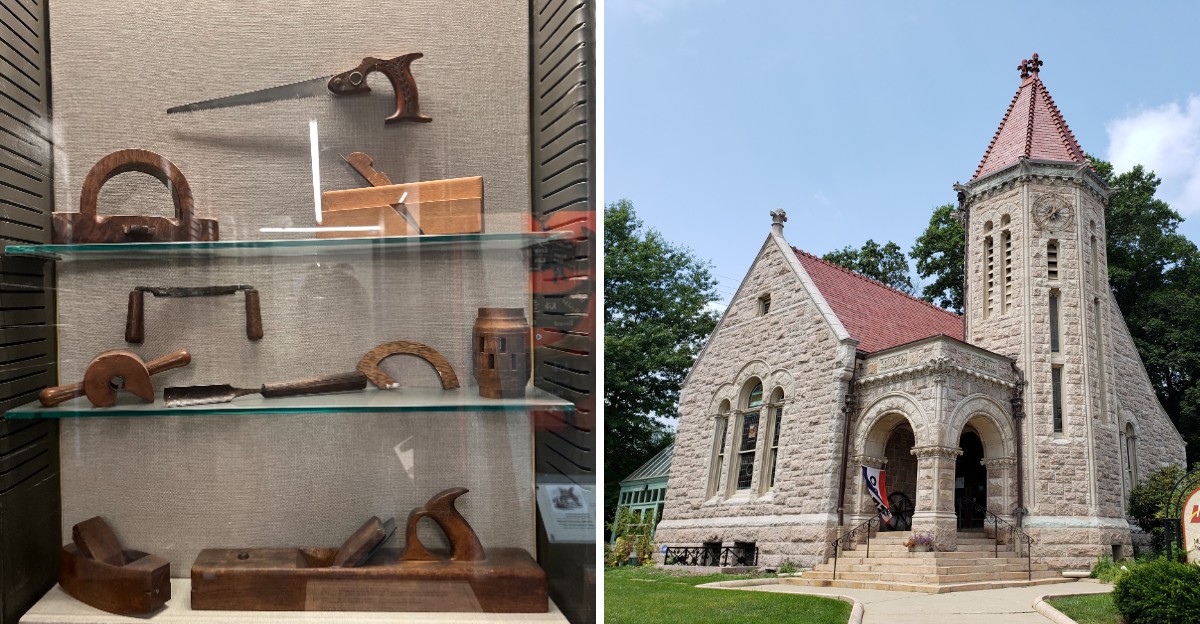
Ever looked at an old tool and thought, “Okay… but what on earth did that do?”
That question could keep you busy for quite a while here.
This small New Jersey museum dives into the working lives of craftspeople from the 18th and 19th centuries, when making a living often required tools most of us would struggle to identify today.
Its collection contains more than 8,000 objects and represents over 40 historic trades. Woodworking, metalworking, shoemaking, farming, and textile work are all part of the story.
Downstairs, tools once used by coopers, cabinetmakers, shoemakers, printers, and blacksmiths help turn those old occupations into something surprisingly tangible.
Ah, suddenly that mysterious rusty thing in Grandpa’s garage deserves another look.
A Stone Building That Fools Almost Everyone
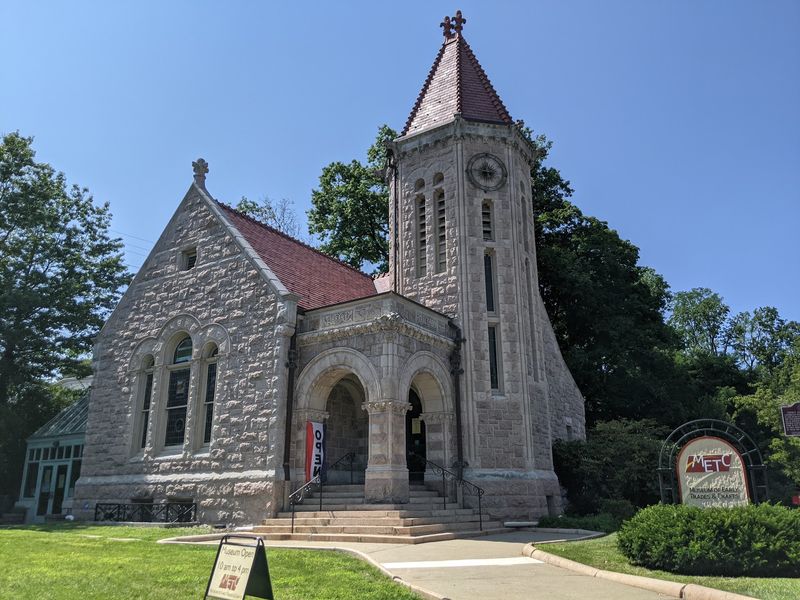
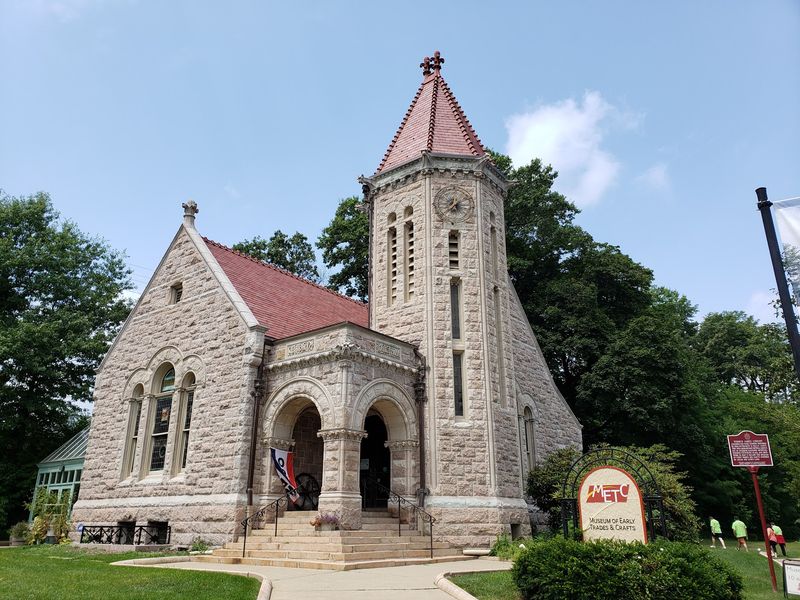
Plenty of visitors pause on the sidewalk and squint upward, convinced they’ve found a chapel. The heavy stone walls, the rounded arches, the clock tower rising above the rooftops, it all suggests something ceremonial.
But the building was never a house of worship. It opened as the town’s first free public library in 1899, a gift to the community, and its Richardsonian Romanesque Revival design was meant to signal that books mattered here.
What I love about the exterior is how much texture it holds. Rough stone blocks sit beside carved details, and the whole thing feels built to outlast several generations of passersby.
Take a slow lap around before going inside. You’ll notice how the masonry shifts color depending on where the light lands, and how the arches frame the street like picture windows.
The Museum of Early Trades & Crafts occupies the space now, which feels fitting. A building this carefully constructed makes a natural home for a collection celebrating skilled hands and patient work.
Jobs That Vanished Along With Their Tools
Cooper. Cordwainer. Wheelwright. Read those job titles aloud and they sound almost invented, yet each one kept a village running.
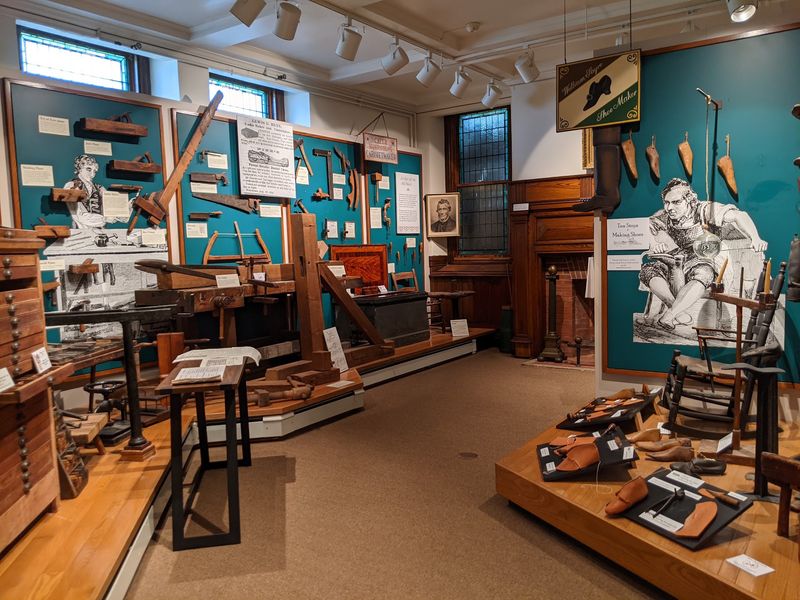
The collection here holds more than eight thousand artifacts representing over twenty-one different trades, which is a staggering number for a museum this compact. Tools sit in tidy groupings, each one tied to a specific task that someone performed hundreds of times a day.
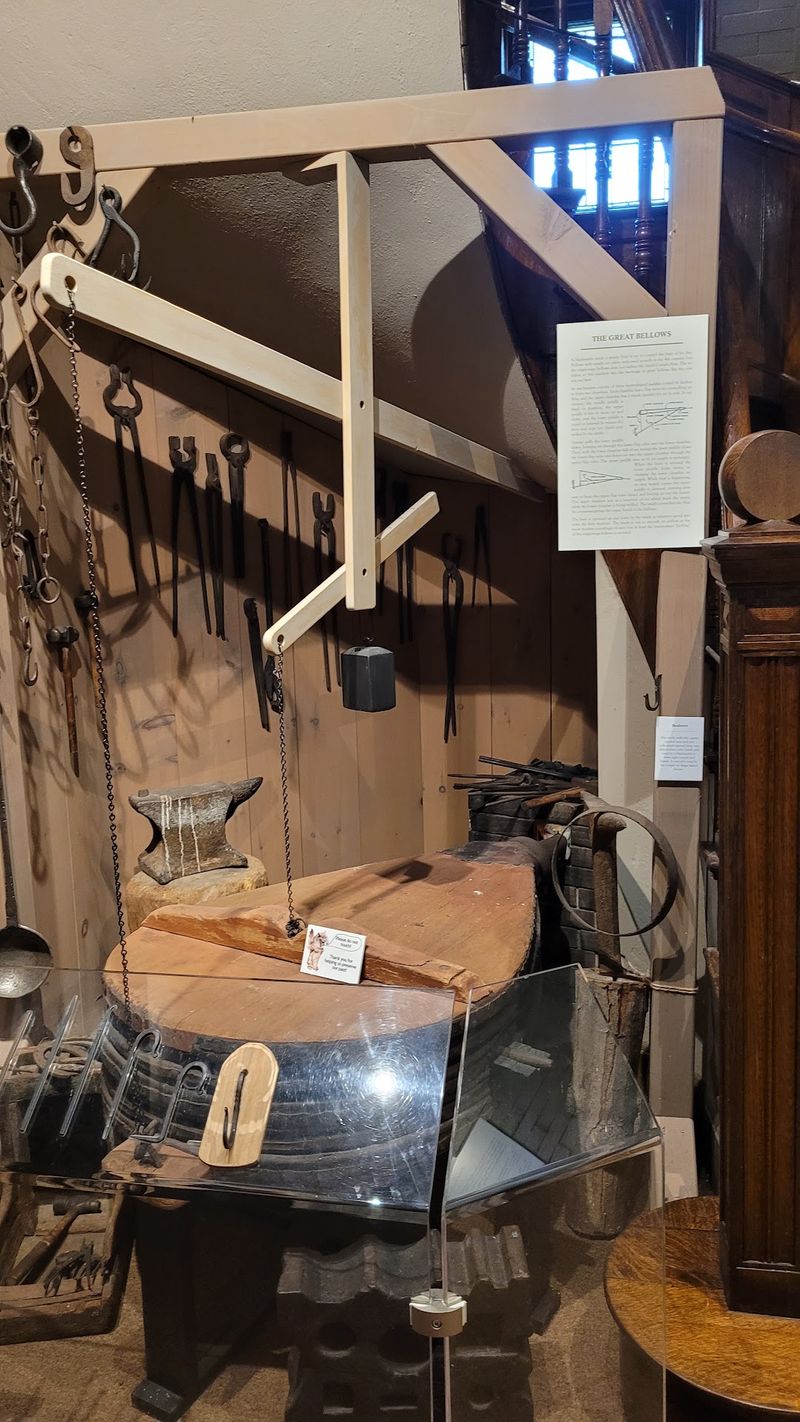
A cooper shaped barrel staves with a curved adze. A blacksmith coaxed iron into hinges and horseshoes.
A shoemaker stretched leather around wooden forms until it held the shape of a foot.
Reading the labels is half the fun, because they explain not just what an object did but why it mattered to people who had no hardware store nearby.
Give yourself time to linger. The tools look simple at first glance, then reveal clever design choices that only make sense once you understand the job they were built to finish.
Woodworking Displays That Make You Rethink Furniture
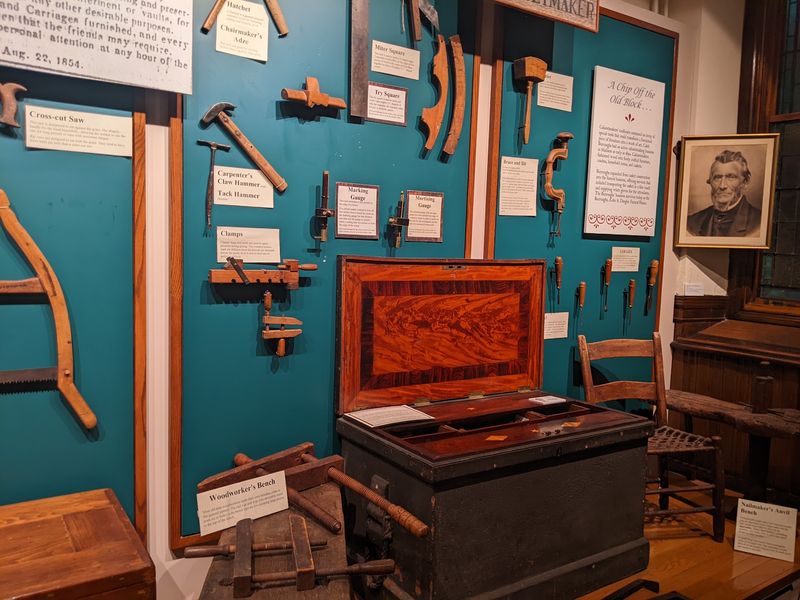
My favorite corner turned out to be the woodworking section, where a cabinetmaker’s chest sits surrounded by planes, chisels, and saws arranged almost like artwork.
Those tools built everything. Chairs, cupboards, coffins, wagon wheels, all shaped without electricity and often without a single nail holding the joints together.
Look closely at the handles and you’ll spot worn hollows where fingers gripped them year after year. That detail does something a textbook never manages.
The exhibit also shows finished pieces alongside the tools, so you can trace the path from rough board to smooth drawer front. Joinery that looks effortless suddenly reveals itself as dozens of careful decisions.
What struck me most was the self-sufficiency baked into it all. Communities relied on whoever lived down the road to make or mend nearly everything they owned.
If you enjoy tinkering, building, or fixing things around the house, this section will hold you longer than you expect. It’s oddly humbling and genuinely inspiring at once.
Leatherwork, Boots, And The Cordwainer’s Bench
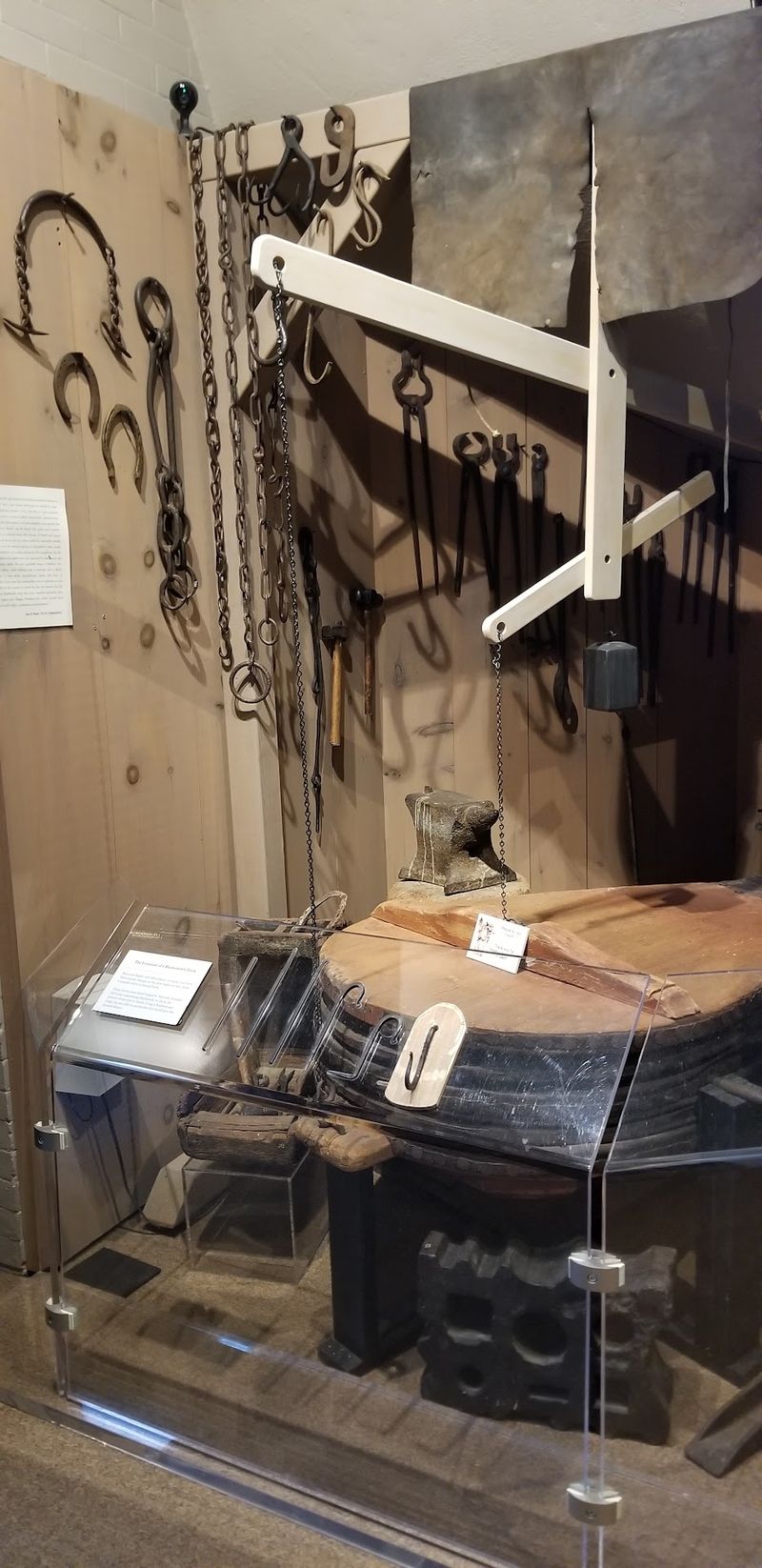
Ever wondered how a pair of boots came together before factories existed? The answer sits right here, laid out with wooden lasts, awls, and stiff pieces of cut leather.
Shoemakers shaped wet leather around carved wooden forms, then stitched everything by hand, one hole at a time. Each shoe was made for a specific foot, which explains why footwear was treated as a serious investment.
The display walks through the steps clearly enough that kids follow along without losing interest. Adults tend to linger even longer.
Small details caught my attention, like the range of last sizes and the specialized knives used for trimming edges. Nothing here was one-size-fits-all.
It also reframes something we rarely think about. Comfortable, affordable shoes are a fairly modern luxury, and this exhibit quietly reminds you of that.
Before leaving the case, check the stitching on the finished boots. The tightness of those seams is a small masterclass in patience.
Kitchen Gear And The Work Of Keeping A Home Running
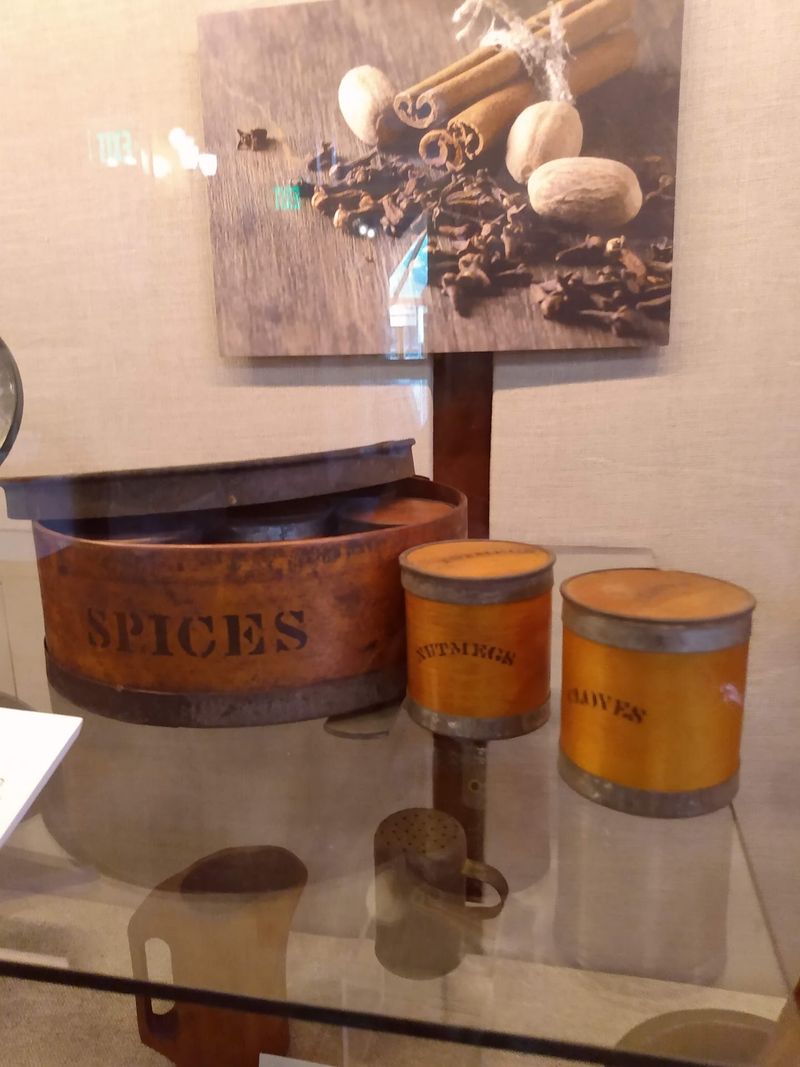
Household tools rarely get top billing in museums, which makes this section feel refreshing.
Exhibits here focus on men and women in early 1800s New Jersey and the daily strategies they used to feed families, preserve food, and manage a home without refrigeration or running water. Crocks, churns, iron pots, and textile tools all get their moment.
Food preservation gets particular attention, and it’s fascinating. Drying, salting, and storing produce carried families through long winters, and every method required specific equipment.
Farming artifacts appear nearby, tying the household to the fields that supplied it. You start to see how tightly connected home, farm, and local workshop really were.
I came away with a different respect for the phrase everyday chores. None of this was quick, and almost all of it was physical.
Bring a curious kid along and ask them to guess what each object does. Some answers are obvious, others are wildly wrong, and that’s exactly the point.
Beauty Hiding In Purely Practical Objects
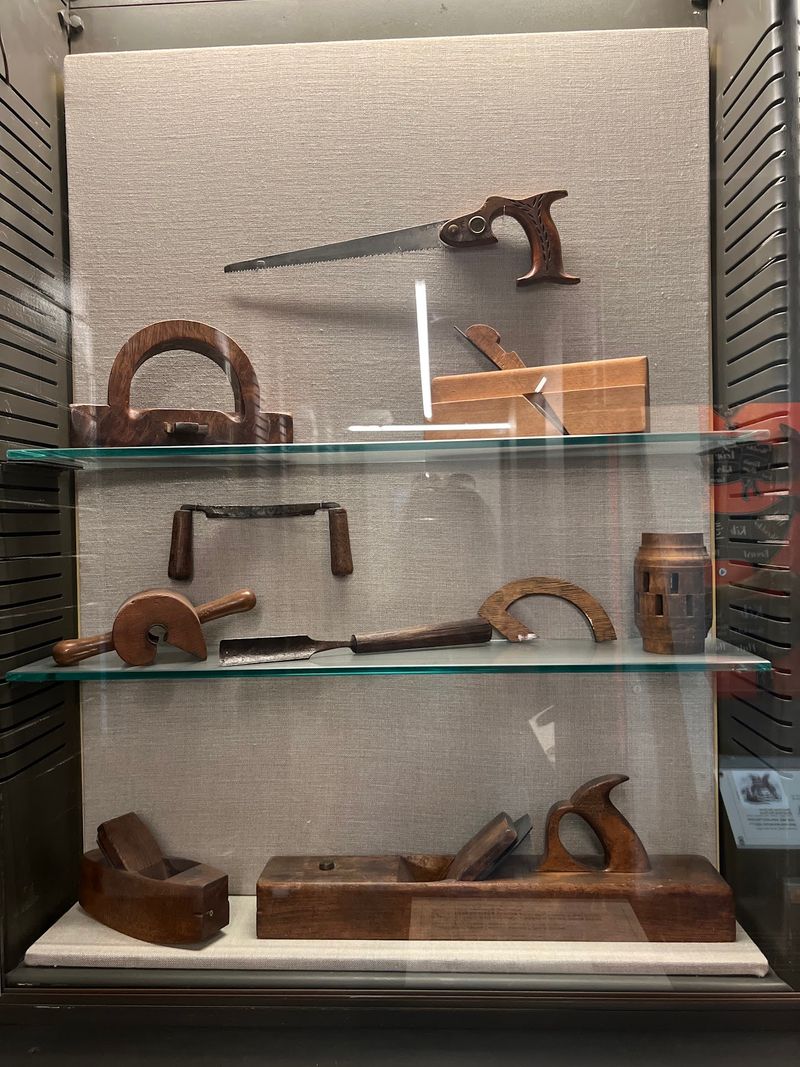
Something funny happens as you move through the galleries. Objects built strictly for work start looking like art.
A wooden bucket has perfectly fitted staves. A woven textile carries a pattern nobody strictly needed.
A tool handle has been shaped to sit kindly in a palm.
The pottery and textile displays are where this really clicks. Decorative touches show up on items that existed only to hold water or cover a bed, which tells you something about the people who made them.
Craftsmanship wasn’t reserved for luxury goods. It ran through ordinary life, and objects were expected to last long enough to be handed down.
That idea stuck with me longer than any single artifact. We replace things constantly now, often without a second thought.
Slow down in these rooms and look for the small flourishes. A carved edge, a painted line, a deliberate curve where a straight edge would have worked fine.
Those choices are where the personality lives.
Stained Glass, Vaulted Ceilings, And Iron Details Inside
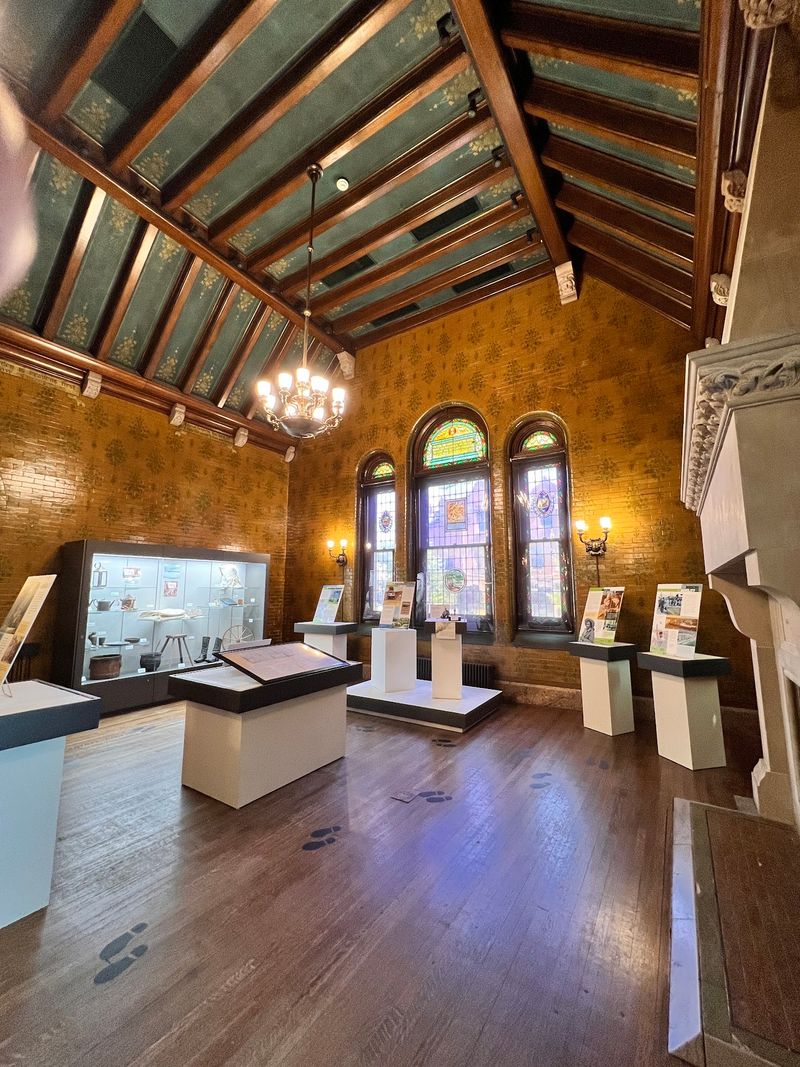
The interior nearly upstages the collection, and I mean that as a compliment to both.
Vaulted ceilings rise overhead, brick walls glow warm, and stained and painted glass windows scatter colored light across the floor in shifting patches. Ironwork and carved woodwork add flourishes in places you might otherwise walk past.
Fireplaces remain in the space, and one carries an inscribed literary quotation about books being the voices of the distant and the dead, a leftover from the building’s library days.
Reading that line while surrounded by antique tools creates a strange, lovely overlap of purposes. Both eras were about passing knowledge forward.
Look up often. The ceiling details reward it, and the light changes noticeably depending on the time of day you visit.
Architecture fans will find plenty to study here, and photographers will want a few minutes near the windows.
Honestly, even someone with zero interest in old hand tools would enjoy simply standing in these rooms for a while.
Hands-On Corners And A Room Kids Actually Like
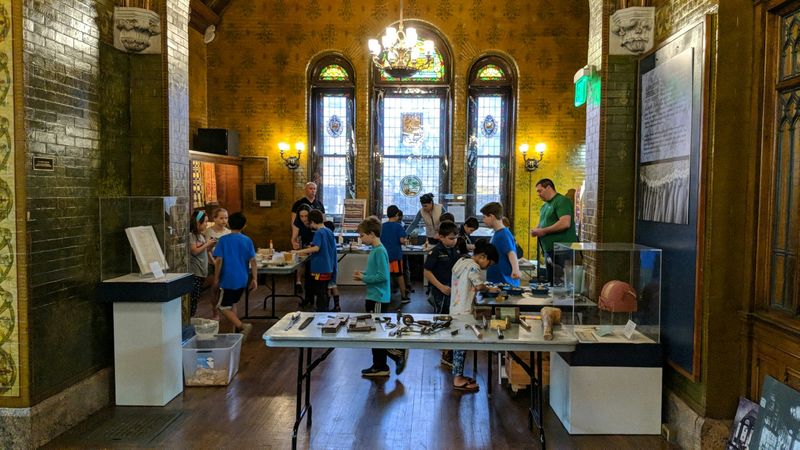
Museums and restless children don’t always mix, but this one plans for it.
Hands-on activities appear throughout the galleries, letting visitors touch, try, and test instead of only reading. There’s also a children’s room with building blocks and games, which turns out to be a hit with grown-ups too.
Younger visitors tend to gravitate toward the library room, where the atmosphere is cozy and the activities are simple enough to grab attention immediately.
Parents get a break, kids burn energy, and everybody leaves having learned something without noticing the learning part.
Staff members are friendly and happy to point out which displays invite touching. Asking questions here is encouraged rather than tolerated.
Most families spend roughly an hour or so covering the whole museum, which lands in that sweet spot before anyone gets tired.
If you’re planning a rainy-day outing with children in tow, this is a smart, low-stress option that doesn’t feel like a compromise.
Viewable Storage And A Peek Behind The Curtain
Most collections keep their reserves locked away, so this feature genuinely surprised me.
A viewable storage facility lets visitors see how artifacts are stored, organized, and cared for, rather than only the polished items chosen for display. Shelves of objects sit waiting, catalogued and protected.
It’s a rare glimpse at the unglamorous side of preservation. Conservation takes constant attention, careful climate control, and a lot of quiet labor.
Seeing it laid out changes how you read the rest of the galleries. Every exhibit represents choices someone made about what to show and how to protect it.
For anyone curious about museum work as a career or just nosy about what happens backstage, this stop is worth the extra minutes.
The Museum of Early Trades & Crafts uses the space to make its stewardship visible, which feels honest and generous.
Ask a staff member about it if you’re unsure where to look. They tend to be enthusiastic on the subject.
Main Street Wandering Before Or After Your Visit
One practical bonus of this museum is where it sits.
Main Street runs right outside, lined with shops and restaurants that make it easy to stretch a short museum visit into a full afternoon. Street parking was simple to find, and there’s additional parking behind the shops.
Hours run Tuesday through Saturday from 10 AM to 4 PM, with Sunday and Monday closed, so plan accordingly. Mornings tend to feel calmest.
Pair the galleries with a coffee stop and a slow walk, and you’ve got a genuinely pleasant day trip that doesn’t require driving all over New Jersey.
The broader exhibits also work to include voices often left out of early American history, covering women’s experiences, immigrant stories, African Americans, and the Native people who lived in the region before the 1700s.
You’ll find the collection at the Museum of Early Trades & Crafts, 9 Main St, Madison, NJ 07940, set into a stone building you won’t forget.
