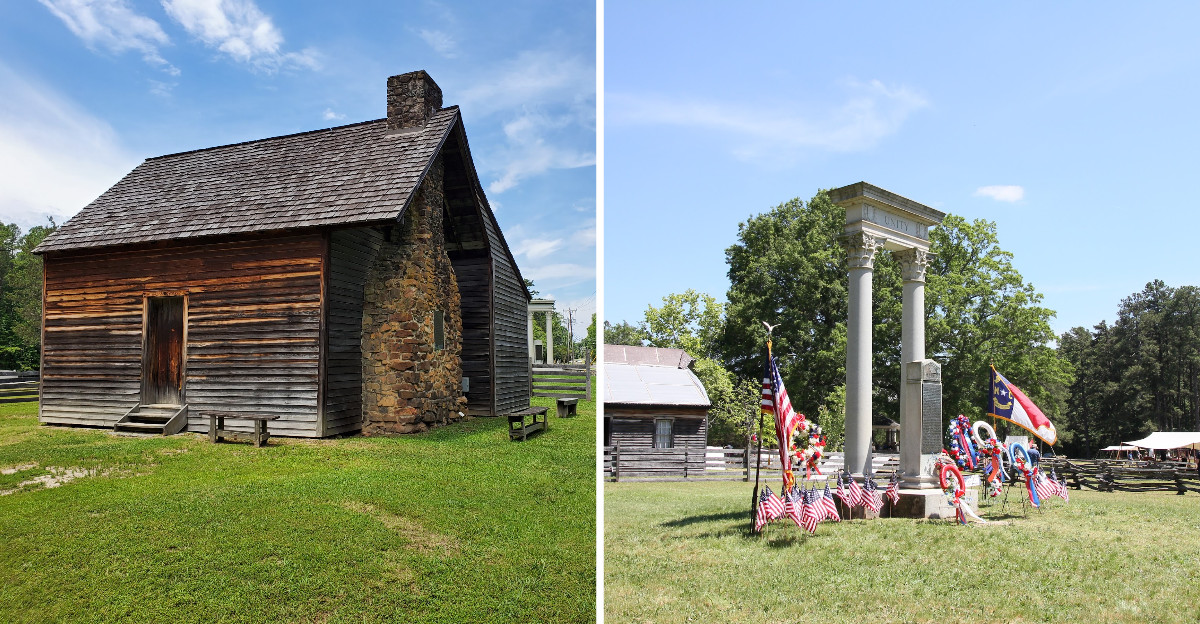
Split rail fences and simple wooden buildings sit on the edge of a North Carolina farm, and the quiet there feels almost too calm for what happened.
Two worn-out generals sat down in April 1865 and talked their way toward peace, and their deal led to the surrender of nearly 90,000 Confederate soldiers, more than three times the number at the more famous Virginia courthouse.
Plenty of people have never heard of this place, which makes walking its shady trails feel like uncovering a secret. The farmhouse is modest, the fields are open, and the paths wind past cabins and old trees.
Hours disappeared while reading plaques and standing in the rooms where the terms were worked out. History that stays this quiet tends to stick with you, and this farmhouse deserves a spot on any North Carolina list.
The stories here do not shout, they wait for you to listen.
Where the Biggest Surrender Really Happened
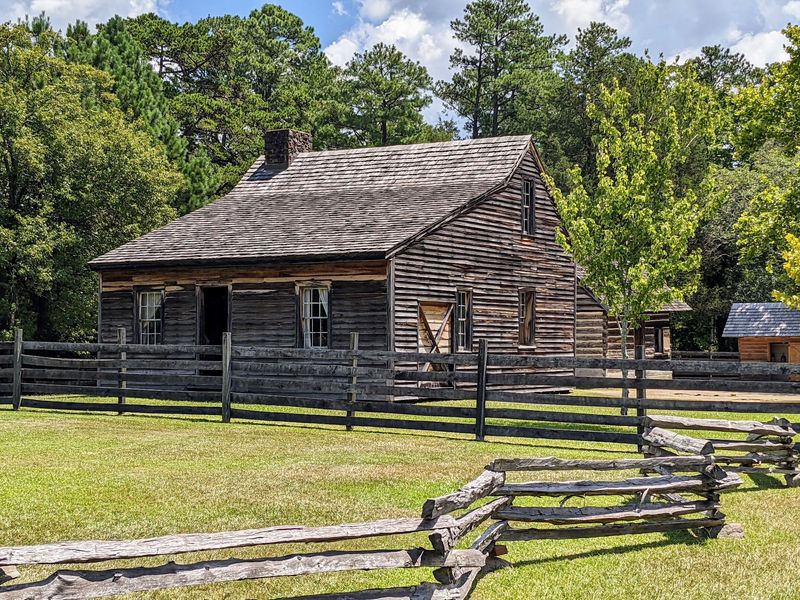
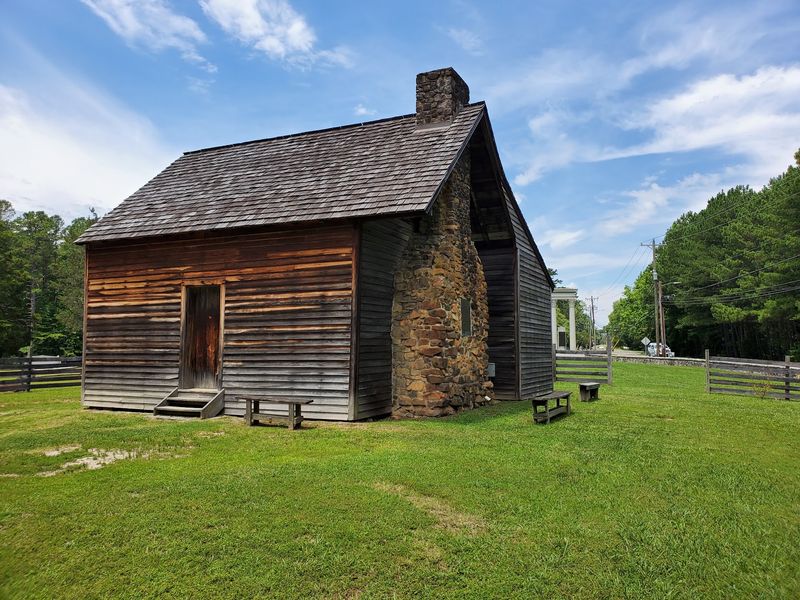
My first surprise came before I even left the parking lot. A plain wooden farmhouse, a split rail fence, and a lot of quiet were not what I expected from a spot that ended a war for so many people.
Here is the big picture. In April 1865, Confederate General Joseph E.
Johnston surrendered about 89,270 soldiers to Union Major General William T. Sherman on this farm.
Those troops came from the Carolinas, Georgia, and Florida, which made it the largest troop surrender of the entire Civil War.
Most people have heard of Appomattox, where Robert E. Lee surrendered a couple of weeks earlier.
Far more soldiers laid down their weapons here, yet the name Bennett Place still draws blank looks from a lot of folks. I kind of love that, because it means the site stays calm and uncrowded.
Knowing the numbers before you arrive changes the whole visit. That small house suddenly feels heavy with meaning, like a tiny room that held a giant decision.
I caught myself slowing down and reading every sign more carefully.
My advice is simple. Spend a few minutes picturing two armies camped miles apart, both tired and hungry, waiting to hear what two men would decide.
Then look at the peaceful fields around you and let that contrast sink in.
Life Inside the Bennett Family Home
Farm life in 1865 was not glamorous, and the Bennett home makes that clear in the best way. James and Nancy Bennett were ordinary farmers who grew crops, raised animals, and sold goods to travelers along the nearby road.
Their log house had no idea it was about to become famous. When the two generals needed a private place to talk, the Bennetts let them use it, and history moved into the front room.
The family waited outside in the kitchen building while the talks went on.
The buildings you see today are careful reconstructions, since the original house burned in 1921. Historians rebuilt it using old sketches and photographs, then filled the rooms with furniture from the right time period.
The result feels honest and lived in, not fancy or staged.
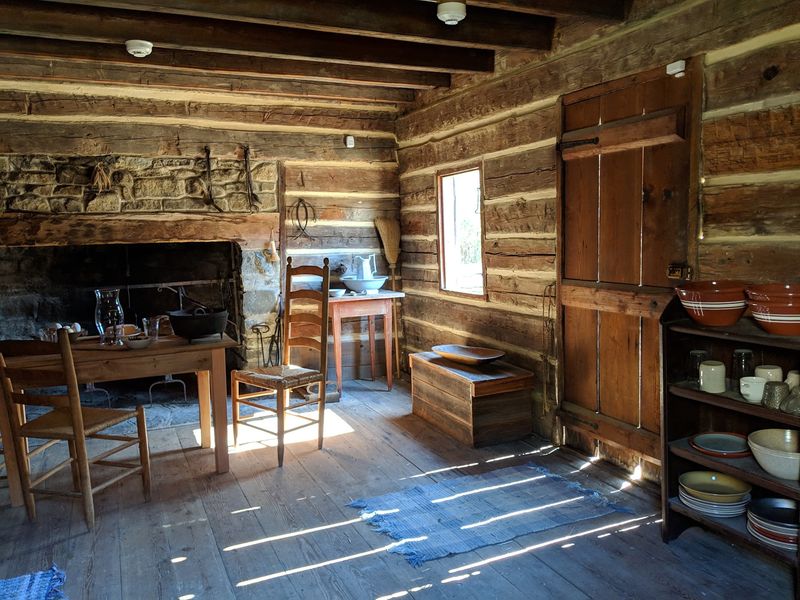
I lingered in the kitchen house longest. Its fireplace is huge, much bigger than the one in the main house, and cooking happened in a separate building so a kitchen fire would not wipe out the family’s living space.
A smokehouse nearby shows how families kept meat for the long months ahead.
Peek through the doorways and notice the small stuff, like the simple beds and worn tools. Those details tell you how hard daily work was on a small North Carolina farm.
It makes the peace talks feel even more human.
Sherman and Johnston, Rivals Who Chose to Talk
Picture two men who had spent months trying to beat each other, now sitting at the same small table. That scene stuck with me more than any battle story ever has.
William T. Sherman was the Union general famous for his March to the Sea, a campaign that tore through Georgia and the Carolinas.
Joseph E. Johnston led the Confederate forces trying to slow him down.
They had been rivals for a long time, but they also shared a deep respect for each other as soldiers.
By April 1865, Johnston knew the fight was lost. Lee had already surrendered in Virginia, and Johnston’s army was worn out and shrinking.
He reached out to Sherman to talk, even though Confederate President Jefferson Davis wanted the war to continue.
They met on the road between their lines on April 17 and rode together to the nearest farmhouse, which happened to belong to the Bennetts. Right before that first meeting, Sherman had received news that President Abraham Lincoln had been assassinated.
He shared the news with Johnston in private, and both men understood it could make peace much harder.
I found it moving that these two tough commanders chose talking over fighting. Their bond lasted, too, since Johnston later served as a pallbearer at Sherman’s funeral in 1891.
A Peace Deal That Almost Fell Apart
Peace, it turns out, can take a few tries. The first meetings on April 17 and 18 ended with an agreement, but it reached far beyond what a general was allowed to promise.
Sherman’s original terms touched on political questions, like recognizing Southern state governments. Leaders in Washington, still reeling from Lincoln’s passing, rejected the deal fast.
Sherman was told to offer terms more like the ones Lee received at Appomattox, and the truce came close to collapsing.
So the generals came back. On April 26, 1865, they sat down once more in the Bennett parlor and signed a simpler military agreement.
Confederate soldiers would turn in their weapons, sign paroles, and head home.
Here is the part that surprised me most. Sherman arranged for 250,000 rations to be handed out to the surrendering troops so they would not starve on the long walk back to their families.
Many of those men had been living on almost nothing for weeks.
Guides at the site do a great job explaining these twists, so ask questions if you take a tour. I left with a new respect for how messy and patient real peacemaking can be.
If you enjoy stories with a turning point, sit near the porch for a minute afterward and think about how close the war came to starting up again.
The Visitor Center Sets the Scene
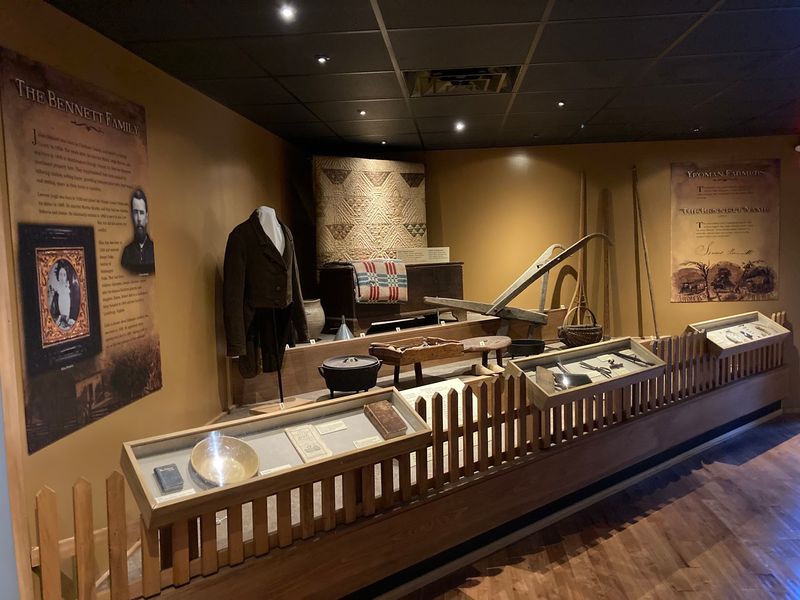
Start inside, trust me. The visitor center is the best first stop, and it gives the farmhouse so much more meaning once you head outdoors.
A short orientation film called Dawn of Peace plays in the theater and runs a little under twenty minutes. It lays out the final days of the war in a clear, easy way, and it brings Sherman and Johnston to life before you ever see the house.
If it is not already playing, the staff are usually happy to start it for you.
The museum gallery fills three rooms with exhibits about the Bennett family and the surrender. I spotted military weapons, farm tools, and everyday objects that helped me picture life in 1865.
Plan on around twenty minutes if you like reading every panel.
One panel taught me something I never knew. The Bennett Place surrender was not the only one after Appomattox, and the exhibit explains the other surrenders that followed across the South.
It is a small detail, but it helped me see how slowly the war actually wound down.
There is also a little gift shop with history books and souvenirs, which is handy if you have kids who want a keepsake. My tip is to chat with the staff and volunteers here.
They know a remarkable amount, and a friendly question can easily turn into a fascinating conversation.
The Unity Monument and a Moment to Reflect
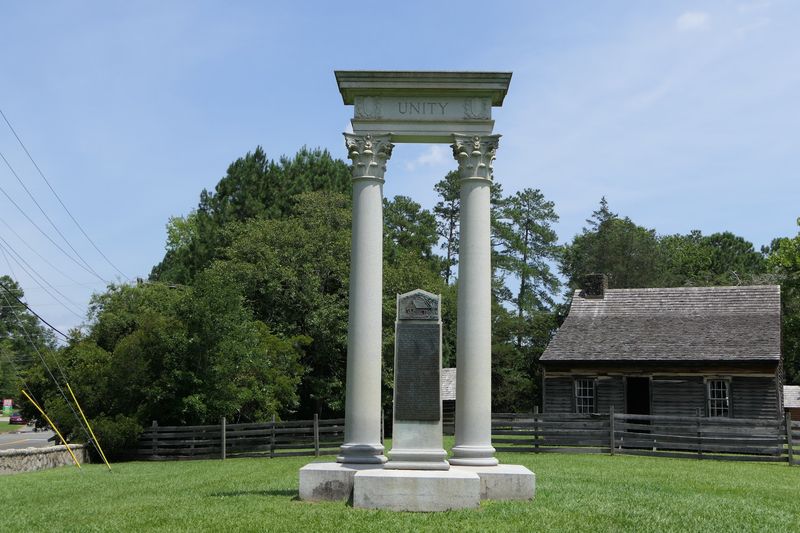
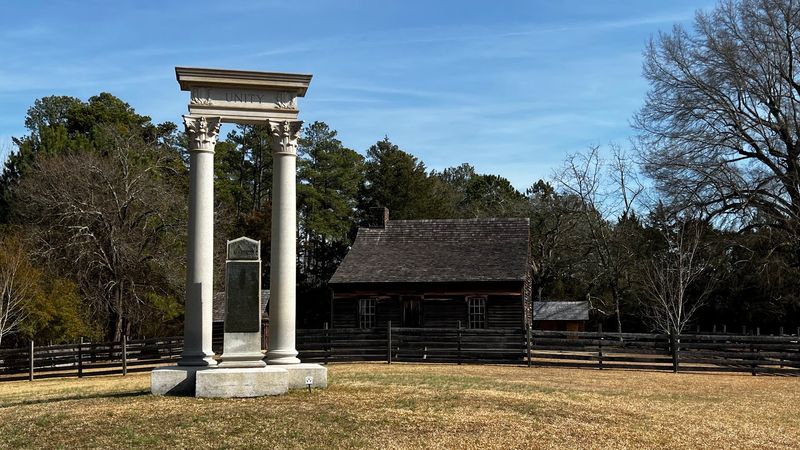
Two stone columns stand near the farmhouse, joined across the top by a single block carved with one word: Unity. I stopped in front of it longer than I expected.
The Unity Monument was dedicated in 1923, long after the war ended. The two columns represent the North and the South, and the piece across the top shows them joined together again.
It is simple, but it says a lot without trying too hard.
Visiting it made me think about what came after the surrender. The war ended, but healing a divided country took much longer.
Progress was far from smooth, especially for millions of formerly enslaved people who gained freedom and then faced new injustices in the decades that followed.
The grounds around the monument are calm and open. You hear wind in the trees, maybe a few birds, and not much else.
That quiet makes it a natural spot to pause and think about how hard it is for enemies to shake hands.
I would suggest visiting the monument after the farmhouse tour, when the story is fresh in your mind. Take a photo if you like, but also give yourself a few quiet minutes there.
For me, that pause was the moment the whole visit clicked into place, and I left feeling hopeful about how people can find common ground.
Old Hillsborough Road and the Woodland Trails
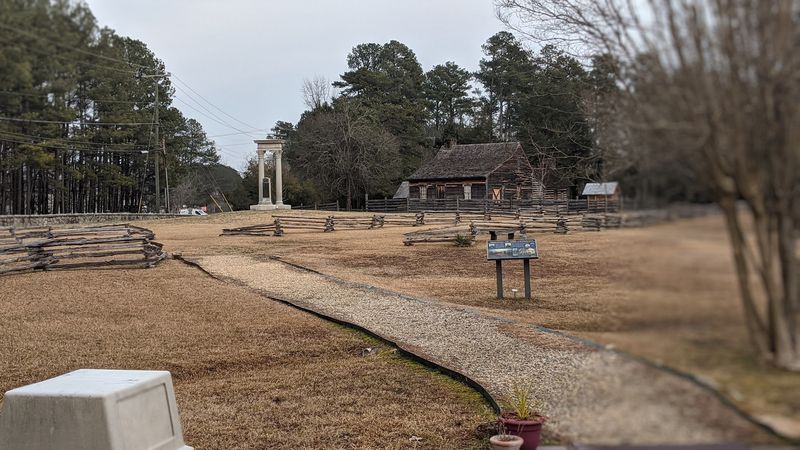
A dirt road does not usually give me goosebumps, but this one did. A stretch of the old Hillsborough Road still runs across the property, and it is the same route the generals traveled to reach the farm.
Following it slowly, I tried to imagine the sound of horses and the quiet worry of the officers riding behind their commanders. The road is flat and easy, so it works well for grandparents, little kids, and anyone who does not want a big hike.
Informational signs along the way fill in the story as you go.
Past the farm buildings, nature trails wander into the woods of the old Bennett farm. Tall trees shade the paths, and benches and boardwalks give you places to pause.
Birds chatter overhead, and on a warm day the forest smells like pine and damp leaves.
Some of the plants along the trails are native species that would have grown here when the Bennetts farmed the land. I enjoyed spotting them and thinking about the family walking these same woods.
It turns a history lesson into a peaceful outdoor break.
The lawns are neat and open, with picnic tables nearby, so pack a lunch and make an afternoon of it. Comfortable shoes and a water bottle are smart choices, especially in summer.
North Carolina heat can sneak up on you fast.
Living History Days and Planning Your Visit
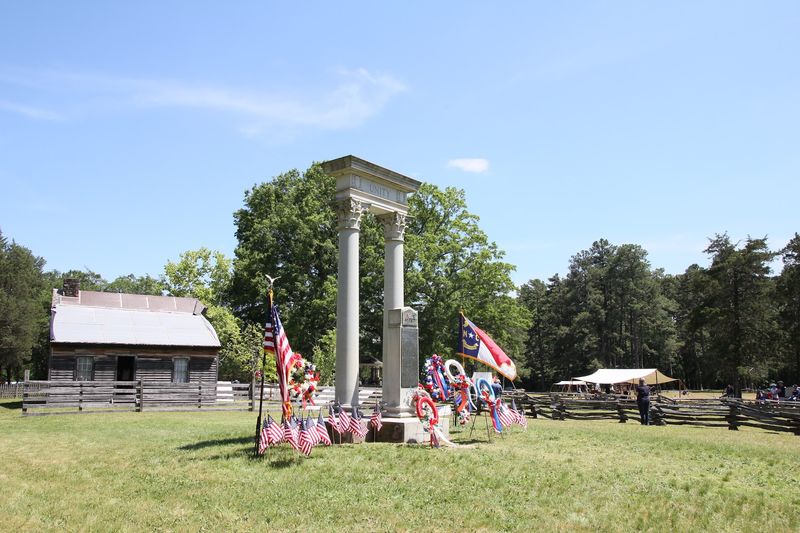
Musket fire echoing across a peaceful field is not something you hear every day. On special event weekends, Bennett Place fills up with living history reenactors in period clothing who show how soldiers and farm families lived in 1865.
These events are some of the liveliest times to visit. You might catch rifle demonstrations, cooking over an open fire, or seasonal celebrations with old-fashioned treats and holiday fun.
Check the official state historic sites website before you go so you can plan around them.
On regular days, the site is open Tuesday through Saturday from 9 AM to 5 PM, and it is closed Sunday and Monday. Entry to the grounds and visitor center is free, and donations help keep things running.
Guided tours of the farmhouse are offered for a small fee, and they are worth it.
One handy tip is to call ahead in summer, because afternoon tours are sometimes skipped on very hot days. You can also grab a free self-guided brochure if the timing does not work out.
Most visitors spend one to two hours here.
I left feeling like I had found one of Durham’s best-kept secrets. It is quiet, friendly, and full of stories that deserve more attention.
Address: 4409 Bennett Memorial Rd, Durham, NC 27705
