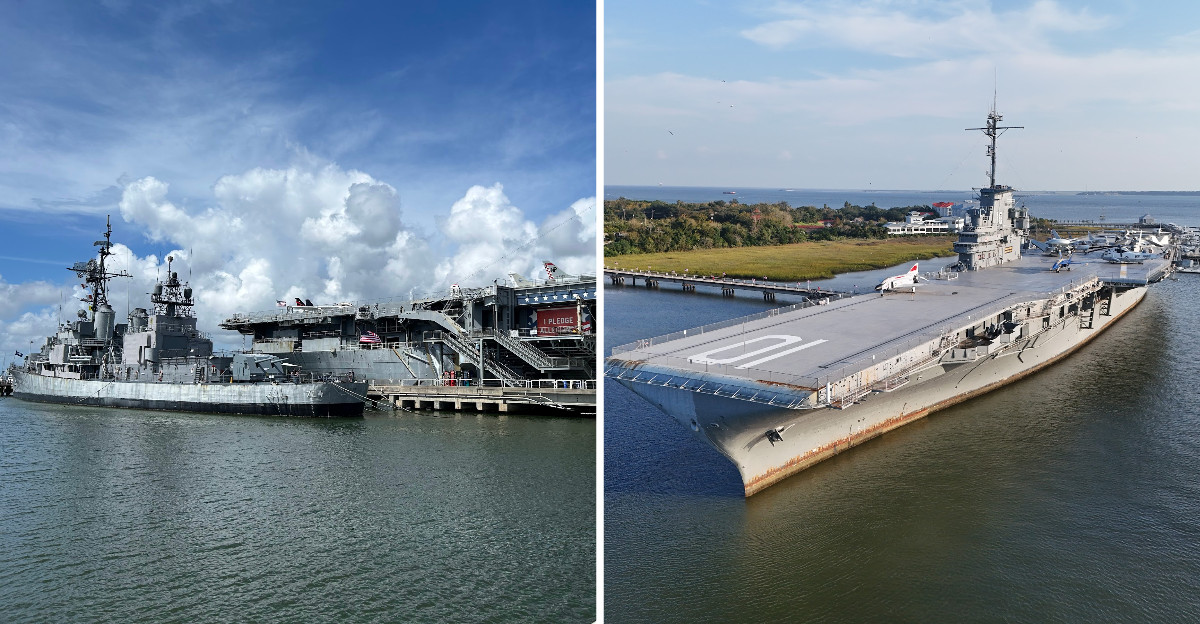
Aircraft carriers rising out of a harbor look like steel islands, and one in South Carolina grows bigger the closer you get. This floating museum draws crowds for its planes and war stories, and the top deck delivers plenty of both.
What visitors rarely expect is the hidden story below. Nearly two million gallons of dangerous waste sat in the ship’s belly for almost fifty years, and the state spent over thirty-one million dollars to clean it out.
That rescue changed how the whole vessel is seen, turning a wartime relic into a story of environmental recovery. Walking the decks now, the contrast between the top and the bottom becomes impossible to ignore.
The ship has survived battles, decades of neglect, and a massive cleanup. Hours slip away while exploring its corridors and cabins.
South Carolina keeps this landmark afloat, and it rewards anyone who steps aboard.
Meeting the Fighting Lady Up Close
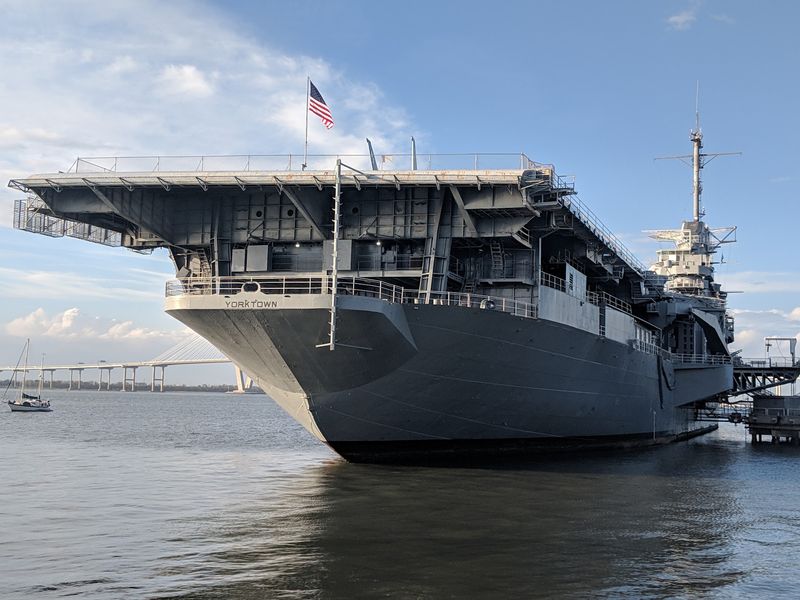
My neck got a real workout on day one, because I kept tilting my head back to take in the sheer height of this ship. The USS Yorktown, nicknamed the Fighting Lady, joined the Navy in April 1943 and went straight into World War II.
She helped lead the push across the Pacific that ended with Japan’s defeat in 1945. For that hard work, the ship earned a Presidential Unit Citation and eleven battle stars, which is a big deal in Navy terms.
Here is a fun bit I loved learning. This is actually not the first ship with the name.
The original Yorktown sank at the Battle of Midway in 1942, and this carrier carried the name forward to honor it.
Her career did not stop after that war. The Yorktown served during the Vietnam War, then helped with a space mission by recovering the Apollo 8 astronauts in 1968 after they circled the moon.
She retired in 1970 and arrived in Charleston Harbor in 1975 to become a museum. In 1980 she was named a National Historic Landmark, and today hundreds of thousands of people climb aboard every year to see her for themselves.
A Quiet Problem Hiding Below Deck
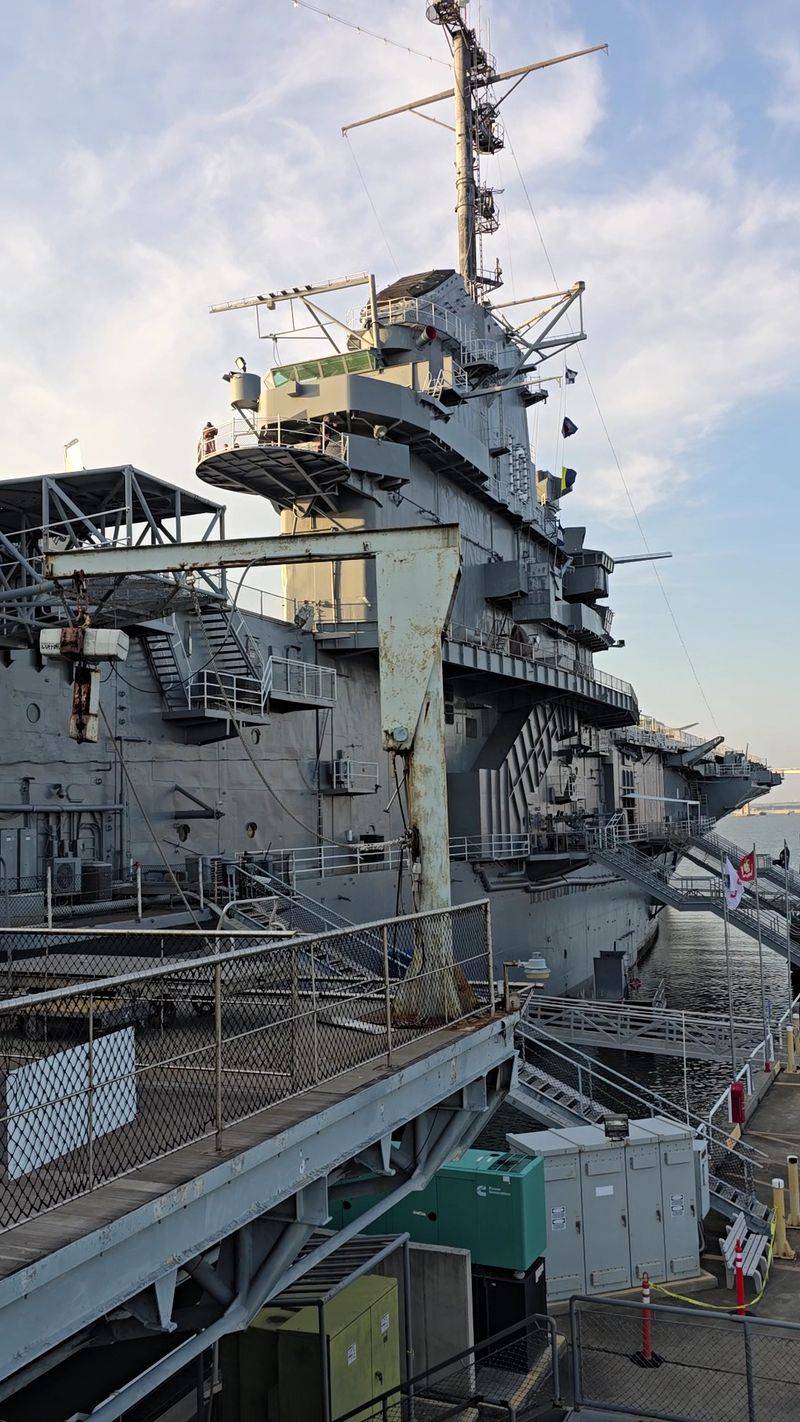
Nobody touring the hangar deck years ago would have guessed what was sloshing around under their feet. When South Carolina took over the ship in 1975, it was accepted as is, which was normal back then.
That simple phrase meant the carrier still held leftover fuel, oil, and dirty water from its working years. Those liquids stayed locked inside the tanks for close to fifty years.
Saltwater is tough on steel, and time made it worse. Slowly, the hull began to rust and weaken in spots, and small breaches started to form.
Governor Henry McMaster called the ship a ticking environmental time bomb, and the name fit. A big leak could have spread oil into Charleston Harbor’s marshes and creeks, harming fish, birds, dolphins, and the local businesses that depend on clean water.
I think about that every time I look out at the harbor now. The water around Patriots Point is lively, with boats gliding by and dolphins sometimes surfacing near the pier.
Knowing how close that scene came to being damaged made me appreciate the calm view even more. It also showed me that saving history sometimes means fixing problems nobody can see.
The $31 Million Rescue Mission
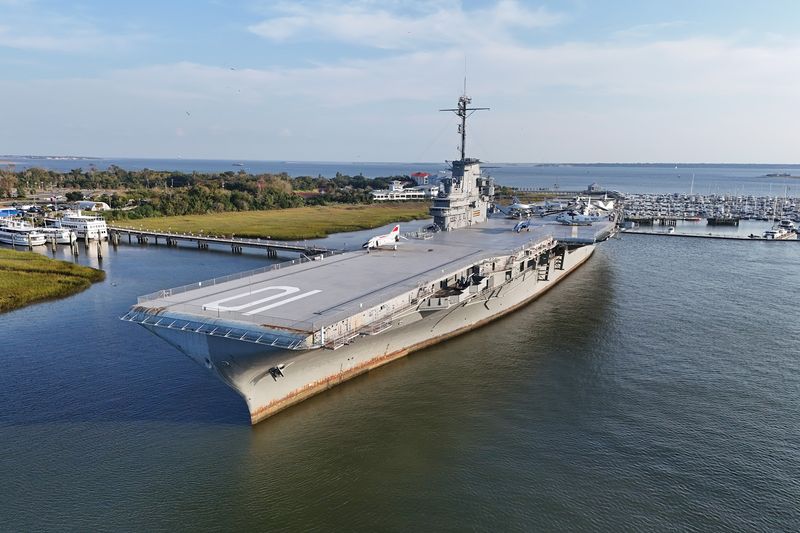
Picture a cleanup job so big it took two full years and over $31 million to finish. That is exactly what happened here, starting with an executive order from Governor McMaster in 2022.
Most of the money, about $31.6 million, came from a federal American Rescue Plan Act grant. The goal was to pull out roughly two million gallons of dangerous liquid waste plus loads of old asbestos.
The first phase wrapped up in December 2023. Crews studied the ship, patched 35 hull breaches, and removed nearly 569,000 gallons of oily water, along with sludge and asbestos waste.
Phase two ran from February to October 2025, and it was even bigger. Workers removed another 1.4 million gallons of old fuel and oil, plus about 9.1 tonnes of asbestos insulation.
Salvage teams from Hepaco LLC, Shipwright Inc., and Isla Maritime cleaned more than 130 tanks by hand and machine. Afterward, the tanks were refilled with fresh water so the ship would stay balanced.
In November 2025, the state announced the job was done. McMaster said the Yorktown was clean as a whistle, and honestly, that might be my favorite description of a warship ever.
Climbing Down Into Sailor Life
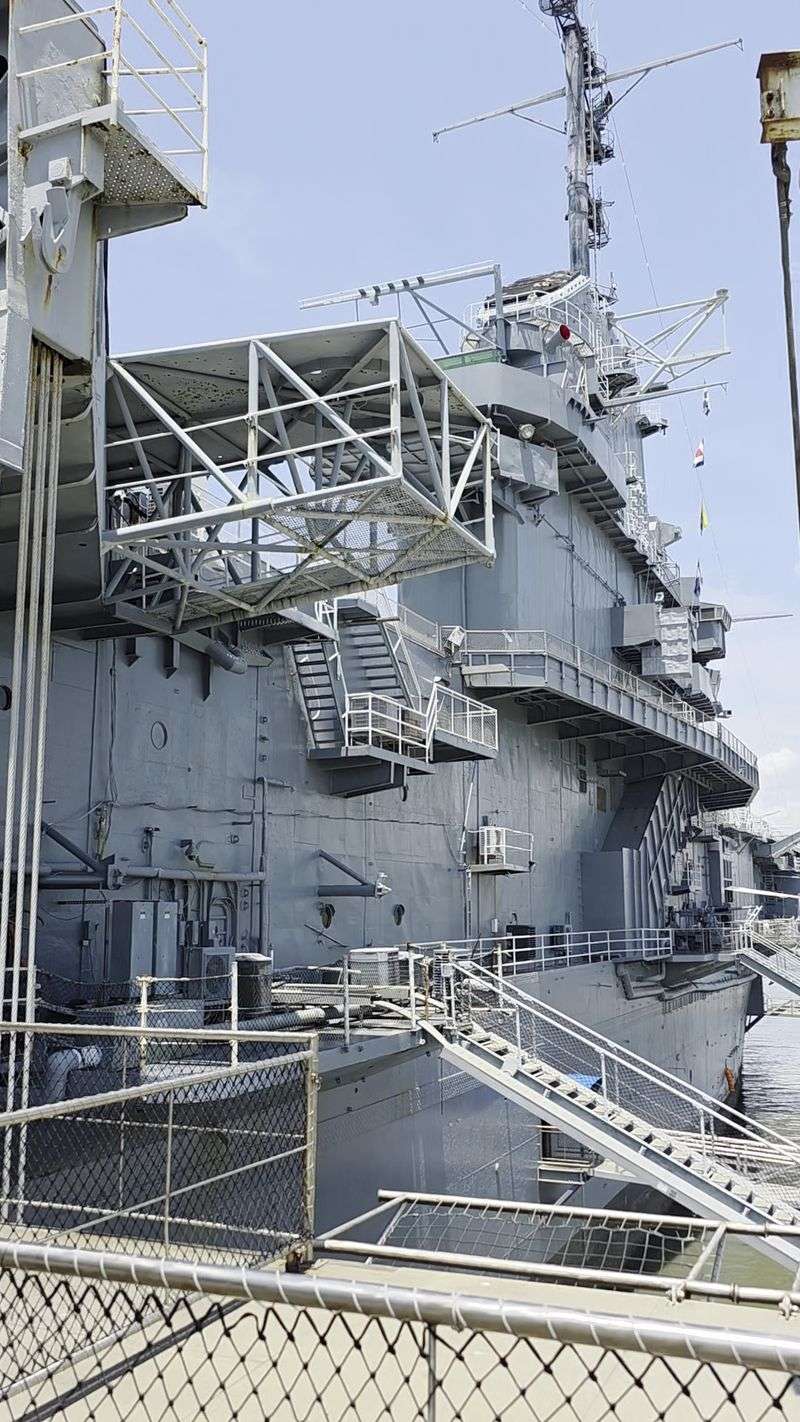
Those ladders are no joke. I learned fast that the steps inside the Yorktown are steep and narrow, so comfy shoes are a must.
The ship has four self-guided tour routes marked with arrows, and I tried to follow them in order. The lower decks pulled me into the everyday world of the crew, room by room.
I squeezed past rows of stacked bunks and wondered how anyone slept with a few inches of space above their nose. The sick bay and old dental chairs made me grateful for modern clinics.
Then came the brig, the ship’s jail for sailors who broke the rules. Kids around me found it hilarious, and I had to admit it was pretty entertaining too.
The engine room is a maze of pipes, valves, and dials. Every space has signs explaining what happened there, so you never feel lost about the purpose of a room.
A helpful tip: summer turns the lower decks very warm. Bring water and take breaks often.
When my legs needed rest, I found the onboard theater near the hangar deck. A short film about the ship plays regularly, and it gave me a comfy seat and some great background.
Heroes Honored and Planes on Parade
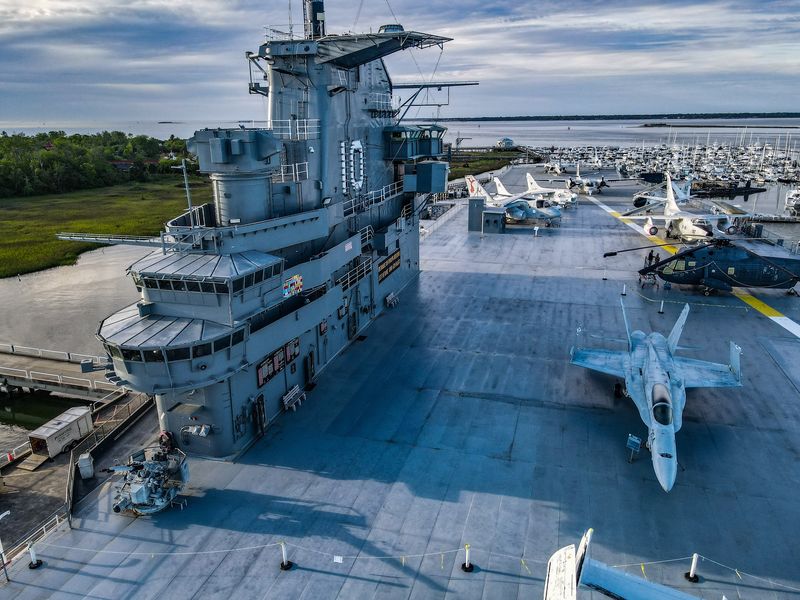
Some places make you go quiet without trying, and the Medal of Honor Museum on board did that for me. It honors Americans who showed amazing courage, and the displays share their stories in a respectful, clear way.
I spent longer there than I planned. Reading about ordinary people doing extraordinary things stuck with me all day.
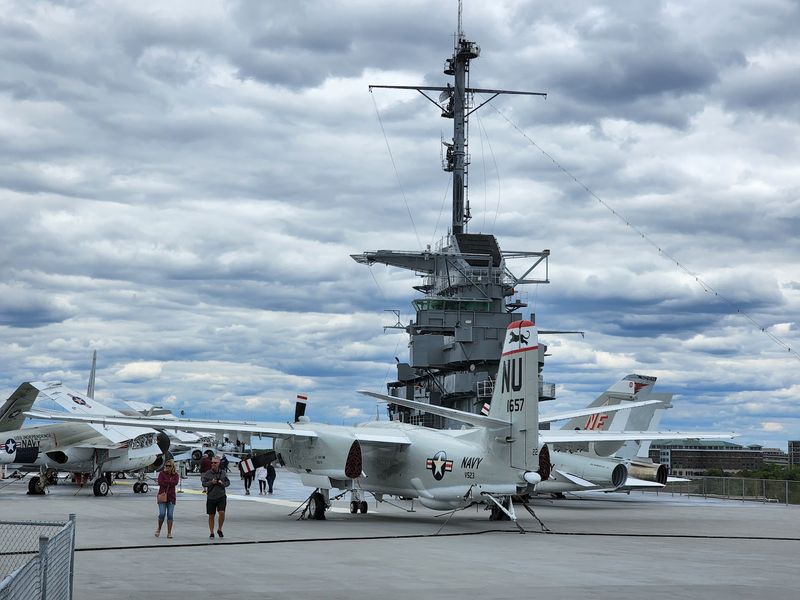
Then the mood shifted to pure excitement up on the flight deck. Restored aircraft sit lined up as if waiting for takeoff, from World War II planes to jets from later years.
The F-14 Tomcat surprised me the most. Photos never show how huge it really is, and standing beside it made me feel tiny.
The views from up top are wonderful. You can see across Charleston Harbor to the Ravenel Bridge, with sailboats drifting below.
If you can manage a few more steps, head up into the island tower to see the bridge where the captain once guided the ship. Looking down from there, I tried to imagine planes roaring off the deck one after another.
One note: storms can close the flight deck. Check the sky before you plan your visit.
Volunteers, Tours, and Overnight Adventures
One of the best parts of my day did not come from a sign or a display. It came from simply chatting with folks who help run the ship.
Many visitors mention friendly volunteers, and some have served in the military themselves. Their personal knowledge adds color that no textbook can match, so do not be shy about asking questions.
For deeper access, guided options like the Captain’s Tour and the Admiral’s Tour take you to spaces you might miss alone. Guides explain missions, daily routines, and the history behind each corner.
Families also love the overnight programs. School and youth groups can sleep aboard in real bunks, watch movies in the theater, and explore after the crowds go home.
I found that idea delightful. Imagine falling asleep inside a warship that once sailed the Pacific!
Ghost tours are another option for anyone who likes spooky stories with their history. Old ships creak and groan, so the atmosphere does a lot of the work.
Plan for at least three hours on board. Many people say they only saw part of the ship in two, and I agree completely.
Beyond the Carrier at Patriots Point
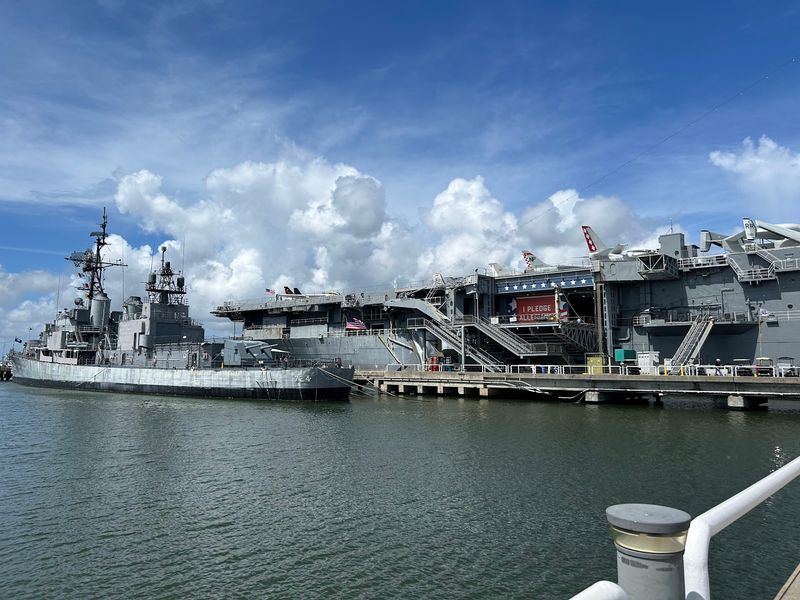
After hours on the carrier, I wandered out to see what else sat along the waterfront. Patriots Point Naval and Maritime Museum surrounds the Yorktown with more history to explore.
Right nearby floats the destroyer USS Laffey, known as The Ship That Would Not Die. It survived fierce attacks in World War II and earned high honors for its crew’s bravery, though it sometimes closes for repairs, so check ahead.
The Vietnam Experience exhibit spreads across three acres. Recreated scenes show what life looked like at bases during that war, and it felt surprisingly real.
There is also a Cold War Memorial, a calm space to pause and reflect. I sat for a few minutes and just watched the harbor water move.
Getting here can be part of the fun. Some visitors arrive by the Charleston Water Taxi, and boaters can reach the nearby marina.
The ship is open daily from 10 am to 5 pm. Military members often get special ticket discounts, which is a kind touch.
Leaving that evening, I looked back at the clean, proud carrier glowing in the late sun and felt really glad she was saved.
Address: 40 Patriots Point Road, Mount Pleasant, South Carolina 29464
