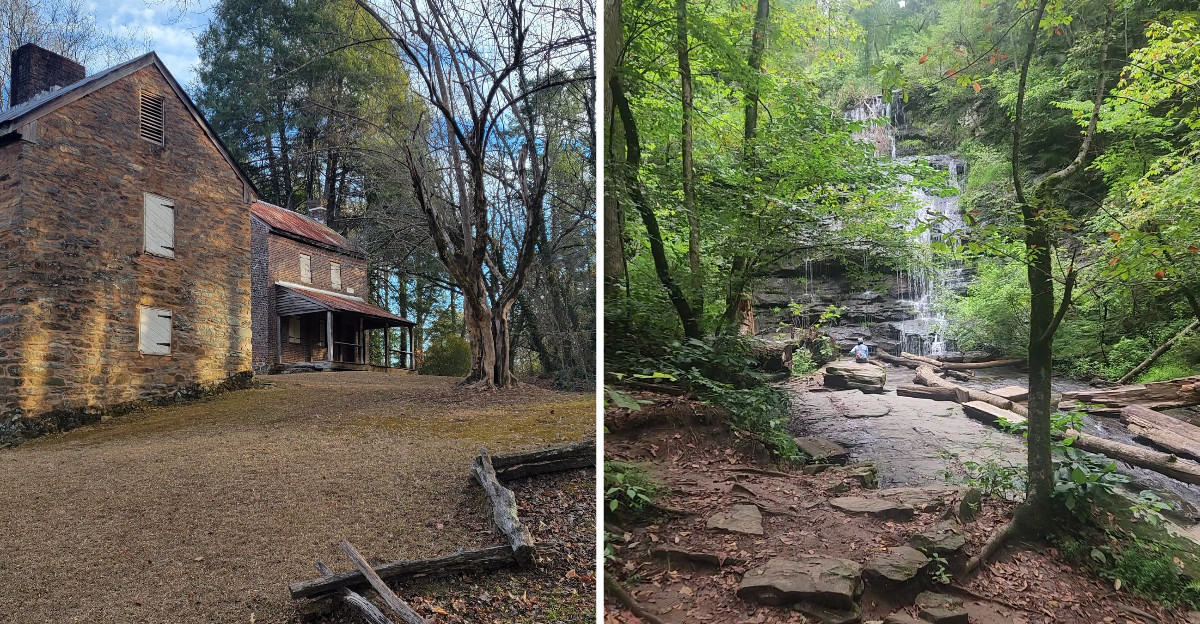
Thick-walled blockhouses from 1792 are not what you expect to find at the end of a narrow country road, but that is exactly what waits in this corner of South Carolina. I turned off the highway and followed a winding road, not knowing what was there.
A quiet gravel lot, birds, and a breeze through tall trees greeted me, and I realized I had the whole place almost to myself. Two old buildings sit on a grassy rise, one made of rough fieldstone and one of handmade brick, and together they tell the story of soldiers, traders, and a frontier that has long since shifted west.
What surprised me most is how much else fits into these 210 acres, from a stocked fishing pond to a shaded trail that ends at a 60-foot waterfall. I came for the history and stayed most of the afternoon for the woods.
Landmarks that stay small, honest, and free of crowds are worth the detour.
The 1792 Blockhouse That Refused to Disappear
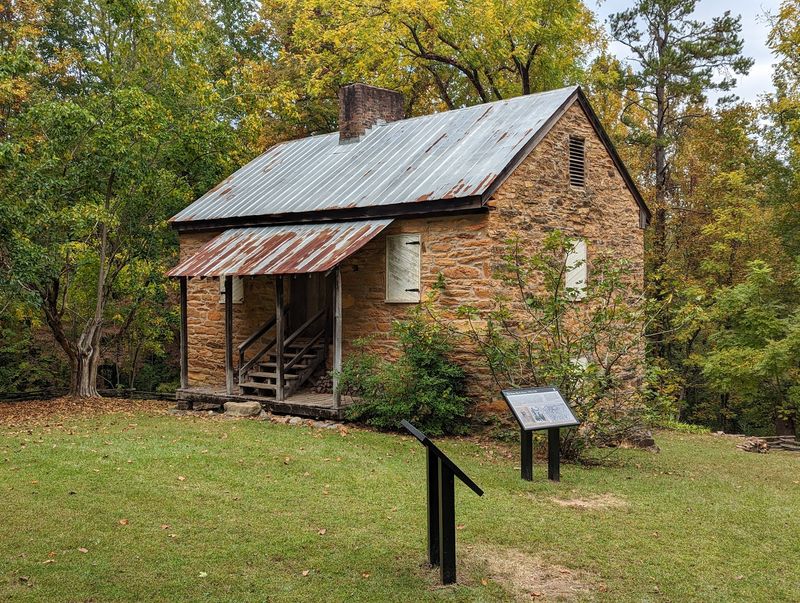
Two feet of stone. That is how thick the walls of this little building are, and you can feel it the second you step through the doorway and the summer heat drops away behind you.
Built in 1792 by the South Carolina State Militia, the blockhouse is the oldest standing building in Oconee County. Rough fieldstone was stacked into straight, sturdy walls, topped with a gable roof and anchored by a big central chimney.
Somewhere between 20 and 30 soldiers were stationed here, keeping watch over a frontier where settlers, Cherokee, and Creek communities lived uneasily side by side. By about 1799 the military purpose had faded as the boundary pushed farther west, and the garrison moved on.
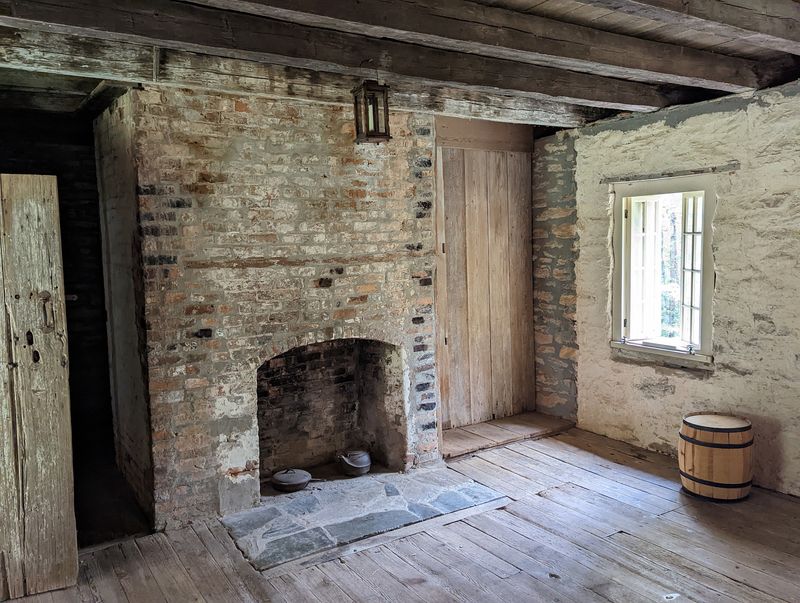
I spent a while just looking at the stonework, trying to picture how long it took to fit those pieces together by hand without modern tools. The interior is small and plain, which somehow makes it easier to imagine people actually sleeping and cooking in it.
Interpretive signs outside fill in the timeline, so even if you arrive when the doors are locked, you still leave understanding what you are looking at.
William Richards House and Its Handmade Bricks
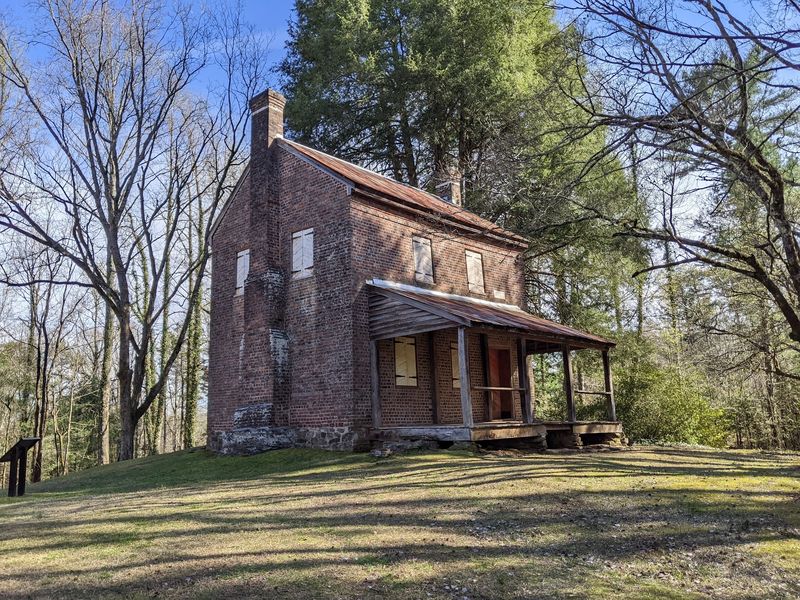
Right beside the stone blockhouse sits something that feels almost fancy by comparison: a two-story brick house from 1805, believed to be the first brick home built in the northwest corner of South Carolina.
It belonged to William Richards, an Irish immigrant and Revolutionary War soldier who settled in the area around 1795. He ran an Indian trading post here and clearly did well enough to move his family out of the drafty stone building next door.
What I found charming is what he did with the old blockhouse afterward. He turned it into his kitchen, which might be the most practical reuse of a military outpost I have ever heard of.
Look closely at the brickwork and you can see the handmade bricks laid in a mix of English and Flemish bond, resting on a fieldstone foundation. There is a basement below, and the whole thing has a solid, square, no-nonsense look.
On weekend afternoons a ranger may open both buildings for tours, and hearing the details out loud made the trading years feel much closer than two centuries away.
Where Deerskins, Furs, and Ginseng Changed Hands
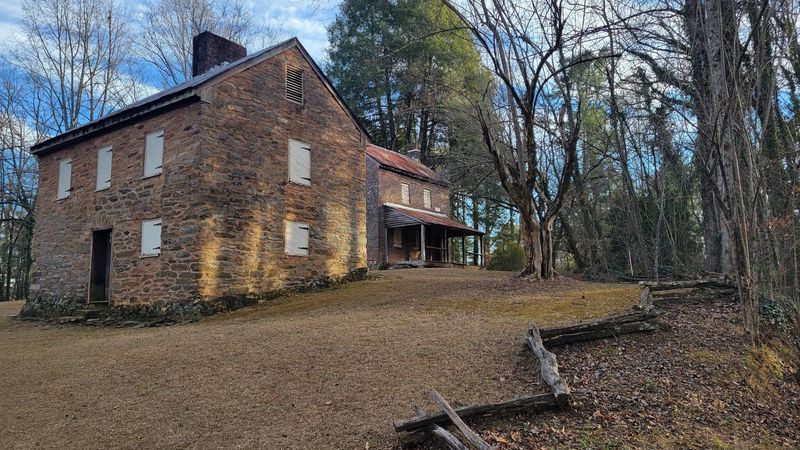
Trade, not war, is what really shaped this spot once the soldiers left. From 1795 to 1809, Richards operated a trading post here, and the goods moving through it say a lot about the region.
Native American traders brought deerskins, furs, and ginseng, that wrinkled root still prized today. In exchange came European items like fabrics, weapons, and other manufactured goods carried in from the east.
Reading about it on site gave me a different picture of the frontier than the one I grew up with. Instead of a hard line between two worlds, this was a busy meeting point where people needed each other, negotiated, argued, and did business.
Ginseng especially caught my attention, because it grew wild in these same mountains and traveled halfway around the world through trade networks. Something so ordinary underfoot became valuable currency.
The park office has a self-interpretation station with video and background material, which is handy if you show up midweek. I watched it before walking up to the buildings, and it made the empty rooms feel populated.
History here is quiet, but it is not thin.
A Short Walk to Station Cove Falls
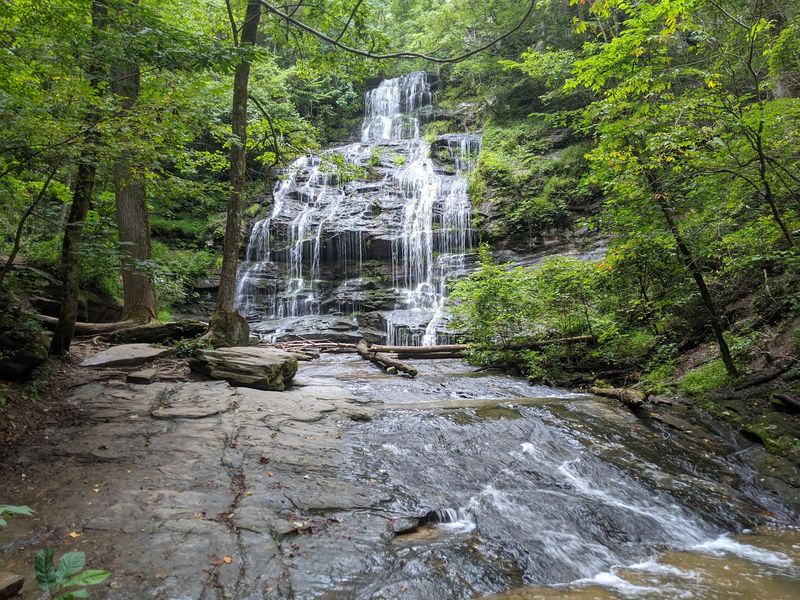
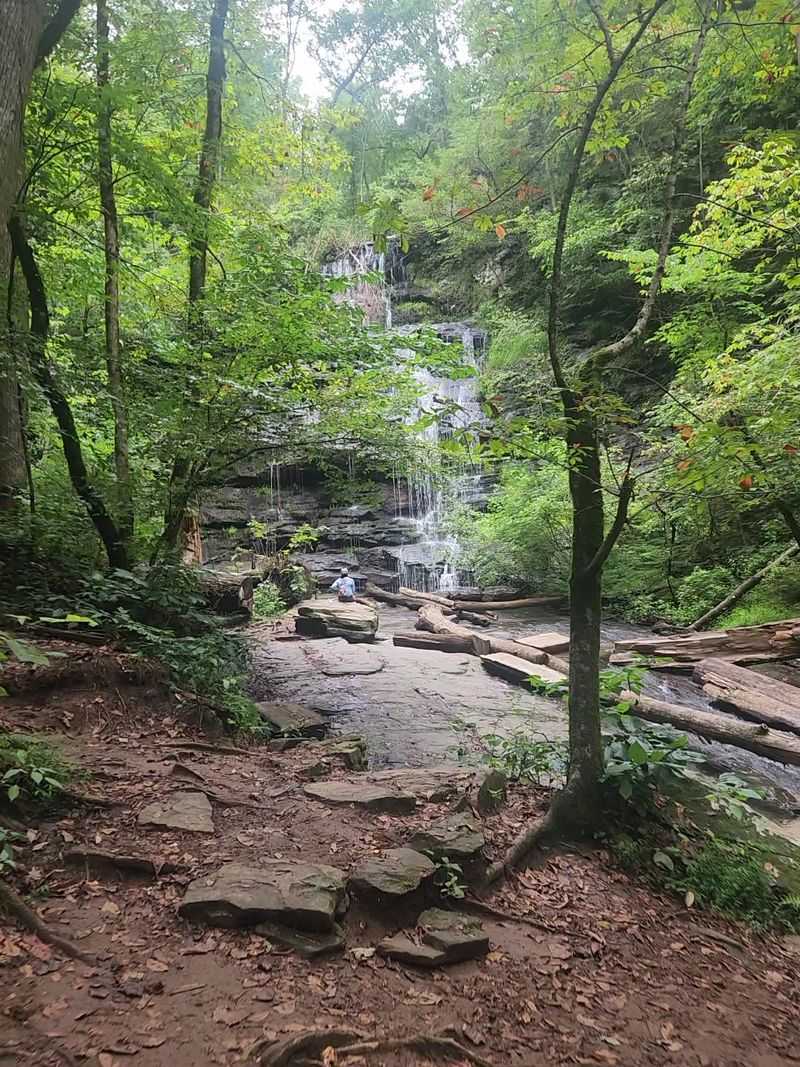
Almost everyone I passed that day was headed the same direction, toward the water. Station Cove Falls drops about 60 feet over layered rock, and the trail to reach it crosses into Sumter National Forest.
The walk itself is friendly. It runs mostly flat through hardwoods, wide and packed firm, with roots here and there but nothing that demands hiking poles.
Families with small kids manage it easily, and several visitors mention pushing strollers along the path, though a sturdier one helps. Shade covers nearly the entire route, which matters enormously in July when the air turns thick and sticky.
One practical tip that saved me confusion: there is a separate trailhead lot just up the road from the main parking area, marked with a sign. Starting there cuts the hike to roughly half a mile each way.
If you begin at the historic buildings instead, the nature trail links up but adds distance and one road crossing, so watch for the marker rather than assuming you took a wrong turn.
Bring water. Sit on a rock at the base and listen for a while, because that is the whole point.
The Four-Acre Pond and the Nature Trail Loop
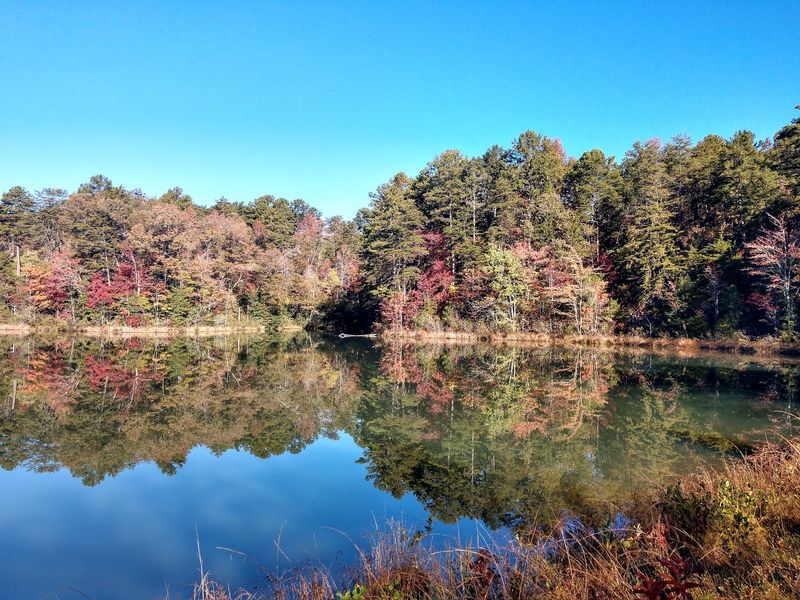
Tucked away from the buildings is a four-acre pond that a lot of visitors miss entirely, and it might be my favorite corner of the property.
Bluegill and largemouth bass live in it, and anglers with a valid South Carolina fishing license can try their luck from the bank. Even without a rod, the water is a pleasant place to stand still for ten minutes.
Getting there means following the 1.5-mile nature trail, which winds through woods thick with wildlife before connecting toward the falls route. I spotted plenty of birds, and other visitors have reported armadillos rustling along the edges, which surprised me for this part of the state.
Sections can be soft or damp after heavy rain, so waterproof shoes are not a bad call. Signage is limited in places, so glance at the trail map before you set off rather than relying on guesswork.
The nice thing about a park this compact is that getting turned around never feels serious. Roads and open fields are close by, and the rangers are genuinely helpful if you need pointing in the right direction.
Spring Wildflowers Turn the Cove Into a Garden
April is the month locals whisper about. When the hardwoods leaf out and the light turns green and soft, the forest floor along these trails fills with wildflowers.
Mayapples spread their umbrella leaves in patches. Trillium, bloodroot, and wild geranium show up along the path, and redbuds add pink to the canopy overhead.
The real prize is the pink lady’s slipper orchid, an odd little pouch-shaped bloom that looks almost fake the first time you see one. Finding one felt like a small victory, and I took about fifteen photos of it.
Photographers visit this cove specifically for spring blooms, since the mix of moisture, shade, and rich soil creates ideal conditions. Waterfalls also run strongest after spring rains, so you get two attractions at their best on the same trip.
Please leave everything where it grows. Many of these plants take years to establish and cannot survive being picked or dug up.
Fall has its own charm with color in the canopy, and winter opens up views through bare branches. Still, if you get to choose your timing, come when the ground is blooming.
Planning Your Visit Without Overthinking It
Logistics here are refreshingly simple. Grounds open daily from 9 a.m. to 5 p.m., and admission costs nothing, though donations help support the site.
The two historic buildings are tour-ready on Saturdays and Sundays between 1 p.m. and 5 p.m., usually with a ranger on hand to explain the details. Show up outside those windows and the self-interpretation station at the park office still gives you plenty of context.
Restrooms and picnic tables sit near the main lot, which makes this an easy lunch stop rather than a quick pull-over. Leashed pets are welcome in most outdoor areas, with a six-foot limit on leads.
Much of the area around the buildings is manageable for visitors with mobility needs, while the falls trail is dirt and roots. Call ahead at 864-638-0079 if conditions matter for your group, since storms occasionally affect the paths.
Since you are already out on the Cherokee Foothills Scenic Highway, consider pairing the trip with Issaqueena Falls, Oconee State Park, or the overlooks around Jocassee Gorges.
Address: 500 Oconee Station Rd, Walhalla, SC 29691
