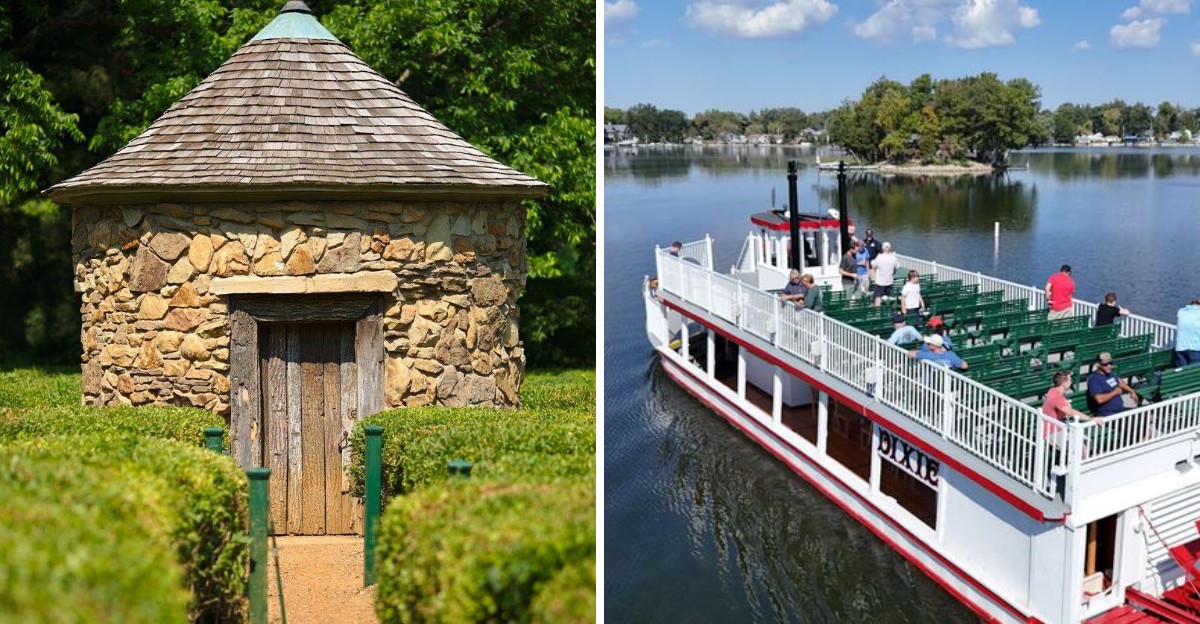
Indiana holds far more than cornfields and highway exits, and the proof sits quietly along back roads and riverbanks across the state.
Hidden in state parks, small towns, and forest trails are places where utopian dreamers, shipwrecked amusement parks, spinning jail cells, and thousand-year-old cities left their mark.
Most of these stories skipped right past the average classroom textbook, which makes finding them feel a little like discovering a secret. Some sites still stand proudly with fresh paint and open doors, while others survive only as crumbling stone and rusted ladders swallowed by weeds.
Together they form a route through Hoosier history that is stranger, richer, and far more human than expected. Pack a curious mind and comfortable shoes, because this journey covers riverbanks, forests, steel towns, and lakes.
1. Rotary Jail Museum, Crawfordsville
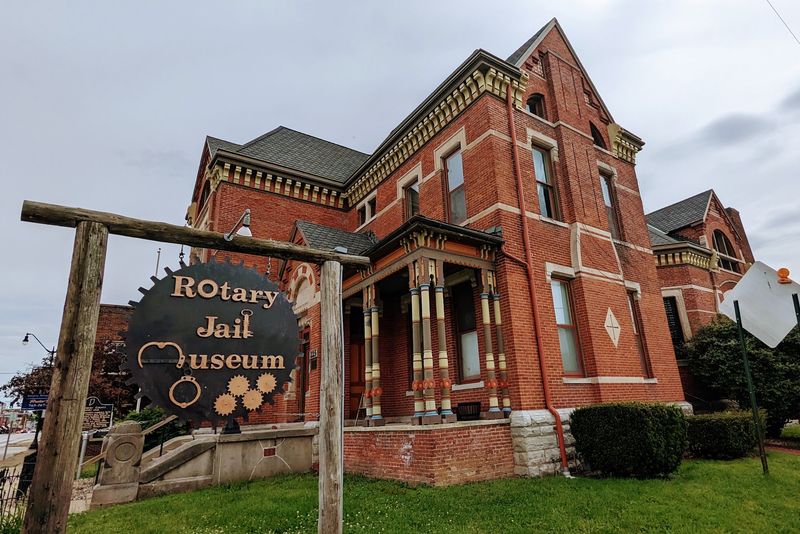
A jail that spins like a lazy Susan sounds like something out of a cartoon, yet one really exists at 225 North Washington Street in Crawfordsville. Built in 1881, it was the first rotary jail ever constructed.
Architect William H. Brown and engineer Benjamin F.
Haugh dreamed up the design with two circular cell tiers weighing more than 32 tons, all turning around a central iron pillar. A hand crank did the work.
Only one cell door ever lined up with the exit at a time, meaning a single guard could manage a whole crowd of prisoners without unlocking much of anything.
Clever? Absolutely.
Safe? Not remotely.
Arms and legs sometimes got caught between the moving bars, and injuries piled up quickly enough that most rotary jails elsewhere in the country were converted or closed.
Crawfordsville kept going anyway, using the structure as the county jail until 1973. Visitors today can watch the mechanism turn and peer into cells shaped like slices of pie, which somehow makes the whole thing feel even stranger.
The building doubles as a sheriff’s residence museum, so the tour swings between family parlors and iron cages within a few steps. It stands as a reminder that big ideas sometimes forget the people living inside them, and that Indiana once tried an experiment nobody else could quite make work.
2. New Harmony and Its Two Failed Paradises
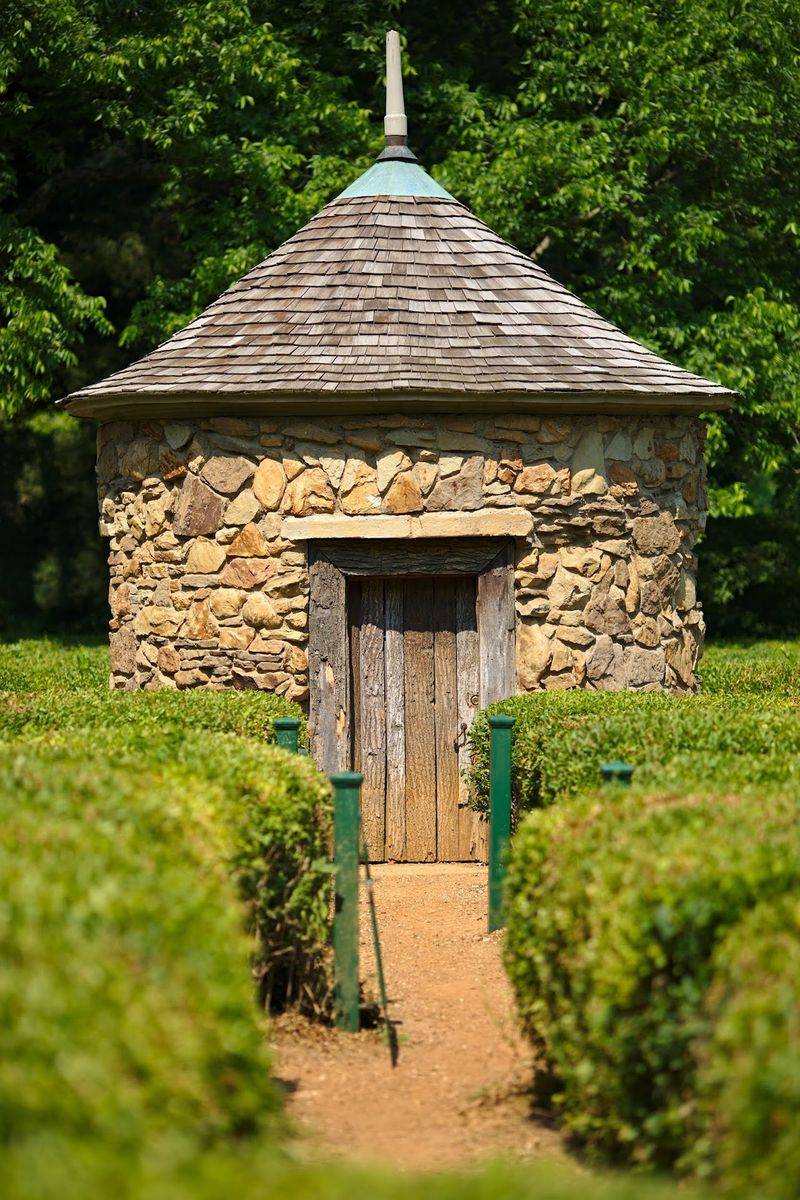
Two separate groups tried to build a perfect world in the same small Posey County town, and both came up short. The results still shape every street in New Harmony.
George Rapp arrived first, founding Harmonie in 1814 with a German pietistic Lutheran group known as the Harmonists or Rappites. Shared property, strict religious rules, and celibacy formed the backbone of their society.
Hard work paid off, and the settlement grew wealthy along the banks of the Wabash River.
Then, in 1824, the Harmonists sold everything and moved on. Rapp’s iron-fisted leadership and a hunger for new surroundings pushed them out.
Enter Robert Owen, a Welsh-Scottish social reformer and atheist with an entirely different blueprint. He renamed the town New Harmony and invited scientists, teachers, and thinkers to join an equal society.
The famous group known as the Boatload of Knowledge arrived in January 1826, carrying geologist William Maclure and zoologist Thomas Say among its passengers.
Disagreements swallowed the experiment within two years. Too many strong opinions, not enough farmers.
What survives is oddly beautiful. Historic buildings, labyrinths, gardens, and quiet lanes give the town an unhurried atmosphere that still leans toward art and learning.
Walking through it feels like visiting a place that never fully abandoned the idea of trying something better, located at 1239 Main St, New Harmony, IN 47631.
3. Rose Island Ruins in Charlestown State Park
Deep inside Charlestown State Park, a hiking trail leads to the bones of a vanished amusement park. Rose Island, located at 12500 IN-62, Charlestown, IN 47111, once drew crowds by the thousands.
Now it belongs to the trees.
Entrepreneur David Rose opened the resort in 1923 on what was actually a peninsula rather than a true island. Guests found a wooden roller coaster, a hotel, a dance hall, and a small zoo stocked with monkeys, a wolf, and a black bear named Teddy Roosevelt.
A filtered swimming pool, reportedly the first in the Midwest, kept families cool through long summer afternoons.
Steamboats and automobiles delivered visitors from across the region, with attendance peaking around 135,000 a year. Even the Great Depression barely slowed the fun.
The Ohio River had other plans. During the catastrophic flood of 1937, more than ten feet of water rolled over the entire park, wrecking buildings beyond repair.
Once the water pulled back, nobody rebuilt.
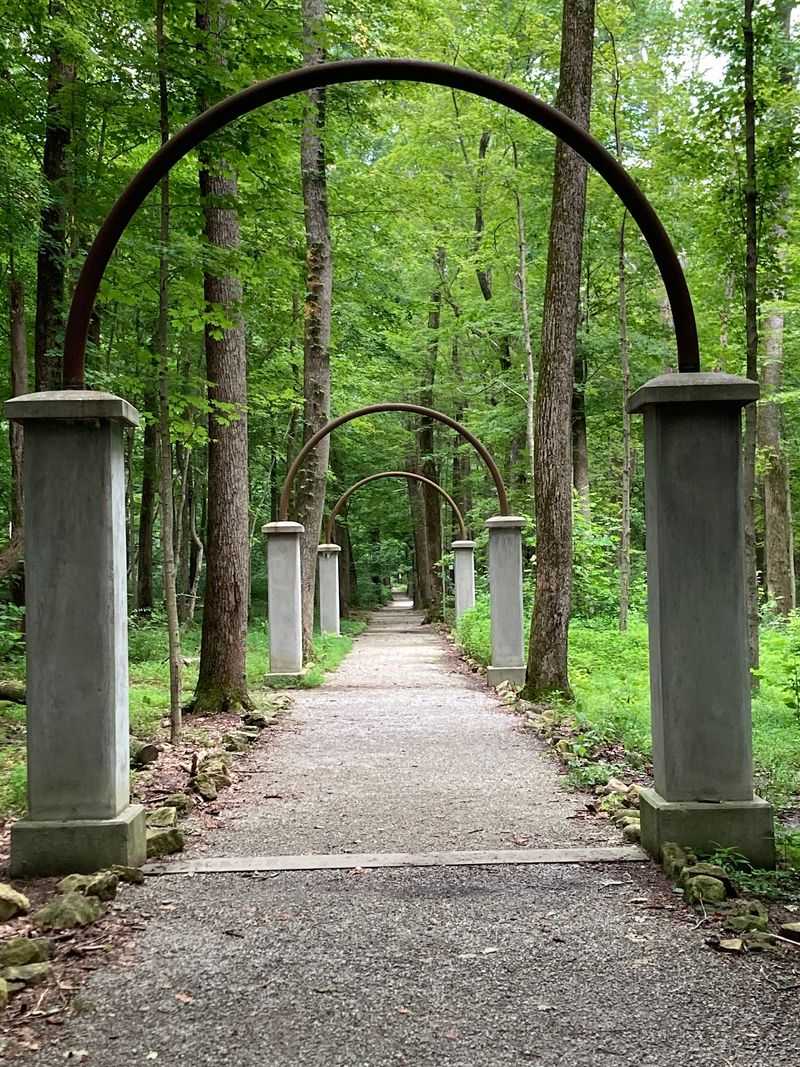
Trail 7 delivers hikers straight into the leftovers. A stone archway still frames the old entrance, the swimming pool sits filled with gravel with rusted ladders clinging to its sides, and scattered foundations poke through the undergrowth.
The walk down is easy. Climbing back up, less so.
Bring water and take time to read the interpretive signs scattered among the ruins.
4. Marktown Historic District, East Chicago
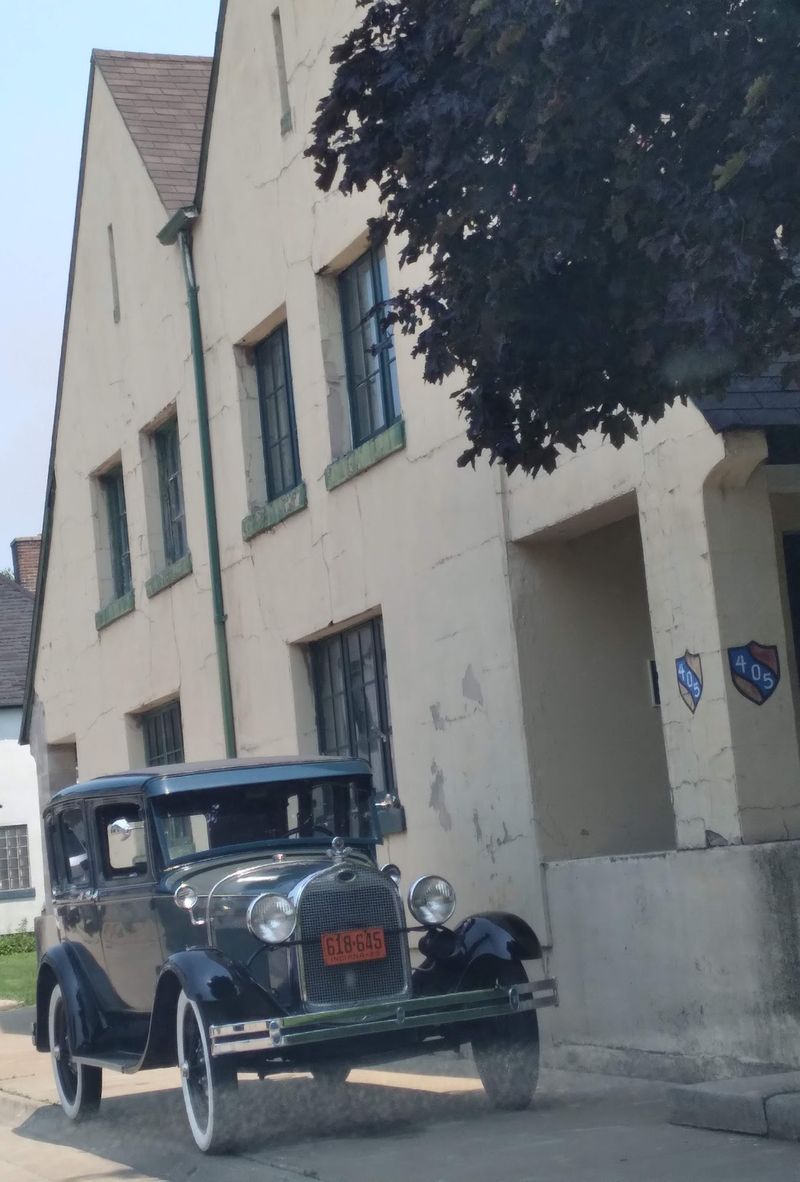
Cars park on the sidewalks. People walk in the street.
That backwards arrangement earned Marktown a spot in Ripley’s Believe It or Not, and it still holds true today.
Roughly 240 homes make up this pocket neighborhood in East Chicago, ringed by steel mills and an oil refinery. Industrialist Clayton Mark launched the project in 1917 as housing for workers at his Mark Manufacturing Company.
He hired Chicago architect Howard Van Doren Shaw, who borrowed the English Garden City style and dressed the houses in Tudor Revival details with stucco exteriors.
Narrow streets were entirely on purpose. Shaw wanted neighbors bumping into each other, chatting on stoops, walking rather than driving.
Original plans stretched much further, with shops, a market, and a theater sketched into the vision. Construction stopped after World War I when the company changed hands, leaving only a fraction of the dream standing.
The contrast is genuinely startling. Storybook cottages sit in the shadow of towering industrial equipment, and the effect is unlike anywhere else in Indiana.
Marktown joined the National Register of Historic Places in 1975, though its industrial neighbors continue to create pressure on the district.
Drive slowly, respect that people live here, and take a moment to appreciate a century-old attempt at giving factory workers something better than rows of identical boxes.
5. The Athenaeum on Massachusetts Avenue, Indianapolis
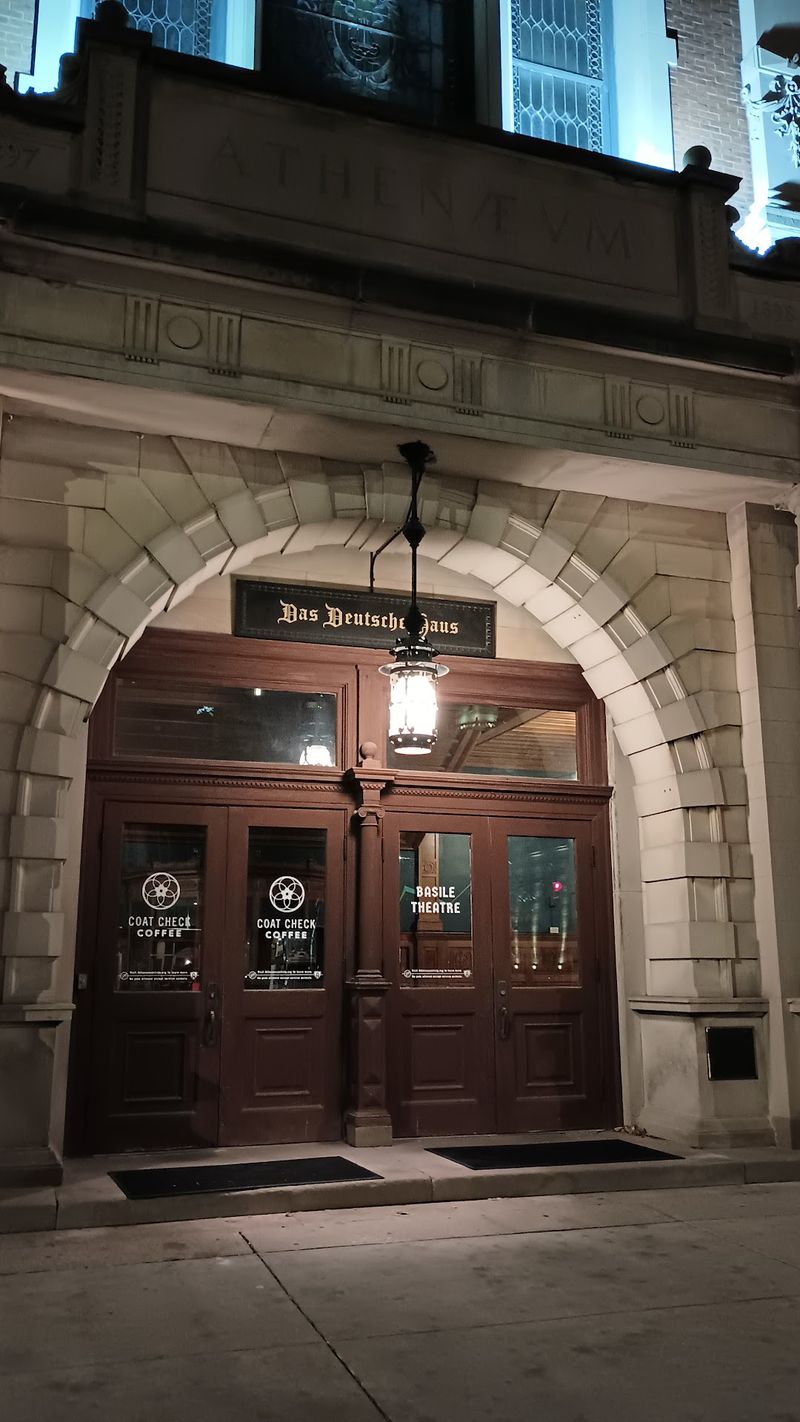
Hidden inside the name of this Indianapolis landmark is a story about fear, patriotism, and a community that had to hide part of itself. All located at 401 E Michigan St, Indianapolis, IN 46204.
The building opened in the 1890s as Das Deutsche Haus, or The German House, serving as the heart of the city’s large German immigrant population.
Architects Vonnegut and Bohn designed it in the German Renaissance Revival style, a firm co-founded by Bernard Vonnegut, grandfather of author Kurt Vonnegut Jr. Banded stonework, round-arched windows, copper cupolas, and leaded art glass give the exterior a European weight rare in the Midwest.
Inside, the German Turnverein philosophy of a sound mind in a sound body took physical form. Gymnastics halls sat near theaters, music rooms, and gathering spaces.
The oldest continuously operating theater in the city performs here, and the Rathskeller in the basement holds the title of the oldest continuously running restaurant in Indianapolis.
Then came World War I. Anti-German sentiment swept the country, and in 1918 the name changed to the neutral-sounding Athenaeum, announced during a George Washington birthday celebration inside the clubhouse itself.
The heritage never disappeared, it just went quiet for a while. Recent preservation work and cultural programming have brought the German roots back into the open, and the building now anchors one of the liveliest stretches of downtown Indianapolis with genuine character.
6. The Dixie Sternwheeler on Webster Lake
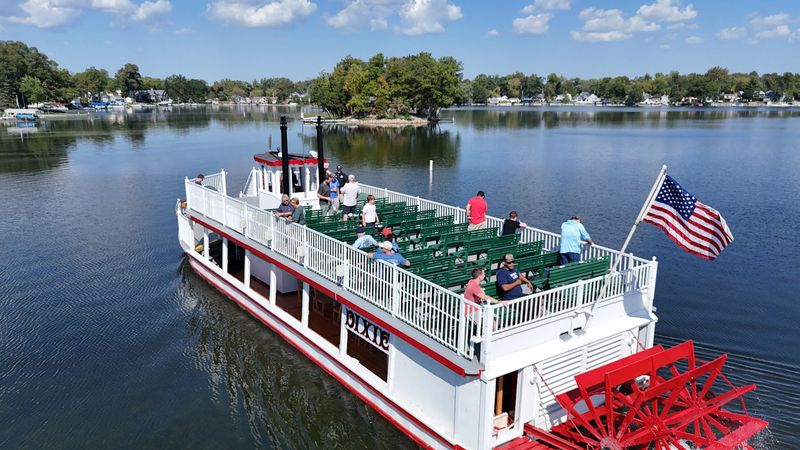
Before it was a sightseeing boat, the Dixie, located at 403 S Dixie Dr, North Webster, IN 46555, was a floating grocery store. And a blacksmith shop.
And the mail carrier.
Captain Joseph Breeck launched the first wooden-hulled Dixie on Webster Lake in North Webster back in 1914, and residents around the 640-acre lake depended on it for daily life. Groceries arrived by paddlewheel.
So did letters, tools, and passengers headed across the water.
Breeck swapped the original vessel for the present 76-foot steel-hulled boat in 1929, running it himself until retiring in 1939. That same hull still churns the lake today, making the Dixie the oldest sternwheel paddleboat in Indiana.
Riding it is a low-key pleasure. The open-air upper deck delivers views in every direction, and shoreline residents have a long habit of waving as the boat drifts past.
Waving back is basically required.
Recognition arrived officially in 2009 when the vessel was added to the National Register of Historic Places, honoring both the boat and its unusual role in local life.
Summer evenings on the water carry the smell of lake weeds and the steady slap of the paddlewheel, sounds that have not changed much in a century. Few historic sites in Indiana can still be experienced in motion, which is exactly what makes this one worth the drive north.
7. Falls of the Ohio State Park, Clarksville
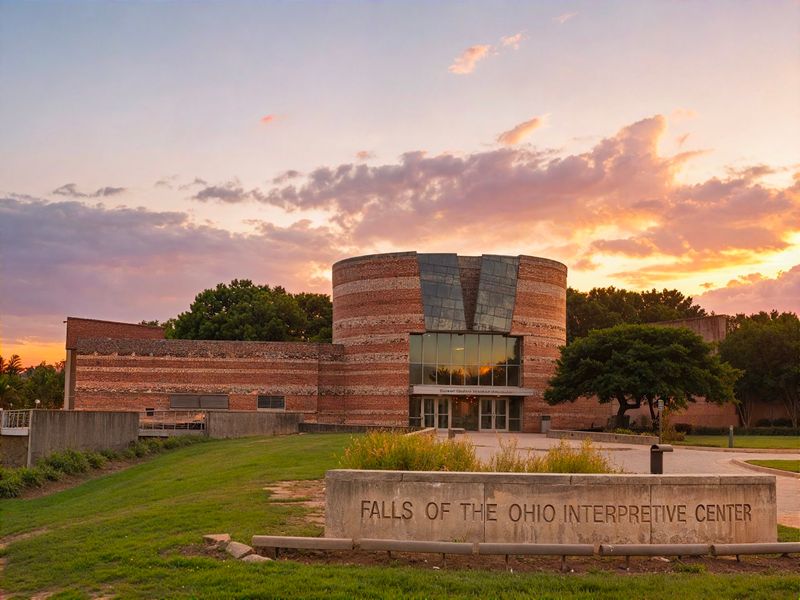
Fossils that predate dinosaurs by roughly 150 million years sit exposed on the riverbed at 201 West Riverside Drive in Clarksville. The Devonian beds here, about 390 million years old, rank among the largest naturally exposed fossil beds anywhere on the planet.
Geology gets the headlines. Human history deserves equal attention.
The Falls were never a single dramatic waterfall. Instead, a two-mile stretch of shallow, rocky rapids formed the only real barrier to river travel between Pittsburgh and New Orleans, wrecking boats and ending lives with unsettling regularity.
Native Peoples used the area for hunting and fishing across thousands of years. Later, the rapids forced boats to stop, which is precisely why Clarksville, Jeffersonville, and Louisville grew where they did.
George Rogers Clark established the first permanent English-speaking settlement in the Northwest Territory on nearby Corn Island in 1778, eventually founding Clarksville.
This same shoreline is where Meriwether Lewis and William Clark met in 1803 to prepare for the Corps of Discovery expedition, a detail that rarely makes it into classroom lessons.
Engineers finally solved the rapids problem with the Portland Canal and its locks in 1830, followed by a dam that reshaped the river entirely.
The Interpretive Center covers geology, paleontology, and the cultural layers stacked on top, and the fossil beds are best explored during low water in late summer and fall.
8. Angel Mounds State Historic Site near Evansville
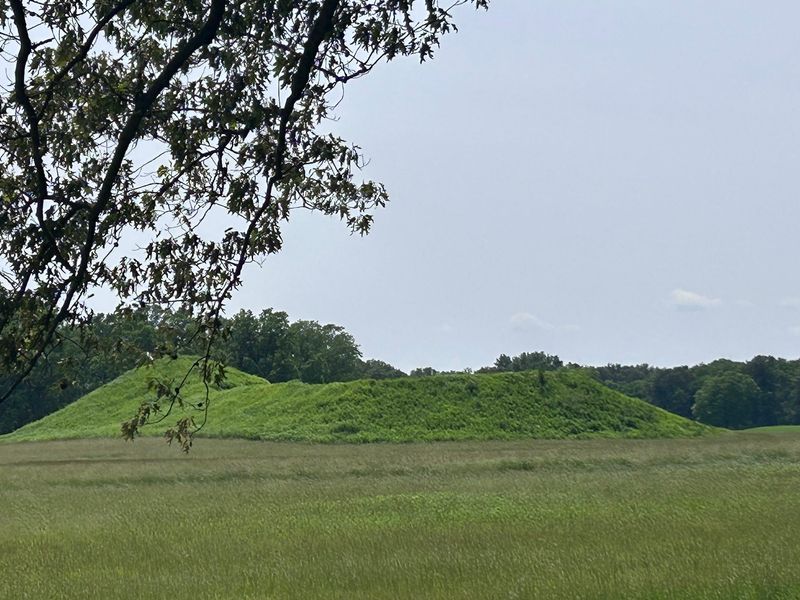
A thousand years ago, the biggest town in what is now Indiana sat eight miles southeast of modern Evansville. Between one and three thousand people lived there at its height around 1300 A.D.
Angel Mounds, located at 8215 Pollack Ave, Evansville, IN 47715, spreads across more than 600 acres and preserves one of the best-kept prehistoric Native American communities in North America.
From roughly A.D. 1000 to 1450, the site served as a major center of Mississippian culture, a society built on large-scale farming, wide trade networks, and a detailed understanding of the sky.
Eleven earthen mounds remain, raised deliberately to lift important buildings above the surrounding town. Leaders lived on some.
Ceremonies happened on others.
Excavations starting in the late 1930s pulled more than 2.5 million artifacts from the ground, revealing daily routines, tools, and beliefs in remarkable detail. Corn, beans, and squash fed the community year after year.
Certain mounds line up with celestial events, including the summer solstice sunrise, a detail that tends to stop visitors in their tracks. Reconstructed wattle-and-daub houses help make the scale of the place understandable.
Why everyone left around 1450 remains unanswered, though worn-out soil and shrinking game populations are strong suspects. Tribal nations regard the site as sacred, and visitors are asked to treat the grounds with matching respect.
9. Lick Creek Trail in the Hoosier National Forest
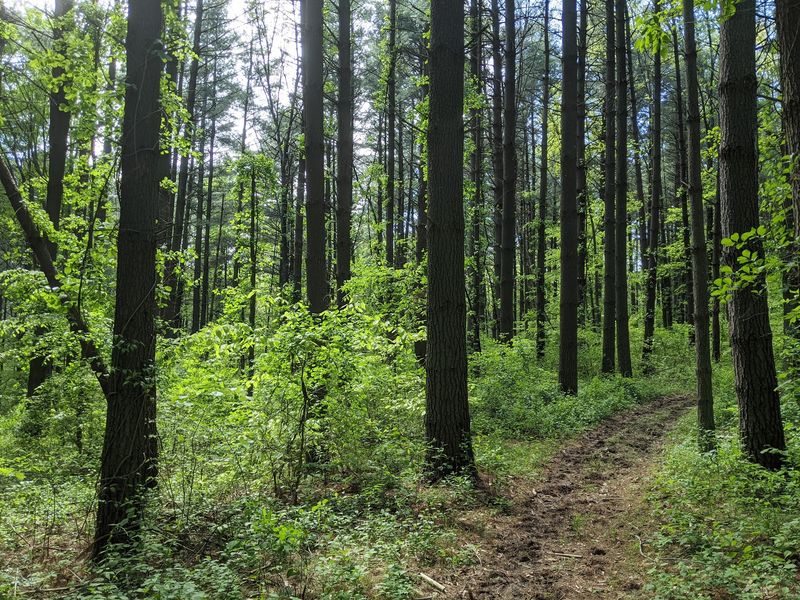
Hardwood forest covers it now, but Orange County once held a thriving settlement of free African American families, and almost nobody learns about it in school.
Beginning in 1811, families traveled north from North Carolina with help from sympathetic Quakers, escaping tightening racial laws in the South.
Indiana territory forbade slavery, and the land they settled became known as Lick Creek, though locals also called it Little Africa, South Africa, or Paddy’s Garden.
Mathew Thomas made one of the first land purchases in 1831. Others followed, farming skillfully and building an integrated community from the ground up.
Growth came steadily. By 1855 the settlement covered 1,557 acres, and by 1860 nearly a third of Orange County’s 260 Black residents lived there.
The African Methodist Episcopal church operated from 1843 to 1869 as the center of spiritual and social life, and the community maintained meaningful connections to the Underground Railroad, offering shelter to freedom seekers heading north.
Racial pressure and the disruption of the Civil War chipped away at the population. The last Black resident sold their land in 1902.
Hiking the Lick Creek Trail, located at Hardinsburg, IN 47125, today leads to the Roberts and Thomas Family Cemetery, where at least 14 marked headstones remain among the trees. Archaeologists continue working here, slowly uncovering more of a story that deserves far wider telling.
