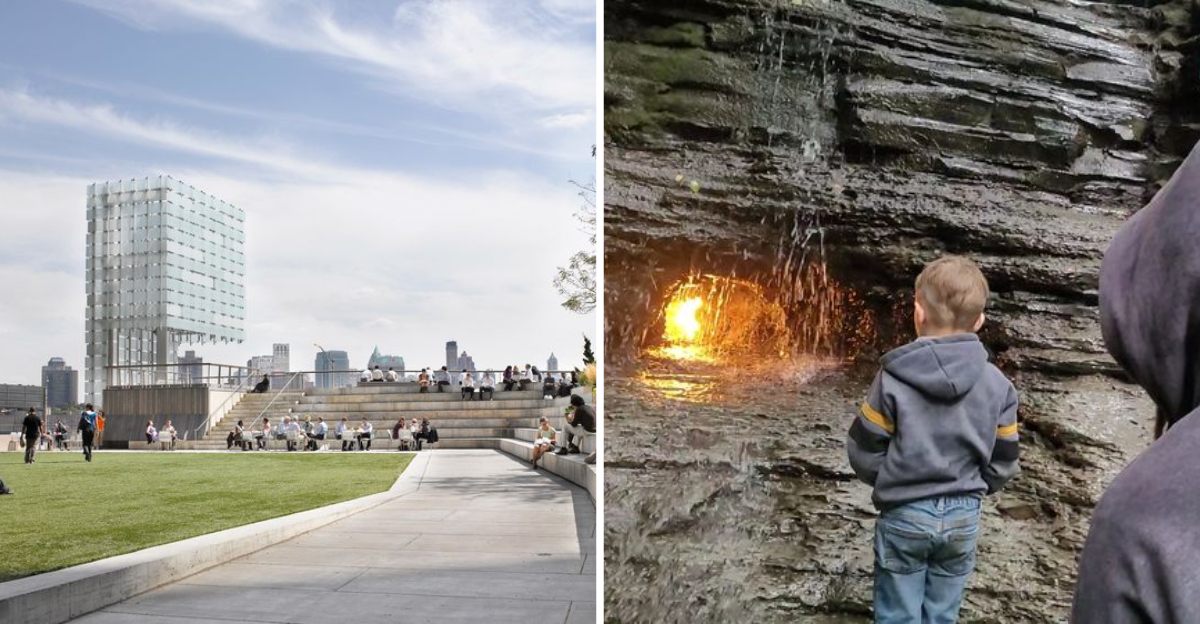
I thought I knew New York after years of wandering its sidewalks, but the state kept handing me surprises I never saw coming. One afternoon I was squinting into a museum the size of a closet.
A few weeks later I was hiking toward a flame that burns behind a waterfall. That mix of city grit and wild backcountry is what makes this route so much fun, connecting a Brooklyn alley all the way up into the Adirondacks.
Every stop on this list holds something that makes people pause and admit they had no idea it existed. I put these ten places together because they reward curiosity instead of crowds, and because they show a side of New York that rarely makes the postcards.
I found a hidden museum tucked into a storefront, a waterfall with a perpetual flame, and a stretch of wilderness that felt like another country entirely. The state has layers, and most people never peel them back.
Pack decent shoes, keep your eyes open, and let New York show off a little.
1. Mmuseumm, A Museum Inside a Freight Elevator
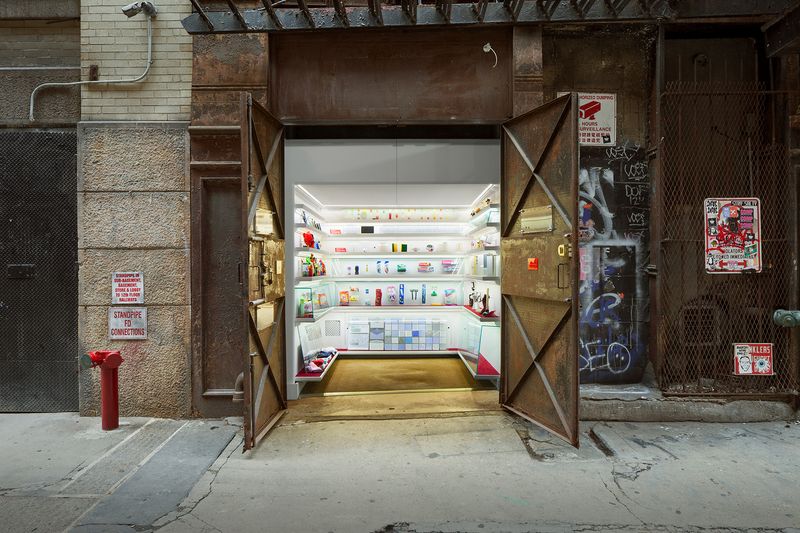
The first time I found this place I nearly walked past it, because the entrance is barely wider than a doorway in a narrow downtown alley. Inside a repurposed freight elevator sit glass cases packed with tiny objects, each one lit like a jewel.
Only about three people fit comfortably at once, which turns a visit into something oddly private. You lean in, read the notes, and slowly realize the collection is journalism told through stuff.
The curators call it object journalism, focusing on things that get overlooked, dismissed, or ignored entirely. Past displays have included a shoe reportedly thrown at George W.
Bush in Baghdad, personal belongings recovered from the Pacific, and scraps of paper left behind in copying machines.
Filmmakers Josh and Benny Safdie teamed up with curator Alex Kalman to create it, which explains the storyteller instinct behind every shelf.
My advice is to go slowly and read everything, since the whole visit takes less time than a coffee break but sticks with you for weeks. Alleys in this part of Manhattan feel cinematic anyway, so the walk there sets the mood before you even arrive.
Address: 4 Cortlandt Alley, New York, NY 10013
2. The City Reliquary, Williamsburg’s Cabinet of Curiosities
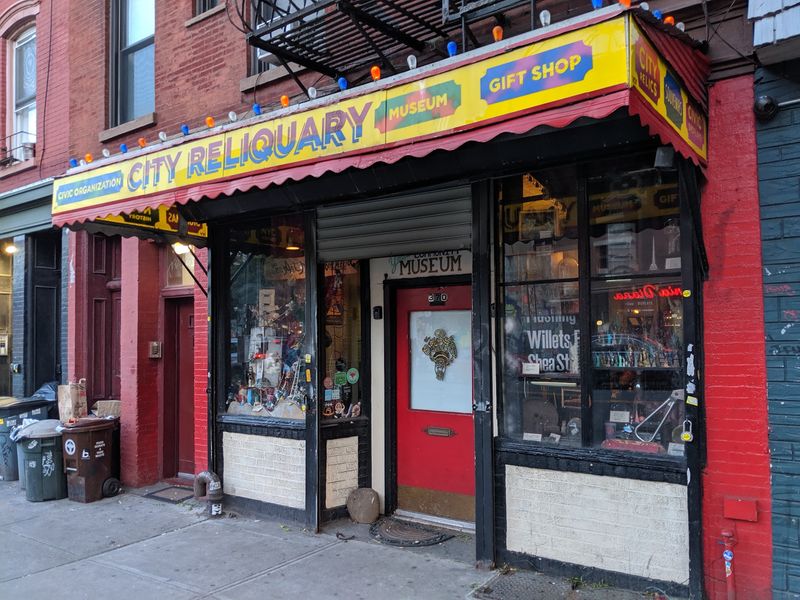
Some museums whisper, and this one chatters happily like a neighbor who collects everything. I wandered in expecting a quick look and stayed much longer, mostly because each shelf sparked a question.
Chunks of old buildings sit near shelves of Statue of Liberty souvenirs, and a geological display shows what lies beneath the city’s streets. There is a 1939 World’s Fair section too, full of the kind of optimism that only old fair memorabilia carries.
What I like most is how personal it feels, since the collections often come from ordinary New Yorkers rather than institutions. Rotating exhibits have covered subjects like the vendors who introduced knish to hungry city crowds, plus shows titled Liberty the Tattooed Lady and Wonder Women: NYC’s Heroes of Heterodoxy.
It runs as a not-for-profit community museum and civic organization, hosting public events that pull neighbors together.
Williamsburg outside the door is loud and busy, which makes the quiet clutter inside feel even more charming. Bring a friend who likes trivia, because you will both leave with facts you cannot wait to repeat.
Address: 370 Metropolitan Ave, Brooklyn, NY 11211
3. The Met Cloisters, Medieval Europe Above the Hudson
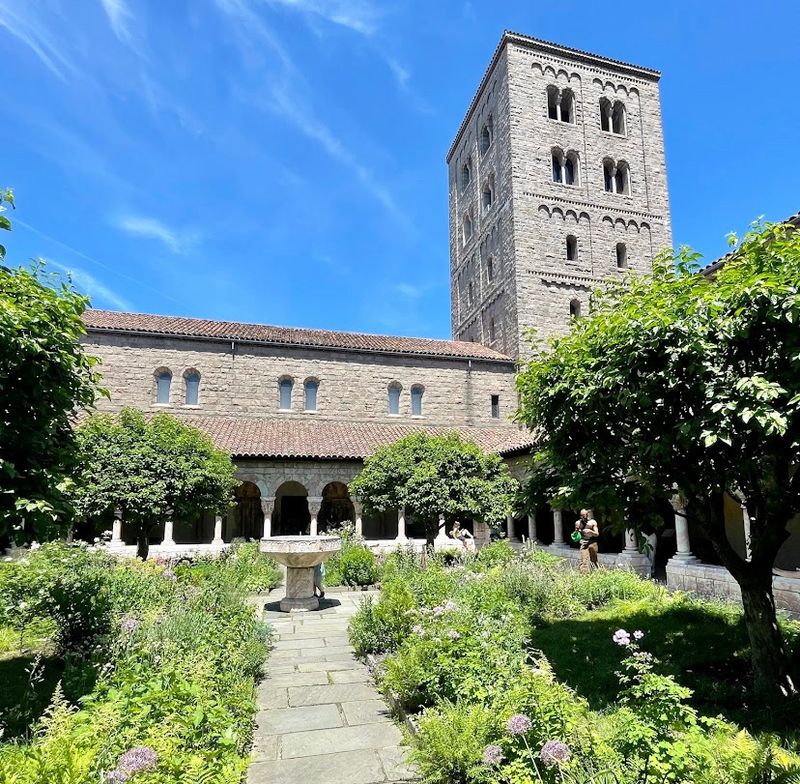
Uptown surprises come in many forms, though few match the moment a medieval stone courtyard appears at the top of a hill in Manhattan. Birds echo off the arches, the herbs smell green and sharp, and city noise simply disappears.
Fort Tryon Park wraps around it all, with wide views of the Hudson River and the New Jersey Palisades below.
Part of the Metropolitan Museum of Art, it is the only museum in the country devoted entirely to the art of the Middle Ages. Architectural pieces from five medieval French cloisters and other monastic sites were built into the structure itself, so the walls are exhibits as much as the artwork.
Around 5,000 medieval works fill the galleries, most of them from the 12th through 15th centuries. The Unicorn Tapestries usually draw the biggest crowd, joined by stained glass, sculpture, and illuminated manuscripts.
Three of the rebuilt cloisters hold gardens planted with species named in medieval treatises, which is a quiet thrill for anyone who likes plants.
Go in the morning if you can, since the light through those columns is genuinely beautiful.
Address: 99 Margaret Corbin Dr, Fort Tryon Park, New York, NY 10040
4. The Elevated Acre, A Rooftop Lawn Hiding in the Financial District
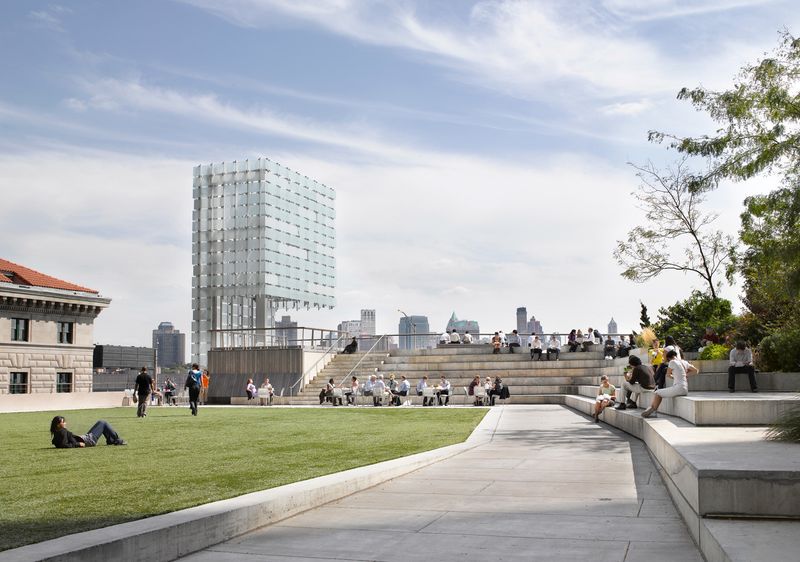
Escalators leading up from a busy Financial District sidewalk look like they belong to an office building, and that is exactly why almost nobody follows them. Ride up and a lawn appears, tucked between towers, with the East River glittering just past the railing.
I ate lunch there once and watched ferries slide by while suited workers hurried below, completely unaware.
Built atop a four-story parking facility, this privately owned public space received a redesign in 2005 that added grass, amphitheater-style seating, and a raised boardwalk. Views stretch across the water toward Brooklyn and Governors Island, which feels like a reward for finding it.
The breeze up there is stronger than street level, so a light jacket helps even on warm days.
An elevator at the building serves as the other way in, useful if the escalators feel intimidating. Half the fun is the search, honestly, because the entrance gives no hint of the greenery waiting overhead.
For a city famous for crowds, this pocket of calm is one of the easiest hidden spots to reach on foot.
Address: 55 Water St, New York, NY 10041
5. Green-Wood Cemetery, Brooklyn’s Open-Air Sculpture Park
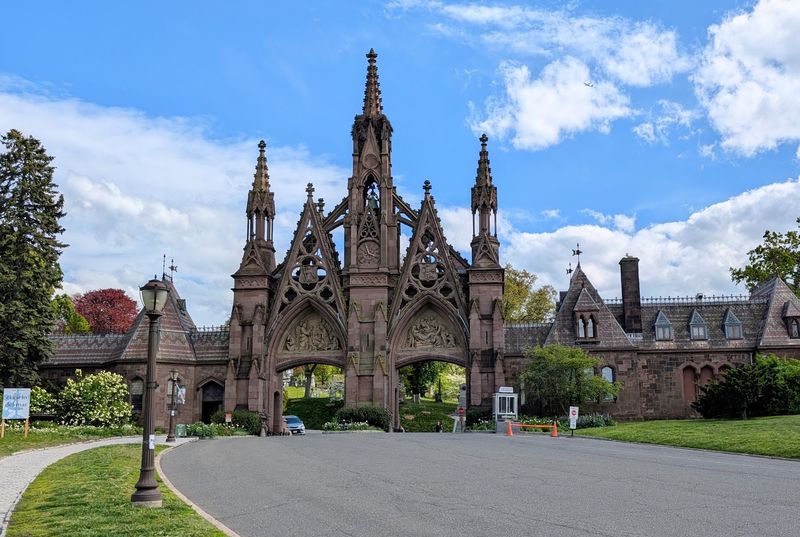
Statues here outnumber people on a quiet weekday, and that is oddly comforting. Rolling hills, glacial ponds, and enormous old trees spread across 478 acres, which makes it feel more like a park than a burial ground.
The Gothic Revival gates alone are worth the trip, all spires and carved stone.
Established in 1838 as one of America’s first rural cemeteries, it helped inspire the creation of Central Park and Prospect Park. During the 1800s it ranked as the second most popular tourist attraction in New York State, behind only Niagara Falls, which still stuns me.
It holds one of the largest outdoor collections of 19th and 20th century statuary and mausoleums anywhere.
Battle Hill sits at the highest natural point in Brooklyn, where fighting took place during the Battle of Long Island in the Revolutionary War. A statue of Minerva stands there, facing the Statue of Liberty across the harbor.
Warren and Wetmore, the firm behind Grand Central Terminal, designed the chapel. Hidden catacombs occasionally open for tours, so check ahead if underground history appeals to you.
Address: 500 25th St, Brooklyn, NY 11232
6. City Hall Station, The Subway Stop You Can Only Glimpse
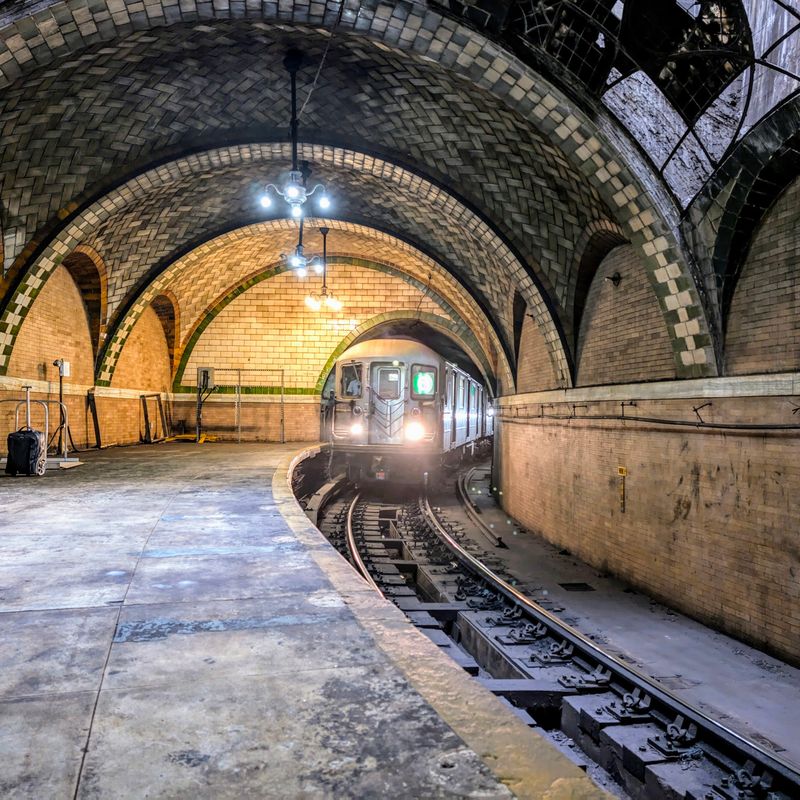
Stay on the downtown 6 train past its last stop and something strange happens. The lights outside the window shift, arches curve overhead, and for maybe fifteen seconds you are looking at a station that closed before most riders were born.
I have done this ride three times and still press my face to the glass like a kid.
Opened in 1904 as the ceremonial terminal of the city’s first subway line, it was built to impress rather than move crowds. Romanesque Revival details fill the space, including Guastavino tilework, chandeliers, and leaded skylights that once let daylight filter down from the park above.
Passenger service ended in 1945, largely because the sharply curved platform could not be extended for longer trains, and because the nearby Brooklyn Bridge station handled far more people.
The loop track stays in daily use, which is why the view survives at all.
Sit on the correct side, keep your camera ready, and do not expect to linger. Fleeting is the whole point, and that makes the glimpse feel earned.
7. The Wild Center, Treetop Bridges in the Adirondacks
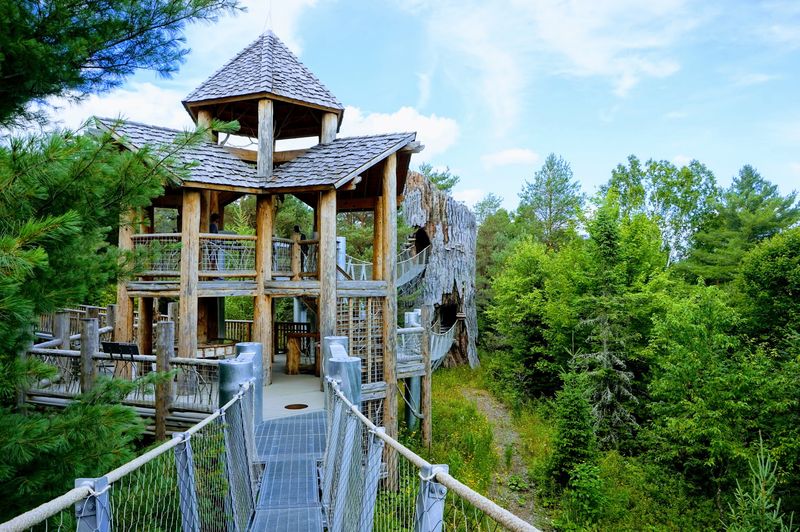
Climbing a bridge into the canopy is the sort of thing I assumed only kids got excited about, and then I did it and grinned the entire way. The Wild Walk lifts you through the Adirondack forest on a series of elevated bridges, ending with a full-sized bald eagle nest you can actually sit in.
A four-story twig tree house and swinging bridges keep the momentum going.
The campus covers 115 acres in Tupper Lake, mixing outdoor trails with hands-on indoor exhibits. River otters usually steal the show, sharing space with resident birds and reptiles.
Inside, 54,000 square feet of exhibit halls include Planet Adirondack, which shows Earth from a space-eye view along with global weather and ecological data.
Outdoors you will also find Stickwork sculptures woven from branches and the Raquette River Roll, an all-natural ball run that begs to be tested. Woodland trails wind through the property, and guided canoe trips head out onto the Raquette River.
Allow most of a day here, because rushing through the treetops defeats the purpose entirely.
Address: 45 Museum Dr, Tupper Lake, NY 12986
8. Eternal Flame Falls, A Fire Burning Behind Water
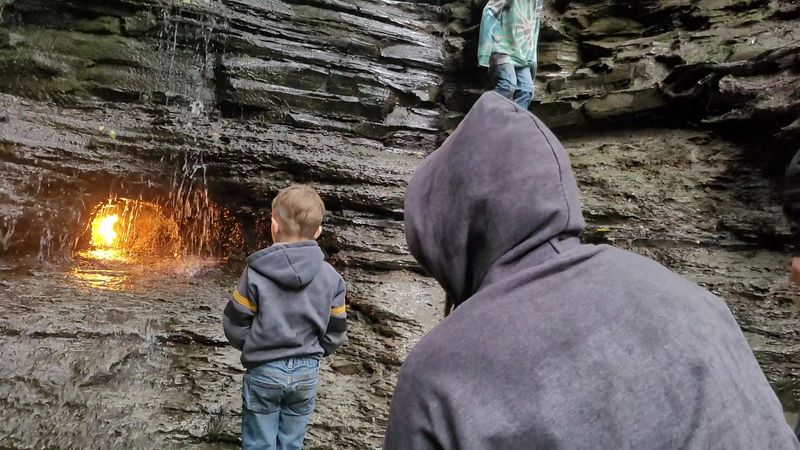
Fire and water are supposed to cancel each other out, which is exactly why this little waterfall messes with your head. Behind a thin curtain of falling water, tucked into a shale alcove, a small flame flickers away.
The waterfall itself only drops about 30 feet, so the flame is the real headliner.
Methane gas seeps up through cracks in the shale below and feeds the fire, one of very few natural eternal flames on the planet. Geologists find it especially puzzling because the shale producing the gas is cooler, younger, and shallower than the rock that usually generates it.
Sitting in the Shale Creek Preserve inside Chestnut Ridge Park, the site takes a moderate hike to reach.
Trail improvements including box steps and railings have made the descent easier than it used to be, though the last stretch stays muddy and slick after rain. Waterproof shoes are not optional in my experience.
The flame occasionally goes out, and hikers often relight it, so bring a lighter just in case you find it dark.
Address: 1251-1299 Chestnut Ridge Rd, Orchard Park, NY 14127
9. Robert H. Treman State Park, A Gorge Carved by Glaciers
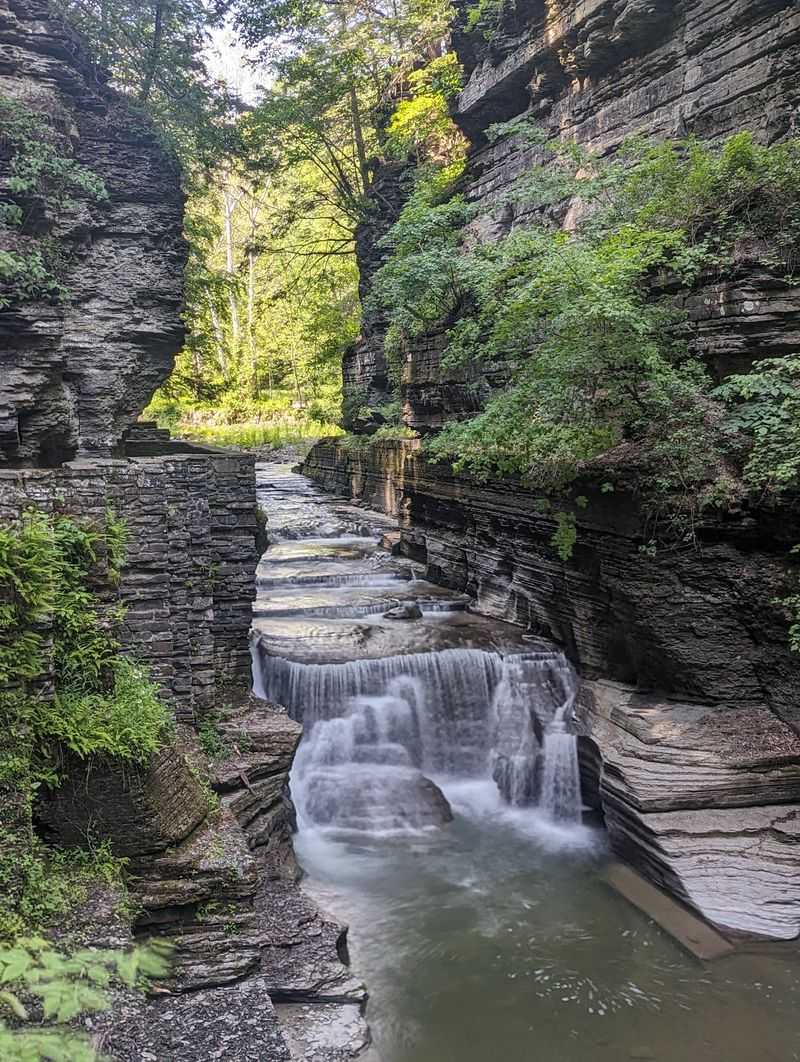
Cool air rises out of the gorge before you even see water, which is the first hint that something dramatic waits ahead. Stone steps climb along Enfield Creek, past mossy walls and pools worn smooth over thousands of years.
Lucifer Falls is the payoff, a multi-tiered 115-foot drop that looks almost staged.
Near Ithaca in the Finger Lakes, the park protects Enfield Glen and roughly a dozen waterfalls. Enfield Falls, often called Lower Falls, sits close to the entrance and includes a popular swimming area beneath the cascade.
The Gorge Trail and Rim Trail together give you two very different perspectives on the same rock walls.
Much of the stonework, including arched bridges and steep staircases, was built by the Civilian Conservation Corps during the Great Depression, and it still looks handsome. Devonian shale and sandstone form the gorge, which shows evidence of two separate carving phases.
A historic gristmill adds a rustic note near the lower end.
My tip is to hike up the gorge and return along the rim, because the descent gives your knees a break.
Address: 105 Enfield Falls Rd, Ithaca, NY 14850
10. Louis Armstrong House Museum, A Jazz Legend’s Queens Living Room
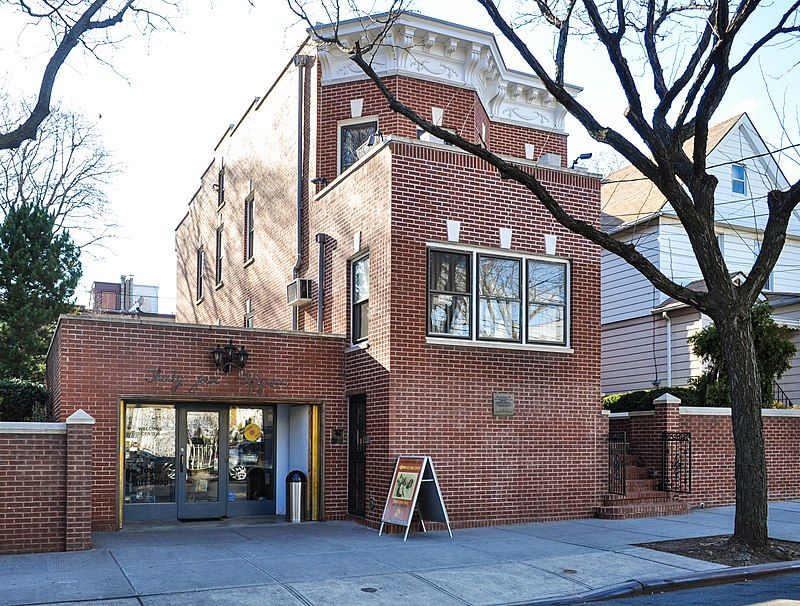
Corona, Queens looks like any quiet residential block until you notice the modest brick house that once belonged to one of the most famous musicians who ever lived. Inside, the rooms sit exactly as Louis and Lucille Armstrong left them, right down to the appliances and paintings.
There are no velvet ropes, which makes the whole visit feel almost too personal.
Now a National Historic Landmark, the home is preserved with its original furnishings and decorations, so it genuinely seems like the couple stepped out for errands. Guided tours walk through his career and legacy, often layered with a soundscape drawn from his own homemade tape recordings.
Hearing his voice in his own hallway is something I did not expect to find so moving.
Across the street, the Louis Armstrong Center adds exhibition galleries, a jazz club, and the extensive Louis Armstrong Archives. Those archives hold hand-decorated reel-to-reel tapes, scrapbooks, letters, photographs, and personal papers.
Among the displayed treasures are his gold-plated trumpet, manuscripts, clothing, and samples of his collage artwork.
Reserve a tour time in advance, since group sizes stay small.
Address: 34-56 107th St, Corona, NY 11368
