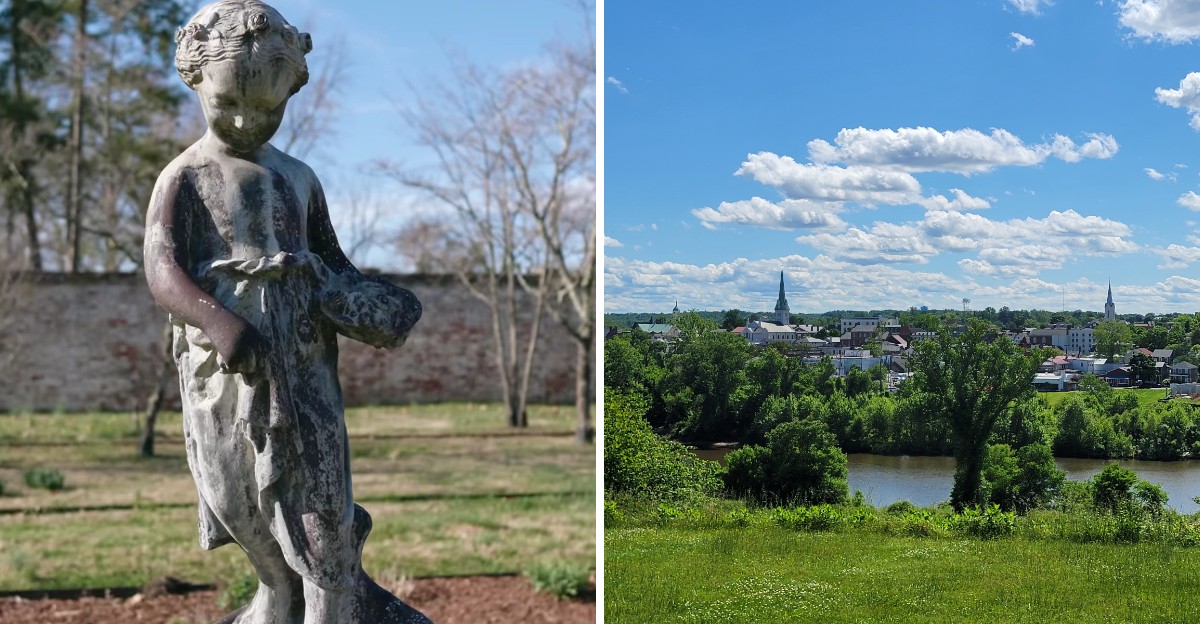
A stone Pan, the goat-legged Greek god of the wild, got knocked off his spot by vandals in December 2002. He stayed in pieces for more than ten long years.
Then a garden club, a Rotary club, and a friends group decided that was long enough. Two sculptors took the shattered stone and rebuilt the old fellow by hand.
I like how this story starts with one careless act and ends with years of patient repair. That stubborn kind of care says a lot about this corner of Virginia, and I believe it deserves more attention.
Today the statue stands again on an 18th-century estate high above a river, where presidents once walked. Soldiers even scratched their names into the walls there, so what else is waiting up on that quiet hilltop?
A Goat-Footed Greek God Has Been Guarding These Gardens For Decades
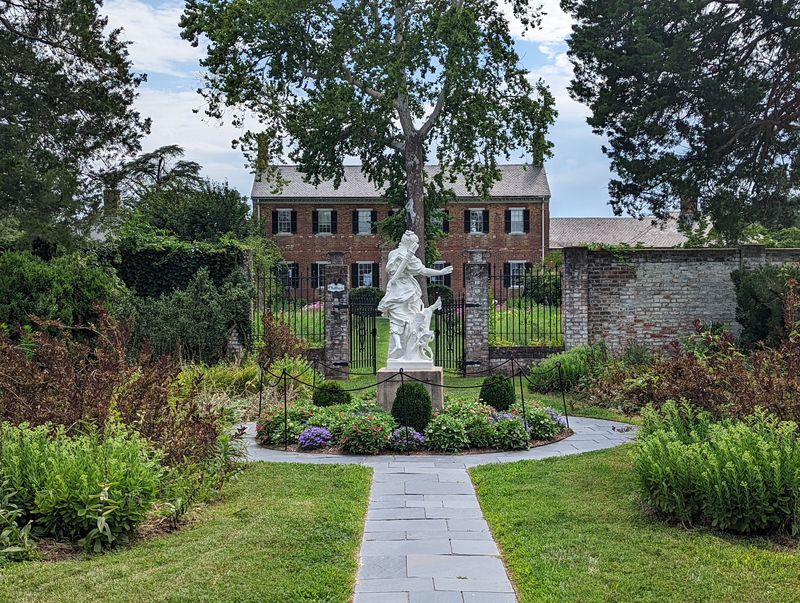
Of all the figures you might expect at a colonial Virginia estate, a pipe-playing Greek god is not high on the list. Yet that’s exactly who greets garden visitors at Chatham Manor.
Pan is the mythical god of shepherds, woods, and wild places. He’s famous for his goat legs and his reed pipes, which basically makes him the ancient world’s favorite garden musician.
His stone likeness fits right into the Colonial Revival gardens on the grounds. That style loved classical touches, so a sculpture of Pan felt right at home among the flower beds.
For decades, the statue became a quiet part of the scenery. Families strolled past him, photographers framed him, and he just kept playing his silent tune.
I think that’s what makes his story land so hard. Garden statues don’t ask for much attention, so we rarely think about how much they add until they’re gone.
Chatham Manor sits in Stafford County, across the Rappahannock River from downtown Fredericksburg. The estate is run by the National Park Service today.
So when you spot Pan among the blooms, give him a nod. He’s been through a lot more than most garden ornaments ever will, and he earned that spot twice.
One Winter Night In 2002 Left Pan In Pieces
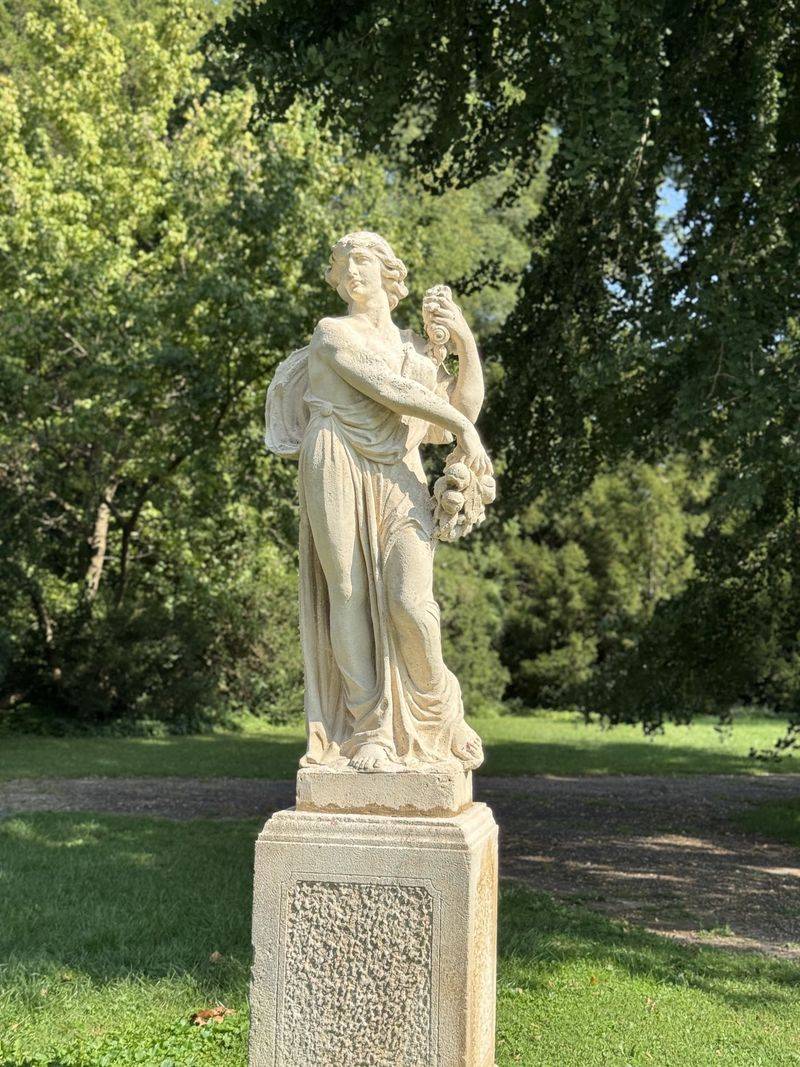
December 2002 brought the worst kind of holiday surprise to the gardens. Vandals knocked the statue of Pan over, and the stone figure shattered into pieces.
Stone looks tough, but it doesn’t bounce. Once a carved figure hits the ground, delicate parts like hands, pipes, and faces can break apart fast.
Nobody needs a degree in art history to feel that loss. A familiar figure that had stood calmly for decades was suddenly a pile of fragments on the ground.
What strikes me is how quick the damage was compared to the repair. It likely took moments to knock him down, but it would take years to make him whole.
That gap is a useful thing to remember on any historic site. Statues, markers, and old walls can’t be swapped out like a broken lamp from the store.
The National Park Service cares for places like this one so everyone can enjoy them. Respecting the grounds keeps that possible for the next family who visits.
Pan’s broken pieces could have ended up forgotten in storage forever. Luckily, a group of determined neighbors had very different plans for the old god of the woods.
Three Local Groups Refused To Let The Story End There
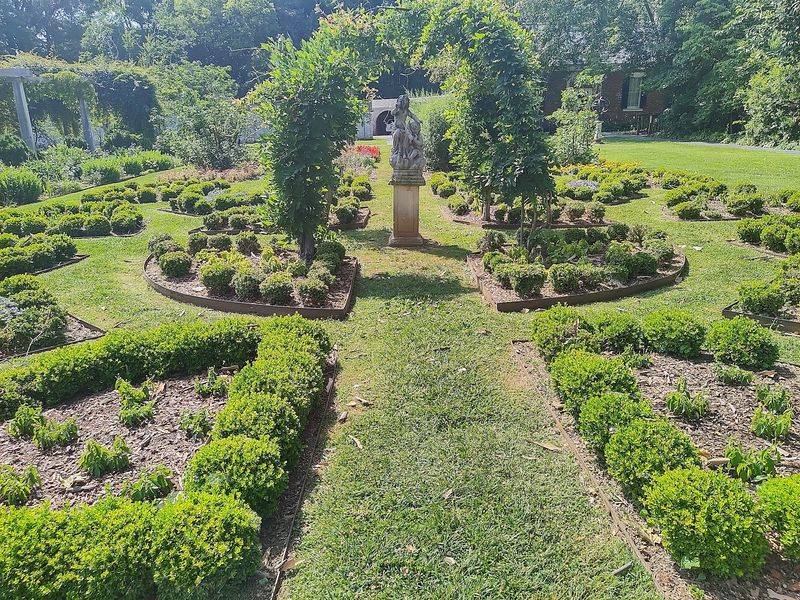
Garden clubs and Rotary clubs rarely make headlines for rescuing Greek gods. This time, they absolutely deserved one.
The Rappahannock Valley Garden Club stepped up to help bring Pan back. The Rappahannock Fredericksburg Rotary Club joined in, and so did the Friends of Chatham.
Each group brought its own strengths to the table. Together, they gathered the support and resources needed to fund a serious restoration.
Fixing a shattered sculpture is not a weekend craft project. It takes money, planning, patience, and skilled people who know how stone behaves.
I love that this push came from the community itself. These were neighbors who simply cared about a place they loved and wanted it whole again.
The Friends of Chatham group supports the estate in many ways beyond this one statue. Local backing like that helps keep historic spots beautiful and welcoming.
Here’s a practical takeaway if you live near a park or historic site. Volunteer groups often need extra hands, and joining one can make a real, lasting difference.
Pan’s return proves that small clubs can pull off big results. It just took teamwork and a refusal to give up on a broken old friend.
Two Sculptors Took On A Puzzle Nobody Would Envy
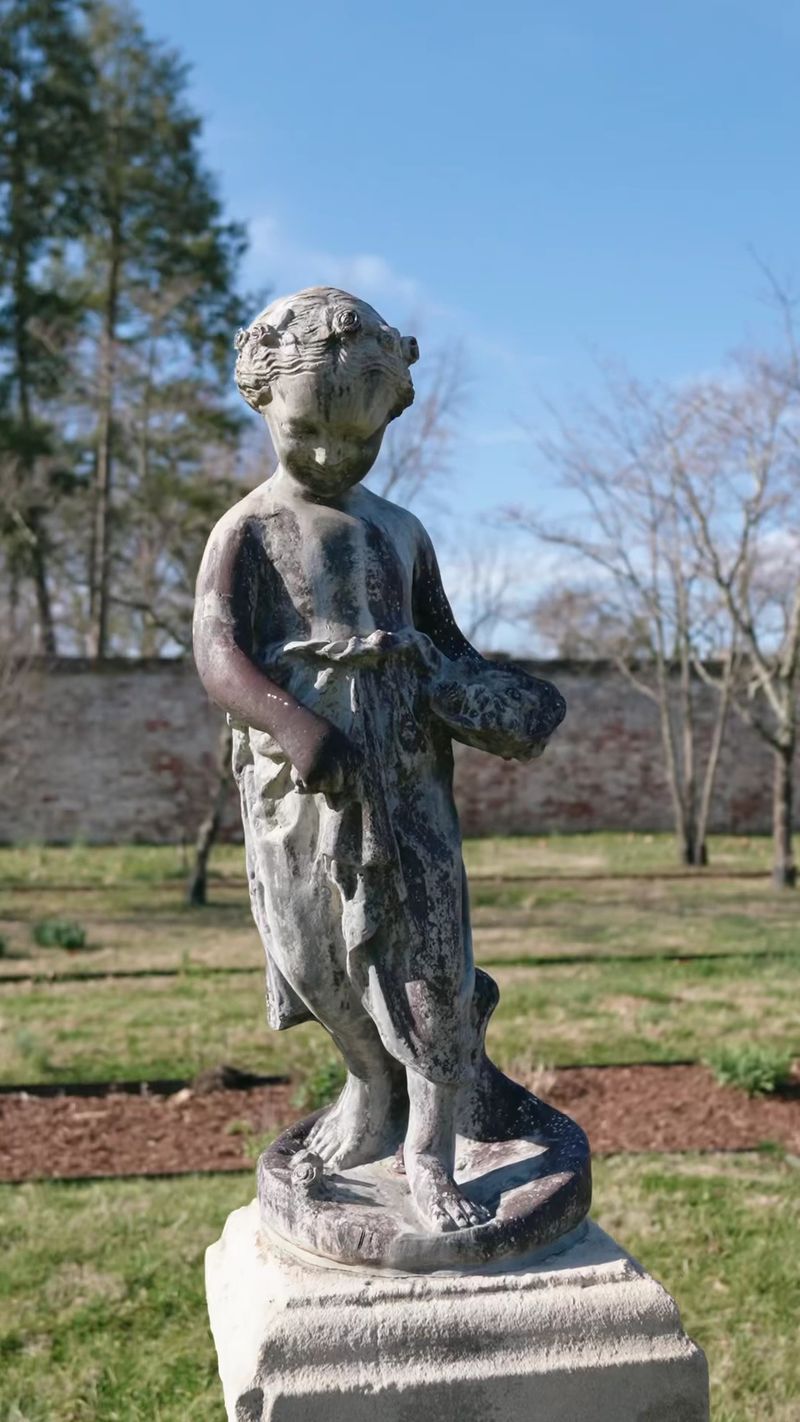
Think of the hardest jigsaw puzzle you’ve ever tried, then make every piece out of heavy stone. That gives you a small taste of the job these artists faced.
Scott McKee, a sculptor from Fredericksburg, took on the restoration work. He teamed up with James Robertson, a sculptor from Richmond.
Restoring a shattered statue means far more than gluing chunks back together. Missing or crumbled areas may need careful rebuilding so the figure looks right again.
The goal is always respect for the original piece. Good restorers try to bring back the artist’s intent rather than turning the work into something new.
Having local talent involved makes the story even sweeter. Fredericksburg and Richmond are both Virginia cities, so this was truly a home-state effort.
I can’t imagine the patience it took to study each broken fragment. Every curve of the pipes and every bit of goat leg had to make sense.
The next time you see a restored statue anywhere, look closely at the details. Somewhere in that stone are hours of quiet, careful work you’d never notice at first.
Pan, for his part, came out of the process ready for his second act.
Spring 2013 Finally Brought A Very Happy Homecoming
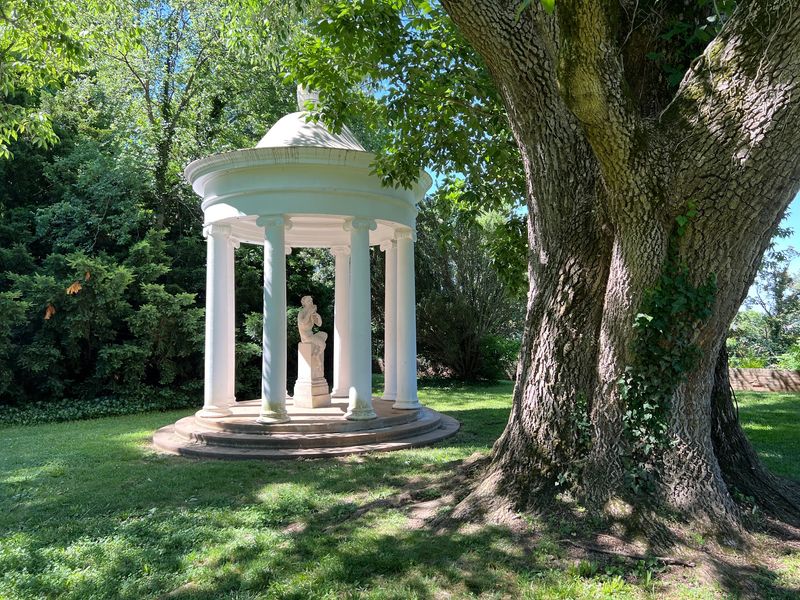
Talk about fashionably late. Pan returned to Chatham Manor in April 2013, more than ten years after vandals knocked him down.
Spring was a fitting season for the comeback. The god of wild, growing things came home just as the gardens were waking up again.
That moment meant a lot to everyone who had worked on the project. The clubs, the friends group, and the sculptors all got to see their effort standing tall.
A decade can feel like forever for a project like this. Fundraising, planning, and careful craft don’t move at the speed of a phone notification.
I believe that slow pace is part of what makes the ending so satisfying. Nobody rushed Pan back, so he returned looking like himself.
Visitors today might never guess he was once a pile of stone. That’s the mark of a restoration done with real care and skill.
If you go, spend a minute with him before heading off to the views. Knowing his backstory turns a pretty garden figure into a small victory you can stand right beside.
Honestly, few statues have a comeback story this good. Pan deserves a round of applause, or at least a cheerful wave.
The Brick Mansion Behind Pan Is Older Than The Country
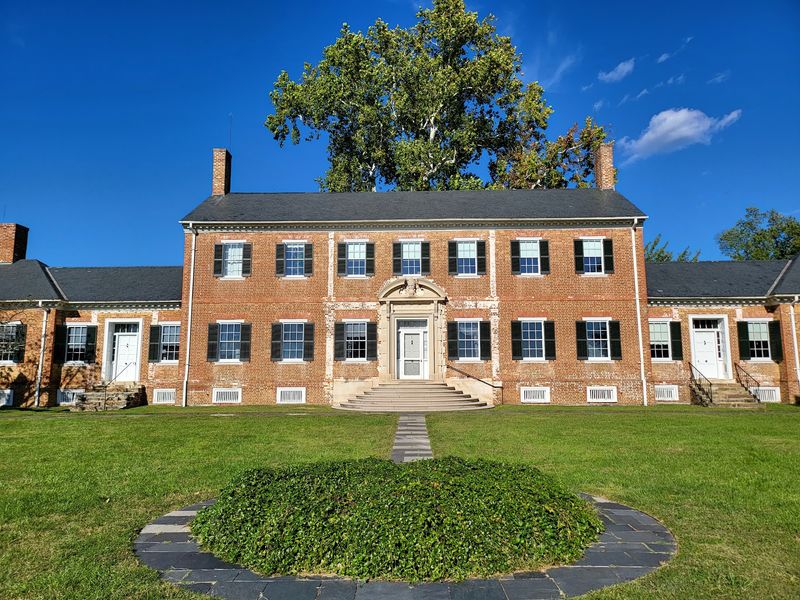
Pan may be the comeback star, but the house behind him has seen centuries of drama. Chatham Manor was built between 1768 and 1771 by William Fitzhugh.
That means the mansion was finished before the United States even declared independence. It’s a Georgian-style brick home, known for its balanced, orderly look.
You’ll find it at 120 Chatham Lane, Fredericksburg, VA 22405. Despite that Fredericksburg mailing address, the estate sits in Stafford County on the river’s opposite bank.
The home’s story is not all elegant parties and pretty lawns. It was a plantation that relied on enslaved labor, and an uprising by enslaved people happened there in 1805.
I appreciate that the site’s history includes those harder chapters. A full picture helps visitors understand who truly built and kept this place running.
Later owners in the 1900s restored the house and added the gardens. John Lee Pratt, the final private owner, left the estate to the National Park Service in 1975.
Interior access has shifted during renovation work in recent years. Checking the park service’s current schedule before you go is a smart move, so you know which rooms you can explore.
Famous Footsteps And Soldier Scribbles Fill This Place
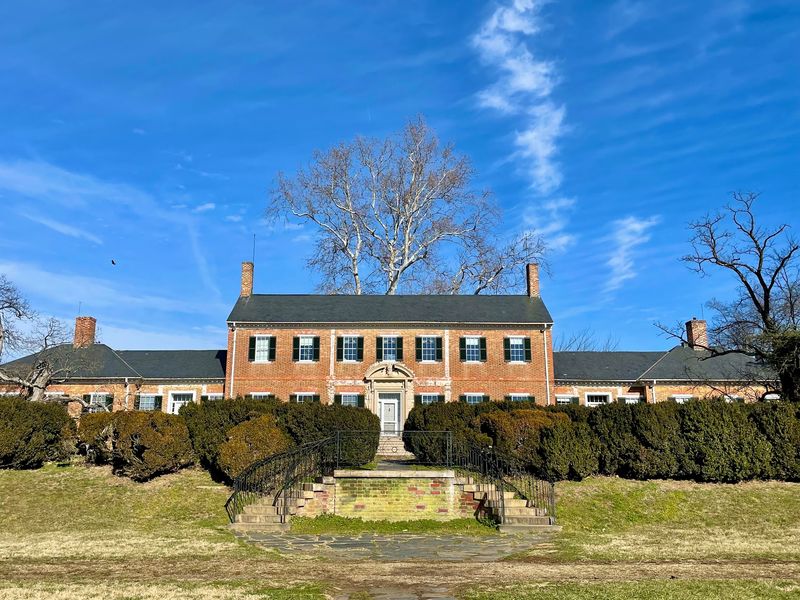
George Washington visited this house. So did Abraham Lincoln, which gives Chatham Manor an impressive guest list for a home on a quiet hill.
During the 1860s, Union forces used the mansion as a headquarters. It later served as a hospital around the Battle of Fredericksburg in December 1862.
Two famous names helped care for the wounded here. Clara Barton, who later founded the American Red Cross, and poet Walt Whitman both spent time at Chatham.
Soldiers also left their mark in a very literal way. Graffiti from that era survives on walls, a raw and personal note from people far from home.
I find those scratched names more moving than any grand portrait. They feel like quick messages from ordinary people living through an extraordinary time.
The hilltop’s view explains why armies valued this spot. From up here, you can look straight across the river toward Fredericksburg.
Kids might enjoy turning the visit into a hunt for historic clues. Ask them to imagine who wrote each name and why they wanted to be remembered.
Just look and never touch. Those fragile marks have lasted more than 160 years, and they need gentle eyes only.
Flower Lovers Should Plan For Some Serious Lingering
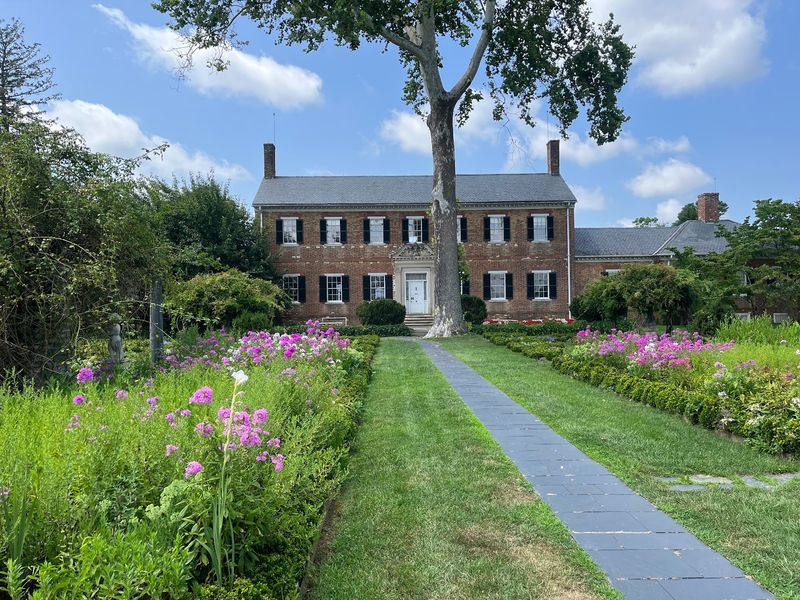
Ellen Biddle Shipman was one of the most respected landscape architects of her era. She designed the Colonial Revival gardens at Chatham Manor in the 1920s.
Her style mixed tidy structure with lots of soft, generous planting. Think brick paths, neat borders, and flowers that spill out with plenty of personality.
The gardens change with the seasons, so no two visits look quite the same. Spring and early summer can bring tulips, irises, peonies, and roses.
Statues, including our friend Pan, add little surprises along the way. Spotting each one feels a bit like a friendly scavenger hunt.
Photographers love this setting for good reason. The mix of flowers, brick, and old trees makes almost every angle look polished.
One simple rule matters here, and it’s easy to follow. Please don’t pick the flowers, because they’re meant for everyone who visits after you.
Virginia summers can get steamy, so morning or late afternoon makes strolling more pleasant. A water bottle and comfy shoes won’t hurt either.
I like that a garden this lovely sits beside such a heavy history. It offers a calm place to think about everything the house has witnessed.
Bring A Camera Because That River View Steals The Show
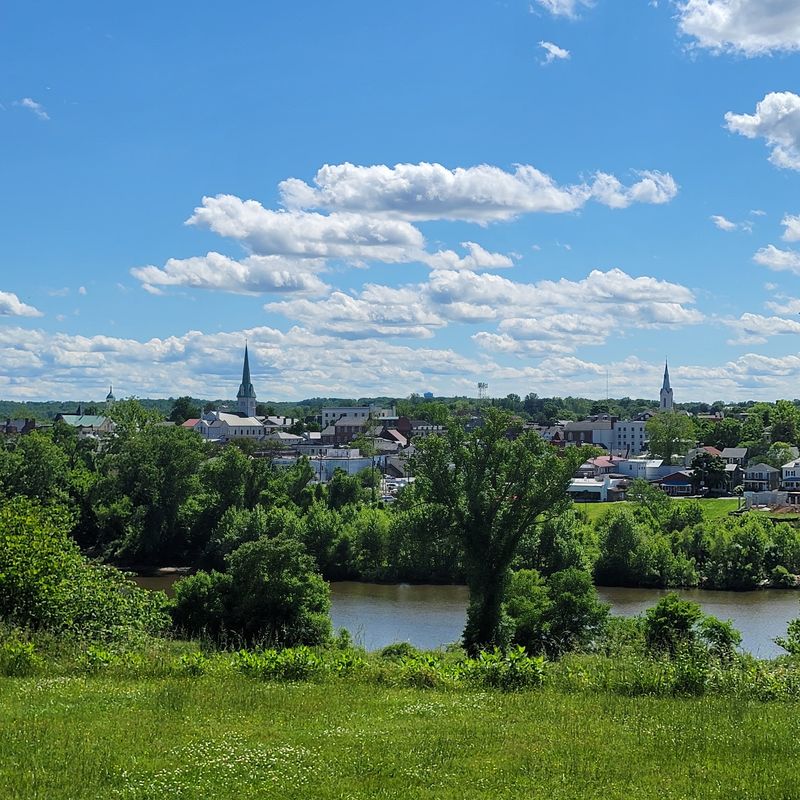
Free admission and a skyline view are a pretty great combo. Chatham Manor’s grounds look out over the Rappahannock River toward downtown Fredericksburg.
Church steeples and old rooftops line up across the water like a postcard. On a clear evening, the sunset adds a warm glow to the whole scene.
The estate is part of Fredericksburg and Spotsylvania National Military Park. That connection makes it an easy add-on if you’re exploring nearby battlefields.
Parking is free, and accessible spaces are available. Follow the one-way directional arrows on the entry and exit roads, since they keep traffic moving smoothly.
The lawns offer plenty of room to spread out and relax. A picnic with that view is a low-cost treat that feels surprisingly fancy.
Hours for the house and grounds can change, especially during renovation work. A quick check of the park service schedule saves you from a disappointing drive.
I can’t think of a better way to end a visit than saying goodbye to Pan. Then grab one last look across the river before heading home.
For a spot in Virginia that blends history, flowers, and a famous comeback, this hilltop is hard to beat.
