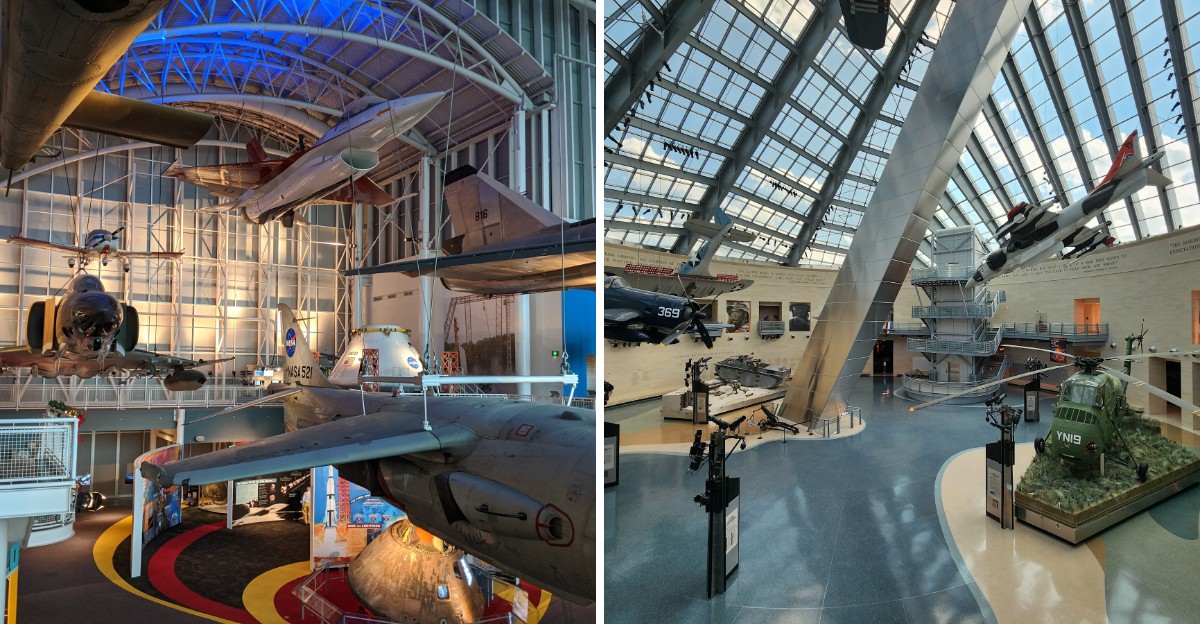
Aviation history has a way of making people look up. The planes, the people, the risks they took, and the technology that changed over decades.
This list has ten Virginia aviation museums packed with historic aircraft and the stories behind them. Some focus on military aviation, with fighter jets and bombers that saw real combat.
Others highlight civilian flight, from early biplanes to the jets that made travel accessible to everyone. A few have interactive exhibits where you can sit in a cockpit or try a flight simulator.
The common thread is preservation. These museums are not just displaying planes.
They are keeping the history alive, with volunteers and staff who know the details and are happy to share them. Whether you are an aviation enthusiast or just curious about how flight changed the world, these museums are worth a visit.
Bring a camera and plan to spend more time than you expect. The stories are as interesting as the aircraft.
1. Military Aviation Museum, Virginia
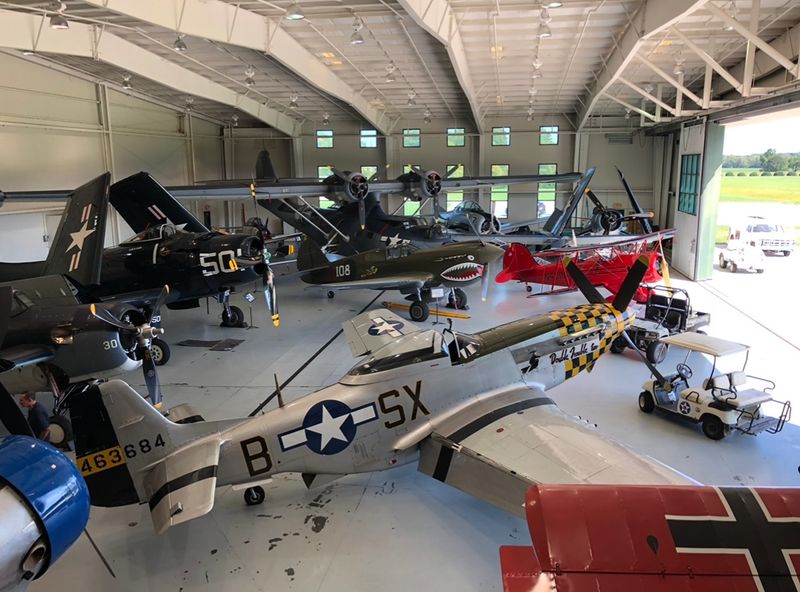
Propellers that still spin. That is the magic trick here, and it never gets old.
Plenty of museums park their planes like statues. This one keeps a huge collection of vintage military aircraft in flying shape, with machines from the World War I era through the early Cold War years.
You get American, British, and German designs all under the same sky. Fighters, trainers, and bombers share hangar space like old rivals at a reunion.
Look closely at the buildings too. A real German hangar was taken apart overseas and rebuilt right on this property, which is wild when you think about it.
Another hangar copies the look of a classic Depression era maintenance shop. Walking between them feels like flipping through chapters of a history book with your feet.
The grass runway is the real star. When flying events happen, those old engines rumble overhead and the ground practically hums.
Pro tip, check the event calendar before you go. Airshow weekends are loud, busy, and absolutely worth planning around.
Bring earplugs for little ones. Bring a camera with a fast shutter for yourself, because those planes do not wait for you to focus.
The setting adds charm as well. Farm fields roll out around the airfield, so it feels miles away from the beach crowds even though the oceanfront is a short drive away.
Comfortable shoes are a must. The hangars are big, and you will want to see every single one.
Address: 1341 Princess Anne Road, Virginia Beach, VA.
2. Steven F. Udvar-Hazy Center, Virginia
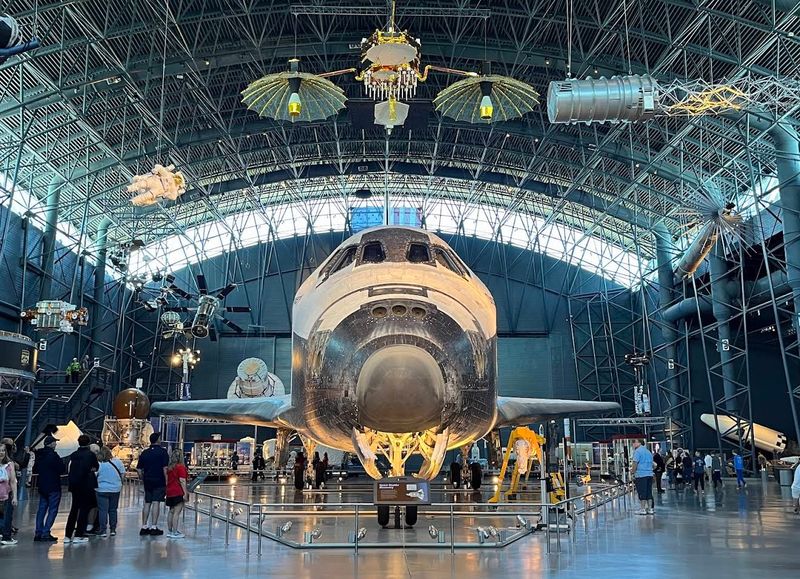
Space Shuttle Discovery is just sitting there. Not a model, not a replica, the actual orbiter that flew into space again and again.
Welcome to the giant sidekick of the Smithsonian National Air and Space Museum. Many artifacts here were simply too big to squeeze into the building on the National Mall.
The main hangar is so huge that planes hang from the ceiling in layers. Crane your neck and you will spot aircraft stacked above you like a flying traffic jam.
Big names fill the floor. An SR-71 Blackbird looks fast even while parked, and a sleek Concorde shows off the era of supersonic passenger travel.
The Enola Gay is here as well. Its story is heavy and important, so give that corner a quiet moment.
Want a peek behind the curtain? Windows into the restoration hangar let you watch specialists carefully bringing old artifacts back to good condition.
Then head up the observation tower. From up high you can watch real jets landing and taking off at nearby Washington Dulles International Airport.
Admission is free, though parking costs extra, so plan accordingly. Arriving early helps you beat the busiest crowds around the shuttle.
Give yourself plenty of time. Rushing through this place is like speed reading an encyclopedia, technically possible but kind of pointless.
If I had to pick one spot on this list for first timers, this would be it. The scale alone makes jaws drop.
Address: 14390 Air and Space Museum Parkway, Chantilly, VA.
3. Virginia Air and Space Science Center, Virginia
Moon rock, anyone? Few places let you stand this close to a piece of the lunar surface.
Hampton has deep roots in flight research, and this center serves as the official visitor center for NASA Langley Research Center. That connection shows up everywhere you look.
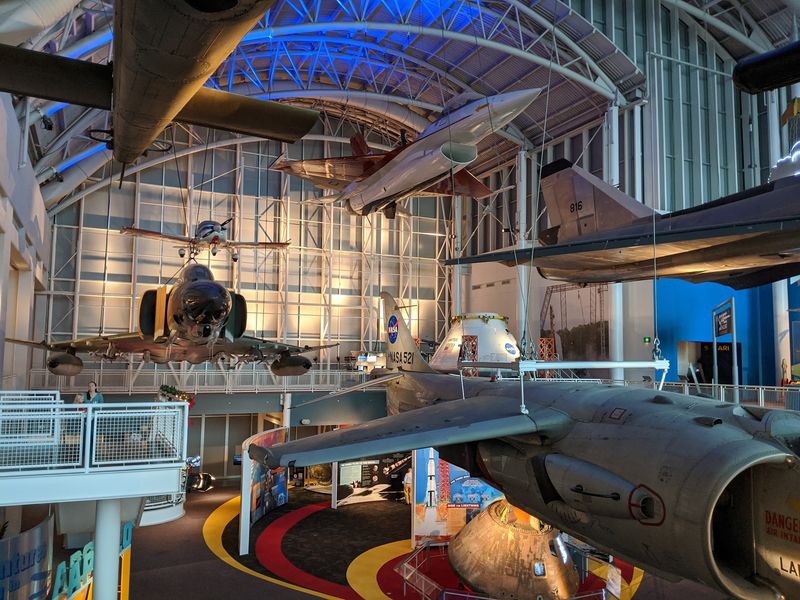
The Apollo 12 Command Module is a must-see. Picture three astronauts squeezed inside that capsule on the way to the Moon, and suddenly your car feels roomy.
Aircraft dangle from the ceiling of the soaring atrium. The building itself, with its glass walls and swooping shape, almost looks ready for takeoff.
Hands-on exhibits are where kids go wild. Buttons, screens, and simulators turn science lessons into games, and adults sneak a turn too.
A big gallery covers the history of flight in the Hampton Roads area. It shows how this corner of the coast helped shape both military and everyday air travel.
Space exploration gets its own spotlight as well. You can learn about rovers, planets, and the bold missions that pushed humans past our atmosphere.
Catch a giant screen film if one is playing. Sitting in that big theater is a great way to rest tired legs.
Downtown Hampton is right outside the doors. The waterfront makes a lovely spot for a stroll after all that brainpower.
Pair this stop with Air Power Park for a full flight-themed day. Both sit in the same city, so the drive between them is quick.
Address: 600 Settlers Landing Road, Hampton, VA.
4. Air Power Park, Virginia
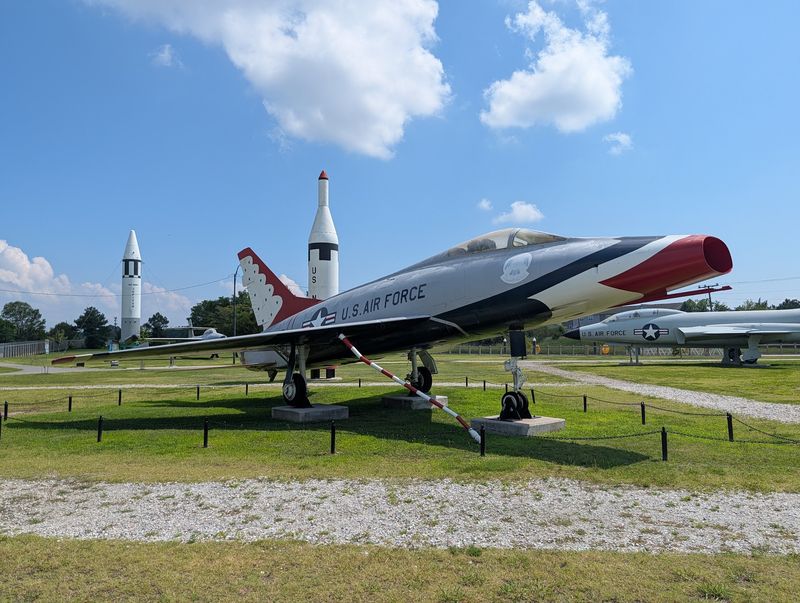
No walls, no ceiling, no problem. Here the planes live outside, and the sky is the roof.
Air Power Park is an open-air spot run by the city of Hampton. Jets and rockets stand on the lawn like a fleet waiting for orders.
Rockets are the surprise twist. Tall test vehicles tied to early space research point straight up, reminding you how close this area sits to serious rocket science.
Military jets fill out the rest of the display. Their sharp noses and swept wings look tough even after years of standing still.
Picnic lovers, take note. Grassy space and a relaxed vibe make this a fine place to unpack a lunch and let kids burn off energy.
A small indoor area adds models and exhibits about local flight history. It is a nice break when the sun gets strong.
Timing matters on hot days. Morning or late afternoon light makes for better photos and cooler walks between the aircraft.
Bring sunscreen and a hat. Shade can be limited, and metal planes soak up heat like a skillet.
The whole thing feels low key and easygoing. You can wander at your own pace, read the signs, and snap photos without bumping elbows.
Budget travelers will love it too. Admission has traditionally been free, making it a quick, wallet-friendly stop on a Hampton road trip.
Address: 413 West Mercury Boulevard, Hampton, VA.
5. Flying Circus Aerodrome, Virginia
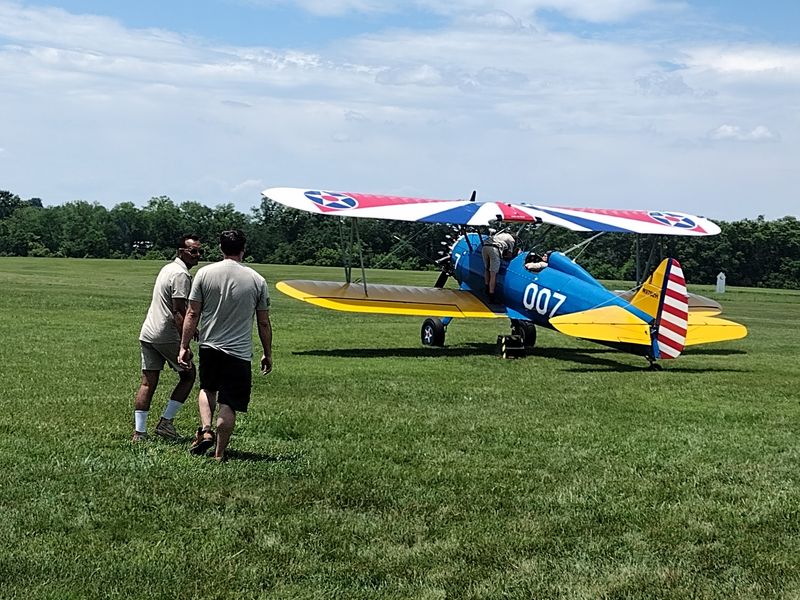
Ladies and gentlemen, step right up. The circus is in town, and the performers have wings.
Out in the green countryside near Bealeton, this grass-strip aerodrome brings back the wild barnstorming days of early aviation. On show days, open-cockpit biplanes take turns stealing the spotlight.
Expect loops, rolls, and formation flying. Some acts lean into old-time comedy routines that feel like a cartoon brought to life.
Wing walking is the jaw-dropper. Watching a person stand on top of a flying plane will make your stomach flip even from the ground.
Classic aircraft like Stearmans and Piper Cubs show up regularly. Each one looks freshly polished and ready for a parade.
Shows run on Sundays during the warm season, so check the schedule before you head out. Weather can change plans, because these pilots fly by the rules of the sky.
Biplane rides are often offered too. Wind in your face and fields below, it might be the most fun you can have in goggles.
Pack lawn chairs or grab a seat in the stands. Snacks are usually around, but a cooler of water never hurts on a hot afternoon.
The vibe is pure small-town fun. Families spread out, kids point at the sky, and everyone cheers like it is a home run.
Honestly, this one might be the dark horse of the whole list. Big museums inform you, but this place makes you grin.
Address: 5114 Ritchie Road, Bealeton, VA.
6. Shannon Air Museum, Virginia
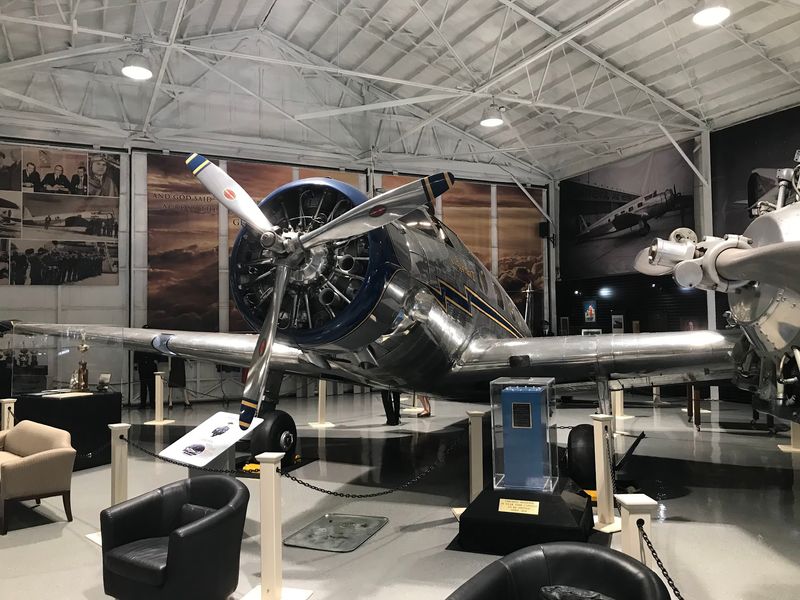
Small airport, big personality. Shannon Airport in Fredericksburg has a family story stitched right into its runway.
The museum honors the passion of Sidney Shannon Jr., a dedicated aviation fan who helped build this airfield. His love for old airplanes still shapes everything inside.
Golden age aircraft are the main attraction. Think graceful lines, shiny metal, and the kind of design that made flying feel glamorous.
A Pitcairn Mailwing reminds you that airmail was once a daring job. Pilots flew in rough weather with few instruments, just to deliver letters.
The Vultee V-1A is another treasure. Sleek and elegant, it carried passengers in an era when air travel felt like pure luxury.
Several pieces once belonged to the former Virginia Aviation Museum in Richmond. After that museum closed, some of its collection found a fresh home here.
The scale feels intimate. You can get close, study rivets and wooden propellers, and actually read every sign without a crowd behind you.
History buffs will love the quiet. There is no rush, no noise, just you and machines that once raced across the clouds.
Fredericksburg itself makes a terrific add-on. Its historic downtown streets are lined with old brick buildings and cute shops.
Check ahead before visiting, since smaller museums can keep limited schedules. A quick look online saves you from a locked door.
Address: 3380 Shannon Airport Circle, Fredericksburg, VA.
7. U.S. Army Transportation Museum, Virginia
Flying saucer alert. Yes, really, the Army once tested a round, saucer-shaped aircraft called the Avrocar, and you can see one here.
That oddball is just a taste of what this museum offers. It tells the story of how the Army moves people and gear by land, sea, rail, and air.
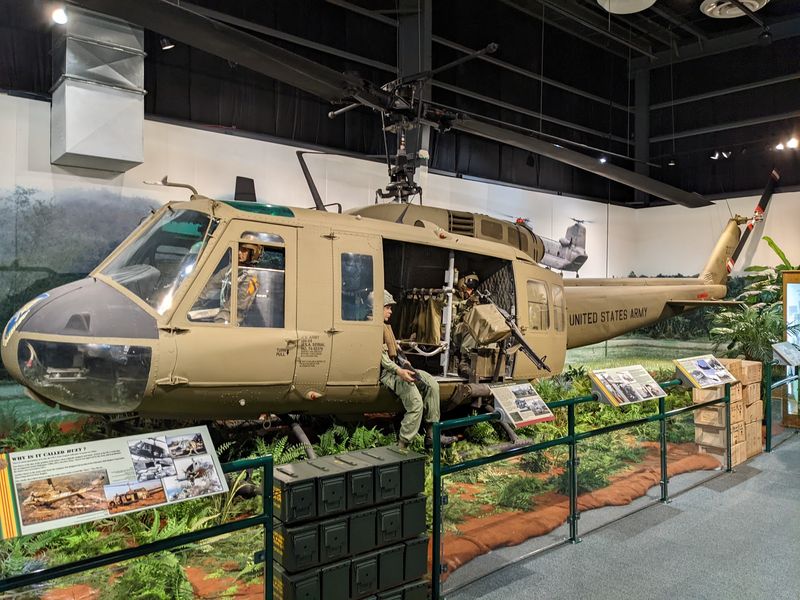
Helicopters fill a big part of the outdoor yard. Their rotors and bulky bodies show how much the Army depends on aircraft that can land almost anywhere.
Trucks, trains, and boats round out the collection. Seeing them side by side helps you understand that flight is one piece of a giant puzzle.
Indoor galleries cover everything from early wagons to modern missions. Dioramas and displays make the timeline easy to follow.
Getting in takes a little planning. The museum sits on Joint Base Langley-Eustis, so base access rules apply and you will need proper identification.
Check current entry requirements before you drive over. Rules can change, and showing up prepared saves a frustrating detour.
Kids tend to love the experimental vehicles most. Some of these machines look like props from a science fiction movie.
Grown-ups often get hooked on the problem solving. Every machine was built to answer one question, how do we get there faster and safer?
Leave time for the outdoor rows. Strolling past the helicopters on a breezy day is one of the best parts.
Address: 300 Washington Boulevard, Fort Eustis, VA.
8. National Museum of the Marine Corps, Virginia
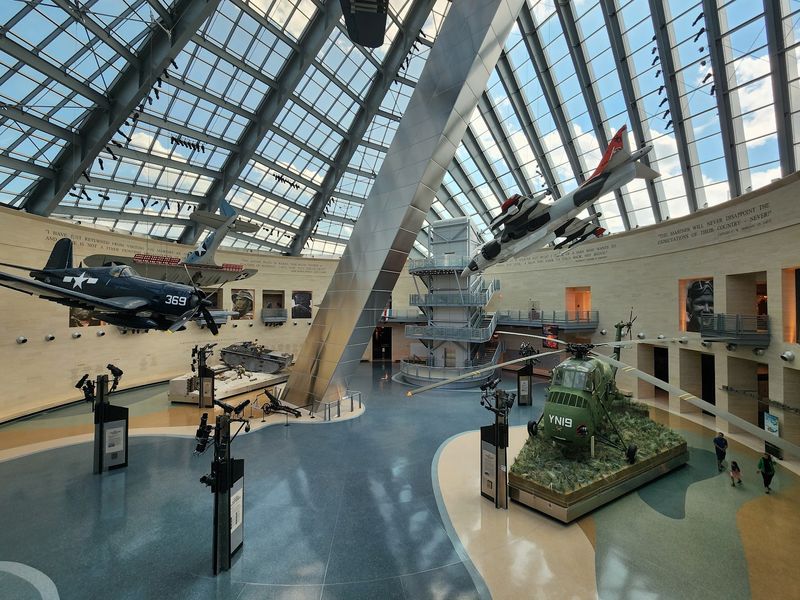
Look up as you drive along Interstate 95. That tall slanted spire is impossible to miss, and it is designed to echo the famous Iwo Jima flag raising.
Inside, the central gallery steals your breath right away. Aircraft hang overhead in dramatic poses, as if frozen mid-mission.
A Corsair fighter, a Harrier jump jet, and Huey helicopters are among the flying stars. Together they show how Marine aviation has supported troops on the ground for generations.
The rest of the museum walks you through Marine Corps history. Galleries move through different eras with immersive scenes, sounds, and even temperature changes.
Some displays are intense, and that is the point. They help you feel a little of what service members faced.
Respect runs through every room. Many families come here to honor loved ones, so a calm, thoughtful pace fits the space.
Admission has long been free, which makes this an easy addition to a Northern Virginia trip. Parking is right on site.
Hungry after all that walking? There is a place to grab a bite inside, so you can refuel before heading back out.
Do not skip the grounds outside either. Memorial paths and a peaceful chapel sit nearby, perfect for a quiet moment.
Of everything on this list, this stop might carry the most emotional weight. Expect to leave with goosebumps and a few new stories to share.
Address: 18900 Jefferson Davis Highway, Triangle, VA.
9. NAS Oceana Aviation Historical Park, Virginia

Top Gun fans, this one is for you. The mighty F-14 Tomcat holds court here, wings spread like it owns the place.
Naval Air Station Oceana is a busy master jet base, and this outdoor park honors the planes that once called it home. Each aircraft represents a slice of Navy flying history.
Classic jets like the F9F Panther and F2H Banshee look almost cartoonish next to modern fighters. Their stubby shapes show how fast jet design changed.
The A-6 Intruder and F/A-18 Hornet add serious muscle. Signs explain each plane and its role on aircraft carriers.
Here comes the catch. The park sits inside the base gate, so access is generally limited to people with approved military identification or official clearance.
Always check current base access rules before planning a visit. Security policies change, and the base decides who gets in.
No base pass? The sound of jets is still part of life in Virginia Beach.
Fighters often roar over the city, which is a free airshow of its own.
Every September or so, the base has historically hosted a big air show open to the public. Those events are the easiest way to see the area up close.
Bring patience and good ear protection on air show days. Crowds are huge, and the jets are thunderously loud.
Even from outside the fence, the energy here is contagious. Jet noise is basically the local soundtrack.
Address: Tomcat Boulevard, Naval Air Station Oceana, Virginia Beach, VA.
10. Science Museum of Virginia, Richmond
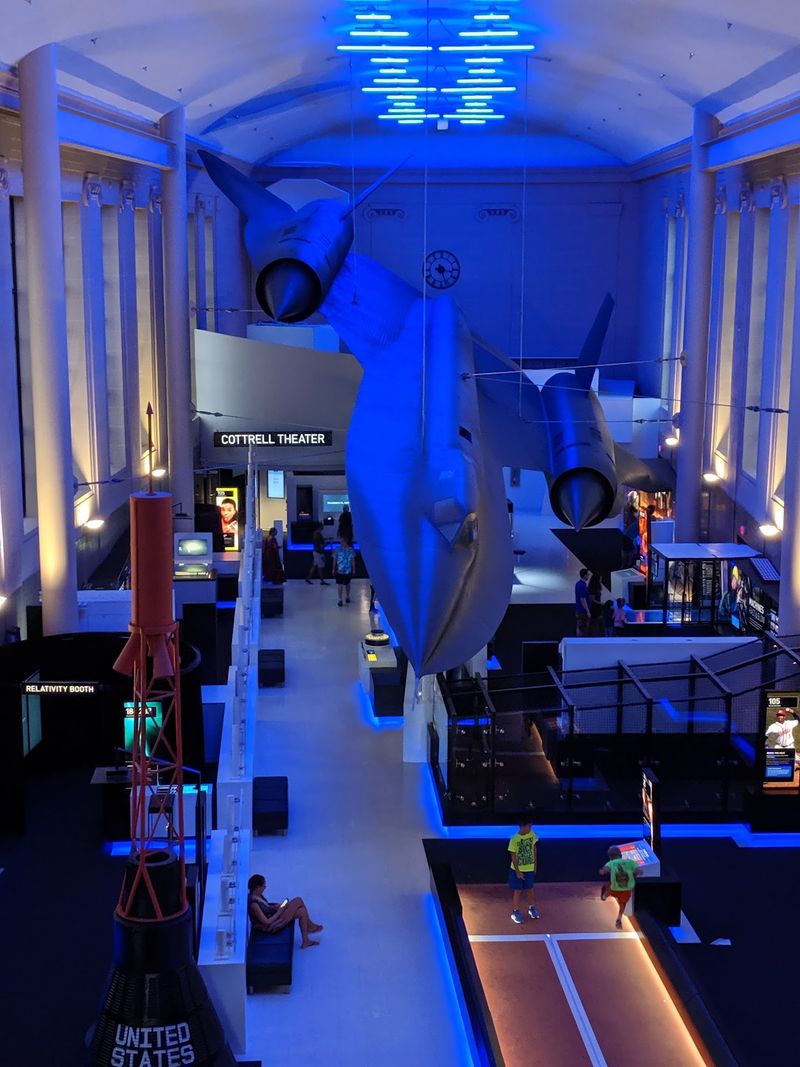
A spy plane at a science museum? Richmond pulled off that combo, and it works beautifully.
The museum fills the grand old Broad Street Station, a former train station with a giant dome and stately columns. The building alone is worth the trip.
Aviation fans come for the Blackbird. This SR-71 once belonged to the former Virginia Aviation Museum and moved here after that museum closed.
Built for extreme speed and high altitude, the Blackbird still looks futuristic. Its dark skin and sharp edges make it feel more like a spaceship than a plane.
Science exhibits inside help explain the magic. You can explore forces, motion, and engineering ideas that keep anything airborne.
Kids can push buttons, pull levers, and test ideas for themselves. Learning feels like play here, which is always the best trick.
The giant dome theater is another highlight. Films about space and nature fill the curved screen and make you feel like you are floating.
Personally, I think this is the sneakiest aviation stop in the state. Most people walk in for science and leave talking about a spy jet.
Richmond makes an easy home base too. Museums, parks, and the James River are all close by.
So there you have it. Grab the keys, fill the tank, and start chasing propellers across the state before someone else claims the best photo spot.
Address: 2500 West Broad Street, Richmond, VA.
