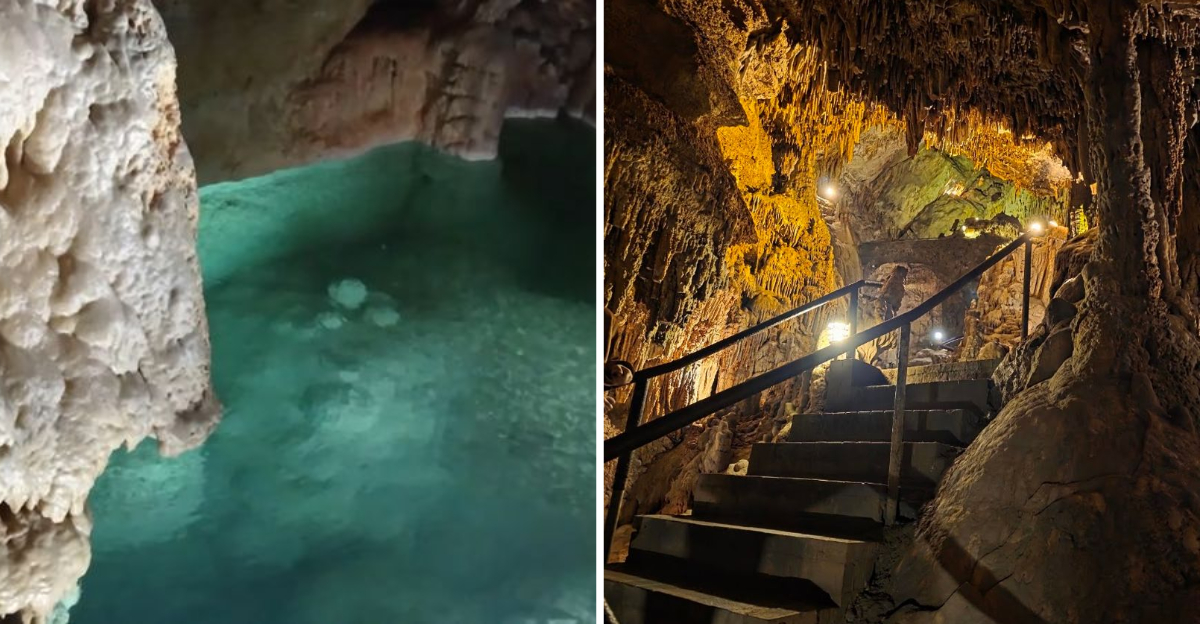
Best secrets hide underground in Virginia, and I mean that literally. Most people drive past roadside signs without ever wondering what else might be tucked beneath these ancient ridges and valleys.
After exploring some of the state’s lesser-known underground worlds, I can honestly say the caves that fly under the radar are the ones that leave the biggest impression. Civil War history etched into limestone walls.
Crystal formations found almost nowhere else on Earth. Stories that feel almost too extraordinary to be real.
I spent an afternoon in one of those caves, the air cool and still, and felt like I had stumbled onto something the guidebooks completely missed.
If you are ready to trade crowded parking lots for something genuinely remarkable, these nine caves are exactly where you should start.
1. Grand Caverns – Grottoes, VA
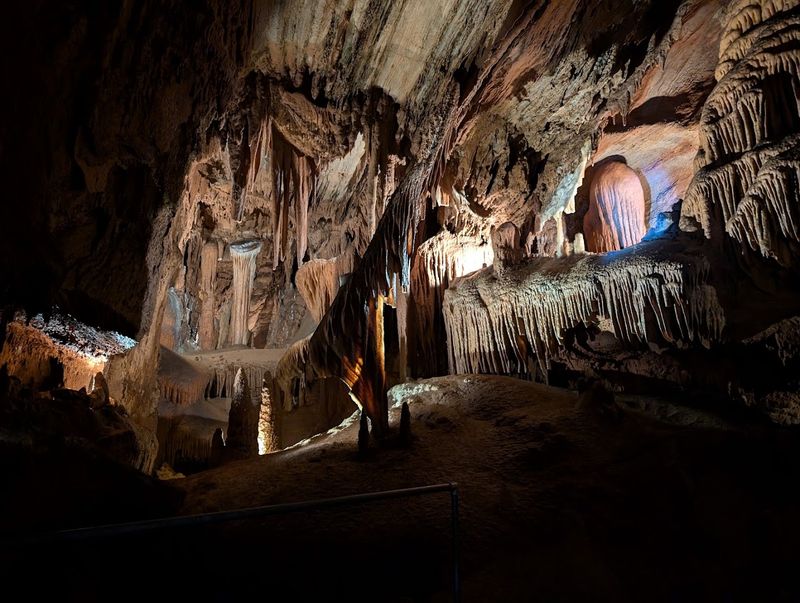
America’s oldest continuously operating show cave has been welcoming curious visitors since 1806, and the sense of deep history here is almost palpable the moment you step inside.
Originally discovered in 1804 by Bernard Weyer while searching for a lost groundhog trap, this place earned its stripes long before modern tourism was even a concept.
More than 200 verified signatures from both Confederate and Union soldiers still mark its walls, making it as much a historical archive as a geological wonder.
The National Park Service designated Grand Caverns a National Natural Landmark in 1973, largely because of its remarkable shield formations, which are rare vertical limestone structures tilted by ancient tectonic forces.
Cathedral Hall soars over 70 feet high, making it one of the largest cave rooms in the entire country.
Formations like the Bridal Veil and the Tapestry Room add a quiet elegance that feels almost theatrical.
The temperature holds steady at around 54 to 55 degrees Fahrenheit year-round, so bring a light jacket regardless of the season.
Beyond the standard walking tours, more adventurous spelunking experiences are available for those who want to push deeper into the cave system.
Grand Caverns earns every bit of its legendary reputation.
Address: 5 Grand Caverns Drive, Grottoes, VA 24441
2. Endless Caverns – Rockingham County, VA
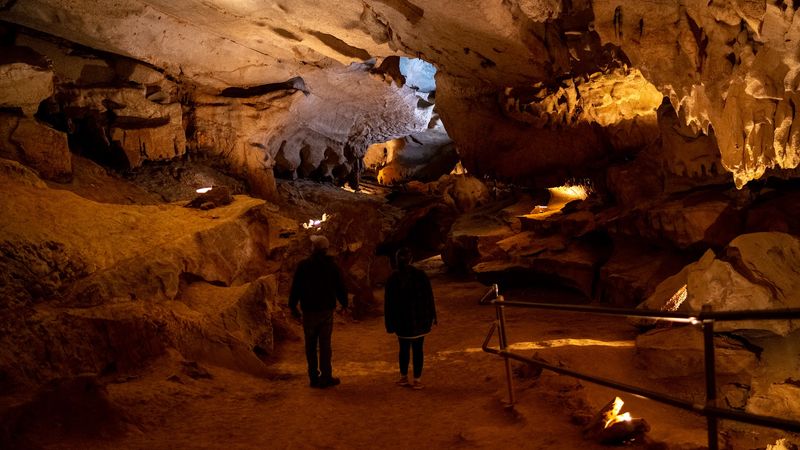
Two boys chasing a rabbit in 1879 accidentally stumbled upon one of Virginia’s most intriguing underground systems, and explorers have been trying to find the end of it ever since.
Over six miles of passages have been mapped inside Endless Caverns, yet no definitive terminus has ever been found.
That lingering mystery gives the whole experience an edge that most commercial caves simply cannot replicate.
The cave tour here is the longest commercial cave experience in Virginia, clocking in at roughly 75 minutes and covering just under a mile of winding corridors.
Narrow passages open unexpectedly into cathedral-like chambers adorned with towering stalactites, rising stalagmites, rare shield formations, and glassy underground pools.
Several bat species also call these passages home, adding a living, breathing quality to the environment that reminds you this is not just a museum exhibit.
Candlelit tours were once the only way to explore this place back when the Zirkle family first led visitors through by hand. Electric lights arrived in 1919 before the cave officially opened as a show cave in 1920.
The air inside hovers around a consistent 55 degrees Fahrenheit, and the relaxed pace of the tour makes it feel like a genuine escape rather than a rushed attraction.
3. Shenandoah Caverns – Shenandoah Caverns, VA
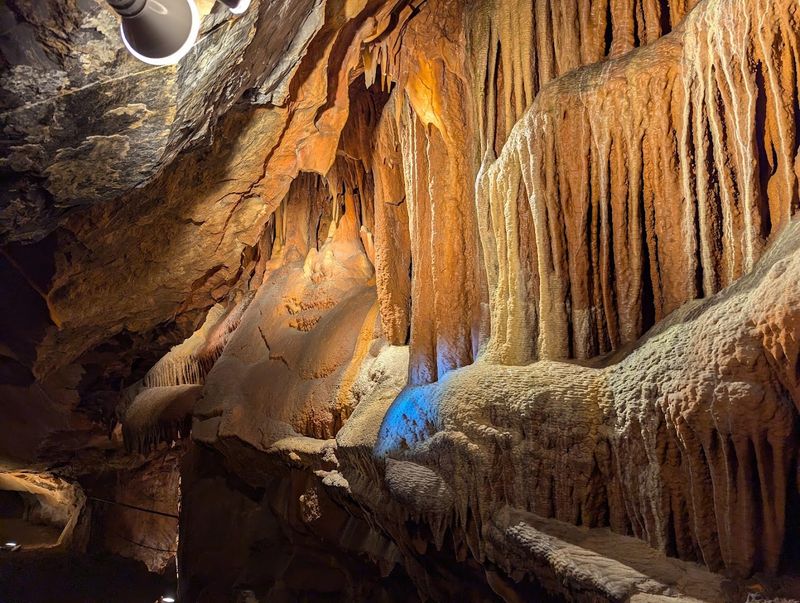
Discovered purely by accident in 1884 during the construction of a railway line, Shenandoah Caverns managed to turn an engineering inconvenience into one of the Shenandoah Valley’s most memorable underground destinations.
It opened to the public in 1922 and has been drawing geology enthusiasts and curious travelers ever since.
What truly sets it apart is something you have almost certainly never seen in any other cave.
The famous bacon formations here are exactly what they sound like: translucent, layered sheets of mineral rock that glow like strips of crispy bacon when light passes through them.
National Geographic featured these formations, and honestly, seeing them in person makes the magazine photos feel like an understatement.
Beyond the bacon, you will also encounter the Capitol Dome, Rainbow Lake, Diamond Cascade, and a quirky optical illusion known as the Cave Bishop.
Shenandoah Caverns is the only cave in Virginia equipped with elevator service, which makes it genuinely accessible for visitors using wheelchairs or strollers.
The temperature inside stays comfortable at around 56 degrees Fahrenheit.
Above ground, the complex includes the American Celebration on Parade exhibit featuring historic floats and a gem sluice for a hands-on mining experience that younger visitors tend to love.
Address: 261 Caverns Rd, Shenandoah Caverns, VA
4. Skyline Caverns – Front Royal, VA
A retired geologist named Walter S. Amos found the entrance to Skyline Caverns on December 17, 1937, not through sophisticated equipment or luck, but by noticing a small colony of camel crickets near a sinkhole.
He knew those insects thrive in damp, dark environments, and that observation led him straight underground. The caverns officially opened for guided tours in 1939 and have been quietly astonishing visitors ever since.
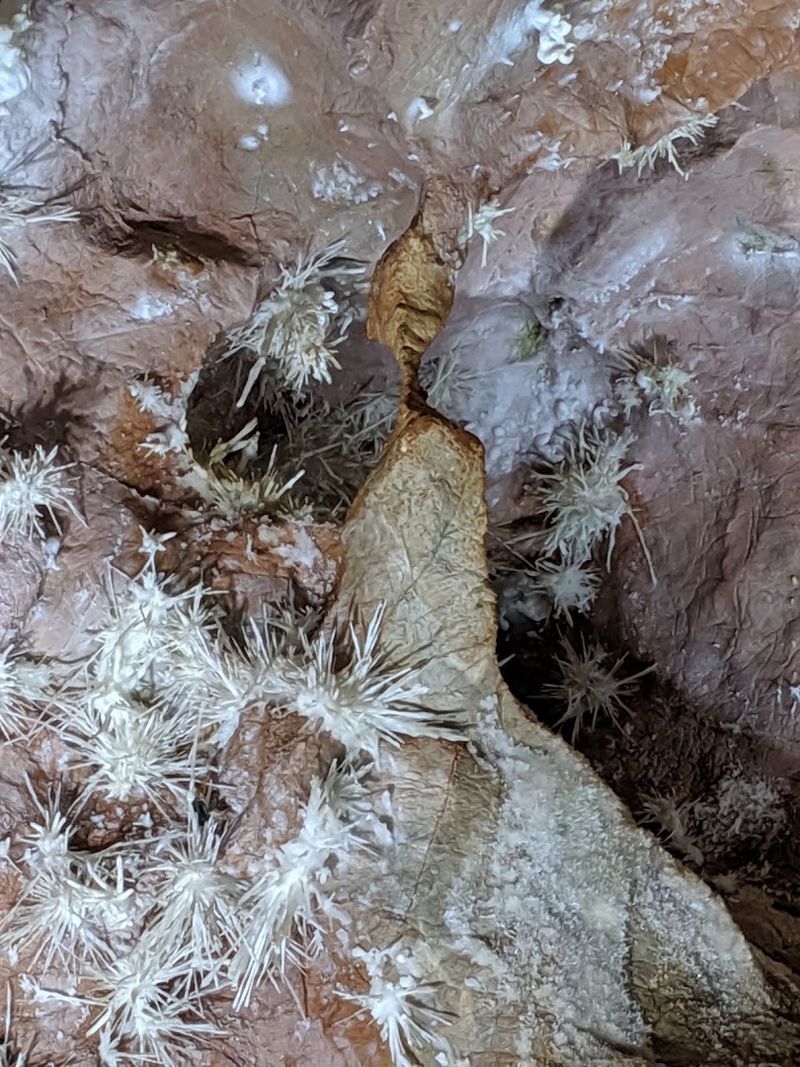
What makes Skyline Caverns genuinely extraordinary is the presence of anthodite crystals, formations so rare that only a handful of places worldwide can claim them.
These sparkling, snowflake-like structures grow in every direction, seemingly defying gravity with their delicate, branching arms.
The Chandelier is the most famous of them all, measuring 18 inches long and recognized as the world’s largest and oldest known anthodite formation.
Three underground streams flow through the cave, and a dramatic 37-foot Rainbow Waterfall adds a sense of movement and life to the tour.
Other highlights include Cathedral Hall, the Painted Desert, Fairyland Lake, and the Grotto of Nativity, each with its own distinct character.
Above ground, the Skyline Arrow Miniature Train and the Enchanted Dragon Mirror Maze offer entertainment for families once the underground tour wraps up.
Address: 10344 Stonewall Jackson Highway, Front Royal, Virginia
5. Natural Bridge Caverns – Natural Bridge, VA
Descending 347 feet below the Earth’s surface, Natural Bridge Caverns holds the title of the deepest commercial cavern on the entire East Coast.
Brothers Jake and Joe Fitzgerald discovered these limestone passages in the 1880s, though the caves did not open to the public until 1977 under their current name.
Before that, they were known as Buck Hill Caverns, a name that somehow undersells the scale of what waits below.
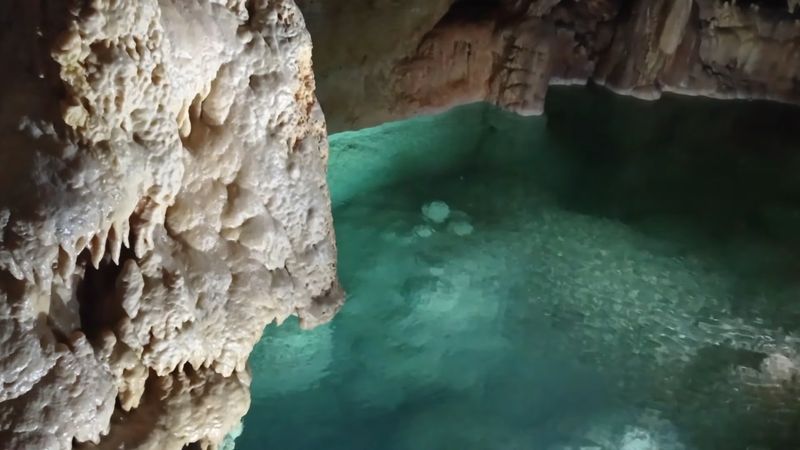
The Colossal Dome Room lives up to its name in every possible way, and Mirror Lake is one of those rare underground features that stops people mid-sentence. Crystal-clear water reflects the cave ceiling so perfectly that the boundary between rock and reflection disappears entirely.
The Well Room and Canyon Room each bring their own dramatic character to a tour that moves through thousands of years of slow mineral artistry.
Two species found nowhere else on Earth call this cave home: the Natural Bridge Cave Beetle and the Natural Bridge Isopod, tiny creatures fully adapted to permanent darkness.
The temperature stays at a cool 54 degrees Fahrenheit throughout.
For those who want something beyond the standard guided tour, lantern tours are also available, casting the formations in a warmer, more atmospheric glow that transforms the whole experience.
Address: 6477 S Lee Hwy, Natural Bridge, Virginia 24578
6. Dixie Caverns – Salem, VA
The story goes that in 1920, a dog named Dixie fell into an opening in the ground near a Salem farm, and two boys followed the sound of her barking straight into one of Virginia’s most charming cave systems.
Whether that tale is entirely accurate or not, the name stuck, and the cave opened to the public in 1923.
What followed was decades of widened passages, added steps, and a gradual transformation from rope-assisted adventure to a genuinely welcoming attraction.
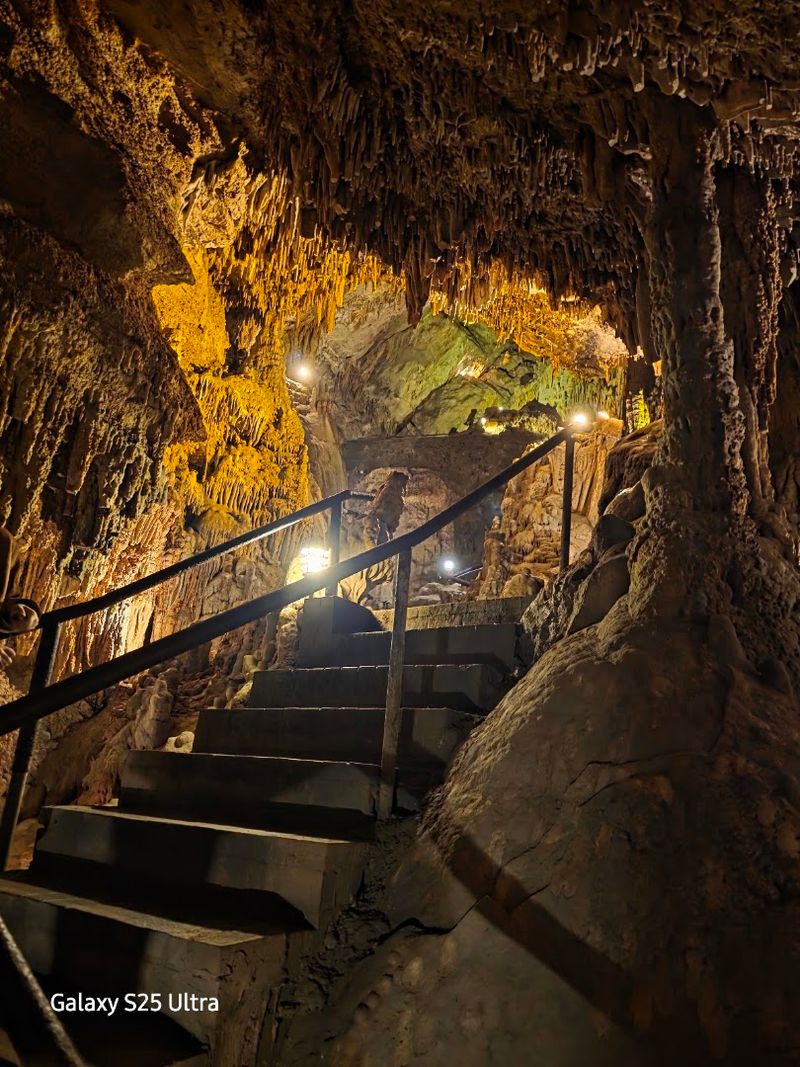
Dixie Caverns has a quirk that surprises most visitors: instead of plunging downward, you actually climb 48 steps called Jacob’s Ladder to reach the first chamber. The cave is carved within a hill and rarely extends more than 15 feet below ground level.
Rooms with names like Fairyland and Carrot Patch give the whole experience a whimsical, slightly playful energy that feels different from Virginia’s more dramatic caverns.
The Wedding Bell formation is the cave’s signature feature, a beautifully shaped flowstone that has inspired real couples to exchange vows beneath it over the years.
The Salem fault line is actually visible within the Grand Cathedral section, offering a tangible glimpse of geological forces at work.
Dixie Caverns is also the only known habitat of Plethodon dixi, a unique cave salamander species found nowhere else on the planet.
7. Gap Cave – Cumberland Gap National Historical Park, VA
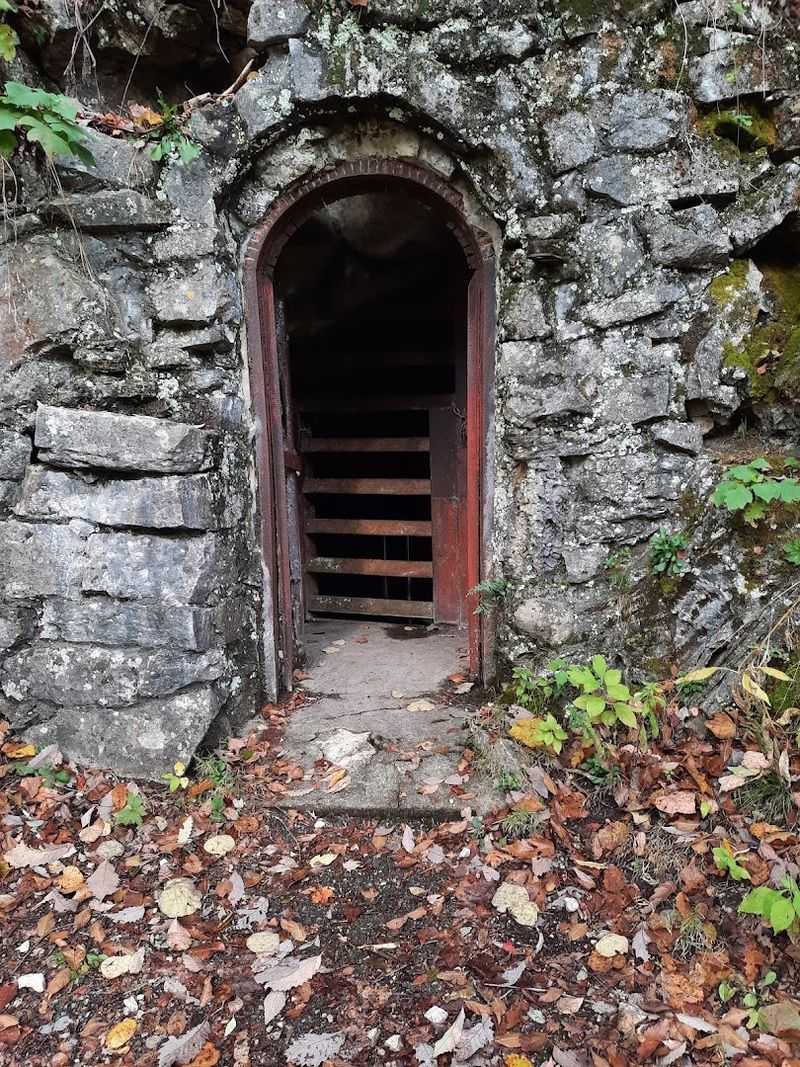
Few caves carry the weight of human history quite like Gap Cave, tucked beneath the Pinnacle Overlook inside Cumberland Gap National Historical Park.
Formerly called Cudjo’s Cave, this underground labyrinth was used by Native Americans, Civil War soldiers, and early settlers, with evidence of saltpeter mining suggesting human activity here even before 1800.
Significant vandalism once threatened its character, but restoration efforts in the late 1990s and early 2000s brought it back closer to its original condition.
The surveyed length of 18.5 miles ranks Gap Cave as the 42nd longest cave in the United States, and six known entrances lead into this single interconnected system.
Access is exclusively through guided, ranger-led tours, which are moderately strenuous and include a 1.5-mile hike to the cave entrance before descending 183 steps through five levels.
Many of these tours are conducted by lantern light, which adds a layer of atmosphere that electric lighting simply cannot replicate.
Inside, flowstone cascades and dramatic stalagmites create a geological backdrop that feels almost cinematic. Cave crickets, bats, salamanders, and crayfish all share this space, making it a living ecosystem rather than a static exhibit.
Exploring Gap Cave means literally walking through layers of both natural and human history, all within the boundaries of one of America’s most historically significant mountain passes.
8. New River Cave – Giles County, VA
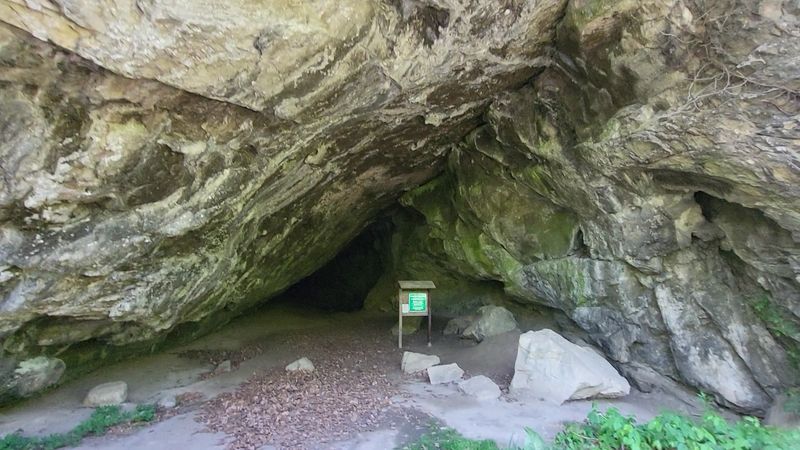
New River Cave in Giles County has been a favorite among serious cavers for nearly 70 years, and the numbers alone hint at why. Over seven miles of mapped passages wind through this complex underground system.
In 2014, the National Speleological Society purchased the property specifically to protect it and ensure future generations of explorers and researchers would always have access.
The Virginia Speleological Survey recognizes it as a state-significant cave, a designation earned through its geological, hydrological, and paleontological value.
An active, perennial stream flows through the cave’s depths, giving it a dynamic, ever-changing quality that static dry caves simply do not have. The overturned strata here are geologically remarkable, a visible record of the intense tectonic forces that once shaped this entire region.
That kind of raw, unfiltered geology is exactly what makes New River Cave feel less like a tourist attraction and more like a genuine encounter with Earth’s interior.
At least three bat species hibernate here, including the big brown bat, little brown bat, and tri-colored bat, though White-nose Syndrome has placed pressure on these populations.
Cave salamanders appear near the entrance, while seal salamanders favor the stream passages deeper inside.
A permit is required for access, which helps keep visitation responsible and the cave environment as intact as possible.
9. Mount Rogers Ice Caves – Mount Rogers National Recreation Area, VA
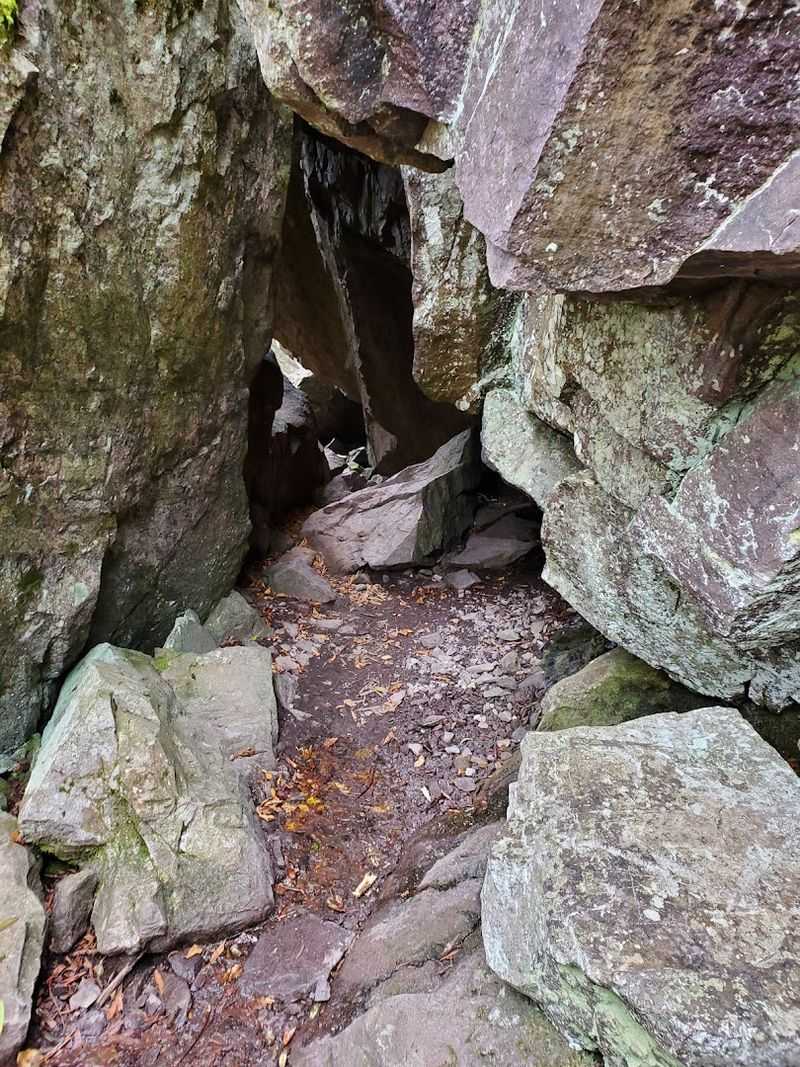
At 5,729 feet, Mount Rogers stands as the highest point in Virginia, and the landscape surrounding it carries the evidence of forces so ancient they are almost impossible to fully comprehend.
The term ice caves here does not refer to glittering frozen chambers you can walk through.
Instead, it points to the profound geological legacy of ancient Proterozoic glaciation that shaped this high-altitude environment millions of years ago.
Formations like the Konnarock Formation rocks preserve a record of ancient glaciers and long-vanished lakes, sitting alongside evidence of volcanic eruptions that predated any life we would recognize today.
The high elevation creates a noticeably cooler climate even in summer, and the spruce-fir forests here feel more like something you would encounter in Canada than in the American South.
Open mountain balds, enormous rock outcroppings, and a herd of free-roaming wild ponies complete a scene that is genuinely unlike anything else in Virginia.
The Mount Rogers National Recreation Area encompasses over 500 miles of trails, including significant stretches of the Appalachian Trail, making it a serious destination for hikers and backpackers who want wilderness on a grand scale.
This landscape was shaped by both volcanic fire and glacial ice, and that dual origin gives it a rugged impressiveness that no single cave tour could fully capture.
It rewards the effort of getting there.
