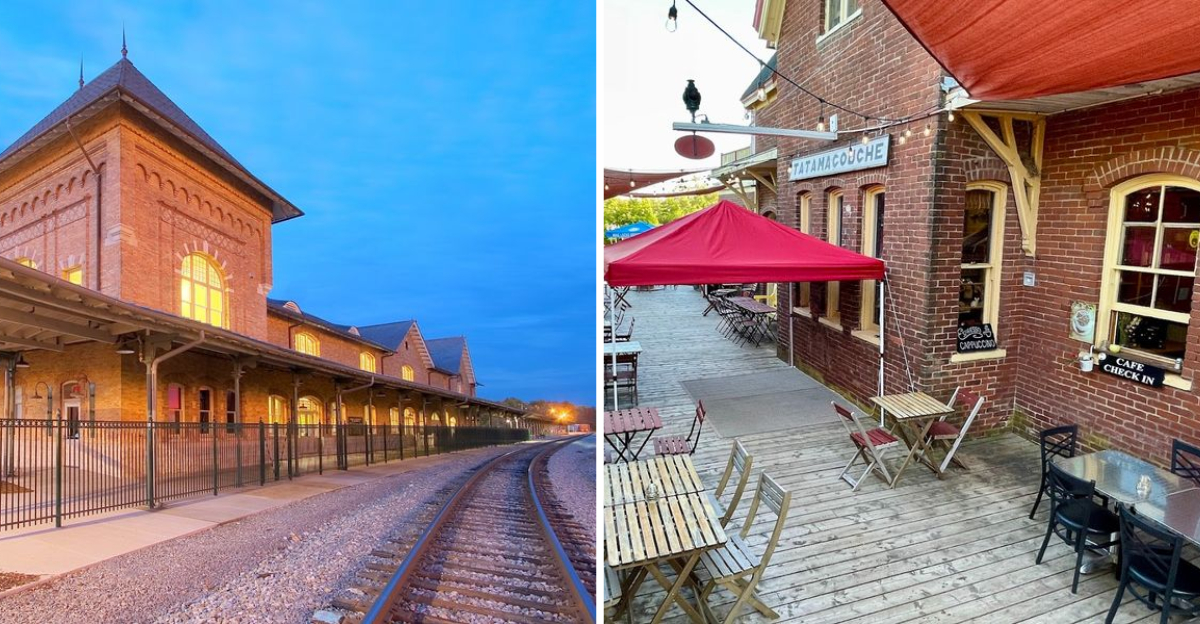
I have a soft spot for buildings that refuse to stay dead. There’s something satisfying about walking into a place where people once waited for trains and finding a menu instead of a timetable.
Virginia has a handful of these old stations that have been given second lives as hotels and restaurants, and honestly, the results are better than most new construction could ever manage.
Some serve up comfort food in former waiting rooms where travelers once paced with their suitcases.
Others let you sleep in rooms where passengers used to grab a quick nap before catching the next locomotive.
The architecture alone is worth the trip: those high ceilings, the old brick, the kind of craftsmanship you just don’t see anymore.
You’re here for the food, the history, or maybe just the novelty of eating dinner where a steam engine once pulled up. These places deliver on all fronts.
Just don’t expect the service to come with a conductor’s hat.
1. Olde Liberty Station (Bedford, VA)
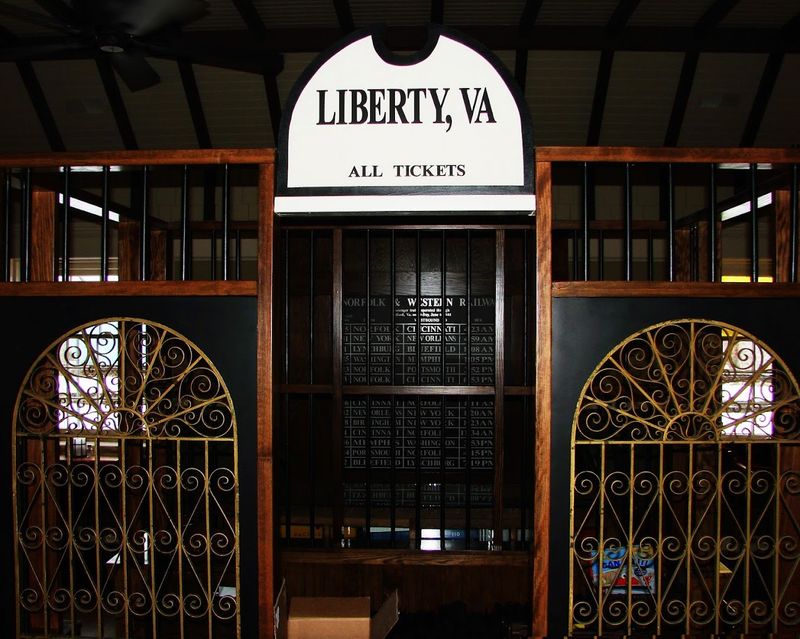
Some buildings carry weight that you can feel the moment you step inside, and Olde Liberty Station is absolutely one of them.
This former passenger depot in Bedford served the community for decades, handling not just travelers but also freight and mail until passenger rail ended in 1973.
Its walls have witnessed some of the most emotionally charged moments in American history.
The Bedford Boys of the 116th Infantry departed from this very station on their way to World War II, a fact that gives the whole place a quiet, solemn gravity.
A damaging fire in September 2009 threatened to erase all of that, but the community rallied.
The station reopened in February 2010 with its original stone walls carefully preserved.
Today it operates as a full-service, locally owned restaurant serving American fare.
Railroad memorabilia fills the interior, and a train board displaying the D-Day schedule hangs as a tribute to those who left from this platform.
Eating here feels less like dining out and more like sitting inside a living memorial. The food is comforting, the atmosphere is layered with meaning, and the history is impossible to ignore.
Address: 515 Bedford Avenue, Bedford, VA
2. The Virginian Hotel (Lynchburg, VA)
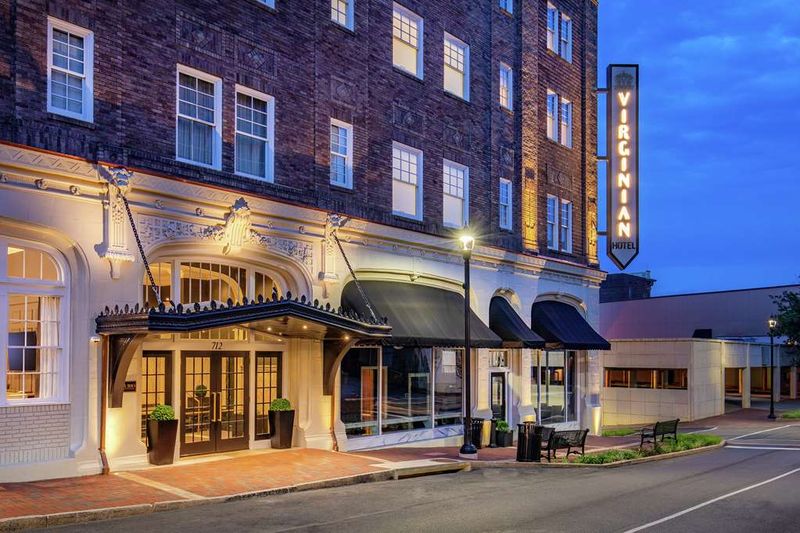
Not every grand building in Virginia started as a train station, but The Virginian Hotel in Lynchburg was born from the golden age of rail travel all the same.
Opened in 1913 in striking Beaux-Arts style, it was built to welcome passengers arriving by train in the finest possible fashion.
Ronald Reagan even stayed here in 1957, back when the hotel was still the social heartbeat of downtown Lynchburg.
Decades of change were not kind to the building. It cycled through use as a college dormitory and later subsidized housing before a four-year restoration effort began in 2014.
When it reopened in May 2018 as part of Hilton’s Curio Collection, the transformation was extraordinary.
The grand staircase and ballroom were preserved with care, while modern amenities were woven in seamlessly. Multiple dining options now fill the space, including an upscale restaurant and a rooftop dining experience that offers views across the city.
I think what makes this place so compelling is how it manages to feel both historic and alive at the same time. It is the kind of hotel that makes you want to dress up just a little before walking through the lobby door.
Address: 712 Church Street, Lynchburg, VA 24504
3. The Virginian Railway Passenger Station (Roanoke, VA)
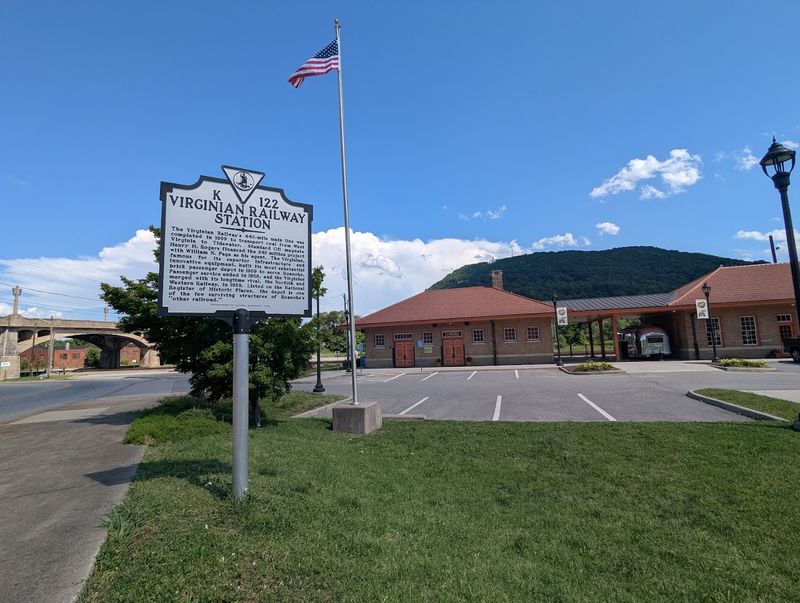
Built between 1909 and 1910, the Virginian Railway Passenger Station in Roanoke was the most significant brick station on the entire Virginian Railway line.
It acted as a critical division point between the New River and Norfolk Divisions, keeping trains and passengers moving efficiently across the region.
Passenger operations ceased in January 1956, and for years the building served as a retail store for feed and garden supplies.
A fire on January 29, 2001, exactly 45 years to the day of the last passenger train departure, caused serious damage. That eerie coincidence feels like the building demanding attention.
The Roanoke Chapter of the National Railway Historical Society received the property in 2005 and poured years into restoring it to its original splendor.
Completed in 2016, the restoration brought back the station’s architectural dignity. The building is now leased to a commercial tenant for catering events, helping fund ongoing preservation work.
Plans for the smaller baggage building include a museum dedicated to the Virginian Railway’s regional impact.
The station also serves as a public comfort stop along the Mill Mountain Greenway, making it a natural gathering point for cyclists and walkers exploring Roanoke’s outdoor trail network.
Address: 1402 Jefferson St. SE, Roanoke, VA
4. Bristol Train Station Event Center (Bristol, VA)
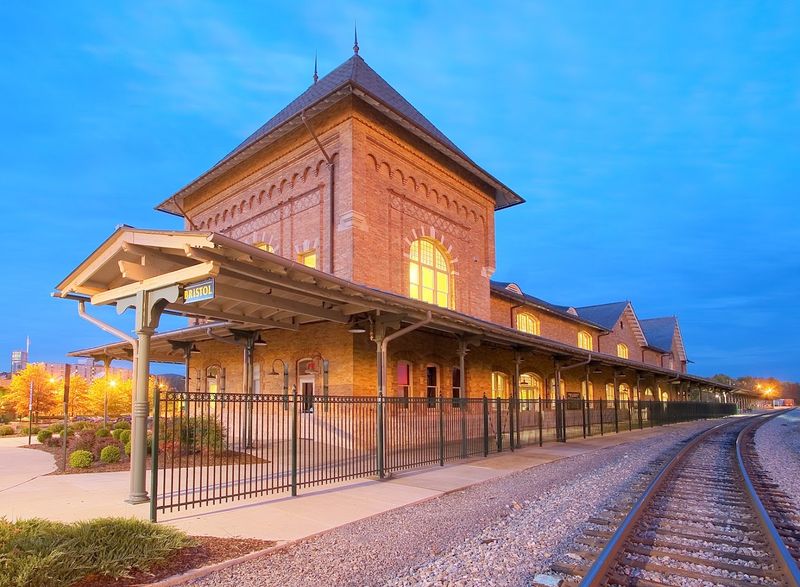
Bristol’s railroad story stretches all the way back to 1856, when the very first train station opened its doors in this border city.
The original structure was destroyed during the Civil War in 1864, and the town rebuilt not once but three times before the current station was completed in 1902.
At its peak, more than 20 passenger trains arrived and departed daily, making Bristol a genuinely busy rail hub.
One fascinating quirk of the early years involved different track gauges on either side of the state line, which meant passengers and freight had to physically transfer between trains at the border.
Passenger service finally ended in May 1971.
The station then briefly housed shops and dining establishments before falling into uncertainty.
The Bristol Trainstation Foundation stepped in during 1999 with a mission to restore the building’s original grandeur.
That restoration concluded in 2008, timed beautifully to coincide with Bristol’s sesquicentennial celebration.
Today the station functions as a vibrant event and wedding venue, offering over 7,500 square feet of flexible, beautifully restored space.
Freight trains still roll past on the adjacent tracks, adding a genuine sense of living history to every gathering held within these walls.
Address: 101 Martin Luther King Jr. Blvd., Bristol, VA 24201
5. Exchange Hotel (Gordonsville, VA)
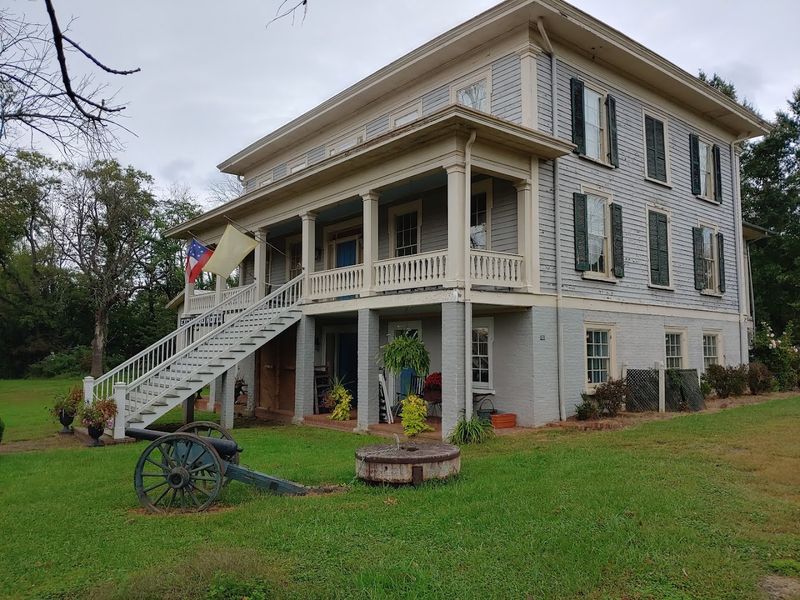
Richard F. Omohundro built the Exchange Hotel in 1860 right beside one of Virginia’s most important railroad junctions, and the timing could not have been more consequential.
The hotel was designed to give passengers on the Virginia Central Railroad a comfortable place to eat and rest, since train cars of that era offered neither dining nor sleeping facilities.
Its elegant high-ceiling parlors and sweeping veranda made it a genuinely appealing stop.
When the Civil War arrived, everything changed. The hotel was converted into the Gordonsville Receiving Hospital, where over 70,000 wounded soldiers from both Confederate and Union armies were treated.
After the war, it briefly served as a Freedman’s Bureau Hospital before returning to its original purpose as a hotel, a role it held until the 1940s.
Historic Gordonsville, Inc. acquired and restored the property in 1971, and today it operates as the Civil War Museum at the Exchange Hotel.
Artifacts including medical instruments, uniforms, and firearms fill the exhibit spaces, offering visitors a vivid window into wartime Virginia.
A bookstore rounds out the experience. Few buildings in the state carry this many layers of history within a single set of walls.
Address: 400 South Main Street, Gordonsville, VA
6. The Depot Lodge (St. Paul, VA)
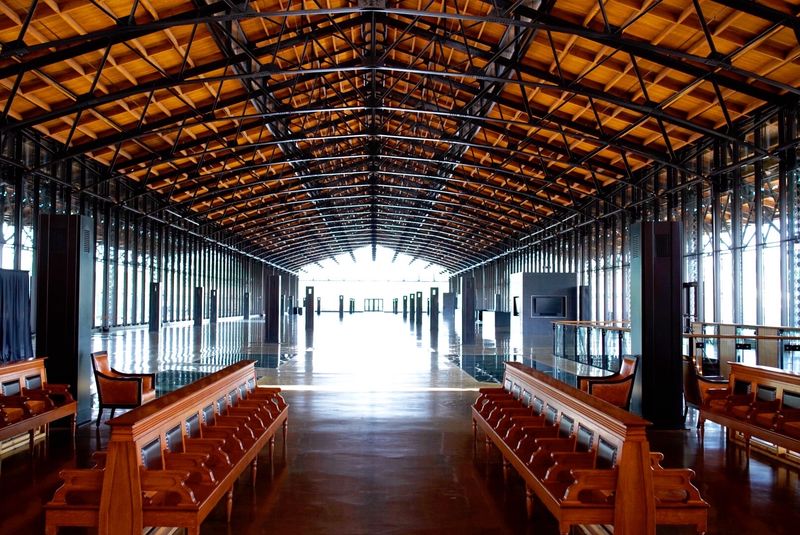
The structure that became The Depot Lodge started its life in 1909 as the terminal depot for the Potts Valley Branch line of the Norfolk and Western Railway.
Coal was king in this corner of Virginia, and the railroad was the artery that kept the whole economy moving.
St. Paul itself became a significant junction when the Norfolk and Western Railway arrived in 1890, followed by the Carolina Clinchfield and Ohio Railway in 1909.
Where those two lines crossed, coal and freight changed hands, and the depot sat at the center of all that activity. The mining industry drove everything here, from the jobs to the architecture to the rhythm of daily life.
That heritage is still tangible when you spend time in this part of southwestern Virginia.
Today, The Depot Lodge and several other historic buildings on the property have been carefully renovated into charming overnight accommodations.
The original architecture has been preserved with genuine attention to detail, so guests can feel the bones of the old depot beneath the modern comforts.
Staying here is a real chance to connect with a region whose identity was shaped entirely by rail and industry. It is quiet now, but the history speaks loudly.
7. C&O Railway Heritage Center Depot (Clifton Forge, VA)
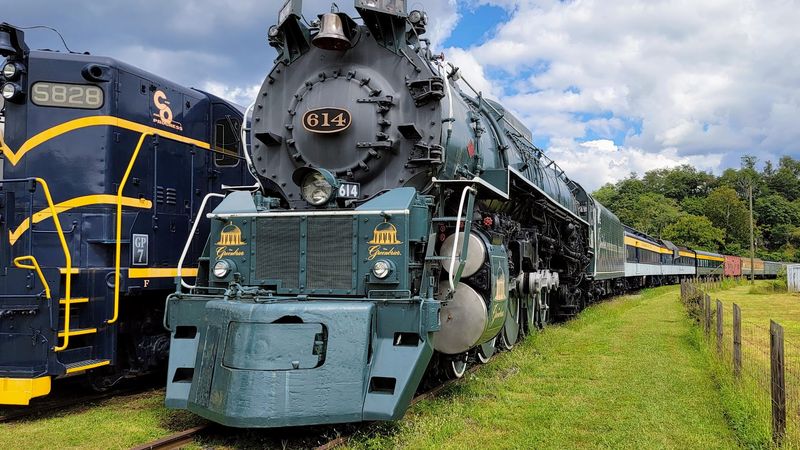
Clifton Forge was once one of the most important railroad towns in all of Virginia, employing over two thousand people at the height of C&O Railway operations.
Locomotives were serviced here before tackling the steep grades of the Alleghany Mountains heading west or the Blue Ridge Mountains heading east.
The area around the C&O shops was even known as West Clifton before it merged with Clifton Forge in 1906.
The C&O Railway Heritage Center now sits on the former grounds of the Smith Creek Yard, which once included locomotive repair shops, a classification yard, a passenger coach yard, and the railroad’s regional division headquarters.
That scale of operation is hard to picture today, but the center does a remarkable job of making it feel real.
At the heart of the museum is the meticulously restored 1895 Clifton Forge C&O Freight Depot, packed with indoor exhibits and an elaborate model railroad that draws visitors of all ages.
Outside, restored diesel-electric locomotives and vintage railcars are arranged across the grounds, alongside a reconstructed switch tower and a replica circa-1900 passenger station housing the gift shop.
Active CSX trains still pass directly beside the property, which adds a wonderful sense of continuity to the whole experience.
Address: 705 Main St, Clifton Forge, VA 24422
8. The Train Station Inn (McCoy, VA)
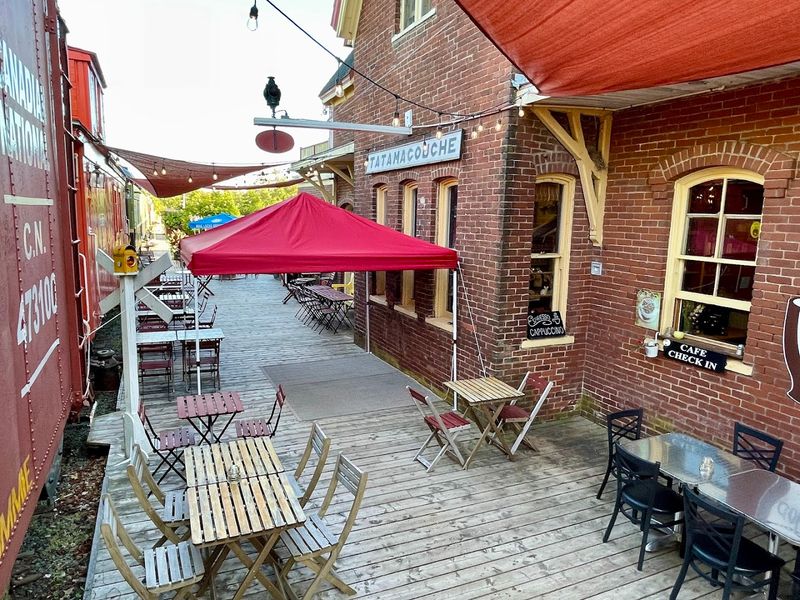
McCoy, Virginia, sits quietly in Montgomery County, tucked into a landscape shaped for generations by coal mining and the rail lines that served it.
The railroad was not just transportation here, it was the reason communities like McCoy existed at all.
Nearby Christiansburg saw its first train service arrive in 1854, and the depots that followed became anchors for the surrounding rural areas.
A historic train station built in 1903 in this region has reportedly been adapted into an event space with a small kitchen, offering a glimpse of how these small depots are finding new purpose.
The details about this particular conversion are not widely documented, which itself says something about how many of Virginia’s smaller railroad heritage sites fly under the radar.
That quiet obscurity is part of their charm.
McCoy retains a genuinely rural character, the kind of place where the pace slows down and the landscape does most of the talking.
Whether The Train Station Inn operates as a full lodging destination or primarily as a private event venue, the spirit of the original depot seems to live on in the structure.
For travelers curious about Virginia’s lesser-known railroad corners, places like this offer a more intimate and unhurried kind of discovery.
9. Ashland Train Station (Ashland, VA)
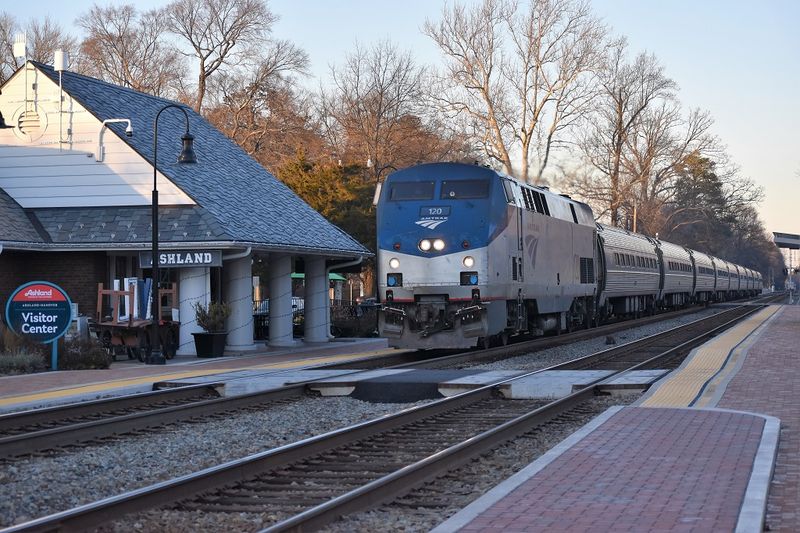
Ashland has one of the most unusual and endearing relationships with its train station of any town in Virginia.
The tracks run right through the middle of town along a charming cobblestone median, which means trains pass close enough that you can practically wave to the passengers from the sidewalk.
The current Colonial Revival building was constructed in 1923 by the Richmond, Fredericksburg and Potomac Railroad, replacing earlier structures from 1866 and 1890.
Ashland itself was originally developed in the late 1840s as a railroad resort destination, complete with a racetrack, which explains why the town’s identity has always been so closely tied to rail travel.
The station once had segregated waiting rooms, a painful chapter that has not been erased but transformed.
That former waiting room now serves as a museum housing RF&P railroad artifacts including blueprints, model trains, and local historical accounts.
Today the station is both an active Amtrak stop for Northeast Regional trains and the town’s official visitor center. A trackside porch with oversized whitewashed columns gives train enthusiasts the perfect perch for watching arrivals and departures.
New brick platforms and improved accessibility features were completed in June 2022. It is a place that manages to be both historically rich and genuinely useful every single day.
Address: 112 North Railroad Avenue, Ashland, Virginia
10. Boykins Depot Museum & Railroad Park (Boykins, VA)
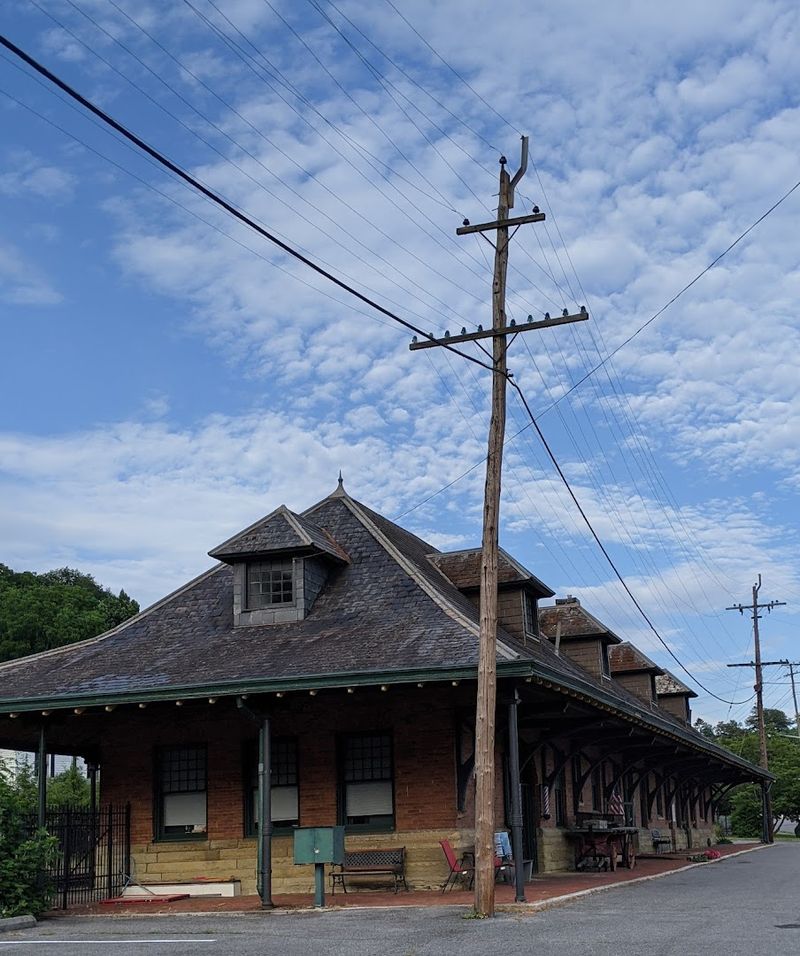
Few train stations in Virginia can claim a history stretching back to 1840, but the depot at Boykins is genuinely that old.
It originally served the Portsmouth and Roanoke Railroad, which later became the Seaboard and Roanoke Railroad, and the town of Boykins, initially called Boykins Depot, grew up entirely around this stop.
Edward Beaton, who played a key role in the town’s early development, served as both the first railroad station master and first postmaster.
That kind of origin story, where a single depot essentially calls a community into existence, is rare and worth appreciating. Limited freight rail service still operates through Boykins today, a quiet reminder that the railroad never fully let go.
The building itself is a simple vernacular frame structure, unpretentious and honest in the way that only genuinely old things can be.
The depot has been transformed into a country store where antique automobiles and local historical artifacts are displayed alongside railroad memorabilia.
It functions as a repository for Southampton County’s rural and railroad heritage, preserving the kind of everyday history that bigger museums often overlook.
Visiting Boykins feels like finding something most travelers speed right past, a small town that kept its story intact and decided to share it generously.
Address: Boykins, VA
