Some history museums give you a room full of glass cases; this Maryland destination gives you hundreds of acres and basically tells you to start walking.
The outdoor museum occupies the site of Maryland’s first capital and combines living-history exhibits with archaeology, reconstructed spaces, historic landscapes, and stories stretching back to the state’s earliest colonial years.
That means a day here can involve far more than reading plaques, with the landscape itself helping connect nearly four centuries of people, politics, work, conflict, and everyday life.
It is especially good for anyone whose attention span starts negotiating an escape route after the third museum display case.
Maryland history feels considerably less like homework when you can actually move through the place where so much of it happened.
The Founding Story on the Banks of the St. Mary’s River
My walk started near the water, which makes sense, because everything about this place started there too. In March 1634, English colonists arrived aboard two ships, the Ark and the Dove, sent under the vision of George Calvert, Lord Baltimore, and led by his son Leonard Calvert.
What they built became Maryland’s capital for 61 years. Catholics and Protestants settled side by side, an unusual arrangement in a century where religion often meant conflict.
Some genuine firsts happened on this ground. The Maryland Toleration Act of 1649 aimed to protect religious freedom for Trinitarian Christians.
In 1642, Mathias de Sousa became the first legislator of African descent in North America, and in 1648, Margaret Brent petitioned for the right to vote in English America.
Then, in 1695, the capital moved to Annapolis. The old city emptied out and slowly turned into farmland.
Here is the twist I love. That quiet abandonment is exactly why so much survives.
Nobody paved over St. Mary’s City, so the foundations, trash pits, and building outlines stayed hidden safely beneath the plow zone for centuries.
Reading interpretive signs while looking at plain open meadow takes a little imagination at first. Give it ten minutes and the layout starts to click.
Practical tip for anyone visiting: begin at the visitor center and pick up a map before heading outdoors. The site is spread across a large landscape, and knowing the route saves plenty of backtracking later in the day.
Climbing Aboard the Maryland Dove
Few things stop visitors in their tracks like the sight of masts rising above the shoreline. The Maryland Dove is a 65-foot square-rigged replica of the small pinnace that sailed with the original settlers in 1634.
The real Dove mattered enormously. Once the larger Ark returned to England, the colonists needed a vessel of their own for hauling cargo and staying connected to the wider Atlantic world.
A newer and more historically accurate version of the ship, built by the Chesapeake Bay Maritime Museum, launched in 2022. Decades of fresh research into 17th-century shipbuilding shaped its design.
Visitors can walk right onto the deck. I ducked below and immediately understood why sailors of that era were not known for personal space.
Ropes, wooden blocks, canvas, and tar create a smell that no exhibit case can copy. It is easily one of the museum’s most popular stops, and for good reason.
The dock area also explains something maps cannot. Water was the highway of the Chesapeake, and everything from letters to tobacco barrels moved by boat.
A small suggestion: bring shoes with decent grip, since decks and ramps can be slick after rain. Also, plan a little extra time here if traveling with kids, because most of them refuse to leave quickly.
Standing at the rail looking upriver, the idea of crossing an ocean in something this size stops feeling like history and starts feeling like courage.
Chores, Crops and Hearth Smoke at Godiah Spray Tobacco Plantation
Smoke drifting from a chimney was my first clue that someone was cooking. The Godiah Spray Tobacco Plantation recreates a middling-class farm set in the year 1661, hidden a short walk from the Town Center.
Timber buildings, heirloom gardens, and working fields fill the site. Corn and tobacco grow using 17th-century methods, which look surprisingly labor heavy up close.
Heritage livestock wander their pens, hearth cooking bubbles away, and woodworking tools get put to real use. Interpreters explain tasks while doing them, so questions feel natural rather than staged.
Worth knowing: the Spray family itself is fictional. The details, though, come from careful research, including a rare ten-year record kept for the orphans of Robert Cole, one of the best windows into everyday British colonial life anywhere in the Chesapeake.
Tobacco explains much of what visitors see. It functioned as currency in the colonial economy, drained nutrients from the soil, and demanded constant labor.
That labor came from families, indentured servants, and enslaved people, and the site does not skip past those difficult realities. Maryland’s legal and labor systems were still forming, and the plantation shows a world both recognizable and very different from later American plantations.
Practical note: paths here are dirt and grass, so sturdy footwear helps. Summer afternoons get warm with little shade near the fields.
Sitting on a bench listening to chickens argue, I found this the most oddly relaxing part of the whole visit.
Inside the Reconstructed State House of 1676
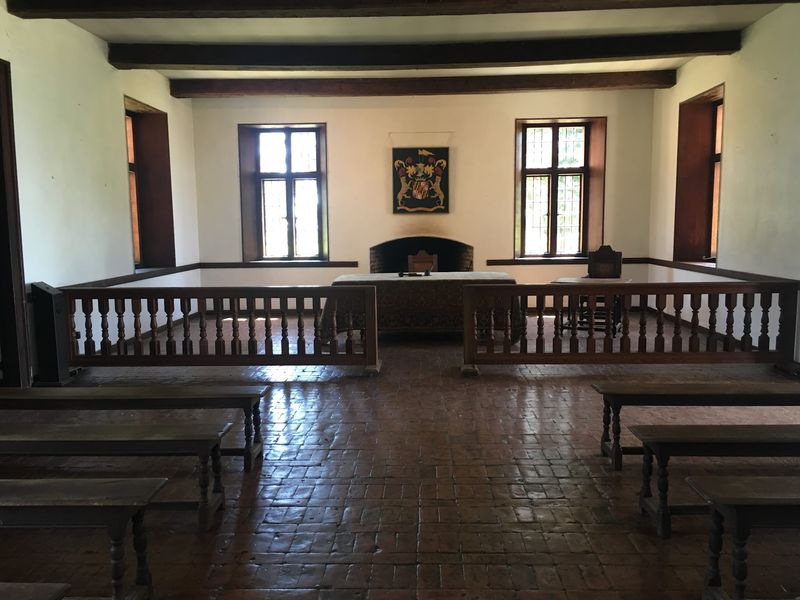
Brick walls and tall chimneys announce the State House of 1676 long before the path reaches it. Of all the buildings on site, this one carries the strongest sense of authority.
The structure is a replica of Maryland’s first capitol, home of the colonial assembly. It was built in 1934 to mark the colony’s 300th anniversary.
Inside, baronial fireplaces and leaded glass windows echo the grandeur of the original. The main chamber feels formal and echoey, the kind of room where voices carry whether you want them to or not.
Decisions made in the original building shaped the colony for 61 years. Laws were argued, passed, and occasionally reversed as political and religious tides shifted.
An interesting turn came after 1695. Once the capital moved to Annapolis, the original statehouse was converted into a Protestant church, a change that says plenty about the era’s shifting power.
Interpreters sometimes stage assembly sessions, and visitors can sit in on the debate. Younger travelers tend to enjoy the chance to vote on something.
The building also works nicely as a landmark. Standing near the State House lawn, most of the outdoor exhibit areas become easy to locate.
Tip for photographers: morning light hits the brick beautifully, and the lawn stays fairly empty early in the day.
Representative government in America began in modest rooms like this one, which is humbling when you notice how small the chamber actually is.
The Woodland Indian Hamlet and the Yaocomaco Story
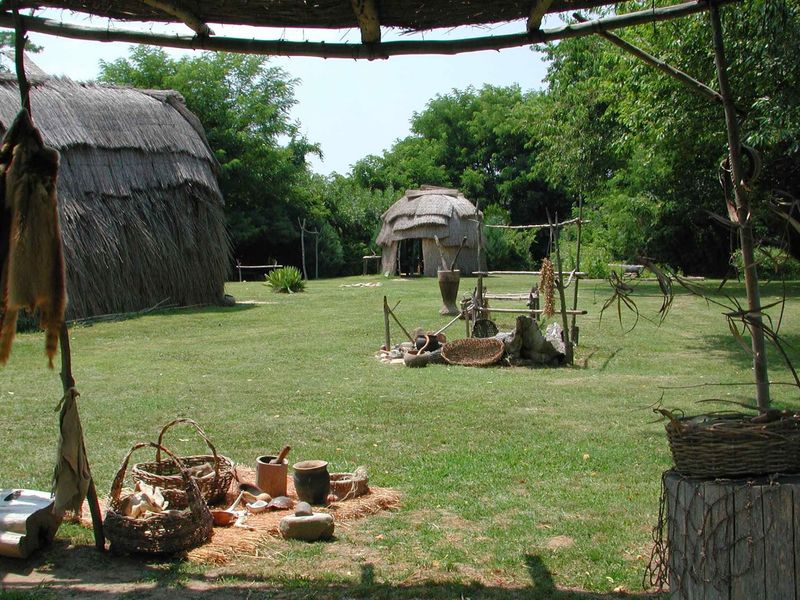
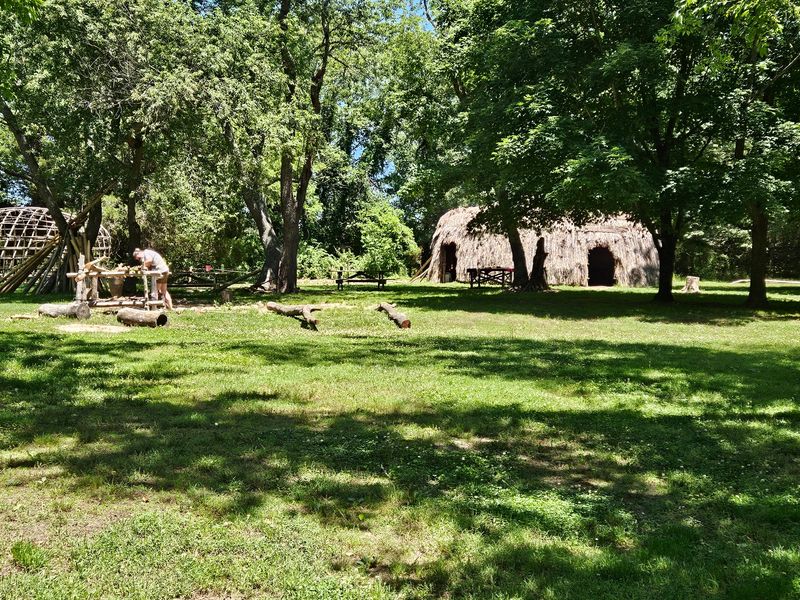
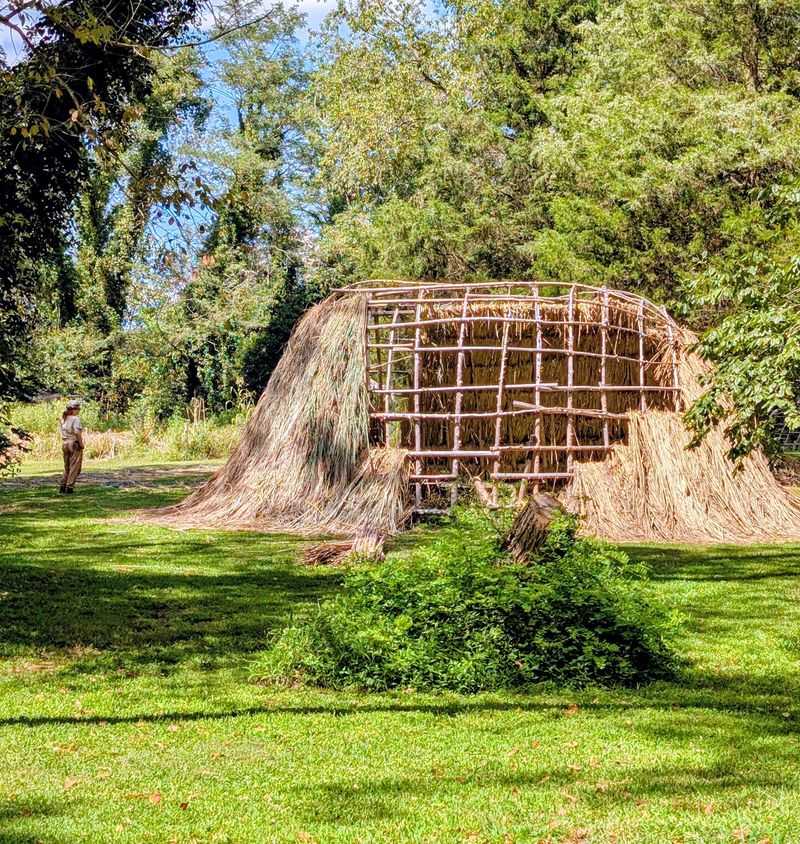
Bark-covered longhouses appear among the trees, low and rounded, built to hold warmth. The Woodland Indian Hamlet recreates a Yaocomaco village, and honestly it shifted how I understood the rest of the site.
Long before English ships arrived, the land that became St. Mary’s City was a Yaocomaco town. The colonists did not settle empty wilderness.
Inside a reconstructed dwelling, woven mats, storage baskets, and sleeping platforms show a household built entirely from local materials. Reeds, saplings, bark, clay, and animal hide did the work of nails and glass.
Interpretive displays explain hunting, fishing, and farming practices tuned closely to the seasons. Corn, beans, and squash grew in nearby plots.
What stands out is the efficiency. Nothing here was wasted, and everything served more than one purpose.
Demonstrations cover tool making, cordage, and food preparation depending on the day and staffing. Even without a program running, the quiet clearing invites a slow look around.
The hamlet also raises questions the museum does not shy away from, including how relations between the Yaocomaco and English settlers changed over time.
Bring water and consider insect repellent, since the area sits in woodland shade. Mosquitoes take full advantage of summer evenings.
Standing inside a witchott with sunlight leaking through the smoke hole, the phrase 400 years of history suddenly felt far too short. People lived on this ground for thousands.
The Brick Chapel and Maryland’s Radical Idea
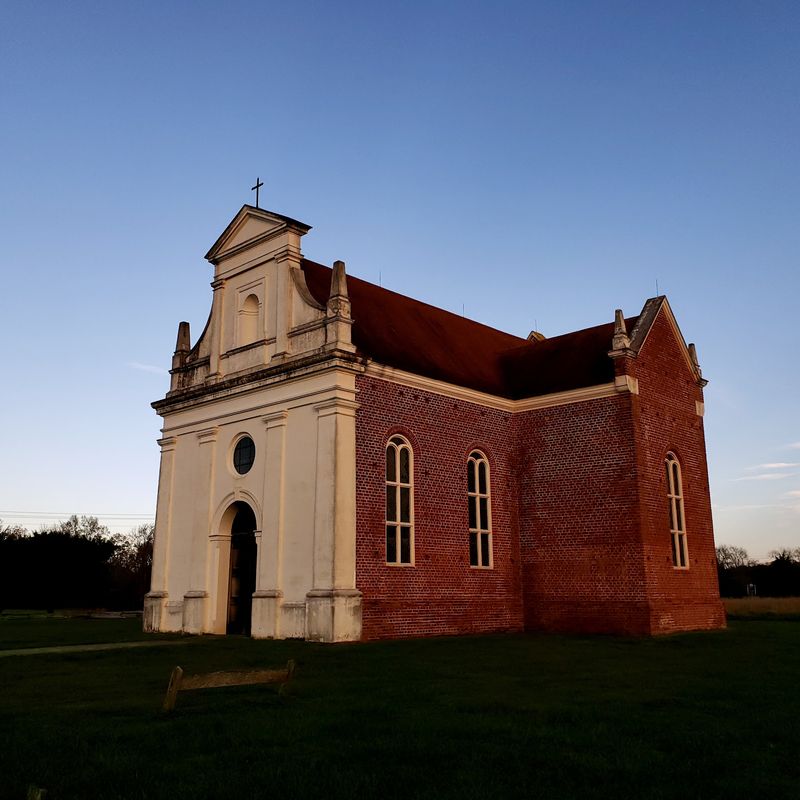
Red brick against green grass, and a shape unlike anything else on the property. The Brick Chapel, originally built around 1667, has been reconstructed directly on its original foundation.
That detail matters. The walls rise from the exact spot where 17th-century builders laid theirs.
Historians consider it the first monumental Catholic church in the English colonies. Given that Catholics faced widespread persecution across the British Isles at the time, its existence was remarkable.
Religious freedom was central to Lord Baltimore’s plan for Maryland. Catholics and Protestants living as neighbors was a genuinely radical arrangement for the 1600s.
The chapel served Maryland’s Catholic community until 1704, when political change forced its closure. It was later dismantled, and its bricks scattered.
Archaeologists rediscovered the foundation, along with lead coffins found beneath the floor, which drew significant scientific attention. That research helped guide the reconstruction visitors see today.
Inside, the space feels stark and cool, with light falling through arched windows onto brick and plaster. Interpretation focuses on how the building was made as much as on worship.
Masonry fans will appreciate the handmade bricks and traditional techniques used in rebuilding.
A quiet moment here pairs well with the earlier stops. After the noise of a working plantation and a ship’s deck, the chapel offers stillness and a reminder that ideas, not just buildings, were being constructed in this settlement.
Watching Archaeologists Dig Up a Lost City
Neat squares cut into the soil, string grids, and buckets lined along the edge. Seeing an active excavation up close was an unexpected highlight of the day.
Archaeology has anchored this museum since the 1960s. More than 300 archaeological sites have been excavated within the old city limits.
Because the settlement was abandoned rather than developed, preservation below the plow zone is unusually good. Post holes, cellars, and refuse pits survived where a modern town would have destroyed them.
St. Mary’s City also runs the longest-operating historical archaeology field school in North America, and its methods have influenced the wider field.
During field seasons, visitors can often watch students and researchers at work. Asking what they have found that morning usually gets an enthusiastic answer.
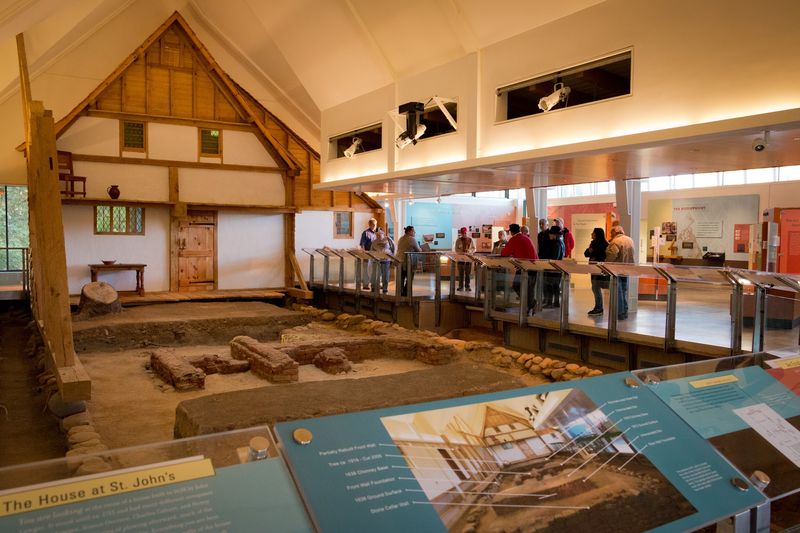
The St. John’s Site Museum goes deeper into technique and discovery, protecting the remains of one of the settlement’s earliest and most important houses. Displays there show how fragments of pipe stems, ceramics, and nails become evidence.
Artifacts recovered here speak for Native Americans, European colonists, and enslaved Africans alike. Together they let historians rebuild a city that vanished from view for centuries.
Timing tip: digs generally run in warmer months, so check the schedule before visiting if watching excavation is a priority.
What sticks with me is the pace of it. Uncovering a lost capital happens one trowel scrape at a time, and nobody here seems in a hurry.
Shop, Inn and Printing Press in the Town Center
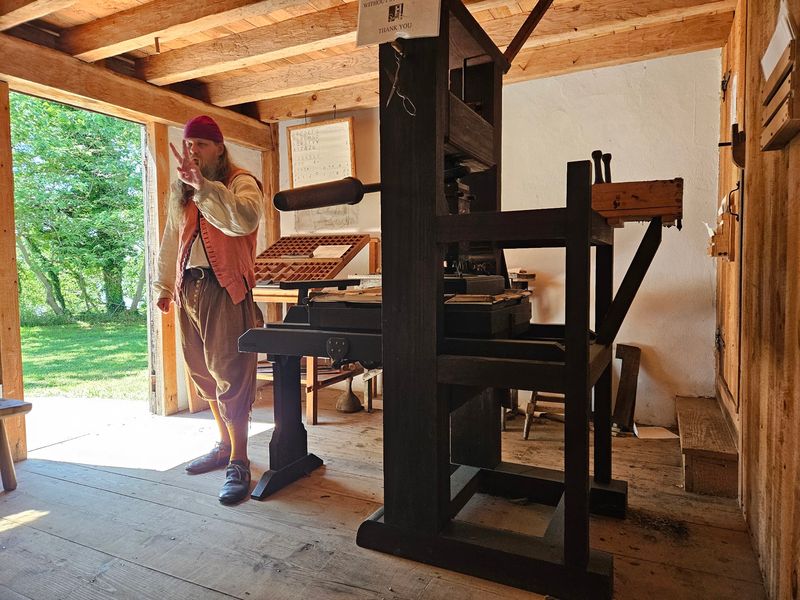
The Town Center gave my visit a different rhythm, busier and more social than the fields. Reconstructed buildings cluster here, marking where Maryland’s first capital did its business.
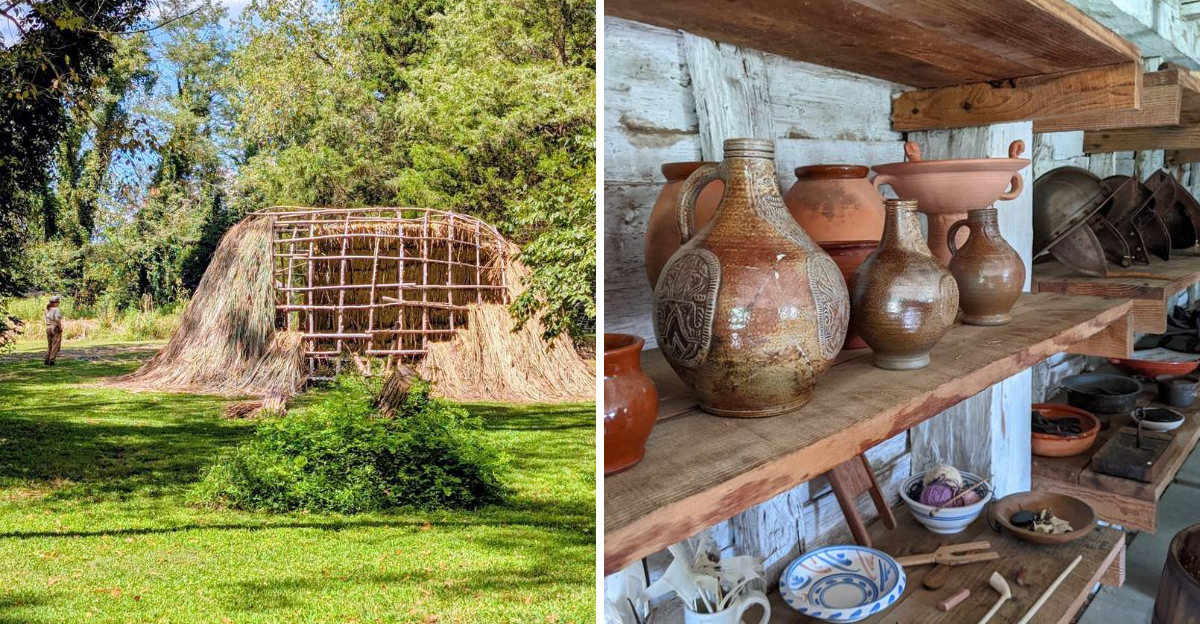
Inside the mercantile, shelves hold reproductions of goods colonists wanted badly. Cloth, tools, ceramics, and small imported luxuries suggest a community tied firmly to Atlantic trade.
Nearby sits an ordinary, the period word for an inn. Travelers, assembly members, and locals gathered in rooms like these to eat, talk, and swap news.
My favorite stop was the printing press. St. Mary’s City was home to the first printer south of Boston, which surprised me.
Watching type set by hand explains why printed pages were treasured. Each letter is placed individually, inked, and pressed with real muscle.
Demonstrations show how information spread across a colony with no newspapers as we know them. Laws, notices, and pamphlets shaped opinion and power.
Living history interpreters move between buildings, sometimes in character, sometimes explaining the research behind what they do. Both approaches work well.
Practical note: the Town Center sits close to the visitor center, making it a good starting point on a short visit or a stop when weather turns.
Small details charmed me most. A ledger left open on a counter, a stack of blank paper waiting for ink, and the faint smell of wood and linseed oil made the place feel paused rather than preserved.
Stories of Freedom and Resilience at the Brome Plantation
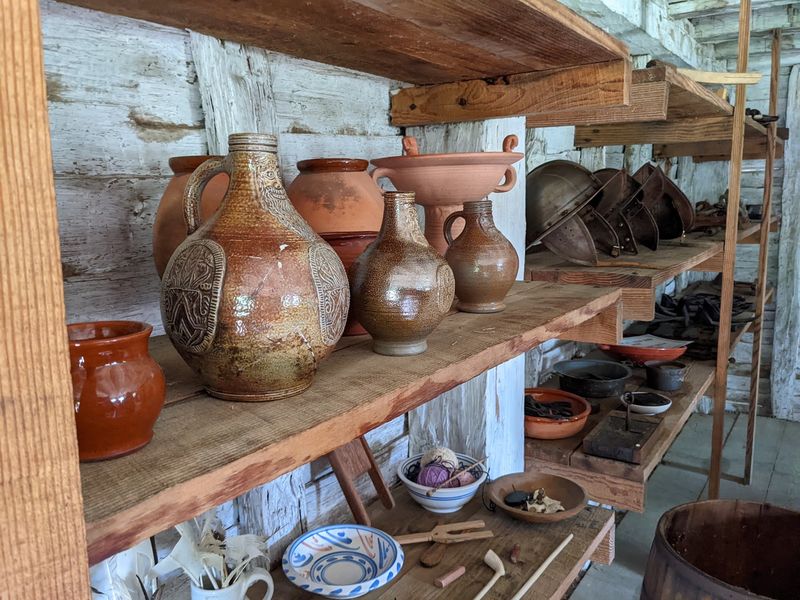
Some of the most important interpretation at this museum sits in a plain building that could easily be overlooked. The Struggle for Freedom exhibit occupies a structure once part of the Brome Plantation.
Displays trace the lives of African Americans in this region from before the Civil War. Slavery, labor, family, and the long fight for freedom are handled with care and clarity.
The exhibit avoids abstraction. Documents, objects, and research about specific households make the history concrete.
Mathias de Sousa also appears throughout the site. An indentured servant of African descent, he arrived with the colony’s founding voyage in 1634.
After completing his indenture, de Sousa worked as a merchant and took part in the Maryland Assembly in 1642. For his time, that path was extraordinary.
Plaques and interpretive panels across the grounds commemorate early African American lives, contributions, and struggles. Together they correct the idea that colonial Maryland was a two-group story.
Reading these panels after visiting the tobacco plantation changed how I understood those fields. Labor systems and legal codes evolving in the 17th century had consequences that lasted generations.
Allow time for this stop rather than squeezing it in at the end. The material rewards slow reading.
Between reconstructed buildings, ongoing excavation, living history, and honest storytelling, this open air museum turns four centuries into something you can actually walk through.
Address: 18751 Hogaboom Ln, St Marys City, MD 20686
