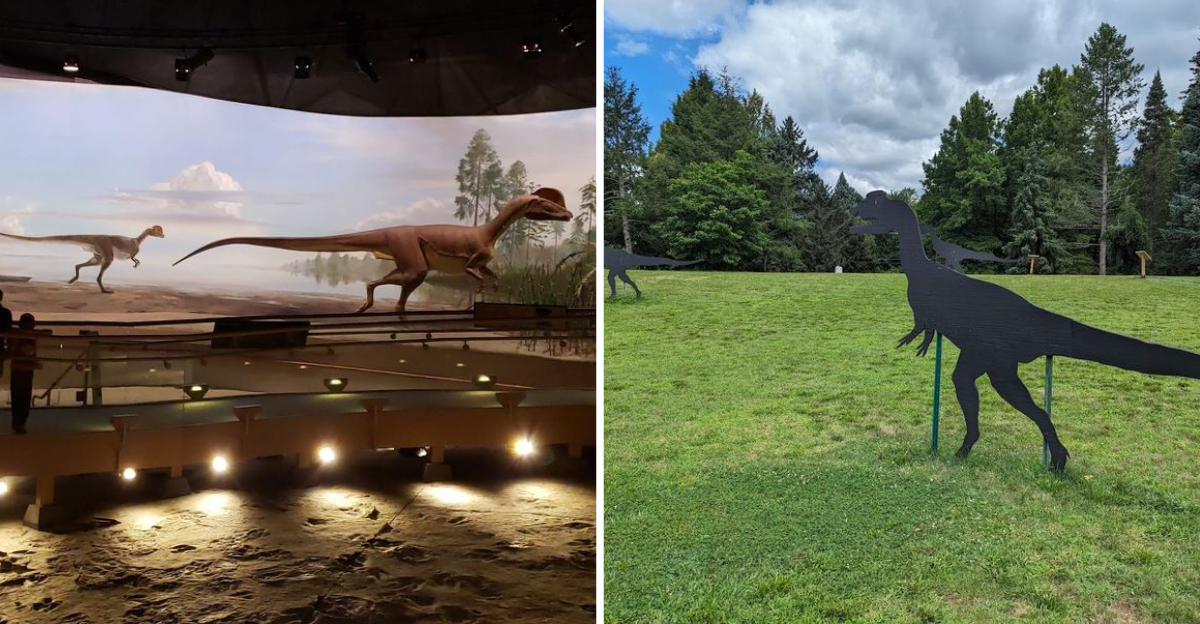
Crouching down and looking at a footprint left by a creature that roamed the earth 200 million years ago is genuinely surreal. Connecticut has one of those rare places that makes history feel completely real and within reach.
I remember pulling into the parking lot and already feeling that low hum of excitement, the kind you get when you know you are about to see something truly unusual.
The park sits on 80 acres and protects one of the largest dinosaur track sites in all of North America, which is a remarkable fact for a small New England state.
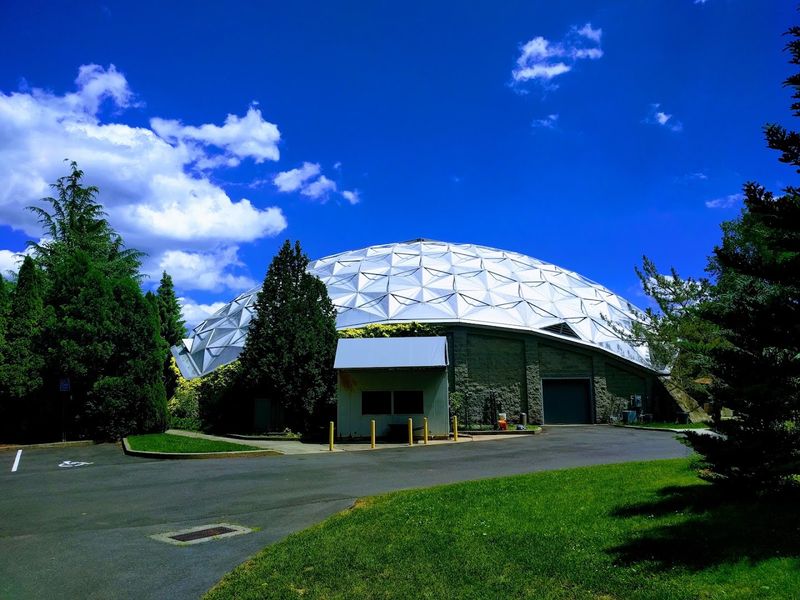
A geodesic dome covers roughly 500 preserved footprints, and outside, nature trails wind through wetlands, meadows, and ancient plant species.
I spent hours walking those trails, trying to imagine what the landscape looked like when those tracks were fresh.
Bringing curious kids or just looking for a day trip with real substance?
This place absolutely delivers.
The Geodesic Dome and the Fossil Trackway
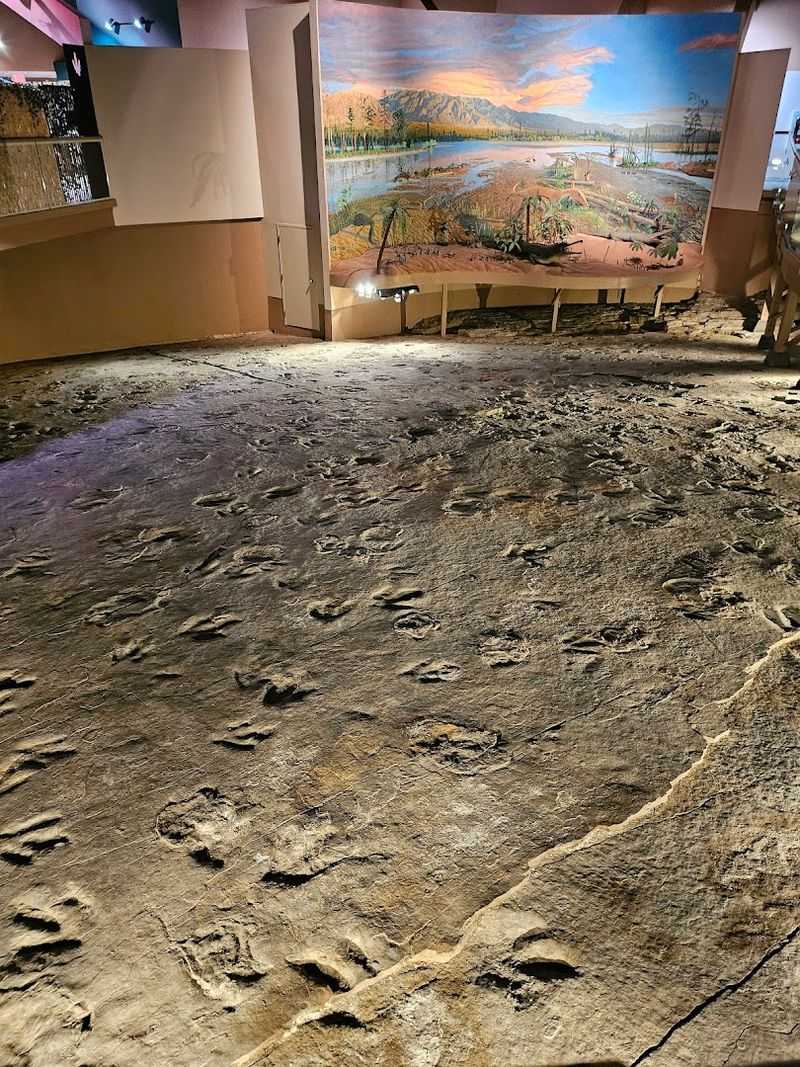
The moment you step under that enormous geodesic dome, the scale of what you are looking at genuinely takes a second to sink in. Beneath you, embedded in ancient sandstone, are around 500 early Jurassic dinosaur footprints that have survived for approximately 200 million years.
The dome was literally built over the tracks to protect them, which means you are not looking at replicas or reconstructions.
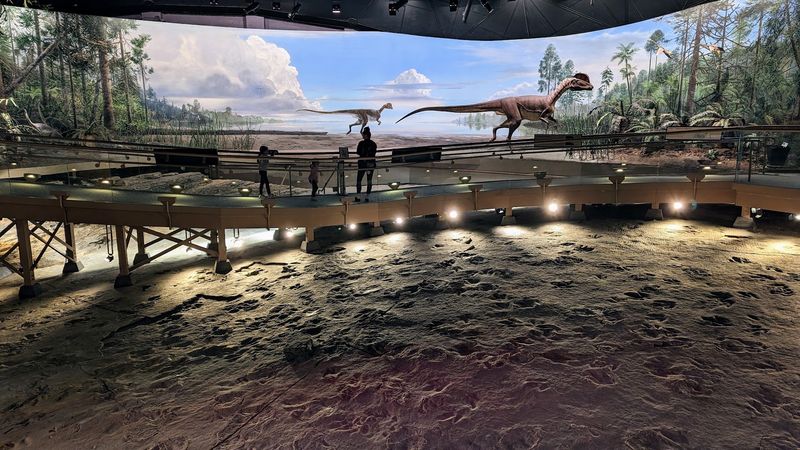
A ramp inside gives you a bird’s-eye view of the trackway, making it easy to trace the path these animals once walked. Most of the prints are three-toed and classified as Eubrontes, believed to have been made by a large theropod closely related to Dilophosaurus.
Eubrontes was officially named Connecticut’s state fossil back in 1991, which feels like a well-deserved honor.
The original excavation site actually contained more than 2,000 tracks, but many were carefully reburied to preserve them naturally. What remains visible is still breathtaking.
Seeing that many footprints laid out in real sandstone, knowing they were made by living animals, creates a connection to deep time that no textbook can quite replicate.
The Discovery That Started It All
Back in August 1966, a bulldozer operator named Edward McCarthy was clearing land for a new state office building when his machine scraped across something unexpected. What he uncovered turned out to be one of the most significant paleontological discoveries in American history.
The site quickly drew attention from scientists and state officials who recognized just how extraordinary the find really was.
More than 2,000 dinosaur tracks were identified at the location, with over 1,800 confirmed as early Jurassic in origin. The sheer number of prints suggested this area was once a heavily traveled path for large theropod dinosaurs, moving across a muddy floodplain that eventually hardened into stone.
It is the kind of accidental discovery that reminds you how much history is still buried just beneath the surface.
The state moved quickly to protect the site, and Dinosaur State Park was formally established to preserve it. By 1968, it had been designated a Registered National Natural Landmark, cementing its importance in the scientific community.
The story of how it was found adds a layer of drama to every visit, knowing that a construction project nearly erased this window into the Jurassic world entirely.
The Dilophosaurus Model and Museum Exhibits
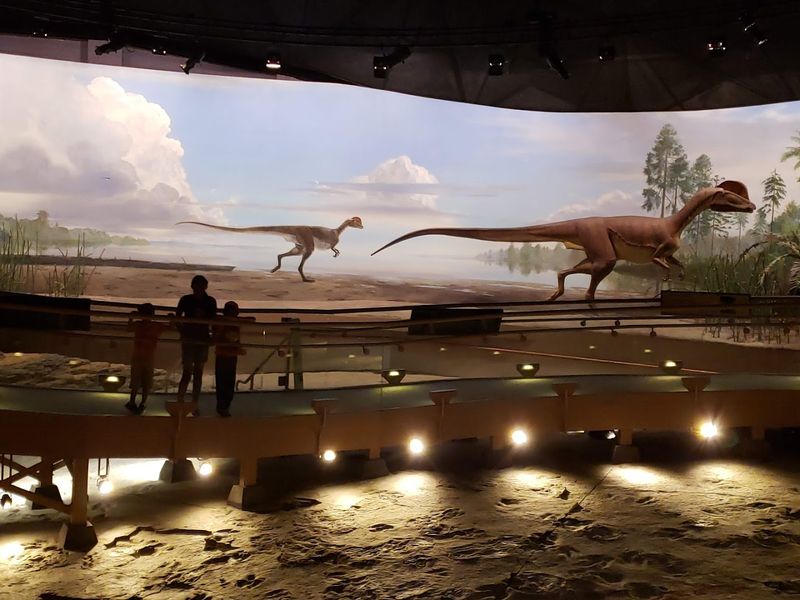
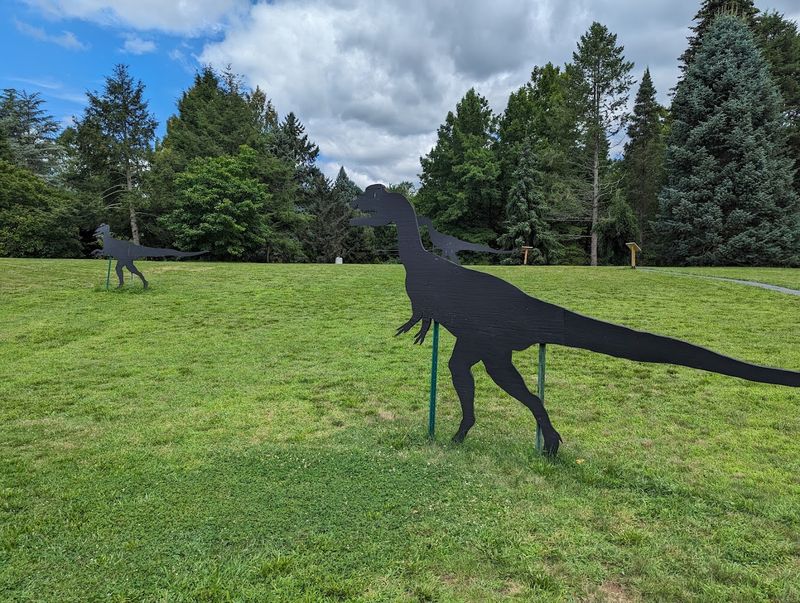
One of the first things that catches your eye inside the exhibit center is the full-scale model of a Dilophosaurus, the dinosaur most likely responsible for the Eubrontes tracks found at the site. It is impressively detailed and gives real context to the footprints you just saw on the dome floor below.
Seeing the size of the animal helps you understand why those three-toed prints are so large and so deep.
Beyond the model, the museum features dioramas depicting both Triassic and Jurassic environments, showing what Connecticut might have looked like when these creatures were alive. Fossil collections line the displays, and there are hands-on interactive areas that make the science feel approachable rather than intimidating.
The newer augmented graphics exhibits are particularly fun, including an animated sandbox where you can dig for fossils or watch your own footprints transform into dinosaur tracks on screen.
There is also a small auditorium where educational films run throughout the day, and live animal encounters are scheduled regularly. The staff is notably enthusiastic and genuinely knowledgeable, happy to answer questions from both kids and adults.
The exhibits strike a good balance between being scientifically accurate and genuinely entertaining for a wide range of ages.
Making Your Own Dinosaur Track Cast
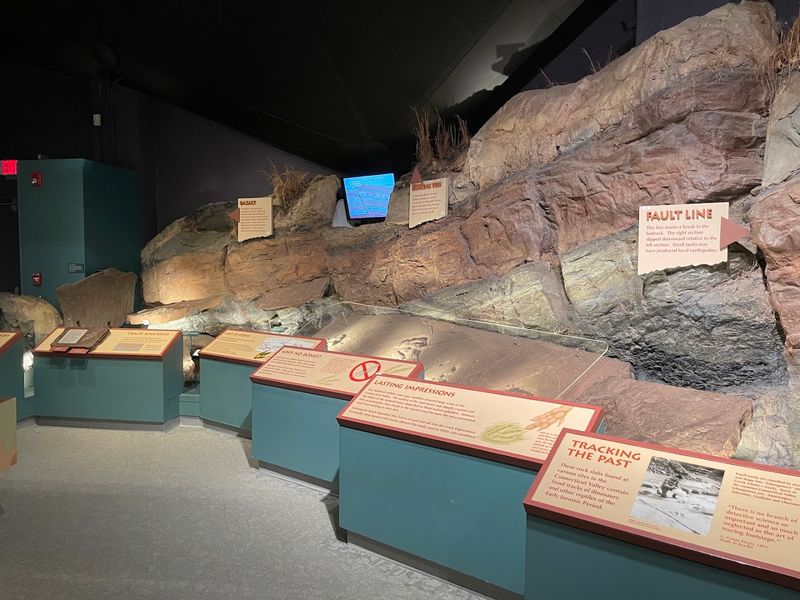
Few activities at a nature park feel as tactile and memorable as making your own plaster cast of a real dinosaur footprint. From May 1 through October 31, visitors can participate in the casting program at Dinosaur State Park, pressing plaster into an actual Eubrontes track and taking a piece of prehistory home with them.
You do need to bring your own materials, so a quick check of the park’s website before your visit will save you a scramble.
The casting station is set up outdoors and is genuinely satisfying for both kids and adults. There is something almost meditative about carefully filling the mold, waiting for it to set, and then lifting out a near-perfect replica of a 200-million-year-old footprint.
It transforms the experience from passive observation into something you actually participated in.
This kind of hands-on engagement is part of what makes Dinosaur State Park stand out from a typical museum visit. You are not just reading about science, you are doing it in a small but meaningful way.
The finished cast makes for a unique souvenir that sparks conversation long after the trip is over. It is the sort of activity that stays with kids for years, planting seeds of curiosity about geology and natural history.
Nature Trails Through the Arboretum and Wetlands
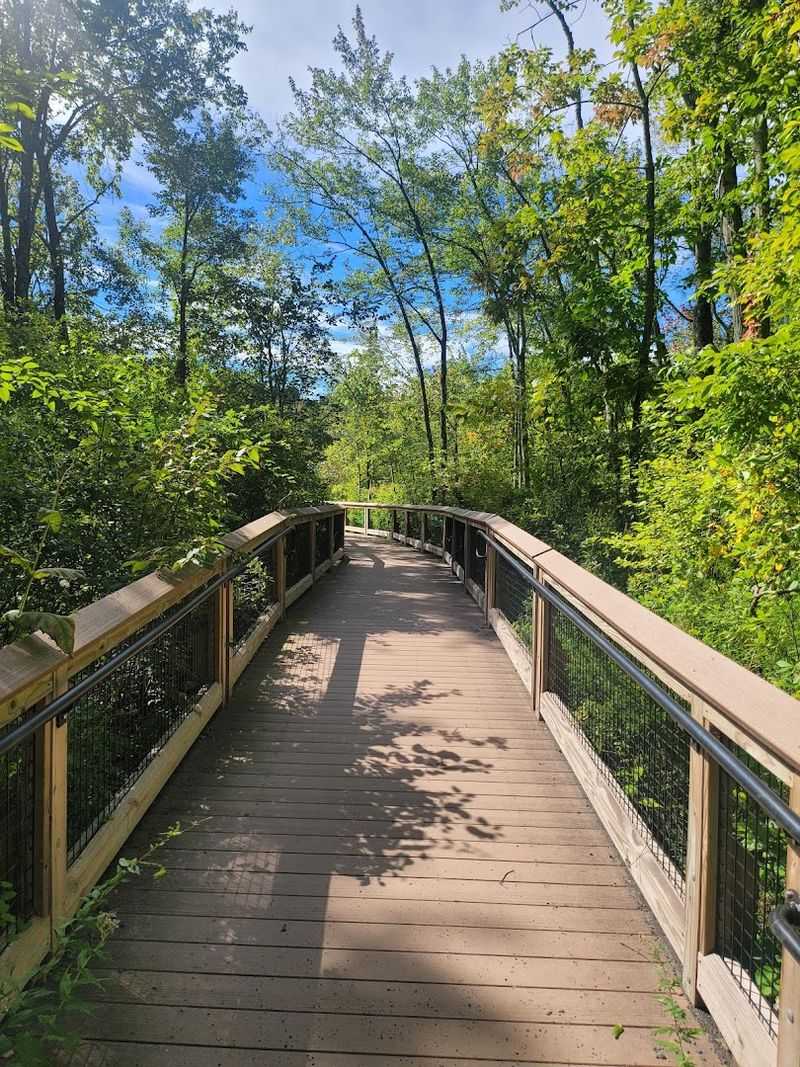
The trails at Dinosaur State Park are genuinely pleasant, even if you are not a serious hiker. About 2.5 miles of walking paths wind through a variety of landscapes, including a red maple swamp crossed by a wooden boardwalk, open meadows, and shaded forest sections.
The blue trail is a well-marked loop that is manageable for most fitness levels, including older visitors and young children.
What makes these trails more interesting than a typical park walk is the arboretum woven throughout the grounds. Over 250 plant species with lineages tracing back to the Jurassic period grow here, and interpretive signs identify them along the way.
It is a quiet but fascinating reminder that the natural world around you has deep prehistoric roots, not just the rocks underfoot.
Bring bug spray if you plan to tackle the wetland sections, especially during warmer months. The trails are stroller-friendly on the smoother sections, though the boardwalk and rockier stretches require a little more care.
Picnic tables are scattered throughout the grounds, making it easy to pack a lunch and extend your visit into a full afternoon outdoors. The park grounds and trails are open daily, even when the exhibit center is closed on Mondays.
Live Animals and the Discovery Room
Not everyone expects a dinosaur park to have live animals, but Dinosaur State Park keeps things lively with a rotating cast of reptiles, amphibians, and insects on display inside the exhibit center. Snakes, lizards, turtles, frogs, and even Madagascar hissing cockroaches make appearances, along with an African frog that visitors consistently find both bizarre and wonderful.
The variety keeps even skeptical adults pausing longer than they planned.
Scheduled animal encounter programs give visitors a chance to get up close and sometimes even pet the animals while a knowledgeable staff member shares facts and answers questions. These sessions run about 30 minutes and include a lively back-and-forth with the audience.
Younger kids especially light up during these moments, and the staff’s enthusiasm is completely genuine rather than rehearsed.
The Discovery Room is designed with the youngest visitors in mind, featuring dinosaur toys, coloring stations, and simple games. Older kids might find it a bit basic, but for toddlers and early elementary-age children it is a welcome space to decompress between exhibits.
There is also a gem and fossil mining sluice available during summer months, which adds another layer of hands-on fun. The gift shop near the exit stocks a solid selection of dinosaur toys, books, and geology-themed items worth browsing.
Planning Your Visit to Dinosaur State Park
Dinosaur State Park is open Tuesday through Sunday from 9 AM to 4:30 PM, and the park grounds and trails are accessible daily. Monday is the one day the exhibit center stays closed, so plan accordingly if the indoor experience is a priority.
The park is located at 400 West St in Rocky Hill, Connecticut, and parking is free, which is always a welcome detail.
The exhibit center admission is very affordable, making it an accessible outing for families without a big budget. Kids under five are free, and the overall cost for a family is minimal compared to most attractions.
Seasonal activities like the plaster casting station and the gem mining sluice run from May through October, so summer and fall visits offer the fullest experience.
A few practical tips worth keeping in mind: arrive with your casting materials if you want to make a footprint mold, check the daily schedule posted at the entrance for film screenings and animal encounters, and wear comfortable shoes if you plan to hike. The park has EV charging spots in the parking lot, which is a thoughtful modern touch.
First-time visitors often find they want more time than they expected, so giving yourself at least two to three hours makes the trip feel complete rather than rushed.
Address: 400 West St, Rocky Hill, Connecticut
