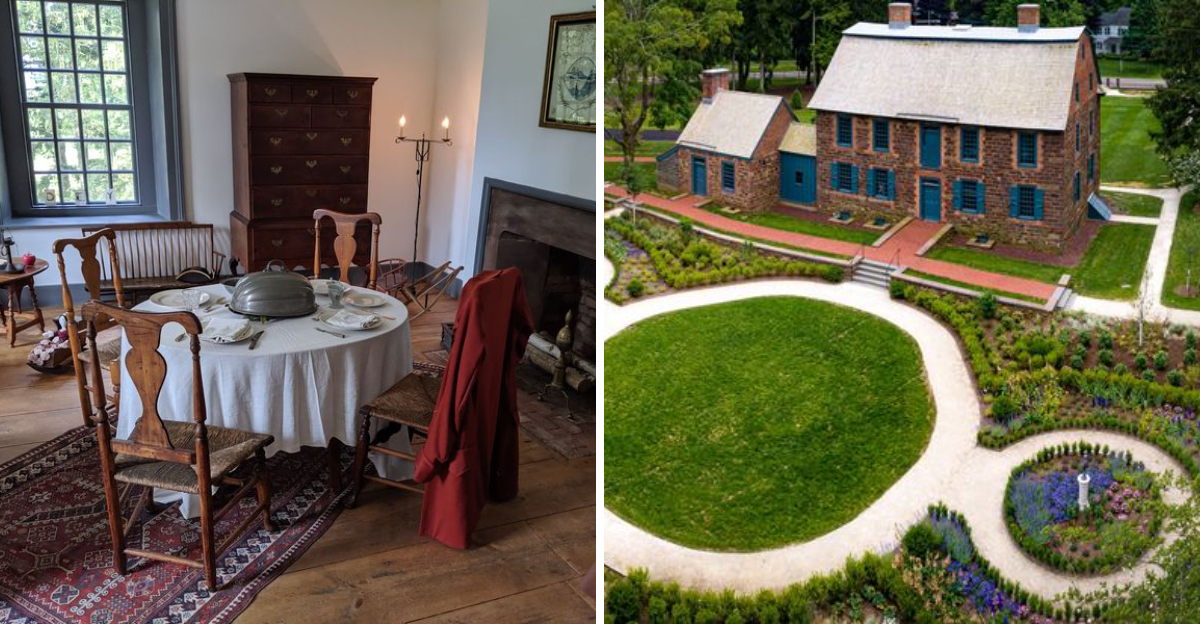
Hundreds of letters. One very tired general.
A Revolutionary War headquarters tucked into a quiet New Jersey mansion.
Washington spent three months here in 1780, writing strategy, arguing with his generals, and debating what to do with a man named Benedict Arnold.
The second-floor parlor is where most of the action happened.
Wood floors. Tall windows. The kind of room where decisions weighed heavier than the furniture.
Today, you can stand in that same room and imagine the scratch of a quill, the urgency of a war still being fought, and the weight of a future hanging in the balance.
Some houses hold memories.
This one holds the blueprint of a nation.
Hundreds of Letters Written From This Revolutionary Mansion
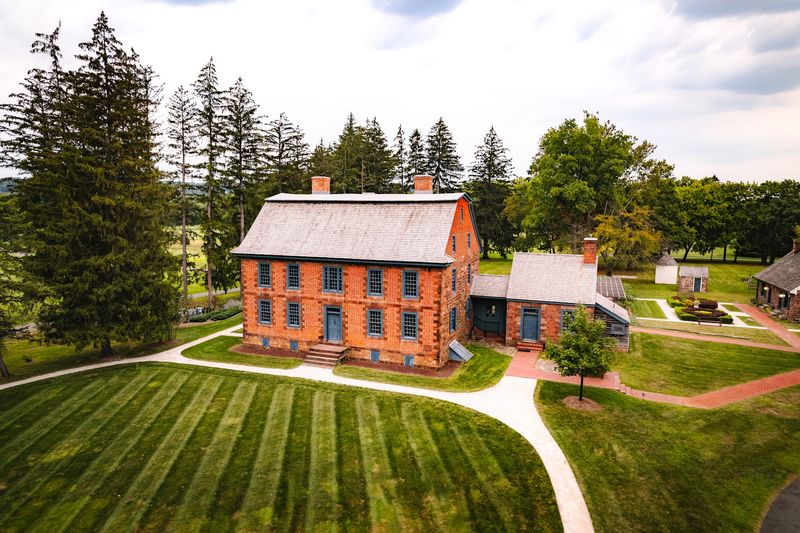
Walking through the front door of this mansion, the first thing that hits you is how much work actually happened here. General George Washington did not just sleep under this roof; he wrote relentlessly, urgently, and in extraordinary volume.
The sheer output from this location is staggering to think about.
Records indicate that Washington’s letters and correspondences produced during his stays totaled an astonishing 964 pieces, covering more than 1,800 written pages. These were not casual notes.
They were military orders, diplomatic dispatches, and urgent communications to Congress that kept the Continental Army functioning.
His aides-de-camp, including the brilliant Alexander Hamilton, worked alongside him drafting many of these critical documents. Every page represented a decision, a strategy, or a plea for resources.
Standing in those rooms, you can almost feel the weight of that pen-and-ink pressure. The mansion was not just a place to rest; it was the beating administrative heart of the American Revolution during those months.
Washington’s Headquarters in the Preakness Valley
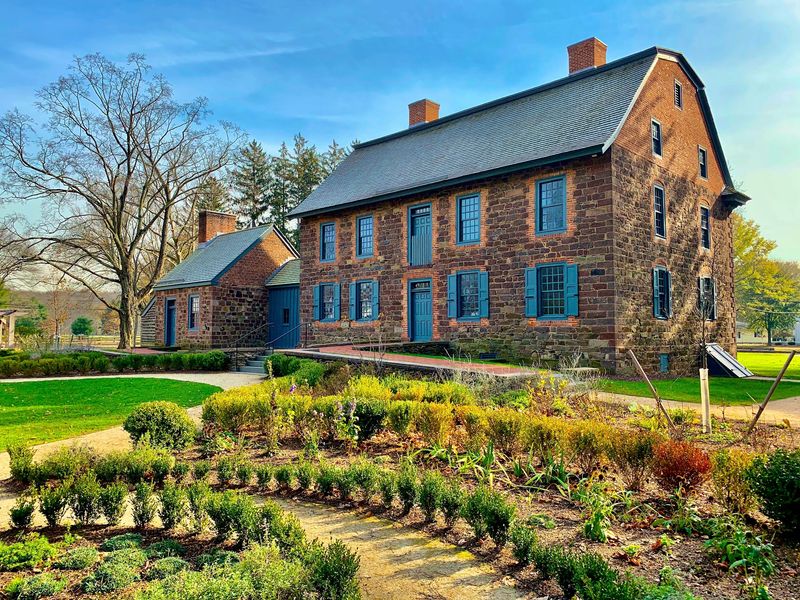
Choosing a headquarters during wartime was never random, and the Preakness Valley offered Washington something genuinely rare: strategic advantage wrapped in natural abundance.
The surrounding land provided defensible terrain and a steady supply of food and forage for a large, hungry army.
That practical reality made this valley an obvious choice.
Colonel Theunis Dey, a wealthy landowner with deep colonial roots dating back to 1641, offered his elegant Georgian-style mansion freely to the patriot cause. His family had built something substantial here, and sharing it with Washington was a statement of conviction, not just hospitality.
The mansion sat at the center of a community already deeply committed to independence.
The valley itself felt like a natural fortress, with geography working quietly in favor of the Continental Army. Provisions could move efficiently, troops could be positioned strategically, and Washington could command with some measure of security.
The Preakness Valley did not just shelter Washington; it actively supported the Revolution in ways that maps and textbooks rarely capture fully.
A Hub of Revolutionary Strategy
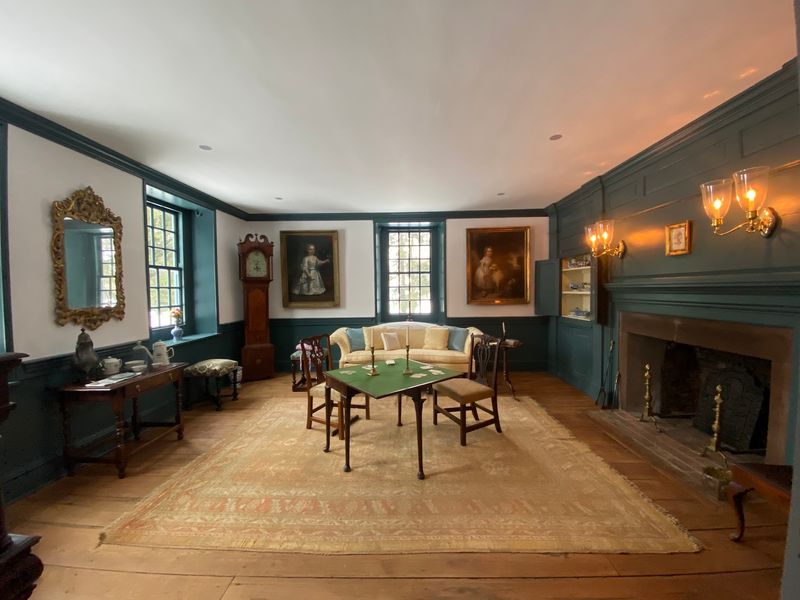
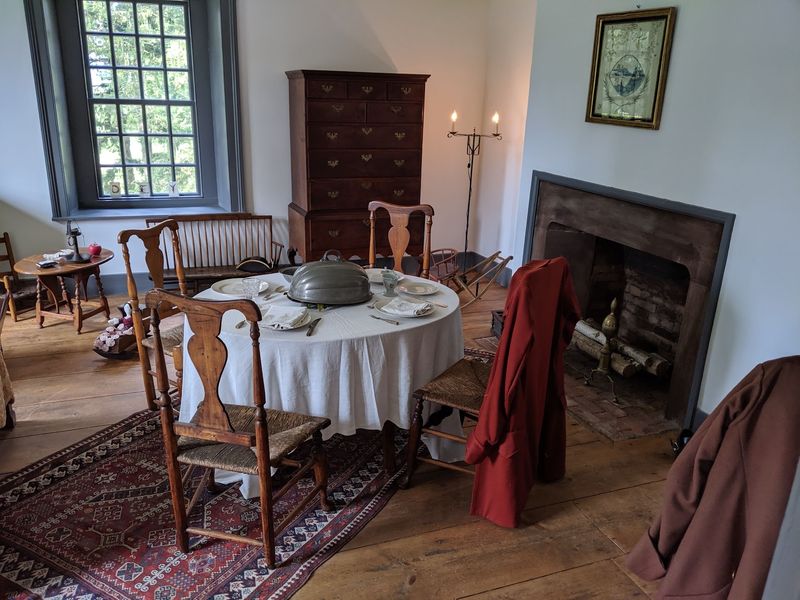
Few rooms in American history carried as much daily urgency as the formal dining room of this mansion, which regularly doubled as Washington’s working office. Military maps, intelligence reports, and urgent correspondence competed for table space with whatever meal was being prepared.
The line between war room and dining room blurred completely during those months.
Washington’s so-called military family filled the east side of the house, transforming it into a buzzing command center. Alexander Hamilton, Tench Tilghman, Robert H.
Harrison, David Humphreys, and James McHenry all worked from within these walls, each contributing their skills to the larger effort. The energy of that collective intelligence must have been remarkable.
Long hours were fueled by shared meals, simple and hearty by necessity, that kept sharp minds functioning through exhausting days. Those dinners were not social occasions; they were working sessions where strategy evolved over food and candlelight.
The mansion held all of it together, serving as a place where military rigor and domestic rhythm found an unlikely but essential balance.
Where General Washington Planned the War
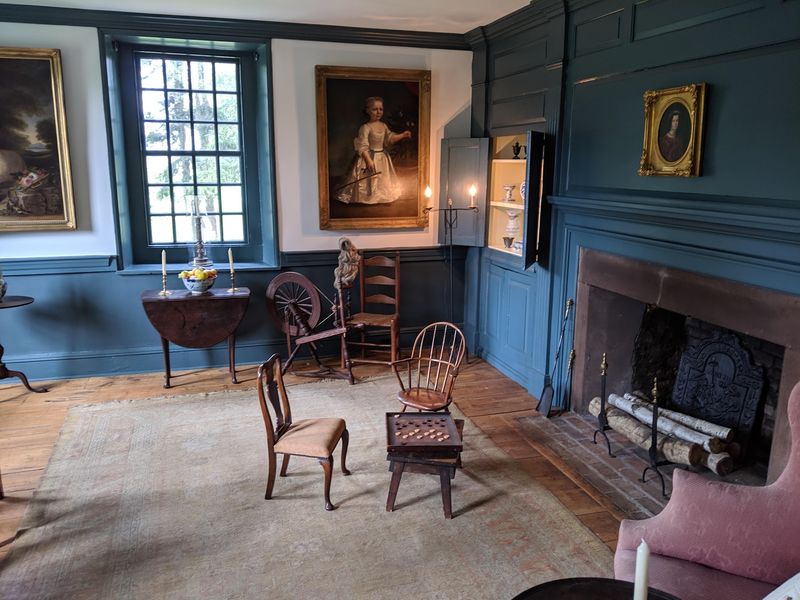
From inside the Dey Mansion, Washington directed some of the most consequential military planning of the entire Revolutionary War. A planned attack on Staten Island was conceived here, and reconnaissance missions near Fort Lee were organized within these very walls.
The mansion was not a retreat from the war; it was the war, compressed into a series of urgent daily decisions.
On July 14, 1780, Washington received transformative news at this location: French allied forces had landed at Newport, Rhode Island. That single piece of intelligence, arriving here in the Preakness Valley, shifted the entire strategic calculus of the conflict.
Coordinating with a powerful ally required careful, constant communication, much of it generated right here.
Some operations planned at the mansion were ultimately called off, but the planning itself was never wasted. Each rehearsed strategy built the institutional knowledge that the Continental Army desperately needed.
Washington used this mansion as a place to think carefully, move deliberately, and command with the kind of patience that eventually won a revolution.
Three Pivotal Months in a Patriotic Home
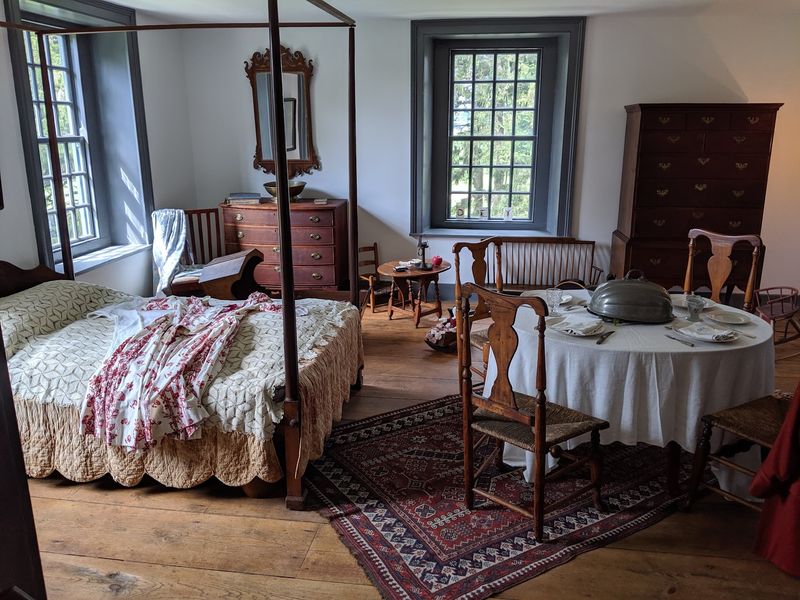
Washington stayed at the Dey Mansion during two distinct but equally intense periods in 1780, together totaling roughly three months of continuous command. The first stay ran from July 1 through July 28.
The second, longer stay stretched from October 8 all the way through November 27.
These were not quiet months. The Continental Army faced serious uncertainty, and the very foundation of the patriot cause was tested repeatedly during this time.
It was within the walls of this mansion that Washington processed the devastating news of Major General Benedict Arnold’s treason, one of the most painful betrayals of the entire war.
Managing that fallout while maintaining the confidence and cohesion of his forces required extraordinary composure. The mansion provided the secure, stable environment Washington needed to absorb the shock and respond with clarity.
Those three months represent some of the most emotionally and strategically complex weeks of Washington’s entire command, and this home quietly held all of it.
400 Letters That Helped Shape a Nation
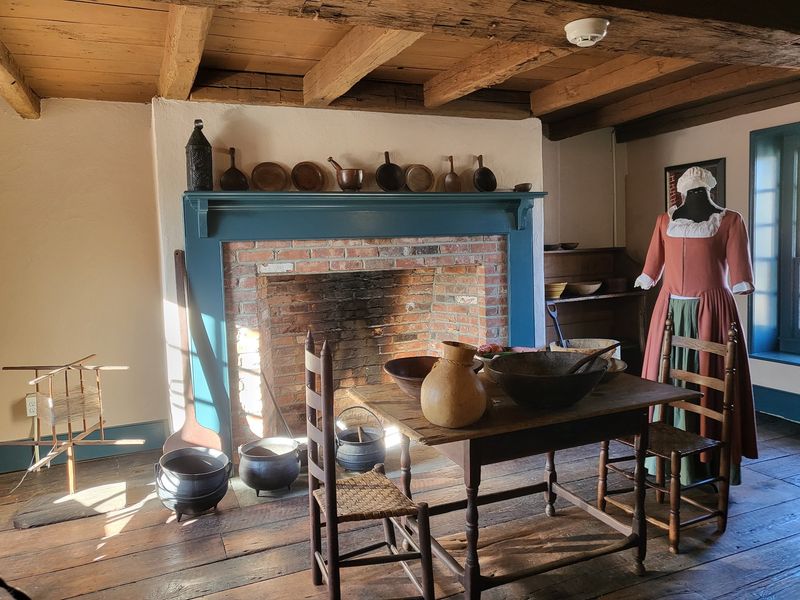
The number is hard to wrap your head around even when you are standing right there. Washington’s total correspondence produced during his time at the Dey Mansion reached 964 letters and documents, filling more than 1,800 pages.
Each one represented a thread in the complex web of command that held the Continental Army together.
These letters went to Congress, to fellow generals, to foreign allies, and to local commanders managing their own desperate situations. One significant document issued here was a commission to Benedict Arnold, a trusted figure at the time, before his catastrophic betrayal reshaped everything.
The irony of that particular letter, written in good faith from these very rooms, is quietly haunting.
Alexander Hamilton’s role in drafting many of these communications deserves recognition too. Washington relied on his talented aides to translate strategic thinking into precise, persuasive language.
That collaborative effort, played out daily at desks and dining tables inside this mansion, produced a paper trail that historians still study closely today. The written word was, in many ways, the Revolution’s most powerful weapon.
Wayne’s Historic Link to the Commander-in-Chief
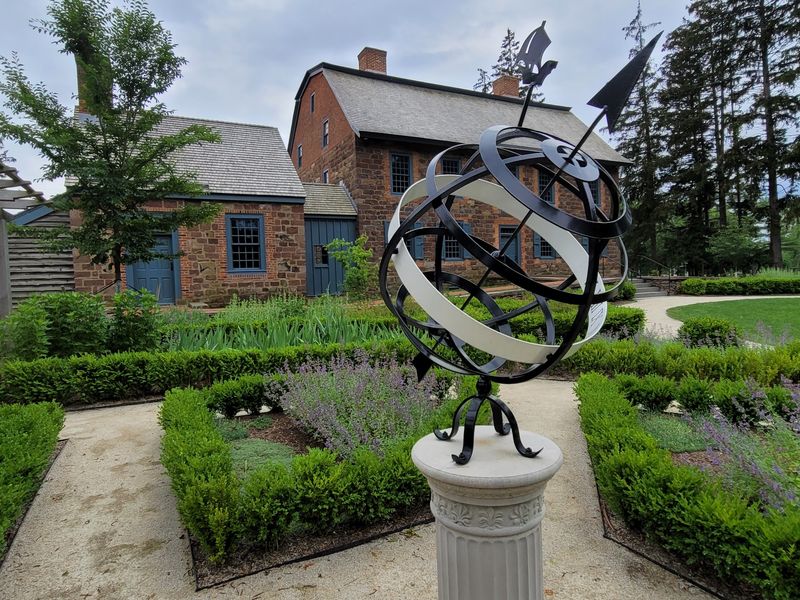
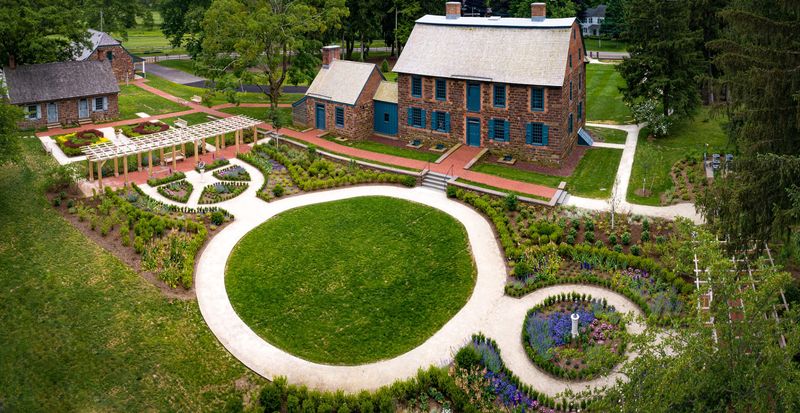
Wayne, New Jersey holds a remarkable and specific claim to Revolutionary War history through this single address: 199 Totowa Road. Passaic County has owned and operated the mansion as a public museum since 1987, investing in its preservation so that every visitor can experience it authentically.
That civic commitment is visible in every carefully maintained room.
Extensive restoration work in the 1930s stabilized the structure, and a significant rededication in 2016 brought renewed attention and energy to the site. The result is a house museum that genuinely feels like it belongs to its era, not like a reconstruction or a replica.
The 18th-century details are real, and that realness changes everything about the visit.
Tours run on the hour, Wednesday through Sunday, from 9 AM to 5 PM, making the mansion accessible for families, school groups, and solo history enthusiasts alike. The grounds open at 9 AM, giving early arrivals time to walk the property before the first tour begins.
Wayne has taken its responsibility to this history seriously, and it shows in every corner of the estate.
Washington’s Field Headquarters in Jersey
New Jersey earned its reputation as the Crossroads of the American Revolution honestly, through geography, sacrifice, and an almost constant military presence throughout the war years.
Washington spent more time in New Jersey during the Revolution than in any other state, and the Dey Mansion represents one of the most significant of his many field headquarters here.
The mansion offered something that open encampments could not: security, structure, and a functional space for the kind of administrative work that kept the army alive. Field headquarters needed more than a roof.
They needed rooms where aides could write, where commanders could meet, and where intelligence could be processed without interruption.
The Preakness Valley location added logistical advantages that Washington could not afford to ignore. Food and forage moved efficiently through the area.
Troop positions could be managed from a central, secure point. The Dey Mansion threaded all of those needs together into one working headquarters that served the Continental Army with quiet, steady effectiveness throughout those critical months of 1780.
The House Where Revolution Was Penned
There is a specific kind of power in realizing that a revolution was not only fought on battlefields but written into existence at a desk inside a family home. The Dey Mansion is where that writing happened, page after page, letter after letter, through the long days and nights of 1780.
The quill was every bit as important as the musket here.
Washington and his aides gathered around tables that also served meals, blending the rhythms of daily domestic life with the urgent demands of wartime command.
Simple, hearty food sustained the men who were drafting orders and composing diplomatic correspondence that would shape the future of an entire nation.
That blend of the ordinary and the extraordinary is what makes this place feel so genuinely human.
Visitors today can stand in those same rooms and feel the atmosphere that inspired some of the most consequential writing in American history. The mansion does not dramatize its past; it simply holds it, quietly and completely.
Every creaking floorboard and period-furnished room tells a story that no textbook has ever quite managed to capture.
Address: Dey Mansion Washington’s Headquarters, 199 Totowa Rd, Wayne, NJ 07470, United States
